Flames of War: Metropolitan Wargamers Tanksgiving 2014

Tanks2014

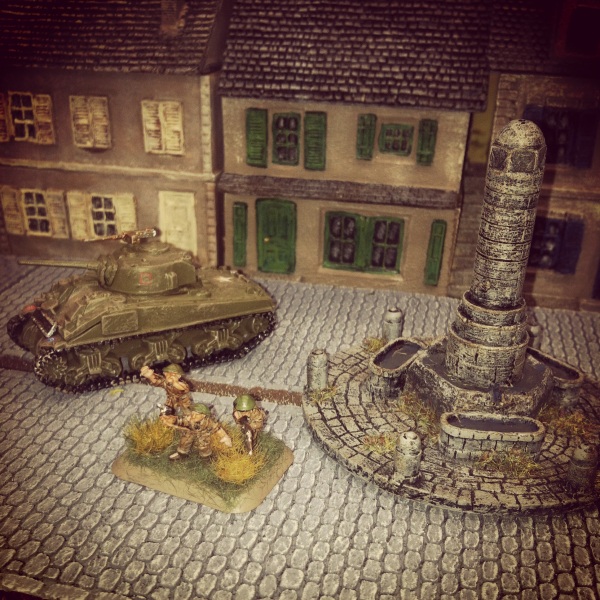
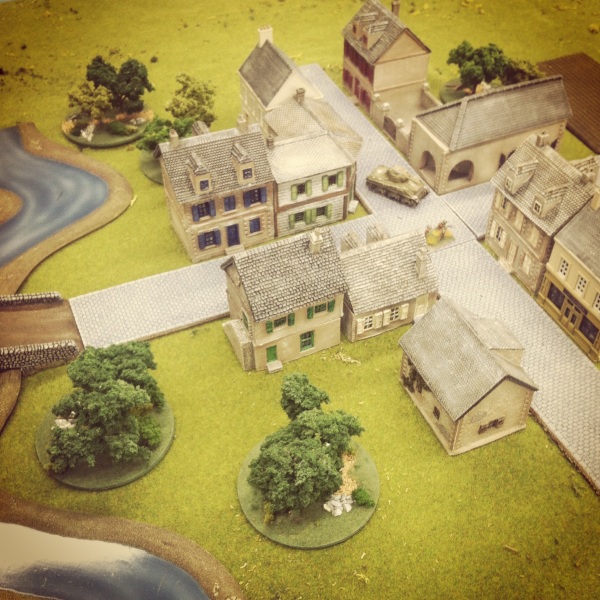
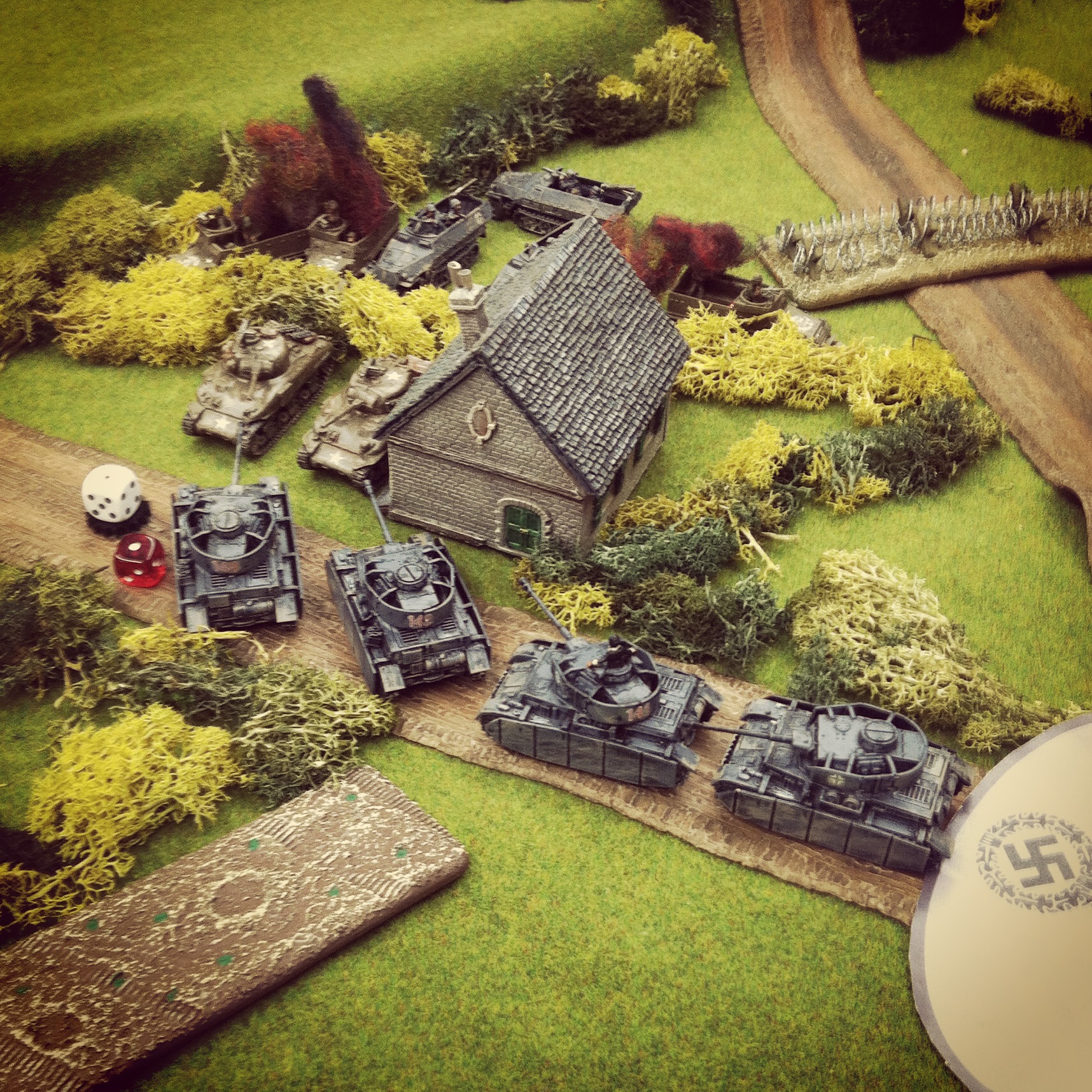
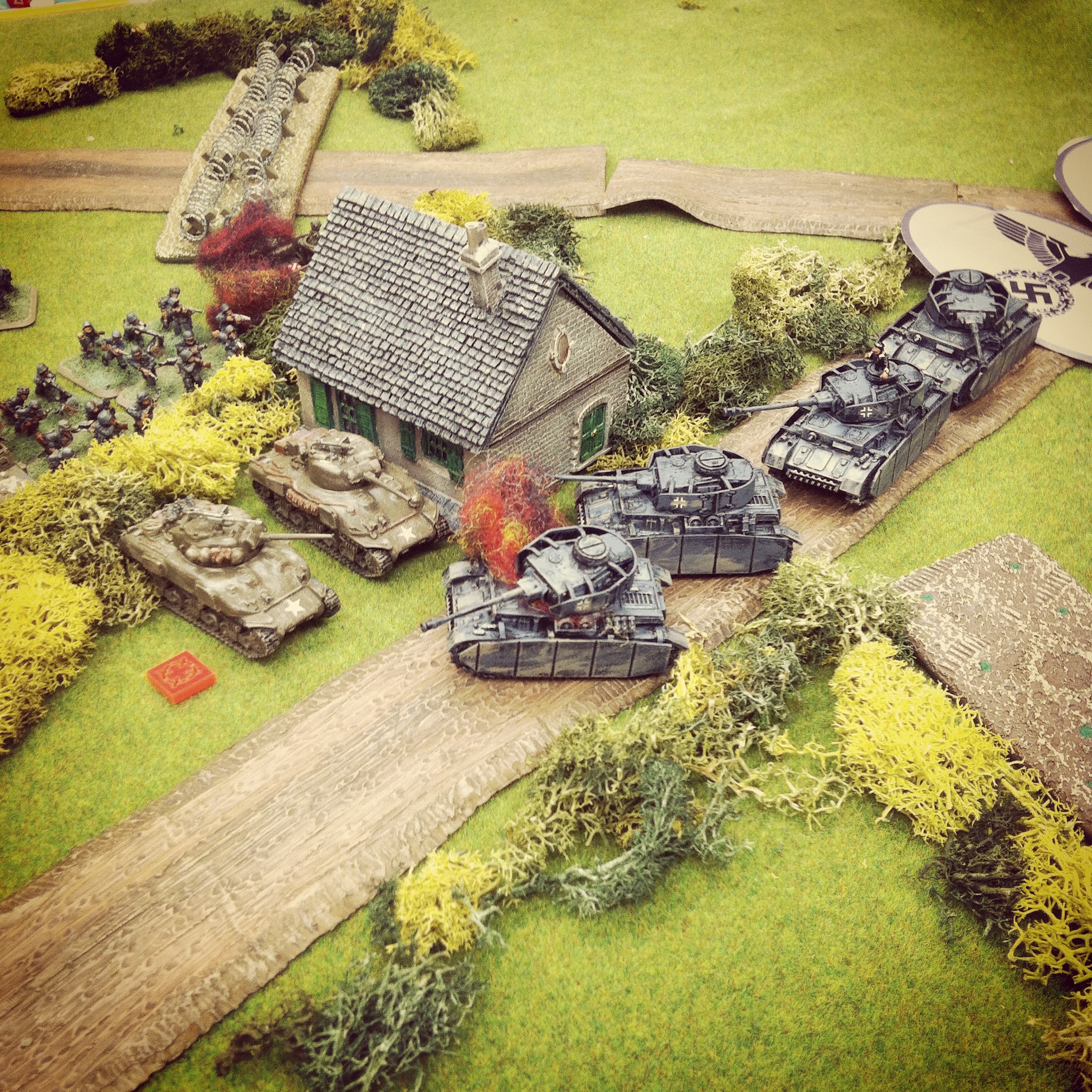
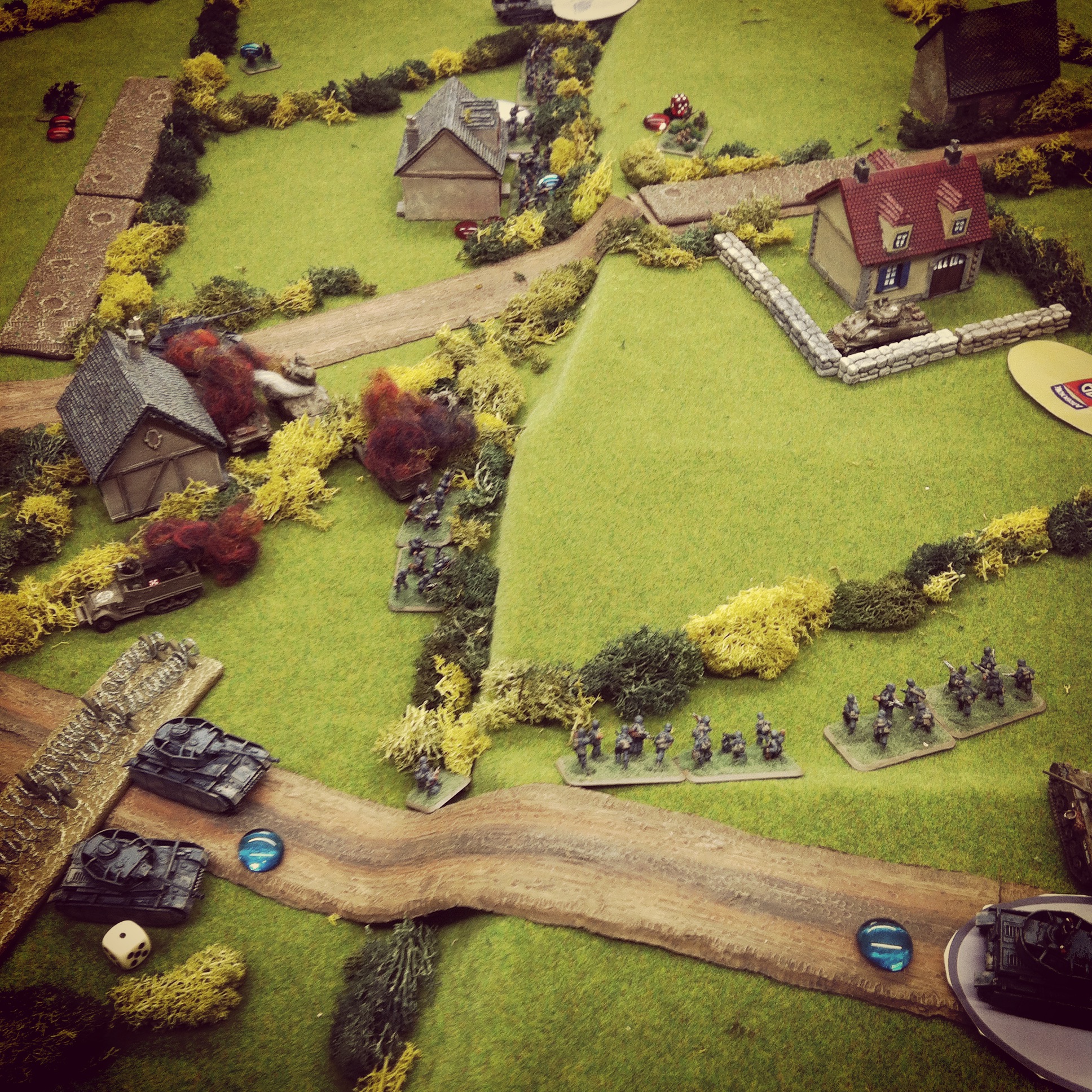
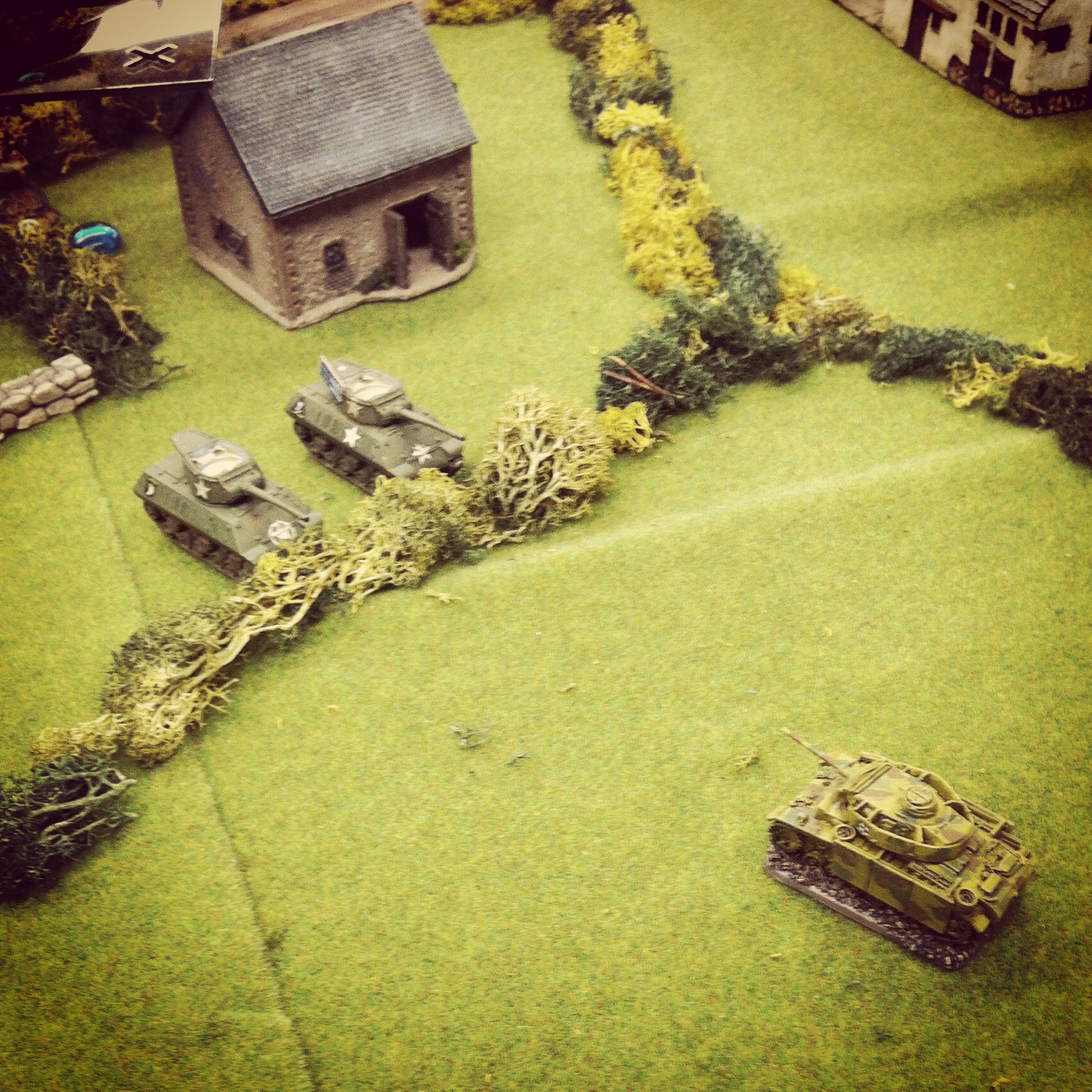
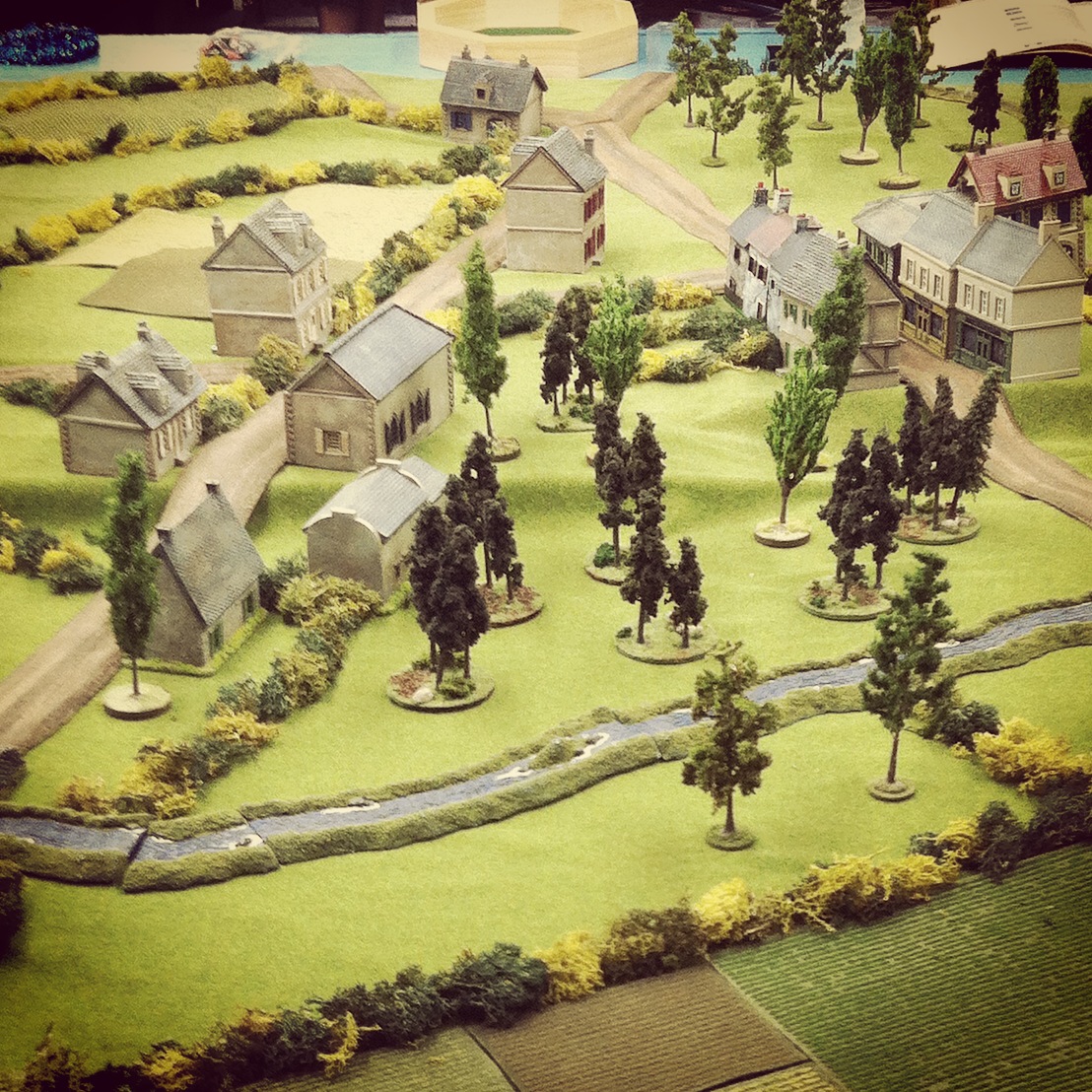
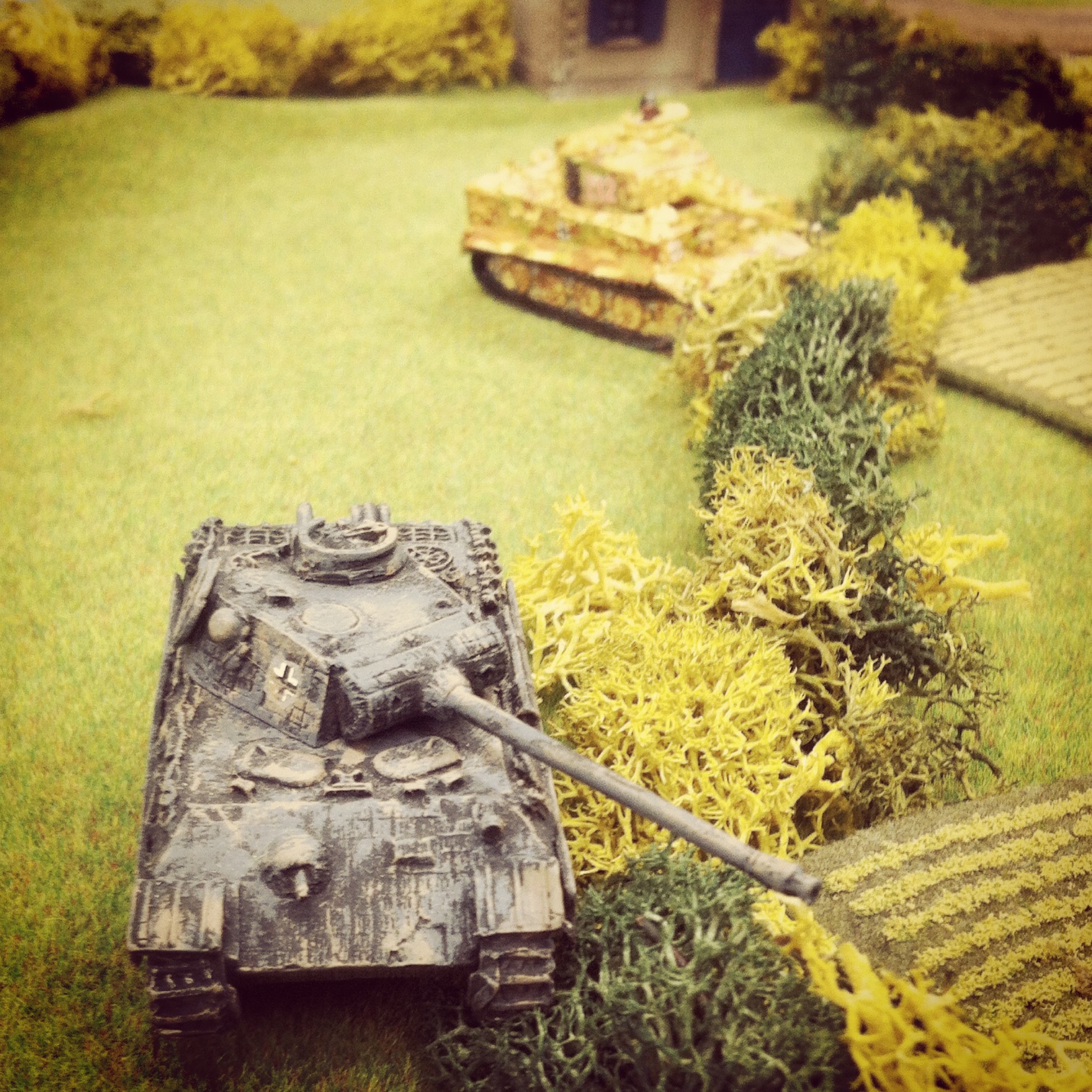
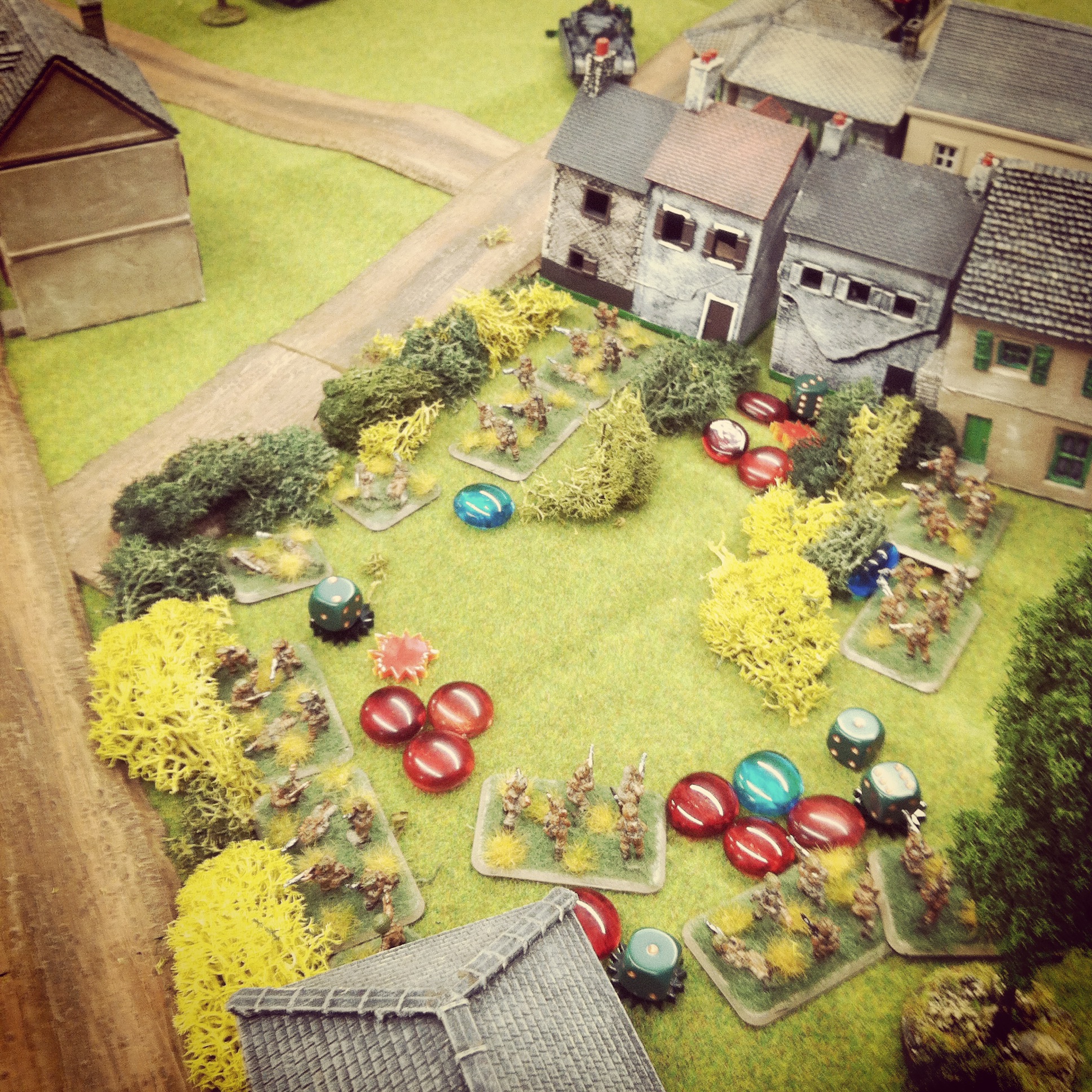
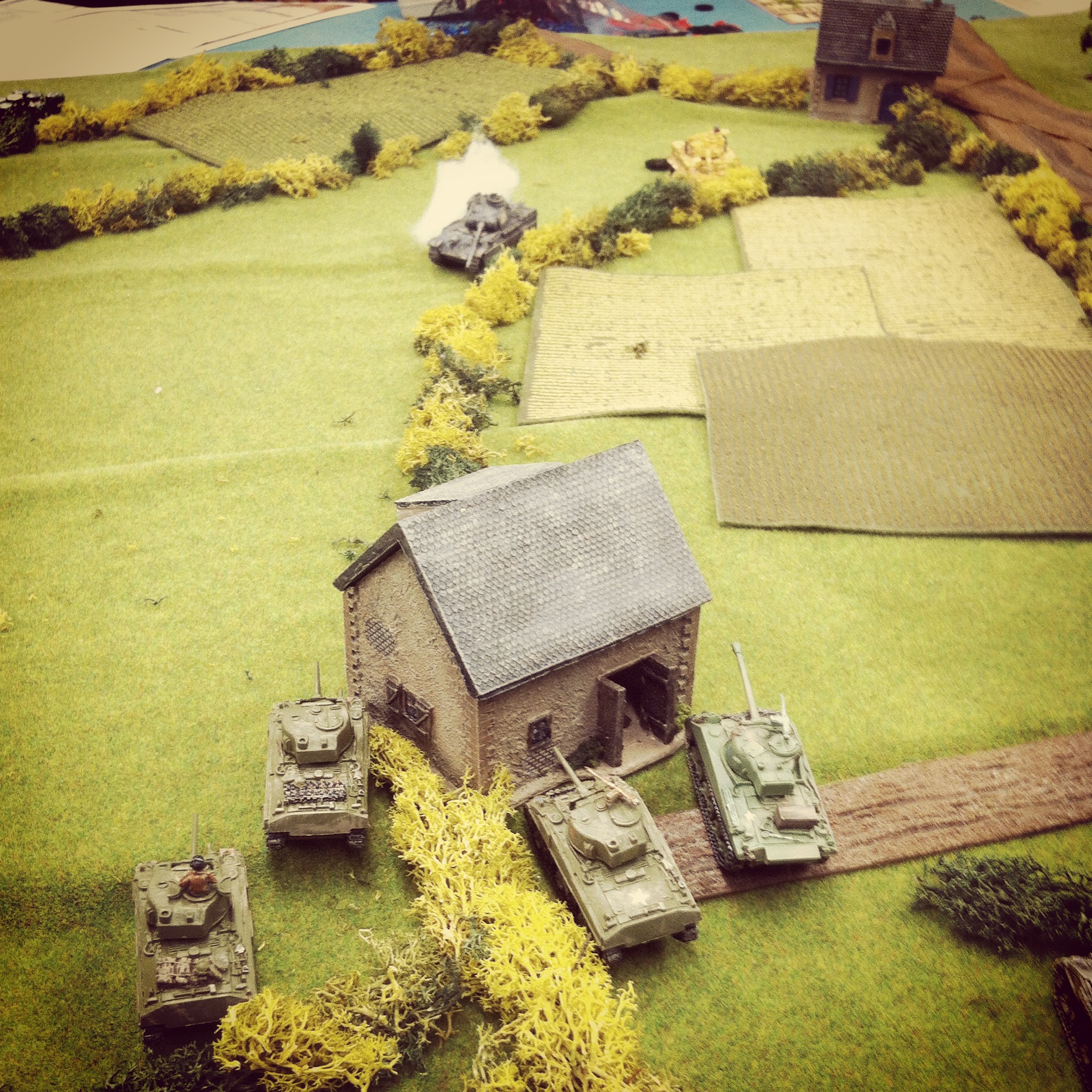
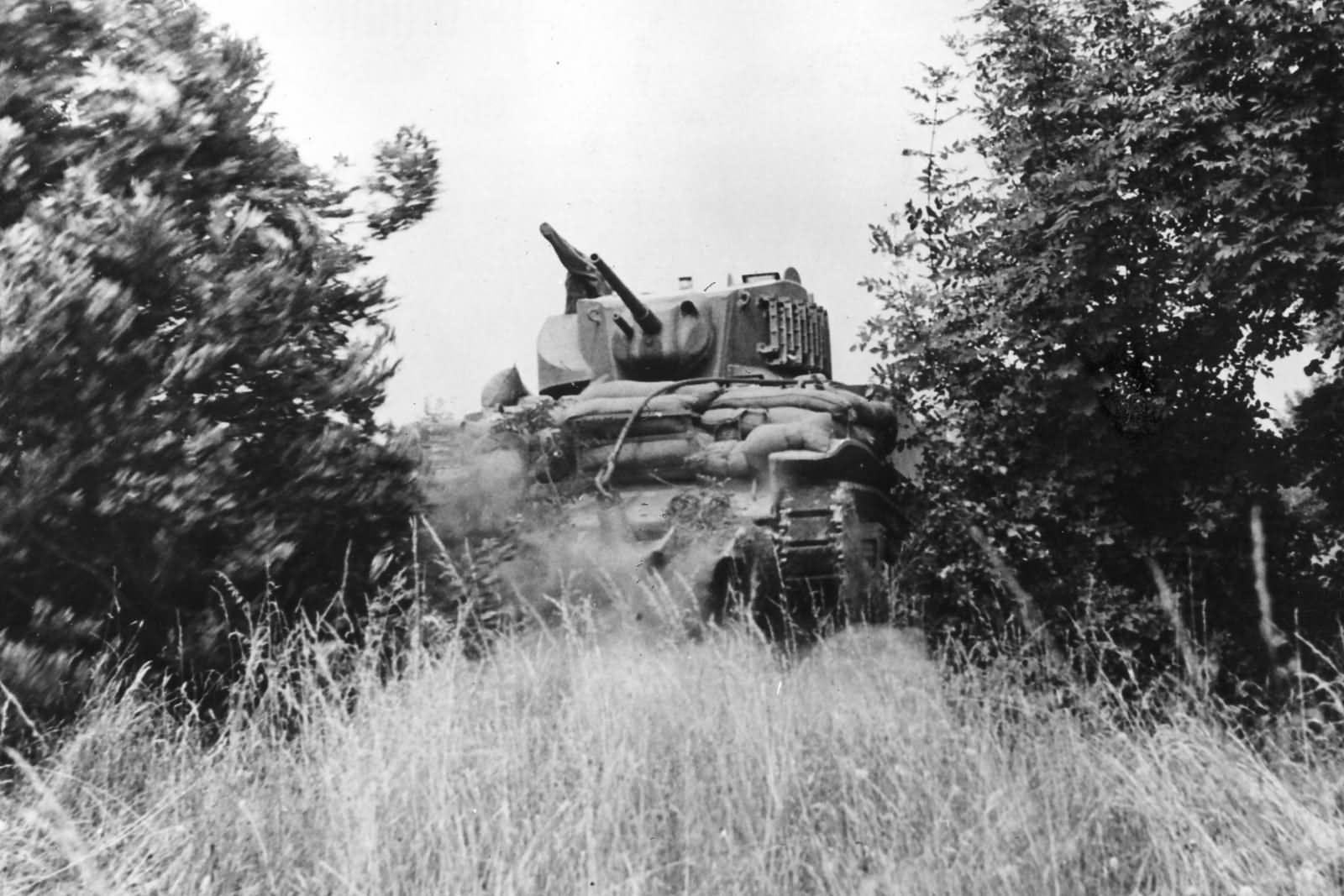
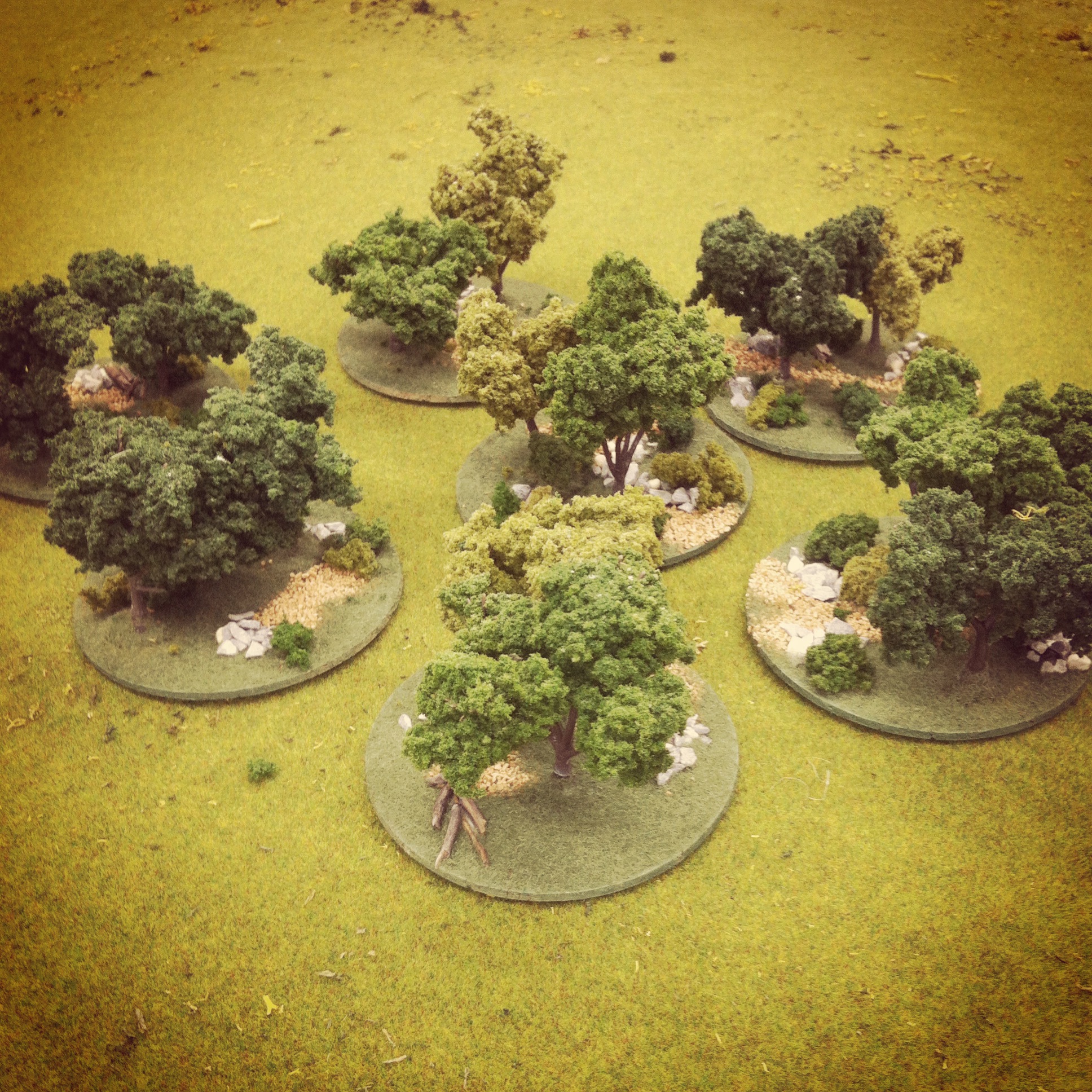
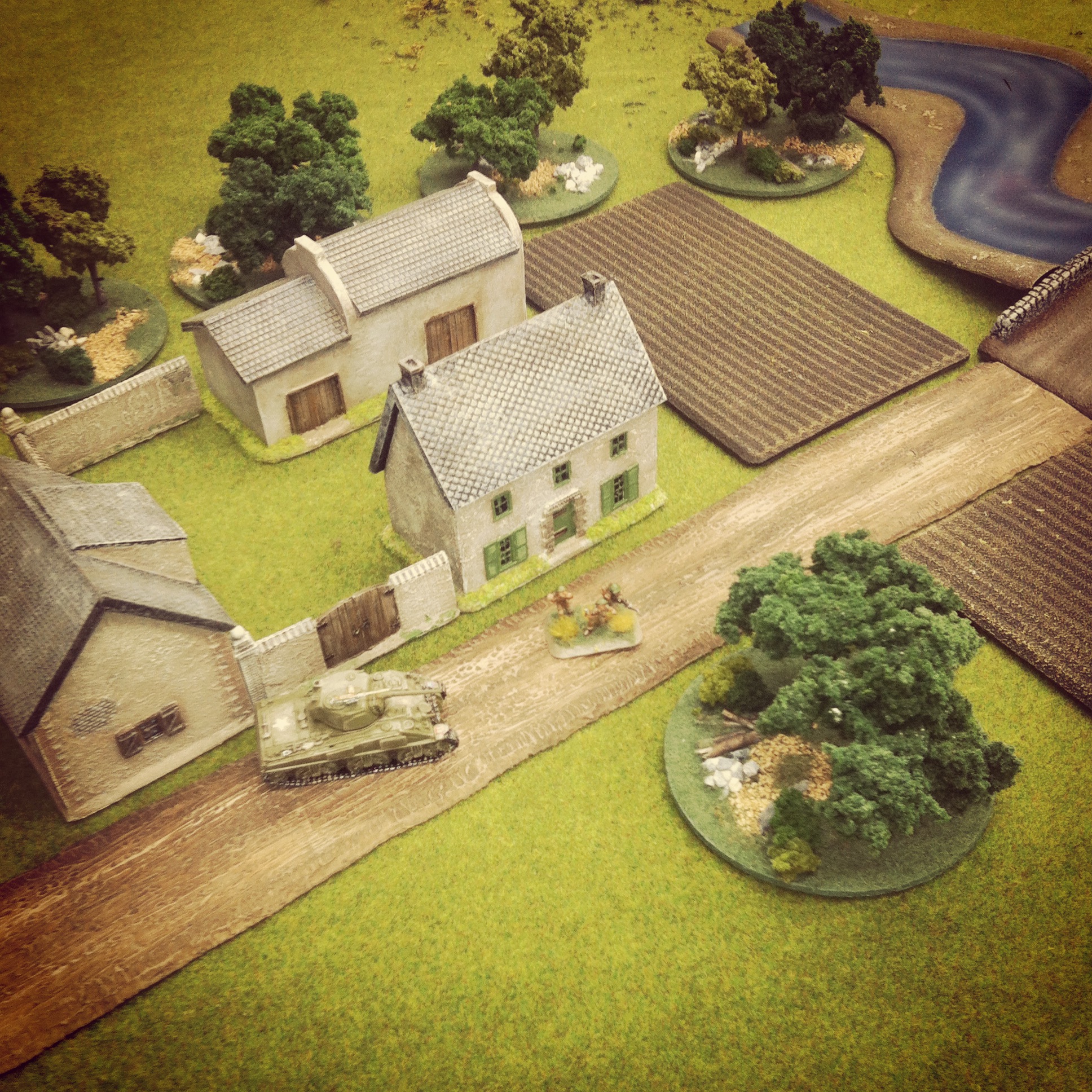
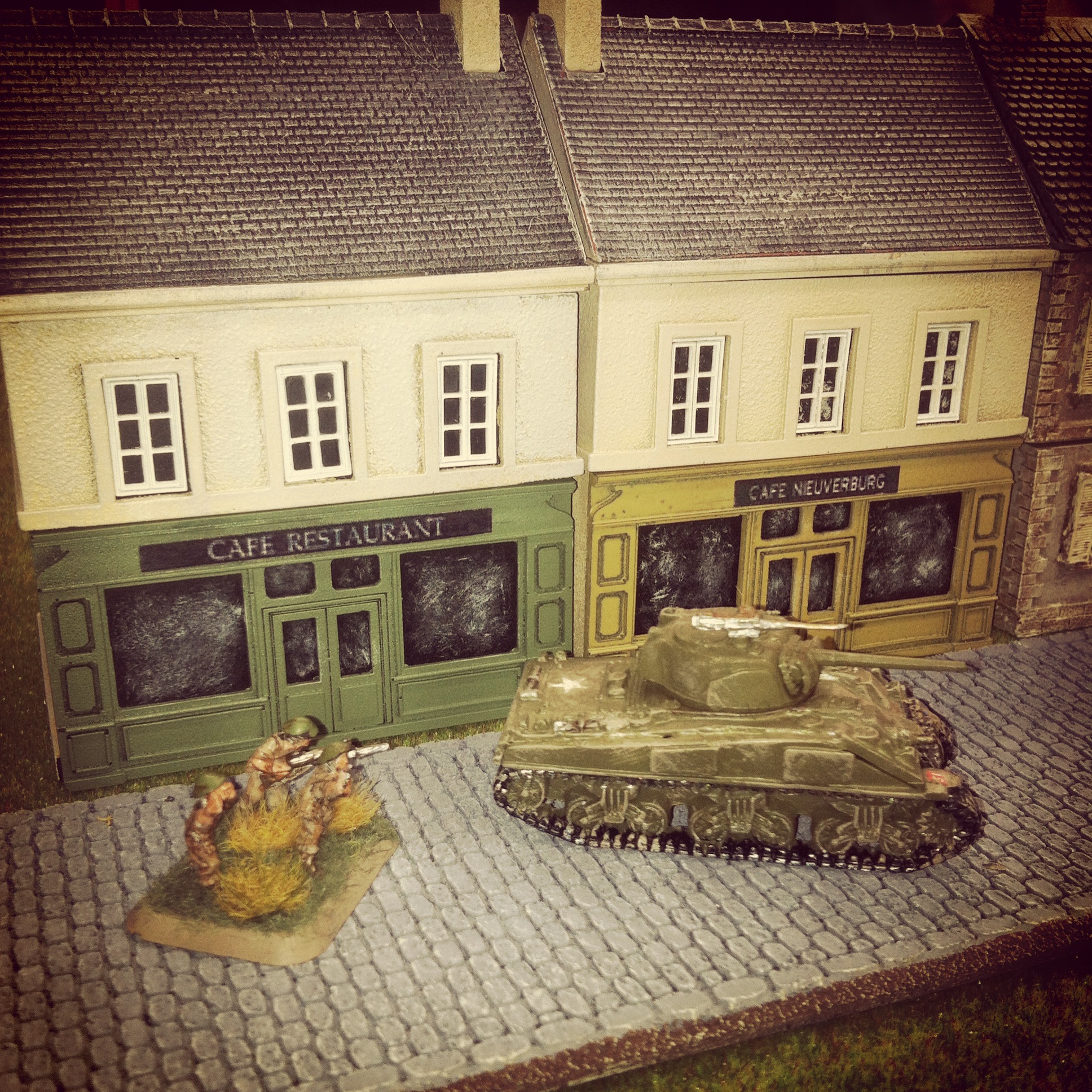
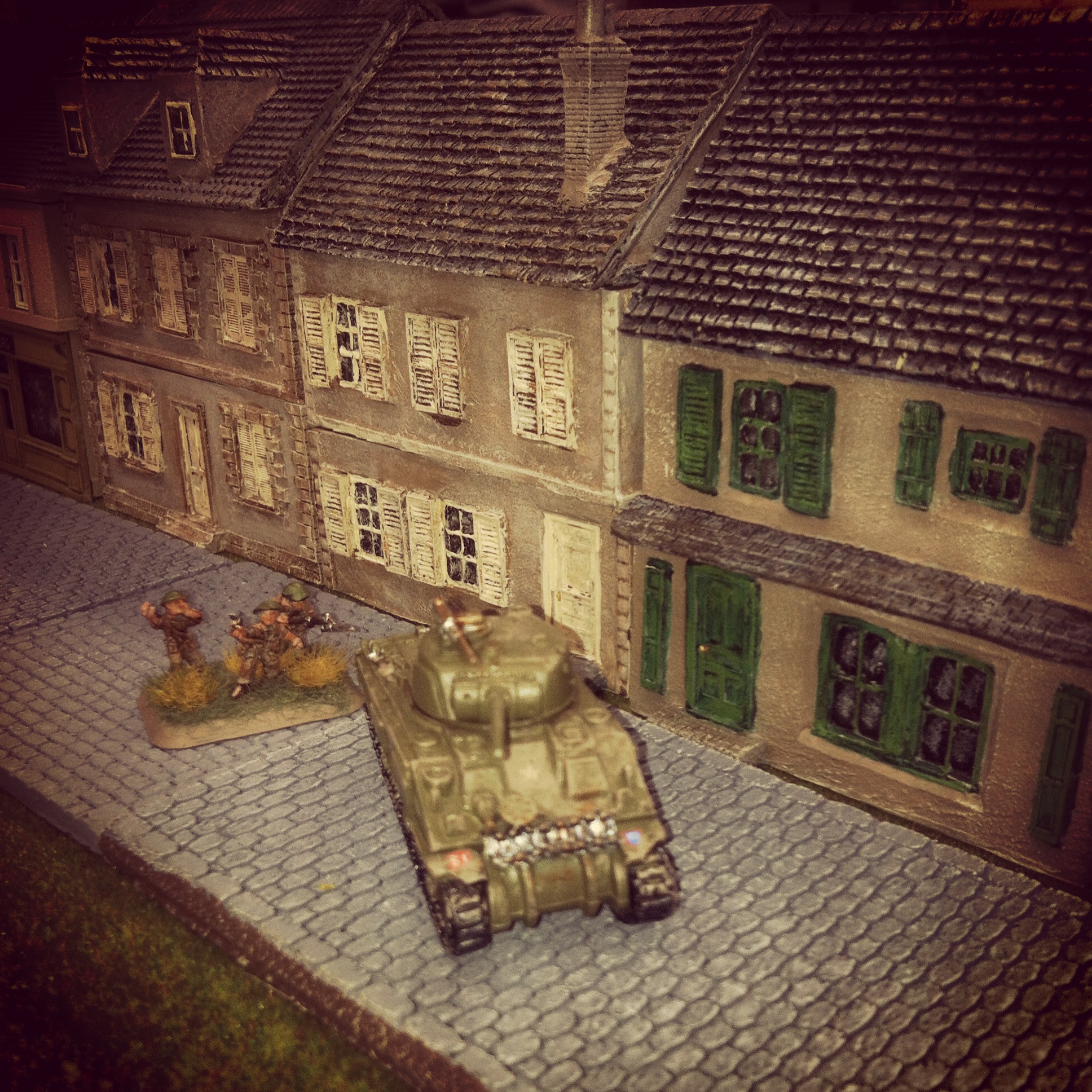
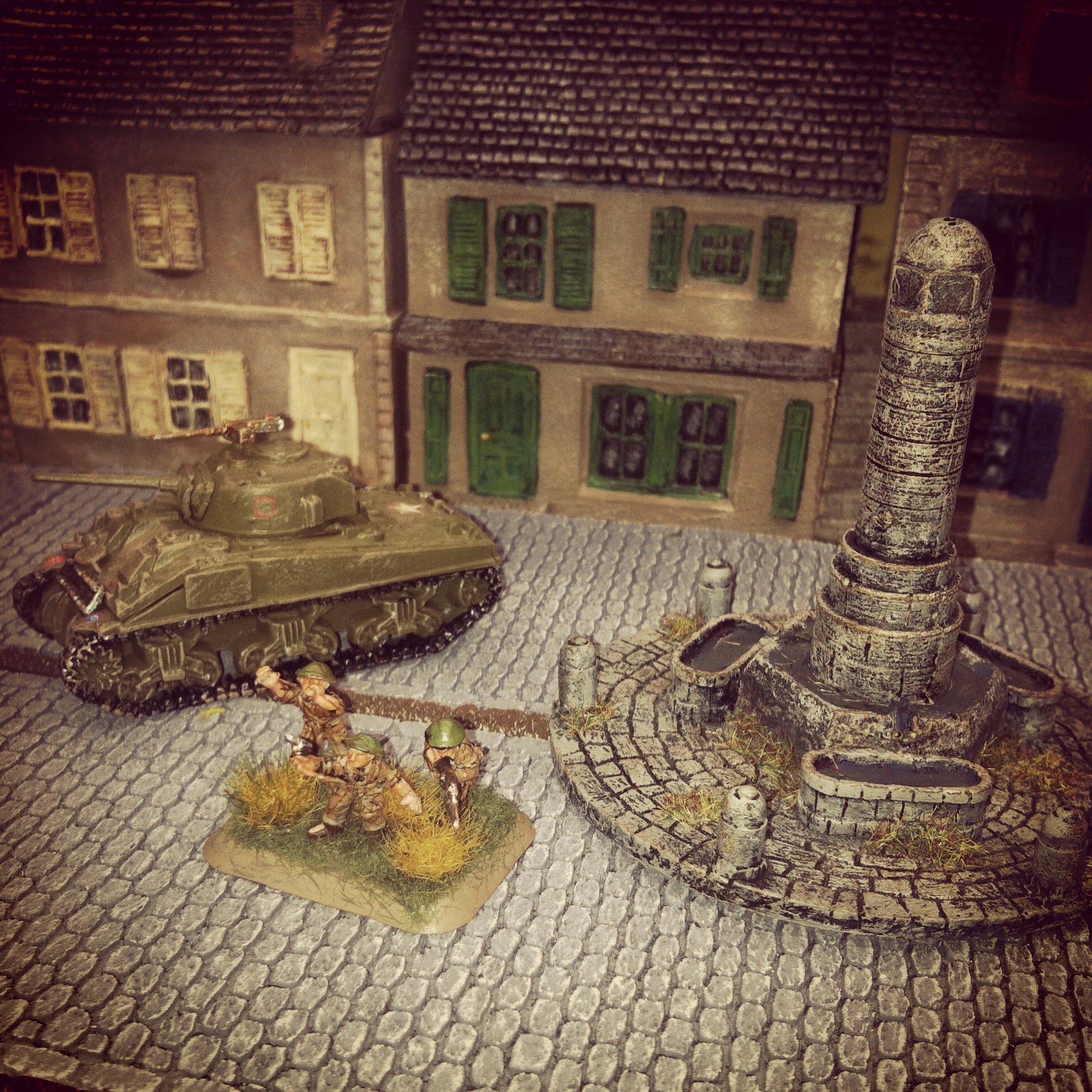
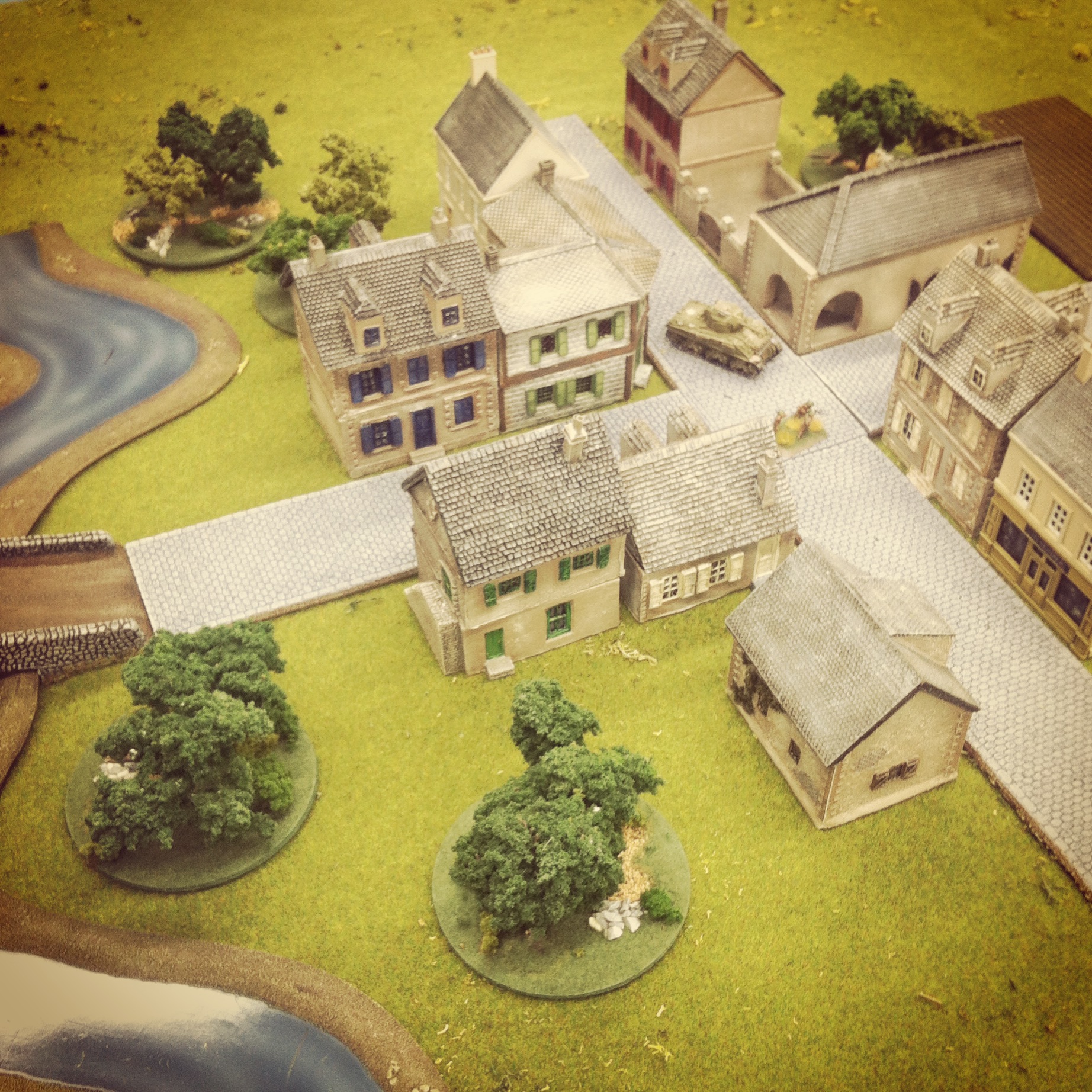
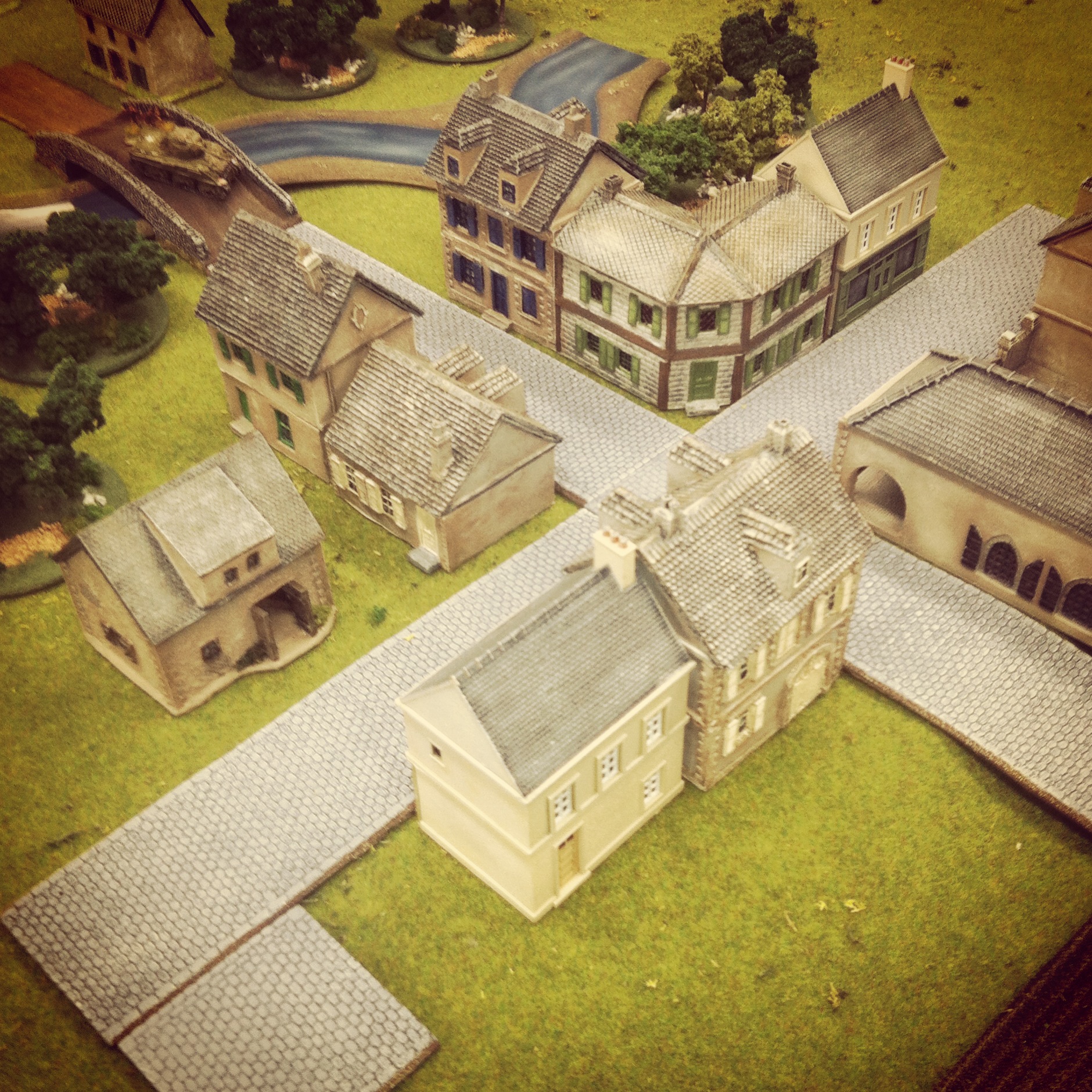
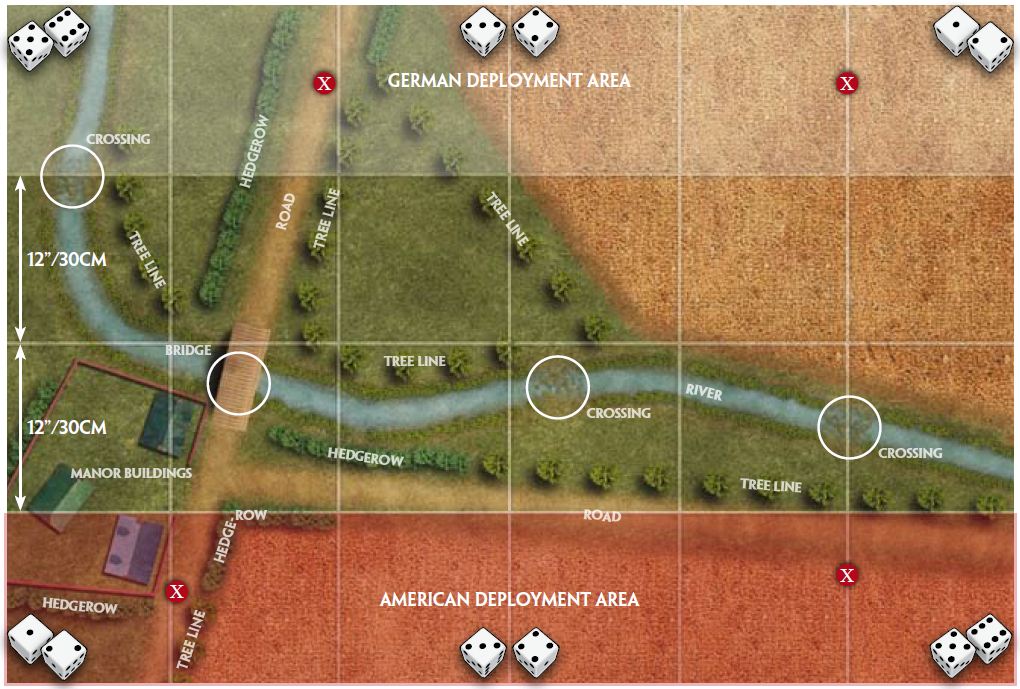
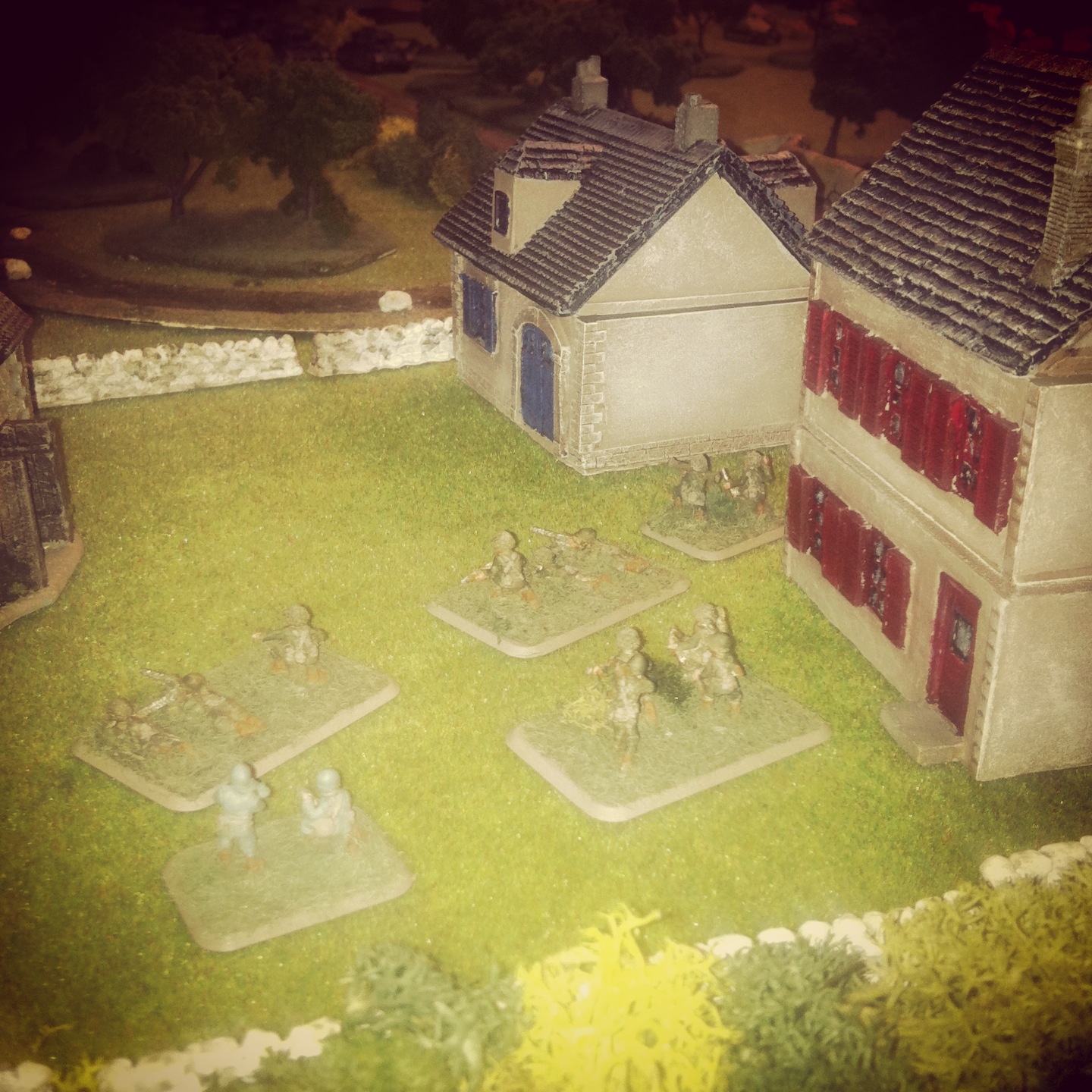
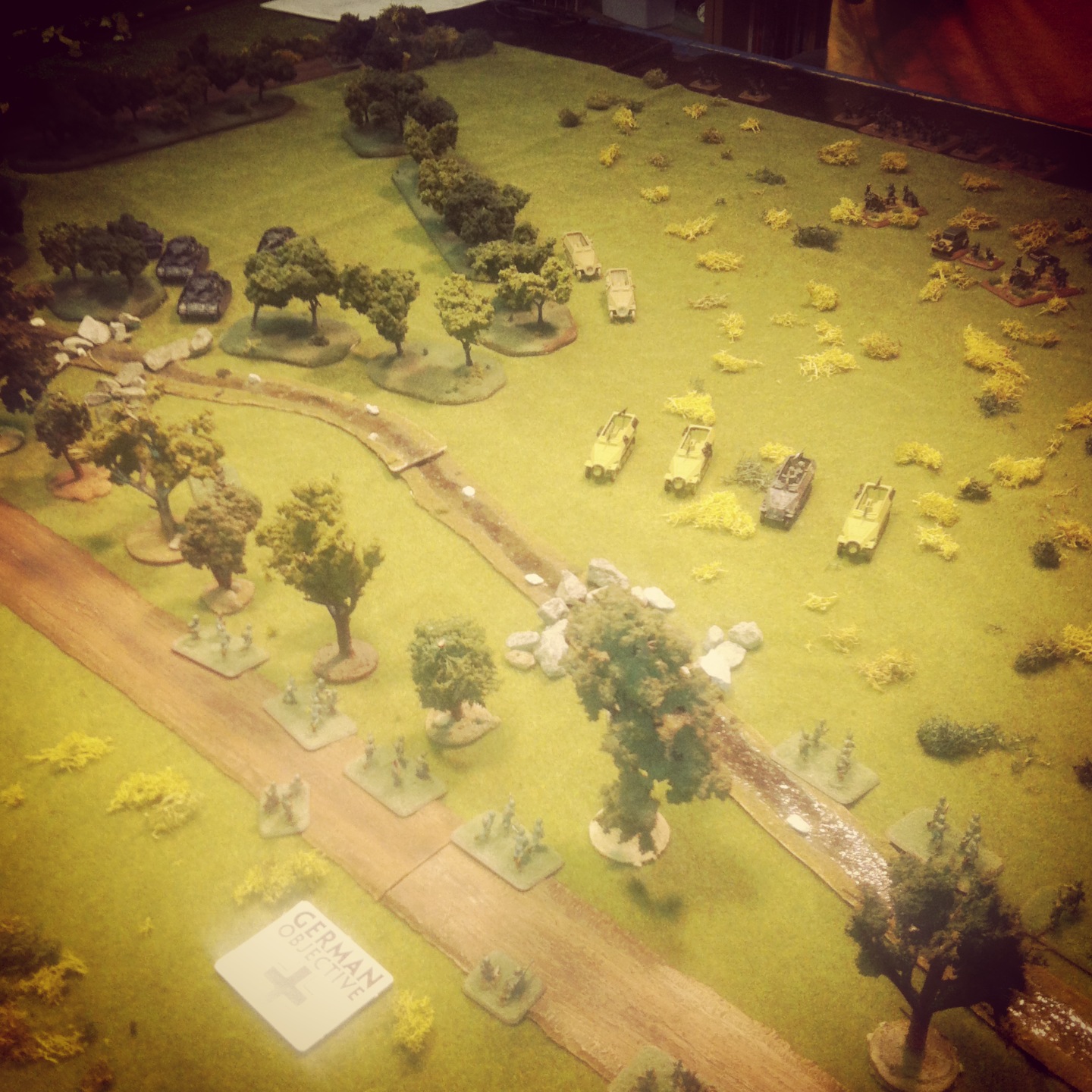
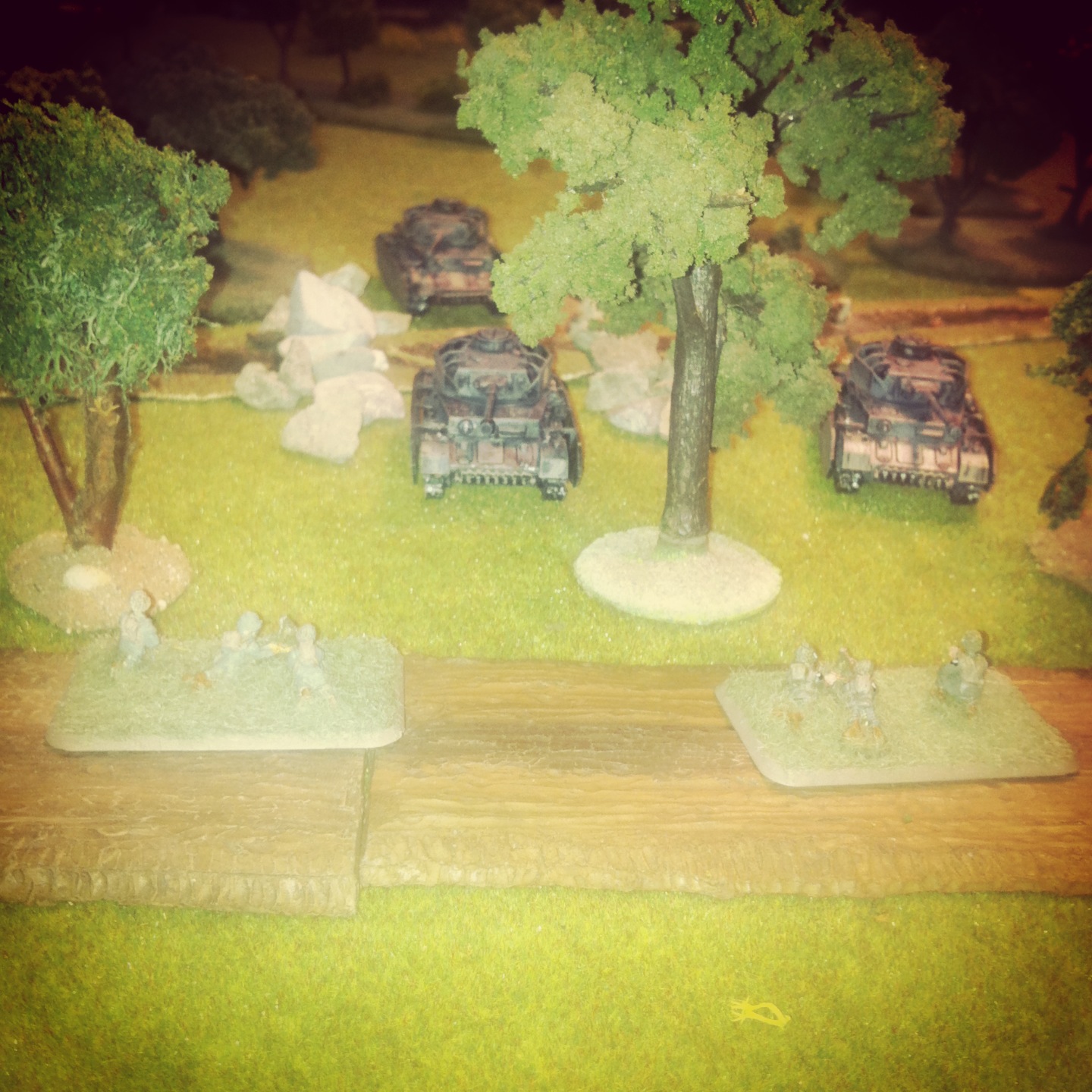
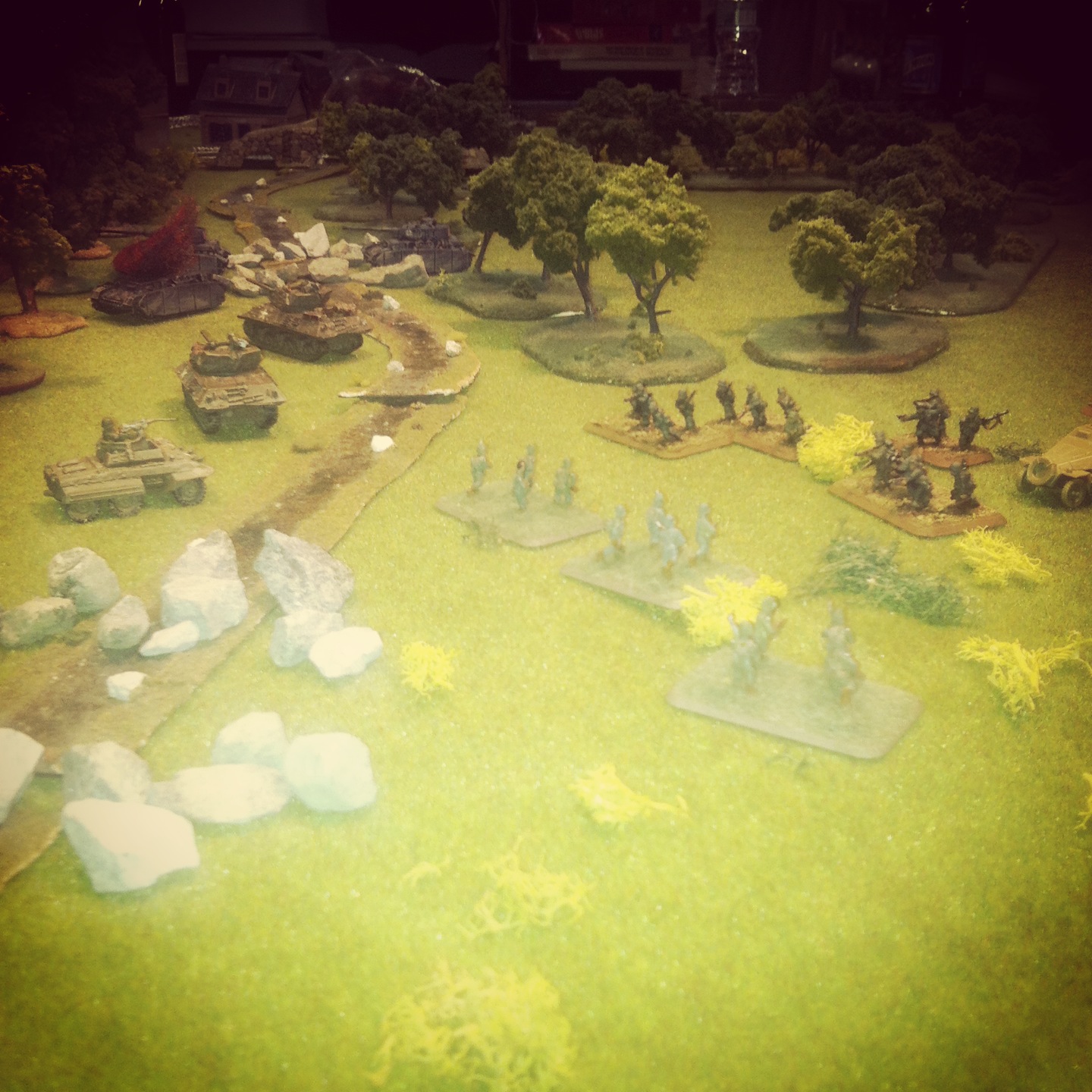
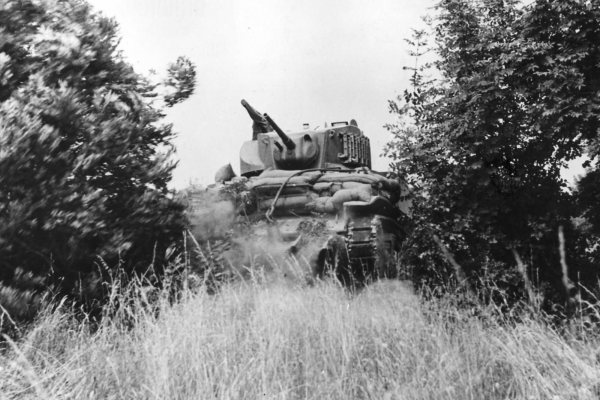
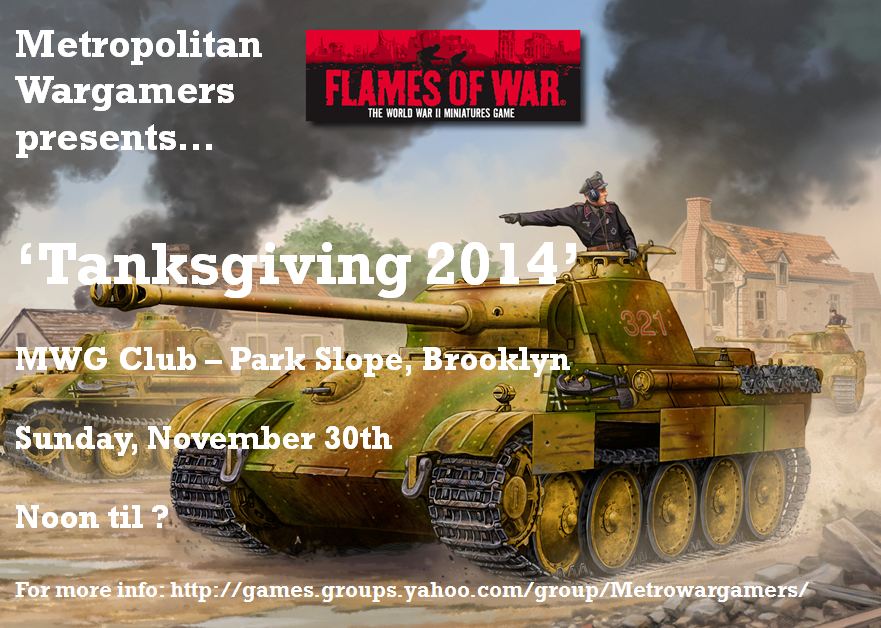
For the second year in a row, we’ll be hosting a day of armored Flames of War tank battles on Sunday November 30th at noon at Metropolitan Wargamers in Park Slope, Brooklyn. At last year’s Tanksgiving 2013 we hosted about ten players stretched over two tables participating in Early War Africa and a Late War Europe scenarios. This year we’ll be running multiple Late War Europe games using 1500 points of armored forces on a side. We’ll have plenty of US, British, Germand and Russian models on some gorgeous tables, so experienced players can bring their own forces or newcomers are welcome to just come along, move some armor, roll some dice learn the game.

The event will be held at Metropolitan Wargamers at 522 5th Street in Park Slope, Brooklyn (enter through basement level). Visitors pay just $15 and regular club members are free. The event will be a great opportunity for new people to meet some of us at the club and experience the best and oldest wargaming community in New York City. If you’d like to come, RSVP via our club’s Yahoo group.

I Ain’t Been Shot Mum: Panzer Lehr Counterattack Campaign – ‘Morning of the 902nd’ July 11, 1944 Scenario

OLYMPUS DIGITAL CAMERA

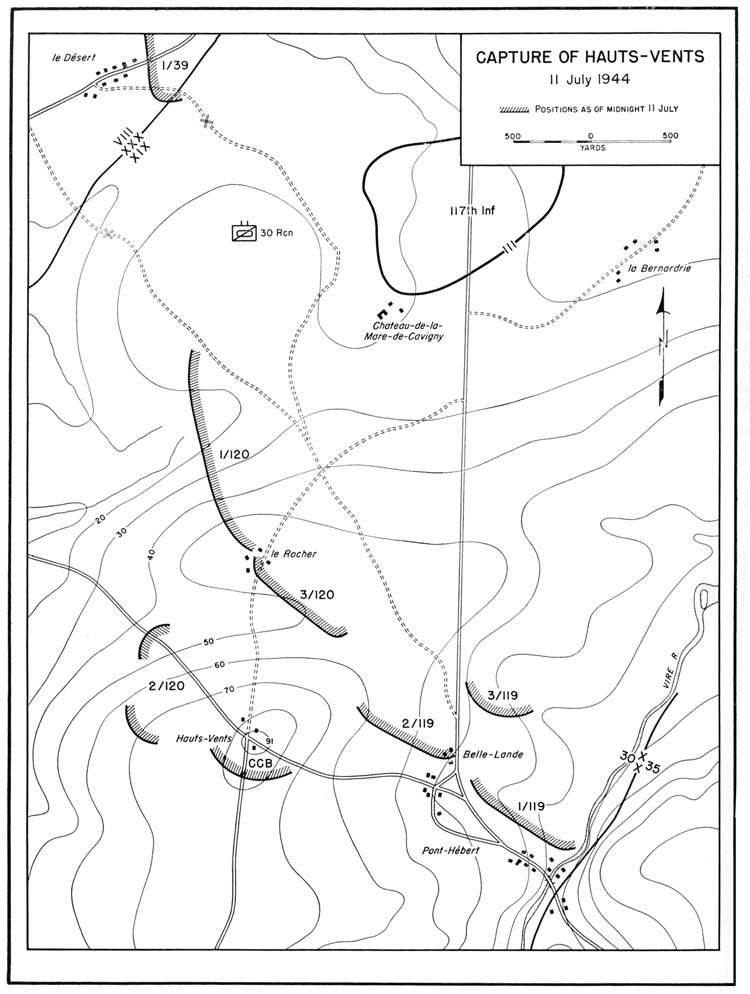
The battle near Hauts-Vents was a two-day affair between the US infantry and armored forces and German Panzer Lehr Division. After a day of intense combat on July 10, 1944, US forces were warned of local movements of the 902 Panzer Grenadier Regiment toward Hauts-Vents. With a German counterattack expected in the early morning hours of the next day, American infantry and armor prepared for a defensive fight under the cover of darkness and foggy, damp weather among the dense bocage hedgerows and under cover of the strong French buildings.

HVJuly44MapMap of the battle at Hauts-Vents, July 11, 1944

(via US Army Center of Military History)

After a first game loss at Hauts-Vents by the Germans, we continued our campaign at Metropolitan Wargamers in Brooklyn, NY this past week. The second game from the “Panzer Lehr Counterattack” mini campaign from the Heroes of Omaha and Panzer Lehr scenario book from Skirmish Campaigns is called ‘Morning of the 902nd.’ The game uses the same terrain set-up as the first scenario, but this time focuses on the German attempt to recapture Hauts-Vents on July 11 after losing key objectives to the Americans the day before. The game begins under pre-dawn darkness over wet ground with US platoons in hidden positions at the north end of the table and the Germans advancing under blinds from the hill position to the south. The Germans must retake the field by capturing two of the three objective buildings at the center town.

IMG_4251Germans deploy on blinds looking to take back the town

IMG_4253Germans blinds rush forward and immediately hit a minefield

IMG_4254A German platoon encounters a minefield and takes heavy casualties

The German advanced on blinds from Hill 91, making a hasty frontal push straight for the town. On the German left, mechanized Grenadiers mounted in Sd. Kfz 251s roared their engines and drove straight into a minefield at the bocage at the bottom of the valley outside town. Making matters worse, American machine guns hiding in the dense hedge sprayed the German line with fire. German infantry and half tracks fired back, destroying one US machine gun team and forcing a retreat of the other to the center of town. At the end of the firefight, the German commanding officer escaped but three fire teams in one platoon took heavy damage, forcing them to fall back.

IMG_4256The German Panzer IV column exposes two Shermans behind a farmhouse

IMG_4255The lead German Panzer IV is destroyed, blocking the road

IMG_4312Panzer IVs switch routes, making for the American flank

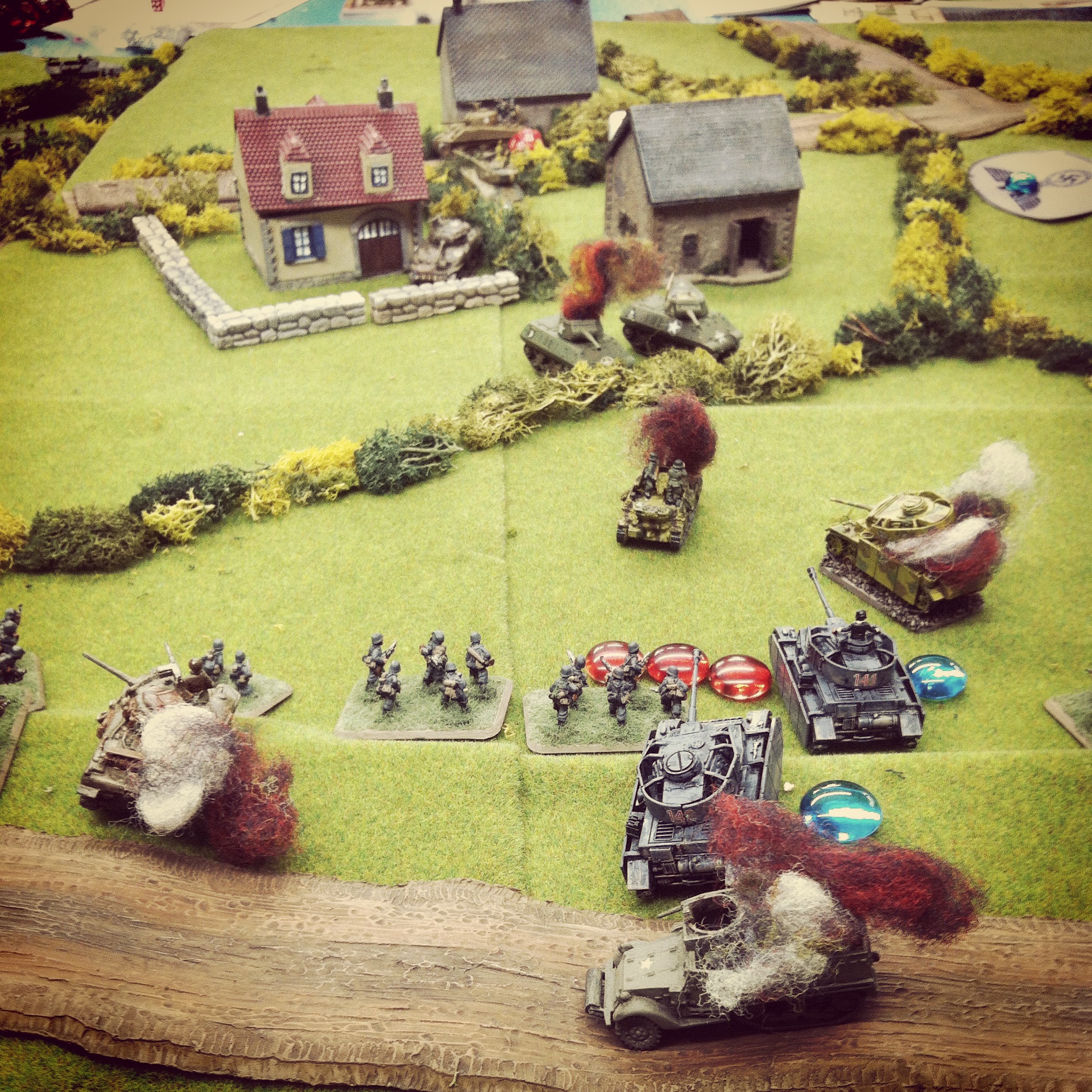
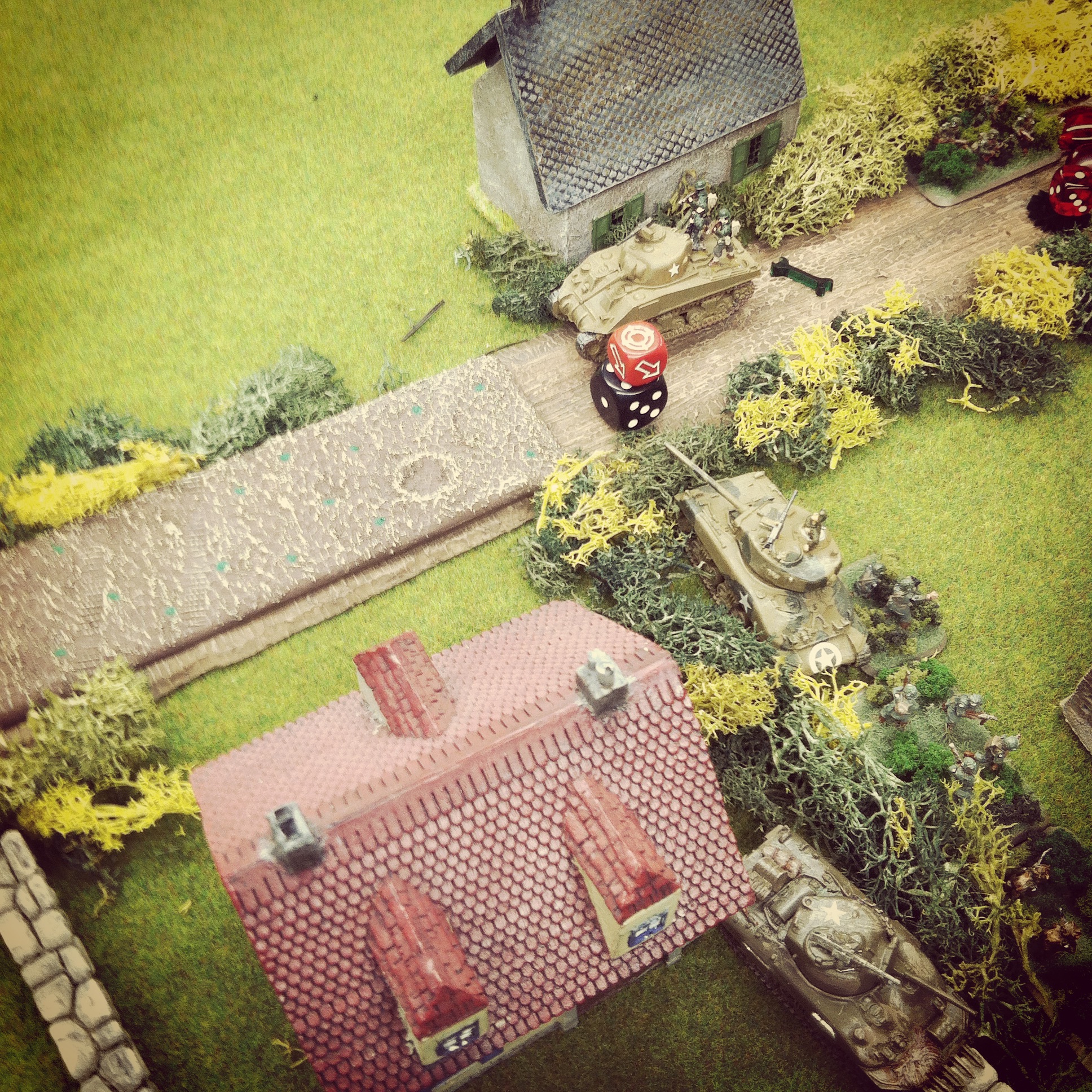
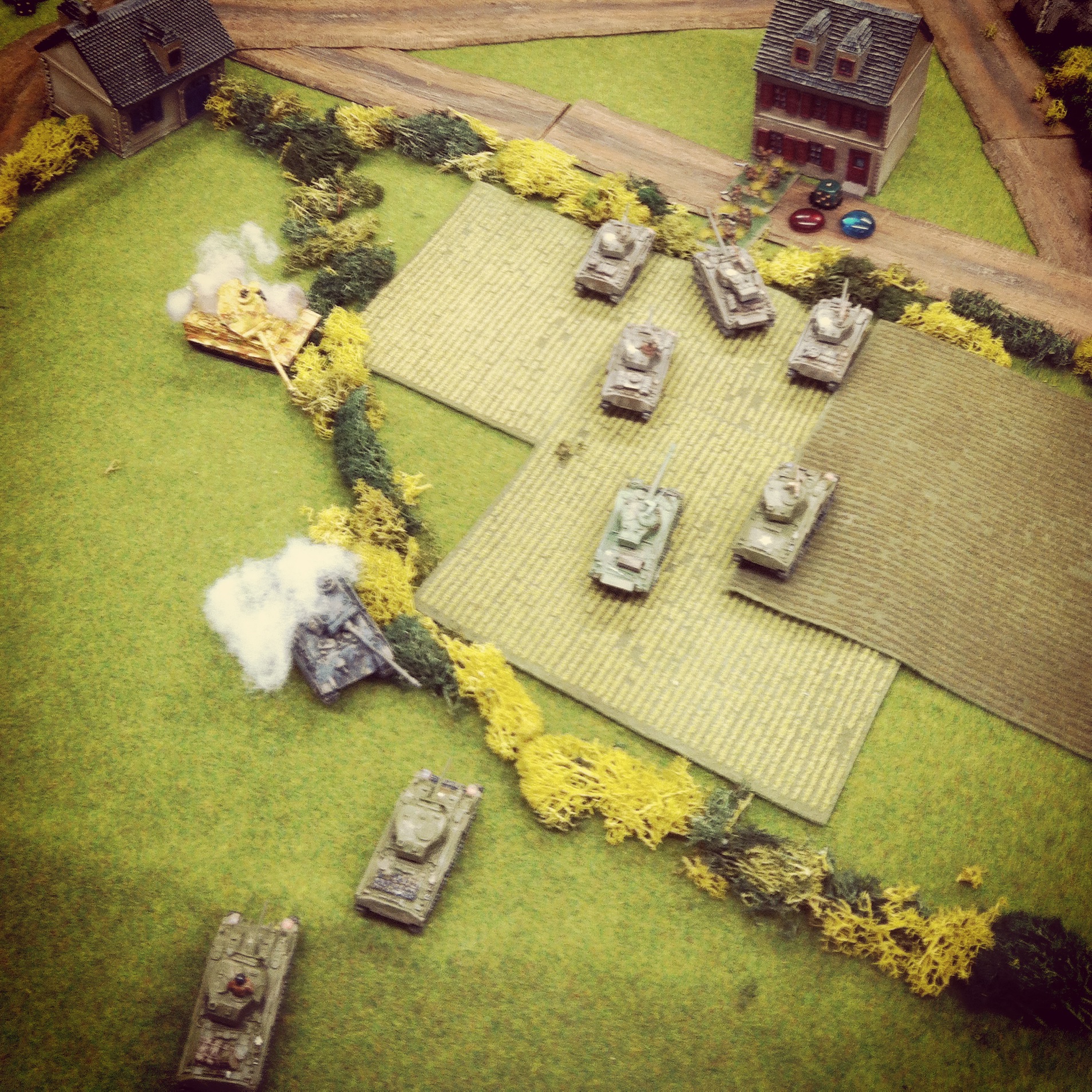
On the German right, things didn’t go much better. A column of Panzer IVs drove on the main road for town, accompanied by a a Grenadier platoon closing in on a farmhouse they had lost the previous day. Waiting hidden at the stone cottage were two M4 Shermans which opened fire at the lead Panzer at close range , leaving it a burning hulk blocking the road forward. Closing in from behind, Grenadiers ran to engage the tanks with a Panzerfaust shot on their rear armor. Several turns of fire were exchanged between the Shermans and Panzer IV second in line as the two rear Panzers reversed direction back to the fork in the road. A few rounds later both Shermans were destroyed, and the surviving three Panzer IVs and the unharmed Grenadiers were heading for the east side of the town.

IMG_4313Panzer IVs and Grenadiers move on the US left and expose a Sherman platoon at an objective

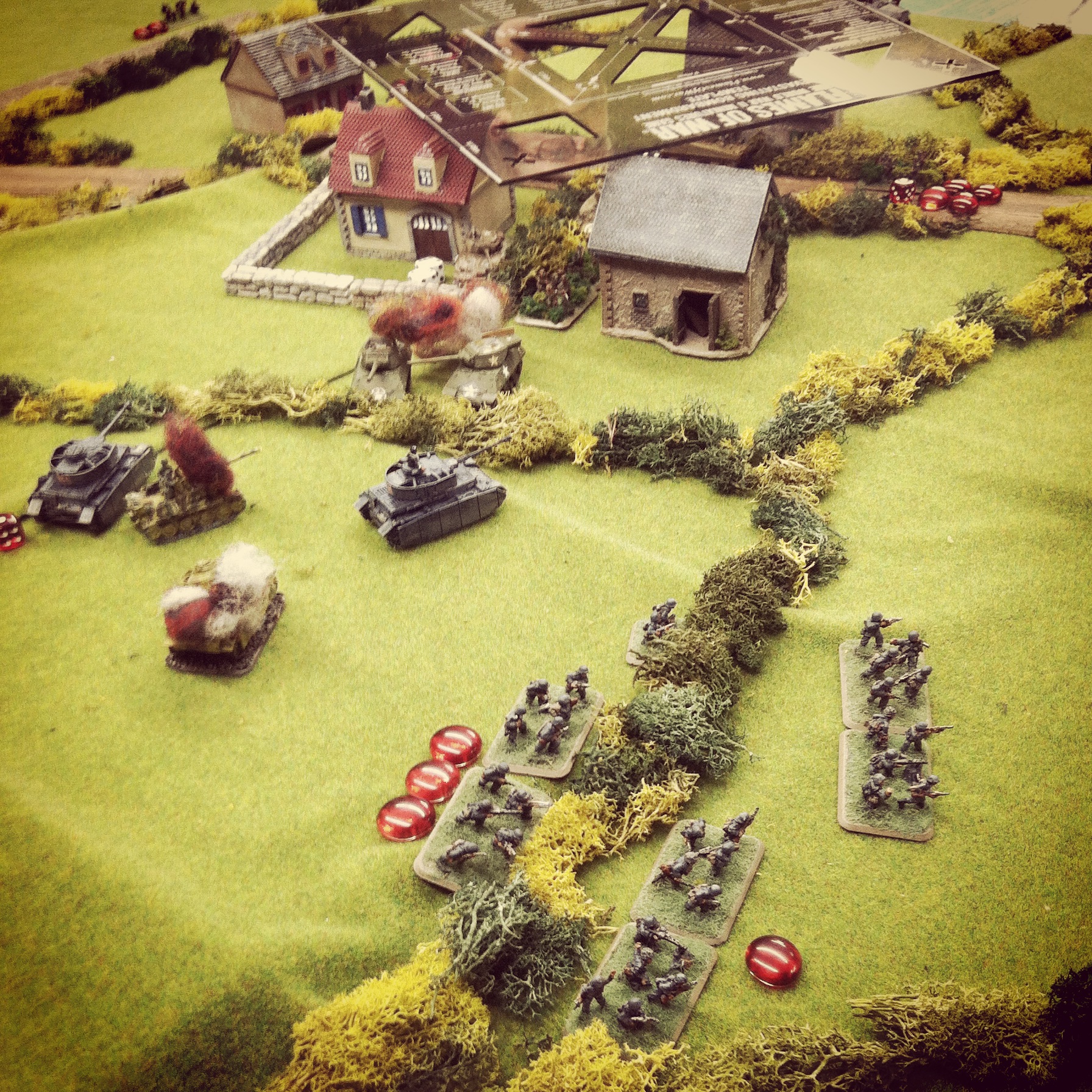
The Germans continued their advance up the road on the US left, looking to flank the town. The three Panzer IVs were slowed over the barbed wire blocking the road, and one bogged for the remainder of the action in soggy ground. German infantry spotted a Sherman platoon camped out around one of the objectives and then ran over and around the bocage looking to avoid fire in the field beyond.

IMG_4314US Wolverines take aim at a German Panzer III flame tank in the open

IMG_4316US and German armor exchange fire, leaving a Wespe, Panzer III and M10 Wolverine in flames

Two remaining German blinds rolled to the field as US tank destroyer M10 Wolverines appeared behind the bocage at the town. The blinds revealed themselves as a Panzer III flame tank and Sd. Kfz. 124 Wespe and both turned to engage the Wolverines. Two quick shots from the flame tank failed to harm the open-topped Wolverines which returned fire and blew up the Panzer III. The German’s mobile gun fired back, destroying one of the Wolverines before subsequently being wrecked by US anti-tank fire. With German armor burning in the field, the Grenadiers continued to sprint over the open area and looked to swing into the town from the rear.

IMG_4317Flares illuminate the town objectives and German mechanized Grenadiers push forward

Back on the German left, several Grenadier platoons on foot and mounted in their half tracks moved to the US left in the town as the early morning darkness was lit up with a flare. Two fresh American rifle platoons revealed their positions in two of the objective buildings and gunfire was exchanged with the German platoons moving toward the town. Despite their cover in the stone building, the combined arms fire from the Germans ousted one US platoon from their building and the other took steady damage.IMG_4318Panzer IVs destroy the final M10 Wolverine as German infantry rush to flank the town from the rear

On the other side of town the two functioning Panzer IVs rolled across the field, shooting at and destroying the last American tank killer. Under continued cover from their Panzers, the Grenadier platoon continued slipping across the field, climbing over the bocage and looping around to the American rear.

IMG_4319A direct hit from Germany artillery arrives in the middle of the American position

With German infantry looking to encircle the town and two Panzers wheeling to engage the Shermans at the center of town, a German artillery barage hit dead center amid the objective buildings. As the smoke cleared, only two Shermans remained fully operational and the surviving US rifle platoons were on the run. As early morning light began to break, the Americans heard encroaching German voices from the hedgerows from every side of the town. The Panzer Lehr counterattack had been a success, and the Americans chose to cut their losses, regroup and fight again.

I Ain’t Been Shot Mum: Saint Lambert-Sur-Dives 1944 Scenario

stlambertsurdives1944Just over two months after the Allied D-Day landings, the Normandy campaign marched toward a conclusion at the Battle of the Falaise Pocket in mid-August 1944. With orders not to withdraw, a last ditch German defense was cobbled together from surviving Panzer divisions in an area about 20 miles south of Caen. Over a nine day period desperate fighting, the German defenders were eventually encircled by overwhelming British, Canadian and US forces. Aside from tens-of-thousands of surrendering troops, Germany had suffered enormous losses in its dwindling tank forces. Elements of the German 7th Army managed to elude capture and slipped back to the German border, although they too took heavy losses in men and and equipment.

VCCurrieMajor David Currie, winner of the Victoria Cross for his actions at Saint Lambert-Sur-Dives in August 1944

On August 18, 1944, Canadians from the Argyll & Sutherland Highlanders and armored South Alberta Regiment made way for Saint Lambert-Sur-Dives. The objective was to take and hold the town, thus preventing more Germans from slipping out of the Allied encirclement. Over three days of infantry fighting and tank duels in and around the town, heavy losses piled up on both sides. With dozens of vehicles and tanks destroyed, the surviving Germans surrendered to Major David Currie. Currie’s actions at Saint Lambert-Sur-Dives earned him the Victoria Cross, the only one earned by a Canadian during the Normandy campaign.

IMG_4093
View from the north entry point for Canadian troops in the IABSM Saint Lambert-Sur-Dives scenario

The rulebook for I Ain’t Been Shot Mum from Too Fat Lardies includes a scenario for the battle at Saint Lambert-Sur-Dives which we recently ran at Metropolitan Wargamers in Brooklyn, NY. Using 15mm terrain, we set up the table with a series of roads intersecting at the town sitting at the edge of a hill surrounded by fields, orchards and hedgerows.

IMG_4092View from the south of the IABSM scenario — the Canadian objective is the crossroads at the lower right

My first Canadian platoons arrived under blinds along the road to the north heading straight for the town where the Germans waited. With several turns of movement under blinds, the plan for each side was quickly exposed in two main areas of the field. My two platoons of M4 Sherman and Firefly tanks made straight down the main road toward the crossroads objective. To stave off the Canadian armor, the Germans quickly set up their Panther A and Tiger tanks behind a hedge southeast of town. The other German armor, two Panzer IVs operating without a commander present, set up in the orchard south of town and covering the other main road to the objective.

IMG_4095German Panther and Tiger tanks overlook the main road into Saint Lambert-Sur-Dives

IMG_4096Panzer IVs occupy the orchard at the southwest corner of Saint Lambert-Sur-Dives

Two platoons of Canadian rifle infantry crossed the river. One made way to the orchard just north of town at the middle. Meeting them was a single, smaller German rifle platoon. The veteran Canadians quickly destroyed half of one fire team from the tired, German regulars. The surviving Germans pulled back to take up position in the buildings in town as the Canadians pursued.

IMG_4094Canadian and German troops open fire across the stream just north of Saint Lambert-Sur-Dives

IMG_4098Canadian infantry press forward through vicious fire at the center of town

The second Canadian rifle platoon made way through the buildings nearby their fellow Canadian tank platoons. Once close enough, the Canadian rifles exposed a German platoon armed with a frightful MG42 camped out in a farmhouse on the eastern edge of town. Thus all the infantry settled into a series of firing positions at the center of town with the Canadians taking fire from German rifles and machine guns on two sides.

IMG_4097Canadian and German tanks exchange fire to the southeast of Saint Lambert-Sur-Dives

At the farm to the east, a game-long tank duel erupted with the Canadian Shermans and Firefly tanks firing from positions behind the French farm’s buildings. The German Panther and Tiger fired from light cover of a hedgerow over the fields beyond. In two turns of fire, the Panther sat in flames and the Sherman platoons were able to focus on the Tiger which unsuccessfully returned fire over repeated tries. One Panzer IV shot harrassingly at the Sherman platoon closer to town which was forced to turn its guns away from the Tiger to return fire.

IMG_4100With German armor aflame, Canadian tanks roll to seize the objective

Back at the town’s center, the Canadian infantry took heavy casualties from German rifles shooting from building windows and the Panzer IVs firing from the orchard. The breakthrough for the Canadians came as the Tiger was destroyed and the Shermans were able to fire up their engines and make way across the fields. Turning the Sherman and Firefly guns to the orchard, the Panzer IVs were quickly destroyed. One more fresh German rifle platoon finally moved to occupy buildings in the town, but by then the path was wide open for the Canadian armor to roll unmolested to the crossroads objective and victory.

This was our first IABSM game using a lot of armor, and the unbalanced number of Canadian tanks firing and moving without a single loss clinched the game for the Allies. The veteran Canadian rifles had also served their purpose of locking down the town in a pitched battle with their numbers and quality allowing them to hold out against their German foes.

Seventy years ago at Saint Lambert-Sur-Dives the German surrender was captured by a a film crew, and bits of the film survive today (see below). The exploits of the Canadians in the Falaise Pocket led by Major David Currie helped seal victory for the Allies after months of fighting in Normandy, and his miniature tank crews won the battle again on our tabletop historical repeat of this important victory at one more crossroads in the French countryside.

Newsreel footage of Canadian troops in action and the German surrender at Saint Lambert-Sur-Dives in August 1944

Downloading: Valiant Hearts: The Great War

Valiant-Hearts-Logo

World War I has quickly moved from news to memory to history in the past 100 years, especially in the United States. While there are certainly plenty of grand remembrances being made of the lingering historical and political ripples of the Great War, the best parts of historical memory often continue to ring truest to us through personal stories. This is the reason why a classic book like All Quiet On The Western Front or the more recent graphic novel The Harlem Hellfighters resonate still in telling the story of WWI.

So, in this centenary year it’s a pleasure to have the distant memory of WWI retold in a vivid modern way with Valiant Hearts: The Great War from Ubisoft. Like any good war story, Valiant Hearts isn’t really about guns and glory, but more about love, friendship, connection and dedication humans strive to maintain when faced with the most hugely catastrophic events.

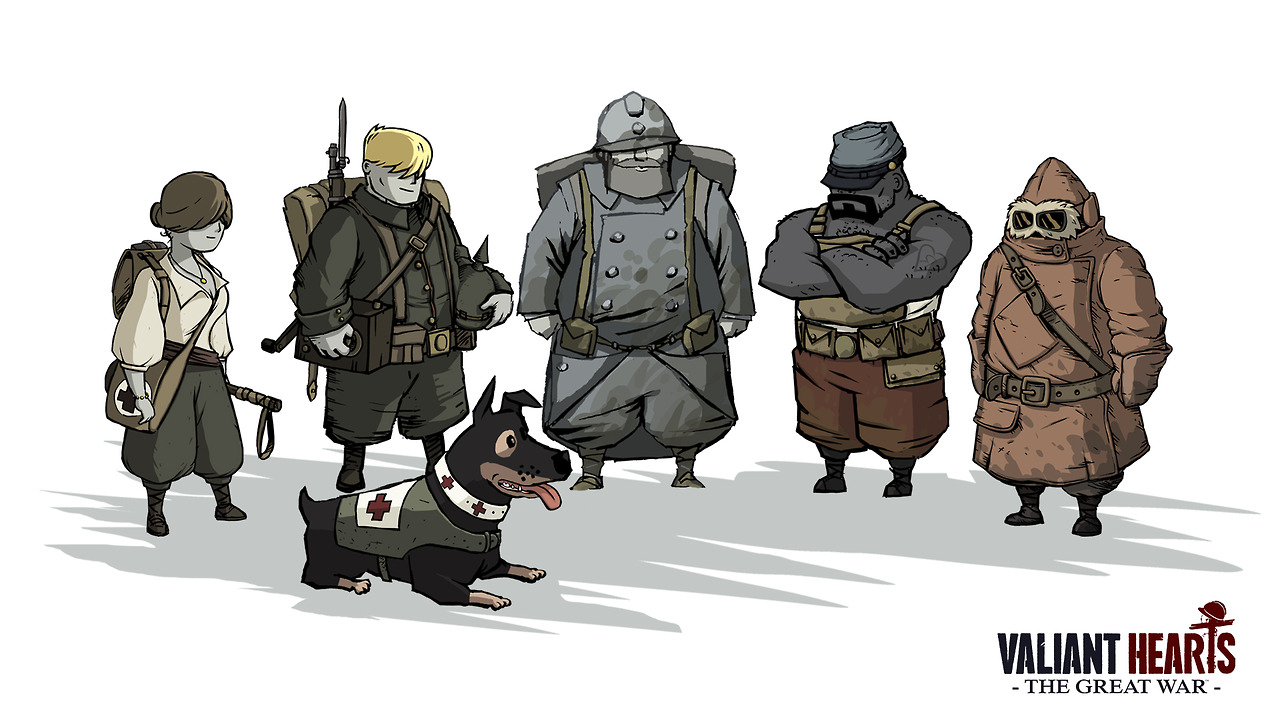
ValiantHeartsCharactersMain cast of characters from Valiant Hearts: Ana, Walt (dog), Karl, Emile, Freddie and George

The cast of characters presented in Valiant Hearts represents a cross-section of nationalities swept up in the European conflict. The main character is Emile, a French farmer who is pressed into service at the outbreak of the war. His daughter is in a relationship with Karl, a German who is exiled from France at the beginning of the war and subsequently compelled into service with the German army. Just after completing basic training, Emile meets Freddie, an American ex-patriot living in Paris and volunteer in the fight against Germany. Once in the trenches, Emile befriends a military service dog named Walt. A fast-driving Belgian nurse named Ana completes the main cast of characters, although a British pilot named George does make a cameo later on in the game.

vhtraining

Emile completing basic training in Valiant Hearts

With a minimal amount of introductory back story of the outbreak of WWI, the game begins with Emile marching off to some quick basic training which introduces a player to the basic climbing, attacking, picking-up and throwing actions. Once at the front, the game quickly moves into the more familiar trench warfare settings which were the hallmark of the war.

For gamers looking for WWI first-person combat wielding a bayonetted rifle or driving a clattering tank through No Man’s Land, there will be disappointment. Although death and destruction surrounds the game, there is surprisingly little direct combat experienced by the player. The entire WWI setting and all its trappings of planes, tanks, artillery and machine guns become tools to propel the characters to action, more like a violent ghostly hand lurking in the background than the main focus of the action.

vhgp6

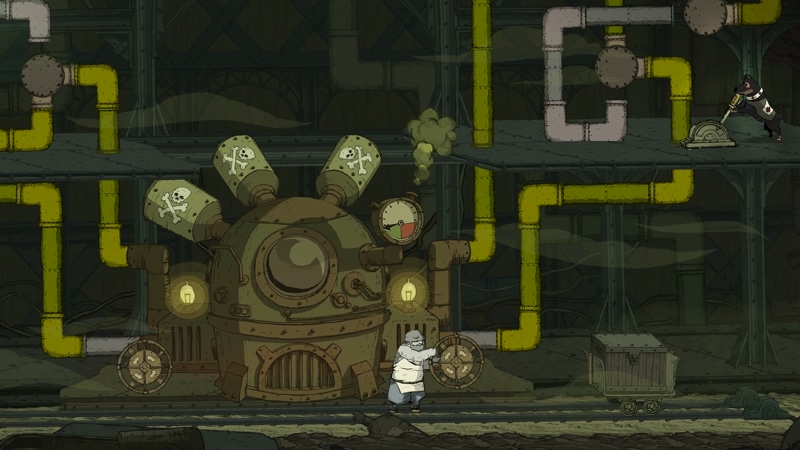
A typical puzzle challenge in Valiant Hearts

As a game, the main focus of Valiant Hearts is at its core a platform, puzzle and adventure game. It is a game set within the war, but the playable characters are not working on racking-up body counts. More typically, a character will work their way through completing a series of tasks to progress to the next level– break down a wall, crouch in a trench, dig a tunnel, climb a ladder, crank a wheel, set a charge and blow up a bridge.

Different characters in the game also work in combination to get puzzles solved and sometimes work with non-player characters. For instance, the burly Freddie is good at smashing down walls, doors and barriers with his bare fists while Emile is handy at digging and Ana provides care to wounded soldiers on and off the field. Characters can also order commands to Walt to move and fetch objects from areas unreachable by the other human characters, such as crawling under clouds of poisonous gas.

vhgp1

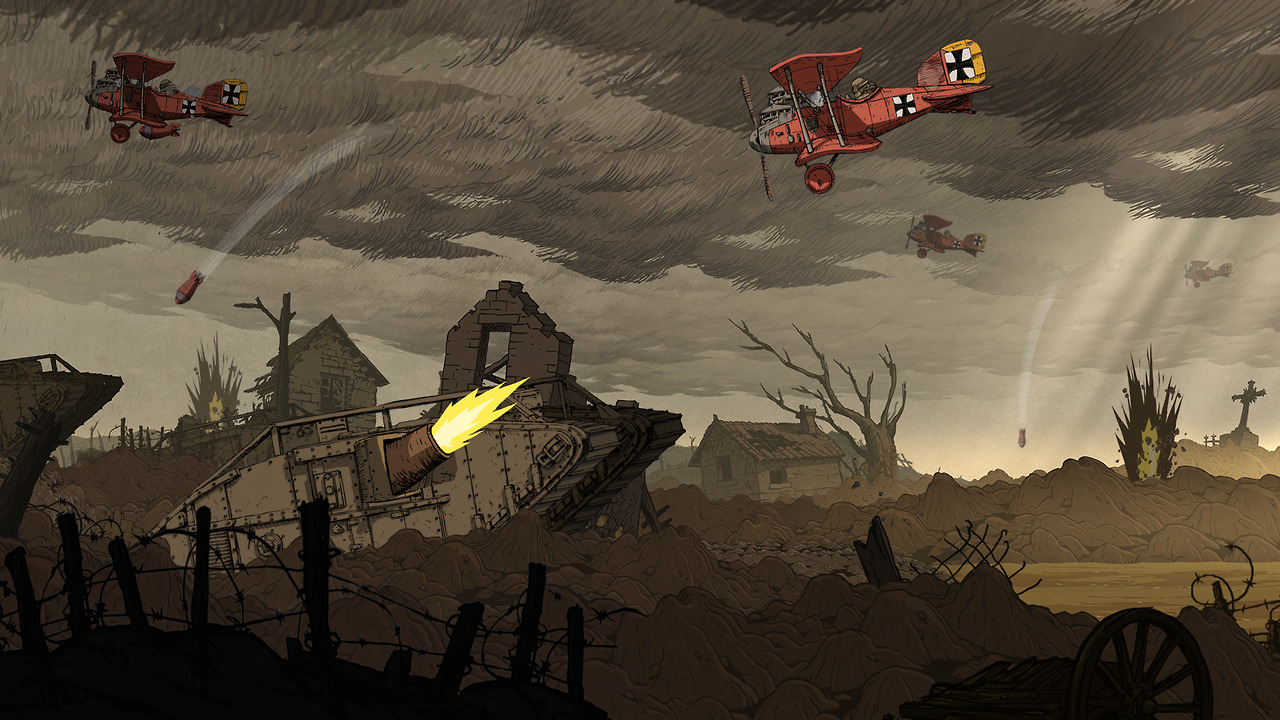
Richly accurate artwork of the Western Front and equipment such as tanks and biplanes set the scene in Valiant Hearts

Beyond the entertainment of the puzzle adventure gameplay, Valiant Hearts is rich in historic detail. A number of short behind-the-scenes developer videos on the game’s website show the depths to which the team at Ubisoft went to paint a vivid picture of WWI using primary documents. Even within the cartoonish game animation, there’s a ton of detail in the flags, uniforms, weapons, vehicles and settings throughout the game. The diversity of nations participating in the war is well-represented, so we not only see the typical British, German, United States and French soldiers but also those from countries like India. To keep the nationalities with their mix of languages consistent, dialogue among characters is limited to emotive symbols and vaguely accented but recognizable foreign mumbles.

Valiant Hearts: The Great War_20140625183402

Historical photos and background fill out the detail in Valiant Hearts

As Valiant Hearts progresses, gamers and would-be historians will find a wealth history laced within the action. Brief cut-scenes do well to set chapters within regional maps and shifting events throughout the war. Pop-up screens provide historical facts and beautifully color-tinted period photographs of life, equipment and stories from WWI. Players who complete puzzles within the game also collect historic artifacts such as identification tags, a whistle, a helmet or actual letters from soldiers of multiple nations. Again, additional pop-up windows takes a player back to the primary sources from which each object is drawn.

Both my 14-year-old son and I have spent time playing through Valiant Hearts this week. As a hardcore gamer, my son found the play pretty rudimentary by modern standards but my greener fingers did find at least some initial challenge to the puzzles. What we both equally delighted in was the art and historical documentation which was wrapped up around the simple human story unfolding throughout the game.

Far away from the politics, grand plans and horrors of combat, every war throughout history has come down to humans and relationships torn asunder or brought together in wartime. This is the journey of the characters in Valiant Hearts: The Great War and one well worth the trip back a century in time.

Valiant Hearts: The Great War is available for PS3, PS4, Xbox 360, Xbox One and Windows PC.

Flames of War: Metropolitan Wargamers Infantry Aces Campaign

MWGInfantry Aces

Two weekends ago we kicked off a Flames of War Infantry Aces campaign at Metropolitan Wargamers in Brooklyn, NY.

A friend of the club and organizer of the campaign has created a special Infantry Aces blog to track the campaign’s progress throughout the summer. The site will be updated weekly as the battle unfolds with after action reports, lots of photos and tracking of each player’s progress in the campaign.

While the battle rumbles on, here’s a brief look at the forces we’ve had fun researching, modelling and painting specifically for our campaign for Italy.

Allied Forces

FOWIAAllies

(clockwise from top left) 504th Parachute Infantry, 92nd Infantry “Buffalo Soldiers,” Gurkha Rifles and members of the 2nd New Zealand Division

Our Allied forces are a mixed group from the Road To Rome book and reflect the mutlinational forces which came together in the late war Italy campaign to break the Axis lines. From the United States, the 504th Parachute Infantry Regiment is bringing their experience to the field after having fought for years from North Africa and Sicily in 1943 to Operation Market Garden to The Battle of The Bulge in 1944. Joining them, are the untested 92nd Infantry Division “Buffalo Soldiers,” the first African-American infantry to fight as wholly-segregated unit in the war.

Allied with the US troops are some unique UK Commonwealth forces. The Indian Gurkha Rifles had a long history in service of the British dating back to the mid-19th-century, and their skill in close combat and rocky terrain would serve them well in Italy. The  2nd New Zealand Division served most of the war in North Africa and hopping around the islands of the Mediterranean until joining the Allied effort to break the Axis lines severing Italy from the rest of Europe.

Axis Forces

germanyia (clockwise from top left) Fallschirmjagers, Hermann Göring troops and Grenadiers

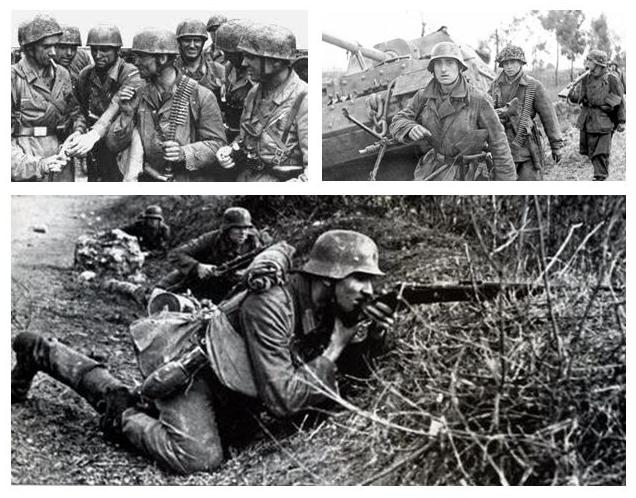
Using the updated Fortress Italy book, our Axis players have fielded some of the classic, war-hardened forces whose mission it was to hold the line against the Allied push up the Italian Peninsula. The 1. Fallschirmjägerdivision in Italy had already proven themselves throughout Europe with wide-ranging early war operations in Denmark and Norway, the Netherlands, Crete and the invasion of the Soviet Union with Operation Barbarossa.

Two other veteran companies fill out the Axis forces. The Hermann Göring Fallschirmpanzerdivision saw action throughout Europe and Africa before fighting in Italy. Finally, the 362.Infanterie-division had seen a long war (including the Battle of Stalingrad) by the time they joined the final Axis defense of Italy.

The Campaign Begins…

IMG_3685

Recent FOW Infantry Aces campaign action at Metropolitan Wargamers

We’ve got two weeks of campaign games in so far, and playing with small infantry forces of 500 points has been a refreshing break from the larger FOW games in which we all usually play. Special rules, varying troop ratings and small tables clogged with Italian terrain have also added to the challenges and enjoyment we’ve all had so far. There’s a lot of gaming to do as the campaign escalates over the coming weeks to 700 and 900 point companies with added support. Check back frequently for more of the action over at the Infantry Aces Metropolitan Wargamers Italian Flames of War site.

“The Harlem Hellfighters” by Max Brooks

harlemhellfightersbook

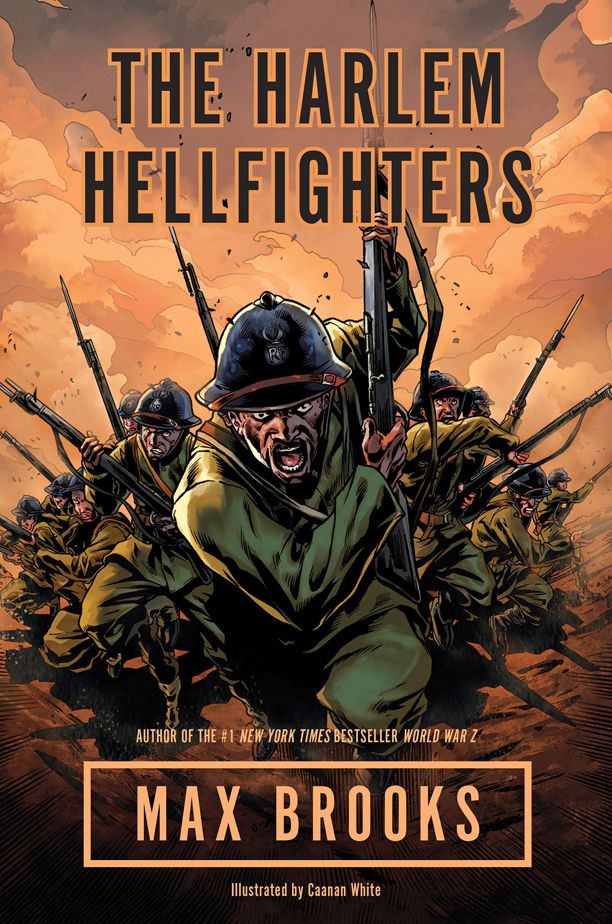
My interests in American history, graphic novels and little-known accounts of war have recently intersected with gripping The Harlem Hellfighters by Max Brooks. Written by Brooks — the well-known author of World War Z — and illustrated by Caanan White, The Harlem Hellfighters recounts the struggles and victories of the 369th Infantry Division as the first African-American regiment to see combat in World War I.

369th poster

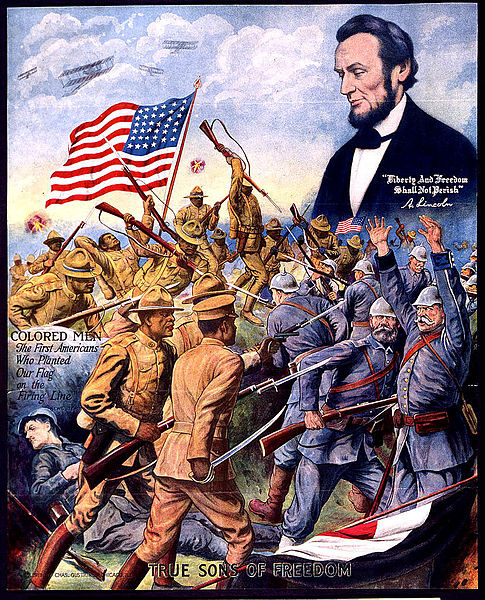
Period poster for the 369th Infantry Regiment

The 369th was composed of a volunteers from many backgrounds reflective of the Harlem Renaissance era’s diverse black population crowding the streets of northern Manhattan. The volunteers included Caribbean and African immigrants, migrants from the American South and native-born New Yorkers. As a green fighting force, the urban laborers, artists, musicians, farm workers and students who fought as the Harlem Hellfighters went on to distinguish themselves in the late stages of WWI and became among the first American Expeditionary Forces to push over the hard-fought German lines.

369th band

James Reese Europe (left) and members of the 369th Infantry Regiment marching band

Brooks has a long-held interest in the Hellfighters, and he had tried unsuccessfully over the years to bring a script to movie or television production. Following on the international success of World War Z, Brooks decided on the graphic novel format to bring the Hellfighter story to a mass audience. Based on real characters in a fictionalized story, the book traces the regiment’s path from basic training in a Jim Crow American South to the trenches of Europe under the command of the French army. Even after winning distinction in early engagements, the members of the Hellfighters ran up against racism which followed them to Europe.

The story of band leader James Reese Europe forms just part of the tale, but is illustrative of both the acceptance of the arrival of black US troops and their rejection by the laws and traditions of white Europeans and their countrymen at home and abroad. Reese is largely credited with introducing jazz to European audiences, and although he would survive the war, he died soon after his return to the States at the hand of fellow band member. The mix of challenges, triumphs and tragedies on and off the field of battle makes the story of the 369th an incredibly compelling story every American should know.

369th trenches

Troops from the 36th Infantry Regiment in the trenches

The Harlem Hellfighters is illustrated in a jagged, dark style by African-American artist White amid pages crowded with rich individual character stories and broader narratives of an era marked by the horrors of modernized warfare as well as lynchings and street-beatings. To the interested reader, there are many jumping-off points into a deeper story of the 369th and their ripple-effects on 20th-century American race history still being wrangled with today.

The 369th arrived back to the States and were celebrated with a heroic parade in New York City. The 369th Infantry Regiment Armory in northern Manhattan still stands today as one of the few monuments to this often-forgotten chapter in a war which is also largely-ignored in our teaching of US history. For the veterans of the Harlem Hellfighters, their fight in Europe would continue back home through the labor and civil rights movements in the decades to come.

Just ahead of the book’s publication in early April, Sony Pictures announced it had acquired the rights to bring the story of the 369th to the big screen with production backing from Will Smith’s Overbrook Entertainment. With the The Harlem Hellfighters and the promise of a movie adaptation, hope springs anew that 100 hundred years on the American men of the 369th get the recognition they earned in spirit and blood.


Flames of War: Modelling Western European Terrain in 15mm

normandystuartterrain

I’ve had a lot of great feedback from the past year of posting after action reports for Flames of War games. Fellow players have been universally complimentary on the layout of my terrain used in my scenarios. With that, I’m increasingly being asked questions about the make of my models, where I buy them and how I achieve some of the other rerrain modelled  in my games.

Modelling terrain, like any aspect of miniatures wargaming, has to take into account the three main factors of skill, budget and time commitment. I find myself somewhere in the middle of all three categories, and I feel my level of personal investment in my terrain modelling is reflective of this. One of the many benefits of belonging to a club like Metropolitan Wargamers in Brooklyn, NY is the opportunity to share in our massed collections of terrain and create some pretty impressive-looking games.

As a longtime miniatures hobbyist with a passion for scale modelling, I wanted to share a quick round up of the current state of my 15mm terrain collection I use for Flames of War. To date, my FOW gaming has focused on the European Western Front, so the vast majority of my terrain focuses on buildings and other features appropriate for France, the Low Countries and Western Germany. All that said, let’s take a European tour in miniature…
markivposter

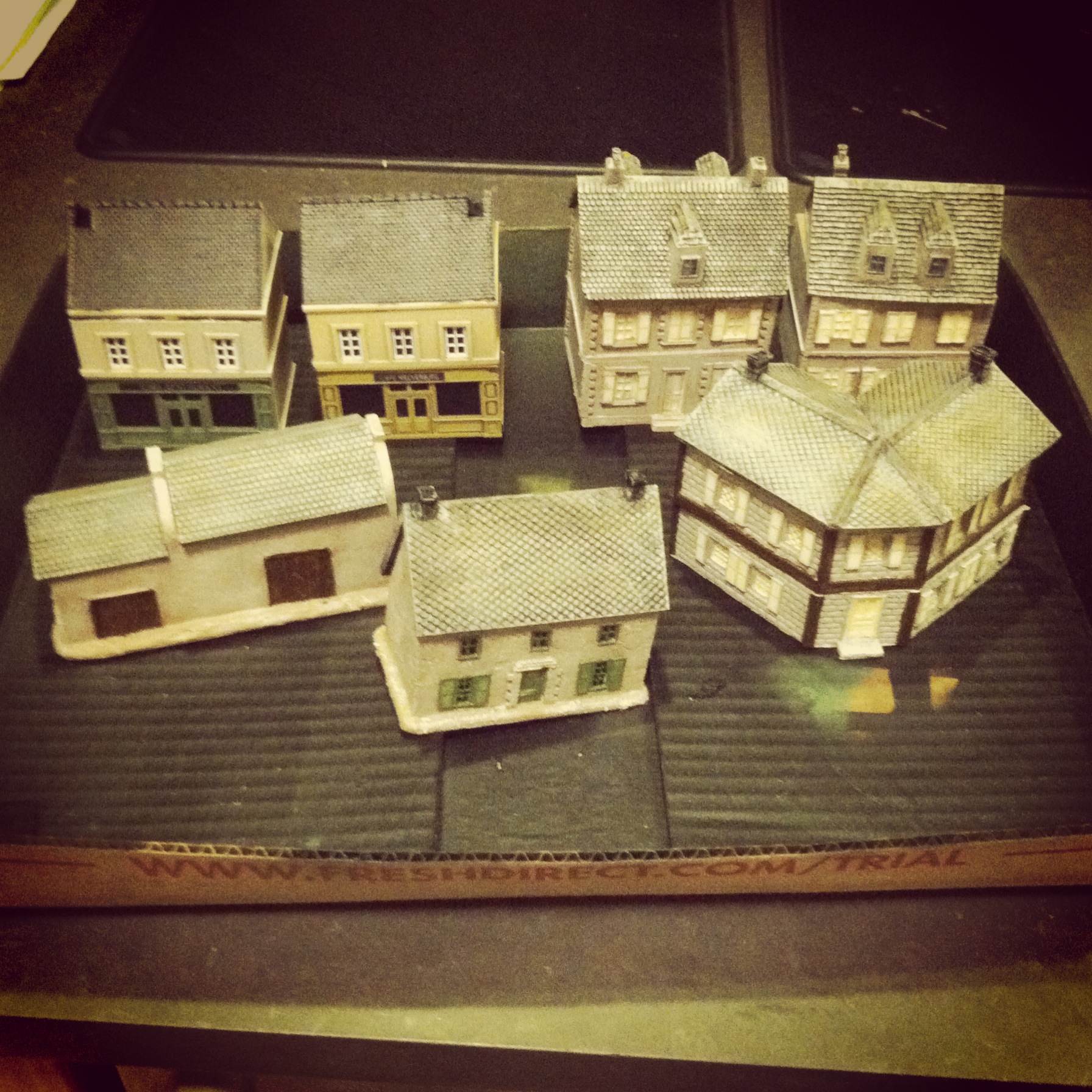
Any small town or rural tabletop Western European battlefield needs buildings — barns, houses, shops and cafes — not only for visual appeal, but to provide covering positions and even possible objectives during game play. FOW offers a fine line of pre-painted buildings but I find them to be a bit on the expensive side and toy-like. I also like to paint, so breaking up modelling little tanks and soldiers with some miniature real estate projects makes for a nice change to hobbying routine.

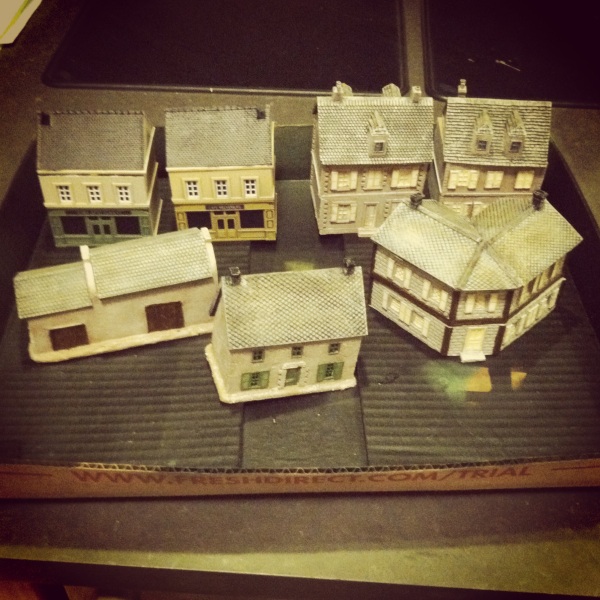
Last year I discovered the cast resin terrain produced by Mark IV Miniatures. As a second-generation wargamer, the owner of Mark IV obviously invests a great deal of care to his Western and Eastern front models. All the buildings come with removable multiple stories and roofs, making their use in FOW gaming a breeze. I just acquired my second set of models from Mark IV (ordered from Musket Miniatures), giving me a number of houses, barns and shops which I set close together as a village center or spread out for use in the countryside. For my towns, I also have a set of Mark IV  walls, a cobblestone courtyard and nifty fountain monument model. At about $18-24 per model, Mark IV’s offerings are my hands-down favorite in miniature buildings.

gowlogo

With so many Mark IV models on my shelf, I wanted to add in a few more commercial structures representing stores or cafes common to European towns small and large. The excellent Model Dads UK blog recently reviewed the 15mm town shop models from Games of War. Based on a shop in Caen, the GOW shops come in three different pre-painted varieties for about $24 each shipped from the UK.

The GOW buildings scale nicely with my Mark IV models, and just a little work weathering the existing paint blends them nicely into the streetscape. I also added some signage and posters to the exterior walls, bringing a bit more sense of liveliness to the townscape.
IMG_3111Painting Mark IV and Games of War buildings

jrlogo

The first 15mm buildings I ever bought were from JR Miniatures. An old standby in the hobby, JR offers a wide variety of scales and themes for eveything from Ancients to Historicals to Sci Fi. I have a small, roughly-cast farmhouse and outbuildings from JR which I use as area terrain. Overall, I find JR’s buildings to be a bit less crisp in detail than those from Mark IV and GOW, and many buildings don’t open for placement of figures.

Last year, I picked up a basic JR European stone bridge at a convention for about $14. The simplicity of the model made it easy to paint with a few stone-colored dry-brushed layers of paint. The model stretches over just about every river running through my gaming tables, and I may very well pick up another bridge in a different design from them soon.

MBAlogo

On the higher end of the terrain options, I’ve always had a thing for the Miniature Building Authority. MBA’s extensive 15mm European line comes pre-painted with lift-off sections to place units in the buildings or model them as destroyed structures. They also carry some rather unique structures and large set-pieces like a multiple-model farm complex or full train depot set-piece.

My brother and his gaming friends have been collecting MBA buildings for years, buying a few buildings a year and sharing in their collection. Taking their gradual approach, I recently started small and ordered a couple of their shops and a large, beautiful hotel model for my collection. Over time, I hope to add more from MBA and grow toward larger, more urban scenarios.
fowcobblestone

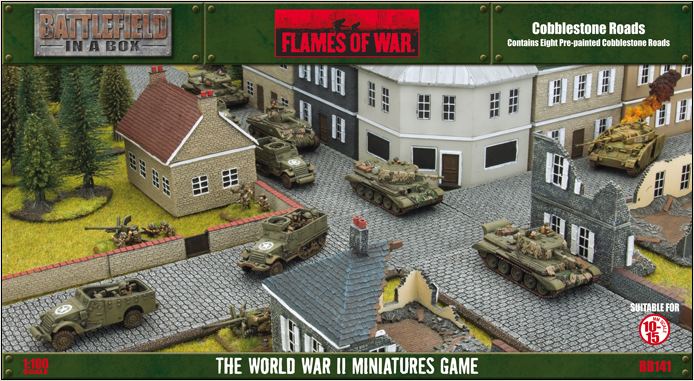
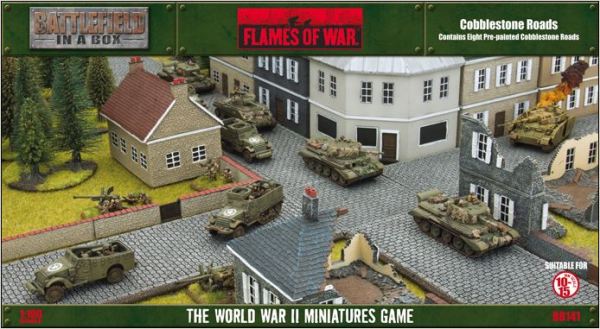
Laying out a gaming table almost always necessitates having roads. I bought some rubberized roads years ago at a convention which suit rural unpaved areas well. A small town or rural setting requires having paved streets, and cobblestones provide a suitable road surface for Western Europe at the time of WWII.

I experimented with stone-textured papers and looked at rubberized stone streets, but none of them provided the depth or the solidity inherent in a stone road. Finally, I’ve bitten the bullet and invested in a set of the FOW cobblestone roads  at a slight discount from a seller on eBay. With a total of more than 6-feet of pre-painted cast resin roads, the box has given me what I think to be plenty roadway for my tanks to rumble down.

wslogo

Trees are one of the standard needs for any miniatures wargaming table in any era. Several wargaming manufacturers offer boxes of pre-made tree stands and bases for around $35-40 for maybe a dozen trees. I choose to go the economic bulk route and make my own using trees, flocking and modelling details from Woodland Scenics. For about $75 I’ve been able to make more than enough to fill even the largest battlefields.
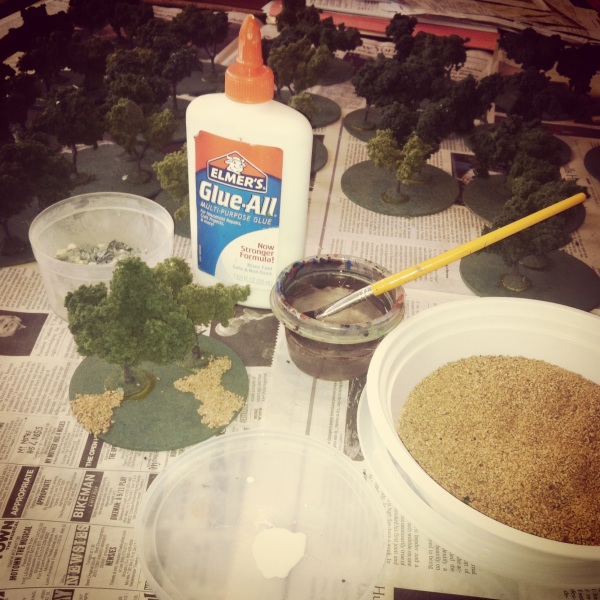
IMG_3040Tree-making assembly line

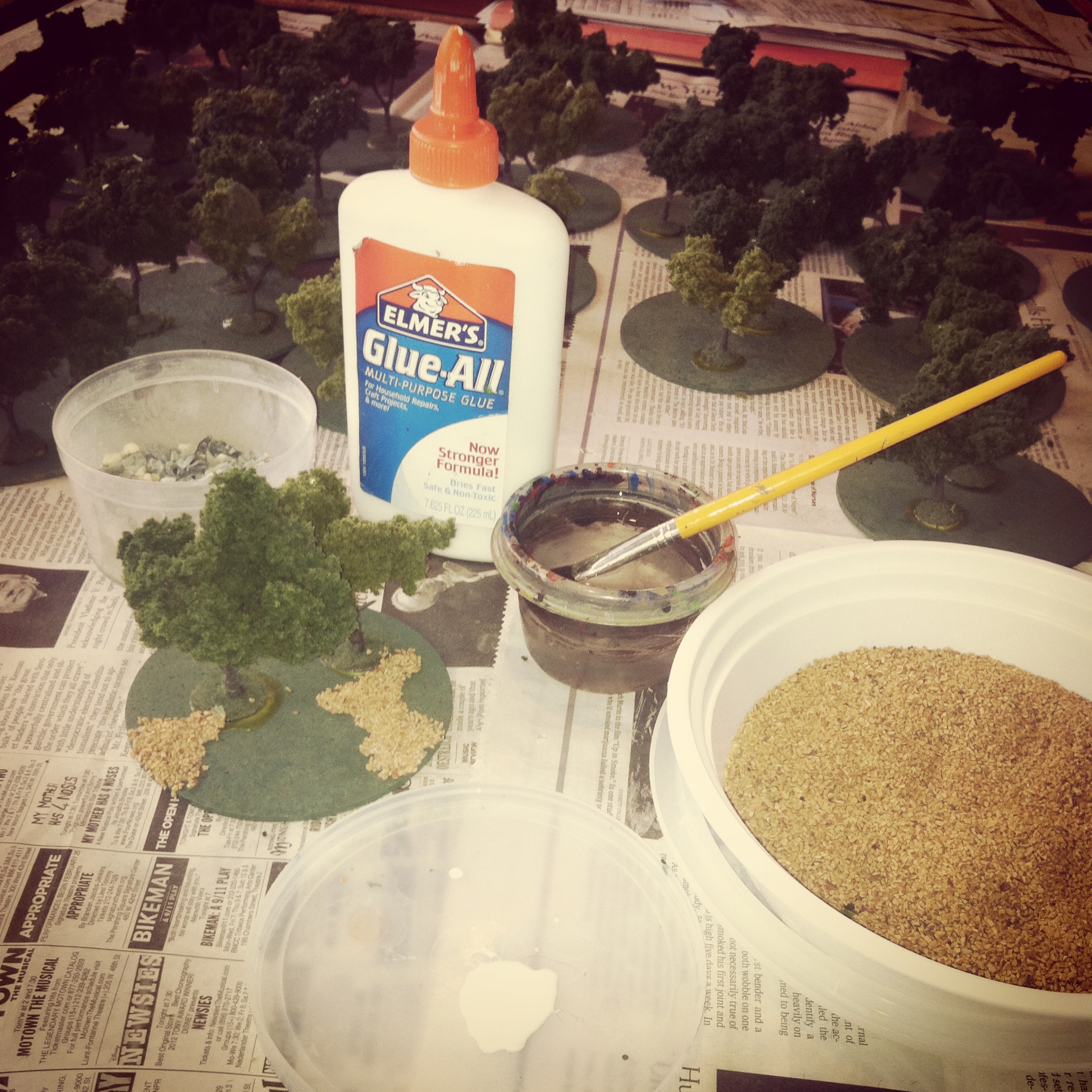
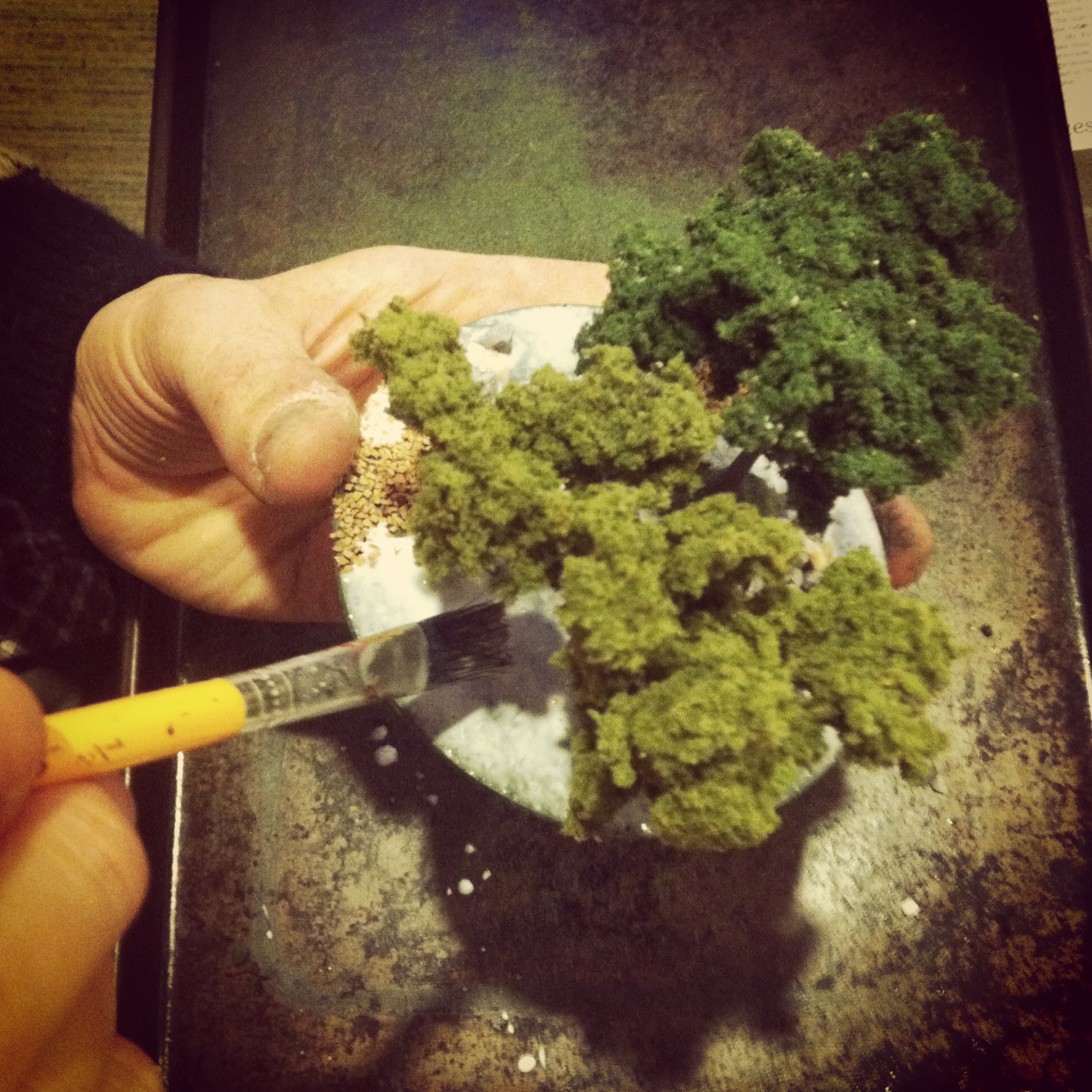
Using two different sized trees from the WS Ready Made Trees Value Pack line, I first glued groups of 2-3 trees to cork coasters picked up at a craft store. On top of the spray-painted green coaster bases, I apply white glue and sprinkles of gravel of varying sizes in random places. After dry, another coat of glue to the remainder of the bases is then flocked with a basic green grass flocking. A few twigs and larger rocks glued here and there add some more depth to the little mini-scenes on each base.
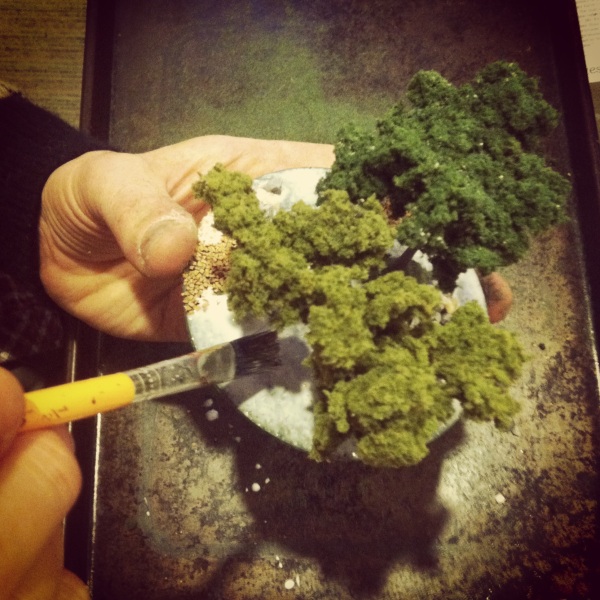
IMG_3041Applying white glue to the tree bases before flocking

Bases are finished off with coarse clumped foliage to represent bushes and undergrowth. Mixing colors of the trees and foliage provides a realistic look. Gravel and larger rocks get hit with some brown washes to tone down the glaring brightness of the paths and piles on each base. All my work is done assembly line style in stages over an old baking sheet so excess flock and gravel shaken from the bases can go back in their containers to use again. When finished, I hit the bases with a matte spray to hold everything in place. In just a few hours time, my model forest on some 30 bases is ready to provide cover for any troops seeking concealment from enemy fire.
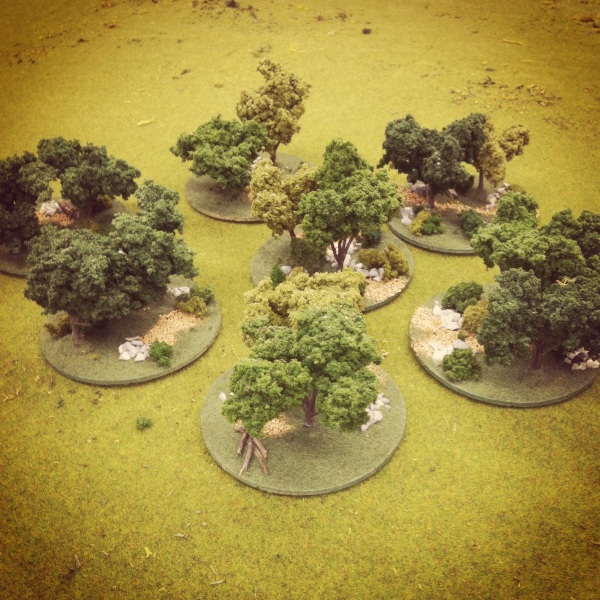
IMG_3156Completed homemade trees

Putting it all together, a dozen buildings, cobblestone roads, a bridge and a bunch of my homemade trees gives me more than enough terrain to present rural and town landscapes in Western Europe. Adding in some river sections, dirt roads and fields from fellow club members completes the look of just about any inland battle scenario in Normandy. Check out the pictures below of the results, and keep an eye on my after action reports for future glimpses into my tiny tabletop fields of battle.
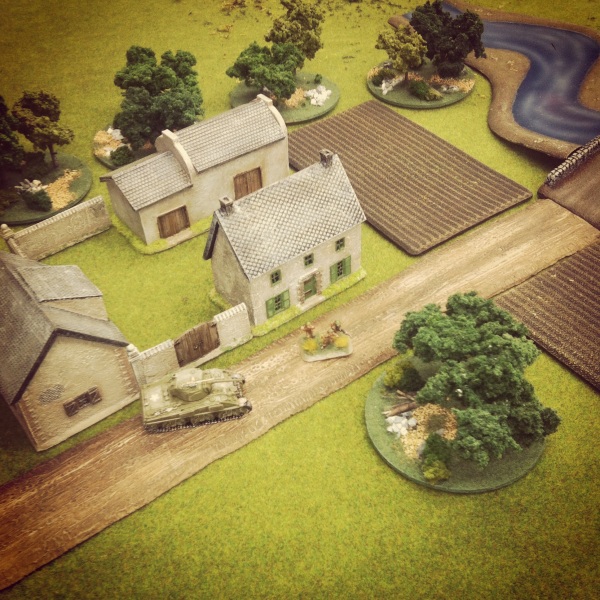
IMG_3161Farm complex with Mark IV buildings and walls, JR Mini bridge and FOW fields and river
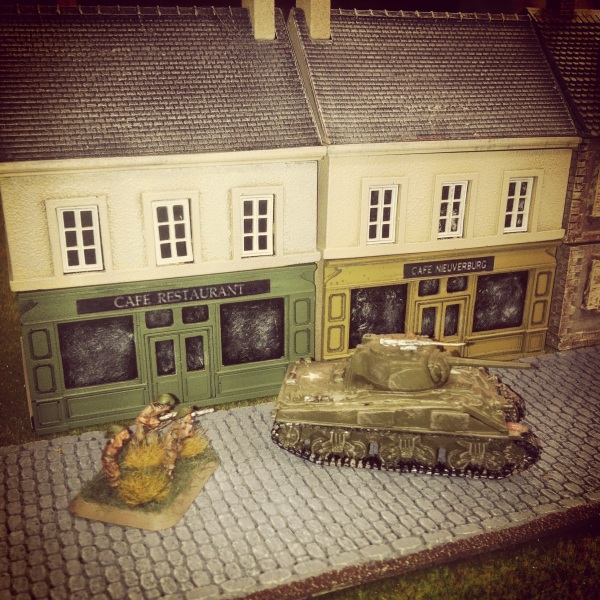
IMG_3159Games of War shops with added weathering and signage
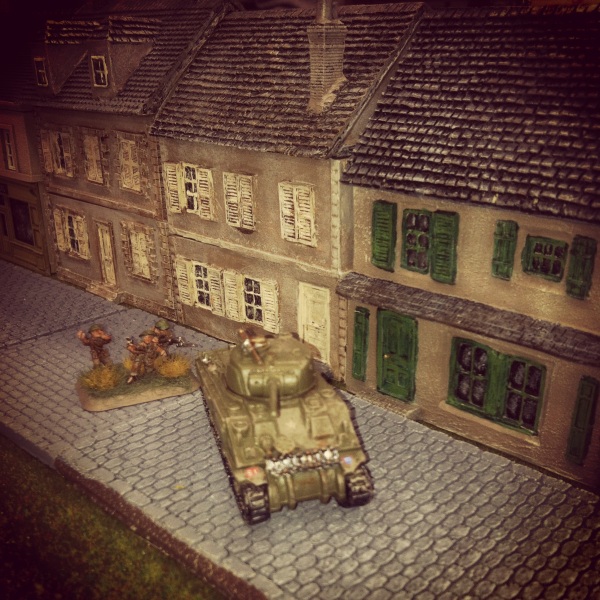
IMG_3162Row of Mark IV buildings

IMG_3160Mark IV buildings and monument

IMG_3158Town set-up with terrain from Mark IV, JR Mini, FOW, Games of War and my homemade trees
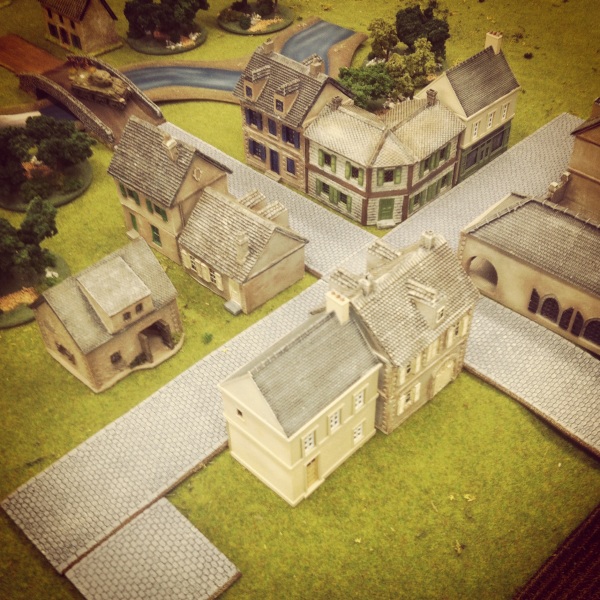
IMG_3157Town set-up with terrain from Mark IV, JR Mini, FOW, Games of War and my homemade trees
Flames of War: La Fiere Causeway 1944 Scenario

lafiere1944

In the late evening of June 5th and pre-dawn hours of June 6th, 1944, a steady flow of Allied paratroopers began dropping throughout the French countryside to clear the inland way for the D-Day beach landings to come later that morning. Like elsewhere, scheduled US Airborne drops near Sainte-Mère-Église left paratroopers scattered around the countryside. To the southwest of the town’s target area, a contingent from the 82nd Airborne found itself near a quaint French farm compound and a small bridge over the Merderet River. Recognizing the river crossing as a key defensive line, the assembled paratroopers established a perimeter along the river. A few hours later, the US troops were met by a German Grenadier and armored battallion hoping to stall the Allied invaders from moving inland. The battle that erupted at the river would rage for three days until the German force withdrew in time for the arrival of US infantry and Sherman forces rolling in from Utah Beach on June 9th.
causewaygamemap

The Flames of War website offers a basic scenario of the encounter at La Fiere Causeway suitable for 1500 point forces on either side. This past weekend a visitor to Metropolitan Wargamers and I had a go at the scenario with my US Airborne facing off against his Germans. As with the historical record, my force held closely to the scenario’s outline with two parachute rifle platoons with plenty of bazookas supported by a platoon of light machine guns, parachute engineers, a glider artillery platoon and M18 tank destroyers. On the German side of the table, my opponent lacked the primitive French tanks that historically fought at the battle. Instead, he filled his force with a number of Grenadier platoons mounted in half tracks backed by two small platoons of Panzer IVs and a Nebelwerfer rocket battery.

IMG_2161

IMG_2163

As per the scenario rules, each of us chose half of our platoons to be held in off-table reserve. Beginning with the Germans, we alternated deploying our starting forces on the table. My American engineers took up position in the courtyard of the farm on my left flank, the machine guns lined the hedge on the other side of the bridge and a rifle platoon deployed on my far right flank. As expected, the Germans deployed a tank platoon at the road entry point and the rocket battery and a mounted Grenadier platoon in the field on their left flank.

IMG_2165With the Germans taking the first turn, the first Panzer IV platoon made way for the river crossing at the middle of the table while the half tracks rolled for the ford on the American right flank. Deployed in and around the farm buildings, the US engineers quickly laid down mines at the foot of the bridge and an Airborne platoon crossed the river to meet the approaching Grenadiers and the rocket battery beyond.

IMG_2169

IMG_2167With turn three, German tank and Grenadier reserves appeared on the table edge opposite the farm and pointed their way toward the French buildings and the nearby bridge. Four US bazookas bailed one Panzer in the clearing across  the river but three other Panzers made it across at the middle ford. US tank destroyer reserves came on the table and immediately poured machine gun fire into the half tracks across the river. The Grenadiers bailed from their transports and the half tracks raced to the rear while the Nebelwerfers failed to score effective shots in the hearty US Airborne troops.

IMG_2171With the Grenadiers on the run back to defend the rocket battery, the US tank destroyers turned their attention on the Panzers and quickly destroyed one while the others continued to push on unharmed due to the protection of their side Schurzen armor. At the farm, the approaching Panzer and Grenadier platoons exchanged fire with the engineers and riflemen defending behind the stone walls. Even with heavy casualties, the engineers repelled a direct assault by two Panzers as a fresh rifle platoon rushed to reinforce the farmyard strongpoint.

Alas, by the fifth turn the game was effectively over for the Americans as the late-arriving US howitzers once again failed to hit in one final volley against the Panzers rushing to seize the objective. The Americans had chased both Grenadier platoons from the field and destroyed a couple Panzers, but the Airborne focus on defending rather than seizing objectives allowed the Germans to take the table.

At the game’s outset, both of us shook our heads with the difficult mission ahead of us. The Airborne never effectively engaged in a close-quarters assault that might’ve taken out more of the tanks sooner on in the game, and artillery on both sides contributed nothing to the game. As with the last few FOW games I’ve played, the engagement at La Fiere once again pointed out the strength and tactical importance that infantry played in WWII. Keeping men moving and in the fight is key to victory, and this time around the German troops got the better of the day.

New Game Weekend: Power Grid

PGcontents

This year I’ve been fortunate to have both the time and a revolving line-up of patient opponents at Metropolitan Wargamers to introduce me to nearly 30 new games. Lots of times I’ll hear the name of a game or references to its mechanics tossed around by other members, and I’ll just file that name away in the back of my head for a future gaming option. One of the games I’ve heard come up again and again is Power Grid, and this past weekend I finally got my first shot at playing it.

What a fantastic game.

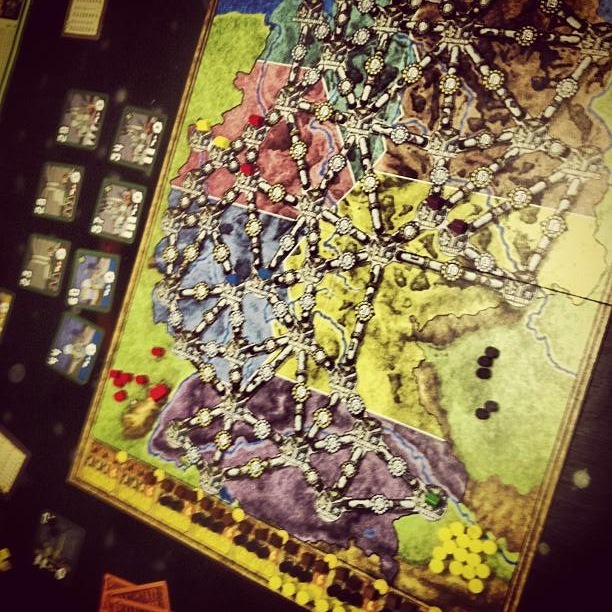
Power Grid is a game of building power plants along a grid among interconnected cities and managing the resources to power the system. Originally published in Germany over 10 years ago, Power Grid began as a crayon and paper game. The version available since 2004 from Rio Grande Games is a more typical Eurogame with a two-sided playing board (Germany and US maps on either side), cards and scores of wooden playing pieces.

The game play unfolds over a series of turn phases. First, player order is determined by the player with the most cities built. Player order is very important in the second phase when power plants are auctioned among players. Some primitive coal, wood or trash-burning plants may come cheap but power few cities or require lots of resources to fire them. Other plants, like solar fields and wind farms, come at a higher initial cost but require no resources to fuel them since the wind and sun come for free. At the far edge are high-tech nuclear plants which can power many cities but require the rare and costly uranium fuel.

And so that leads to the third phase of buying resources. In turn order, players buy coal, wood, trash and uranium which fluctuate in a market of varying demand and pricing throughout the game. Each player’s plant holds double the resources it requires, so a coal-fired plant that requires two coal to run it can hold four coal resources. In terms of strategy, players buy resources for use in their own plants, but they may also choose to stockpile resources and rob other players of the ability to buy resources for their plants.

In the fourth phase, players build cities and their grid. Building cities begins at a $10 value but rises to $15 and then $25 as the game progresses and the grid becomes more crowded with development. Connections between cities also costs money, so creating a close network of cities along a compact grid can make things cheaper for you and more expensive for your opponent as the game goes on. To wrap a turn, players fire up their grid, burn resources and collect income based on how many cities they are able to supply with power.

PGgame

Power grid is a fantastic game of economics, resource management and area control, hitting all the marks of a classic Eurogame. A mix of strategies of building and resource management makes for a realistic yet streamlined game requiring just some basic rules, no reading during the game and simple components. The

Numerous expansion sets are available for Power Grid, including additional power plant cards and additional two-sided regional maps from around the world such as France/Italy, Central Europe, Russia/Japan and China/Korea. A rabid international online fanbase has also created custom homebrewed maps of just about any country or region on the planet.

With the topic of energy and natural resource consumption on the front page of just about any paper in the world on any given day, it’s easy to see why Power Grid resonates so widely. The game also plays without any reading required (other than a basic understanding of one of the translated rulesets), adding to its international appeal. Not only is the game a huge draw for hardcore gamers, I could also see it as a very instructive tool in teaching any group of engaged kids on the challenges of managing ever-increasing power demands.