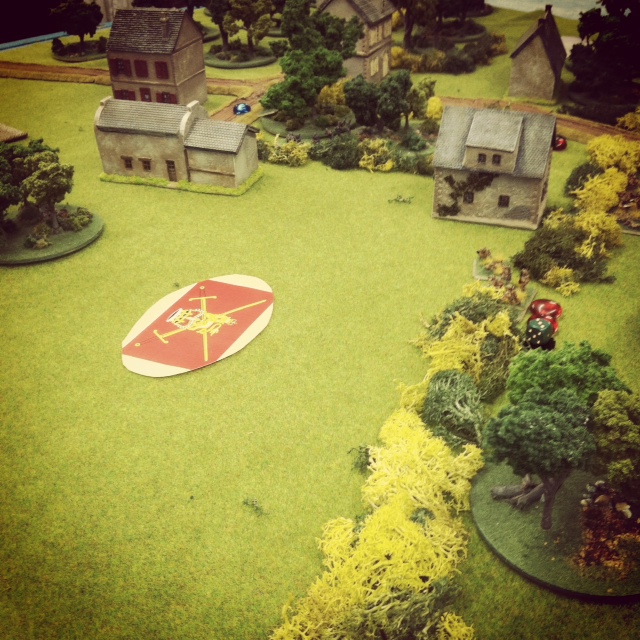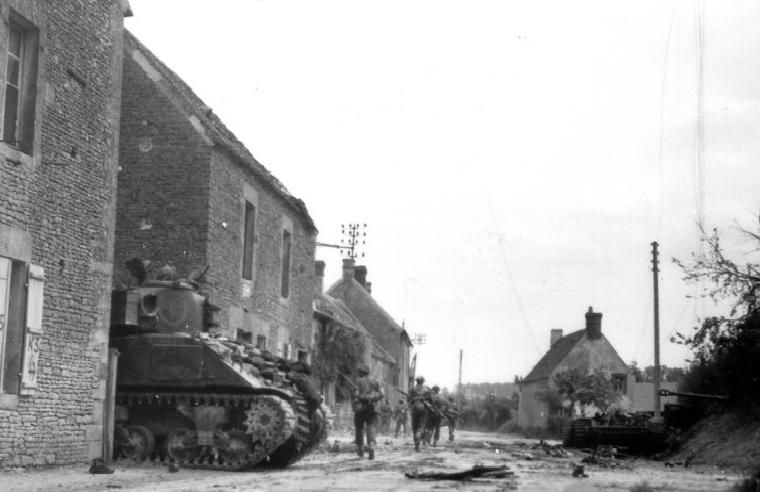
World War I: The Battle of Vimy Ridge 1917 with Price of Glory

VimyRidgepic

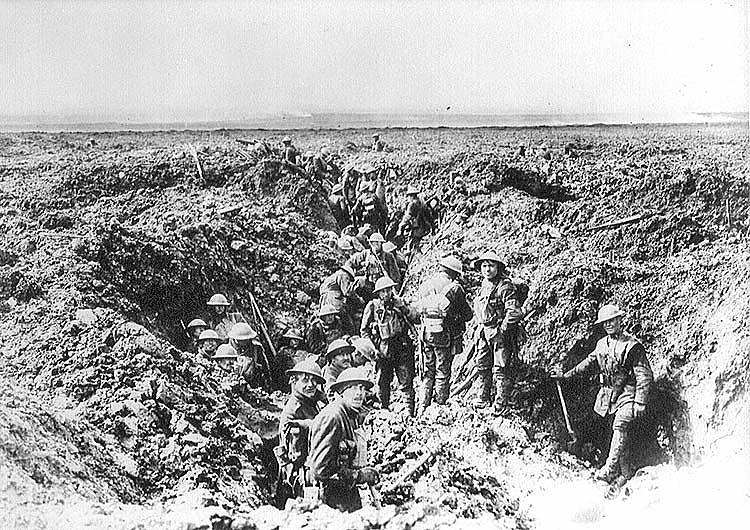
The Battle of Vimy Ridge, France over four days in early April 1917 was not just a victory for the Allies during World War I. The battle also served as a shining example of Canadian national pride as the overwhelming Canadian-led force was able to stand on its own for the first time without British leadership on the field against Germany. The decisive capture of the German lines at the ridge would hold this section of the Western Front for the Allies until the end of the war.

pogcover“Price of Glory” by Iron Ivan Games

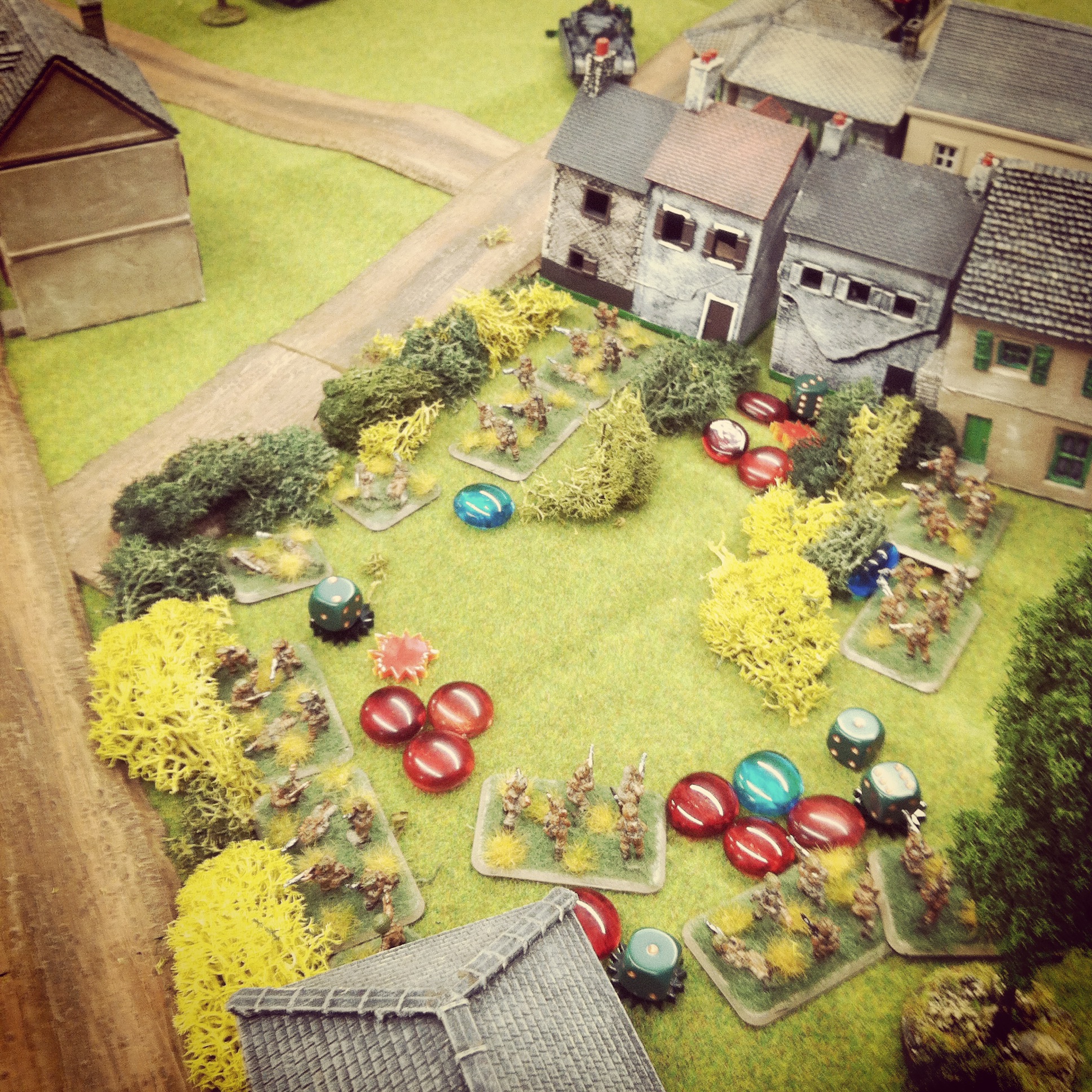
This past weekend at Metropolitan Wargamers we finally got some WWI gaming in with a quick scenario modelled on the Canadian exploits at Vimy Ridge with the Price of Glory rules from Iron Ivan Games. We unpacked over six feet of beautifully modelled trench works that had laid too long in storage and set up a gorgeous collection of 28mm WWI German and Canadian troops from Great War Miniatures. The three of us new to the rules divided the Canadians among ourselves with four rifle and machine gun squads, a grenade-armed bombing party and a Vickers machine gun to our right. Facing us across the cratered and barb-wired field was two lines of German trenches initially defended by two teams of Germans and a MG 08 on their right flank. The level of Canadian victory would be measured by the capture of the German front line, rear set of trenches or the treeline beyond in a ten-turn game.

IMG_4620

Canadian troops advance on the German lines at Vimy Ridge

The Canadians initially plotted four artillery targets along the front and rear trench lines. After the starting German deployment, we rolled off for the artillery bombardment which we had luckily ranged-in directly on the German rifles and machine gun on the front line. Unfortunately the dice were not with the Canadians, and all four artillery shots missed. From there, the Price of Glory rules progressed simple enough with a D10 roll-off for initiative which the Canadians won and began their advance. Teams alternate on each side of the table taking move, fire or melee actions with short movement of 3″ allowing for a full rate of fire, 6″ at fire at half-rate and a 9″ sprint allowing for now firing.
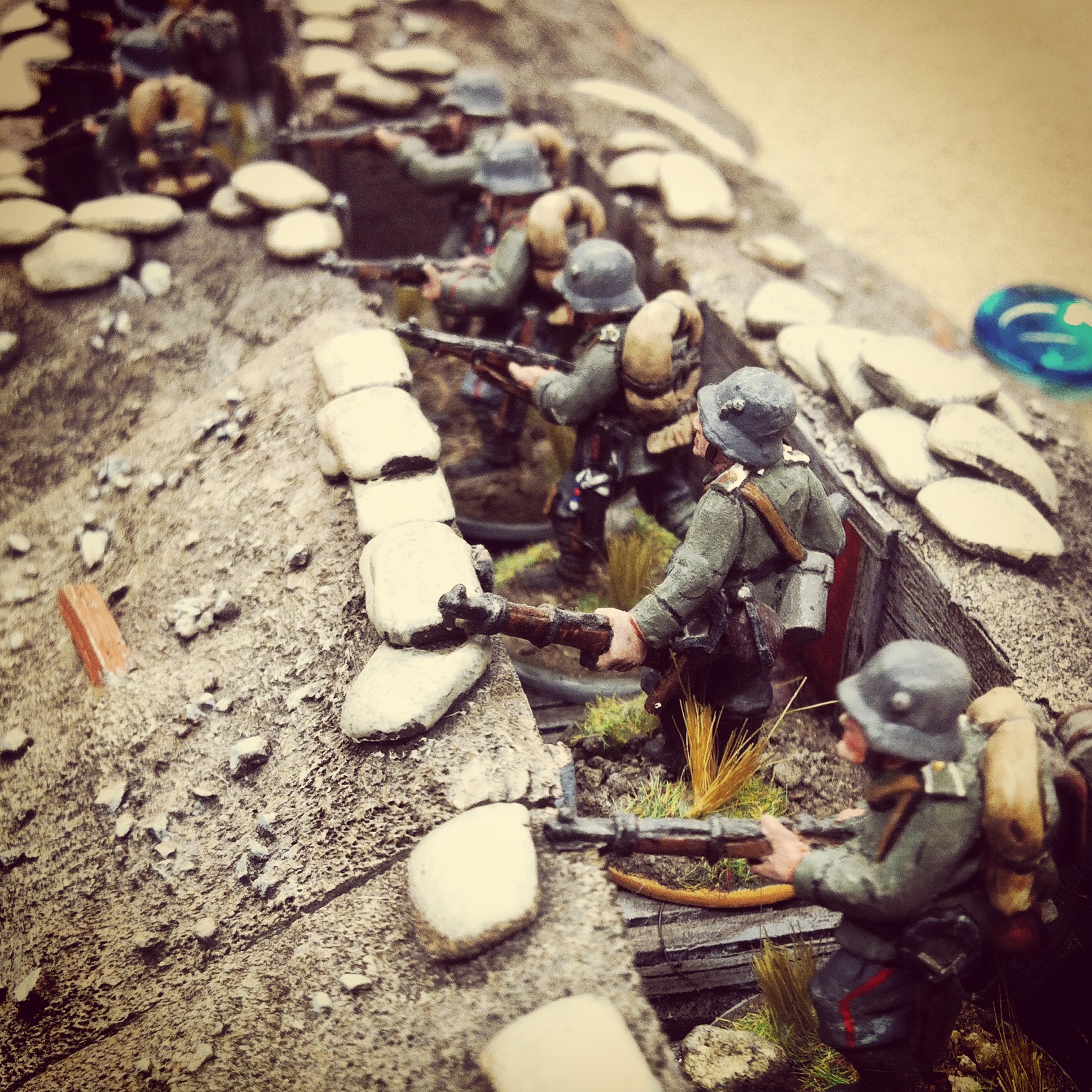
IMG_4621

Germans hold the front line in the trenches

As the first few turns elapsed, the Canadians at the right slowly advanced from crater to crater as they took heavy fire from the German rifles and machine gun. Defending from the trenches, the Germans were a hard target with only a “1” result counting as a hit on the fistfuls of D10s being thrown. In the rules, a team taking fire must also roll a D10 morale check or become suppressed. Morale rating is based on the command strength of the squad, with squads on both sides initially beginning with two officers each at a “7” and “8” rating. A morale check equal to or less than the command rating for the squad passes and may take an action on their turn. A squad losing their morale check must use their next activation to rally.
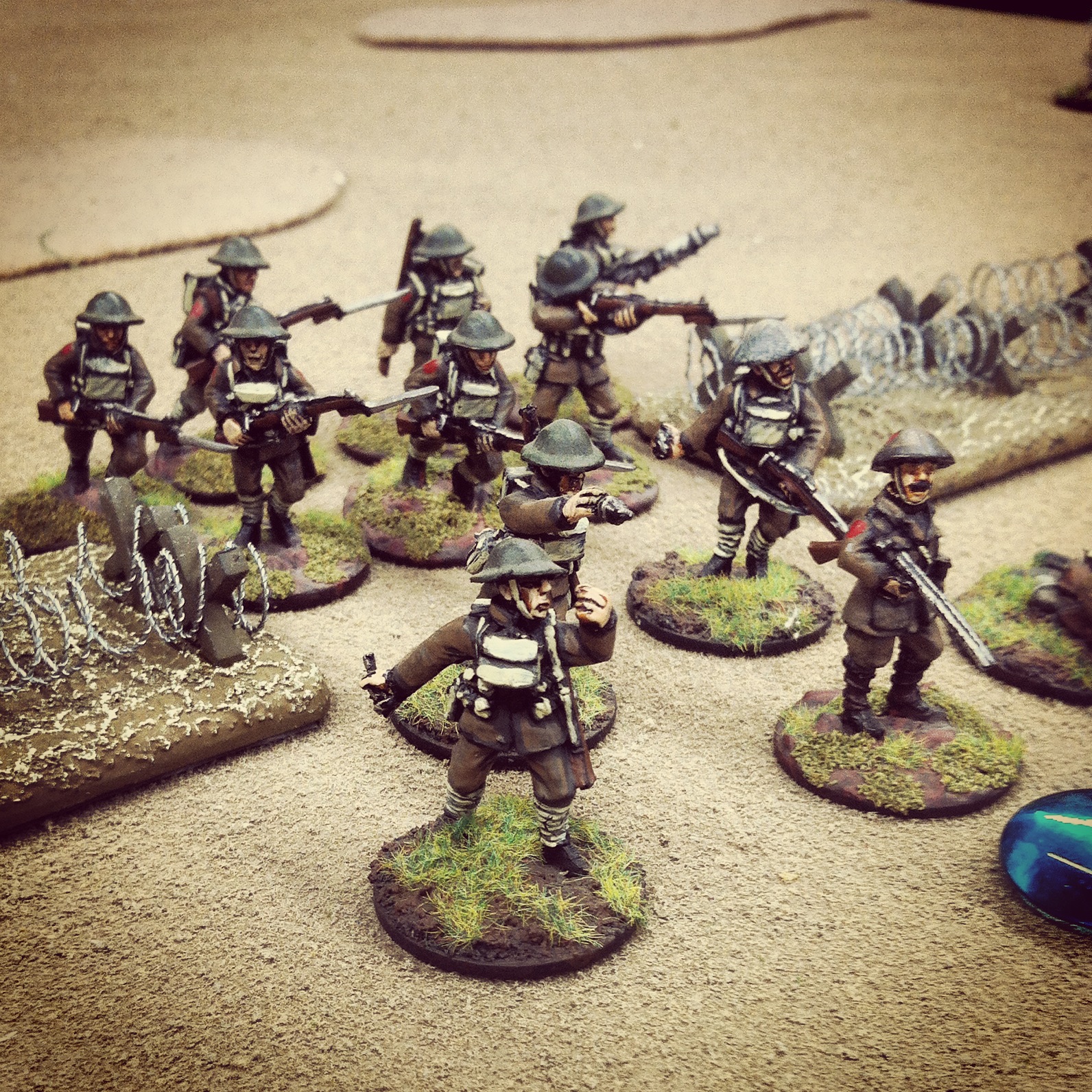
IMG_4622

Canadians advance through a gap in the wire

By mid-game, one Canadian squad had met their doom in the open wasteland in front of the German line and a second was torn in half as they limped to the trench line at the German left. At the center, a full Canadian squad made their way through a center gap followed by the bomb team. On the German right, the machine gun was eliminated and a final squad of fresh Canadians made way for the trenches. The Canadians continued to win initiative roll-offs which were modified at -1 on each side for lost squads or squads failing morale checks.
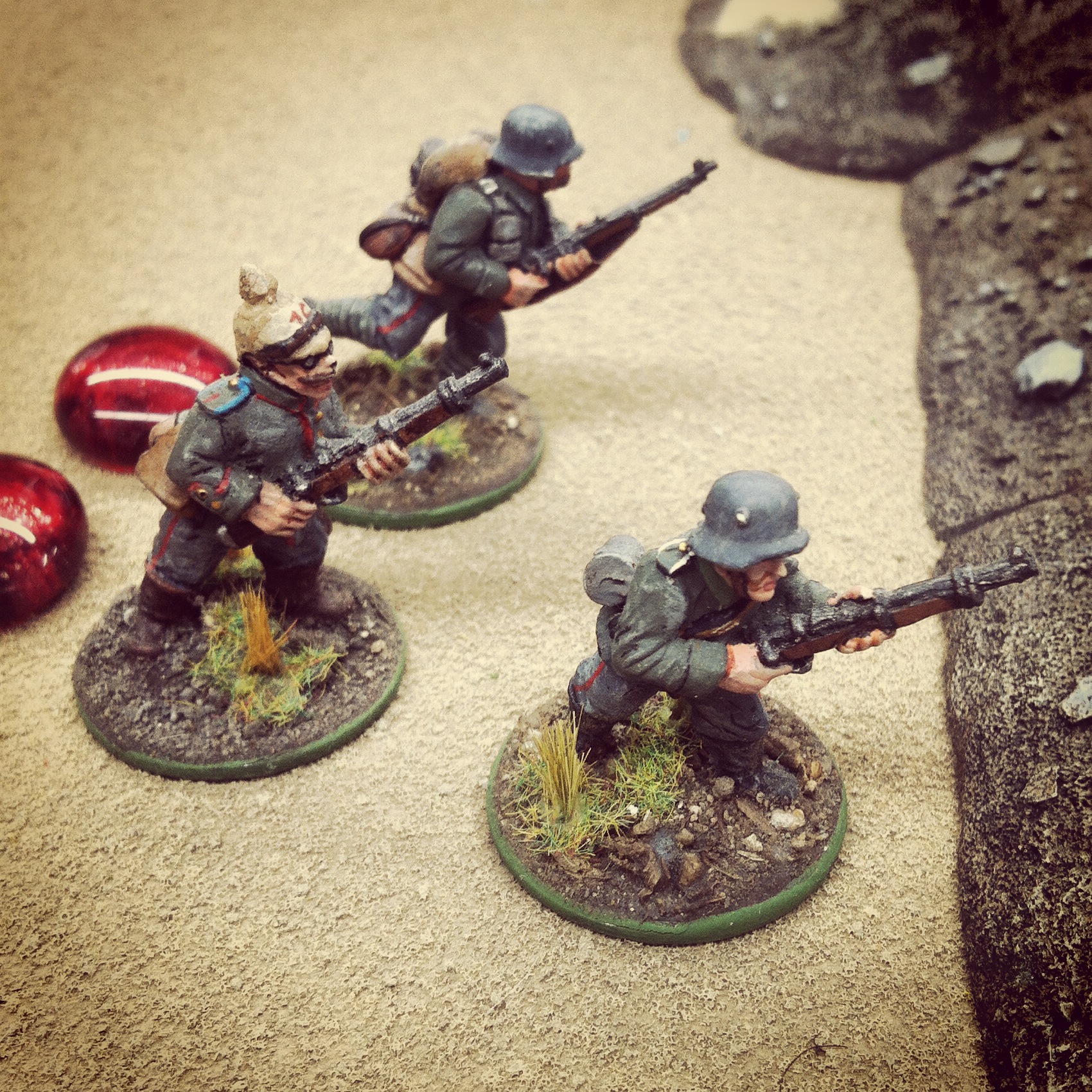
IMG_4623

Germans flee the front line to defend from the next line of trenches

As the remnants of one surviving squad of Germans fled the first line of defense after losing two morale checks against the encroaching Canadians, two reserve units of Germans emerged from the woods to the rear and ran to defend the secondary line of trenches. From there, the final turns of the game became a shoot-out between the two trenches with the Canadian bomb crew and a German rifle squad being nearly eliminated in the firefight. At the final turn, the Canadians had scored a minor yet costly victory by securing the first line of the German trenches for the Allies.

IMG_4625

The Canadian bombing party occupies the first line of trenches

IMG_4626

Germans hold the second line at Vimy Ridge

IMG_4624

Canadians hold the first line for victory

I hadn’t played a WWI game in a couple of years, and the figures and terrain at the club hadn’t hit the table in quite some time either. The Price of Glory rules ran fast, and we were all generally of the opinion it captured the combined fire and morale effects found during the conflict. We also agreed another larger game with a bit more complexity and perhaps some artillery, armor and cavalry would be in order. With many worldwide commemorations this year of the Great War’s 100th anniversary (including an excellent site from the Imperial War Museum), is was good to make time for our own journey back to the Western Front.
New Game Weekend: Corsairs

Corsairsbox

I’ve spent the last month or so reading Robert Louis Stevenson’s Treasure Island with my younger son, and it still amazes me how pirate stories continue to engage people long after the romantic swashbuckling days of yore have faded into history and myth. Just this past year, the rollicking fun NBC show Crossbones starring John Malkovich set sail in primetime. Even though the show was cancelled after a short run, it’s amazing the retelling of the exploits of the famed pirate Blackbeard found a home once again in a 21st-century crowded with zombies, superheroes and retro advertising executives behaving badly.

Corsairsships

Sample galley cards from Corsairs

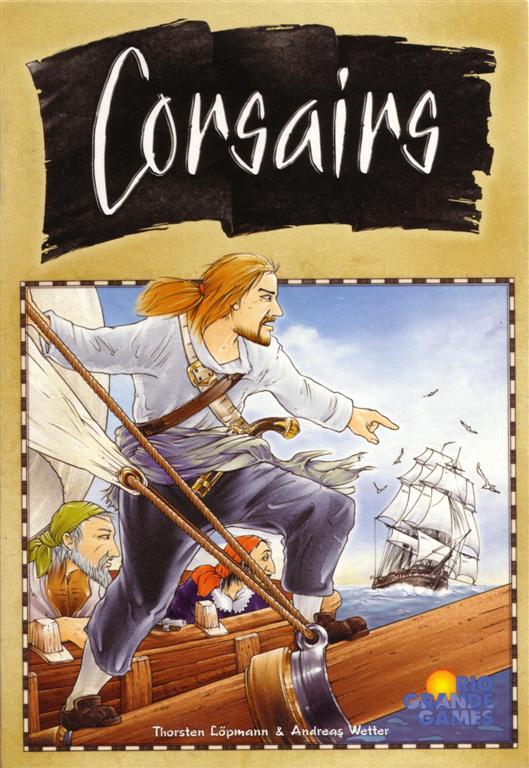
The pirate theme, as I’ve noted before, also continues to have a tight grasp on gamers. This past weekend at Metropolitan Wargamers in Brooklyn, NY, I had a chance to play through the now out-of-print Corsairs produced by Rio Grande Games in 2000. Playing best with four players, Corsairs involves the simple idea of raiding and capturing ships by playing provision and pirate cards, rolling dice and double-crossing opponents. Four heavy cardboard ships (or galleys) begin on the table. Each galley card depicts the point value at the top, the die value needed to capture the ship and a mix of required provisions needed before an attempt can be made to capture the vessel.

Corsairscards

Sample provision and pirate cards from Corsairs

Players begin by being dealt a hand of six cards each. The color-coded cards depict provisions – bananas, beans, bread, meat, rum, or water – or a pirate with a face value of  2 to 4. In turn, players place a total of two cards on the available ships. Matching types and amounts of provisions are played on ships face up along with any pirate cards face-down. After two cards are played, a third is discarded before redrawing back to a six-card hand. Play passes in turn until a player has enough required provisions to attack a ship. Rolling two dice and adding available pirate bonuses, players attempt to exceed the required value to seize the ship. If successful, all players lose the provisions on that ship and the player takes the card. If unsuccessful, the player loses their provisions on the ship and play passes to the next player. A player who attacks on their turn misses their next turn when they can redraw their hand. Once the final galley card is played and seized, the game ends and the player with the most points wins.

Corsairsgame

 A game of Corsairs at Metropolitan Wargamers

As with any good pirate game, the opportunity to out-scalawag your opponents is where the real fun comes in with Corsairs. With cards played on a ship, a player may attempt a “broadside” attack once per turn by rolling two special dice with provision colors on each face. A successful result enables the player to steal the provisions for their own use or simply to prevent another player from using them first. Capturing several ships of the same colored border also allows a player to double-up on points, so stealing a ship away from another player before they snatch it also comes into play.

I managed to win my first play through Corsairs by doubling-up on two high point purple ships, snagging two other valuable galleys and then foiling some other players by stealing their provisions through broadside attacks. Corsairs moves fast like a ship on the high seas and requires no reading, making it a great game to play with kids. And what kid – young or old – doesn’t like pirates?

Collector’s Note: You made need a treasure map to find a copy of the out-of-print Corsairs, but you can fdig them up on eBay occasionally for upwards of $50-60.

I Ain’t Been Shot Mum: Panzer Lehr Counterattack Campaign – ‘Morning of the 902nd’ July 11, 1944 Scenario

OLYMPUS DIGITAL CAMERA

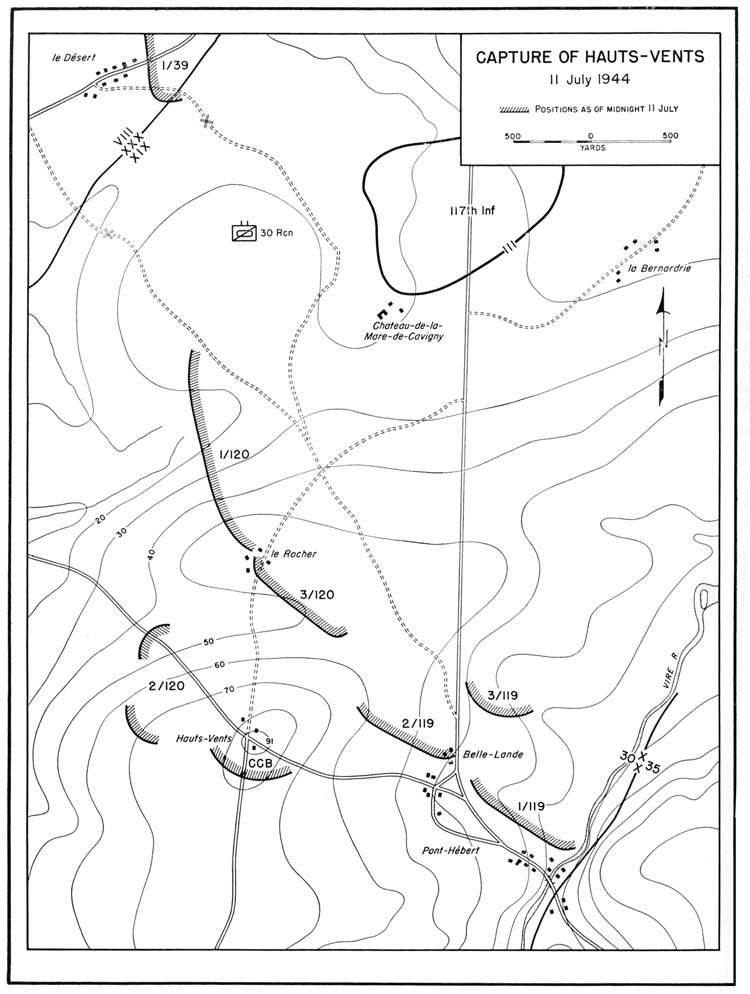
The battle near Hauts-Vents was a two-day affair between the US infantry and armored forces and German Panzer Lehr Division. After a day of intense combat on July 10, 1944, US forces were warned of local movements of the 902 Panzer Grenadier Regiment toward Hauts-Vents. With a German counterattack expected in the early morning hours of the next day, American infantry and armor prepared for a defensive fight under the cover of darkness and foggy, damp weather among the dense bocage hedgerows and under cover of the strong French buildings.

HVJuly44MapMap of the battle at Hauts-Vents, July 11, 1944

(via US Army Center of Military History)

After a first game loss at Hauts-Vents by the Germans, we continued our campaign at Metropolitan Wargamers in Brooklyn, NY this past week. The second game from the “Panzer Lehr Counterattack” mini campaign from the Heroes of Omaha and Panzer Lehr scenario book from Skirmish Campaigns is called ‘Morning of the 902nd.’ The game uses the same terrain set-up as the first scenario, but this time focuses on the German attempt to recapture Hauts-Vents on July 11 after losing key objectives to the Americans the day before. The game begins under pre-dawn darkness over wet ground with US platoons in hidden positions at the north end of the table and the Germans advancing under blinds from the hill position to the south. The Germans must retake the field by capturing two of the three objective buildings at the center town.

IMG_4251Germans deploy on blinds looking to take back the town

IMG_4253Germans blinds rush forward and immediately hit a minefield

IMG_4254A German platoon encounters a minefield and takes heavy casualties

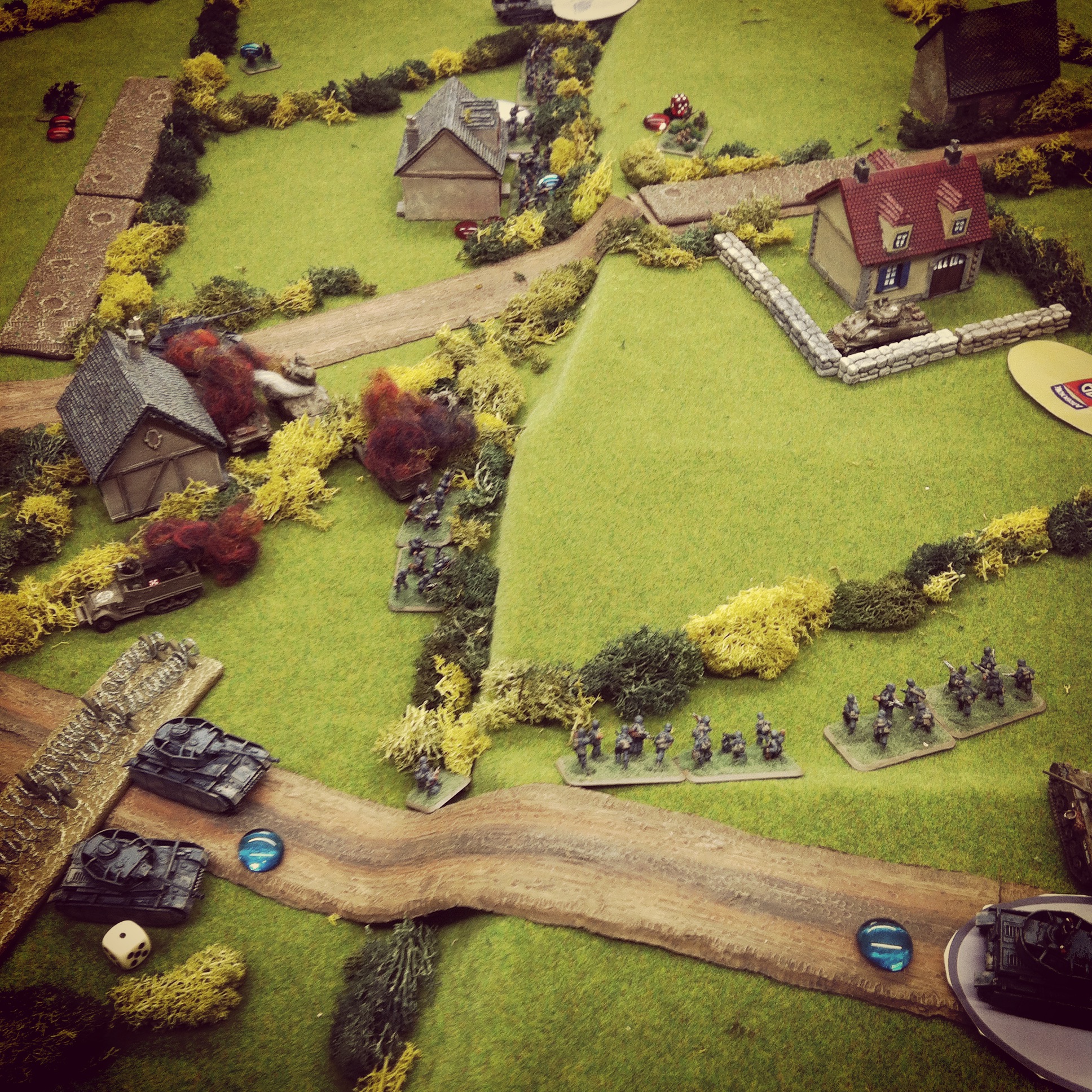
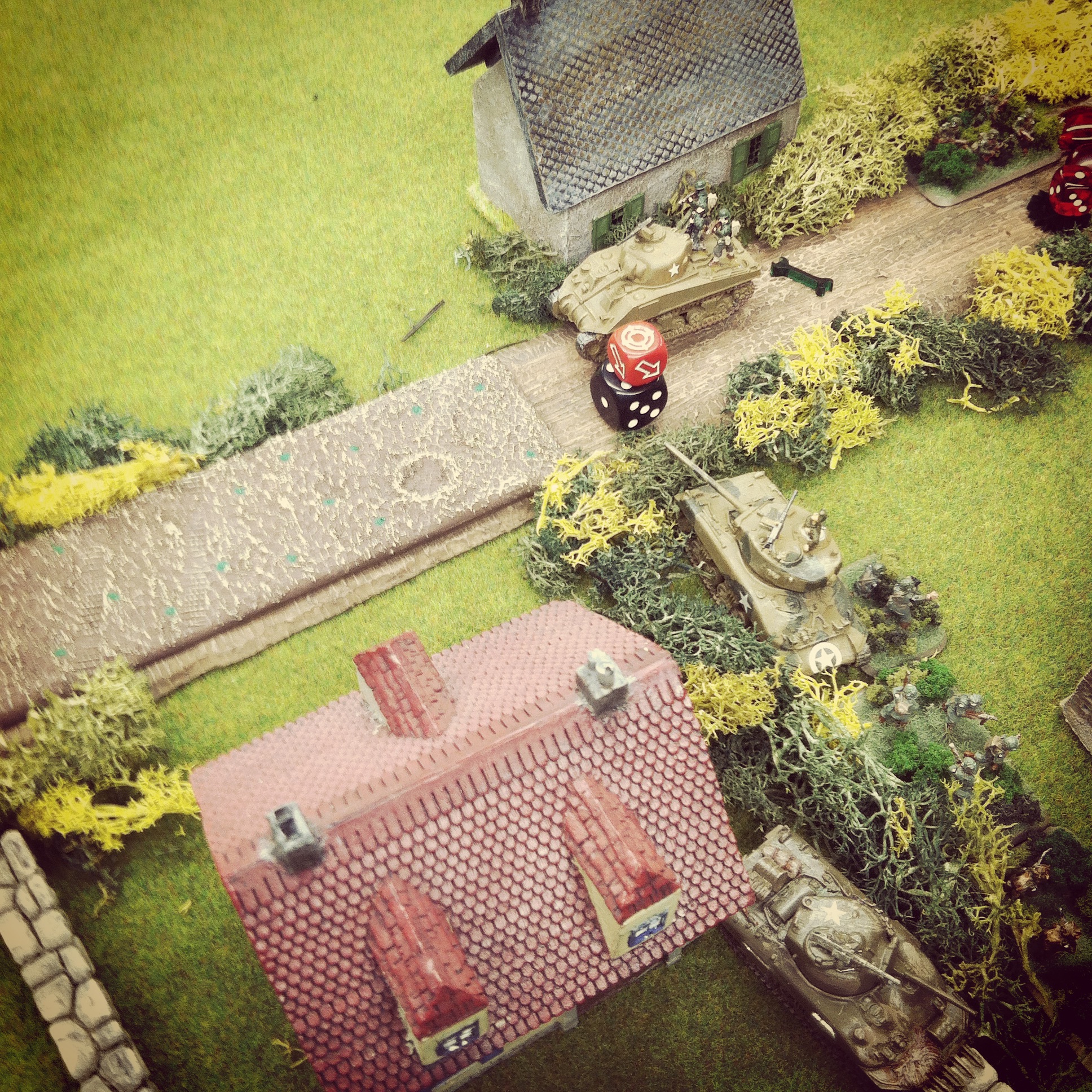
The German advanced on blinds from Hill 91, making a hasty frontal push straight for the town. On the German left, mechanized Grenadiers mounted in Sd. Kfz 251s roared their engines and drove straight into a minefield at the bocage at the bottom of the valley outside town. Making matters worse, American machine guns hiding in the dense hedge sprayed the German line with fire. German infantry and half tracks fired back, destroying one US machine gun team and forcing a retreat of the other to the center of town. At the end of the firefight, the German commanding officer escaped but three fire teams in one platoon took heavy damage, forcing them to fall back.

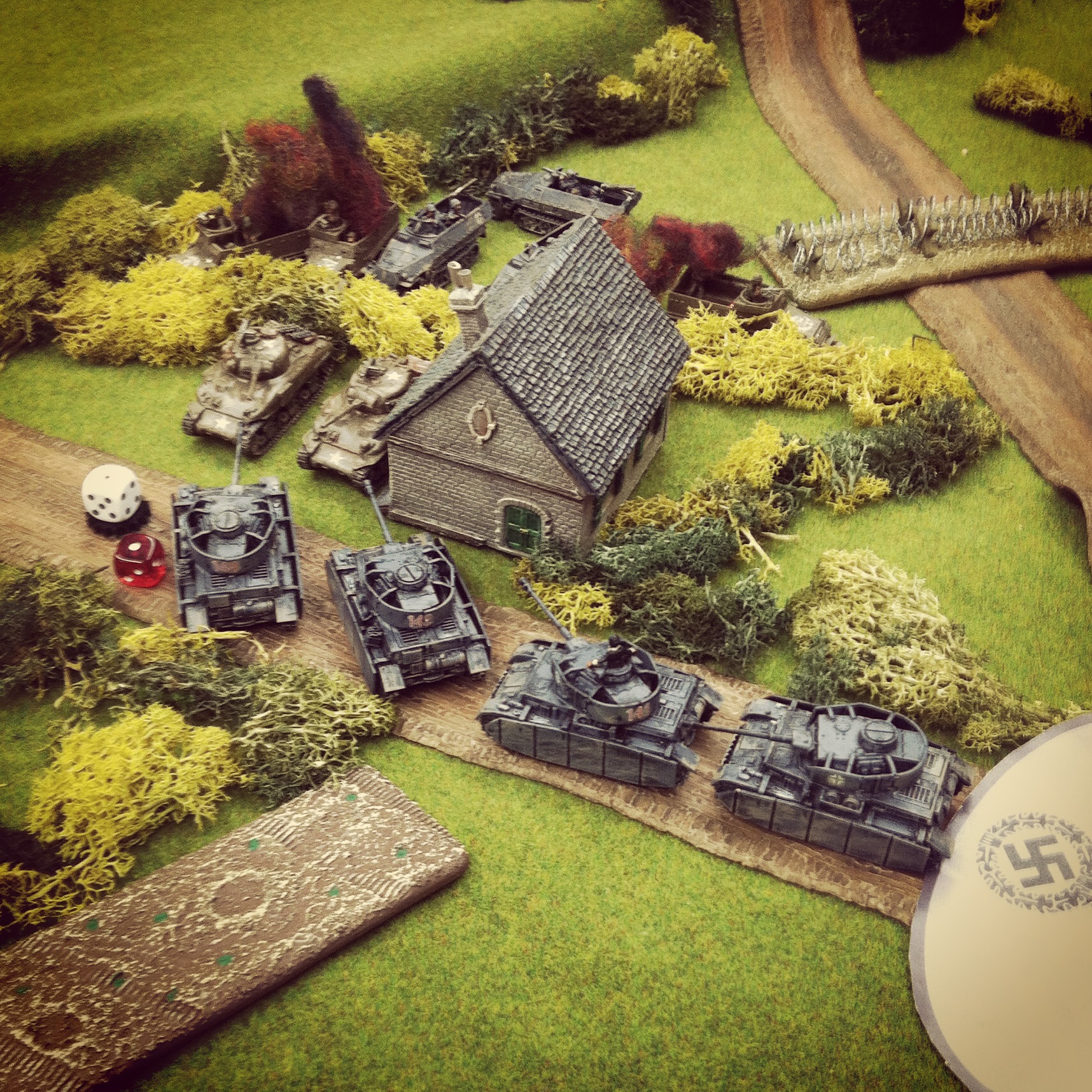
IMG_4256The German Panzer IV column exposes two Shermans behind a farmhouse

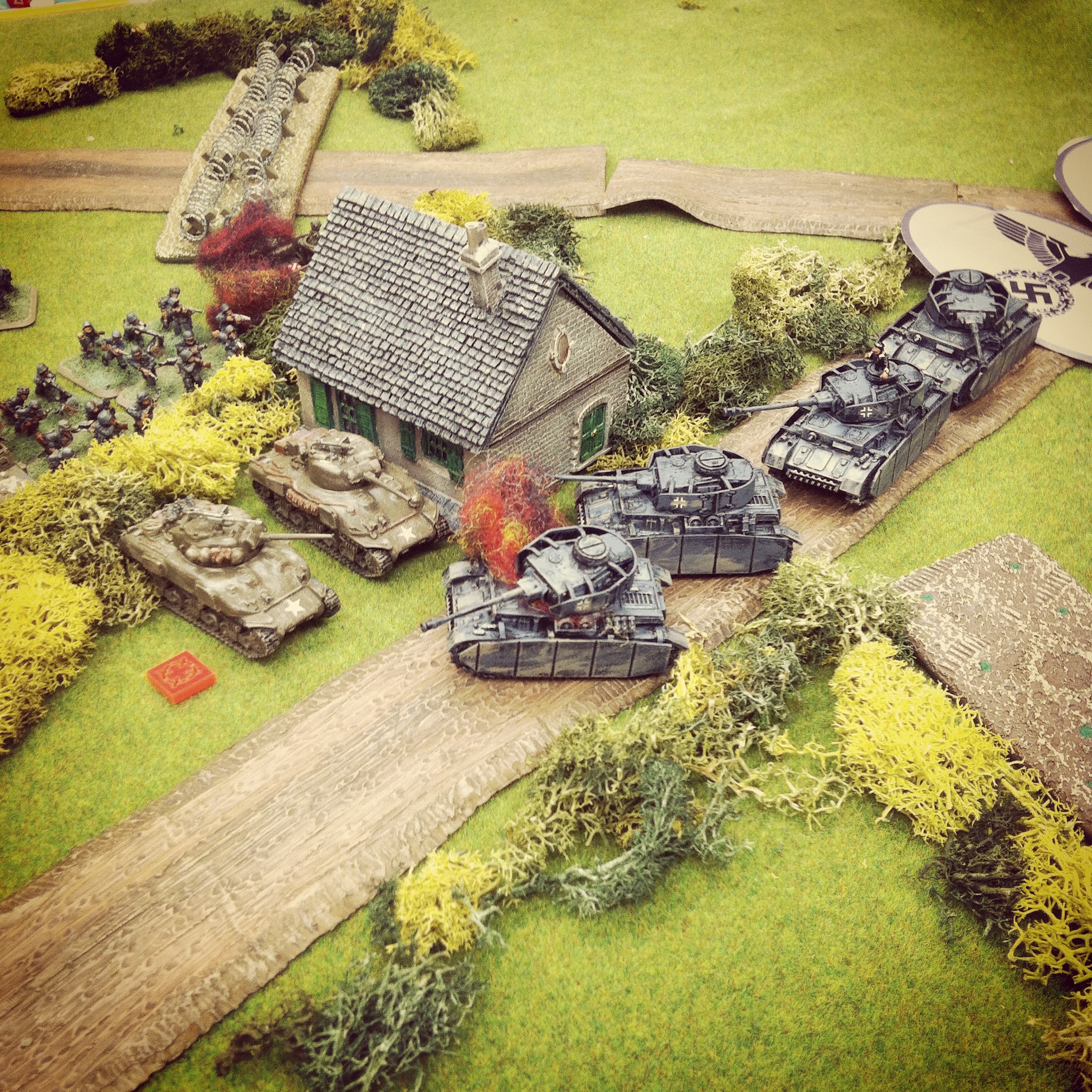
IMG_4255The lead German Panzer IV is destroyed, blocking the road

IMG_4312Panzer IVs switch routes, making for the American flank

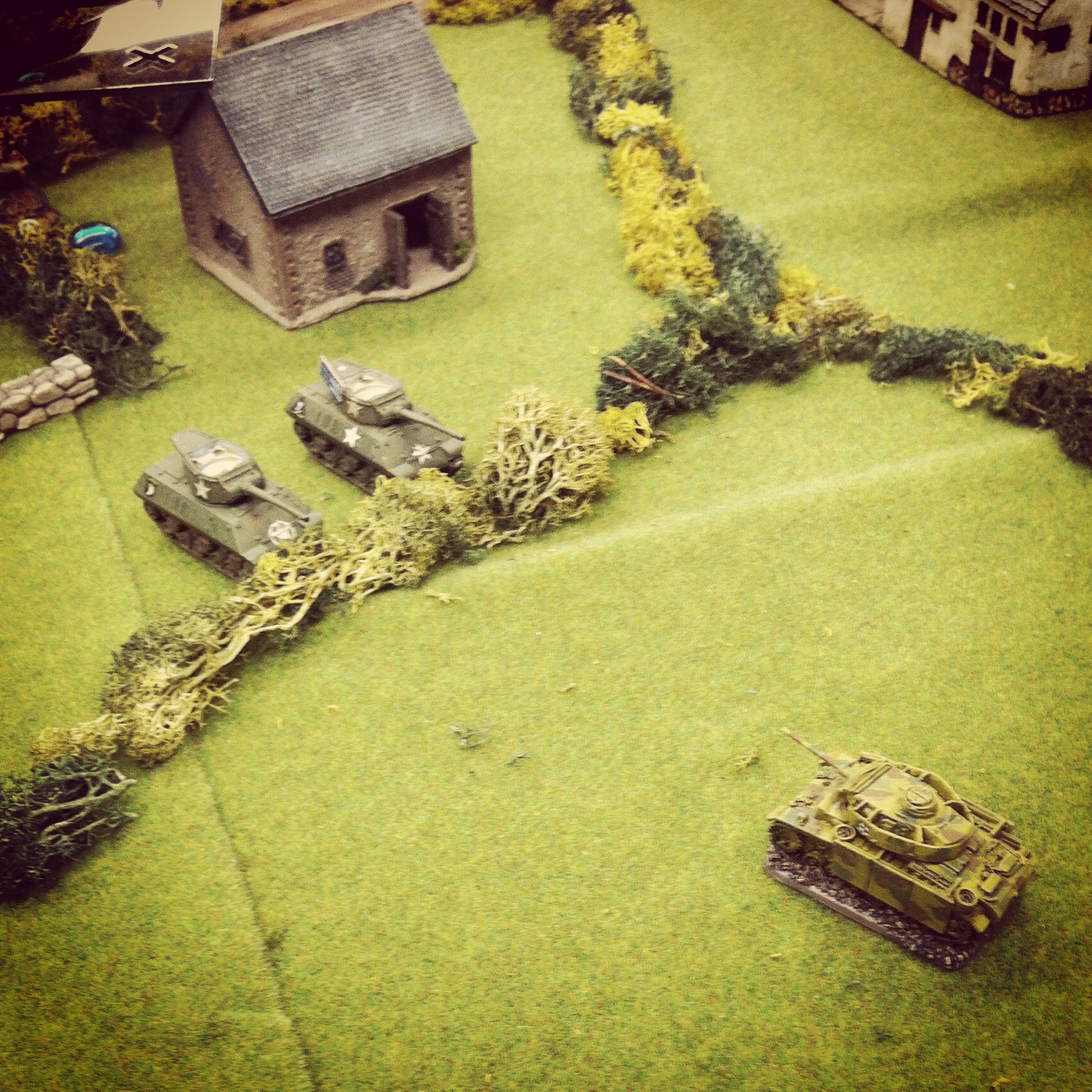
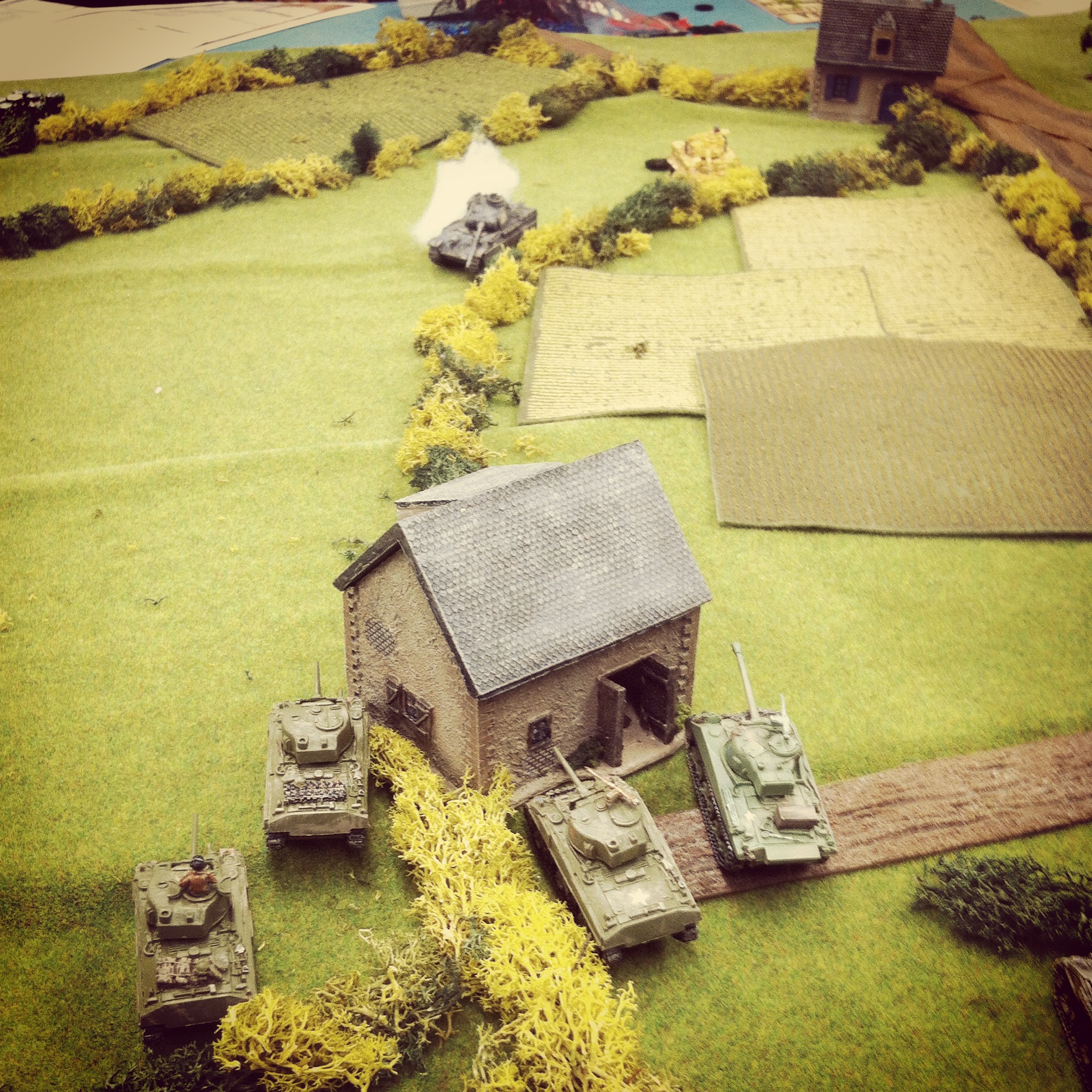
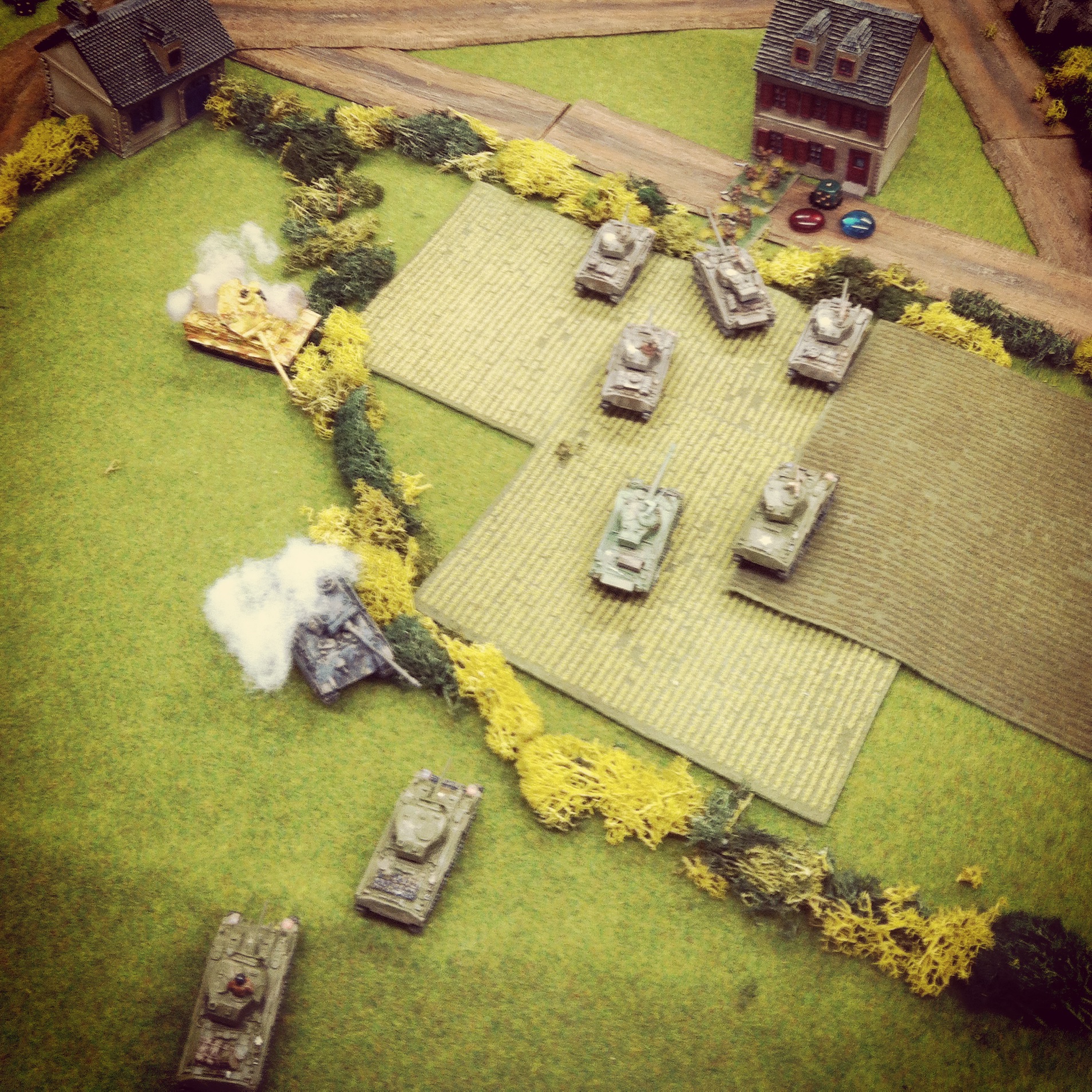
On the German right, things didn’t go much better. A column of Panzer IVs drove on the main road for town, accompanied by a a Grenadier platoon closing in on a farmhouse they had lost the previous day. Waiting hidden at the stone cottage were two M4 Shermans which opened fire at the lead Panzer at close range , leaving it a burning hulk blocking the road forward. Closing in from behind, Grenadiers ran to engage the tanks with a Panzerfaust shot on their rear armor. Several turns of fire were exchanged between the Shermans and Panzer IV second in line as the two rear Panzers reversed direction back to the fork in the road. A few rounds later both Shermans were destroyed, and the surviving three Panzer IVs and the unharmed Grenadiers were heading for the east side of the town.

IMG_4313Panzer IVs and Grenadiers move on the US left and expose a Sherman platoon at an objective

The Germans continued their advance up the road on the US left, looking to flank the town. The three Panzer IVs were slowed over the barbed wire blocking the road, and one bogged for the remainder of the action in soggy ground. German infantry spotted a Sherman platoon camped out around one of the objectives and then ran over and around the bocage looking to avoid fire in the field beyond.

IMG_4314US Wolverines take aim at a German Panzer III flame tank in the open

IMG_4316US and German armor exchange fire, leaving a Wespe, Panzer III and M10 Wolverine in flames

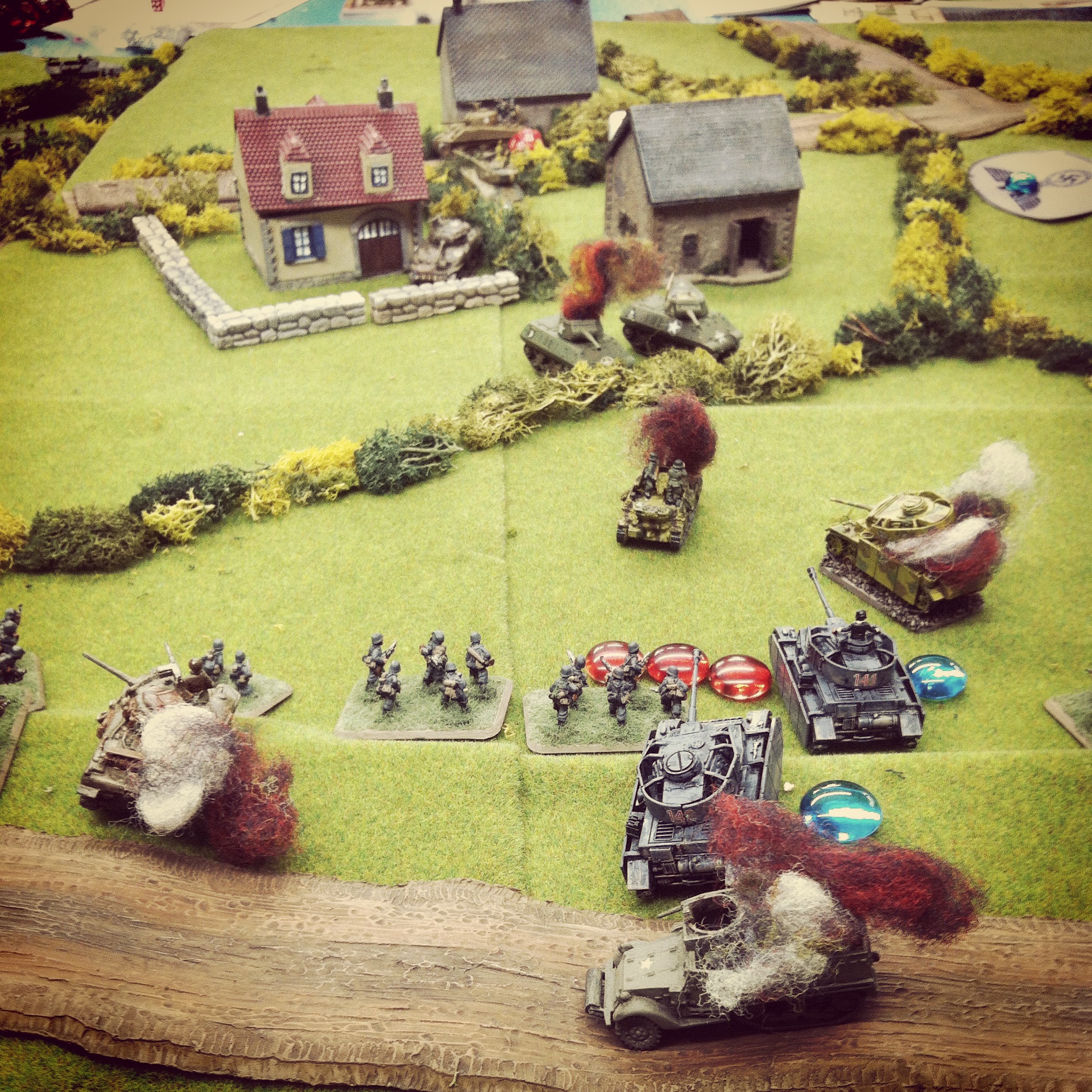
Two remaining German blinds rolled to the field as US tank destroyer M10 Wolverines appeared behind the bocage at the town. The blinds revealed themselves as a Panzer III flame tank and Sd. Kfz. 124 Wespe and both turned to engage the Wolverines. Two quick shots from the flame tank failed to harm the open-topped Wolverines which returned fire and blew up the Panzer III. The German’s mobile gun fired back, destroying one of the Wolverines before subsequently being wrecked by US anti-tank fire. With German armor burning in the field, the Grenadiers continued to sprint over the open area and looked to swing into the town from the rear.

IMG_4317Flares illuminate the town objectives and German mechanized Grenadiers push forward

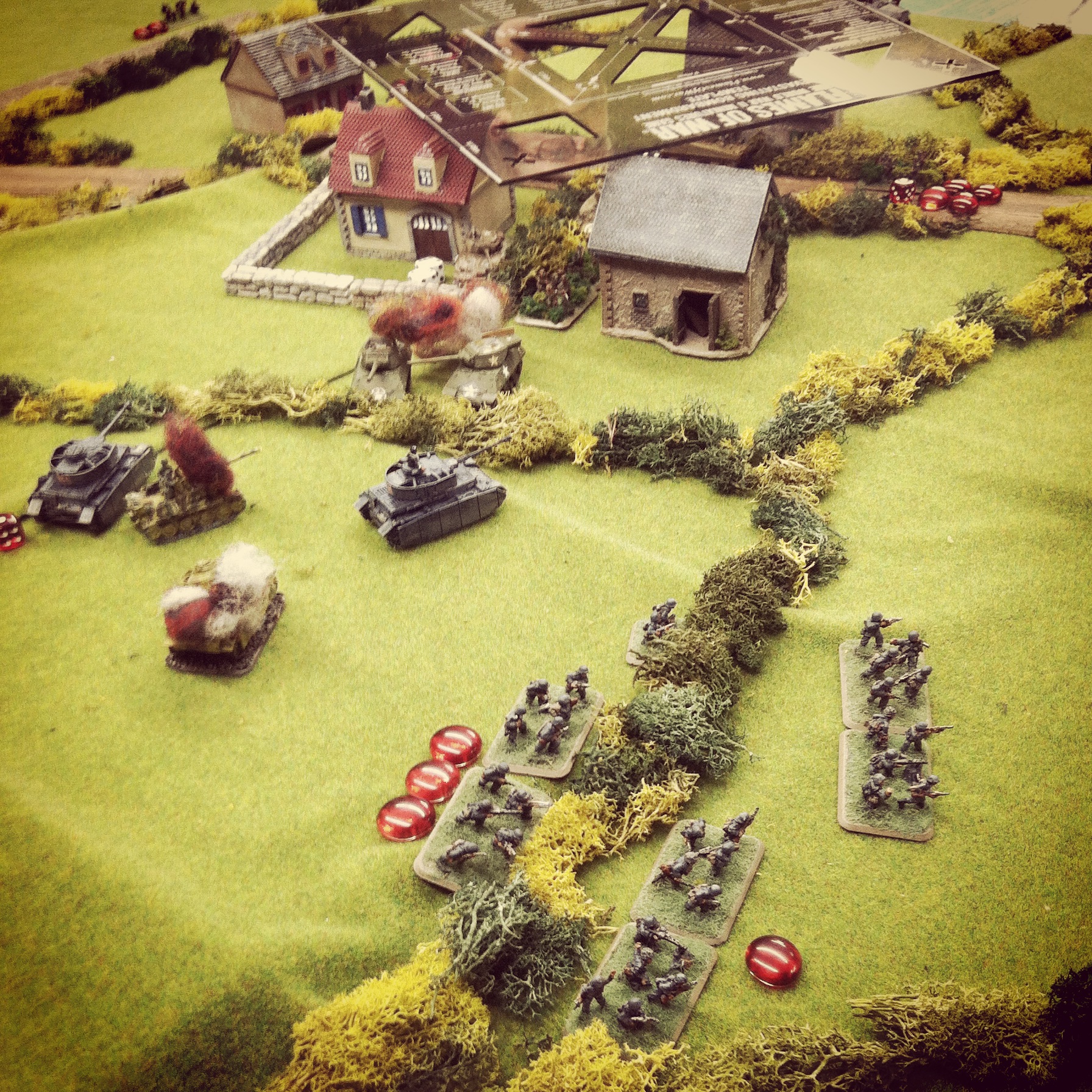
Back on the German left, several Grenadier platoons on foot and mounted in their half tracks moved to the US left in the town as the early morning darkness was lit up with a flare. Two fresh American rifle platoons revealed their positions in two of the objective buildings and gunfire was exchanged with the German platoons moving toward the town. Despite their cover in the stone building, the combined arms fire from the Germans ousted one US platoon from their building and the other took steady damage.IMG_4318Panzer IVs destroy the final M10 Wolverine as German infantry rush to flank the town from the rear

On the other side of town the two functioning Panzer IVs rolled across the field, shooting at and destroying the last American tank killer. Under continued cover from their Panzers, the Grenadier platoon continued slipping across the field, climbing over the bocage and looping around to the American rear.

IMG_4319A direct hit from Germany artillery arrives in the middle of the American position

With German infantry looking to encircle the town and two Panzers wheeling to engage the Shermans at the center of town, a German artillery barage hit dead center amid the objective buildings. As the smoke cleared, only two Shermans remained fully operational and the surviving US rifle platoons were on the run. As early morning light began to break, the Americans heard encroaching German voices from the hedgerows from every side of the town. The Panzer Lehr counterattack had been a success, and the Americans chose to cut their losses, regroup and fight again.

I Ain’t Been Shot Mum: Panzer Lehr Counterattack Campaign – ‘Hauts-Vents’ July 10, 1944 Scenario

NearStLo

Although the Panzer Lehr Division was held out of action during the Allied D-Day landing at Normandy in June 1944 , they would go on to provide a number of important defensive, delaying and counterattack actions in the months following. They first distinguished themselves in the days immediately after, throwing up a hasty defense at Caen against encroaching British and Canadian forces. After battles at Tilly-sur-Seulles and Villers Bocage in mid-to-late June, the vastly depleted Panzer Lehr Division was called out of the fight. With only a short time to regroup, the war-worn division was ordered west to countetattack he Allied inland progress toward Saint-Lo. While the June battles had run the Germans up against British Commonwealth forces, the July engagements in the hilly fields and bocage-lined roads would be against the armored and infantry forces of the United States.

PLCounterattackJul44Map

Map of the Panzer Lehr Division counterattack in July 1944

(via US Army Center of Military History)

For a few months now at Metropolitan Wargamers in Brooklyn, NY, we’ve been playing a fair amount of I Ain’t Been Shot Mum rules system for World War II. After a number of one-offs and our recent North of Caen game, we finally decided to jump into a mini campaign focusing on the Allied push inland toward St Lo and the German defense following the D-Day landings in  Normandy in June 1944.

SCHeroesofOmahaSkirmish Campaigns  “Heroes of Omaha and Panzer Lehr” scenario book

For our campaign, we’re using the classic Heroes of Omaha and Panzer Lehr scenario book from Skirmish Campaigns. The Skirmish Campaigns series of books offers well-researched and detailed campaign scenarios full of detailed orders of battle, terrain layout maps and deeply descriptive narrative of how actual engagements unfolded during World War II. With just a little bit of work, the Skirmish Campaigns scenarios are easily adaptable to a variety of wargaming rules and scales including Battleground, Bolt Action, Flames of War and I Ain’t Been Shot Mum.

IMG_4207

Scenario set-up with two small houses as objectives at the middle of the table set amid rolling hills, small farms and thick bocage

The scenario at Hauts-Vents is set up on a long table with hills rolling into a valley from either end. Roads cross the table among fields lined with heavy bocage hedgerows. At the center of the table are two farmhouse objectives that are the focus of the US mission. All German platoons are deployed on blinds nearly everywhere on the table, accepting the northeast corner from which the US advance begins.

My Germans deployed on blinds with a Pak 40, a Sdkfz 10/1 and an artillery spotter for the off-board 105mm artillery deployed around a farmhouse atop Hill 91 on the southern end of the table. German rifle platoons armed with Panzerfausts deployed in blinds in and around the objective farmhouses. One platoon also had a MG42 and another contained a Panzerschrek anti-tank team. To block the predicted US advance, one road was blocked with barbed wire and another was laid with mines.

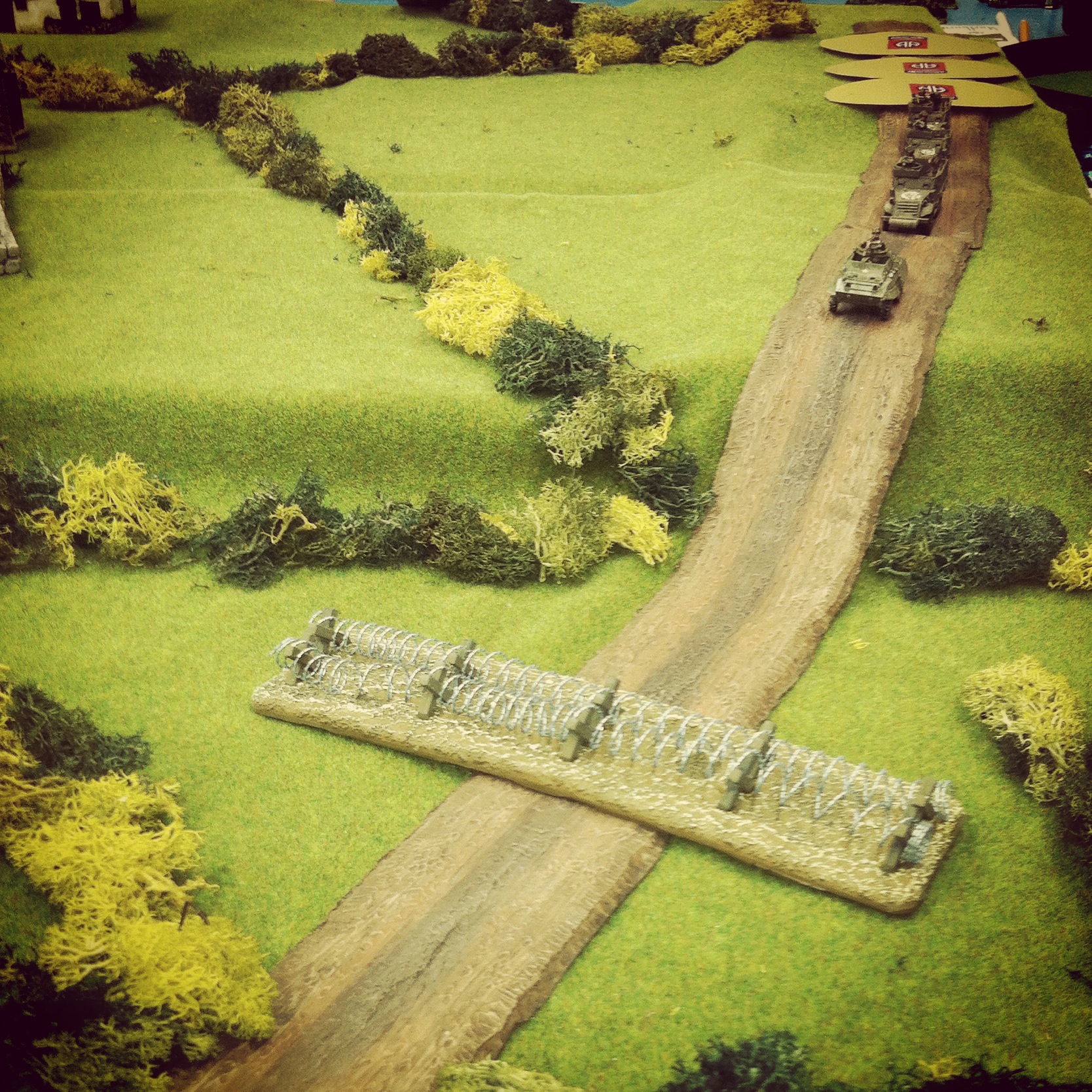
The American blinds moved in straight in column along the road sloping down toward the valley. Heading the advance was a US recon platoon led by an M8 Greyhound armored car. Three platoons of mechanized infantry loaded up in half tracks and a platoon of Sherman tanks fell into line behind.

IMG_4210

A US recon Greyhound at the head of the column exposes barbed wire laid to block passage on the road to the objectives

IMG_4212

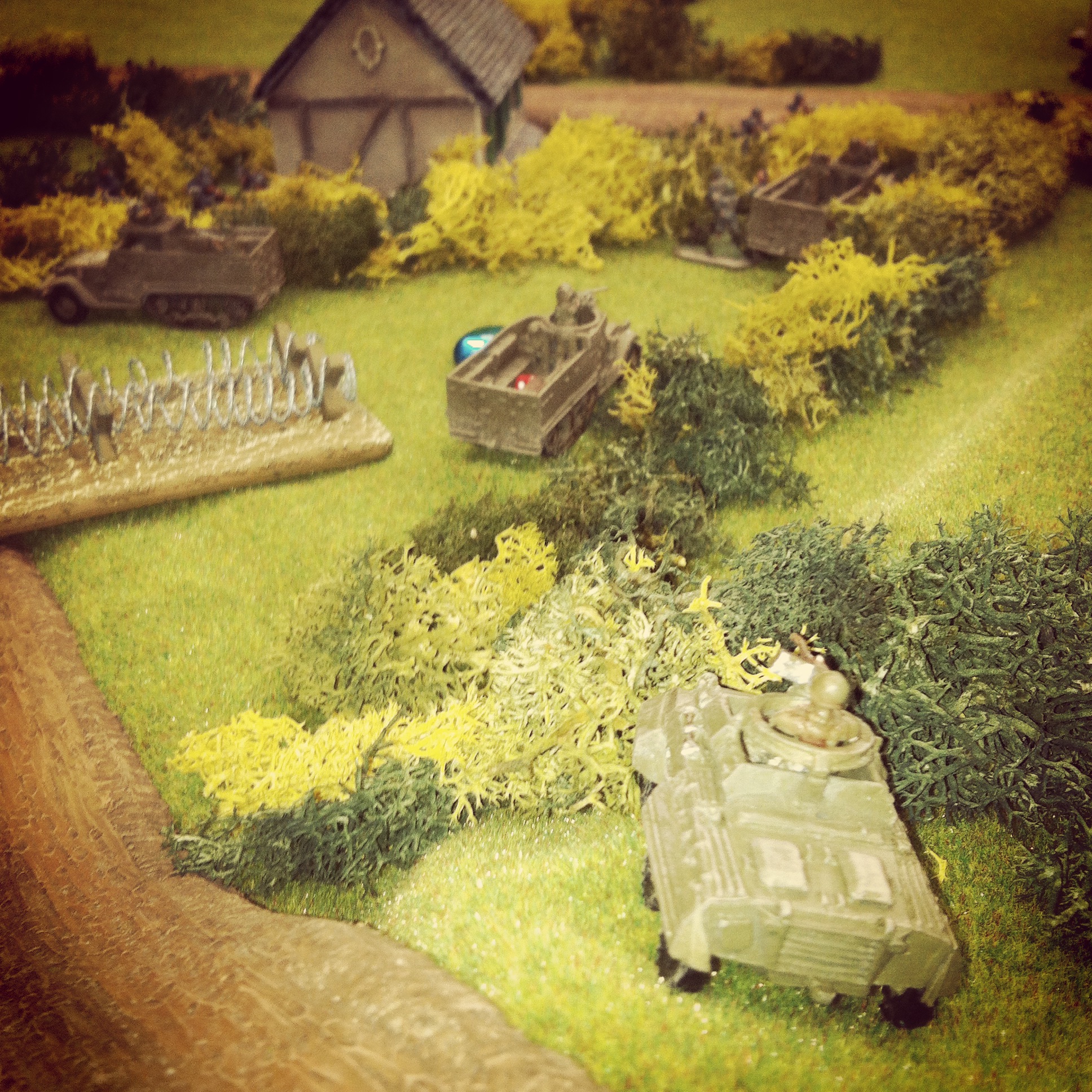
The recon unit moves to overlook the German position near the objective house as US half tracks roll into position

IMG_4211

 German infantry move out of the house to engage the US infantry

IMG_4213Fire from German Panzerfausts destroy two half tracks and their passengers

IMG_4215

Germans use their last Panzerfausts to destroy the remaining half track and its crew

The first few turns progressed quickly with the US column moving down the road under blinds while the Germans quietly defended from concealed positions. The lead Greyhound revealed the barbed wire blocking the road, forcing the first platoon of half tracks off the road toward the first objective. Closing in on the house, the German position was revealed and the Germans quickly destroyed two half tracks and their mounted infantry with shots from Panzerfausts. In subsequent turns, the US commander jumped from his vehicle and was followed in by the final half track which was also destroyed. With the lone US commander in the position, the Germans assaulted taking casualties before eliminating all Americans from the disastrous head-on assault on the objective.

IMG_4214

 The column of US Shermans and infantry mounted in half tracks rush down the road

IMG_4216

German 105mm artillery rains in from off the table wreaking havoc on the US column

IMG_4217

A German Pak 40 and Sdkfz 10/1 break their cover on Hill 91 to engage the paralyzed American column

As the first platoon of US infantry fell, the remainder of the column ran into problems of their own. The Shermans attempted a push into the field off the road but two of the three quickly bogged in the rain-soaked ground. With the Shermans stalled and the rest of the column bunched-up on the road, an off-board German 105mm artillery barrage made a direct hit to the US line. As a result, the tanks took severe damage to their sights, main guns and mobility. Infantry jumped from their half tracks and one platoon took immediate fire from German MG42s hidden in the bocage across the nearby field. As the Americans desperately attempted to spread out and move to cover, additional rounds of fire from the Pak 40 and Sdkfz 10/1 on the far hill continued to pour shots into the remnants of the burning US column.

IMG_4218

 US reinforcements arrive at the house and advance on the defending German left

IMG_4220

Germans attempt to hold the flank at the objective

IMG_4219

Smoke is laid down in front of the German position on Hill 91 to cover the US advance

IMG_4245A late game push up Hill 91 by the US Greyhound leaves it in flames

The survivors from the US column swiftly moved to position themselves for another round of assaults on the German position. Two surviving Shermans unbogged and rolled to position along the bocage, destroying the MG42 positions along the way. US infantry rushed in along both flanks of the German survivors at the farmhouse who were quickly reduced to a single operable fire team. US mortars followed up with a directly aimed smoke bombardment in front of the German guns on the hill, providing invaluable cover for the American ground advance. Pressure from the advancing Greyhound forced the Sdkfz 10/1 to fall back late in the game. As the armored car breached the crest of the hill, a quick shot from the Pak 40 eliminated it. Unfortunately for the Germans, this was one of their last bits of glory for the game.

IMG_4242German defenders get routed at the first objective during close assault and fall back

IMG_4243The last platoon of German defenders get spotted at the second objective

IMG_4244The final objective falls to the Americans as the German defenders are caught in combined infantry and artillery fire

Back at the two objectives, the US moved hard toward victory. A close assault at the first house sent the survivors of two German fire teams running for the rear with heavy casualties and all but eliminated from the game. With that, one lone German platoon was exposed at the second house objective, and all US focus turned toward them. Two turns of heavy US artillery strikes and small arms fire from the bocage across the road laid waste to all but a few of the last Germans holding out. With the US Shermans still working their way on the German left and US infantry closing on the front, my Germans threw up their hands in defeat.

The first day of battle at Hauts-Vents went to the Americans, but as dark was drawing near, another battle was already looming before dawn as more Germans rushed to the defense.

I Ain’t Been Shot Mum: North of Caen 1944 Scenario

BritsCaen1944The city of Caen presented a big target during the Allied invasion of Normandy in June 1944. One of the larger cities in the region of the invasion, it also occupied an important series of crossroads straddling the Orne River. Less than ten miles from the British Commonwealth forces landing zone of Sword Beach, Caen was a target for British and Canadians wading ashore on June 6th. Despite a relatively easy landing at the beach, Allies with their eye on Caen were met with a hastily-organized armored counterattack from the German 21st Panzer Division. By the end of the day, the British sat just halfway to their objective and Caen remained in Axis control.

CaenMap1944Map of the Battle for Caen, July 8-9 1944

Over the next two months, the area around Caen became a bogged-down front as Anglo-Canadian forces positioned themselves around the city. The eventual capture of the city on August 6th was costly for all involved. The ancient city was nearly leveled with Allied bombing campaigns and much of the French civilian population fled. The British forces suffered around 50,000 casualties, a devastating loss of men and equipment for British commander Bernard Montgomery. With the costly British victory, it had achieved not only the occupation of Caen but had also provided an enormous distraction for German forces which suffered even greater losses than the Allies.

iabsmlogo

This past weekend at Metropolitan Wargamers in Brooklyn, NY, a couple of us ran through a non-historical scenario typical of the British-Germany engagements just north of Caen in early July 1944. The “North of Caen” scenario is provided in the basic rule book for I Ain’t Been Shot Mum, the fantastic company-level World War II game that has fast become a favorite for some of us at the club.

Caen1British infantry advance through an orchard under blinds north of Caen

The small infantry engagement is set in the fictional hamlet of Le Moulin on a table of flat, open terrain with fields, orchards, low hedge rows and five stone buildings set at a crossroads. The game begins with three British infantry platoons entering from the north under blinds after an initial off-board artillery bombardment of the Germans dug under in around the farm and crossroads. The objective of the game is for the Germans to eliminate the British advance while the British are tasked with seizing four of the five buildings or otherwise eliminating the German troops.

Caen2A British rifle platoon takes heavy German MG42 fire and is pinned behind a barn

Following my initial bombardment, my British advanced under blinds for a few turns through the orchard northeast of the crossroads. The German blinds positioned themselves in a wood at the crossroads and in a small orchard southwest of the hamlet. Three of my blinds moved toward cover to my left behind a barn while my third false blind moved toward the road. My first blind was spotted behind the barn by a German platoon armed with three rifle sections and a deadly MG42. With the Germans deploying in a nearby barn and within the orchard, they opened up on the British rifles. With not enough cover behind the small barn, one British rifle section was all but eliminated in the first round of fire.

Caen4A British platoon runs bravely under a blind across an open field between two barns

The British survivors behind the barn returned fire, firing their rifles and 2″ mortar into the Germans in the orchards and nearby barn. In the meantime, my false blind was revealed as a second British platoon slipped to the hedge to the other side of the barn. Firing at the Germans from each side of the barn, the MG42 was forced to retreat back south of the crossroads. But the damage had been done to my first platoon at the barn, and two fire teams fell back to the orchard leaving one safely inside the barn. Sensing a brief opening, my final blind sprinted across the wide open field between the barn.

Caen3The British blind is exposed, take fire and break for hedge in the distance

Midway through the field, the German rifles in the second barn spotted and revealed my blind, slowing their run and forcing them to deploy in the open. The final German blind revealed itself among the buildings west of the crossroads. My fresh British platoon hopped the hedges and likewise crossed to the west of the road, opening fire at the Germans in the building just the other side of a small orchard. Subsequent turns of fire were exchanged and my British losses started to pile up on my right.

Back at the field on the British left, combined rifle and mortar fire poured into the Germans in the barn. Despite shock stocking up on the Germans, their position in the barn allowed great enough cover allowing them to slowly begin wearing down the exposed British platoon which became pinned from movement. With British taking losses to the right and less against well-protected Germans in the heavy stone buildings, it was not working out as a good day for the British who ceded the tiny hamlet to the Germans. More costly days were to come after this day just north of Caen, but a month off there would be victory for the British.

I Ain’t Been Shot Mum: Saint Lambert-Sur-Dives 1944 Scenario

stlambertsurdives1944Just over two months after the Allied D-Day landings, the Normandy campaign marched toward a conclusion at the Battle of the Falaise Pocket in mid-August 1944. With orders not to withdraw, a last ditch German defense was cobbled together from surviving Panzer divisions in an area about 20 miles south of Caen. Over a nine day period desperate fighting, the German defenders were eventually encircled by overwhelming British, Canadian and US forces. Aside from tens-of-thousands of surrendering troops, Germany had suffered enormous losses in its dwindling tank forces. Elements of the German 7th Army managed to elude capture and slipped back to the German border, although they too took heavy losses in men and and equipment.

VCCurrieMajor David Currie, winner of the Victoria Cross for his actions at Saint Lambert-Sur-Dives in August 1944

On August 18, 1944, Canadians from the Argyll & Sutherland Highlanders and armored South Alberta Regiment made way for Saint Lambert-Sur-Dives. The objective was to take and hold the town, thus preventing more Germans from slipping out of the Allied encirclement. Over three days of infantry fighting and tank duels in and around the town, heavy losses piled up on both sides. With dozens of vehicles and tanks destroyed, the surviving Germans surrendered to Major David Currie. Currie’s actions at Saint Lambert-Sur-Dives earned him the Victoria Cross, the only one earned by a Canadian during the Normandy campaign.

IMG_4093
View from the north entry point for Canadian troops in the IABSM Saint Lambert-Sur-Dives scenario

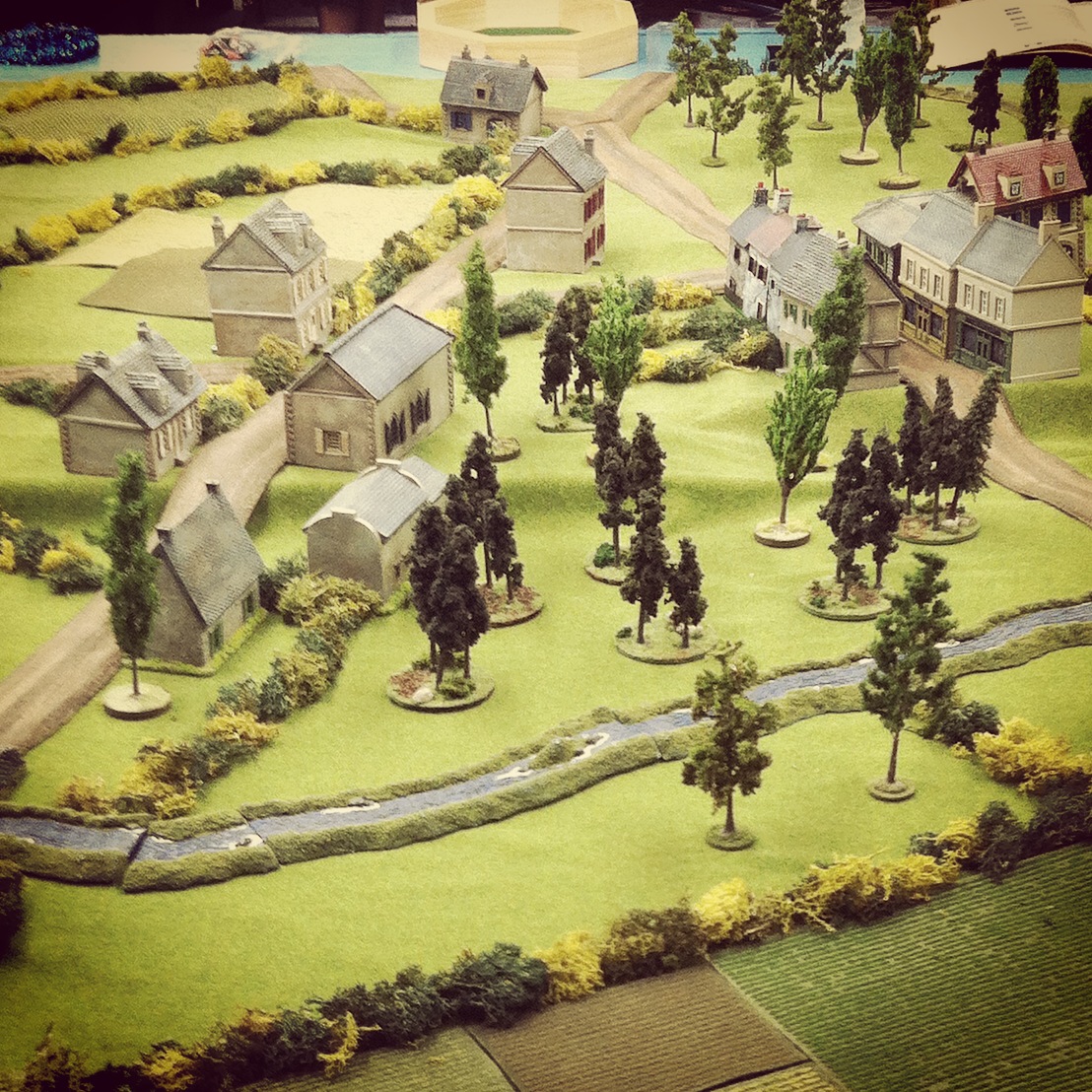
The rulebook for I Ain’t Been Shot Mum from Too Fat Lardies includes a scenario for the battle at Saint Lambert-Sur-Dives which we recently ran at Metropolitan Wargamers in Brooklyn, NY. Using 15mm terrain, we set up the table with a series of roads intersecting at the town sitting at the edge of a hill surrounded by fields, orchards and hedgerows.

IMG_4092View from the south of the IABSM scenario — the Canadian objective is the crossroads at the lower right

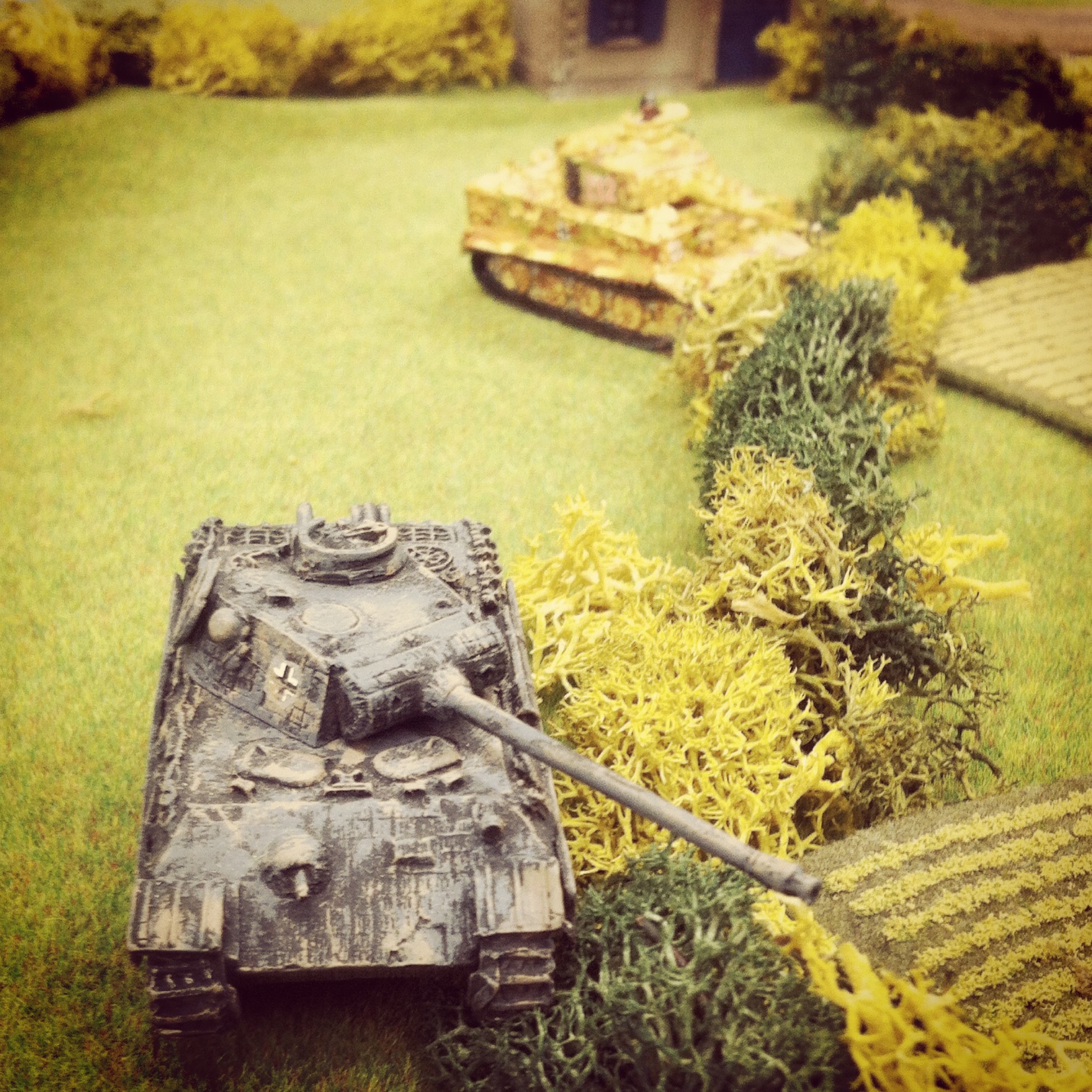
My first Canadian platoons arrived under blinds along the road to the north heading straight for the town where the Germans waited. With several turns of movement under blinds, the plan for each side was quickly exposed in two main areas of the field. My two platoons of M4 Sherman and Firefly tanks made straight down the main road toward the crossroads objective. To stave off the Canadian armor, the Germans quickly set up their Panther A and Tiger tanks behind a hedge southeast of town. The other German armor, two Panzer IVs operating without a commander present, set up in the orchard south of town and covering the other main road to the objective.

IMG_4095German Panther and Tiger tanks overlook the main road into Saint Lambert-Sur-Dives

IMG_4096Panzer IVs occupy the orchard at the southwest corner of Saint Lambert-Sur-Dives

Two platoons of Canadian rifle infantry crossed the river. One made way to the orchard just north of town at the middle. Meeting them was a single, smaller German rifle platoon. The veteran Canadians quickly destroyed half of one fire team from the tired, German regulars. The surviving Germans pulled back to take up position in the buildings in town as the Canadians pursued.

IMG_4094Canadian and German troops open fire across the stream just north of Saint Lambert-Sur-Dives

IMG_4098Canadian infantry press forward through vicious fire at the center of town

The second Canadian rifle platoon made way through the buildings nearby their fellow Canadian tank platoons. Once close enough, the Canadian rifles exposed a German platoon armed with a frightful MG42 camped out in a farmhouse on the eastern edge of town. Thus all the infantry settled into a series of firing positions at the center of town with the Canadians taking fire from German rifles and machine guns on two sides.

IMG_4097Canadian and German tanks exchange fire to the southeast of Saint Lambert-Sur-Dives

At the farm to the east, a game-long tank duel erupted with the Canadian Shermans and Firefly tanks firing from positions behind the French farm’s buildings. The German Panther and Tiger fired from light cover of a hedgerow over the fields beyond. In two turns of fire, the Panther sat in flames and the Sherman platoons were able to focus on the Tiger which unsuccessfully returned fire over repeated tries. One Panzer IV shot harrassingly at the Sherman platoon closer to town which was forced to turn its guns away from the Tiger to return fire.

IMG_4100With German armor aflame, Canadian tanks roll to seize the objective

Back at the town’s center, the Canadian infantry took heavy casualties from German rifles shooting from building windows and the Panzer IVs firing from the orchard. The breakthrough for the Canadians came as the Tiger was destroyed and the Shermans were able to fire up their engines and make way across the fields. Turning the Sherman and Firefly guns to the orchard, the Panzer IVs were quickly destroyed. One more fresh German rifle platoon finally moved to occupy buildings in the town, but by then the path was wide open for the Canadian armor to roll unmolested to the crossroads objective and victory.

This was our first IABSM game using a lot of armor, and the unbalanced number of Canadian tanks firing and moving without a single loss clinched the game for the Allies. The veteran Canadian rifles had also served their purpose of locking down the town in a pitched battle with their numbers and quality allowing them to hold out against their German foes.

Seventy years ago at Saint Lambert-Sur-Dives the German surrender was captured by a a film crew, and bits of the film survive today (see below). The exploits of the Canadians in the Falaise Pocket led by Major David Currie helped seal victory for the Allies after months of fighting in Normandy, and his miniature tank crews won the battle again on our tabletop historical repeat of this important victory at one more crossroads in the French countryside.

Newsreel footage of Canadian troops in action and the German surrender at Saint Lambert-Sur-Dives in August 1944

Micro Armour: How To Apply Decals To 6mm Models

tankfactory

I’m working my way through my new 6mm micro armor modelling project using models from GHQ. After painting I arrived at the stage of applying decals which I also ordered from GHQ. Like many hobbyists, I have a love-hate relationship with decals at any scale. Cutting and applying decals can be frustrating as they fold, tear or wind up in the wrong positions on models. On the other hand, getting decals successfully applied to models adds a ton of personality to a paint job and can allow for easier identification during play on the tabletop.

An experienced micro armor modeller and player at Metropolitan Wargamers in Brooklyn, NY turned me on to his technique for applying decals to 6mm models which I’ve found to be fast and easy with great results. Being organized and methodical in an assembly line manner is key. Having the right equipment is also a necessity. Magnifying reading glasses keeps all the tiny decals and models in focus. Working off a clean, flat hobby mat provides an ideal surface to cut decals and also keeps things easy to see. A sharp hobby knife with a fresh blade, some very fine brushes, clean water, white glue, paper towels and a cotton swab round out the basic equipment. Finally, using a decal fixative (I use Walthers Solvaset) gives a good bond for decals once applied, nestling them into the uneven surfaces of the model.

Applying 6mm Decals

  1. Carefully cut around the shape of each decal with a very sharp hobby knife.
  2. Using a finger tip, dot several small beads of  clean water in a row on the work surface.
  3. Apply a small amount of watered-down white glue to the surface of the model where the decal will be applied.
  4. Carefully push a decal into a bead of water using a small brush.
  5. After a few seconds, roll the decal off its paper backing using a fine brush.
  6. Roll the decal onto the model’s surface and gently push it into position.
  7. After a few minutes of drying time, dab the decal area with a cotton swab to remove any excess water.
  8. Coat the decal and the immediate area with a decal fixative solvent.
  9. Once models are completely dry, spray with a protective matte finish.

IMG_4079Applying decals to 6mm American armor

Historic markings varied a lot during World War II, so I largely came up with my own simple plan for my decals. Each one of my half tracks got encircled white air-observation stars on the hood. My Shermans each received two stars, one plain star on the front hull and an encircled white star on the rear deck of the tank. The M10 Wolverines and armored cars likewise received white stars in circles on the rear deck area.

IMG_40776mm US armor and transports with decals applied

I was able to complete all my decals in just two evenings, totaling  just about two hours. I couldn’t be more pleased with the results, and I didn’t lose a single decal in the process. Now that I’ve got my newly-learned technique down, it’s on to my German armor and then the battlefield.

Flames of War: Fielding the PSC US Mortar Support Platoons

USmortaritaly

As with so many armies past and present, the infantry man was the backbone of the US Army during World War II. Armed with the M1 rifle, his training and an enormous line of supply to the rear, the American soldier was arguably one of the most formidable combatants in the history of warfare.

That said, even the most effective foot soldier often needs support. Along with machine gun crews, US infantry companies commonly contained the M2 60mm mortar. Crewed by just two men, the M2 added explosive punch in a highly portable weapon which could move swiftly with ground advances through varied terrain.

wwIIchemmortar M2 4.2 inch chemical mortar in use during World War II

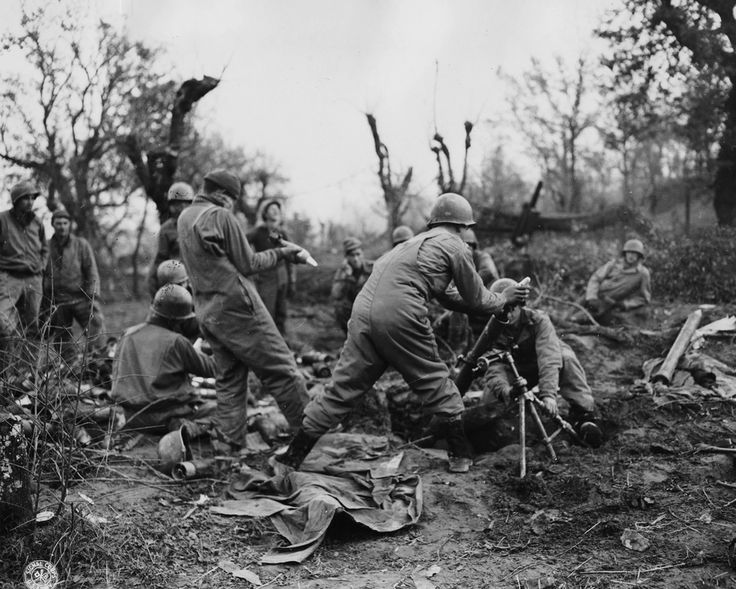
At the battalion level, larger mortars with more diverse ammunition, longer ranges and greater effectiveness were also available. The M1 81mm mortar (pictured at the top of this post) was used throughout the war with its 3000 yard range and mix of explosive shells. The larger mortar, weighing in at about 150 pounds, required a larger team and was commonly transported by cart or mounted in the back of a halftrack.

By the time of the Allied invasion of Italy in 1943, the even heftier M2 4.2 inch chemical mortar was added to the American arsenal. Designed but never used for lobbing various weaponized chemical payloads like poison gas, the M2 was set on a large rectangular base plate with a pinion-like stand to stabilize firing large explosive or smoke payloads over 4000 yards. The weight and over-sized shells of the M2 did limit its portability significantly, but even so, it helped to very effectively fill out the small artillery arsenal at the infantry level.

pscusheavyinstr

Sprue detail for the PSC US Heavy Weapons set with 60mm, 81mm and 4.2 inch chemical mortars

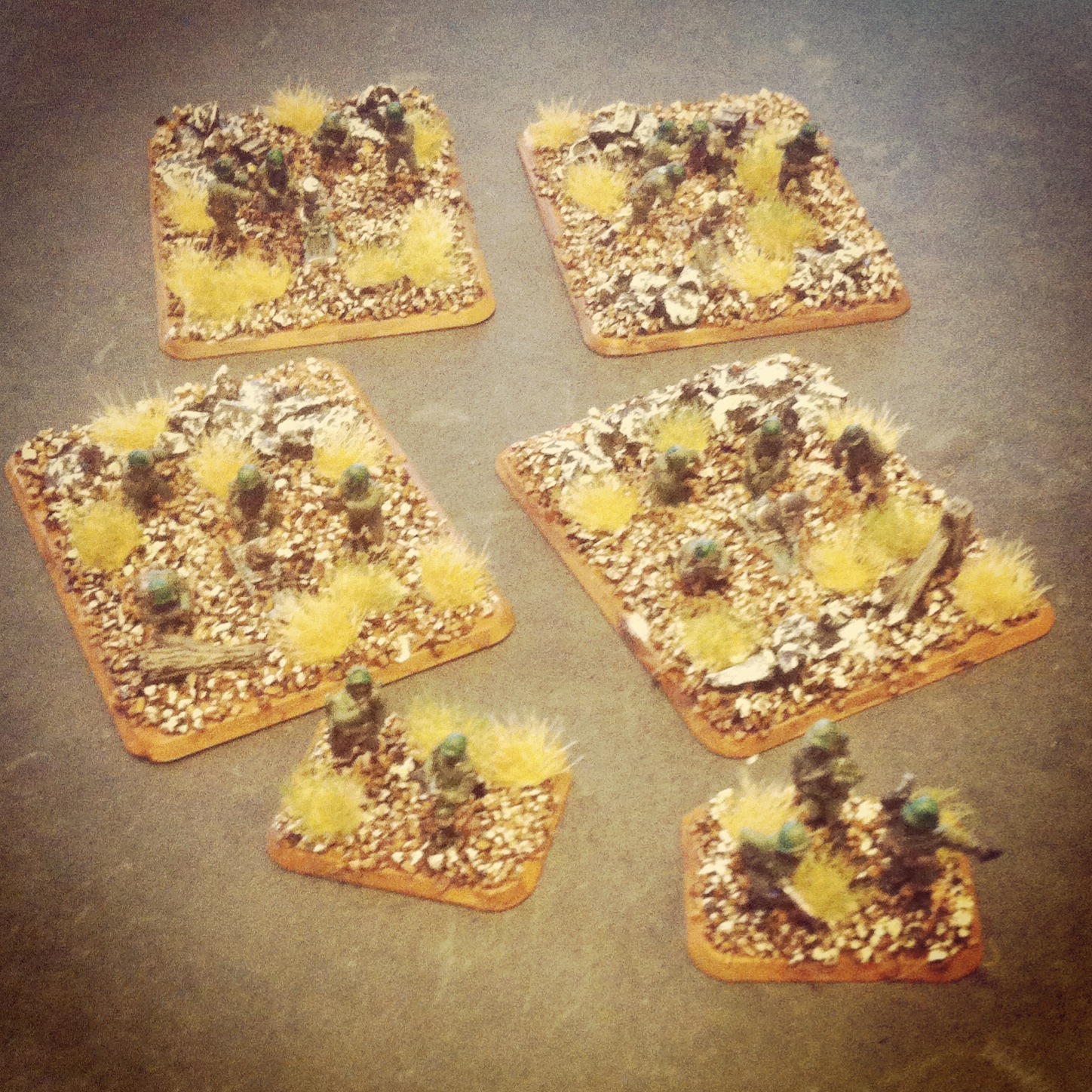
I’ve been diversifying my mortar support when building my US force for our Flames of War Infantry Aces Campaign at Metropolitan Wargamers in Brooklyn, NY. The Plastic Soldier Company’s Late War US Heavy Weapons 1944-45 box offers a whole host of extra weapons for my infantry, including three types of mortars. My 92nd Infantry Division started out with a weapons platoon containing a few standard 60mm mortars along with some M1919 machine guns.

To my initial force, I’ve recently added both 81mm and 4.2 chemical mortar platoons (photos below). I continue to be impressed by the PSC sets both for their sculpting as well as their value. I love the mortar crews holding their ears as the mortars fire and the guys crouching with binoculars. The tiny arms can often be a bit wonky when gluing the figures up, but this also allows some flexibility in poses. I set up one pair of figures in a little vignette of one guy reaching over to console his comrade who has been rattled by all the noise.

IMG_4003Completed 81mm mortar platoon

IMG_4002Detail of 81mm mortar and command

IMG_3998Completed 4.2 chemical mortar platoon

IMG_4004Chemical mortar platoon observer and command stands

IMG_3999Detail of a 4.2 chemical mortar squad

MWGInfantry Aces

I’m putting my new mortar support platoons to use already in the Infantry Aces Campaign we’ve been running at the club for more than a month now. Although their first outing this past weekend wasn’t very successful, I’ve been studying up on FOW mortar smoke tactics. With strength only in numbers with my relatively inexperienced Confident/Trained riflemen, I’m going to be giving my force another try soon with mortars raining smoke and pinning fire on my German opponents. My hope is the mortars will provide just the support my American infantry need to fight to another tabletop victory.

Flames of War: Metropolitan Wargamers Infantry Aces Campaign

MWGInfantry Aces

Two weekends ago we kicked off a Flames of War Infantry Aces campaign at Metropolitan Wargamers in Brooklyn, NY.

A friend of the club and organizer of the campaign has created a special Infantry Aces blog to track the campaign’s progress throughout the summer. The site will be updated weekly as the battle unfolds with after action reports, lots of photos and tracking of each player’s progress in the campaign.

While the battle rumbles on, here’s a brief look at the forces we’ve had fun researching, modelling and painting specifically for our campaign for Italy.

Allied Forces

FOWIAAllies

(clockwise from top left) 504th Parachute Infantry, 92nd Infantry “Buffalo Soldiers,” Gurkha Rifles and members of the 2nd New Zealand Division

Our Allied forces are a mixed group from the Road To Rome book and reflect the mutlinational forces which came together in the late war Italy campaign to break the Axis lines. From the United States, the 504th Parachute Infantry Regiment is bringing their experience to the field after having fought for years from North Africa and Sicily in 1943 to Operation Market Garden to The Battle of The Bulge in 1944. Joining them, are the untested 92nd Infantry Division “Buffalo Soldiers,” the first African-American infantry to fight as wholly-segregated unit in the war.

Allied with the US troops are some unique UK Commonwealth forces. The Indian Gurkha Rifles had a long history in service of the British dating back to the mid-19th-century, and their skill in close combat and rocky terrain would serve them well in Italy. The  2nd New Zealand Division served most of the war in North Africa and hopping around the islands of the Mediterranean until joining the Allied effort to break the Axis lines severing Italy from the rest of Europe.

Axis Forces

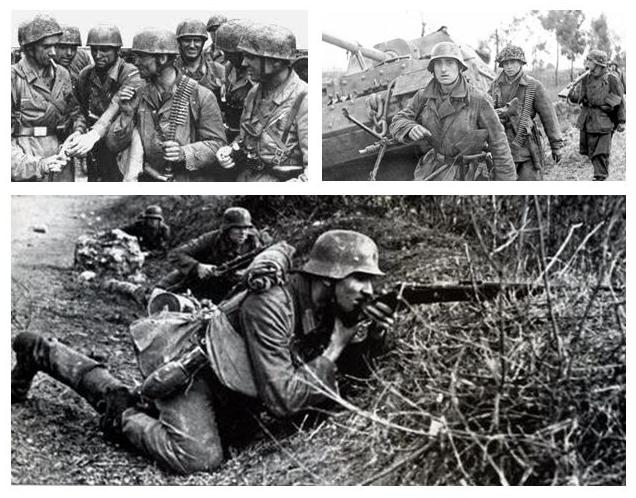
germanyia (clockwise from top left) Fallschirmjagers, Hermann Göring troops and Grenadiers

Using the updated Fortress Italy book, our Axis players have fielded some of the classic, war-hardened forces whose mission it was to hold the line against the Allied push up the Italian Peninsula. The 1. Fallschirmjägerdivision in Italy had already proven themselves throughout Europe with wide-ranging early war operations in Denmark and Norway, the Netherlands, Crete and the invasion of the Soviet Union with Operation Barbarossa.

Two other veteran companies fill out the Axis forces. The Hermann Göring Fallschirmpanzerdivision saw action throughout Europe and Africa before fighting in Italy. Finally, the 362.Infanterie-division had seen a long war (including the Battle of Stalingrad) by the time they joined the final Axis defense of Italy.

The Campaign Begins…

IMG_3685

Recent FOW Infantry Aces campaign action at Metropolitan Wargamers

We’ve got two weeks of campaign games in so far, and playing with small infantry forces of 500 points has been a refreshing break from the larger FOW games in which we all usually play. Special rules, varying troop ratings and small tables clogged with Italian terrain have also added to the challenges and enjoyment we’ve all had so far. There’s a lot of gaming to do as the campaign escalates over the coming weeks to 700 and 900 point companies with added support. Check back frequently for more of the action over at the Infantry Aces Metropolitan Wargamers Italian Flames of War site.

Flames of War: Fielding the 92nd Infantry Division Buffalo Soldiers

buffalsoldierscmnd

Although African-Americans have fought in every war in US history, their fight has often come on multiple fronts of prejudice and acceptance at home and abroad. Segregated units such as the famed 54th Massachusetts during the American Civil War and the 369th Infantry Regiment Harlem Hellfighters in World War I have received their due in popular culture in recent years, as have the WWII pilots of the Tuskegee Airmen.

On the ground, African-Americans in WWII were most often relegated to support roles early in the war as truck drivers, stevedores and cooks. By late in the war with reserves of Allied soldiers dwindling throughout the European campaigns, black soldiers were pressed into service at the front lines of the Battle of the Bulge and the Italian Campaign. It was in the actions in Italy where the famed 92nd Infantry Buffalo Soldiers added another chapter to their service history.

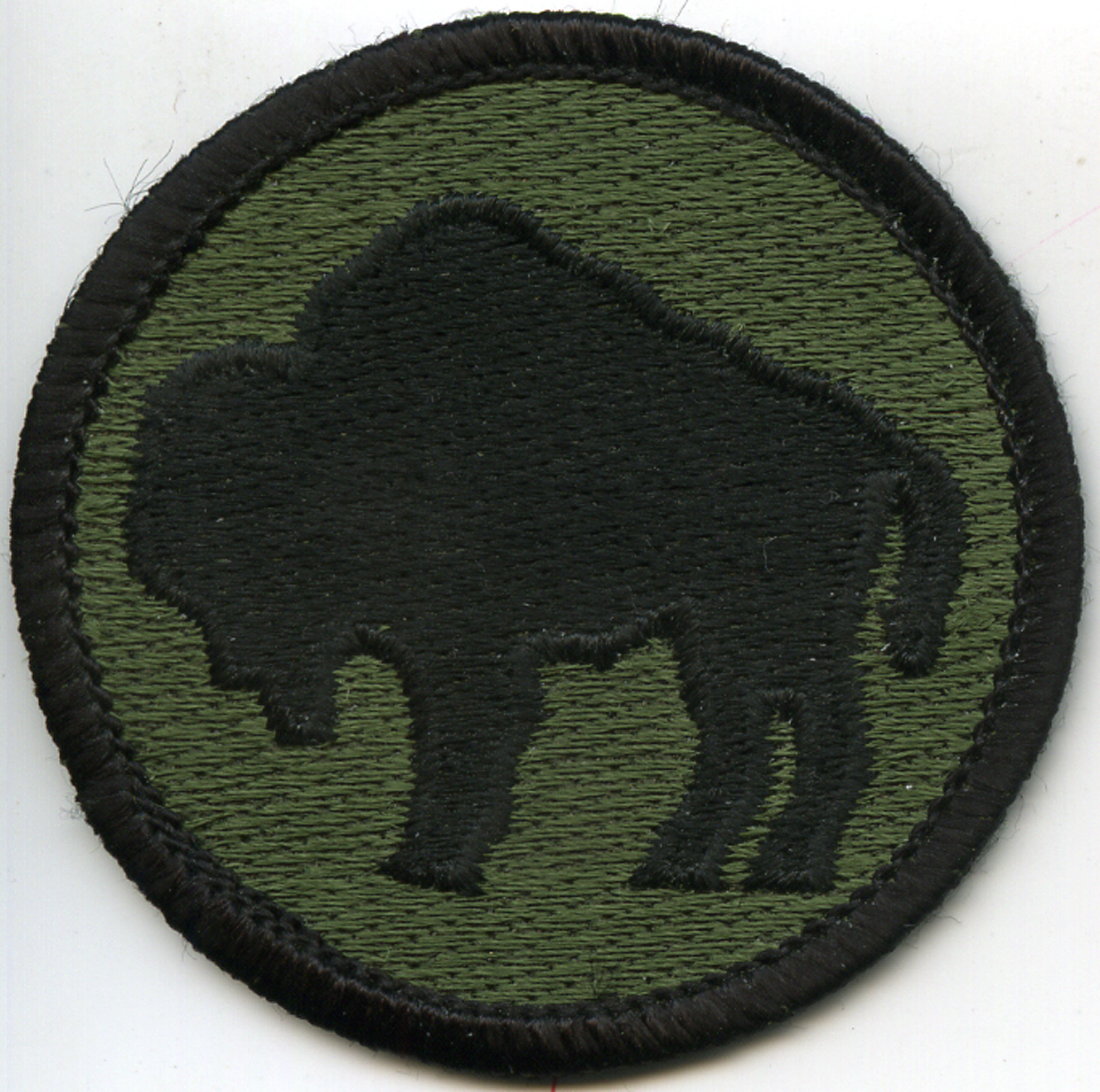
92ndpatch

Shoulder insignia of the 92nd Infantry Division ‘Buffalo Soldiers’

The Buffalo Soldiers in the Italian Campaign

The name “Buffalo Soldiers” dates back to the frontier Indian Wars of the 19th-century when post-Civil War free blacks volunteered for service in various US army capacities in the West. Later, these units continued serving in various capacities through the Spanish-American War and into WWI. Reactivated in 1942, the Buffalo Soldiers of the 92nd Infantry Division finally made their way to the war via Italy in the fall of 1944.

Video of the 92nd Infantry arriving in Italy in October 1944

As part of the US 5th Army, the 12,000 men of the 92nd Infantry made up part of the multinational Allied coalition of US, Brazilian, British and UK Commonwealth forces which sought to break the Gothic Line. Cutting across Italy, the Axis hoped to hold off any further Allied progress north to meet with other Allied forces pressing through Europe from Normandy inland toward Berlin.

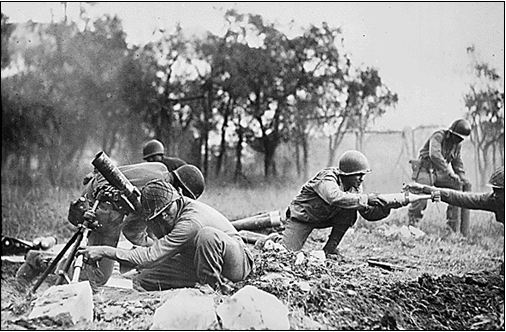
92mortar

A 92nd Infantry Division mortar crew firing near Massa, Italy

Led by senior white officers in otherwise segregated units, the 92nd Infantry made up a key element of the left flank of the Allied push up through the Italian peninsula. Crossing the Arno River and proceeding north, the 92nd made its way up the Mediterranean coast  through Lucca, Massa and on to La Spezia and Genoa by the time of Axis surrender in May 1945.

The legacy of the contributions of the 92nd Infantry Division’s effectiveness in Italy has been much-debated. A paper from the 1950s does what I read to be a good job in explaining the challenges the Buffalo Soldiers faced — delays in reinforcements,  shortages in re-supply and a lack of training for the kind of terrain encountered in Italy. I believe much of this can be chalked-up to the ingrained organizational racism against the segregated units. Post-war, the members of the Buffalo Soldiers also returned to a United States still entrenched in racial discrimination. It was not until the late 1990s that two members of the 92nd were recognized with Medal of Honor commendations, some fifty years after the war’s end.

Spike Lee’s Miracle At St. Anna

StAnna

As a wargamer and film fan, I often turn to the movies to cross-pollinate my interest in a period. Spike Lee’s Miracle At St. Anna from 2008 tells the story of four soldiers from the 92nd Infantry who hide out in a small Tuscan village and bond with its residents amid the oppression and danger of German occupiers. Lee’s movies often run hot and cold, and Miracle at St. Anna met with mixed reviews, poor box office results and a fair amount of criticism over the lack of historical accuracy. All that said, the Italian locations and strong individual performances makes the movie worth a view for a rare glimpse of African-American soldiers in WWII cinema.

Modelling the 92nd Infantry Division for Flames of War

fowroadtorome

In late February 2014, the revised Flames of War Road To Rome and Fortress Italy compilation was released as an updated and expanded guide to the Italy campaign of 1944 and 1945. The Fortress Italy book covers the German and Italian defenders, and Road To Rome outlines the Allied US, British, Polish, French and lesser-known UK Commonwealth forces from Canada, New Zealand, India and South Africa. A third book, Italy Battles, provides special mission rules, battle scenarios and campaign notes for Anzio (aka “Operation Shingle”) and Monte Cassino.

infantry aces

Having dedicated years of my FOW modelling and gaming to Western Europe, these books provided a great opportunity for myself and other members of Metropolitan Wargamers in Brooklyn, NY to dive into a club-wide Italian project. I’ve also been wanting to put together a unique company for my FOW collection, and I was pleased to find the 92nd Infantry Regiment outlined in the Road To Rome book. With all our focus on the Italy theater, we’ve decided to dive headlong into a multi-month FOW Infantry Aces campaign, and there will be more to come with updates on our new Infantry Aces blog.

PSCUSinf

For my 92nd Infantry I decided to snap up the two sets from the Plastic Soldier Company – Late War US Infantry 1944-45 and US Infantry Heavy Weapons. At about $26 a box from my favorite online dealer The Warstore, the PSC kits are a huge value in fielding an entire infantry company along with bazooka, machine gun and mortar supporting weapons. Assembly involves lots of small parts and bases must be purchased separately, but getting a whole company on the table for a fraction of the costs of FOW models can’t be beaten.

IMG_3669

Pvt. Fred “Radio” Rogers and Lt. Daniel McFeeley

To fill out my force, I picked of the FOW Infantry Aces set for about $12. The pack gives you nine stands of character models to create special Infantry Ace command stands for use in the Infantry Aces campaign. The blister pack includes general US, British and German models with special Fallschirmjäger, Japanese-American Nisei, Kiwi and turbaned Indian characters. I shared the models with my fellow players at our club, and modelling these guys really adds some nice personality to the game. For my Command Ace stand, I’ve modeled the fictional Pvt. Fred “Radio” Rogers and Lt. Daniel McFeeley leading the way for my company.

IMG_3670One of my three rifle platoons for the 92nd Infantry Division

In the FOW Italy campaign, the 92nd Infantry Division is rated as Confident-Trained making my force cheap and numerous. To start, I’ve constructed three rifle platoons with two rifle squads each plus a platoon command and bazooka in support. Along with my rifles and McFeeley and Rogers leading the way, I’m also bringing a weapons platoon in support. The platoon packs a punch with three 60mm mortars and four M1919 machine gun crews.

IMG_3671My Buffalo Soldiers mortar and machine gun weapons platoon

For all my models, I glued the PSC soldiers and equipment onto FOW bases and then hit them with an army green spray coat base. Boots, equipment, rifle stocks and flesh got a dark brown. Pants were done in a tan paint and leggings got a brownish off-white color. Guns were finished off in a metal coat. Basing involved a layer of fine gravel and larger rocks coated in a brown wash and then dry-brushed in a grey-white. Finally, tufts of brown-green grass completed the Mediterranean look of the models.

The beginnings of my platoon will be hitting the tabletop shores of Italy this coming weekend in their first round of our club’s Infantry Aces campaign. In the coming weeks I’ll be adding additional infantry weapons support with additional mortars, machine guns and more infantry. Even before these guys see their first action, I’m pretty thrilled to have put in the time to create some pretty unique models that I haven’t found modeled anywhere else at this scale. As in WWII years ago, I think the 92nd Infantry Buffalo Soldiers have been too often forgotten by mainstream history and many gamers alike. With my soldiers hitting the field again, I hope to bring a bit more glory back to these men who not only contributed to the fight against Axis fascism but also stood bravely against the tide of so much history against them.