Metropolitan Wargamers D-Day Plus 70 Event Report

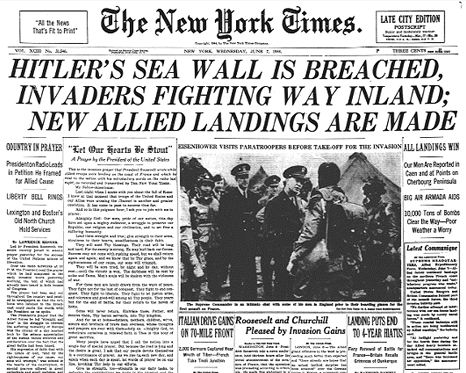
NYTimesDDay

This past weekend at Metropolitan Wargamers in Brooklyn, NY, dozens of gamers came together for three days commemorating the 70th anniversary of the Allied invasion of Normandy on June 6, 1944. Throughout the weekend, we ran multiple WWII-themed games, including Normandy ’44, I Ain’t Been Shot Mum, Flames of War, World In Flames and Memoir ’44. Dice were rolled, strategies were debated, prizes were won and Allied and Axis forces vied for control of France. In all, it was another great weekend full of gaming at our club’s space in the heart of Brooklyn.

Friday Games
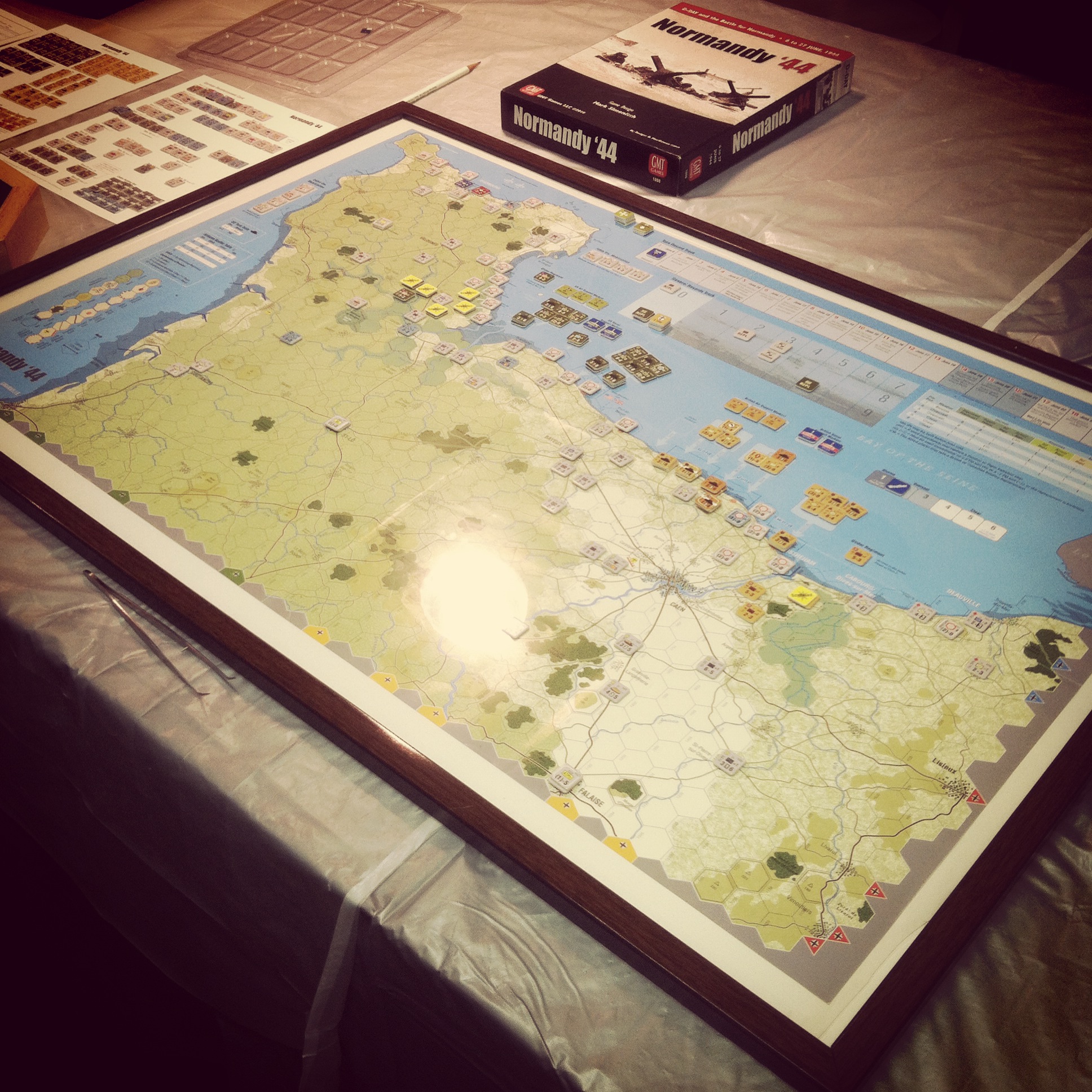
IMG_3586The invasion of France begins with Normandy ’44 at Metropolitan Wargamers

Friday kicked off after work with a few players unpacking a fresh copy of the classic Normandy ’44 from GMT Games. This one-map game covers the pre-dawn D-Day Airborne landing areas, five Allied invasion beaches and the charge to the initial inland objectives. The game scale plays with regiments and battalions with each turn representing one day of action. The small, self-contained game provides a great introduction to game mechanics at this scale with a tight, clear rules set. With a quick look at the game, I decided I’m going to have to personally give this one a shot sometime soon.
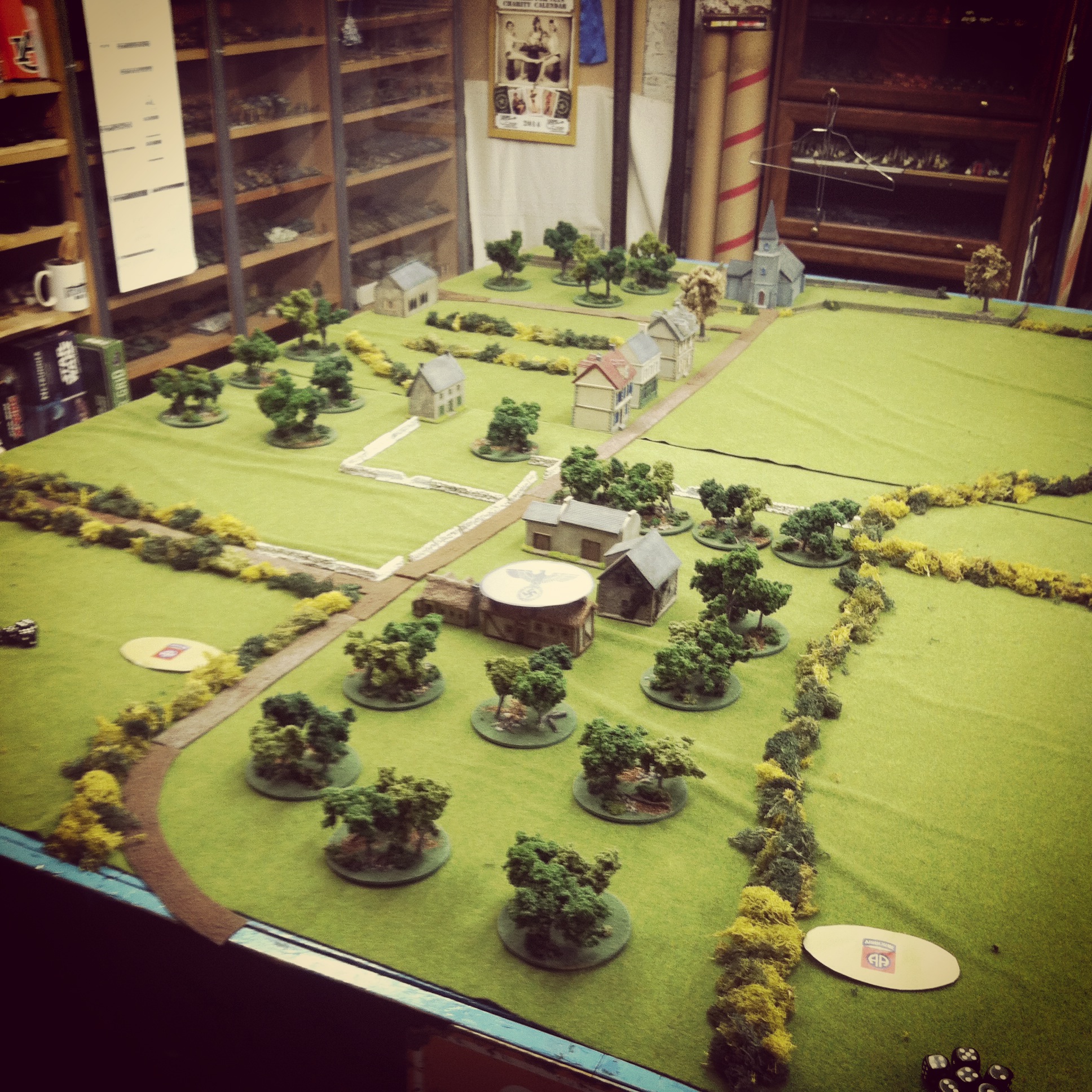
IMG_3587 US infantry blinds move toward unsuspecting German defenders at a farm outside Vierville

At the back of the club, we ran a game of our new favorite WWII tactical miniatures game, IABSM  from Too Fat Lardies. In our ongoing campaign of the Normandy scenarios in the IABSM Where The Hell Have You Been Boys? book, our game focused on the battle at Vierville-sur-Mer. With the 116th Infantry Division supported by the 5th Ranger Batallion, the Allied mission was to drive inland to capture and defend the church at Vierville.

IMG_3589

German and US units exchange fire in and around the farm at Vierville

As per the scenario, initial Allied blinds approach a farm outside Vierville where a German blind sits unknowingly in the complex of buildings. With Allied infantry closing in over dense bocage hedgerows and orchards, a firefight erupted and drove the German defenders through the buildings and into the orchard beyond.

IMG_3590

German reserves arrive at the flanks of the advancing US infantry outside Vierville
IMG_3633

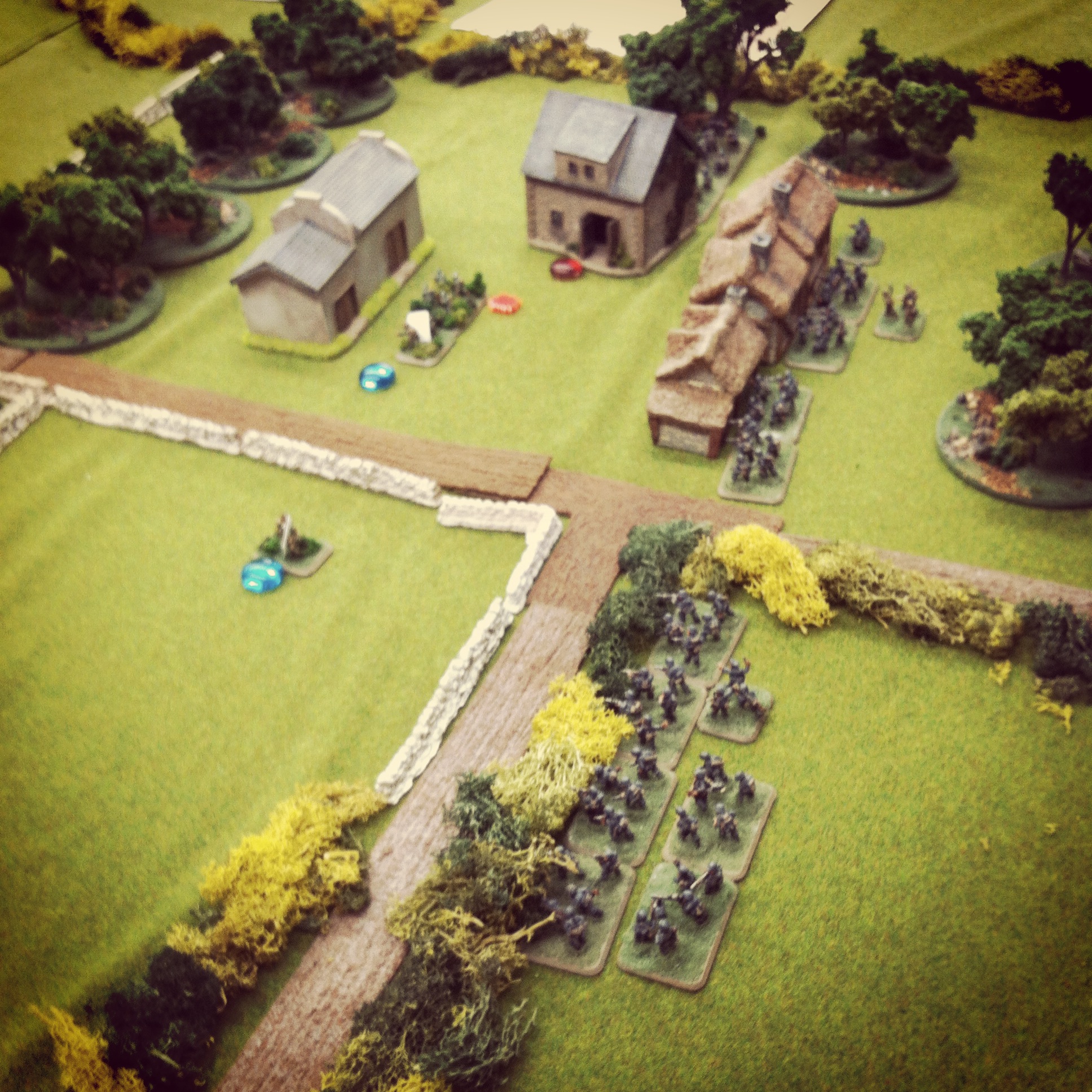
Germans reinforcements push the Americans from the farm

As the first force of Germans fled the farm, their reinforcing comrades came on to the rear and flank of the US infantry. The Americans made consecutive moves of firing and moving back to defend at a series of stone walls across the road from the farm. The retreating defensive US actions held off the German onslaught until enough Americans could take up position amid Vierville’s houses. At the same time, the US Rangers moved in at the far end of town to hold the objective at the church.

IMG_3632

Americans pull back from the farm to take position in Vierville

The game eventually settled into a bloody house-to-house and hedge-to-hedge fight along the road leading toward the church. Occasional lucky shots from US Ranger light machine guns at the church also harassed the Germans lying low behind their stone wall position at the farm’s orchard. By midnight, much of the initial American force had been destroyed or was retreating to a final stand at the church held by the Rangers. While the Germans had also lost a sizable amount of their force, their heavy machine guns were still in play as they closed in through the town. This time around, we called the action at Vierville a draw.

Saturday Games
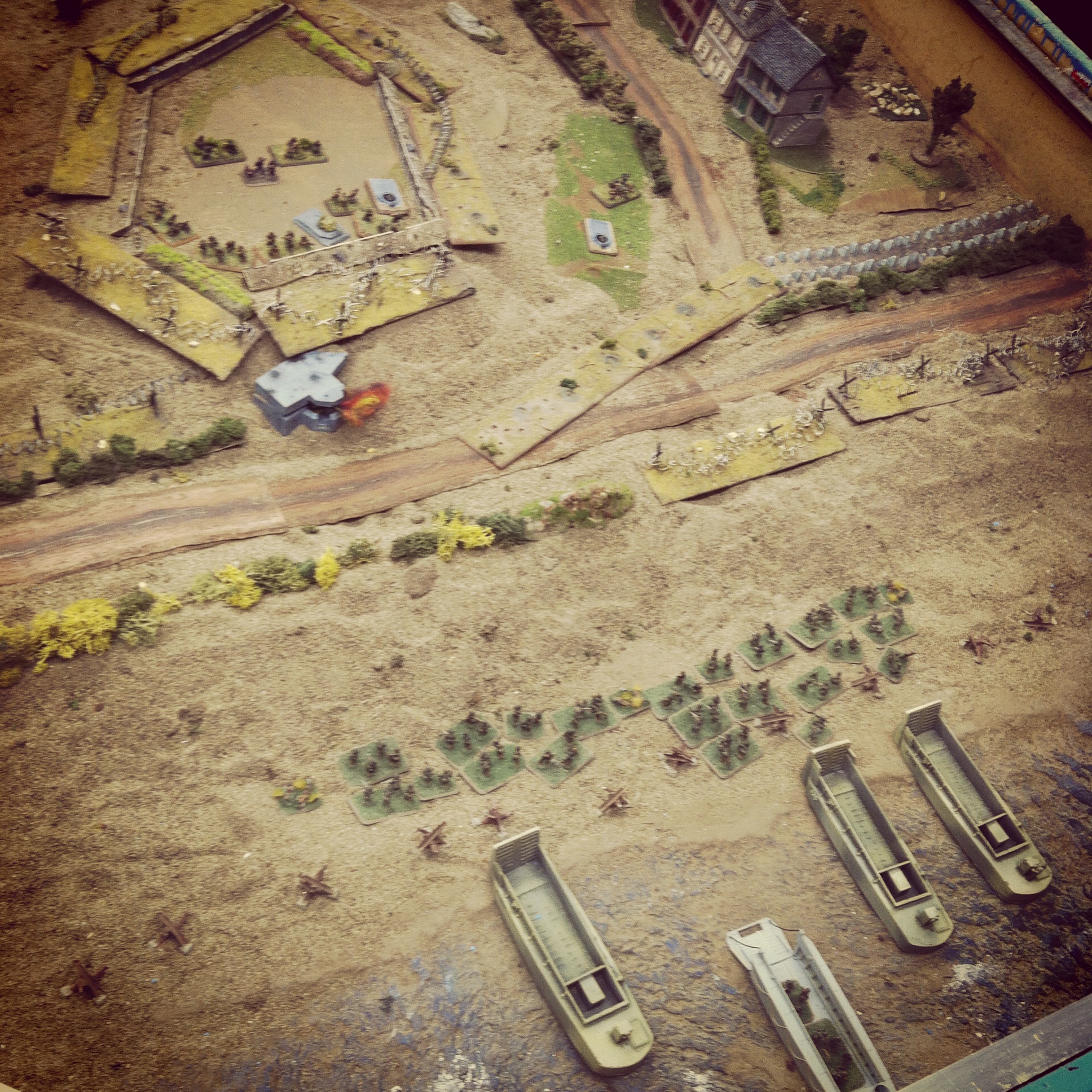
IMG_3603The Americans hit the Easy Green sector of Omaha Beach

The next day kicked-off with a running of a FOW beach landing at Easy Green on Omaha Beach. We have been play testing the FOW scenario over the past two months, tweaking our forces and strategies to cope with the clumsy beach landing rules. In our past games, the US invaders only manage to win about a third of the time. Even so, we decided no D-Day weekend was complete without a return to “Bloody Omaha” on one of the club’s award-winning sand tables.
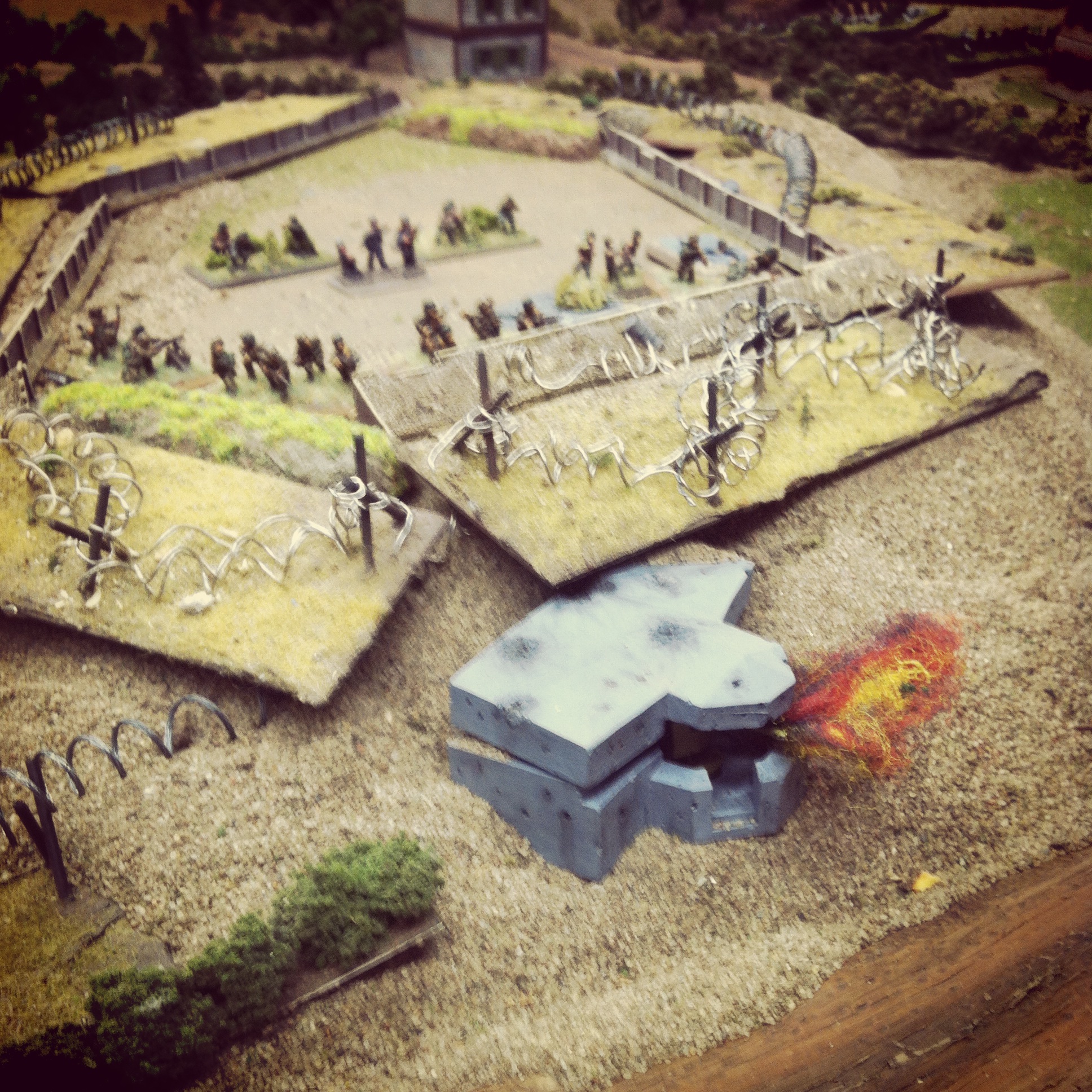
IMG_3604German defenders hold their positions behind a burning bunker

The opening turns found a lot of US boats on the beach and a quick push to the seawall. So early combined arms fire managed to destroy the main bunker at the beach, but the battle was far from over. The initial US push followed on to the left of the beach, but multiple turns at clearing the barbed wire stalled the advance as the Americans took heavy fire.
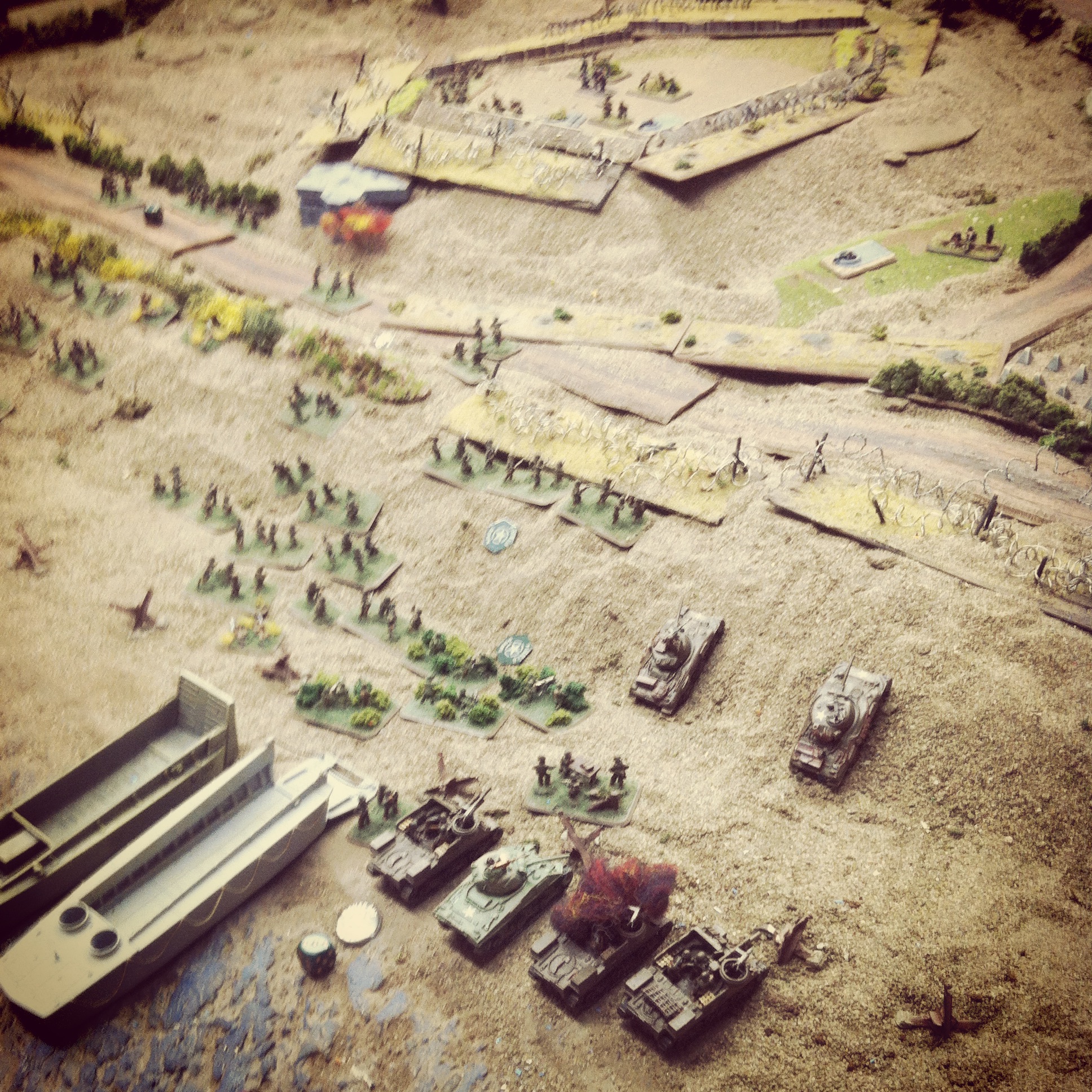
IMG_3606

American armor and artillery follow-up the infantry landings

As US armor arrived, several tanks managed to drive off the beach to the minefield position to lay down fire on the German trenches. One tank wound up spending three turns bobbing in the surf offshore only to arrive and bog for two more turns on the beach. As this most inexperienced tank crew in Normandy struggled, the other Shermans took fire from German rockets and reserve tank platoon which rolled to bulk up the beach defense. American artillery also arrived but proved pretty ineffective to the Germans at the trenches. Wave after wave of US infantry pushed to the trenches, eliminating most of the defenders but never managing to clear the barbed wire lines to seize the German position. At the final turn, the Americans just hadn’t made enough headway to control the beach.
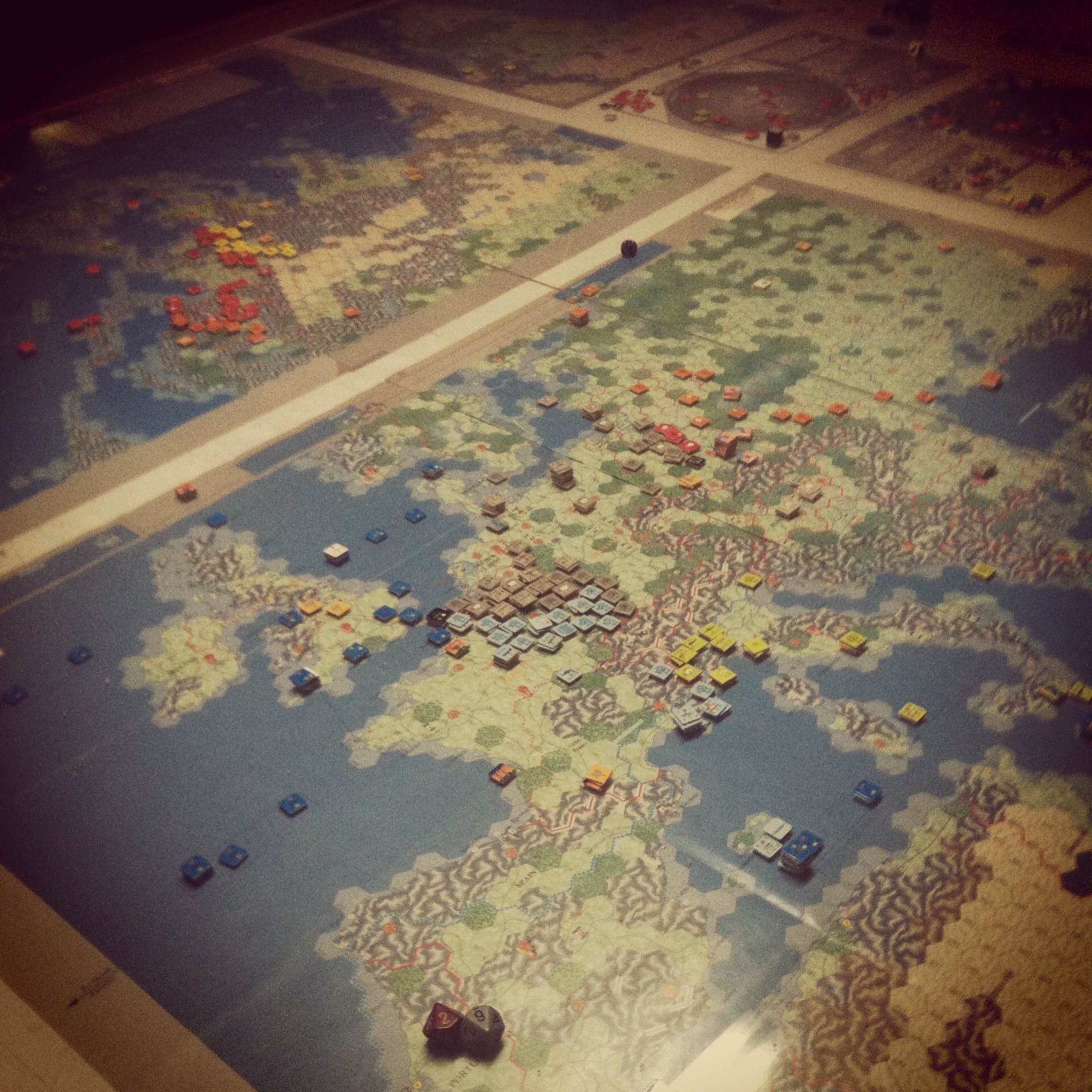
IMG_3627World In Flames continued over D-Day weekend

With action raging on the sand table, a group of club members showed up to continue playing their massive World In Flames game. Australian Design Group’s WIF from 1985 is the standard in grand-scale strategic fighting of the entire WWII period. The game’s rich playable detail, dizzying number of 1400 playing counters and sprawling maps makes it a commitment for only the most experienced gamers over many months of play.

IMG_3630Allied forces push from the beaches inland to Caen in Normandy ’44

The Normandy ’44 game from the evening before concluded with a decisive Allied victory Saturday afternoon. Pushing the Germans back from all but Utah Beach, the Allies captured Bayeux and several smaller towns. With German defenders routed from roads leading inland from the landing beaches, the victors rolled in to control half of Caen by the game’s end.

IMG_3625No one was going hungry at Metropolitan Wargamers over the weekend

Saturday also included a lot of other club members down for the usual variety of board, Euro and card games, making for a packed house. As the crowd rolled in, a longtime club member showed up with an enormous fresh-caught fish which he proceeded to gut with a huge military-style knife. With fish on the grill and food ordered in, there was plenty of food to sustain the crowd of gamers throughout the day.

We all took a mid-afternoon break to dice-off in a game, books, DVD and miniatures raffle to raise funds for the club. I was fortunate to score a copy of A Few Acres of Snow from Treefrog Games, and another lucky person picked up an unused copy of out-of-print the Games Workshop classic Dreadfleet.

IMG_3631

Initial deployment of Allied and Axis blinds in our Saturday evening IABSM scenario

As the main crowd thinned out, we ran an evening IABSM game continuing the assault beyond Easy Green. The scenario found initial US forces deployed around a small French farm with the objective of moving men off the table on the roads beyond. The Germans were tasked with preventing the American advance and seizing the farmhouse stronghold.

IMG_3607

Settling in for a contested fight at the farmhouse above Omaha Beach

Using initial blind deployment, Germans quickly moved to the farm along thick hedgerows as the Americans drove into the building for cover. Turns followed with the Americans jumping from cover to fire on the dwindling German force which returned fire over the hedges to unfortunate US infantry hanging out in the open. A US flamethrower attack from the window of the farmhouse decimated another German squad sitting close behind a nearby hedge. Pressing their luck, a group from the farmhouse made a run for the road exit only to be stalled by a reinforcing German heavy machine gun squad. Returning fire, the German MG42s were eliminated from their position in the open field. However, the damage had been done. Although the Germans had not captured the farm objective, the Americans no longer had a sufficient force to push off the table. The night ended with a German victory beyond Easy Green.

Sunday Games

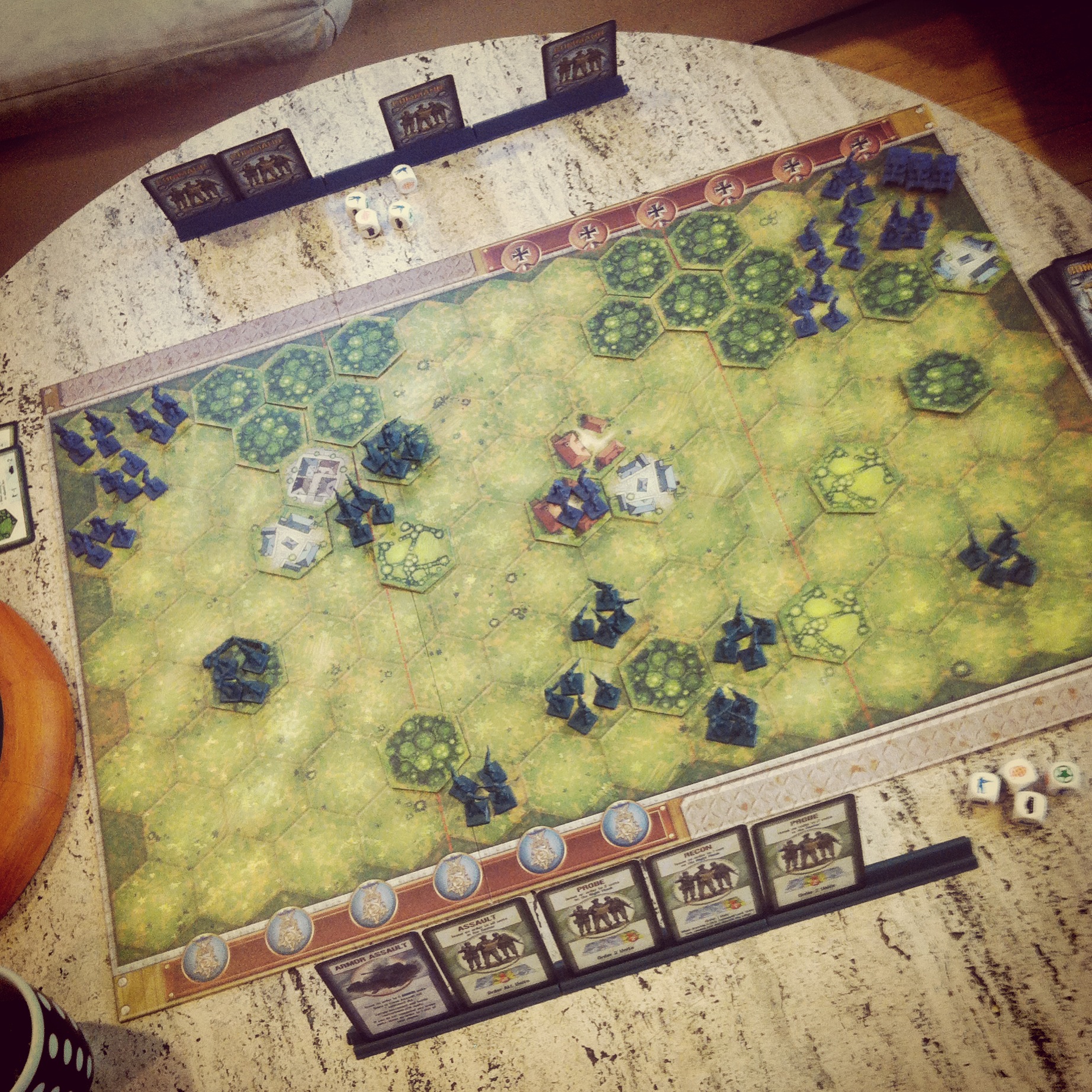
IMG_3620The war continues on the Memoir ’44 Hedgerow Hell battle map

With the first days of Operation Overlord behind us, Sunday’s game focused on the breakout actions. A couple visiting players showed up for the club’s Memoir ’44 game around noon on Sunday. Using the wide Hedgerow Hell expansion map, the Allies beat the scenario odds to win the game in the Overlord scenario. There was much talk of getting larger games of Memoir ’44 back in rotation at the club soon, so hopefully getting the game back on the table will bring some renewed interest in the coming months.

 IMG_3621

The initial armored encounter outside Lingevres leaves British tanks in flames

I finished off my weekend as the British at Lingevres using the same scenario I first ran at the club a few months ago. The mission ahead for the Brits was to move into the heavily defended town and take two of the buildings. Historically, the battle played out as a tank duel between UK Sherman Firefly and German Panther tanks, and our game this past weekend played out in a similar way.

IMG_3624

A Panther meets its end at the hand of the British Royal Artillery as a close assault is attempted on another in the woods nearby

At the outset, my first platoon of tanks got a bit overly aggressive and charged into contact with the full Panther platoon at the farm outside Lingevres. With the first Firefly destroyed in the opening turns, my remaining Shermans pulled back as the Panthers rattled to the middle of the field to hold off UK infantry advancing through the woods and bocage-lined fields beyond. One Panther bogged on a hedgerow and another was destroyed in an initial volley from the Royal Artillery in the fields outside town. Several turns became ensnared in attempted infantry assaults on the third Panther in the woods, but eventually the German tank rolled away to deal with the building reinforcing infantry and tank platoon in the fields on the other side of the table.
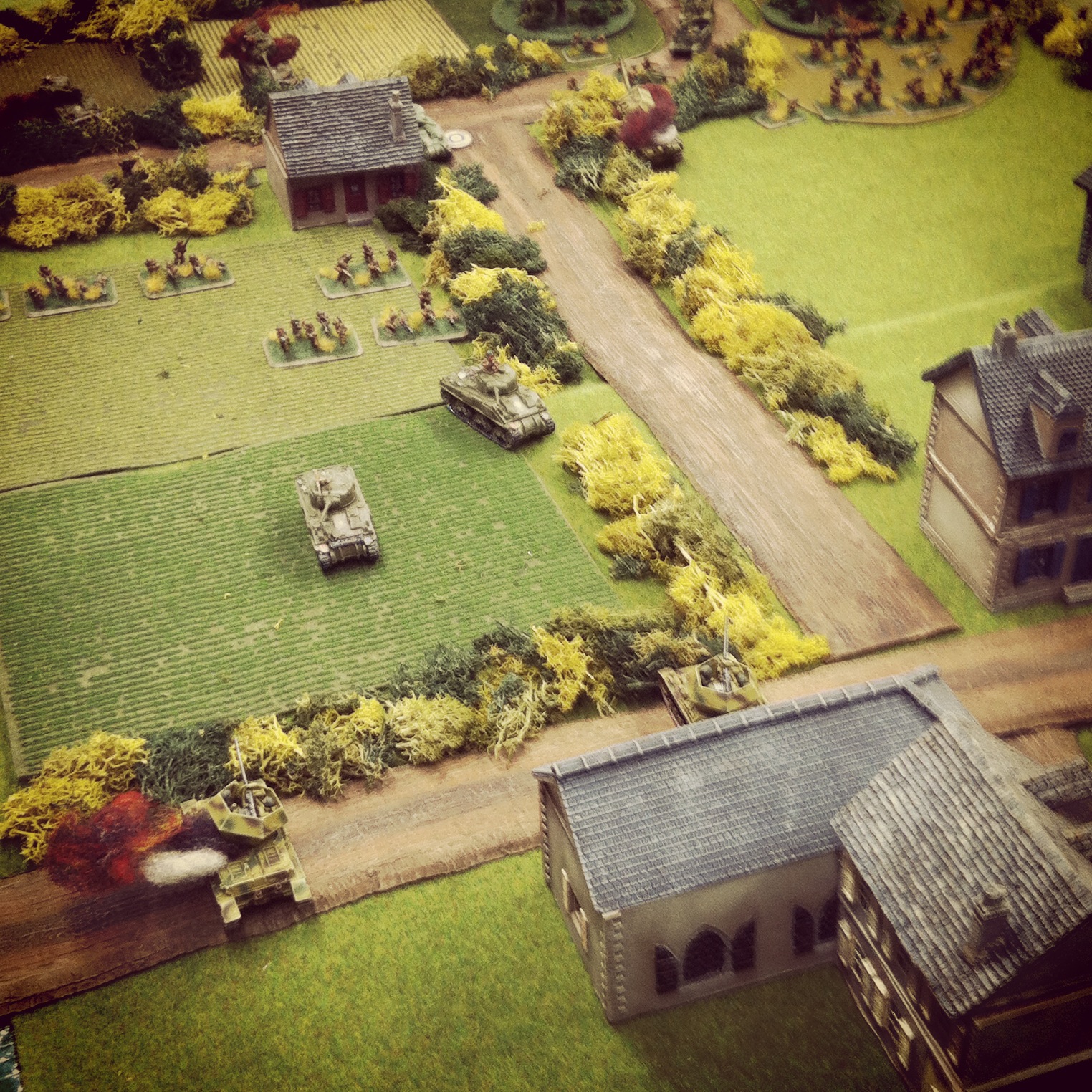
IMG_3622British Shermans and infantry break across a field toward Lingevres

With the Panthers moving away, fresh British infantry and the surviving Shermans moved to the farm and fields beyond. British artillery fire winnowed and pinned the German platoon in the church over several turns. Artillery fire also sought to keep the reinforcing German spotter pinned to limit the effectiveness of the reserve Nebelwerfer battery which as delayed reserves to the rear of Lingevres.

IMG_3623

The duel between the Panther and Firefly ends with the British tank in flames as the remaining Shermans destroy a Panzer IV platoon in the distance

In the meantime, a multi-turn tank duel had settled in between a lone Firefly and Panther while a reinforcing Panzer IV platoon arrived at the edge of town. Both tank groups traded fire, and in the end, the Panzers were routed with two or their three destroyed and the Firefly fell to the Panther’s gun. Back at the farm field, Shermans traded fire with Pak 40s and destroyed an anti-aircraft platoon defending the town’s flank. With two Panthers left on either side of the church, Shermans on each side of town and advancing British infantry, we called the game a draw.

 Weekend Debrief

After more than 20 hours of gaming over two nights and days, I was pretty worn out, but the interest in the D-Day event had made the weekend well worth it. WWII still holds enormous interest to this day, as demonstrated not only by our weekend of gaming but by the mainstream media’s coverage of D-Day over the week leading up. In the next week, we’re kicking off an FOW Infantry Aces campaign with fresh forces hitting the tables in rounds of Italy-themed WWII games. This fall we’ll be playing out some Market Garden battles and by the winter we hope to host some Battle of the Bulge engagements. It was a pretty special weekend in Brooklyn, but for regular visitors to Metropolitan Wargamers, there’s always the next game in this very unique New York City community.
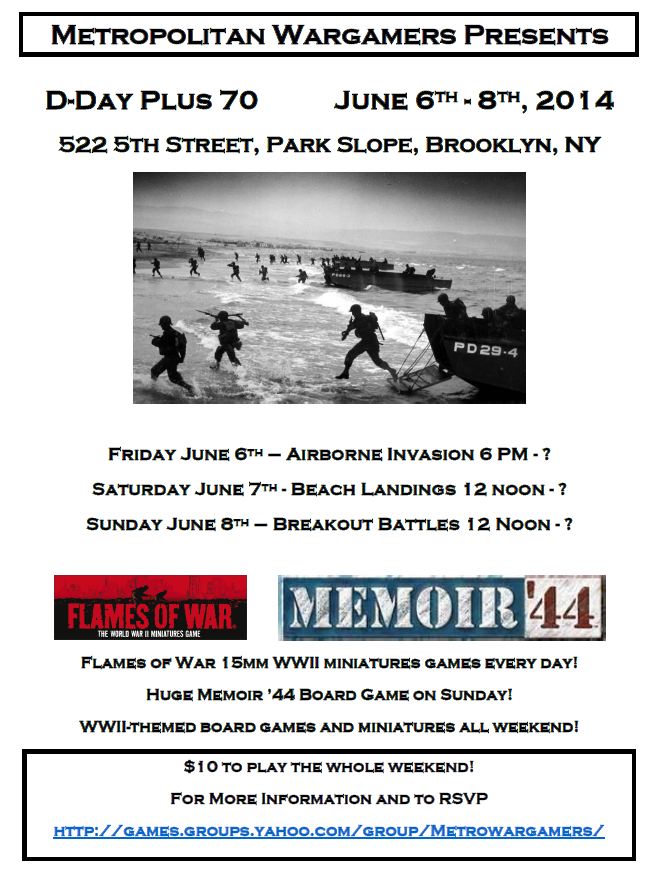
Metropolitan Wargamers D-Day Plus 70 Event – June 6th-8th 2014

MWGDDay

This June is the 70th Anniversary of the Allied D-Day landings at Normandy, and New York City’s oldest and largest wargaming club Metropolitan Wargamers is celebrating with a full weekend of events.

IMG_2161

La Fiere Causeway at Metropolitan Wargamers in Brooklyn, NY

Whether you’re new to the hobby or an experienced gamer, there will be plenty of WWII action the entire weekend. On the evening of Friday June 6th we’ll begin with Flames of War airborne landing scenarios. Saturday June 7th kicks off at noon with a FOW beach landing scenario on one of the club’s famed sand tables. Sunday wraps up the weekend with a couple FOW breakthrough battles and a large Memoir ’44 board game. Other WWII-themed games will run throughout the weekend.

IMG_2816

Utah Beach on one of the sand tables at Metropolitan Wargamers

We’ll have FOW scenarios set up for the weekend with plenty of miniatures and stunning terrain on the club’s tables, so all you need to bring is your passion for wargaming and history. Our FOW miniatures games are fun and a feast for the eyes, and you can get a sense of what’s in store for the weekend by viewing some of our past scenarios at the club here.

Admission for the full weekend of gaming is just $10 and a great opportunity to visit a very unique community of gamers in the heart of Brooklyn’s Park Slope neighborhood.

For more information and to RSVP for the D-Day Plus 70 weekend, check the Metropolitan Wargamers website or join our Yahoo group.

New Game Weekend: Joan Of Arc

joanwarbonds

For a story mixing heroicism, legend, Christian mysticism and epic battles of swords and armor, you really can’t beat Joan of Arc. Rising from storied French farmgirl  beginnings toward the end of the Hundred Years War, the teen-aged Joan of Arc is legendarily credited with turning the French tide against English invaders at the Siege of Orleans in 1429. Her later capture, trial, burning at the stake and eventual canonization as Saint Joan of Arc cemeted her place in world history as a military, feminist and religious icon.

joanofarcbox

In the six hundred years since she was executed, Joan of Arc has remained a prominent subject of film, plays, art, literature, and yes, games. With so few women in headline roles in the history of warfare, the chance to game the period of warring Europe in the waning days of chivalrous armored calvary can be all the nore interesting when Saint Joan is present.

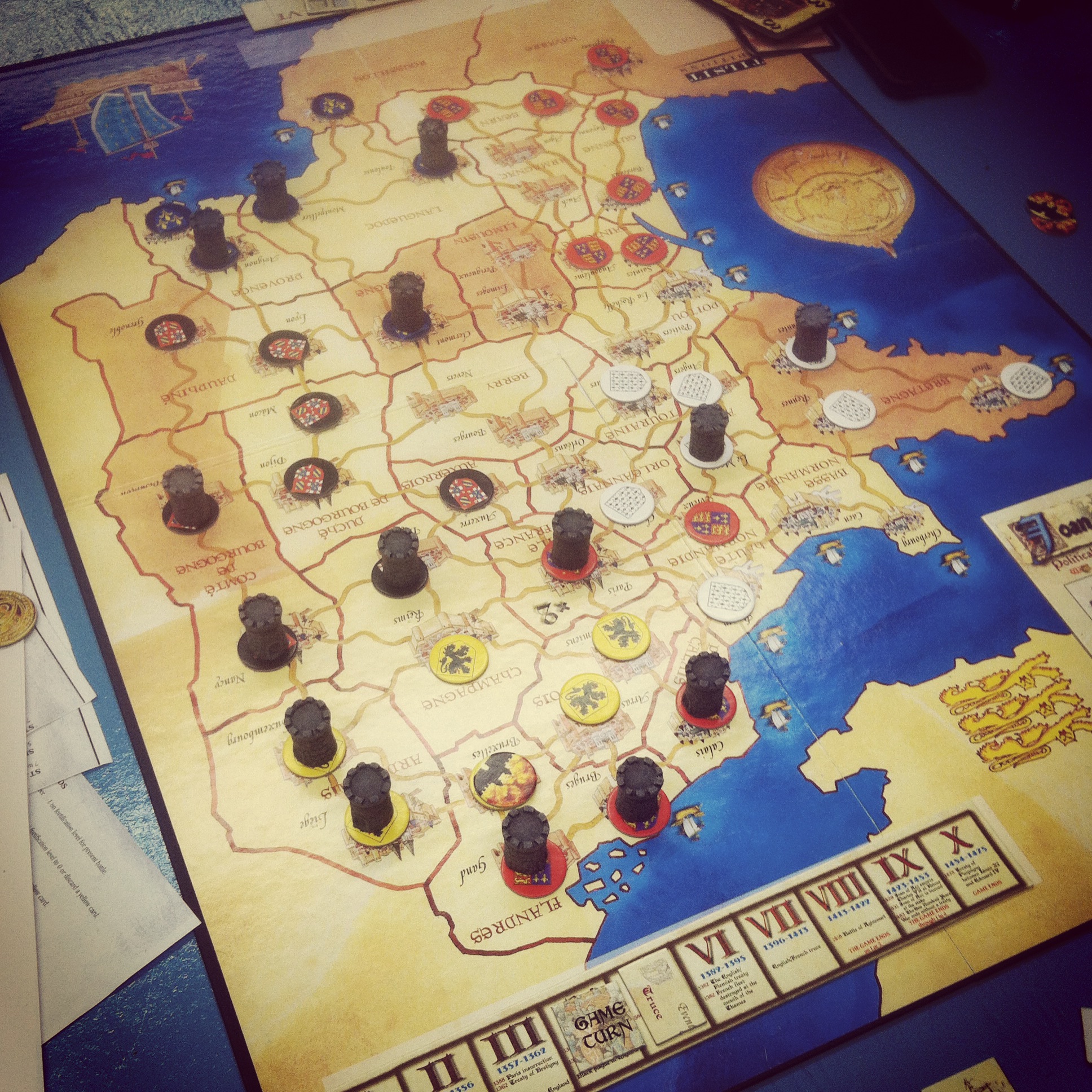
Released by Clash of Arms in 1998, Joan of Arc is at this point a classic board game which I recently had a chance to play for the first time at Metropolitan Wargamers in Brooklyn, NY. The game board presents the contested areas of the 100 Years War dotted with cities connected by roads. Players choose to represent on e of the warring kingdoms of France, England, Navarre, Brittany, Flanders and Burgundy. The game begins in a time of peace, and in each subsequent turn players vote in secret on whether the turn is to be one of peace or war. A time of peace causes one random event to be drawn and just one attack action per player, while a period of war brings two events and up to two battle actions from each player.

IMG_3434

 Joan of Arc at Metropolitan Wargamers

In random order at the beginning of each round, each player may expand into up to two free city locations along connecting roads or via seaport connections. Players draw a hand of large, tarot-like cards with which they can wage combat or cause other chance actions like the appearance of a hero of the kingdom such as St. Joan herself for the French. An attacking player draws cards from their hand, each carrying a numeric value, along with special actions such as Engineering which negates the defender’s bonuses from previously built castles and strongholds. A defeated city is occupied immediately by the attacking army, and the number of controlled cities and collective regions generates additional income in the following turn.

Throughout Joan of Arc, alliances are made, truces may be purchased through influence and battle for area control of the map marches through time. The player scoring the most points through controlled space on the board wins at the end of the game. Our group of savvy wargamers had the most fun in the alliances an double-crosses we meted out on each other’s kingdoms throughout the game.

There are a lot of better historically-based area-control games on the market at this point, and Joan of Arc’s connection to the historical record is pretty abstract at best. The game design looks great and it plays well once the somewhat imprecise rules are understood after a turn or two. Even with its minor faults and stretched thematic story, Joan of Arc more than engages a group of players in the era of Europe tipping away from its feudal centuries of warfare toward a more enlightened age on the continent we can still recognize today.

New Game Weekend: Lego Heroica

heroicabox

Like a couple generations of kids around the world, I grew up on Lego. My childhood was heaped with thousands of little plastic building pieces produced in Denmark and strewn in endless piles on my bedroom floor. Lego have changed a lot over the years from its early days as an abstract, creative and flexible building system of my early years to the heavily-licensed and more rigid playsets my own kids have been raised on.

In 2011, Lego launched Heroica, a brick-based fantasy-themed dungeon crawl board game. Each set included a set of bricks to build a series of rooms, hallways, bridges, paths and outdoor areas with which several configurations of game boards could be assembled alone or in combination with other sets.

IMG_3372

My first game of Lego Heroica

This past weekend, I played Lego Heroica: Castle Fortaan with my 9-year-old son, a certified Lego and gaming addict. The game pieces go together nicely to create nifty modular rooms including a dungeon, castle walls, a hall with fireplace and a throne room. Four character adventurer figures and goblins in three varieties are depicted as tiny, rigid pawns which offer less interest than the very-popular Lego Minifigures common with most Lego sets. With a board built according to one of the included scenarios (or a game of your own making), players take turn rolling the special die, moving through the castle, collecting magic items and racing to the objective endpoint.

IMG_3371

Gaming components from Lego Heroica: Castle Fortaan

As expected from Lego, the Heroica sets look great. Each player has their own rack on which they track gold and magic items collected and damage received during combat with goblins lurking throughout the castle. A weapons rack allows for the purchase of special weapons which give bonuses and added abilities. The special die (also built from Lego) offers faces with dual purposes for movement, combat resolution and other results such as regaining health and randomized treasure.

IMG_3370

Our adventurers quest through the halls of Castle Fortaan

Despite the look of Heroica, gameplay leaves much to be desired. Unlike the collaborative spirit of most dungeon crawl games, Heroica is a straight-up competition and a race to the finish line. Strategy is also absent from the game, and the die-driven movement makes the game largely an exercise in die-rolling. Combat is overly-simple with any of the three goblins types easily destroyed on a single die result, no matter their strength. Purchasing an item from the weapons rack requires three collected gold, but finding three gold often doesn’t occur until late in the game when any bonus from an acquired item really doesn’t matter.

Lego suggests ages 8-and-up for Heroica, but this probably has more to do with safety issues with small parts than actual game complexity, interest or replay value. My son is a pretty experienced gamer, but he still liked the game most probably because of his overall passion for Lego. I’d peg the game more appropriate for 4 or 5-year-olds as a way of introduction to the basic concepts of dungeon crawlers including movement, melee and ranged combat, hit points, character abilities and collecting treasure and magic items.

Not surprisingly, Lego has announced the imminent discontinuation of the Heroica line of games. A fairly avid fanbase for the game exists using heavily-modified rules, but ultimately I really don’t think the game is worth the time and effort no matter how much customization is put into it. With so many engaging dungeon crawl games available and appropriate for a huge swath of ages, its pretty obvious why Heroica crashed in popularity in three short years.

As for dungeon crawling with my kids, I’m going to be heading back to my Dungeons & Dragons Basic Set from the late 1970s in the coming weeks — no plastic bricks required.

Come Play Zombicide With Me At Brooklyn Game Lab April 29th

zombibox

I’m thrilled to be lending a hand hosting an evening of Zombicide at Brooklyn Game Lab in two weeks on Tuesday, April 29th, 2014.

Since opening a few months ago, Brooklyn Game Lab has been grabbing a lot of press as the latest space in New York City to take hold of the recent boom in tabletop gaming. Through its innovative afterschool programs, the Lab has provided space for children to not only play games but to stretch their minds in developing their own ideas into playable games of heir own. When the kids head home, the Lab has been filling up evenings and weekends with adult gamers on theme nights, singles mixers nights and a recently-packed International Tabletop Day.

zombicide contents

Zombicide: Season One base game from Guillotine Games

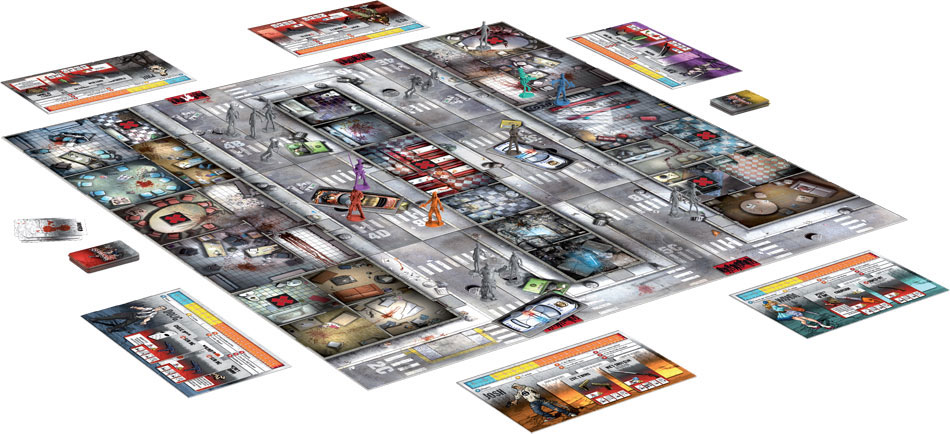
To kick off the summer, Brooklyn Game Lab (353 7th Avenue @ 10th street in Park Slope, Brooklyn) is hosting a night of the incredibly popular Zombicide board game from 7-10pm on the 29th of April. Admission for the evening is just five bucks, and I’ll be there to help run a couple simultaneous games of survival and zombie carnage.

zombifigs

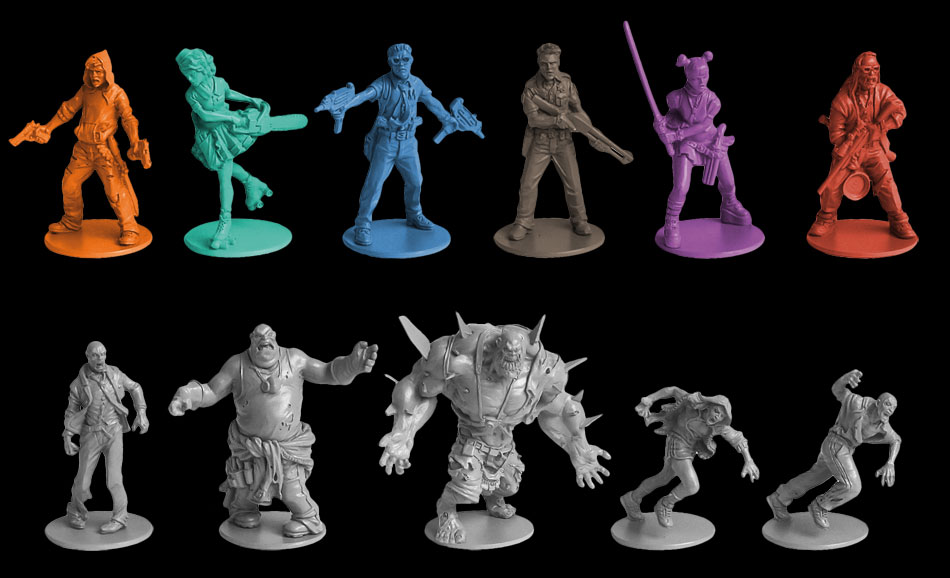
Zombicide survivor and zombie miniatures

I first played Zombicide about a year ago, and I can’t wait to drag some more people into this easy-to-learn and gorgeously-designed game where either everyone wins or everyone loses. Released in 2012 via a Kickstarter from Guillotine Games, Zombicide and its subsequent Toxic City Mall and Prison Outbreak expansions pits up to six survivors against a growing zombie horde. Players collaborate as they kick in doors, search for supplies, arm-up with a variety of weapons and mow down scores of zombies. If you’re a zombie fan, a game fan or just fascinated at the prospect of meeting some people and battling through the zombie apocalypse for an hour or two, you should definitely come by the Brooklyn Game Lab.

For more info on this an other upcoming events, check out the Brooklyn Game Lab calendar.

New Game Weekend: Revolution! and Carcassonne

ITD

This past Saturday was International Tabletop Day, a day where tens-of-thousands of people around the world crowd around tables in dining rooms, basements, clubs and hobby shops to do what many of us do year-round — play games. My youngest son and I spent the afternoon at Brooklyn Game Lab, a recent entry into the growing list of New York City venues dedicated to unplugging and playing tabletop games with friends and strangers alike. The scene in Brooklyn was like that played-out worldwide with a packed house of experienced gamers and newcomers joining together, rolling dice, racking up points, playing cards, placing tokens and role-playing through a massive variety of games. At Brooklyn Game Lab, players faced off with a variety of games like Betrayal at House on the Hill, Love Letter, The Resistance: Avalon, Tokaido and even a few games of Chess. My son and I had a go at two games which were new to us — Revolution! and Carcassonne.

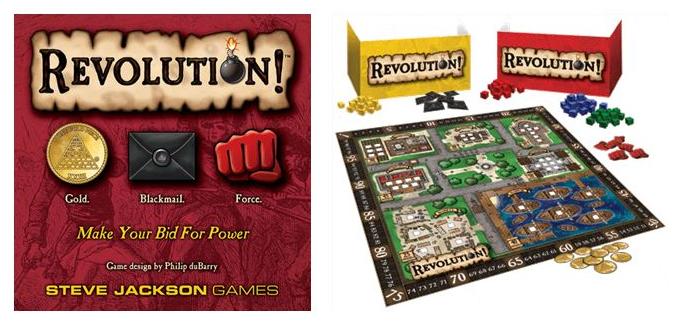
rev picIn Revolution! from the decades-old Steve Jackson Games  players vie for power in a town through a secretive combination of blackmail, strong-armed force and out-and-out bribery. With four new players at the table, Revolution! was a quick learn and exciting fast play in just under an hour’s time.

securedownload-1A player’s secret bidding card in Revolution with Gold, Blackmail and Force tokens

Revolution! has an interesting secret bidding mechanic where players simultaneously bid their Force, Blackmail and Gold tokens on a dozen citizens of the board’s town such as the General, Priest, Printer, Mercenary or Spy. Once bids are placed, players remove their screens to reveal their bids. Bids to influence the same character are resolved through a simple Force beats Blackmail, Blackmail beat Gold and ties result in no effect for the round. Once a player wins influence over a character, the effects dealt out through additional earned Force, Blackmail and Gold tokens, Support points or placement of Influence markers in one of the town’s areas such as the Tavern, Town Hall, Market or Harbor.

securedownloadOur game of Revolution! from Steve Jackson Games at Brooklyn Game Lab

The game continues with subsequent rounds of bidding which progress into evolving strategies and agendas as the town’s areas fill up with player Influence. As the board is filled, players in Revolution! shift in their need for Force, Blackmail and Gold tokens, seeking to not only control the board but shift and undermine their opponent’s already-placed pieces. Controlling an area of the town brings additional Support points when the game ends, and the player with the most points on the outer scoring track wins.

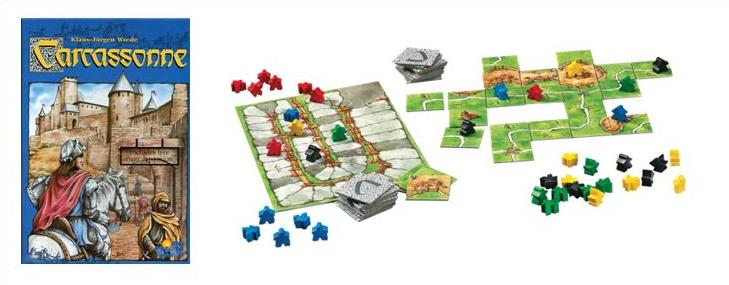
carcassonneFor our second game of the day, we got into the now-classic Carcassonne from 2000. Distributed by Z-Man Games in the United States, Carcassonne is a tile-placement game where players build-out and a kingdom dotted with cities, roads and monasteries. Carcassonne is a quick learn, and the random tile choice at the beginning of each player’s turn creates choices in matching the tile to the multiple potential fits on the table.

In placing a tile, a player also makes a choice in placing a meeple on the board and in doing so, placing a bet on potential points. In placing the first tile of a city, a player may place one of their colored meeple pieces with the hope of closing off the city with additional tile plays which score points on the number of subsequently connected city pieces at a two points apiece. A monastery scores nine points when the eight surrounding tiles are placed, and roads are scored at a tile each once a route is closed between two endpoints. Victory points are tracked on a scorecard next to the growing kingdom of Carcassonne, and each tile played reduces the chances from the finite number of potential tiles in the draw pile. Playing against three experienced players in my first game,  I was able to score highest on some chancy bets and lucky tile draws.

International Tabletop Day is 24 hours of celebration of games, chanced strategies played out and opportunities to try something new. At the Brooklyn Game Lab this past weekend I found myself in my element surrounded by passionate gamers questing for victory and fun and more than a few hours of play. Games focus on this one day per year, but for a lot of my fellow gamers, they play out week after week until next turn  rolls around on the calendar.

Downloading: Mapping the World at the New York Public Library

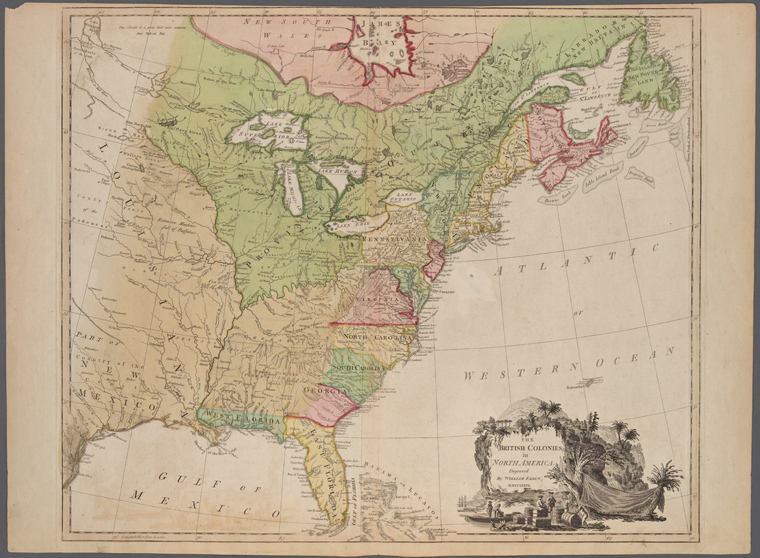
britishcolonies

As a lifelong gamer, I’ve spent many, many hours staring at maps or drawing my own. Most board games provide maps of sorts that define movement and area control. For players of Dungeons & Dragons and the like, adventure maps create much of the framework for how campaigns and role-played stories evolve. Miniature wargames, from ancients and historicals to fantasy and sci-fi, utilize three-dimensional set-ups driven by maps and the relationship of various features on the tabletop.

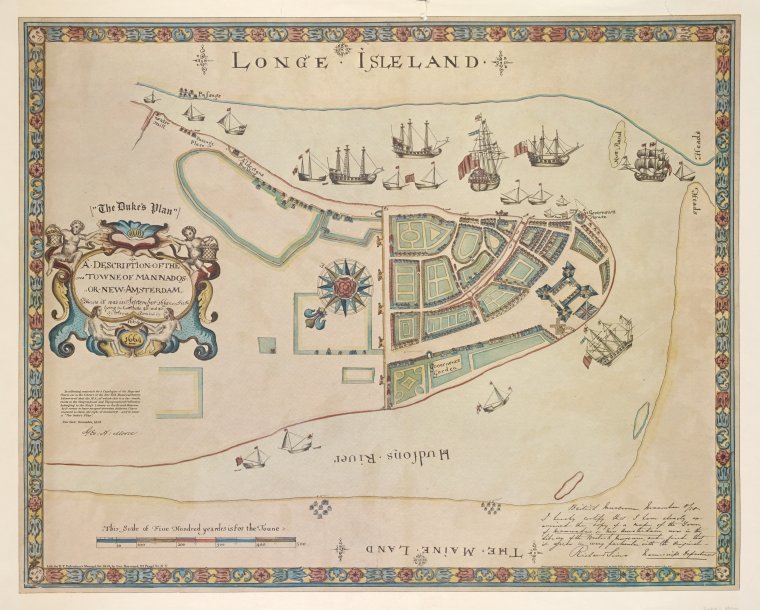
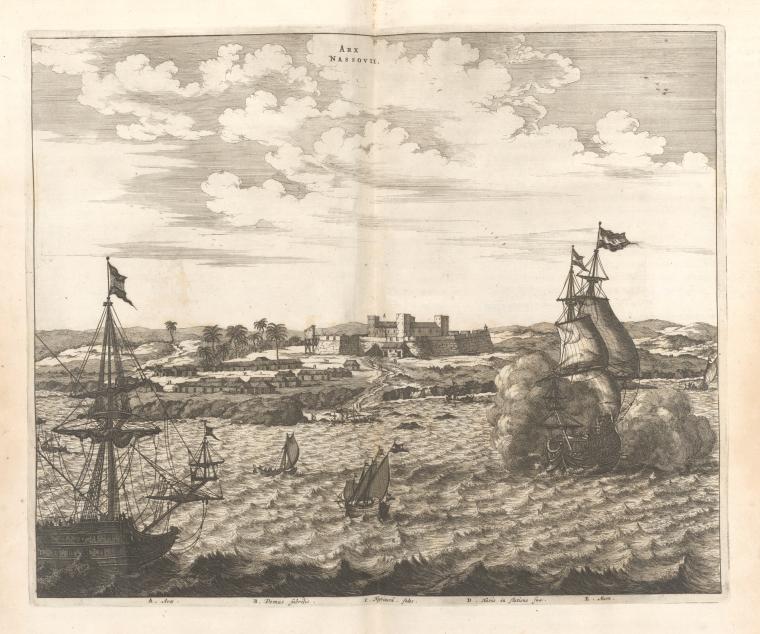
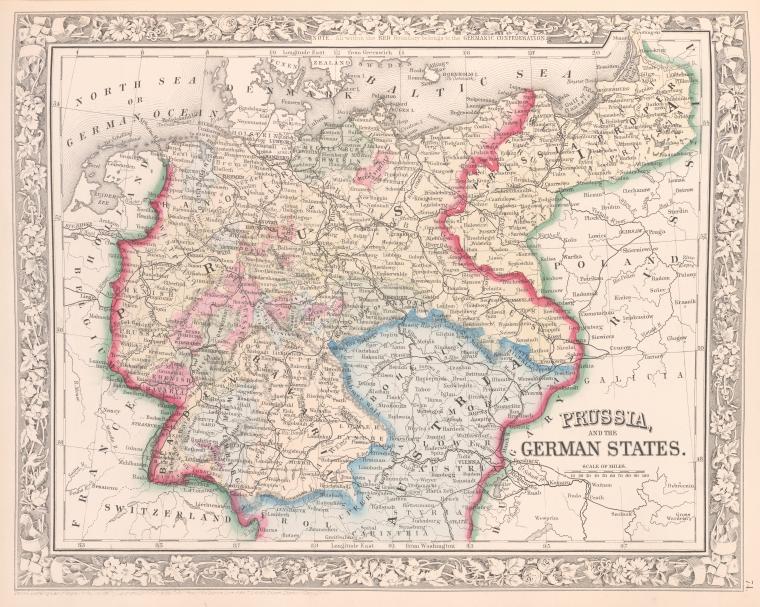
Late last month, the New York Public Library announced the availability of some 20,000 high resolution downloadable maps. The collection is an enormous resource for hardcore historians and hobbyists alike. Well over half the online collection naturally focuses on New York City, New York State and the surrounding areas. Beyond the New York area, the cartography goldmine grants access to hundreds of years of maps from around the world which can be viewed singly or within the context of their original books, atlases or folios.

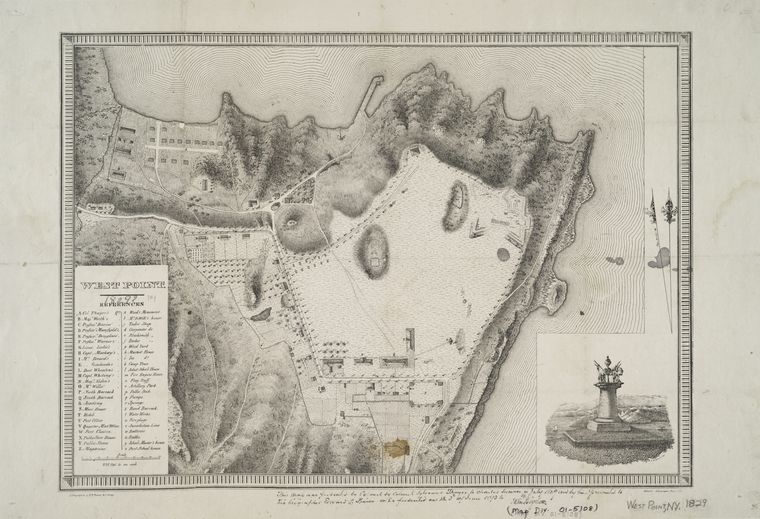
Digging into the archive, there’s a fair amount of material certain to be of interest for gamers. Maps of Europe, Africa, Asia and the Americas portray the development of civilizations and empires over the centuries. A fair amount of material is available on the American War of Independence, particularly in the areas around New York, New Jersey and Pennsylvania. Aside from maps, there are also some engraved plates of native societies encountered by European colonists, renderings of forts and some naval views.

The entire online collection is searchable here, but here are a few highlights I’ve come across on my digital travels.

New York

newamsterdam

New Amsterdam

navy yard

Brooklyn Navy Yard

American War of Independence

battleLI

Battle of Long Island

saratoga

Saratoga

Forts

westpoint2

West Point

fortalbany

Fort Albany

Naval History

dutchportships

Dutch and Portugese Ships

british1671

Ships in the British West Indies

Europe

ancientgreece

Ancient Greece

romanempire

Roman Empire

prussia1860

Prussia


New Game Weekend: Brass

Brassbox

Canals have been a part of human history for as long as people have sought to move large quantities of goods from one place to another along routes without natural waterways. Beginning in Mesopotamia in about 4000 BC, canals have fuelled the expansion of human settlement and trade just about everywhere. The Industrial Revolution of the 18th-and-19th-centuries saw an enormous boom in canal construction in Europe, North America, Africa and Asia. To this day, engineering marvels like the Suez Canal and Panama Canal are critical to moving goods around the world.

GVC

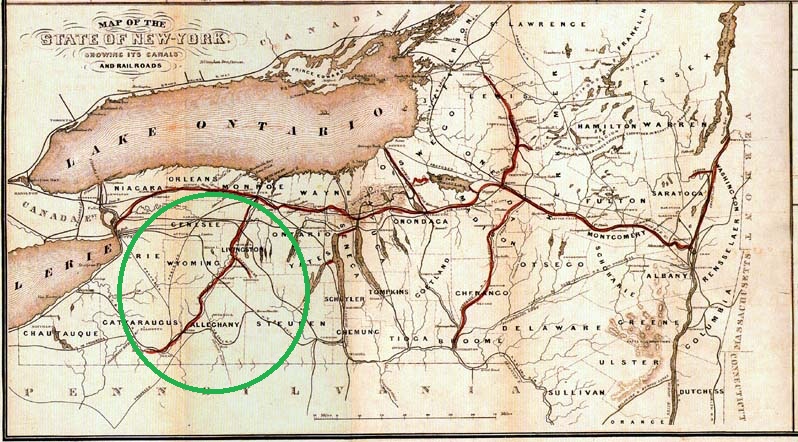
Map of New York State canals with Genessee Valley Canal (1840-1880)  in green

Growing up in the 1970s, every kid raised in Western New York State was surrounded by the mythology of the Erie Canal. Stretching 360 miles from Albany to Buffalo, the canal opened in 1825 and connected the ports of New York City with the booming Great Lakes region and the territories beyond.

Some of my earliest childhood memories of thrashing around in the woods in my hometown of Piffard, NY occured along the remnants of the Genesee Valley Canal which ran as a southern spur to the Erie Canal from 1840-1880. In my mid-20s I found myself living and working in Southwestern Pennsylvania, once again surrounded by the ghosts of canals and later railroad lines which fuelled the economic expansion of the old western frontier. Today, many these old canal lines have new lives serving as recreational arteries like the Genesee Valley Greenway and the Pittsburgh-To-Harrisburg Main Line Canal Greenway.

BrassBoard

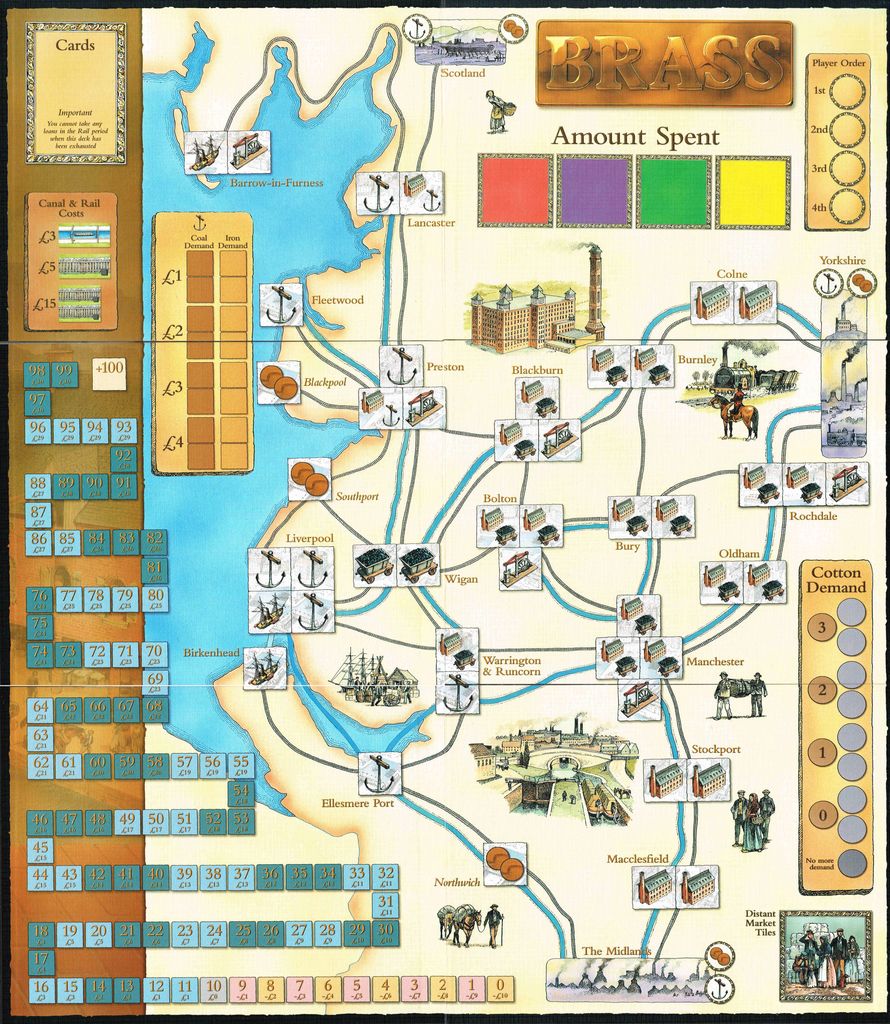
The Brass game board depicting Northern Engkand

My life has had a lot of canals running through it, and so it was great when I recently had a chance to try my hand at playing out the canal and railroad boom era in Brass. Produced by Treefrog Games in 2007, Brass takes players back to an England at the dawn of its massive industrial expansion. The game divides into two parts — a Canal Age and a Railroad Age — and is played on a map of Northern England cities and ports connected by transportation routes. When cards are used up points are scored at the end of the Canal Age for industries built, canal routes constructed and income earned. Canals and industries are then removed before play procedes through the Railroad Age after which there is a final tally of points for victory.

BrassCards2

Brass industy cards (left to right: coal mine, shipyard, iron works, port and cotton mill)

BrassCards3

Sample Brass location cards

Cards depicting cities and industries are dealt to players at the beginning of the game. Canals and lower tech industries are built in the first half of the game, and railroads and more advnaced technologies are built in the game’s second half. Each turn a player may develop industries, build canal or railroad sections, develop their existing industry, sell cotton or take loans for additional capital investment. The player who spends the least money on their turn gets to go first on the next turn, one of the game’s many mechanics which makes for a good balance of cautious and aggressive play.

IMG_2967

The “Canal Era” in our game of Brass at Metropolitan Wargamers

Industries are built on specific locations by playing both a location and industry card in combination and then spending the appropriate money and resources. Connecting canals and railroads may also be built to establish routes between cities and ports to transport goods and resources. Multiple industries built by multiple players may be built at the same location, allowing for some level of shared collaborative play. A hub city like Manchester holds four industries and connects along five separate routes, making it a potential key location for players. Building routes to ports and foreign export of cotton becomes important as the game develops and generating more income for construction is needed.

IMG_2968

The “Railroad Era” in our game of Brass

There’s a ton going on in Brass, and fortunately I had an experienced player walk me through my first game. I’ve heard the rules themselves are a bit hard to decipher, but playing the game my first time was pretty easy to follow. Brass plays like many Eurogames with a balance of area control, building, managing resources and playing cards. Ultimately the game becomes one of competition for routes and resources and biding one’s time to export cotton goods to foreign markets when demand is at its highest.

I won my first game of Brass in a three-player game, but I’d like to try it at its full four-player maximum. I managed to have an enormous amount of cash on hand to invest into developing my industries and transport routes pretty early in the game, a strategy that didn’t allow me to play first in most turns but paid off in the end. Playing an economic game like Brass makes for some very different play than my usual rolling of tanks and advancing platoons of soldiers. For a gamer like me with canals and railroads flowing through my blood, I’ll take an economic victory just as easily as a one won on the battlefield any day.

New Game Weekend: Memoir ’44

mem44box

I’m about 10 years late to the WWII board game Memoir ’44, but after a few first plays through it this past weekend I’m glad this modern classic is now part of my gaming arsenal. Released by Days of Wonder on the occasion of the 60th anniversary of the D-Day Normandy Invasion in 2004, the game has won numerous awards and remains high in the esteem of casual and serious wargamers alike.

mem44contentsContents of the basic Memoir ’44 game from Days of Wonder

The base Memoir ’44 game runs about $40 and contains over 300 playing pieces. The blue-grey Axis and green Allies tank, infantry, artillery and defensive features look fantastic, and playing with them evokes the little plastic toy soldiers of many a kid’s youth. The reversible game board with a beach on one side and countryside map on the other provides the basic layout for the more than a dozen historic scenarios included in the easily-read rulebook. Scenarios are laid out using hex tiles with various terrain features such as towns, forests, hills, rivers and hedgerows. Each historic game scenario is presented with a clear illustration on how to lay out the appropriate terrain tiles and initially deploy forces on each side.

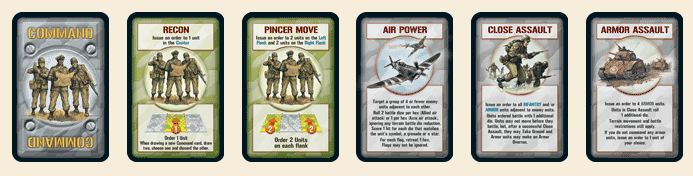
M44cards

Sample Command Cards from Memoir ’44

Command cards and battle dice provide the basic drivers of game mechanics. Cards provide activation of one or more units in the left, right and/or center portions of the board. Infantry may move once and attack or move twice, artillery may move or shoot, and tanks may move up to three hexes and engage in combat. Attacks are resolved with a simple roll of special battle dice which hit units based on the icon results on each die face and what units are present in the combat. Die rolls may also result in misses of forced retreats. When a player finishes their moves and combats, they draw a fresh card and play passes to the opposite side of the board. Games are scored by destroying units or securing objectives like bridges.

IMG_3022

The Sainte-Mère-Église scenario for Memoir ’44

As fairly experienced WWII historical miniatures players with Flames of War, both my son and I were pleasantly surprised by the fun to be had with Memoir ’44. The intro scenario is for Pegasus Bridge which we tackled in about 20 minutes to get a feel for the game. Next up, we tried Sainte-Mère-Église with a fun added feature of actually dropping a fistful of paratroopers onto the board. We both found the command cards to be a good mechanic to represent the effectiveness of delivering orders on the battlefield. In out second game, my son’s tanks lay parked at the corner of the board the entire game since he never drew a card allowing activation of units to his left. We each pulled a couple special cards, allowing things like airstrikes and close assaults to happen as the game quickly moved to a finish in about four or five turns. With the basic rules under our belts, we’re anxious to push on through the remaining scenarios included in the basic rules.

M44terrainContents of the Memoir ’44 Terrain Pack expansion

The scores of  available official scenarios, expansion editions, campaign books and army packs add an amazing amount of replay value to Memoir ’44’s basic rules and mechanics. A nifty online design scenario design tool also allows armchair historians to have a go at creating official-looking games of their own, and I can just imagine the educational possibilities in using it in school settings. Along with the base game, I snatched a copy of the Terrain Pack expansion which offers nearly 150 additional tiles, markers, special unit tokens and four additional scenarios. With the vast expansions of Memoir ’44, just about any interest in the air and land battles of every major front in WWII can be endlessly played and explored.

I realize I’ve just begun with Memoir ’44, and I’m certain to have both my boys playing along with me. There’s so much appeal in Memoir ’44 for kids or adults who have dabbled casually in war-themed board games like Risk or Stratego, plus the added interest of easily replaying historic WWII battles. Quick games, some real history and a fun box of toys — Memoir ’44 brings the complete package to the table.

New Game Weekend: Axis & Allies: Guadalcanal

AandAguadalcanalboxThe  Battle of Guadalcanal between August 1942 and February 1943 was the first major Allied campaign set on crushing the Japanese foothold in the Pacific region. Fought in bloody air, sea and island engagements, the seven months of battle resulted in a significant shift in superiority to the Allies in the region and led to the beginnings of the downfall of the Japanese Empire in the Pacific.

Most of my wargaming happens on dry land and usually somewhere in Europe. The Pacific War in WWII always seems so separate, sprawling and overwhelming to me with its mix of different combined combats, complex supply lines and different territorial agendas. That said, dabbling in this portion of the war gives me a chance to use some very different tactics and strategies I’m not used to gaming. So, with a short couple of hours to spare recently at Metropolitan Wargamers in Brooklyn, NY, I tried my hand at some WWII Pacific action with Axis & Allies: Guadalcanal.

AandAlogo

The popular Axis & Allies boardgame series from Avalon Hill (owned by Wizards of the Coast) has been around for more than 20 years and covers many specific eras, battles and theaters of WWII. More recently, a WWI game has also been added in time for the 100th-anniversary of that conflict. The A&A games are readily available from a number of book and department stores, and they vary in complexity and time commitment. Mt first introduction to the series was with the Spring 1942 game which weaned my younger son and I off much simpler war board games like Risk forever. The great design, hundreds of sculpted plastic playing pieces, economic factors and combat mechanics make the A&A games a great way for old and new wargamers alike to engage in hours of very satisfying play.

AandAguadalcnalcontents

A&A: Guadalcanal board and game pieces (including the “battle box” at left)

The Guadalcanal game presents a map of the South Pacific islands and sea zones contested by US and Japanese forces. Victory points are determined by building and controlling island airstrips. As in the actual campaign, quickly capturing islands and building airstrips is critical not only to endgame victory but in providing bases to supply and deploy additional forces. Aside from capturing islands, controlling the three main sea zones at the center of the board (aka “The Slot”) is key in controlling the transport of crucial supllies and reinforcements.

The combat system in the game uses a “battle box” containing a dozen dice which are shaken and reveal various randomized target effects. With land, air and sea units crowding the board, the confused mass of combined arms is neatly accounted for with a few shakes of the unique battle box.

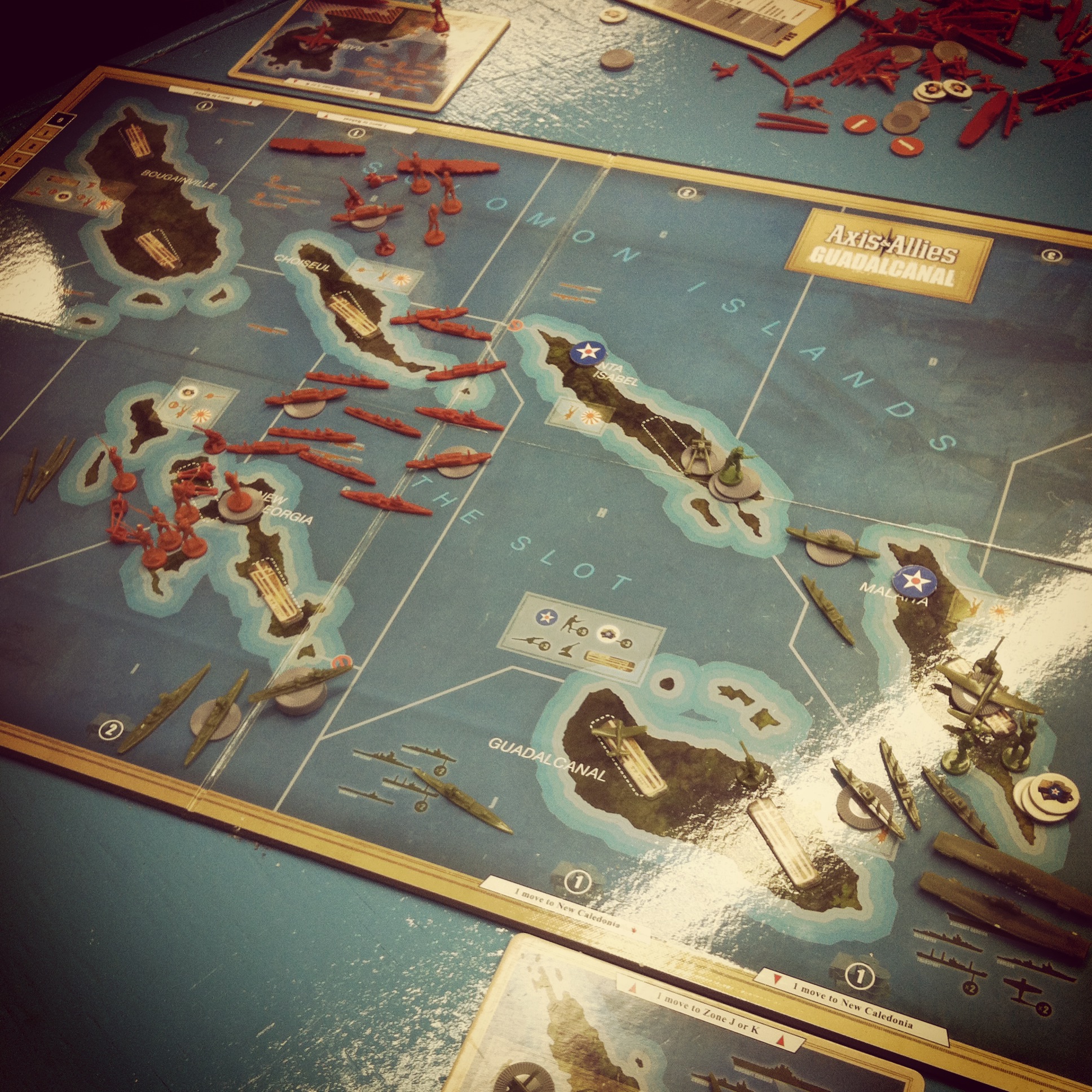
IMG_2895

Axis & Allies: Guadalcanal at Metropolitan Wargamers

In my first play as the Americans, I quickly captured the southern half of Guadalcanal while my Japanese opponent began a big push with his navy toward The Slot. In the second turn I was able to press on to Malaita and build a second airstrip of Guadalcanal to take an early lead in victory points.

With the Japanese navy massing in the central sea zone I made a risky gamble in turn three sending in a huge air attack which destroyed a few ships and damaged a battleship but was repulsed with overwhelming deadly force. With a vastly-depleted air force, I scrambled to build myself back up as the Japanese built an airstrip on Bougainville and I made moves toward Santa Isabel. By turn four my navy headed west along the southern coast of New georgia in the hopes of catching the Japanese navy from behind. While I was able to destroy a number of Japanese submarines at the western edge of the island, my attack on Santa Isabel was halted and the Japanese took the game.

A&A: Guadalcanal moves fast for two players, playing in about 2 hours. The short nature of the game makes every move from turn one onward important with little room for error. My lesson learned in the first game was not to run too fast toward facing-off against the superior Japanese fleet early, perhaps opting instead for a greater build-up of supply to gain island footholds to launch later game attacks.

The Axis & Allies series is fantastic for out-of-the-box playability with the different game versions each offering realistically-specific game dynamics for several WWII theaters and battles. Not being a big Pacific War gamer, A&A: Guadalcanal makes for a perfect way for me to get my feet wet and expand a bit of my gaming experience to another corner of the 20th-century’s greatest conflict.