American Civil War: Converting O Scale Buildings

MPKennedyHouse

I recently scored a few free pre-assembled O scale plastic buildings made by Model Power. The houses are meant to be used in model railroad layouts and look very modern, plastic and toy like. I looked at them and thought that with a little work they might be made suitable for use for in American Civil War wargaming. I started my project with the “Kennedy’s House” model.

IMG_7898

Primed flat black

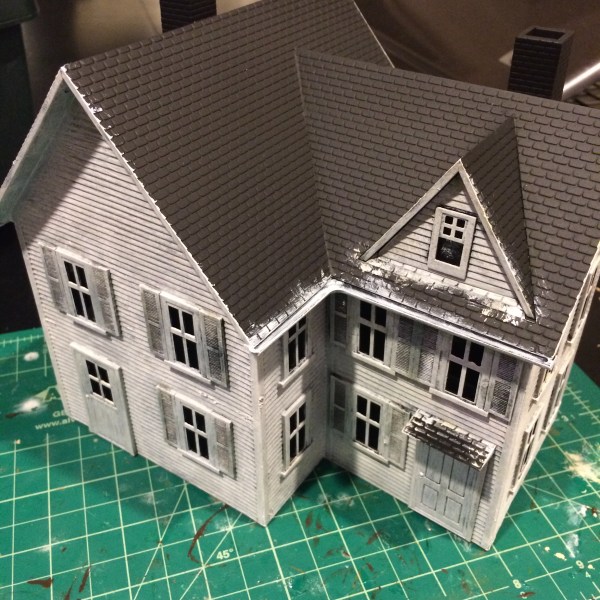
O scale structures are a little on the big side for 28mm, so the first thing I did was to remove the foundation and steps from the building. To make the house a little less grand, I also also removed the decorative front porch. After I re-glued a few loose windows and shutters, the whole model got a coat of flat black primer to knock the sheen off the plastic.

IMG_7900

First dry brush of off white on the siding

IMG_7905

Second dry brush coat in white on the siding

IMG_7906

Two coats of dry brush complete on the siding

Once the primer had set, I dry brushed all the siding, doors and windows with some off white paint. Over the first coat, I built up an additional layer of dry brushed white paint. The final effect I was building up to was a weathered look on the entire exterior.

IMG_7923

Shutters are dry brushed in green and roof gets dark brown base coat

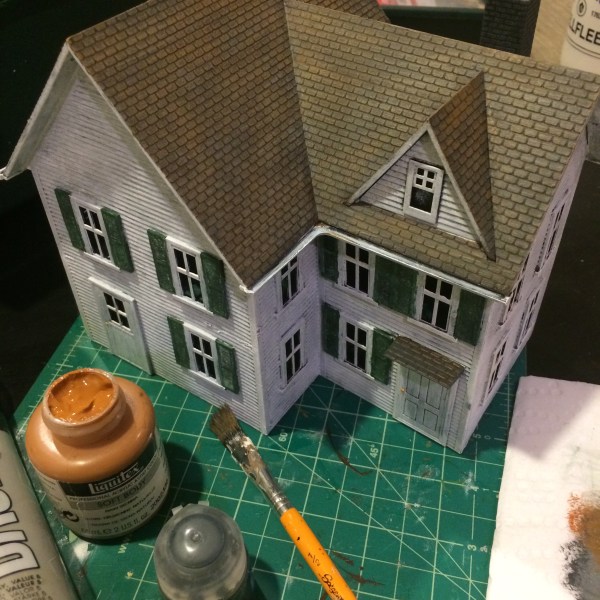
With the siding complete, the shutters on the building’s facade were dry brushed in a dark green. Again, allowing the layers of paint beneath to show throw added to the lived-in and weathered look to the building.

IMG_7924

Roof is built up with alternating dry brush coats of grays and browns

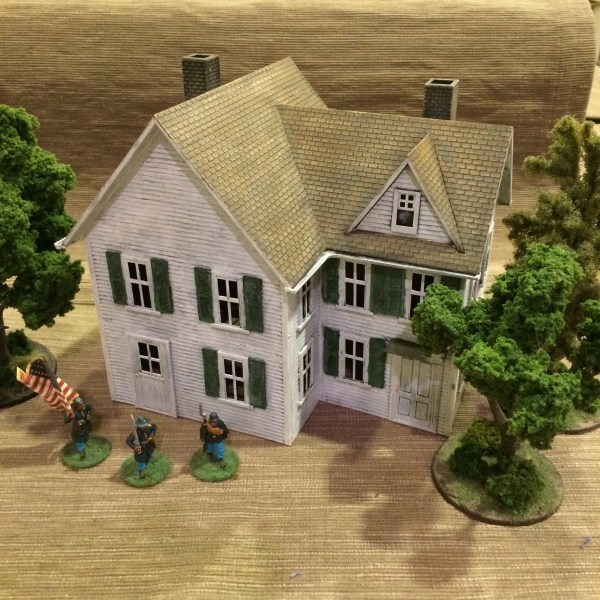
The roof’s look very modern, so I likewise built up coats of paint to make them look more like wood shake shingles. A base coat of dark brown then received two layers of dark and lighter grays, followed by some lighter brown highlights. The chimneys also got a couple coats of dry brush grays and off white to replicate a irregular stone construction. When done, the completed roof looked very much more like something found in the 19th-century.

IMG_7925

Completed conversion of the Model Power farmhouse

IMG_7927

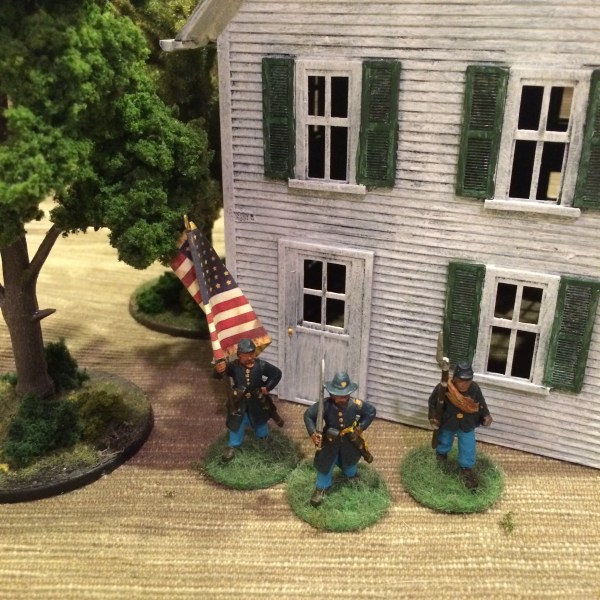
American Civil War Union soldiers standing guard at the newly completed house

Along with the Model Power buildings, I also picked up some free Woodland Scenics trees which I’ve based individually for my gaming. The trees and rehabbed farmhouse are perhaps a little on the large size for my Perry Miniatures soldiers but considering I’ve received all this terrain at no cost it will all work just fine on the table battlefield.

28mm: US .50 cal M2 HMG By Warlord Games

50calAB

The Browning .50 caliber M2HB heavy machine gun has been around for nearly 100 years, a remarkable feat in a span of years when battlefield technology has evolved immensely. The M2’s deadly flexibility in use as an infantry support weapon and mounting on aircraft, land vehicles and naval vessels has served the US and many other military organizations around the world over its history. Clearly, this gun not only has fire power but also significant staying power.

Warlordlogo

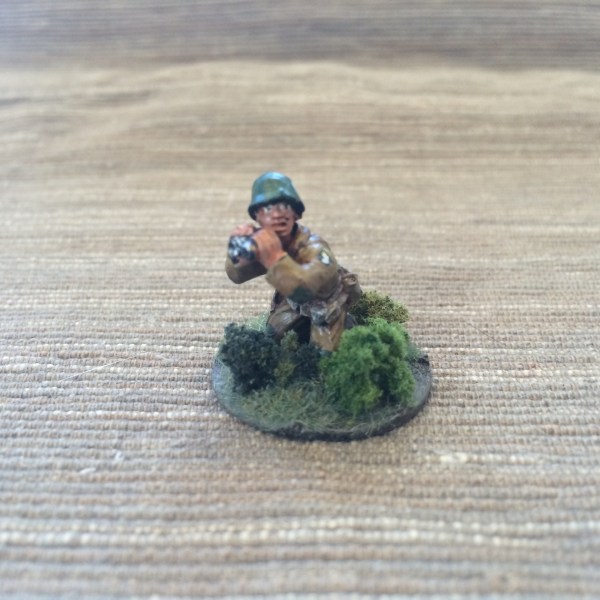
I’ve been gearing up for my first Bolt Action tournament at Nu Brand Gaming in Brooklyn, NY, and the M2 was one the one missing piece to my US 101st Airborne force I really wanted to get ready for the table. I got a deal on the metal cast model from Warlord Games and have chosen to paint it up as an Airborne support weapon unit. Some pics of the finished gun and its four-man crew are found below along with my simple approach to getting models painted up and ready for action.

AB Paint Scheme

Painting 28mm US Airborne Support Weapons

  1. Clean flash from metal models with a sharp knife and glue to metal washer or plastic bases.
  2. Apply filler putty to bases. When dry, scrape off excess with a sharp knife.
  3. Base coat models and bases with flat black spray primer.
  4. Paint uniforms and bandages on helmets with Tallarn Sand.
  5. Paint helmets and knee and elbow patches with Waaagh! Flesh.
  6. Paint faces and hands with Tallarn Flesh.
  7. Paint webbing and packs with Baneblade Brown.
  8. Paint bases, boots, gun stocks and helmet straps with Dark Brown.
  9. Apply Agrax Earthshade wash to uniforms, helmet netting, webbing and packs.
  10. Mix 50/50 Baneblade Brown and Off White and lightly dry brush packs, webbing and socks.
  11. Lightly dry brush bases, gun stocks, helmet netting, holsters and elbow and shoulder patches with Baneblade Brown.
  12. Paint metal gun, bazooka and mortar parts with black and finish with a light dry brush of metallic silver.
  13. Paint eyes with small dots of Off White and Dark Brown. Clean up around eyes with Tallarn Flesh.
  14. Mix 50/50 Tallarn Flesh and Off White and brush highlights on cheekbones, chins, forehead, nose and hands.
  15. Apply Company B decals to shoulders and helmets, followed by a coat of Solvaset decal fixative from Walthers.
  16. Cover bases in white glue and cover in 50/50 mix of fine light green and dark green grass flock.
  17. Glue small pieces of clump foliage to base.
  18. Spray coat completed models with matte finish.

IMG_7896

IMG_7895

IMG_7894

A Place To Play: The Brooklyn Strategist

IMG_7499

The Brooklyn Strategist was opened several years ago by Dr. Jon Freeman, a clinical psychologist, neuroscience researcher and life-long game fan. Situated along the main drag of Court Street in Carroll Gardens, Brooklyn, has quickly grown to be a go-to gaming space for the Brownstone Brooklyn crowds of kids, families and adults.

IMG_7503

Board games, card games and gaming accessories line the walls

The original storefront space of hardwood floors and exposed-brick walls holds a number of tables (including a stunning Sultan custom table from Geek Chic), shelves of games and accessories for sale, and a small coffee and snacks bar. In the spring of 2015, the store doubled in size next door. The new space added about a dozen more tables to accommodate the expanding children and adult programs, tournament events and growing miniatures gaming community.

The core of The Brooklyn Strategist is in its after school programming, and a packed regular schedule of events is also offered every day and night of the week. Magic: The Gathering card games are featured Mondays, Wednesdays and Fridays. Mondays also showcase ongoing Star Wars X-Wing play, and other X-Wing events are held periodically with hosting by the NYC X-Wing group. Scrabble and chess take over Tuesday nights, and opportunities abound for Dungeons & Dragons and other RPG games Wednesdays and Saturdays. Hundreds of games are on hand to pull off the shelf to play.

Paying your way at The Brooklyn Strategist is a great deal with a $10 walk-in fee, individual memberships at $25 per month, couples at $45 per month and family packages at $60 per month. Each level of membership comes with a package of discounts and perks which encourages a solid community to fill the space all week long.

IMG_7502

The expanded miniatures gaming selection includes Flames of War, Games Workshop, Star Wars X-Wing, Battle Foam cases, paints and other popular lines

This past weekend I had the opportunity to sit down with Colt Johnson who has worked hard for a year to expand the shop’s interest in miniatures gaming. Johnson said the miniatures scene is focusing right now on the “five food groups: Malifaux, Infinity, Warmachine, Games Workshop and Flames of War.” Over his time working at the store, the miniatures scene has grown from maybe a dozen players on a weekend afternoon to 40 to 50 packing the tables on a busy day. Organized miniatures tournaments, events and pick-up games rage on the tabletop battlefields, and players new to the hobby can drop in and whet their appetites using beautifully painted 28mm loaner models on hand in display cases throughout the store.

IMG_7504

Miniatures gaming and painting gears up on a recent Saturday

A Warhammer 40K escalation league just kicked off with nearly 40 players signed up to play over the coming months. On the day I was there, 40K was very much in the air. A group of players from Staten Island were settling into their first games on some beautiful tables packed with terrain. One table over, a young girl who recently hosted a birthday party for 15 other girls at the store sat painting up her latest plastic goodies from Games Workshop. As the dice rolled, a phone call came in from someone who had just moved to the city and was looking to play some 40K.

Sci-fi and fantasy miniatures gaming clearly has a big following at the The Brooklyn Strategist, but historical gaming is newly on the rise. The popular World War II 15mm game Flames of War is a recent addition to the store’s minis mix, and this past weekend also presented a demo game of the 15mm Cold War-themed Team Yankee. WWII at 28mm with Bolt Action and even some 18th-century Blackpowder gaming is also on the horizon.

While growing every aspect of miniatures gaming, Johnson is hoping to push into even more historical gaming as both a hobby and way to create excitement for local kids and adults around learning about history through gaming and modelling. No matter the game, period, theme or level of experience, everyone who finds their way to the tables at The Brooklyn Strategist will find themselves in the right place.

The Brooklyn Strategist is located at 333 Court Street in Brooklyn, NY 11231 (a short walk from the F/G train at Carroll Street). Contact them at 718-576-3035 or check them out on their website or Facebook page. For news on the miniatures scene at the shop, check out their separate wargaming Facebook page.

A Place To Play: Nu Brand Gaming

image

Tucked away on a residential side street in Sunset Park, Brooklyn is an inviting tabletop miniatures players paradise. Located in a former chiropractor’s office decked out in knotty pine paneling, wall to wall carpeting and an assortment of Americana and Wild West decor, Nu Brand Gaming opened in 2015 and is one of the newest and best gamer play spaces in the city.

image

One of the many racks of terrain throughout the space

Nu Brand is operated by Ade Sanya, the resident owner of the building and son of the doctor who formerly served patients in the rooms where dice are now rolled and minis are pushed on tabletop battlefields.  With his family living upstairs, Ade has spent the past year creating an incredibly comfortable and inviting space for gamers focused on historic, fantasy and sci-fi miniatures. His skills as a carpenter and set builder are evident in the sturdy tables and racks of terrain found in the half-dozen well-lit rooms which radiate off the central hallway.

image

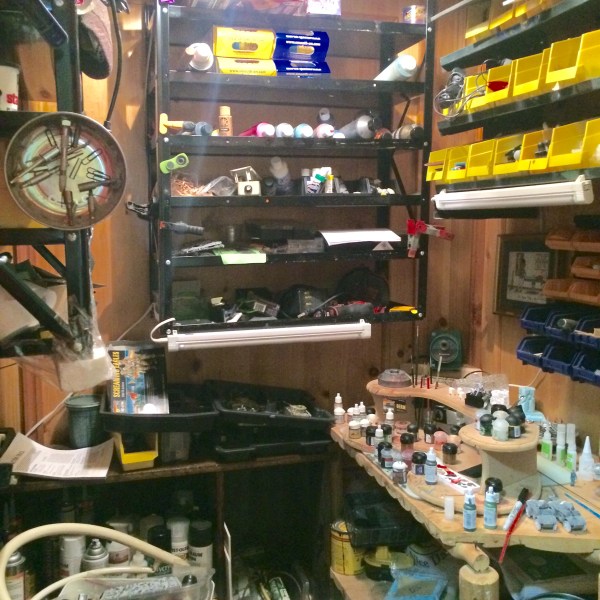
Hobby room with supplies and tools to lend

A small hobby room sits at the back of the building where tools and supplies are available for use by members and drop-ins who come to spend time modelling at one of the many comfortable work places throughout the rooms. A small galley kitchen offers drinks, snacks and a refrigerator for visitors to store their own food. Secured storage lockers are also made available to members to store their gaming gear.

IMG_7465

 Miniatures painting in the back room

Membership runs $30 a month at Nu Brand, and a day rate of just $10 is available for people who come to just give the place a try or participate in one of the many growing number of events scheduled. Members can also take advantage of retail discounts with several suppliers Nu Brand is working with to bring product to the community. The space is generally open Wednesdays, Fridays and Saturdays.

IMG_7455

German Fallschirmjager and US Airborne troops clash in a Bolt Action game

IMG_7458

US Airborne assault a German tank in Bolt Action

IMG_7459

More Bolt Action gaming

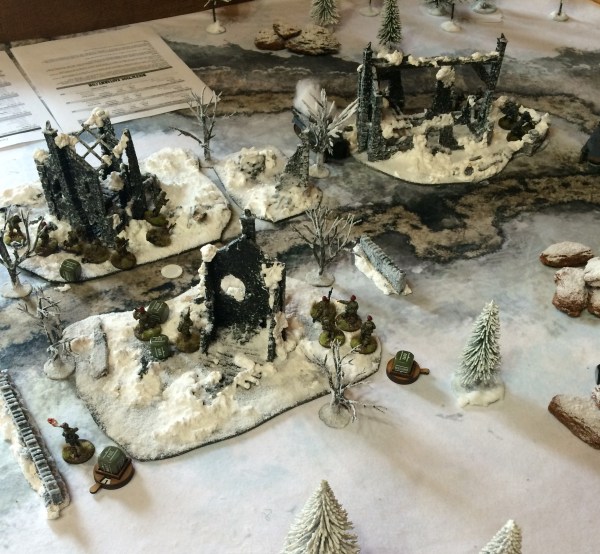
My first visit to Nu Brand this past weekend found ten gamers playing in a day-long series of Bolt Action 28mm World War II games. Tables were gorgeous — from the towns of late-war Western France and the wintery ruins of an Eastern Front forest to an urban town fight and a clash on a Pacific Island. At the end of the day’s events, certificates were awarded for best painting and force lists, a raffle was held and announcements were made for the new monthly Brooklyn Bolt Action campaign kicking off at Nu Brand this month.

IMG_7462

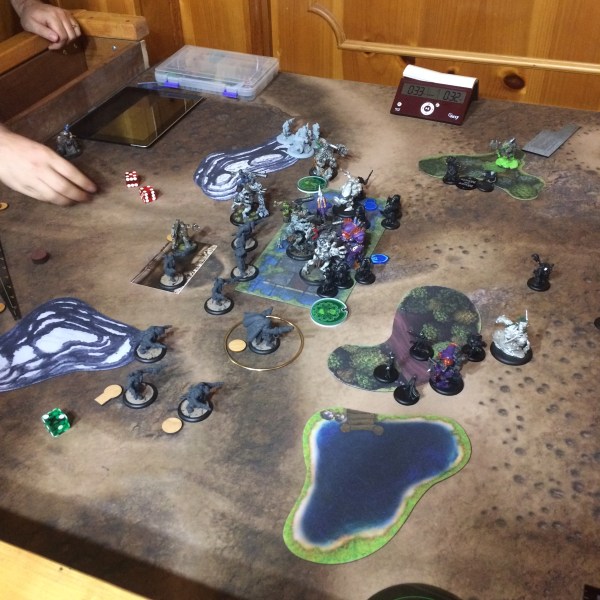
One of the  Warmachine battles in action

IMG_7460

More War Machine gaming

As WWII battles raged in several rooms, other players were occupied with Warmachine and other fantasy games, and four hobbyists were camped out in the back painting away at their miniatures. A variety of games like Star Wars X-Wing, Beyond the Gates of Antares, Malifaux, Mage Wars and Warhammer 40K are played regularly at Nu Brand. Newbies and experts alike all find a spot at Nu Brand. No matter the game, the love of the craft and gaming in the hobby — no matter the era or theme — is evident with everyone who crowds the tables each week.

IMG_7450

Urban terrain set up on one of the many tables

IMG_7466

Modular tables allow for flexible game sizes

The hum of activity and welcoming environment was evident for regulars and newcomers alike at Nu Brand Gaming on my first visit. Aside from myself, two other members of Metropolitan Wargamers were along for the day and we were able to meet and play with a whole host of new people and veteran players who were connected to friends-of-friends throughout the New York City area. Like so many of us in the wide gaming community “keeping table top gaming alive” is the mission of Nu Brand Gaming, and this marvelous place to play is a fantastic new outpost to seize this objective.

Nu Brand Gaming is located at 194 31st Street in Brooklyn, NY 11232 (a short walk from the D/N/R train at 36th Street). Contact them at 646-696-4132 or check them out on their website or Facebook page.


28mm: German PaK 40, Forward Observers and Command By Warlord Games

PaK40

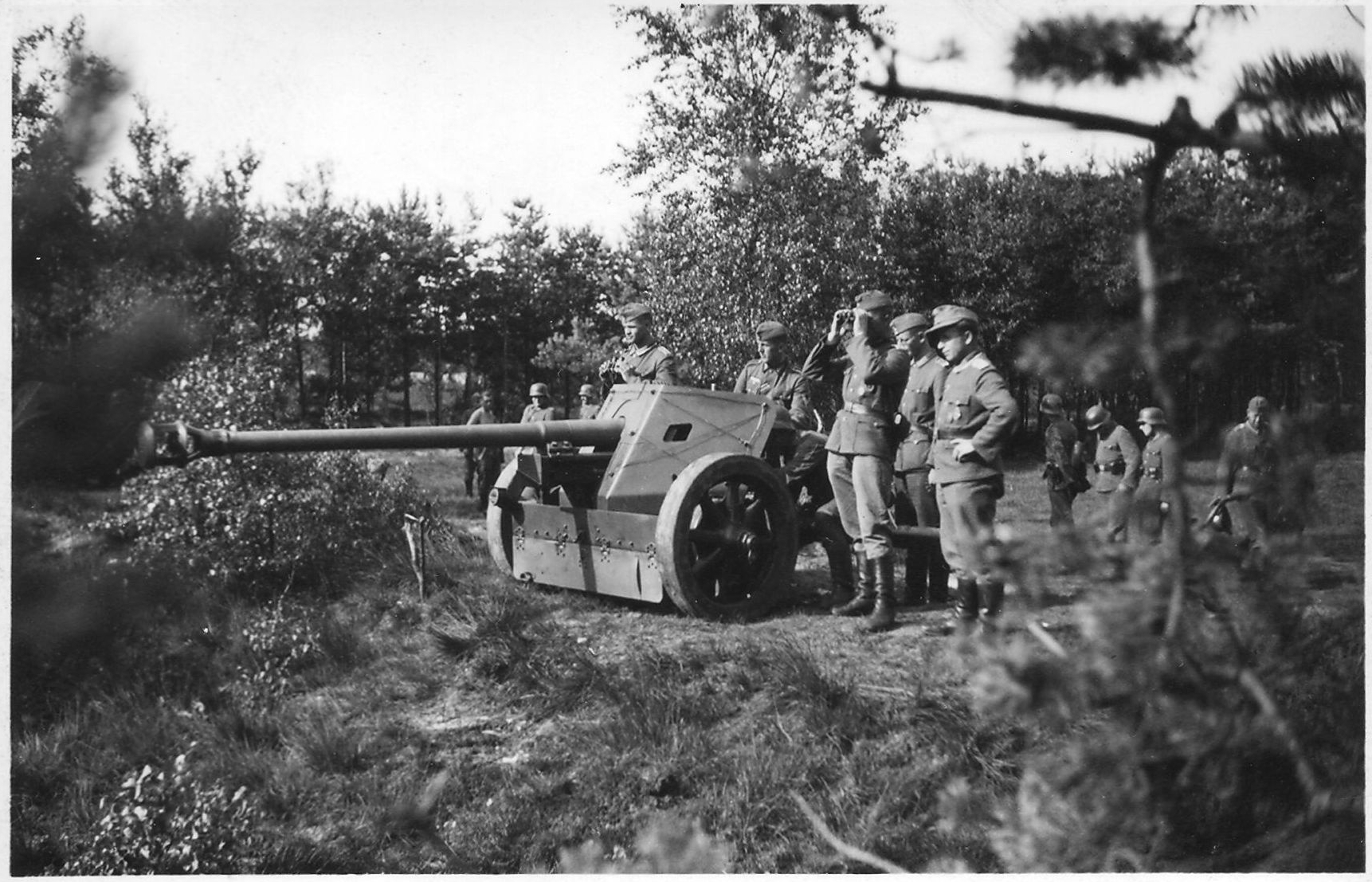
The standard anti-tank gun of German forces in World War II was the 7.5 cm PaK 40. Used throughout the war in every theater, the some 20,000 guns produced were the bane of every Allied tank. As the modern video below shows, the PaK 40 was fearsome weapon.


Warlordlogo

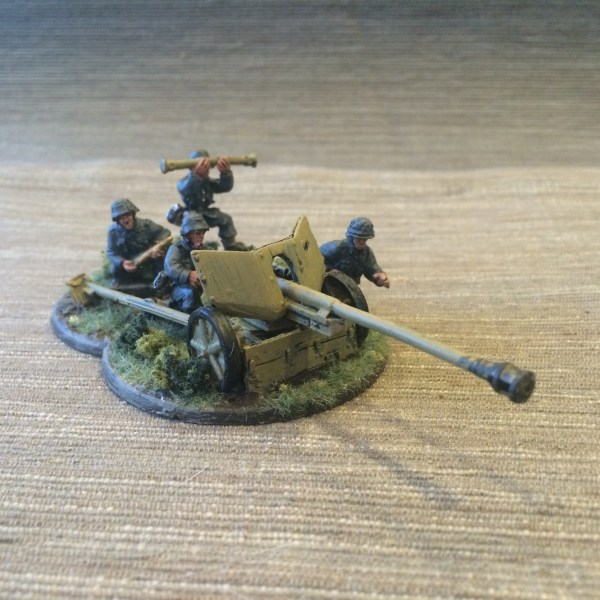
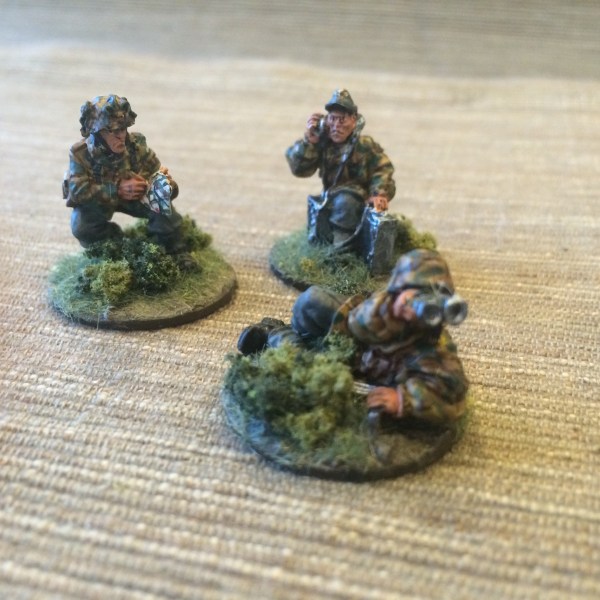
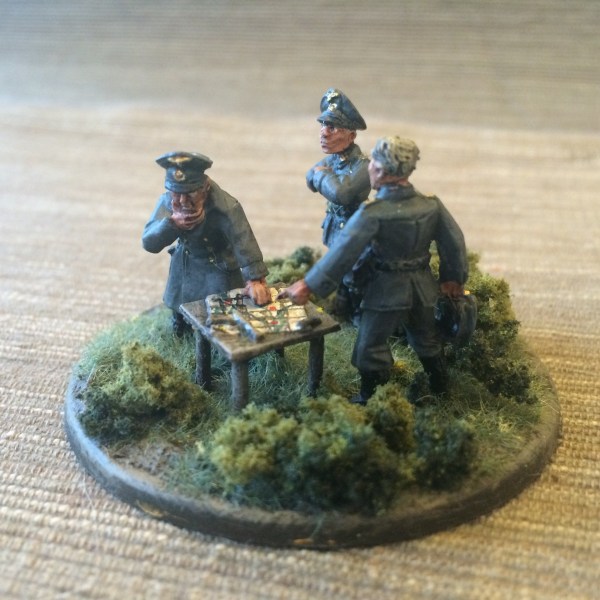
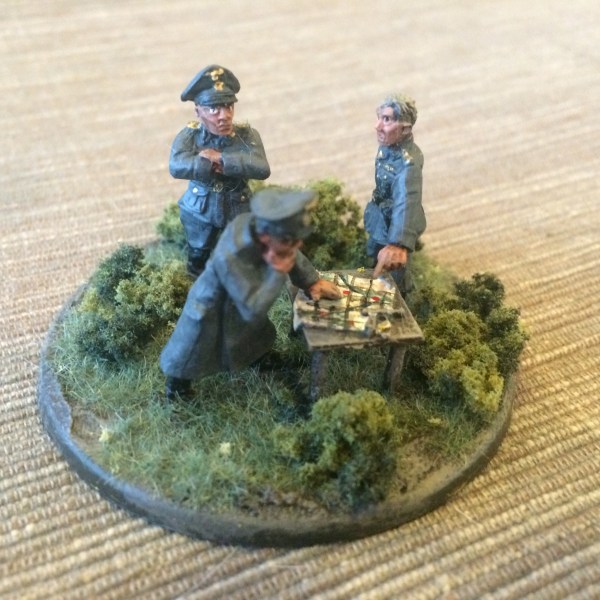
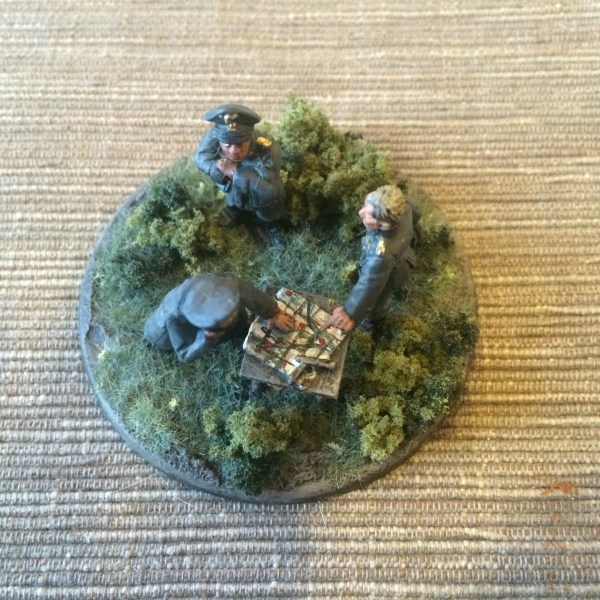
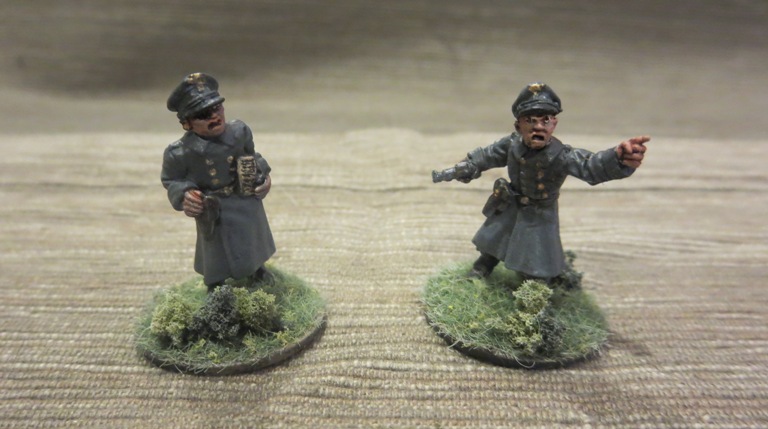
After modelling so many German infantry figures over the past year, I very much wanted to mix things up. I picked up a deal on a few blister packs of 28mm Warlord Games Bolt Action metal miniatures at last year’s HMGS Fall In! 2015 convention, including a PaK 40, a forward observer team and a German high command set. As always, the 28mm metal models from Warlord go nicely with my other Germans in both scale and sculpting. The artillery piece and the high command set both allowed me to create little tabletop battlefield vignettes while deployed with other individual models.

paintgerman

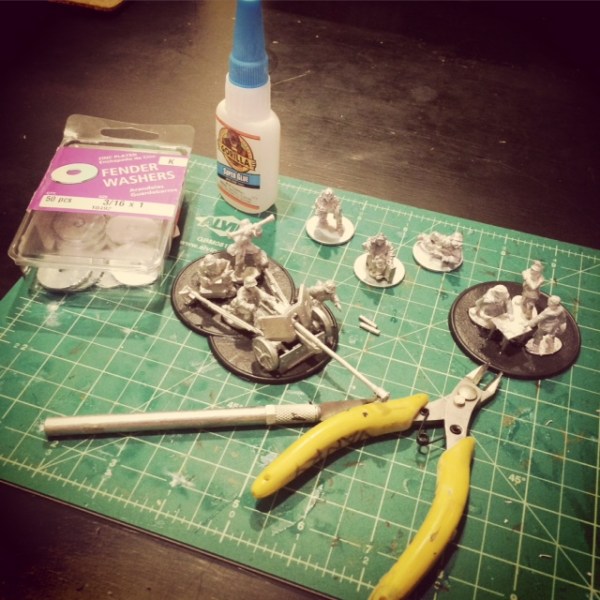
My painting approach is pretty standard for my German forces. Individual figures get a little flash clean up before being glued to metal washers. The high command set went on a 60mm plastic base from Proxie Models. The PaK 40 and its crew went on two of the 60mm bases which I cut and glued together. From there, here were the steps in detail for painting my German infantry.

Painting 28mm German Infantry

  1. Clean flash from metal models with a sharp knife and glue to metal washer or plastic bases.
  2. Apply filler putty to bases. When dry, scrape off excess with a sharp knife.
  3. Basecoat models and bases with flat black spray primer.
  4. Paint smocks and helmets with Tallarn Sand.
  5. Paint PaK 40 with Tallarn Sand.
  6. Paint pants, soft hats, officer uniforms and gas mask containers with Skavenlight Dinge.
  7. Paint camouflage on helmets and smocks with alternating Waaagh! Flesh and Dark Brown.
  8. Paint faces and hands with Tallarn Flesh.
  9. Paint packs with Baneblade Brown.
  10. Paint boots and equipment straps Black.
  11. Paint bases, gun stocks, water bottles and helmet straps with Dark Brown.
  12. Apply Agrax Earthshade wash to uniforms, helmet netting, webbing and packs.
  13. Mix 50/50 Baneblade Brown and Off White and lightly dry brush packs, webbing, socks and holsters.
  14. Dry brush pants, soft hats and officer great coat with Light Grey.
  15. Lightly dry brush bases and gun stocks with Baneblade Brown.
  16. The high command table also gets painted Dark Brown followed by a a dry brushing of Baneblade Brown. The map on the table is painted in Off White with lines drawn on in varying colors with a very fine brush.
  17. Paint metal gun and water bottle parts with black and finish with a light dry brush of Metallic Silver.
  18. Dry brush gasmask containers with metallic Silver.
  19. Paint eyes with small dots of Off White and Dark Brown. Clean up around eyes with Tallarn Flesh.
  20. Mix 50/50 Tallarn Flesh and Off White and brush highlights on cheekbones, chins, forehead, nose and hands.
  21. Cover bases in white glue and cover in 50/50 mix of fine light green and dark green grass flock.
  22. Glue small pieces of clump foliage to base.
  23. Spray coat completed models with matte finish.

IMG_7025

 Figures are cleaned and glued to washers and plastic bases

FullSizeRender

 Primer and base coats to uniforms and the PaK 40 are applied

And here’s the finished results. With a new Brooklyn Bolt Action group holding their first event this weekend at Nu Brand Gaming with some of us from Metropolitan Wargamers in attendance I can’t wait for some of my 28mm models to march into battle.

IMG_7442

IMG_7444

IMG_7443

IMG_7445

IMG_7441

IMG_7437

IMG_7436

IMG_7435


Battleground: Bocage HQ Near Le Mesnil-Rouxelin 1944 Scenario

leMesnilRouxelinJune1944

On June 6, 1944, General Dietrich Kraiss and the 7000 some soldiers of his 352nd Infantry Division were at Omaha Beach to meet the Allied invasion. Fighting valiantly against the overwhelming tide of American and British forces, Kraiss and 352nd were stretched thin at the beaches and continued the defense inland for weeks as they fought the Allied advance toward their objective of St. Lo.

LeMesnilStLoMapMap of the area around Le Mesnil-Rouxelin and the US 175th Infantry Regiment June 14-18, 1944 advance

St. Lo was an important crossroads objective which had endured German occupation since 1940. On the morning of June 6, 1944, the city was hit with vicious American artillery bombardments. As the Allies advanced inland after the coastal landings toward St. Lo, the German 352nd and 353rd Infantry Divisions and 3rd Parachute Division formed a line to slow them down. By late July, St. Lo was liberated by the Allies and the 352nd was destroyed. By early August, Kraiss was dead, and the German presence in Northern France was near its end.

SCHeroesofOmahaSkirmish Campaigns “Heroes of Omaha and Panzer Lehr” scenario book

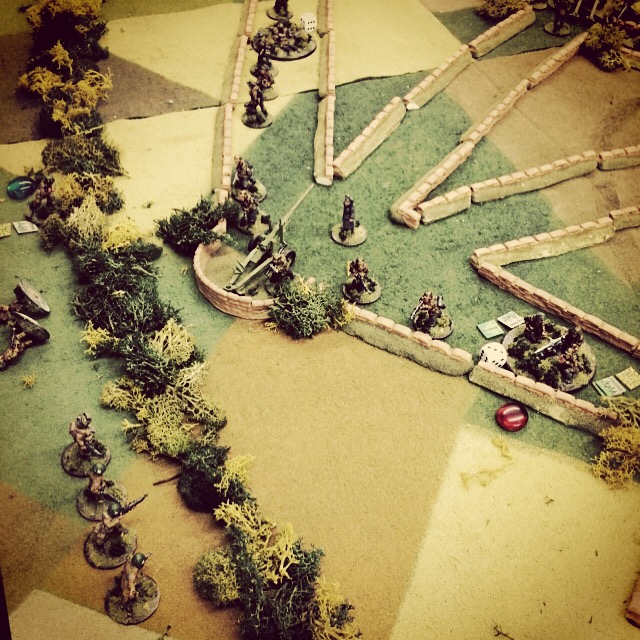
The Heroes of Omaha and Panzer Lehr book from Skirmish Campaigns outlines the eleven engagements during this key period from D-Day to the German counterattack through the Allied breakthrough. This past weekend at Metropolitan Wargamers in Brooklyn, NY we ran through the battle near Le Mesnil-Rouxelin just north of St. Lo on June 17, 1944. With elements of the US 175th Infantry Regiment closing in, General Kraiss and his headquarters quickly assembled an ad hoc force to delay the American advance. In the game, three US rifle squads (each armed with a BAR team) and a lone M4 Sherman must advance and seize the German HQ while being held at bay by several small German teams armed with rifles, Panzerfausts, a mortar and a MG-42. the Americans have to hustle, and they have eight turns to capture the German HQ before Kraiss and his staff can make their escape to fight another day.

IMG_6808Game set up near Le Mesnil-Rouxelin with the German HQ in the distance

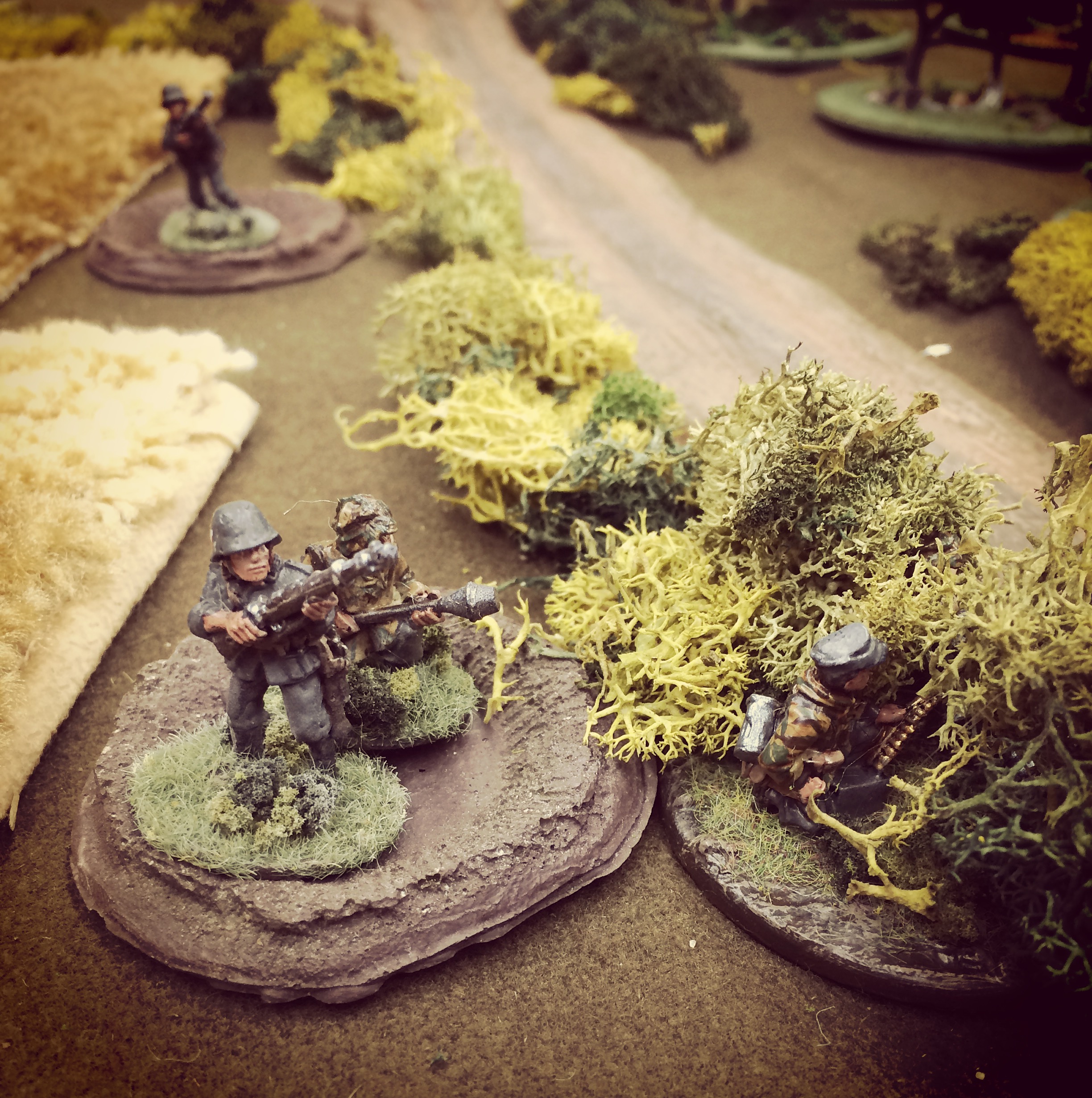
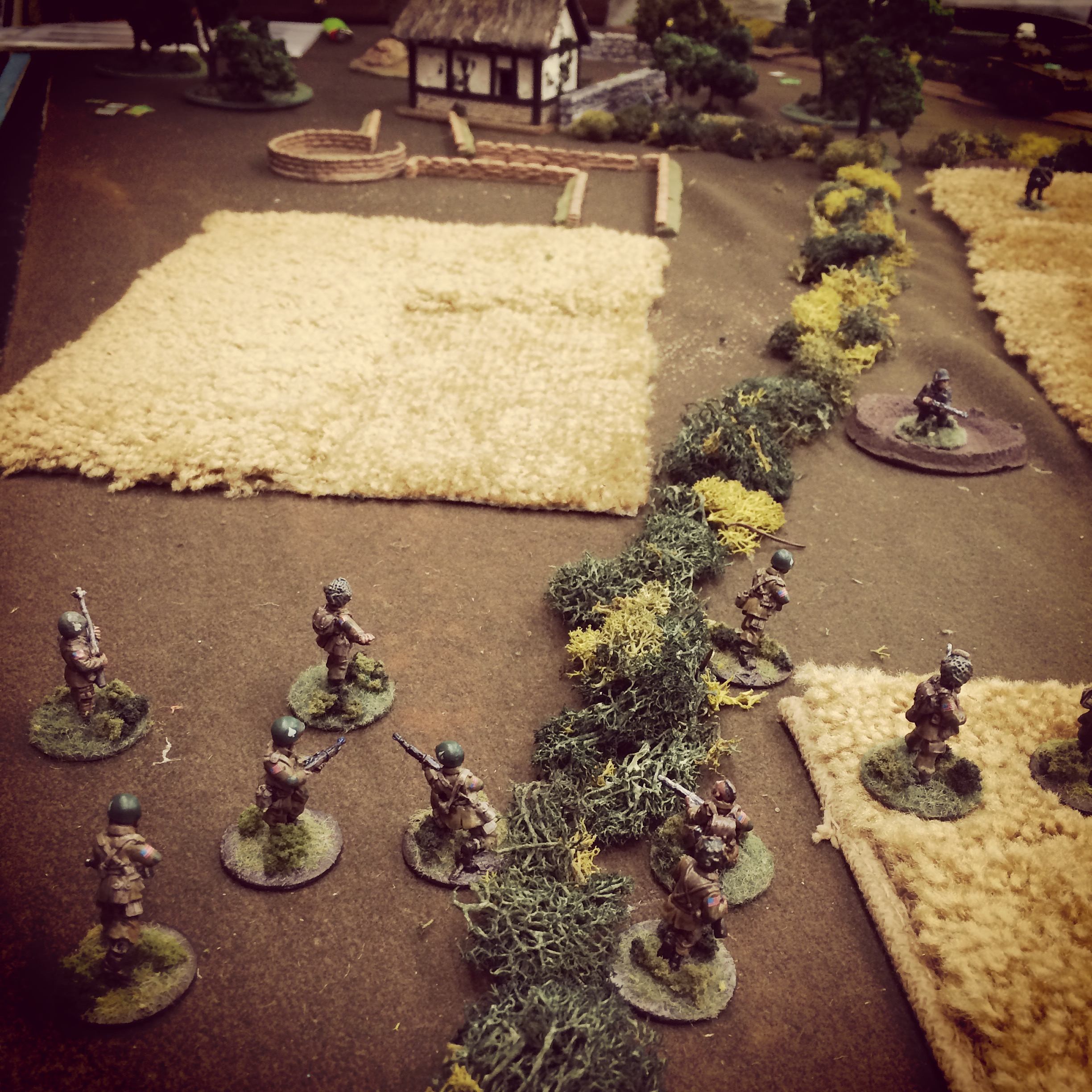
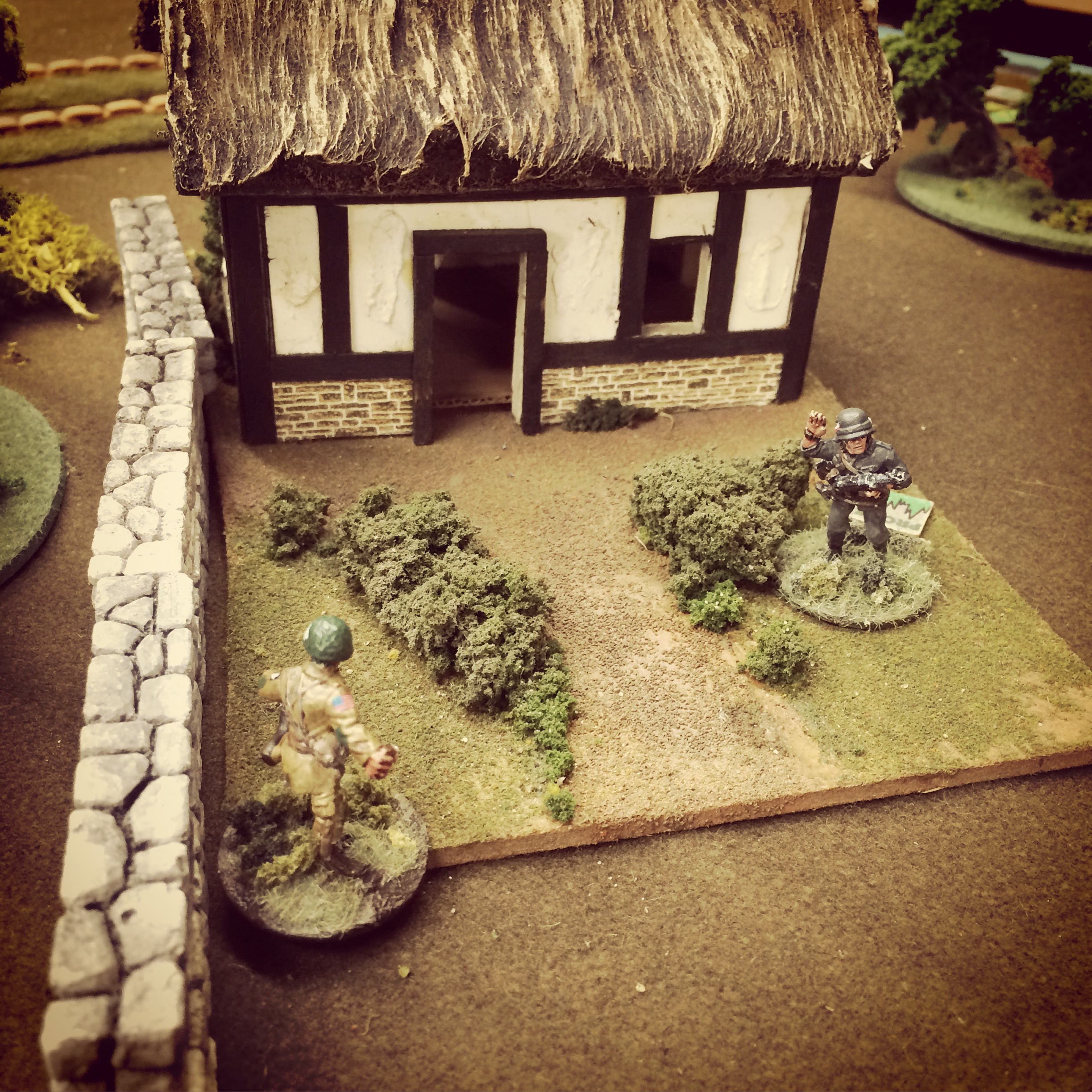
With my US Airborne 28mm models standing in for the American infantry, they spent the first few turns moving in from the north and navigating the bocage hedgerows. Two squads and the US HQ moved to the east of the main road, the Sherman ran straight through the middle and one squad edged toward a French farmhouse mid-field. The German machine gun set up at the road edge in the bocage, looking to cover the advance by road or in the thick fields. Other German riflemen spread out along the hedges, looking to create a defense using their thin units and cover to the best advantage.

IMG_6804

US soldiers push through the fields and bocage

IMG_6805

German soldiers edge into position along the bocage

IMG_6806The Sherman rolls straight along the road toward the objective

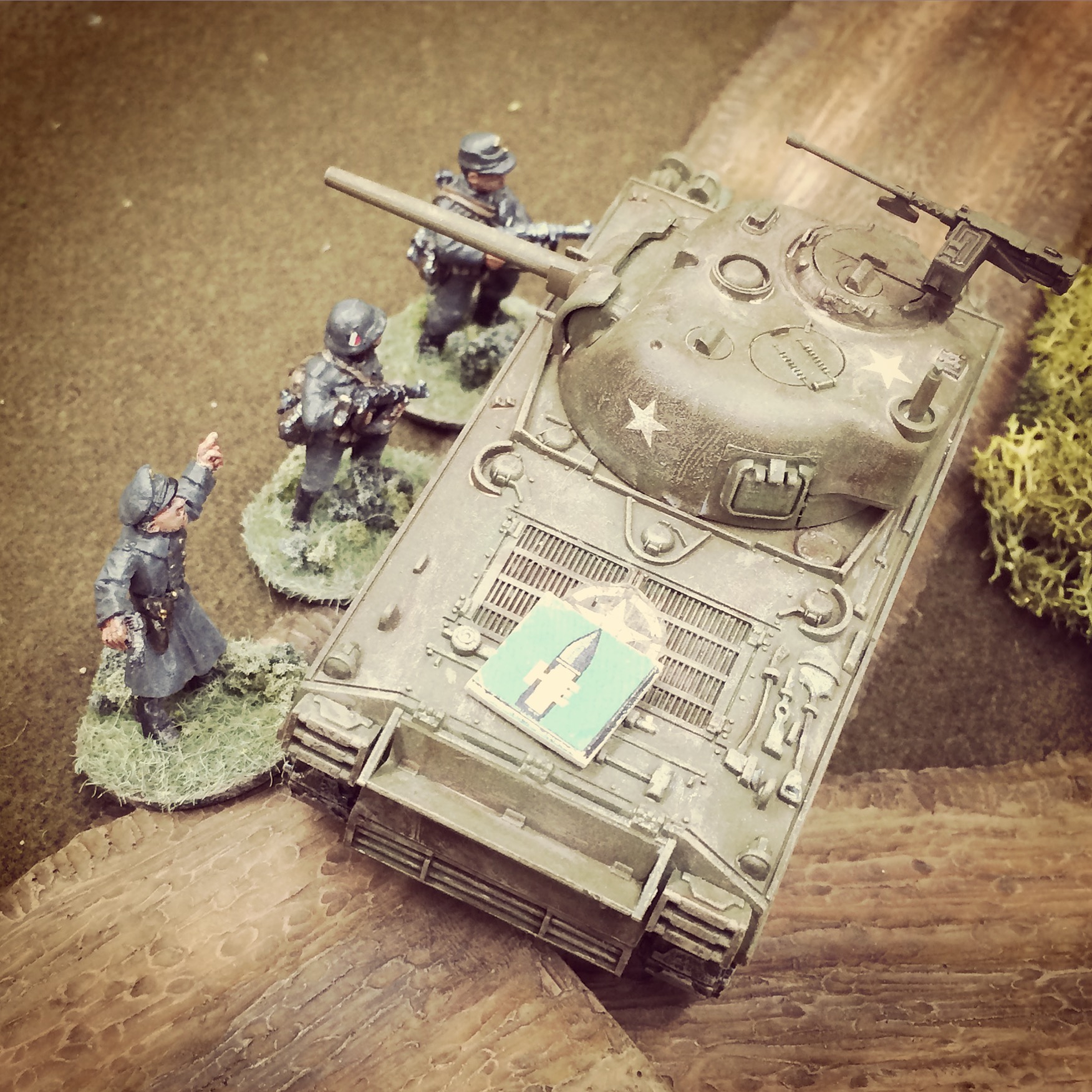
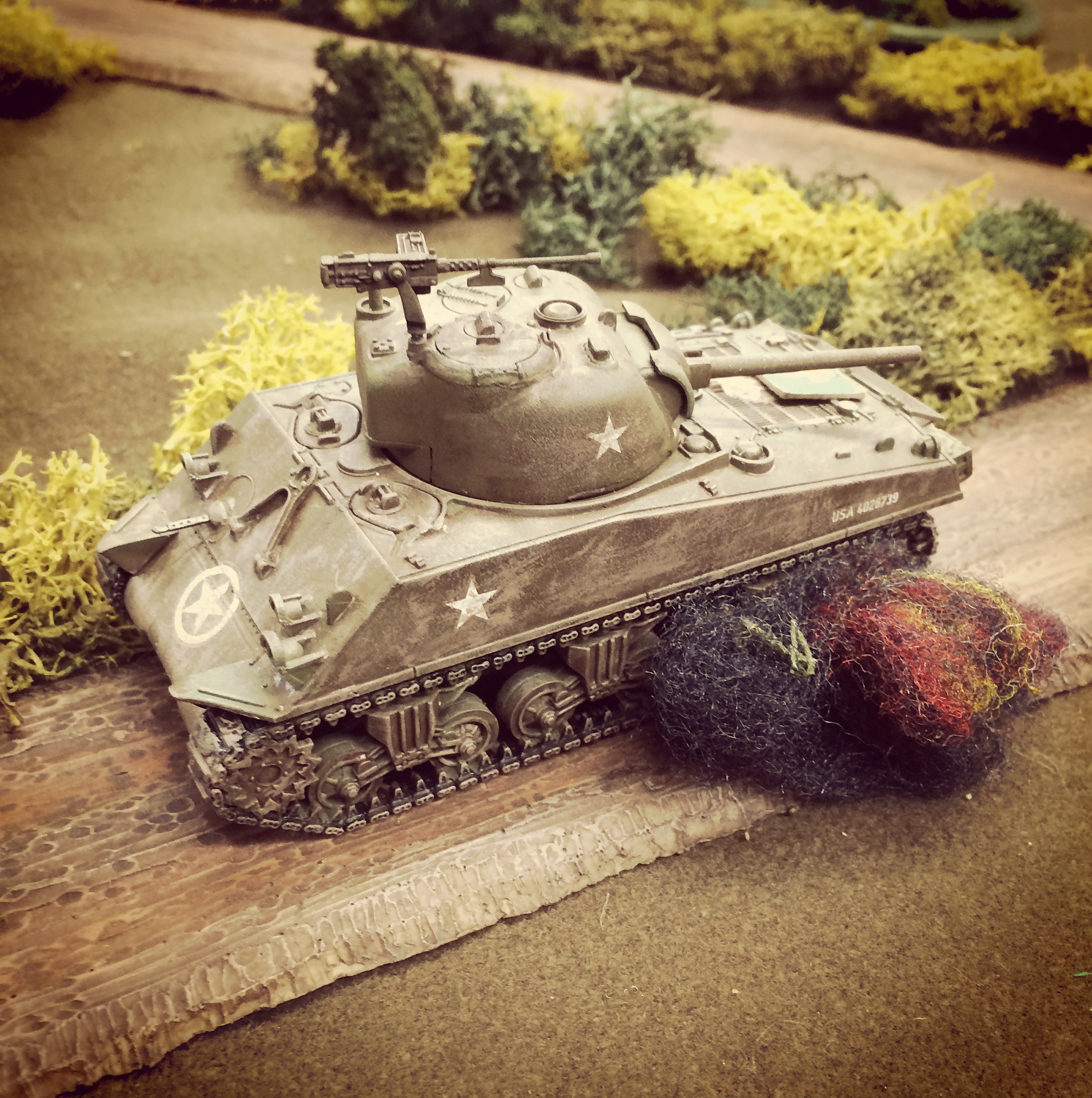
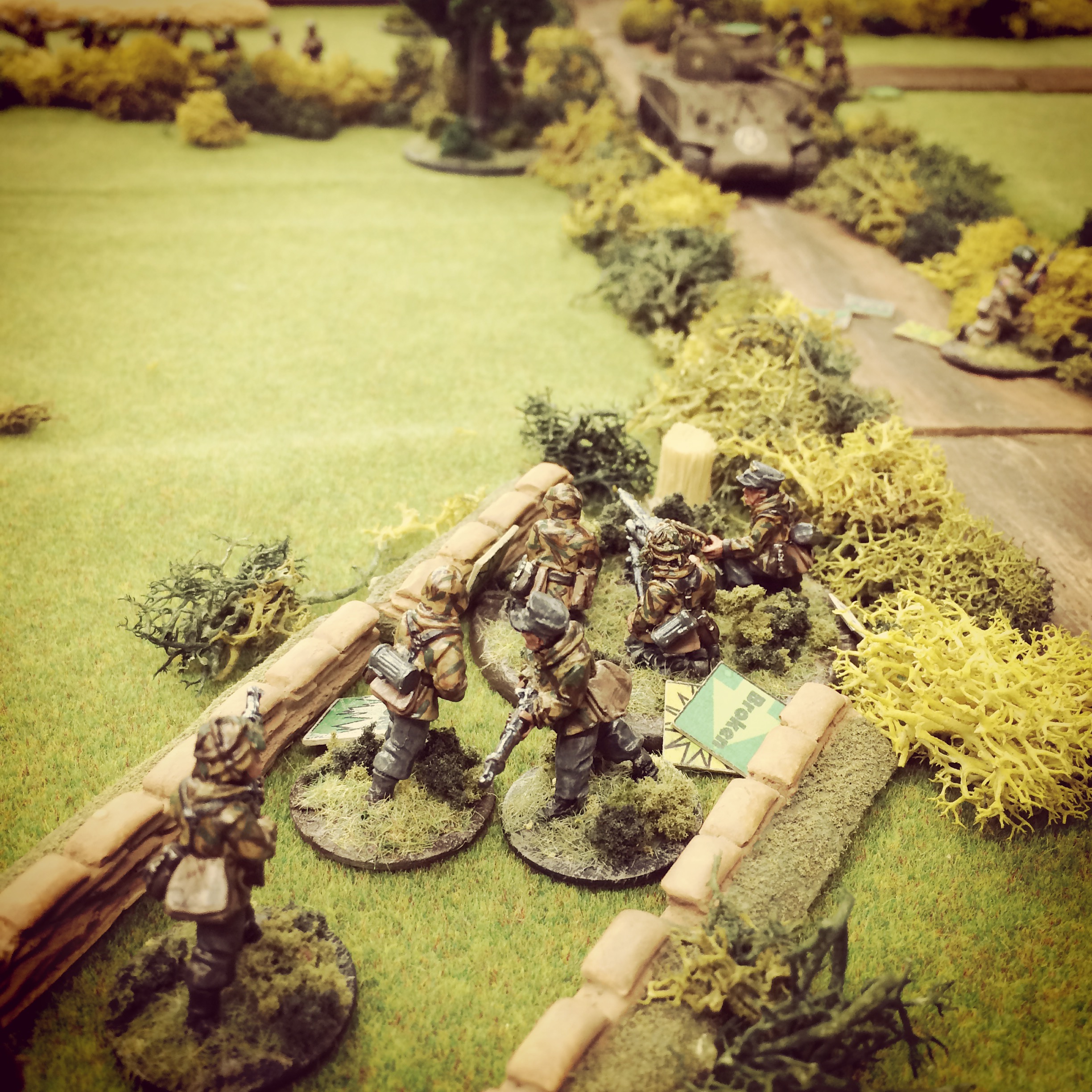
By turn four, the firing began. Germans along the bocage made an attempt to shoot the Sherman at close range with a panzerfaust but the shot miraculously missed. The Sherman answered with a burst of machine gun and high explosive shots, forcing the Germans to fall back from the hedge and into the field. The Sherman rolled forward and a second squad of Germans emerged from the bocage and rushed the tank, placing three grenades along its left side. With the charges set to blow, the tank moved forward and rotated its turret to light up the exposed Germans with another round of machine gun fire, destroying the entire unit. Just as the smoke cleared, the grenades blew up along the side of the tank, immobilizing it for the game with its weapons still functional and crew left unharmed. Back in the field at the center, the German rifles and MG-42 took up new positions and the two US rifle squads and HQ continued to creep forward in prone positions.

IMG_6807Germans await the Sherman’s advance from their bocage positions

IMG_6809Germans disperse under machine gun fire from the Sherman

IMG_6810Germans bravely close assault the Sherman from the hedgerow

IMG_6813The Sherman is immobilized but still keeps fighting

With game time running short, the Americans in the field stood to fire on the Germans. Two German riflemen fell and the MG-42 crew took heavy fire, knocking it out for a round as the remaining crew scrambled back into position. At the left of the field, a US squad opened up at the Germans stretched along the hedgerow. Leaping the bocage and rushing forward, the Germans vanished in a hail of bullets, opening the route forward to the German HQ ahead. At the same time, Germans fell back along the right side of the field and the Americans ran forward. On the far US right, the third fire team ran forward, using their broken tank as cover as they made an end run toward the German command team in their farmhouse HQ.

IMG_6811
Two US squads and the platoon HQ advance at prone through the field

IMG_6814

US riflemen and BAR gunner fire into the German MG-42 as another American squad rushes forward in the distance

IMG_6815With the German HQ in sight, the US soldiers push hard to their objective

By the sixth turn, Kraiss and his command staff were on the move, making a run south from the safety of the farm where they had sat in cover for the whole game. With the final German defense in the field breaking, Americans broke through toward the farmhouse straight ahead and to both sides. Four remaining German rifles behind a wall and in a small copse of trees at the farm exchanged fire with the Americans, holding off dozens of GIs as Kraiss continued his run for safety.

IMG_6816American and German soldiers come face-to-face at the German HQ

With the final turn eighth turn’s arrival, the Americans finally reached the edge of the farm. After quick series of shots, another German fell but no Americans were able to seize the HQ in time as Kraiss and a couple straggling men slipped off to the south further toward St. Lo..

Our battle at the German HQ near Le Mesnil-Rouxelin presented a pretty good feel for the fighting that occurred in mid-June 1944. With a wave of Allied forces closing in toward their objective of St. Lo, General Kraiss and the other German commanders struggled to stall the advance. With the four-year German control of Northern France at stake, German forces cobbled together a fierce retreating defense. Beginning with the tide of men landing on the beaches and from the air on D-Day, the war had turned inevitably for the Allies.

Battleground: Advance to La Fiere 1944 Scenario

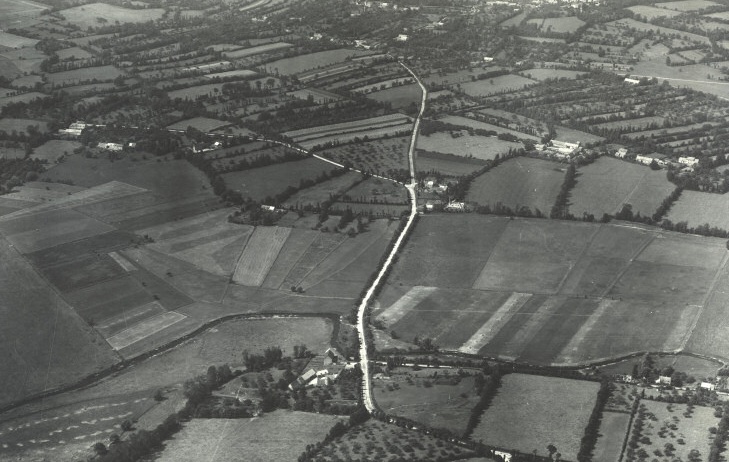
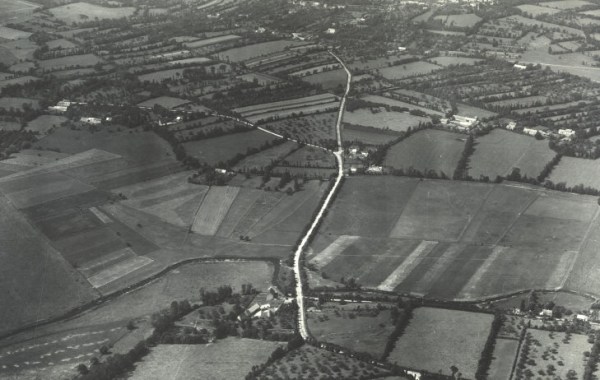
LaFiereAerialAllied airborne troops were the first units on the ground in the pre-dawn hours of June 6th, 1944 invasion of Normandy. As the vanguard ahead of the massive beach landings to come on D-Day, the inland goals of the paratroopers was to secure key inland areas and deny German reinforcements a path to the coast. Members of the 505th Parachute Infantry Regiment of the 82nd Airborne Division were tasked with seizing a bridge over the Merderet River at La Fiere and just west of Sainte-Mère-Église.

LaFiereMapMap of the action around La Fiere, June 6-9 1944

There to meet the arriving Americans were elements of the German 1057th Infantry Regiment of the 91st Infantry Division. For three days, German resistance amid the open fields, bocage hedgerows and scattered stone Normandy buildings held out against the elite US airborne troops. By July 9th, however, the Germans withdrew and the way was cleared as Allied troops began to arrive inland from the beaches.

IMG_6037Skirmish Campaigns  “Normandy ’44 – First Hours” scenario book

I’ve previously run a 15mm Flames of War scenario at La Fiere, so I was excited to scale up the battle to 28mm at Metropolitan Wargamers in Brooklyn, NY this past weekend. Our game at La Fiere once again came from the classic Normandy ’44 – First Hours scenario book from Skirmish Campaigns, and we used Battleground rules. The Skirmish Campaigns series offers narratives, orders of battle and terrain layout maps that are brief and to the point, focusing on getting into the game as quickly as possible. For our game at La Fiere, we modified the order of battle and added in my newly-painted Rubicon Models Sherman tank for the US and a German anti-tank unit I’ve also recently completed. The rest of our forces came from my collection of 28mm German and US troops painted over the past year.

IMG_6699Table set up and initial German deployment at La Fiere

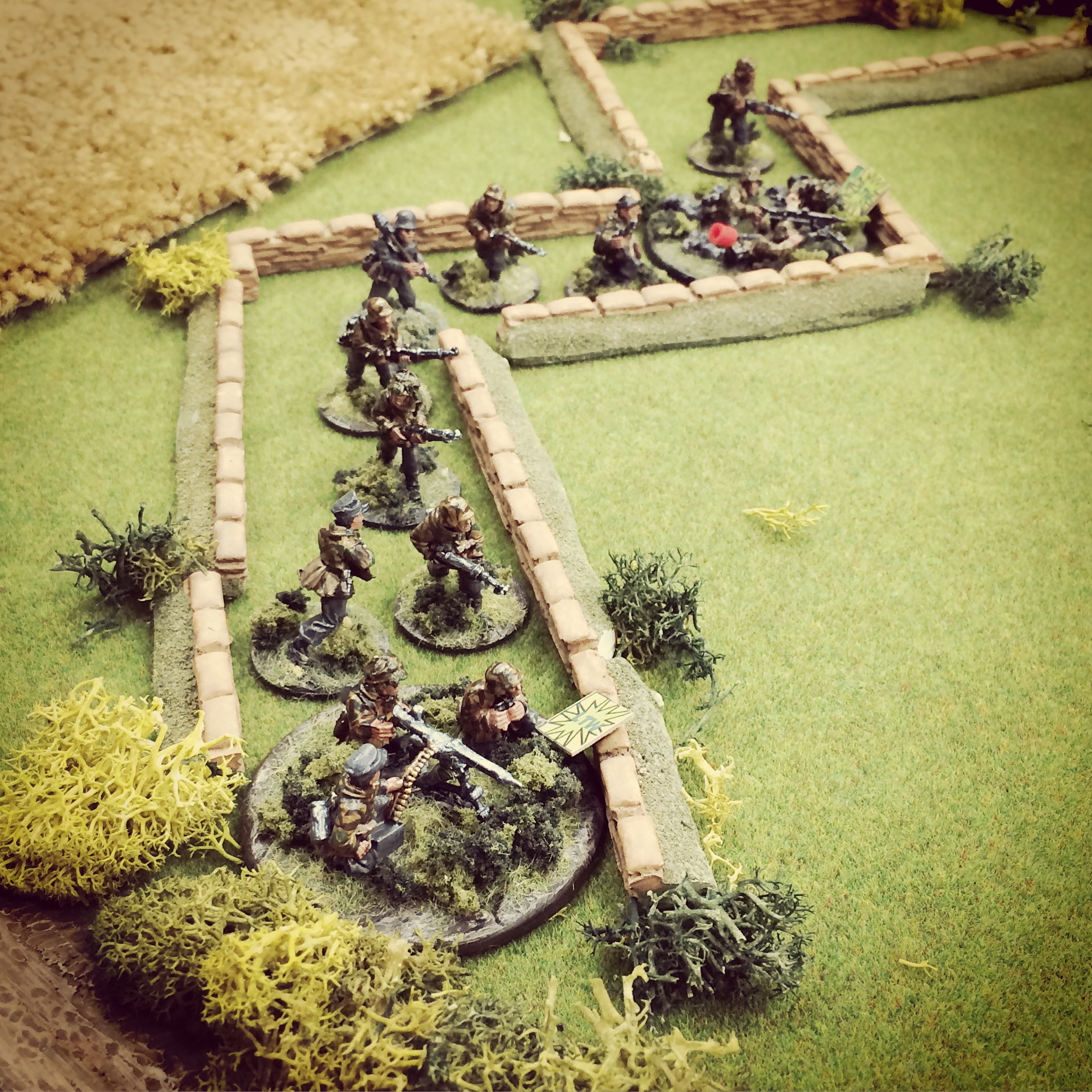
At the 28mm scale, we increased the tabletop set-up to a 4′ x 4′ board accommodating two main bocage-lined east-west roads, fields and a large stone house. With an American objective to seize the house, the Germans set-up with an infantry team and light machine gun in a line of trenches stretching through the main field. The German command set-up in the top floor of the house with a tripod-mounted MG 42 and anti-tank unit armed with a Panzershreck and Panzerfausts ready to deploy from the rear of the building. Two small anti-personnel mine fields were also set — one to the east of the house and one protecting the northern end of the German prepared positions.

IMG_6701Entrenched German troops and machine guns shift to meet the arriving Americans

With a game time limit of ten turns, the game began with the US being given the initiative as the Germans lay quietly in wait. The Americans took the first two turns to move on from the far edge of the table to the east and their deployment quickly revealed their plan. To their right, a M1 mortar crew set up behind a tree with their spotter creeping to the edge of the bocage to sight German targets across the field. Next, a .30-calibre machine gun team  set up at the hedgerow, followed by the HQ and a parachute rifle squad all stretched along the thick hedge. Across the road at the American left, one additional rifle squad moved in along the road with their Sherman rolling in support.
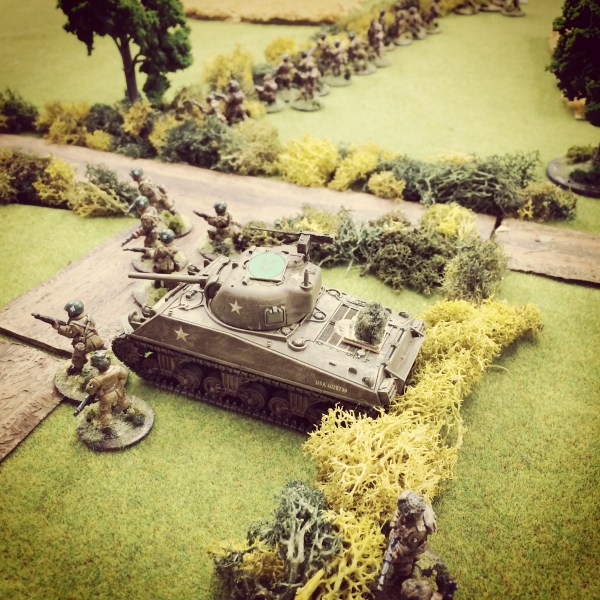
IMG_6700US paratroopers advance at the bocage hedgerows supported by a Sherman

Clearly the US plan was to lock down the German forces in their prepared positions with combined mortar, machine gun and infantry fire as the infantry would push through the open field toward the house objective. All the while, the balance of the Americans would creep toward the house using their tank for cover and intimidation. The mortar team confirmed the plan by launching two smoke rounds into the wide field at the end of the second turn, providing drifting cover for the next two turns.

IMG_6706German machine gunners take heavy fire from the American rifles

With the tank’s position revealed at the road, my Germans quickly moved their anti-tank squad around the house through turn three and lay in wait behind the bocage. The Germans also redeployed their tripod-mounted MG 42 to the far right of the trench to stave off the American advance in the field. The German advantage lay solely in their defensive positions, and all they had to do was survive. The Americans were going to have to abandon cover early in the game, but they superior numbers, elite troops and better weapons. Plus, the airborne had a tank.

IMG_6703The Sherman rolls down the road

There were few targets for the Germans soldiers to shoot at through turn four, and they had difficulty spotting through the smoke and distance across the field. The American machine gunners managed to lay down steady fire each turn, forcing some Germans into prone positions, wounding others but not scoring any kills. The American plan shows signs of unraveling early on as the mortar began failing to repeatedly to sight and range in effectively on any German targets in the trenches.
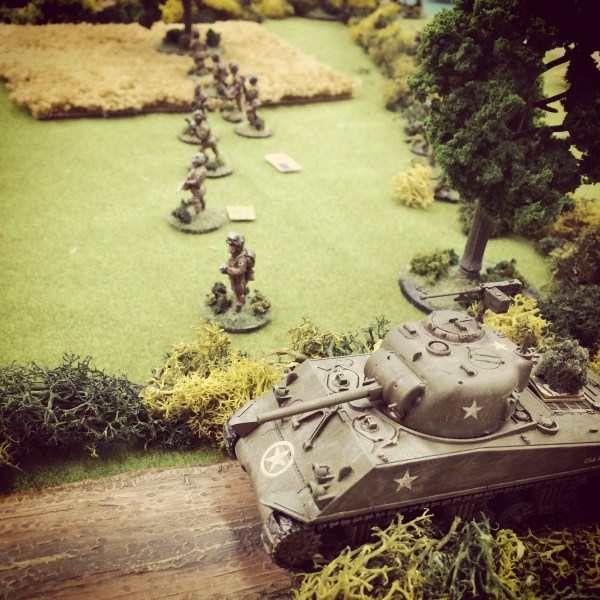
IMG_6705Confident US soldiers make for the open as their tank protects their left

The only other alternative for the Americans was to simply start pushing across the field in the open. With the heavy German machine guns at their center and right jamming and the crew taking fire, the US airborne began a slow advance by turns five and six. Infantry fire from the US included three dice from each Thompson submachine gun and two dice for every M1 rifle. As the paratroopers closed in, grenades were also thrown and knocked the German tripod MG 42 out of commission. All the Germans could answer with were single dice from their rifles and three dice for submachine gun shots from the officers, all in fewer numbers than the larger US squads.

IMG_6702German anti-tank weapons move to meet the advancing American airborne and supporting tank

Across the road, the second American rifle squad crept along on either side of the bocage with the tank rattling along beside them. As the first troops closed near the house, the first minefield was exposed but no Americans were injured as they continued on at a slower pace. Their delay allowed the German anti-tank crew to move into position, firing a few rifle and submachine gun shots along the way at the airborne tip-toeing around the mines. With the tank finally in sight, the Sherman opened up with opportunity fire from its hull, turret and top-mounted .50-calibre machine guns. Under a hail of bullets, the anti-tank crew went prone and took light wounds, disallowing their planned shot at the tank for the turn. By the sixth turn, the assistant gunner was able to crawl to the injured Panzershreck and deliver a crippling shot to the tank’s front track. Rolling for morale after the hit, the American crew rolled a ’20’ — the worst possible outcome — and fled their tank and the field.
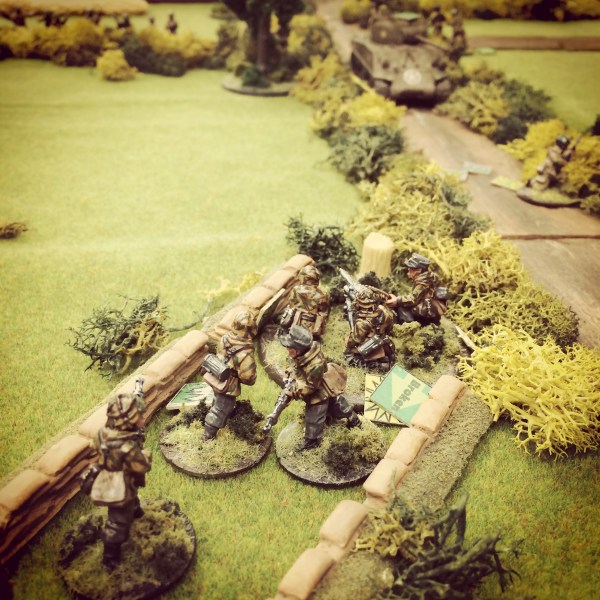
IMG_6704German troops hold fast against continued fire from the Americans

With the tank out of the battle, the airborne infantry were left alone to do the job. At the seventh turn, the first US troops to close on the building were mowed down under heavy fire from the German HQ inside the building. The German survivors in the field trenches held out against three waves of US advances. In the open and with no heavy support, the Americans were eaten up in the field despite their superior training and weapons. Against the odds, the German forces had thrown back the US airborne’s advance on La Fiere.

Playing a 28mm battle with the Battleground skirmish rules gives an incredible amount of detailed feel to the game. Wounds, suppression, weapon jams, moving, loading, spotting, morale checks, cover and troop quality all intertwine to effect each figure individually as they contribute to the overall mission of their force. Under battle conditions, unlikely things — like mortars being completely useless or a tank crew fleeing the field– can and did happen. In our game, a well-laid plan by a superior American force was thwarted by Germans who just kept hanging on as the dice went their way.

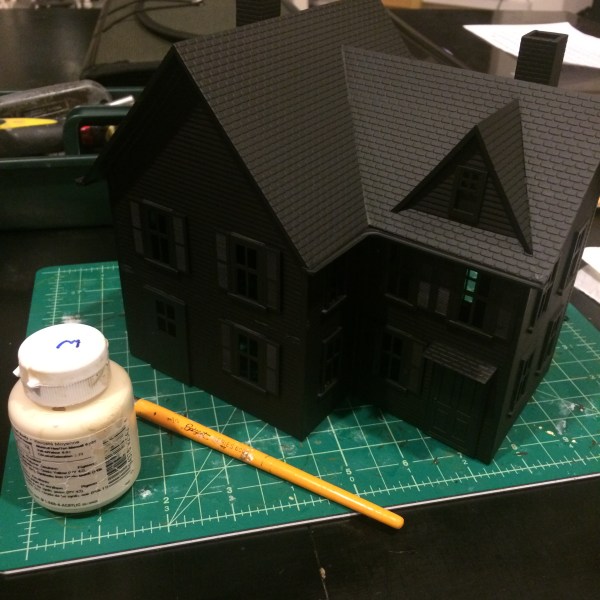
28mm: German Wehrmacht By Black Tree Design

Wehrmacht

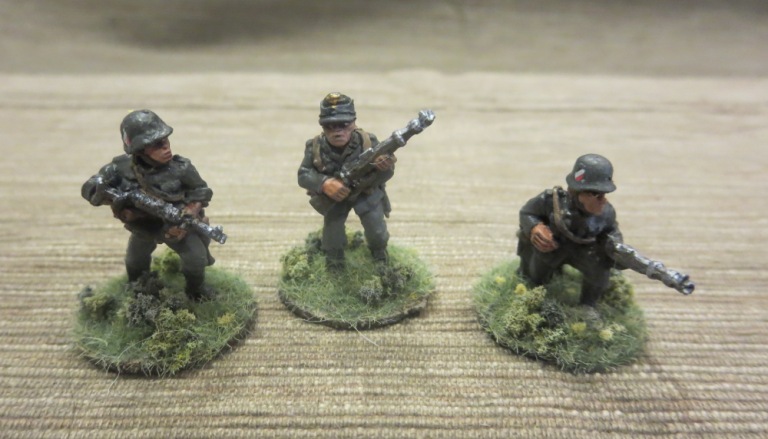
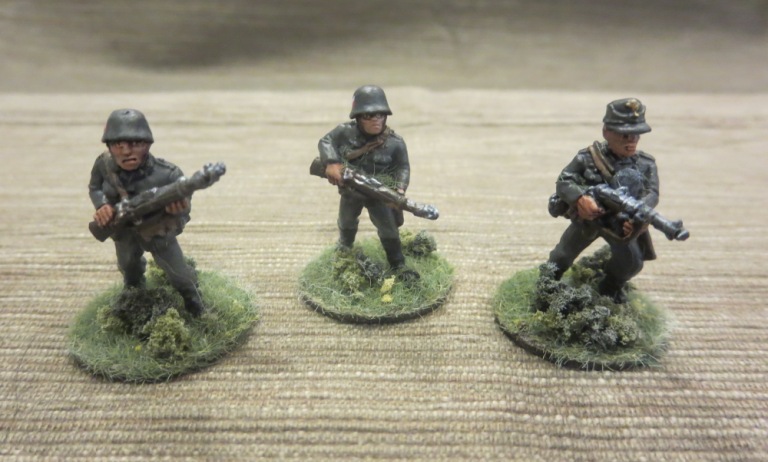
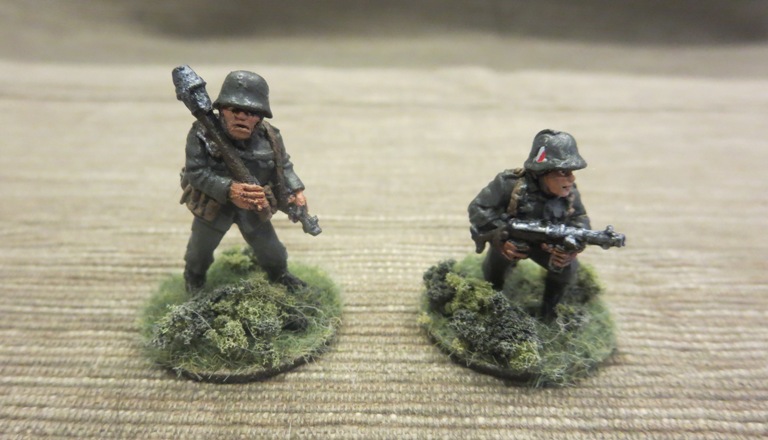
I recently got back to my 28mm World War II projects with some Wermacht from Black Tree Design. After painting up a bunch of German troops in camouflage smocks, I wanted to get some more Heer infantry into the mix. And so, on the back of a big sale this summer, I’ve just about doubled my Axis forces at this scale.

BTD

I was really pleased when I received my large order and marveled at all the detail on these figures. Lots of varied poses, weapons, equipment and personality make these casting from Black Tree Design stand as equals with all my other troops. As always, the customer service from the company was superb with nice hand-written notes included in each order boxed up in a little metal tin.

WehrDecalsGerman infantry decals from Company B

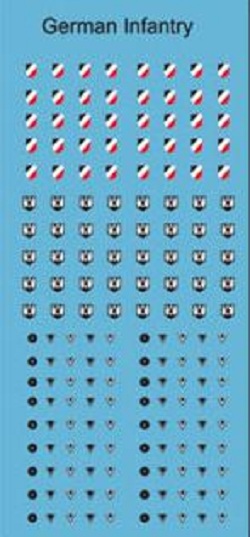
Along with my figure order, I also went back to Company B to order up some decals for the helmets. Even though it might not be as historical, I went with the national colors of the double decal helmet configuration which was phased out fairly early in the war. I really just wanted a bit more color on the otherwise monotone color scheme. And, while I’m on the subject of color, I really liked how the Skavenlight Dinge from Citadel Paint captured a nice mix of grey-green-blue tones of the standard German uniform.

IMG_6375A painted figure gets decals applied

Painting 28mm German Infantry

  1. Clean flash from metal models with a sharp knife and glue to metal washer or plastic bases.
  2. Apply filler putty to bases. When dry, scrape off excess with a sharp knife.
  3. Basecoat models and bases with flat black spray primer.
  4. Paint pants, helmets, soft hats, officer greatcoats and gas mask containers with Skavenlight Dinge.
  5. Paint faces and hands with Tallarn Flesh.
  6. Paint packs ans straps with Baneblade Brown.
  7. Paint boots and equipment straps Black.
  8. Paint bases, gun stocks, water bottles and helmet straps with Dark Brown.
  9. Apply Agrax Earthshade wash to webbing and packs.
  10. Dry brush pants, helmets, soft hats and officer greatcoats with Light Grey.
  11. Lightly dry brush bases and gun stocks with Baneblade Brown.
  12. Paint metal gun and water bottle parts with black and finish with a light dry brush of Metallic Silver.
  13. Dry brush gasmask containers with metallic Silver.
  14. Paint eyes with small dots of Off White and Dark Brown. Clean up around eyes with Tallarn Flesh.
  15. Mix 50/50 Tallarn Flesh and Off White and brush highlights on cheekbones, chins, forehead, nose and hands.
  16. Cover bases in white glue and cover in 50/50 mix of fine light green and dark green grass flock.
  17. Glue small pieces of clump foliage to base.
  18. Spray coat completed models with matte finish.

I really like how these models scale with all my previous 28mm miniatures from Artizan Designs and Warlord Games, and my Wermacht forces will fit nicely in the defense of Europe from the tabletop assault of my Allied troops.

IMG_0762

IMG_0767

IMG_0769

IMG_0771

IMG_0773

IMG_0764

IMG_0766

IMG_0768

IMG_0772

IMG_0770

IMG_0765

IMG_0774

IMG_0763

28mm: M4A3 Sherman By Rubicon Models

M4A3ShermanPicThree

I’ve been quickly fitting out my 28m World War II infantry over the past few months with models from Artizan Designs, Warlord Miniatures and Black Tree Design. With scores of figures on the table, I thought it was high time to add some hefty support to the mix. So, at my recent journey to the excellent NJ Con I picked up a copy of the Rubicon Models M4A3 Sherman tank

55mm-M4A3_no_outline_cs4

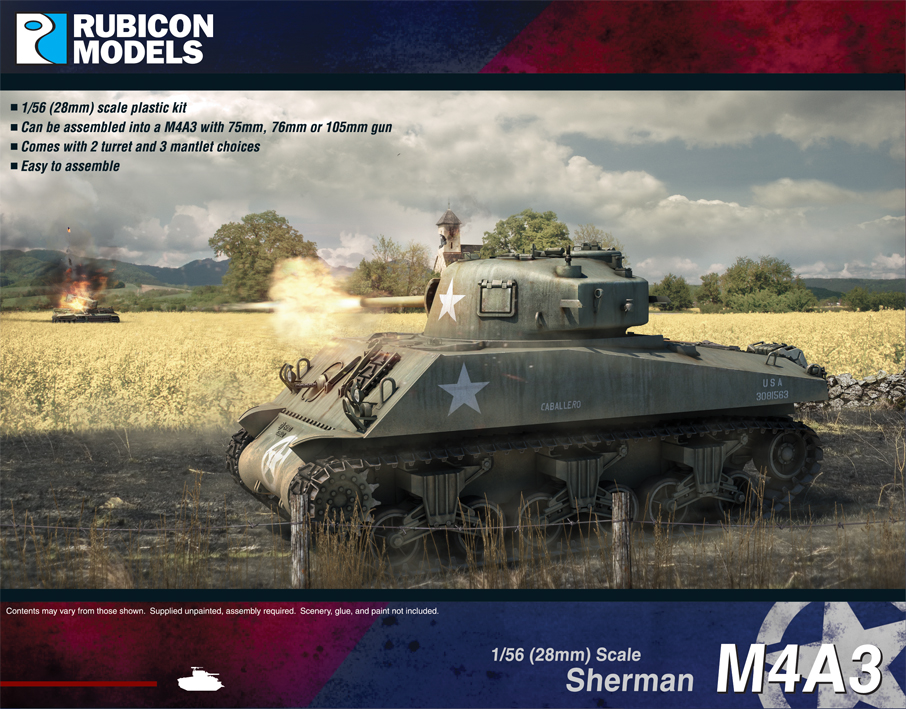
Retailing for under $40 USD, the 1/56 scale Rubicon Sherman comes on three sprues of well cast plastic. The very detailed instructions allow for the construction of three versions of the tank with 75mm, 76mm or 105mm guns and multiple turret variations. As this was my first at this scale, I opted for the most common 75mm gun, and the assembly allowed for loose gun for elevation at multiple angles. The interlocking turret also enabled easy rotation as did the top machine gun when left unglued but snuggly fitted into the turret. No stowage parts were included, but since this was my first model, I didn’t mind keeping it a relatively clean, right off the assembly line version of the workhorse Sherman of WWII.

IMG_6250My go-to basecoat for my US wargaming miniatures

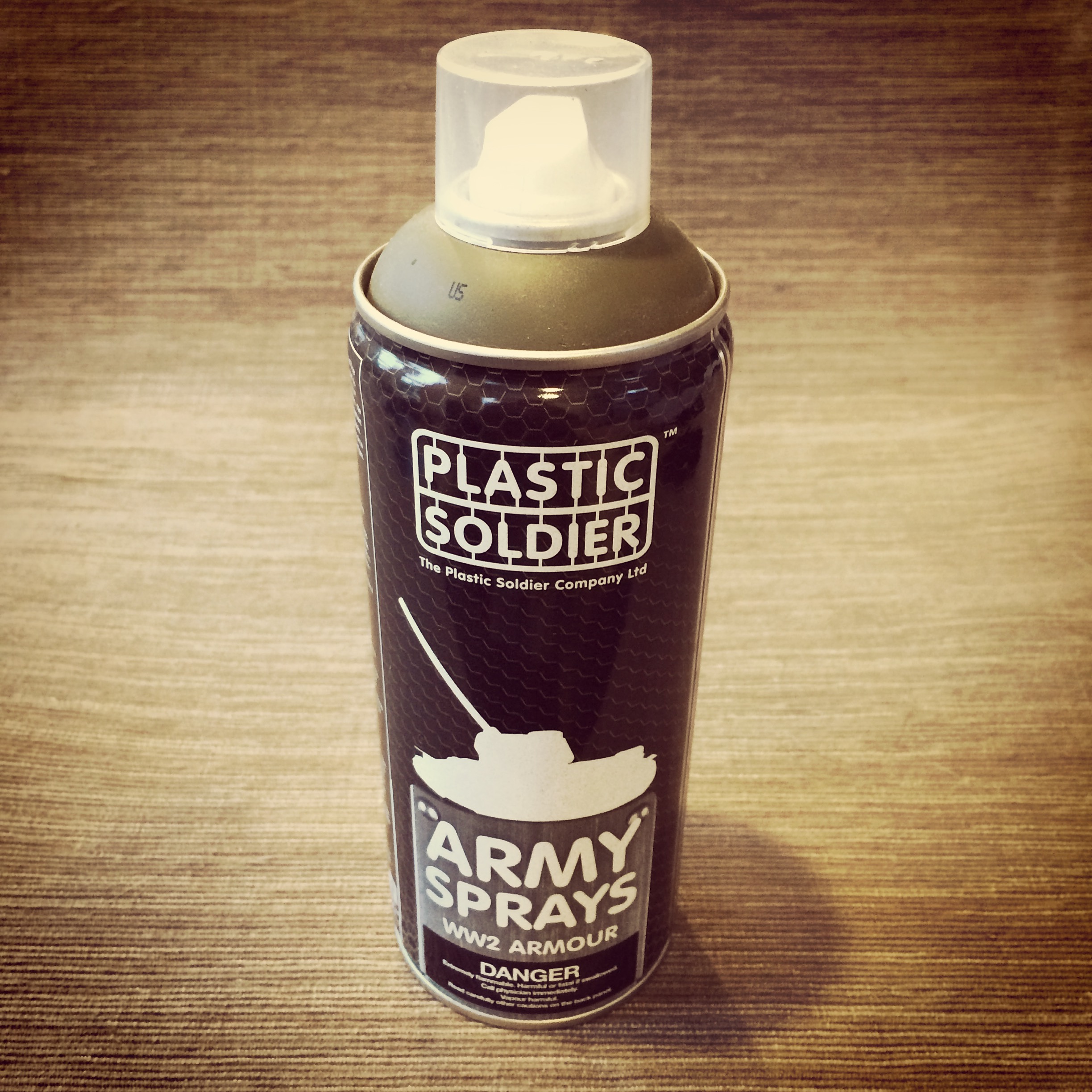
After a quick assembly, my Sherman was hit in a basecoat in the US olive drab color from the Plastic Soldier Company. I’ve gotten a ton of mileage out of this product as a foundation for 15mm Flames of War models in the past, and it worked equally as well at this larger scale. Following the base spray, the treads got a black and then metallic drybrush. Seams in the hull were washed with a black-brown, and the hull received layers of dry-brushed rusty metallics and layers of varying brown mud. The included decals were easily applied and then washed and muddied up before the whole model was dull-coated in a final protective spray.

The resulting M4A3 Sherman armed with a 75mm gun is shown below in detail from a few angles and is ready to operate in support of my Allied models in the months to come.

IMG_6247

IMG_6246

IMG_6249

IMG_6248

Battleground: Brecourt Manor 1944 Scenario

brecourt1944

This year’s 71st anniversary of the Allied invasion of Normandy on June 6, 1944 didn’t get the same attention as last year’s full weekend of D-Day gaming at Metropolitan Wargamers in Brooklyn, NY. Even so, a few of us did come together for a quick run through a gamer favorite small-scale battle at Brecourt Manor.

101stABDDaydropsDrop zones of the US 101st Airborne on June 6, 1944 and the area around Brecourt Manor (circled in red)

Made famous in more recent years in the hit HBO series Band Of Brothers, the action at Brecourt Manor by a couple dozen men from the US 101st Airborne has long been a favorite for military historians and a textbook example of a small-scale assault on a heavily defended position. With four 105mm howitzers firing on Utah Beach, the German gunners were defended in a series of shallow trenches by several MG42 heavy machine guns and a number of infantry. Through surprise and quick movement through the trenches, the US Airborne quickly took the position and disabled the German guns.
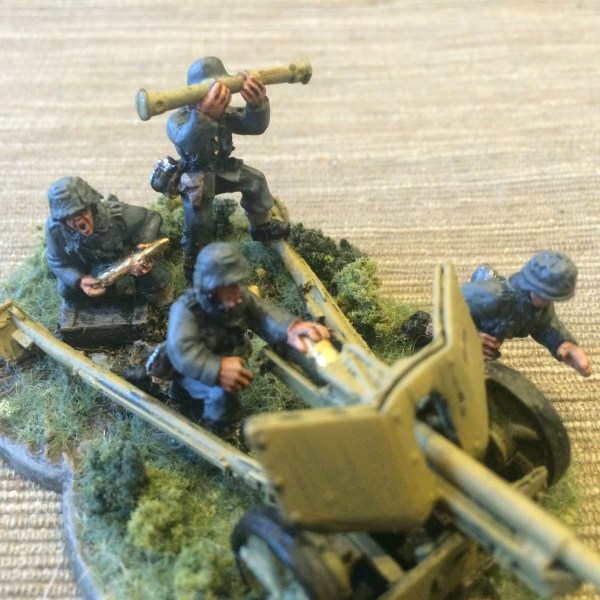
IMG_6037

Skirmish Campaigns  “Normandy ’44 – First Hours” scenario book

For our replay of Brecourt Manor, we turned to the classic Normandy ’44 – First Hours scenario book from Skirmish Campaigns. The Skirmish Campaigns series of books offers well-researched and detailed campaign scenarios filled with orders of battle, terrain layout maps and deeply descriptive narrative of how actual engagements unfolded during World War II. Adaptable to a number of rules systems, the scenario as outlined in the book scaled nicely to our game. Using most of my recently painted 28mm German and US troops and classic Battleground WWII skirmish rules, we were set to replay Brecourt Manor.

IMG_6025The 101st Airborne plot their assault on Brecourt Manor

Two players split their command as the US Airborne and set their battle plans before my Germans deployed in the trench system. Beginning German positions were defined by four gun emplacements each crewed by a team of five rifle-armed gunners and an officer. I also placed three MG42s at different points in the trench lines and one patrolling battery command squad of four riflemen and two officers deployed at the western end of the position.

IMG_6027Germans sit at the ready in their positions at Brecourt Manor

The Americans moved first, slowly deploying a .30 cal machine gun crew from behind the farmhouse at the northwest corner of the table. Directly to the north, a bazooka team crept into position behind a copse of trees with two fire teams behind the nearby hedgerows in support. To the west and toward the south, the other two US fire teams set up and moved toward the German lines, also under cover of the thick bocage.

IMG_6026105mm gun crews stand at the ready

Spotting the American bazooka team to the north, I quickly redeployed one of my machine guns to hold back the advance on that side of my position. Not waiting to get their machine gun in place, the Americans advanced on two sides and took heavy fire to their fire teams leaving them pinned in place. Hoping to pin down the Germans at the strongly defended north and western edges of the position, the US machine gun attempted to lay down a stream of fire but jammed is the trigger was pulled on its first shot of the day.
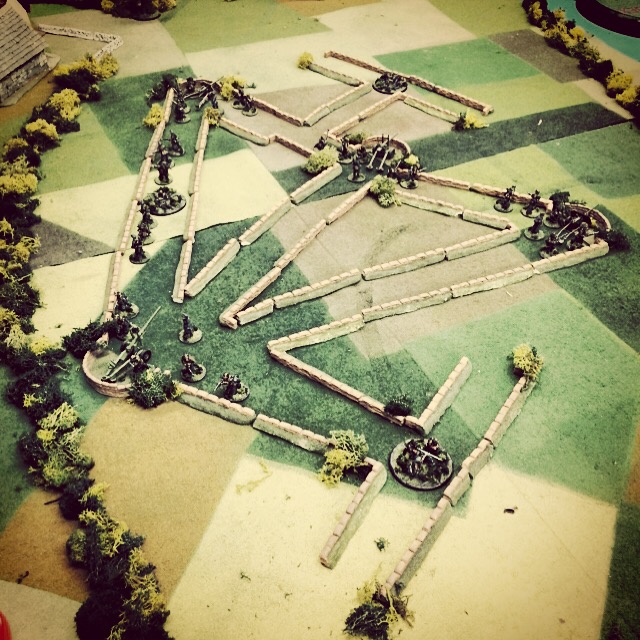
IMG_6029A 105mm gun position is destroyed by an American bazooka

Even under fire, the US bazooka team managed to get into place and a shot destroyed the northernmost howitzer, killing one German gunner and suppressing most of the rest of the gun team. On the western side, another of my redeployed machine guns was instantly spotted and raked with American gunfire and all but knocked out of the rest of the game. With only one MG42 left in the western trench line, a US Airborne team moved with over confidence toward making their first assault. The foolhardy bravery of the Americans was met with combined arms fire from my remaining MG42, rifles at the gun position and shots from the command squad. When the smoke cleared, one American fire team was left with just one man standing and the other had been briefly pinned.

IMG_6028   US Airborne units ready for a close assault at Brecourt Manor

By turn three, the American machine gunners cleared their jam and were finally able to lay down strafing fire along the entire western edge of the German trenches. With bullets whizzing overhead, the Germans were forced to the ground and the remaining Airborne came over the hedge and made way for the German howitzer. The Airborne soldiers poured into the German gun position and hand-to-hand combat ensued leaving two Germans and two Americans dead in the melee. With no clear victory in the first close combat of the day, the Americans bounced out of the German position, pulling back toward the hedges from where they had just come.

Back to the north, the American bazooka team had been cut to just one man who had retreated under heavy fire. One other US rifle team at the north had been eliminated, and the last had been whittled to just two injured men. With just a few rattled troops strung along two sides of the field, the US Airborne retreated and left three guns ready to continue raining shells on the beaches in the distance.

What the scenario showed us, as it did on the actual day some 71 years ago, was the importance the US machine gunners in a tight assault like the one at Brecourt Manor. Met with a larger, more well-defended German force, the American machine guns were the equalizer in real life. Had the American soldiers on our tabletop focused their assault after pinning the German defenders, our game this month may very well have gone the way of history with another victory in the hedgerows of Normandy.