Touring French and Indian War America

FIWeramap

In the spring and summer of this year I vacationed in Missouri, Western New York and Southwestern Pennsylvania. While visiting family and friends was the main focus of my trips, my journeys intersected with the French and Indian War period repeatedly while driving hundreds of miles of back roads throughout the Northeast and Midwest. The hilly regions of the East were  formative in the first half of my life and the flat plains of the Mississippi River have been a presence in the past twenty years after marrying my wife from Missouri.

FIWsites

National Park Service map with French and Indian War era sites I’ve visited

These regions also played a large role in the origin story of what would become the United States of America. The 18th-century American continent was the New World front in the worldwide competition between the French and English for worldwide colonial control. In the Americas, native peoples were inserted into the European conflict with the various Indian Nations shifting alliances among the European powers.

From 1754-1763, the Seven Years War stretched around the globe and occupied the colonial regions of America with the French and Indian War. From the Great Lakes and mountains of Upstate New York to the Allegheny Highlands of Pennsylvania to the western rivers frontier, French, British, Native American and American colonists fought for the future of the what would become the modern United States and Canada.

Over the years, I’ve had occasion to visit numerous sites from this contested Anglo-French period. Family day trips when I was a kid took me to just about every major fort and battlefield in New York state and nearby Canada, including Fort Niagara, Fort Ontario, Fort William Henry, Fort Ticonderoga and Fort York at present day Toronto. During graduate school in Michigan, I spent a weekend at the northern tip of the state and visited Fort Michilimackinac. After graduate school, my time in Pennsylvania included visits to Fort Ligonier, Fort Necessity and the site of Fort Duquesne at Pittsburgh. Since meeting my future wife while in Pennsylvania, I’ve spent a fair amount of time in Missouri, getting married in the historic French town of St. Charles and visiting other colonial era towns and sites.

With the French and Indian War on my gaming mind this past year with the excellent A Few Acres of Snow, here’s a few of the places I’ve managed to visit (or revisit) this past year.

French Settlements on the American Western Colonial Frontier

Over the Easter weekend, I visited my in-laws in St. Louis and St. Charles, Missouri. After a bit of time in and around St. Louis, we headed south along the Mississippi River to Ste. Genevieve. Settled in the 1730s, Ste. Genevieve showcases a remarkably intact collection of distinctive French colonial-influenced buildings. We were particularly fortunate in being allowed to walk through the Bequette-Ribault House which I had read about in one of my graduate school classes. The building was under renovation, allowing us to view a rare surviving example of the “poteaux en terre” construction technique of posts sunk vertically into the ground.

From Ste. Genevieve we took a rickety ferry across the Mississippi and drove along the Illinois side to Fort des Chartres. Reconstructed in the 1930s, the fort today depicts a French outpost way out on the western boundaries of claims to French territory in the 18th-century which stretched from Canada to New Orleans. Standing in the middle of hundreds of miles of farmland all around, it’s amazing to imagine a small garrison of French soldiers at the fort watching over the far edges of a European empire over nearly 300 years ago. The well-interpretted partial reconstruction of the fort itself and the small on site museum captures the scope of the French empire’s commitment to taking a territorial stand on this edge of the New World.

Although the French would cede much control of North America to the British after the end of the French and Indian War, evidence of French culture remains in buildings and place names throughout the old colonial areas. Visitors from France and French-speaking Canada still flock to Ste. Genevieve and the surrounding area every year, and walking the streets of the town and the battlements of Fort des Chartres the French legacy still echoes today.
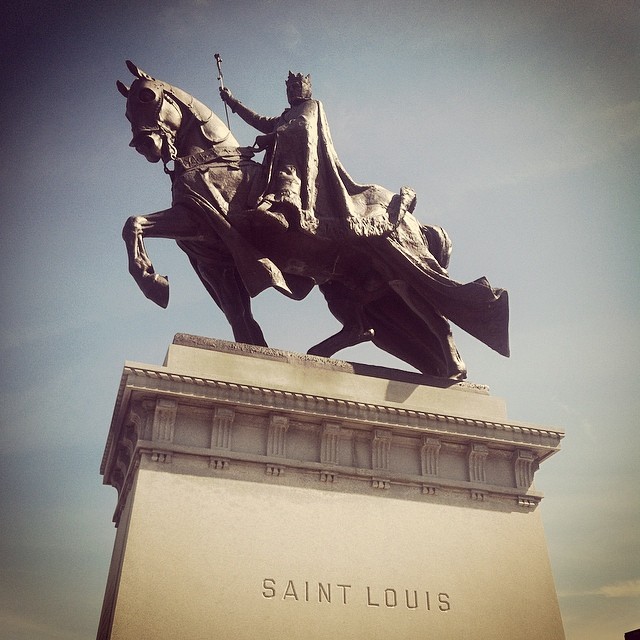
10261977_10202979904952968_8594578130842737852_n

Statue of King Louis IX of France, at the Saint Louis Art Museum

1526266_10202966521378387_8592928619118650316_n[1]

The Bolduc House (c. 1770)  in Ste Genevieve, Missouri

10150539_10202966523138431_7971748547386340404_n

The Bequette-Ribault House (c. 1780) in Ste Genevieve, Missouri

10294434_10202966516098255_2984079262433725022_n[1]

Fort de Chartres (c. 1720) near Prairie du Rocher, Illinois

Mary Jeminson, “The White Indian of the Genesee”

This summer I also took my family back to my hometown in Western New York which sits a quick drive from Letchworth State Park, home to deep river-cut gorges and spectacular waterfalls. The park also celebrates the story of Mary Jeminson, a young girl who was abducted from her family’s Eastern Pennsylvania farm in 1755, traded to Seneca Indians near Fort Duquesne and lived the remainder of her long life as a prominent member of the Iroquois in the area around present day Letchworth.

The legendary story of Jeminson is remarkable, and her life tells the story of the complicated territorial and military alliances between the various Native American and European peoples in the French and Indian War and subsequent American War of Independence. Jeminson is remembered at Letchworth with a monument marking where her remains were relocated in 1872 adjacent to a Seneca Council House which interprets the native people’s governance of the region during the colonial and post-Revolution period.
IMG_3946

The Mary Jeminson Monument at Letchworth State Park

IMG_3951

Seneca Council House relocated to Letchworth State Park in 1872

The National Road and Fort Necessity National Battlefield

Twenty years ago this summer I served as an intern researching and writing National Register of Historic Places nominations for three historic pike towns along the National Road (Route 40) in Pennsylvania. I hadn’t travelled back to the region in two decades, and touring Route 40 again brought back to me how rich the area is in early colonial American history.

Fort Necessity National Battlefield interprets a pivotal series of events that took place in this corner of the Pennsylvania wilderness in 1754 and 1755, arguably leading to the eruption and eventual escalation of the French and Indian War in North America. Commanding a force of Virginia colonial militiamen, British Lt. Col. George Washington encountered a small detachment of French Canadiens led by Joseph Coulon de Villiers de Jumonville in May 1754. After a brief firefight, Jumonville was killed by Anglo-allied Mingo warriors. Two months later, a large force of French, Canadiens and Indians led by Jumonville’s brother Louis Coulon de Villiers met Washington’s small group in a wet, open meadow. Washington hastily built a stockade – a “fort of necessity” – but was overwhelmed by the French force attacking from the woods in a driving rain. One year later, Washington’s mentor General Edward Braddock met his end nearby during his doomed attempt to lad a British force inland to seize the French Fort Duquesne.

In the years since I’ve been to the battlefield, the National Park Service has created a new, modern visitors center telling two important stories from the past. The French and Indian War and its beginnings in the area nearby is depicted through interactive maps, videos and some great exhibits that zero in on the individual nations who fought over the region over two hundred years ago. The construction of the nearby National Road in the decades after the conflict occupies second half of the museum’s narrative, depicting the importance it played in the push West and economic development of the new nation in the early 19th-century. By the time you’ve spent a couple of hours in the visitors center and exploring the hilly region, you can’t help but leave with a real sense of the massive importance this part of Western Pennsylvania played in setting the stage for American progress in the subsequent decades.
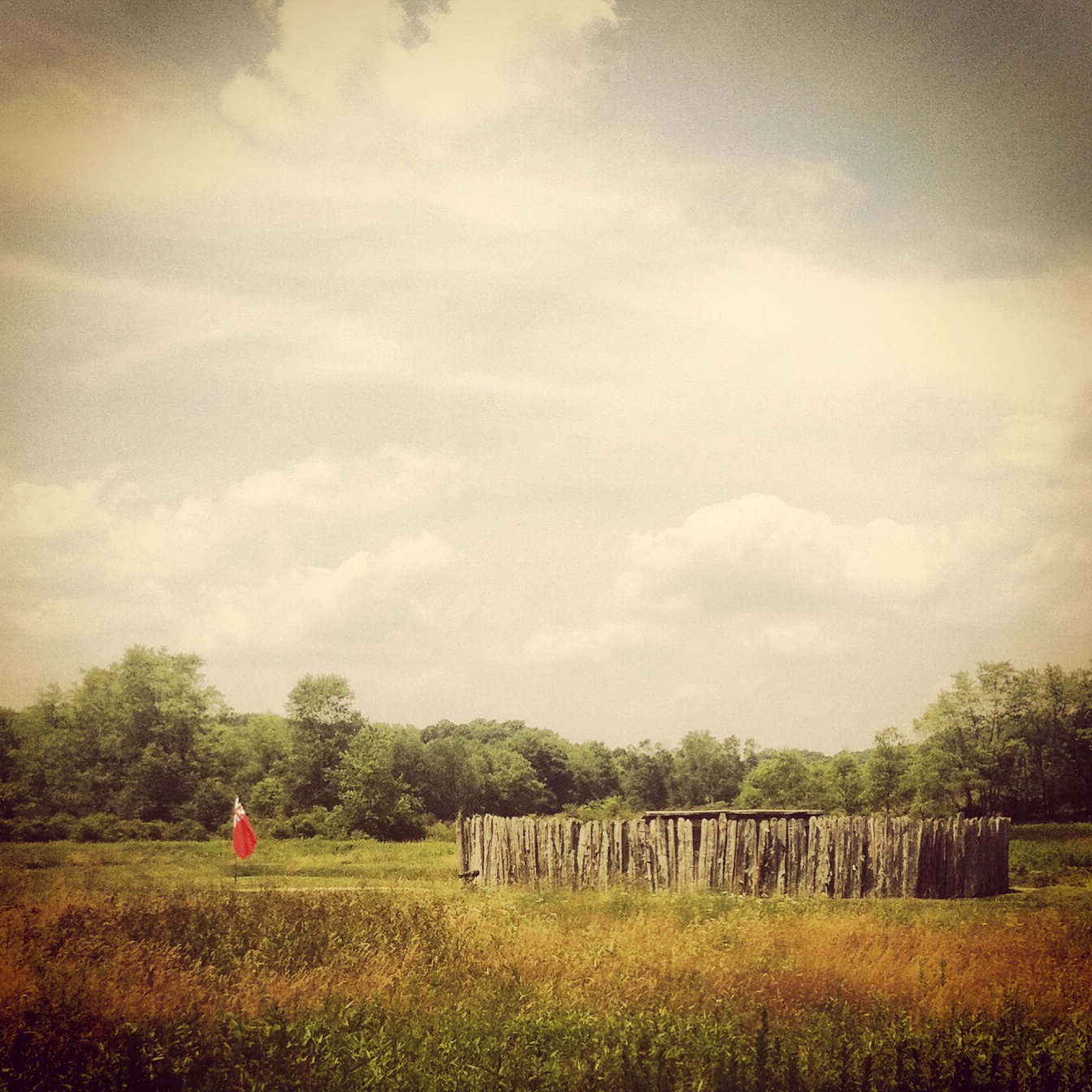
IMG_3945

Fort Necessity National Battlefield

As with most of the French and Indian War and Anglo-French colonial era sites I’ve visited, it is remarkable that such wide-reaching ripple effects through centuries of subsequent history took place in these tiny corners of what was then an open territory for Europeans and home to a rich culture of Native peoples. By the end of the French and Indian War, the British had laid claim to much of the Americas. In so doing, the seeds of descent had also been sown among a bitter population of American colonists who would eventually rise up in independence against their British rulers.

All my travel this past year, followed up by a rewatching of the PBS series The War That Made America, has definitely fuelled the French and Indian War bug in me. I’ve put a few books on my reading list, including Fred Anderson’s Crucible of War, and Richard Berleth’s Bloody Mohawk. The period has also led me to pick up Wilderness War from GMT Games, the modern go-to board game on the period. With more than two-and-a-half-centuries between today and the fight for empire in the Americas, the French and Indian War is very much alive for me.

A Gamer’s Guide to Manhattan’s Hobby Shops

PolksHobbiesGF

I’ve mentioned here more than once that my childhood was full of hobbies including model rocketry, model railroading, plastic kit building, Dungeons & Dragons, comic books and miniatures wargaming. Like generations before me, hobby stores and the now-vanished hobby areas of large department stores and five-and-dimes were where I felt at home from an early age.

I moved to New York City in the mid-1990s when much of Old New York started breathing its last gasps. Along with the closings of many storied NYC bars, restaurants, clubs, book stores, comic shops and movie theaters, hobby shops of all types are becoming more and more a thing of the past here in the Five Boroughs. The causes of the decline of hobby shops in the city are many, including rising rents, loss of customer interest, the growth of online hobby retail and many owners simply retiring or passing away.

PolksHobbiesLogo

The New York Times recently did a great little story on Rudy’s Hobby and Art in Astoria, Queens, and I’ve also become a semi-frequent visitor to Trainworld just a few subway stops away from my apartment in Brooklyn. These outposts in the outer boroughs hold on, but many of the classic shops in Manhattan have not. At the top of many city hobbyist memories is Polk’s Hobby Department Store which once occupied five floors at 314 5th Avenue. Like many businesses, Polk’s was a family-run affair headed up by two brothers beginning in the 1930s. The iconic store carried radio controlled boats and planes, slot cars, plastic model kits, trains and all matter hobby supplies which fueled the imaginations for generations of kids and adults. For the observant nostalgic, a quick glimpse of Polk’s survives in a scene from 1972’s The Godfather (photo at top).

Like Polk’s, most of Manhattan’s other hobby stores, like Carmen Webster’s on 45th Street and America’s Hobby Center on West 22nd Street, have likewise vanished from the city’s streets in recent years. At the same time, Brooklyn has seen a surge in gaming-specific stores and play spaces such as Kings Games, Brooklyn Game Lab, Twenty-Sided Store, The Brooklyn Strategist and Nu Brand Gaming. In Greenwich Village, The Uncommons now sits along the old “Chess Row” south of Washington Square, and a Games Workshop can be found a few blocks away well stocked with Warhammer and 40K players on any given weekend.

For the dedicated scale model hobbyist and gaming enthusiast, a few remnants of the traditional densely stocked hobby store of the past still live on in Manhattan. In almost all cases, online suppliers are a more economical option than purchasing from a local hobby or gaming brick-and-mortar store. However, it’s still hard to beat the experience of browsing a shop in person and having conversations with fellow customers and proprietors who share a passion for a hobby. I recently spent a sunny late summer day poking around in a few of my favorite NYC hobby shops that tap into that unique experience that still lives on.


Jan’s Hobby Shop

1435 Lexington Avenue

(212) 987-4765

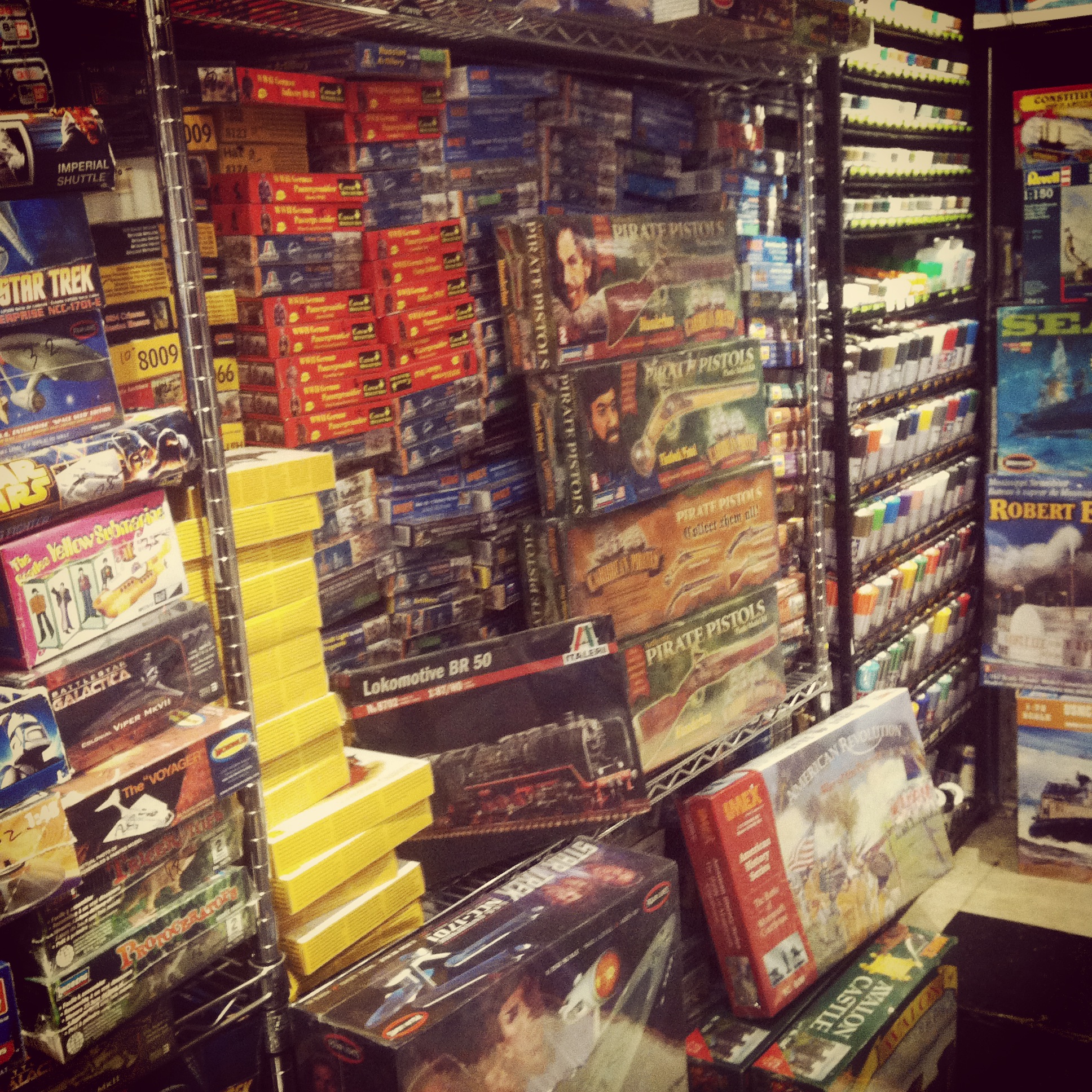
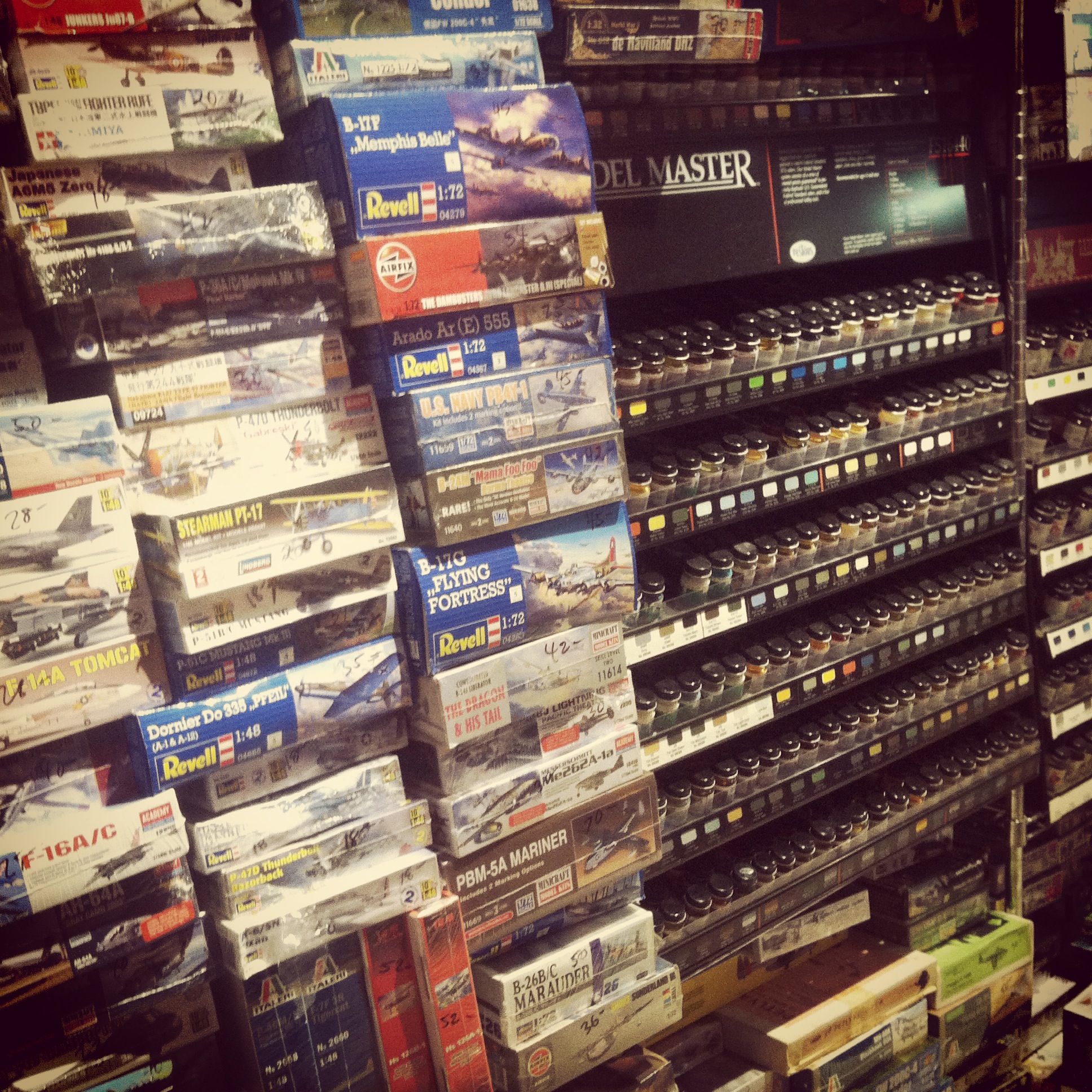
IMG_4284Way up on Lexington Avenue in the East 90s,  Jan’s Hobby Shop is just the kind of store that fired my youthful imagination. Plastic soldiers, model kits, model rockets, paints, brushes, videos, books and hobby magazines are stacked floor to ceiling in the tight space of this classic hobbyist’s paradise. Kits from hundreds of manufacturers from around the world, from the common to the obscure, cover all eras, skill levels, scales and price ranges. Ships from the Age of Sail sit across from Star Wars X-Wings, ancient siege weapons are just down the aisle from Cold War artillery and all manner of cars, tanks, ships and planes fill every bit of space between. For the more advanced scale modeller, a handy selection of balsa, plastic styrene, brass tubing and specialized glues and construction materials sit at the ready.

IMG_4286Plastic soldiers from a variety of manufacturers, eras and scales at Jan’s

IMG_4287Paints and plastic model kits line the walls at Jan’s

IMG_4285Fred Hutchins’s WWII era experimental aircraft models

At the heart of the store on any given morning, store manager Fred Hutchins sits behind his workbench working away on his latest project. In my short visit with Fred, I learned of his lifelong love and work in aeronautical engineering. His ongoing project, at the rate of 30-50 models per year, is to build to scale every experimental aircraft built during World War II. In the cases nearby, much of Fred’s exquisite work is on display, and if you are a polite and patient visitor, he is more than happy to engage in a brief history lesson. Conversation with Fred, modeller-to-modeller, is just the kind of experience only found in a hobby shop and makes a visit to Jan’s worth the trip.


The Red Caboose

23 West 45th Street

(212) 575-0155

www.theredcaboose.com

IMG_4282

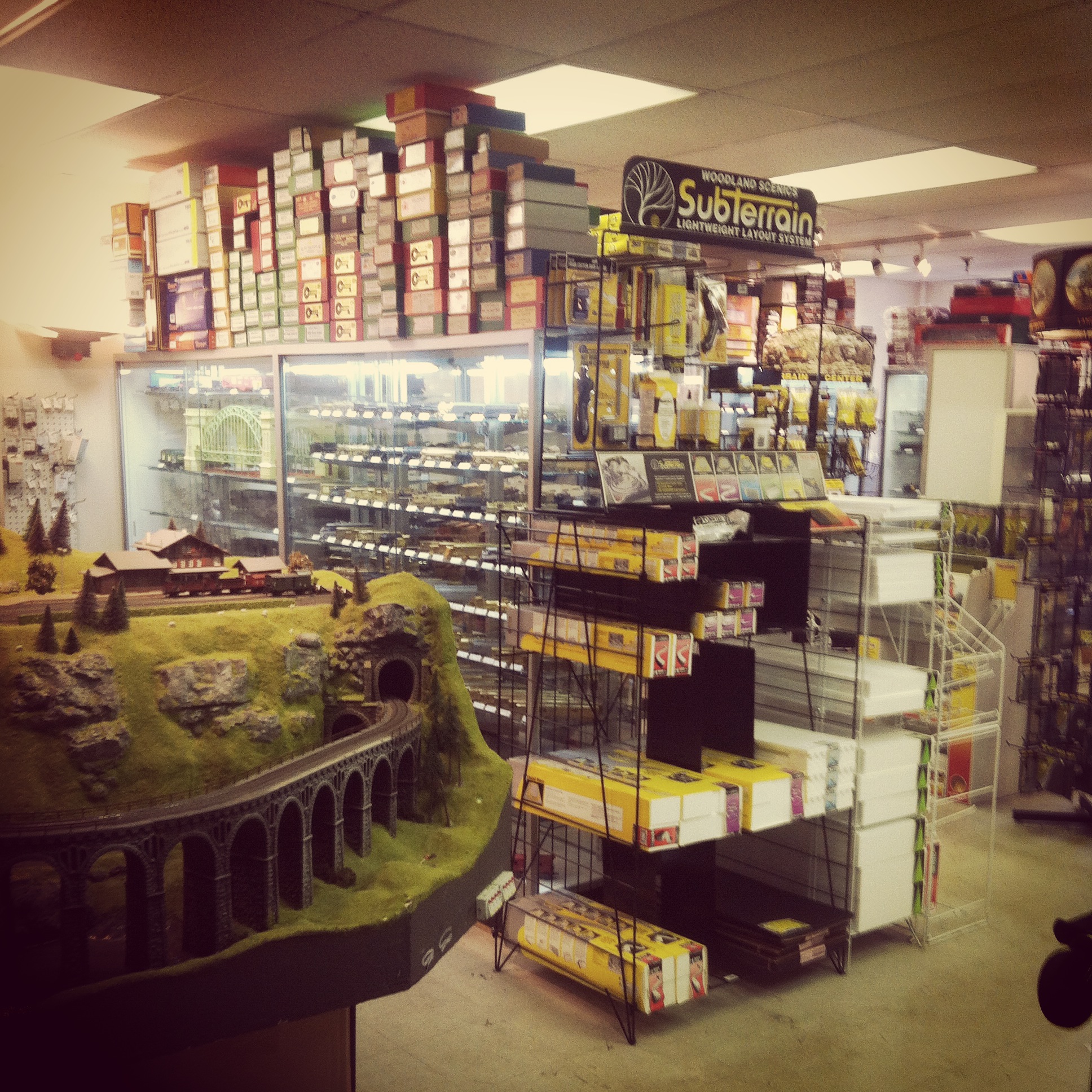
For a hobbyist like me, basements are portals to secret worlds of play hidden away from the normal world above. That’s where you’ll find The Red Caboose, tucked at the end of an easy-to-miss entry hall and then down some narrow stairs to a subterranean hobby wonderland. Focused largely on N and HO scale model railroading, The Red Caboose is lined with glass cases of rolling stock and engines from the steam era to today. Tourists may also find their way here to buy up some authentic scale New York MTA subway cars which may be special ordered to reflect specific routes past or present.

IMG_4283Cases of trains and row upon row of model kits at The Red Caboose

The Red Caboose is a place beyond trains, too.  Rows of shelves are devoted to kits for all sorts of buildings, bridges, industrial complexes and natural scenery, some of which have made their way to my wargaming tables over the years. Rotating racks of scale scratch building plastic, metal and wood parts, along with paints, brushes and other supplies provide a solid inventory for miniature modellers. A decent selection of military and civilian plastic kits and pre-built die-cast scale models can likewise by found, making a stop at The Red Caboose about much more than just trains.


The Compleat Strategist

11 East 33rd Street

(212) 685-3880

www.thecompleatstrategist.com

IMG_4280

As a budding role playing gamer in the 70s and 80s, I was fortunate to live near a college town where the local bookstore and five-and-dime each stocked a handy selection of Dungeons & Dragons books, miniatures and magazines. Tucked in the pages of later issues of those magazines, I occasionally saw ads for The Compleat Strategist with an inventory which sounded like a dream for my hungry gaming appetite. As a resident New Yorker today, a quick visit to “The Strat” over a lunch hour or on a weekend is an amazing escape for a quick purchase or just time spent browsing the latest in gaming.

IMG_4281The Compleat Strategist is NYC’s destination for serious gamers

The store is long, narrow and deep, with shelves of games, books, miniatures and accessories piled to the ceiling. Boardgames, chess sets and puzzles occupy the rear half of the store. A massive selection of boxed historical strategy games stretch down one wall toward an inventory of paints and miniatures ranging from Games Workshop and other fantasy lines to collectible games like Heroclix. RPG books and reference materials fill out the front of the shop along with buckets of dice, stacks of collectible cards like Magic: The Gathering and two large racks of gaming periodicals. Downstairs, the Compleat Strategist also hosts mini gaming tournaments most weekends, rounding out the total experience for the city gamer looking to stay connected to a vital hobby community.


Gotham Model Trains

224 West 35th Street, 13th Floor

(212) 643-4400

www.gothammodeltrains.com

IMG_4278

Down a generic block just north of Penn Station, the tiny and well kept Gotham Model Trains occupies a thirteenth floor space in a building housing a jumble of small businesses and professional offices. The shop is mostly about trains, and the tight inventory offers a well-edited counterpoint to the sprawling warren of shelves at The Red Caboose. I like the nice selection of Woodland Scenics ground cover, shrubbery, trees, gravel and other scratch-building materials in plastic, metal and wood on the walls and racks.

IMG_4279The well-curated inventory of Gotham Model Trains

But trains are the thing at Gotham Model Trains, and over the years this has been my local go-to for a few pieces of track needed in getting a little circular railroad running under my Christmas tree. Multiple scales, controllers, buildings, scale figures and a small selection of railfan books round out the inventory surrounding the sweet little N scale layout greeting you at the shop’s entrance. Stopping in at Gotham Model Trains, like a visit to any of Manhattan’s surviving hobby shops, you can’t help but have the irreplaceable experience of a living breathing hobby.

Pinball, Pixels and Play In Rochester, New York

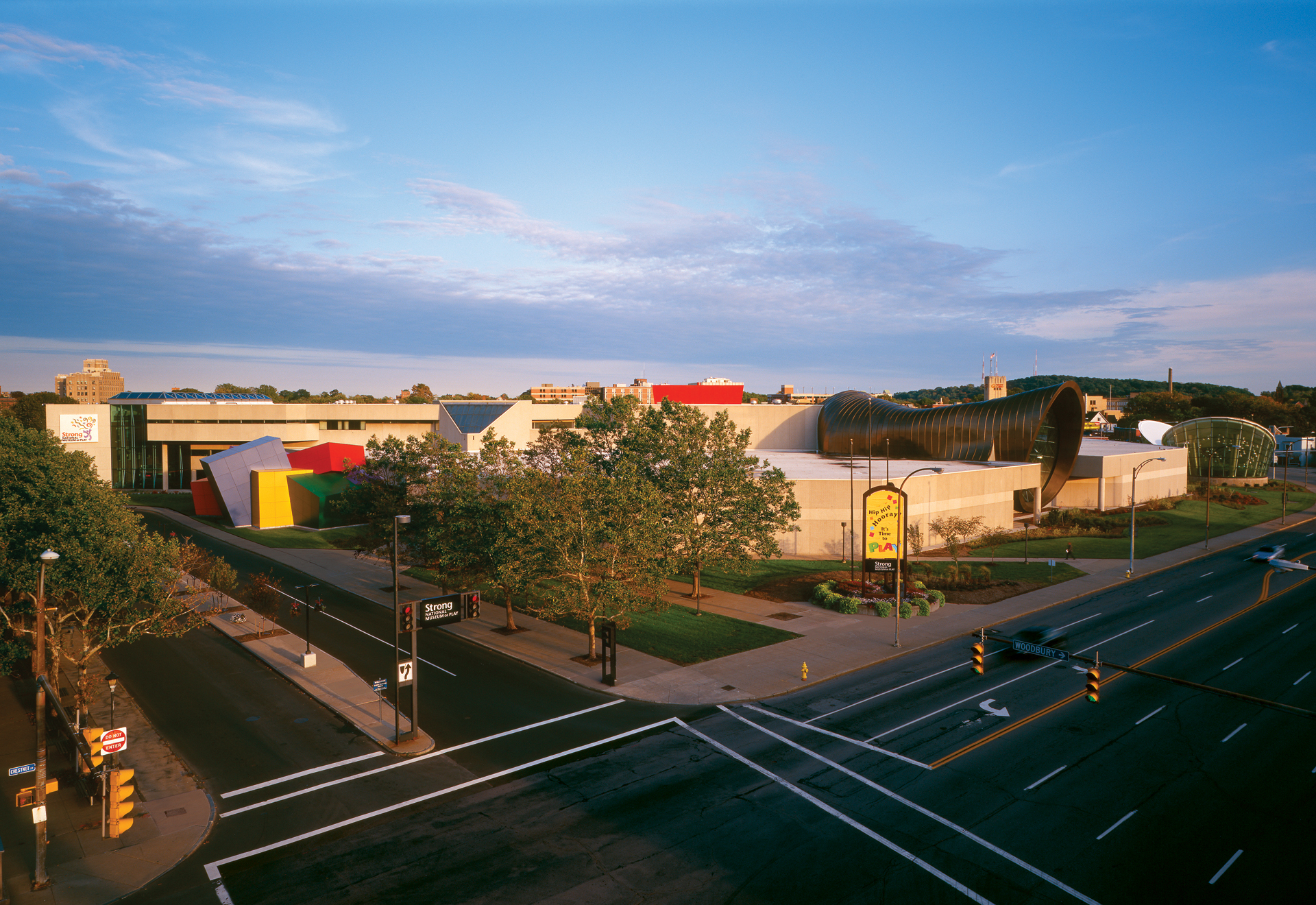
StrongMuseumIt’s been a couple years since I visited The Strong National Museum of Play in Rochester, NY, but I took advantage of a recent week visiting my family in Western New York to pay the place a visit. The museum was founded in the early 1980s with the massive hoard of dolls, toys, games, household items and other objects collected over the lifetime of Rochester heiress Margaret Woodbury Strong. Since then the museum has evolved and expanded to encompass the more recent history of play, as evidenced in some of the wonderful exhibits I had a chance to see this past month.

Pinball Playfields

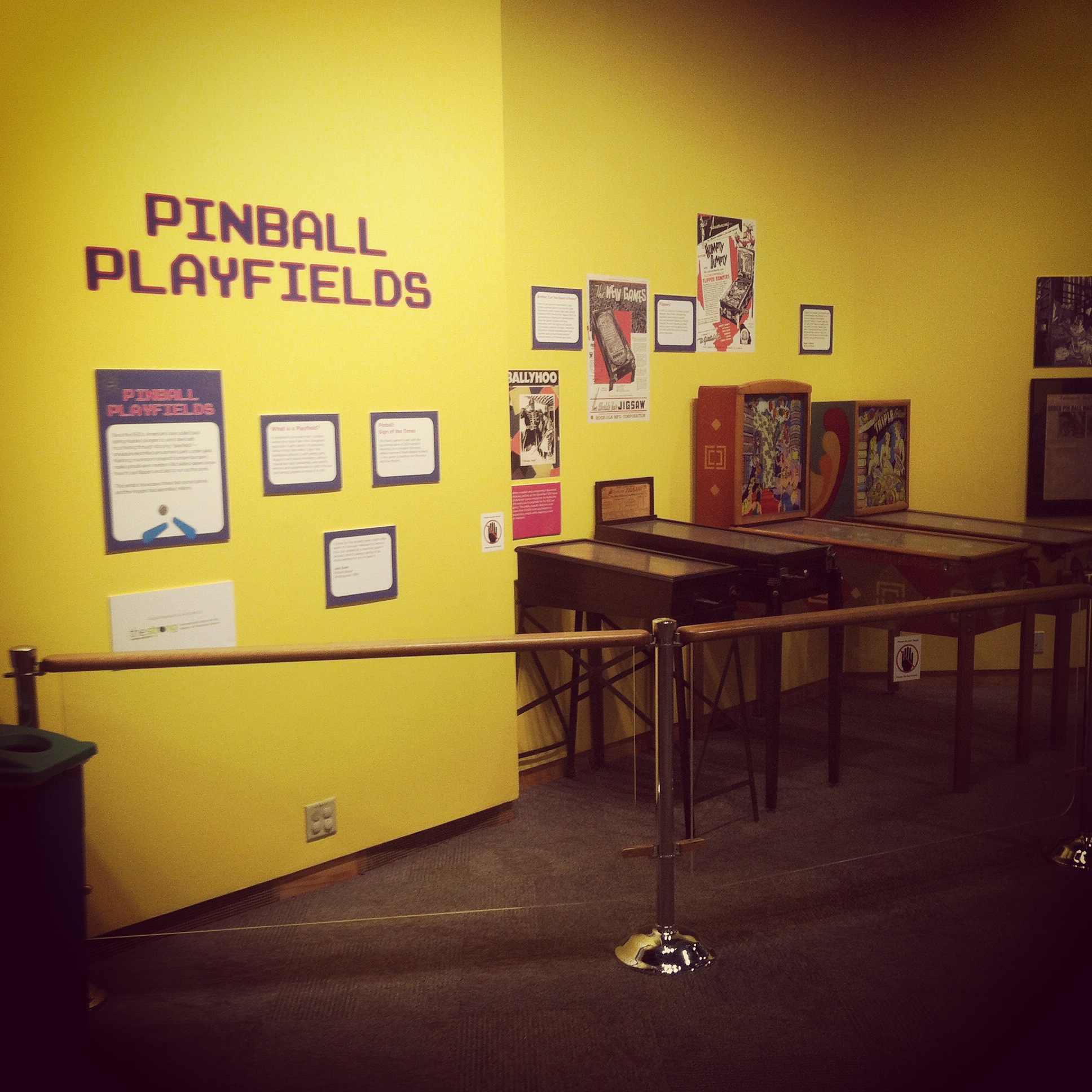
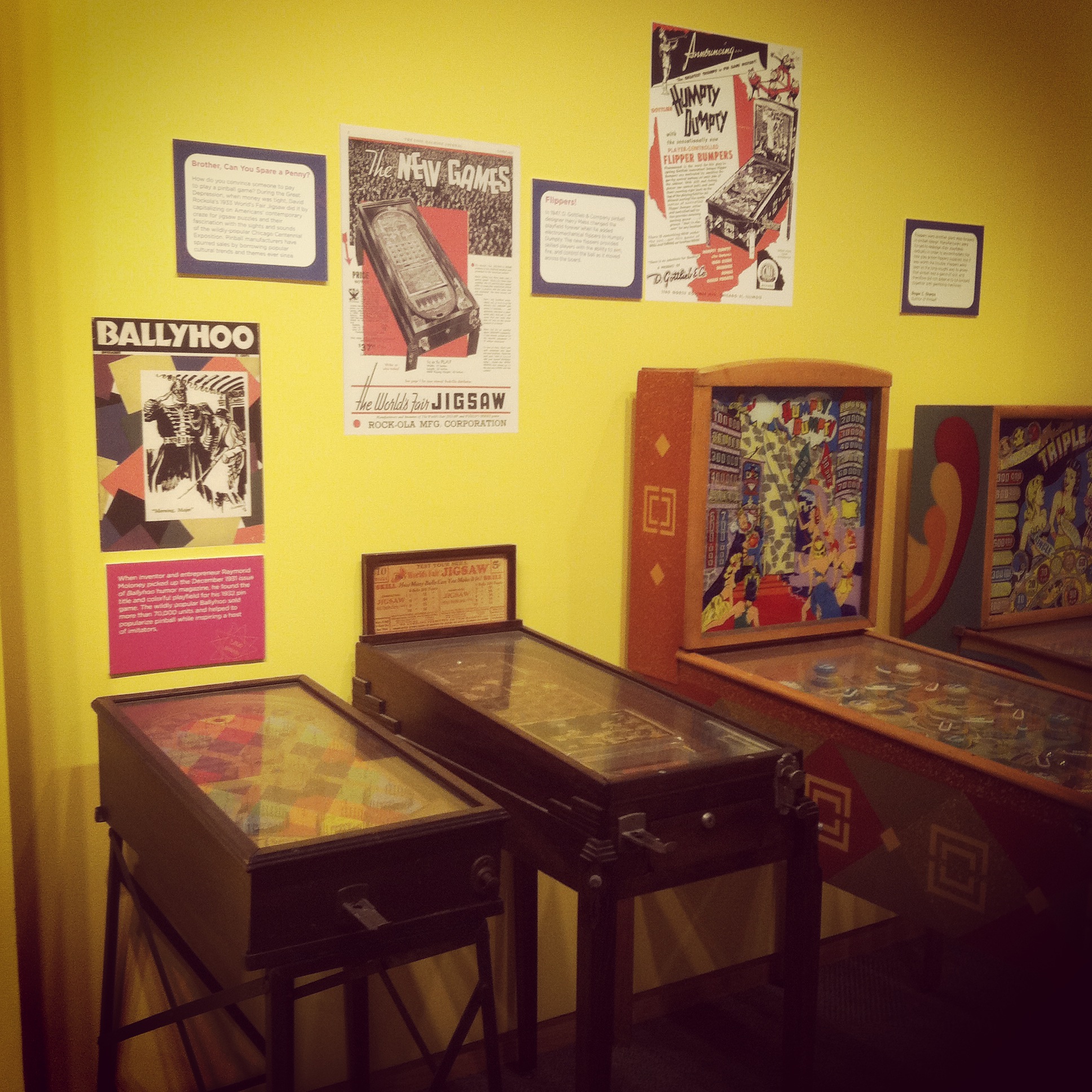
2014-07-08 11.59.24Running through September 7, 2014, Pinball Playfields offers up a tight overview of the American history of coin-operated pinball machines from their earliest appearance in the 1930s through today. A number of early games from the museum’s permanent collection kick off the small exhibit showing the first rudimentary gravity-fed games where balls plunked and clinked their way through a series of “pins” which would give the game its name.

2014-07-08 12.00.10Early 1930s and 1940s pinball machines

By the 1940s, electrified games were on the rise and the introduction of flippers late in the decade added enormous playability and control for anyone willing to feed the growing craze a coin at a time. As explained on the brief wall text, it was this coin-fed frenzy that caused many cultural killjoys throughout the country to advocate for laws banning pinball as a frightening tool of gambling in the 1940s through 1970s (just this past summer, Oakland, California finally repealed an 80-year ban on pinball).

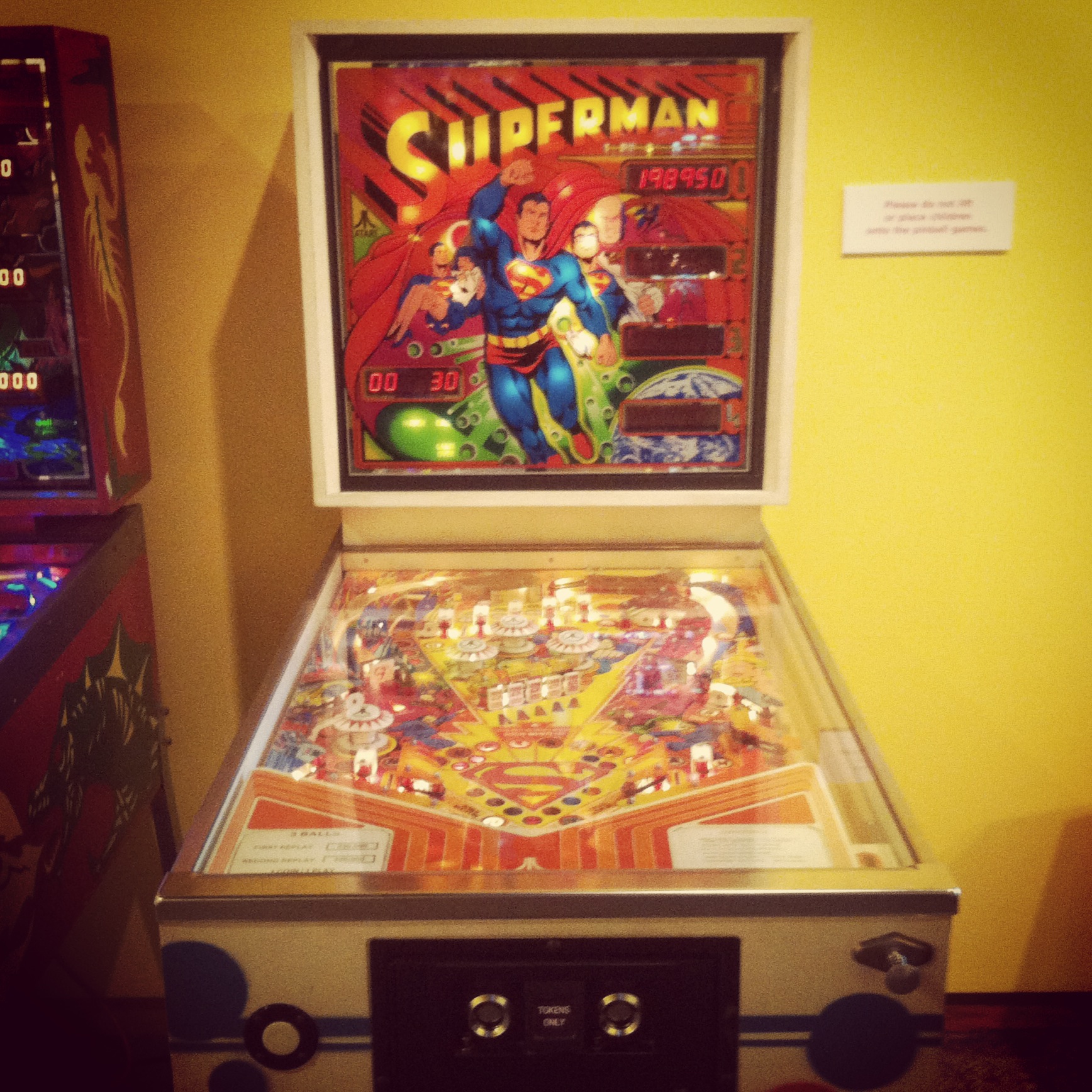
2014-07-08 12.02.40Superman pinball (1979)

Despite its opponents, pinball fandom grew into the 1960s and 1970s, crossing over into rock music with The Who’s iconic “Pinball Wizard” from 1969’s Tommy. In my 70s childhood I can easily recall many pinball machines tucked into pizza parlor corners or inhabiting the basements of some of my lucky friends with their constant glow of light and pinging sounds. The exhibit includes a number of playable machines from the 60s and 70s, including superhero tie-ins with Superman and the Incredible Hulk which demonstrate intersecting pop culture influences on games.

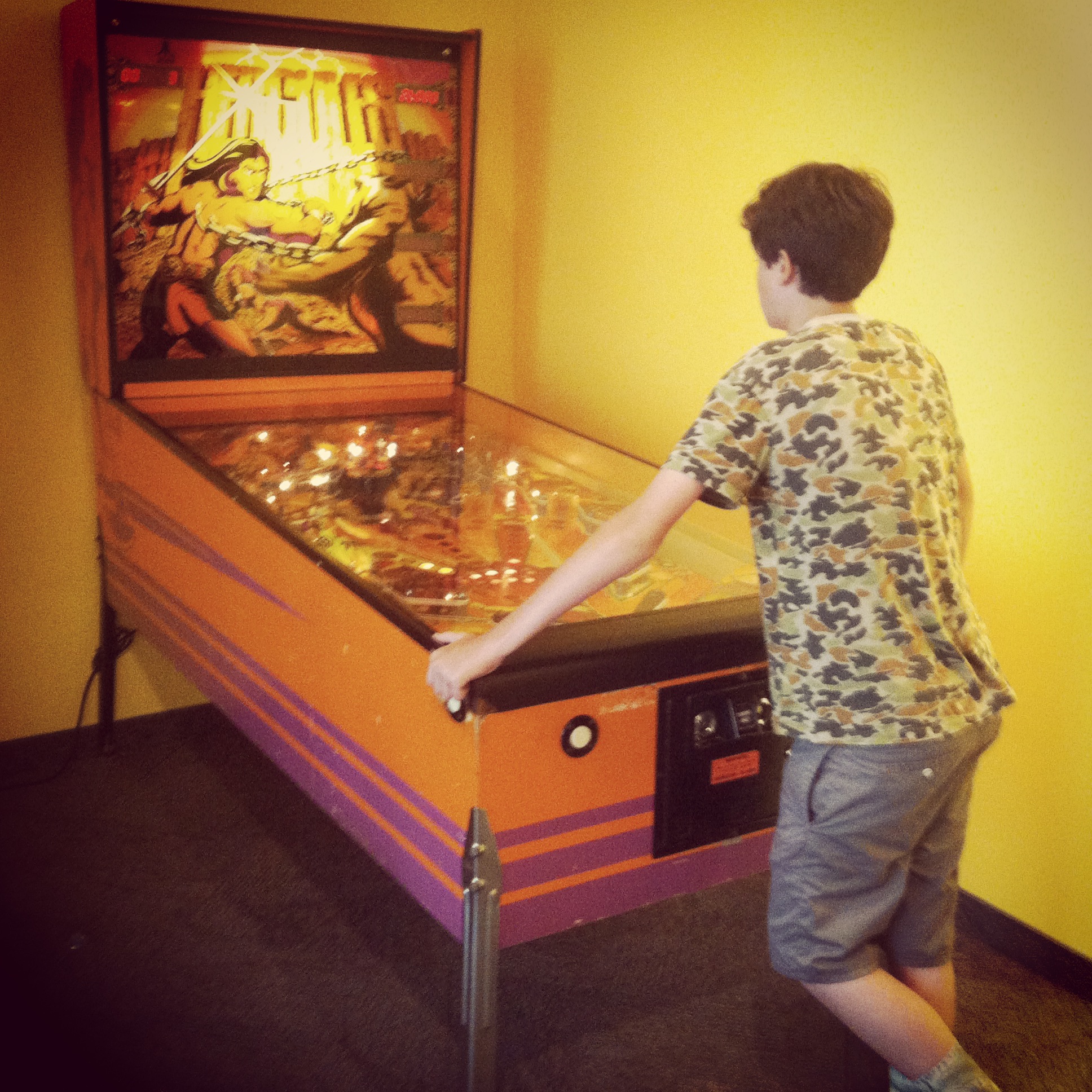
2014-07-08 12.12.03Hercules (1979) — the largest pinball machine ever made

By the late 1970s video games were creeping into territory dominated by pinball machines. Gimmicky games like 1979’s enormous Hercules machine attempted to maintain the hold on fistfuls of coins which would soon be increasingly making their way to video arcades. With video games dominating coin-fed play throughout the 1980s, it was not until the 1990s and the 2000s that pinball rebounded by incorporating increasingly-complex mechanical animations, advanced LED and video screen elements into games. The more recent Wizard of Oz, Monster Bash, Star Trek and Lord of the Rings games on display — and all playable — show how the old-time pinball fun has truly been integrated with a modern thirst for visual effects overload.

Aside from the dozen or so playable machines, Pinball Playfields gives a good deal of historical information with descriptive text, early photos and advertisements, news articles and modern design schematics. All this is certainly fine stuff for the museum context, but anytime I found myself lingering a bit too long over some of the historical material I had to look around to find my wife and kids feeding another token and pulling back the plunger to start another play.

eGameRevolution

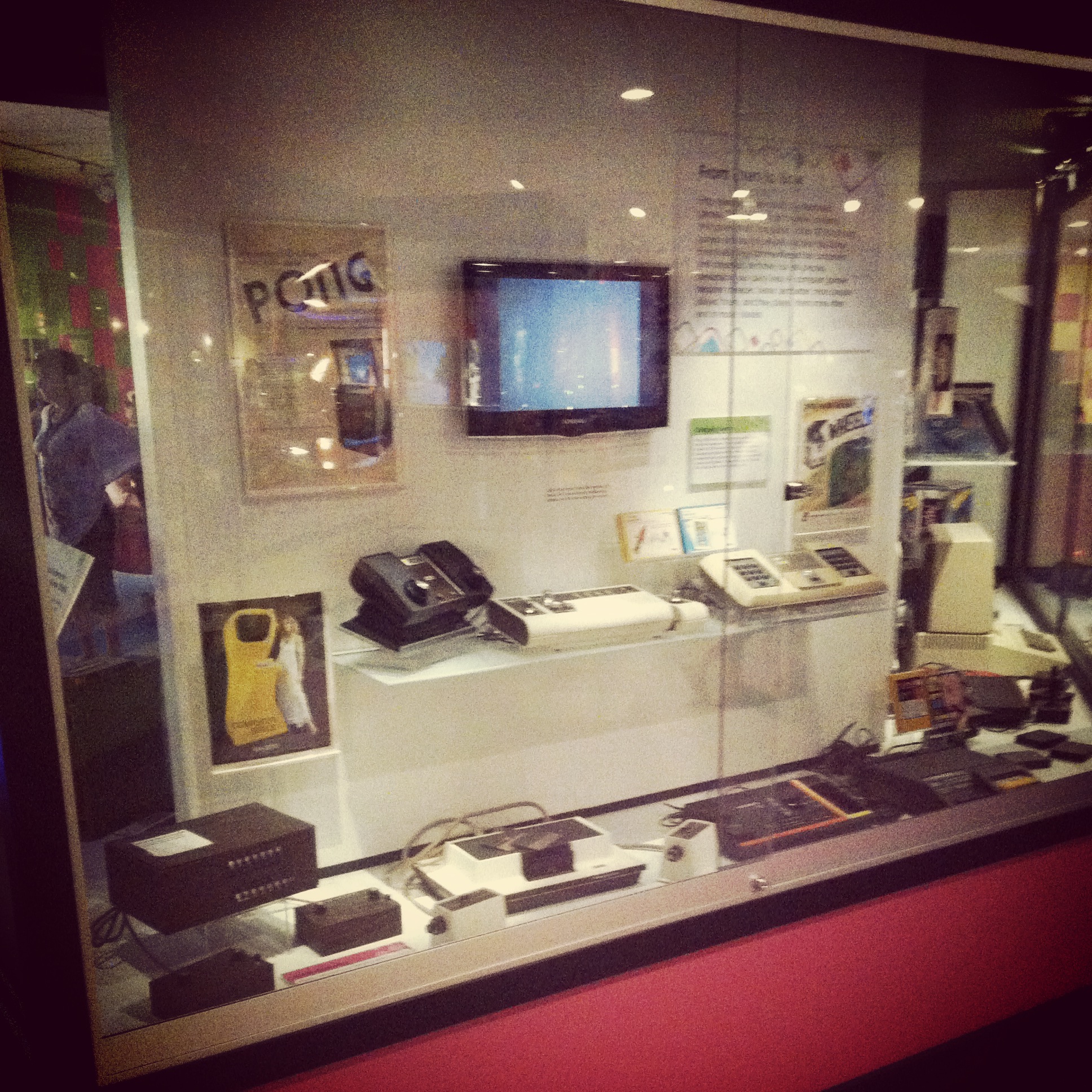
2014-07-08 13.01.51The last time I was at the Museum of Play, the museum had just launched its important International Center for the History of Electronic Games. The collection now contains tens-of-thousands of video game artifacts, making it one of the most important repositories and research resources for the dominant mode of play of the past forty years. The debut exhibit a few years back presented an overview of  video game history and dozens of playable arcade and home games from the 1960s through the present. My latest visit allowed me time to see the full permanent exhibit, eGameRevolution.

2014-07-08 13.20.36Early home video game systems from the 1960s and 1970s

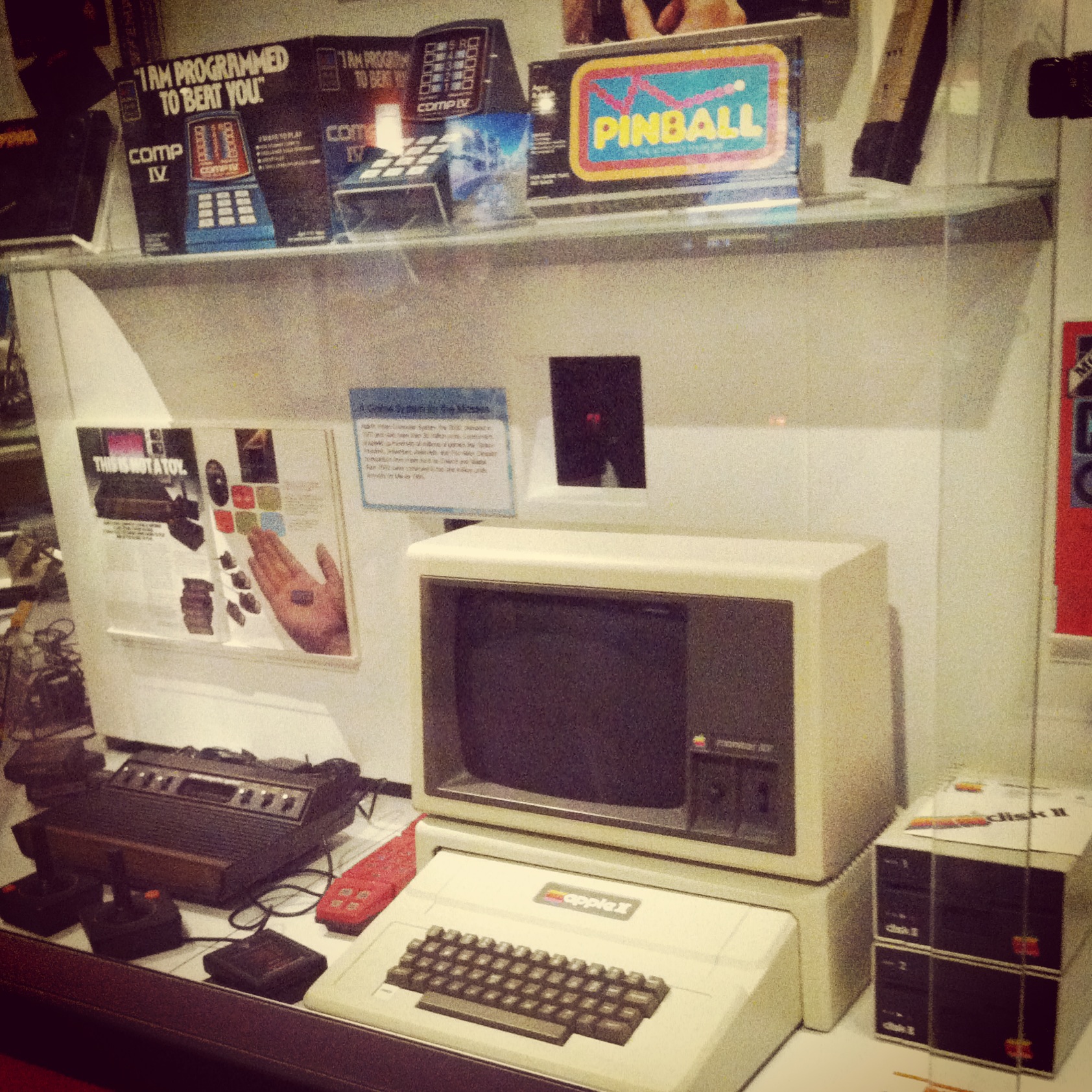
2014-07-08 13.20.26The Atari 2600 and Apple II computer — two machines that changed my world in 1977

The exhibit traces the development of the now-ubiquitous video game from its science lab beginnings of the early 60s through early console and home computer games in the 70s and 80s to the modern games which now inhabit so many living rooms worldwide. Changes in the sophisticated technology, graphics and marketing of video games are well-traced along with traditional curated displays behind glass. And, of course, there are plenty of playable games throughout the exhibit.

2014-07-08 13.22.23The video arcade in the eGameRevolution exhibit at the International Museum of Play

Pinball machines, an air hockey table, arcade cabinet classics, interactive dance and music games and a half-dozen home console games of different eras are set throughout the exhibit. A dark, low-ceilinged room reminiscent of the video arcades inhabited by many first generation video gamers like myself in the 1980s is set in the middle of the more traditional displays. At five plays for a buck, a visitor to eGameRevolution can easily lose themselves in decades of electronic gaming history.

 Game Time!

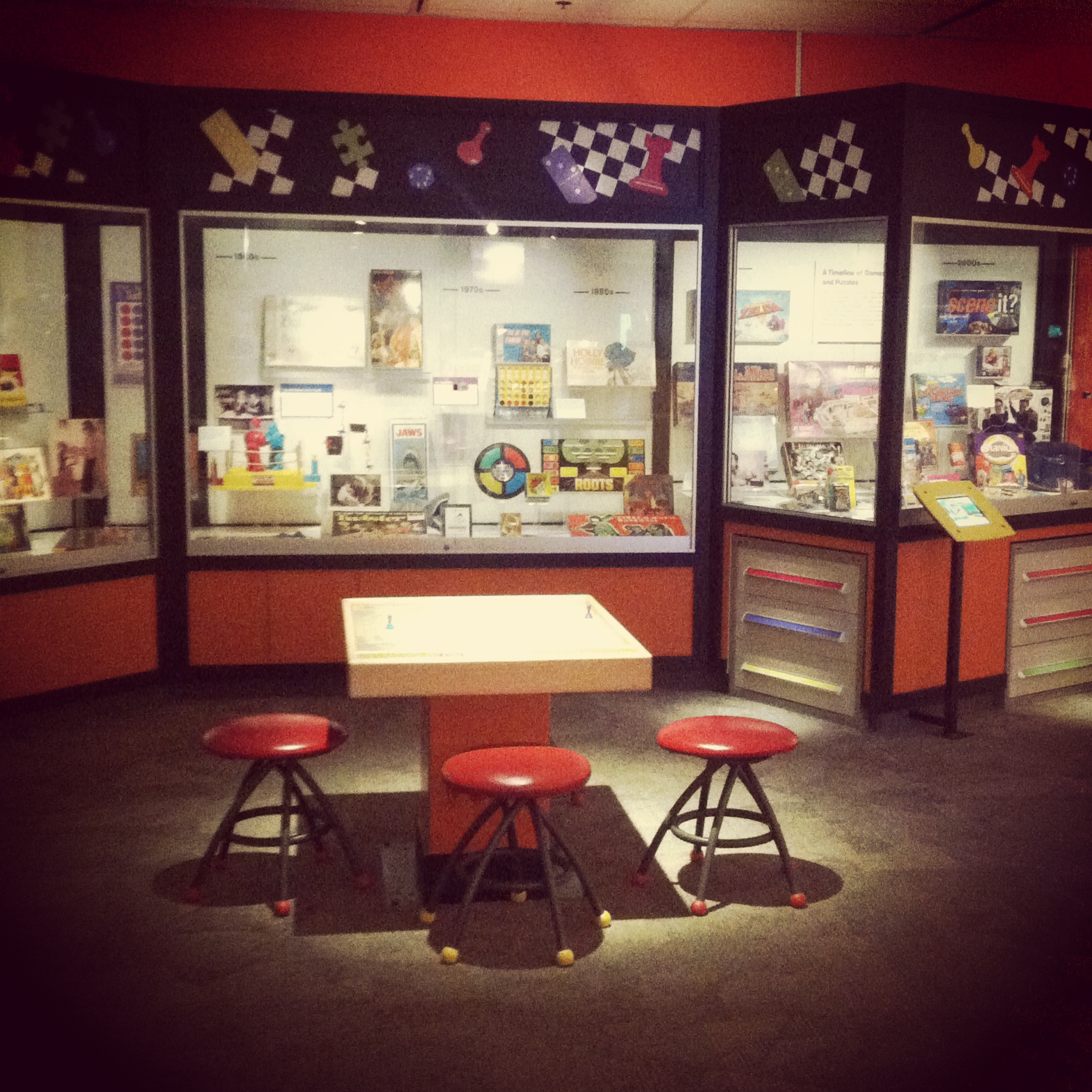
2014-07-08 13.09.07Museum goers willing to take a few steps further back in time will also find a dizzying and deep story of traditional games in the Game Time! permanent exhibit nearby. Three centuries of American board, card, puzzle and electronic games with brief, well-researched text offers a tremendous overview for those who wonder how gaming culture has evolved since the 19th-century.

2014-07-08 13.04.51An early 1970s Dungeons & Dragons set and the famed Dark Tower game from 1981

Games are arranged both in a historic timeline and also along themes such as economic games, chase games, strategy games and puzzle games. Along the way, a story unfolds where games provide a view into the American values and politics of each era, as well as the rise of the big business of games and the importance licensing particularly in the late 20th-century through the present.

2014-07-08 13.10.29War games, including classics like Risk (1959), Stratego (1961) and Battleship (1967)

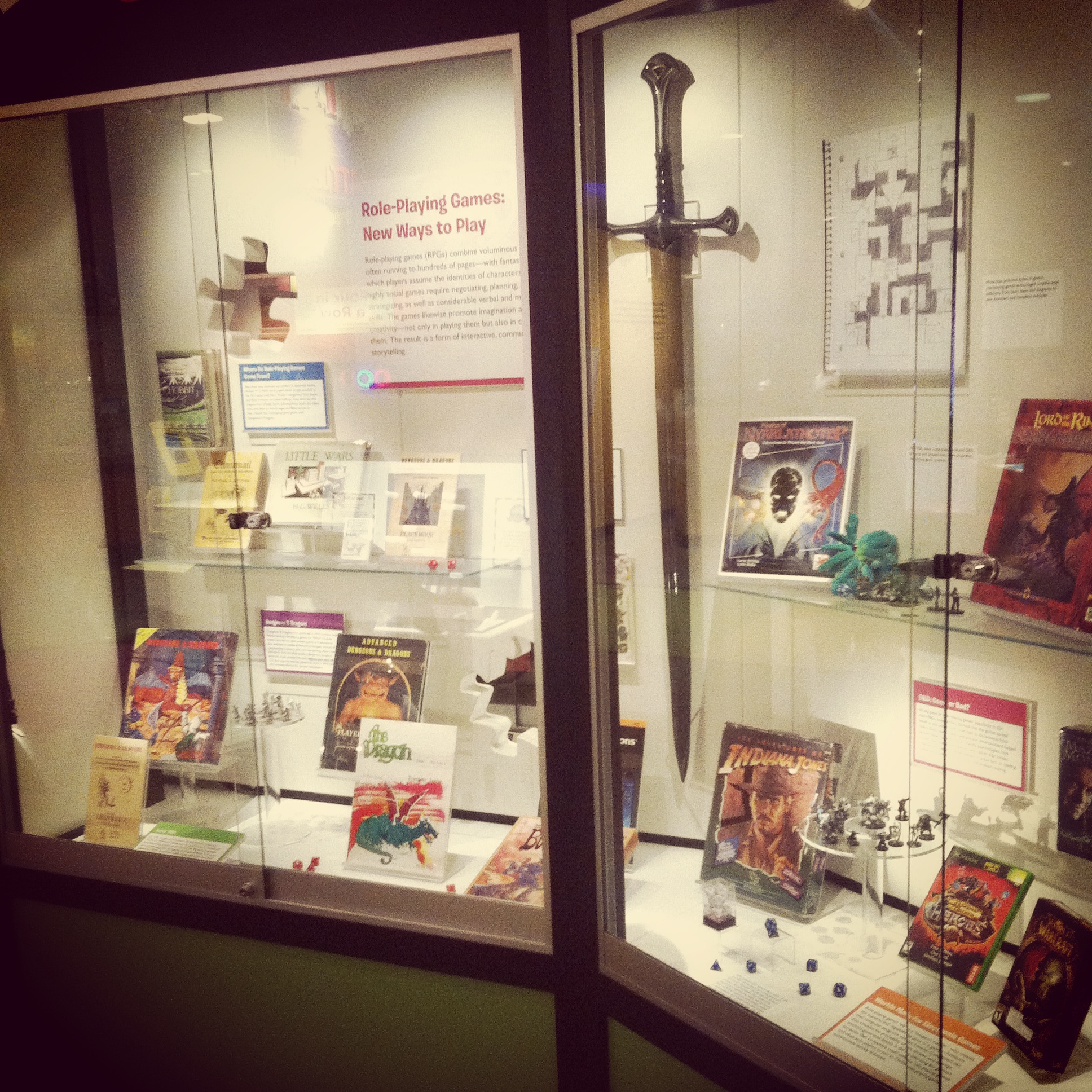
2014-07-08 13.11.05Role-playing games, including 1970s and 1980s Dungeons & Dragons books

Wargames and role-playing games each receive their equal due with an early copy of Little Wars by H.G. Wells and some classic Dungeons & Dragons books from its genesis in the early 1970s. Seeing these games side-by-side with other games, like the extensive exhibit on Monopoly, is incredibly validating for someone like myself who has spent my life engaged in games which once dwelt only at the edges of our culture.

Putting all these games — from pinball and video games to board and role-playing games — which so shaped my youth and those of countless others within a broader context of American history is something one can experience in few places like you can at the Strong Museum of Play. If you can get yourself to Rochester, stealing away a few hours to play through time will be time (and maybe some game tokens) well-spent.

Metropolitan Wargamers D-Day Plus 70 Event Report

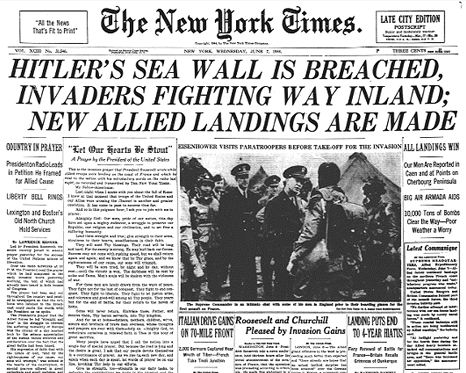
NYTimesDDay

This past weekend at Metropolitan Wargamers in Brooklyn, NY, dozens of gamers came together for three days commemorating the 70th anniversary of the Allied invasion of Normandy on June 6, 1944. Throughout the weekend, we ran multiple WWII-themed games, including Normandy ’44, I Ain’t Been Shot Mum, Flames of War, World In Flames and Memoir ’44. Dice were rolled, strategies were debated, prizes were won and Allied and Axis forces vied for control of France. In all, it was another great weekend full of gaming at our club’s space in the heart of Brooklyn.

Friday Games

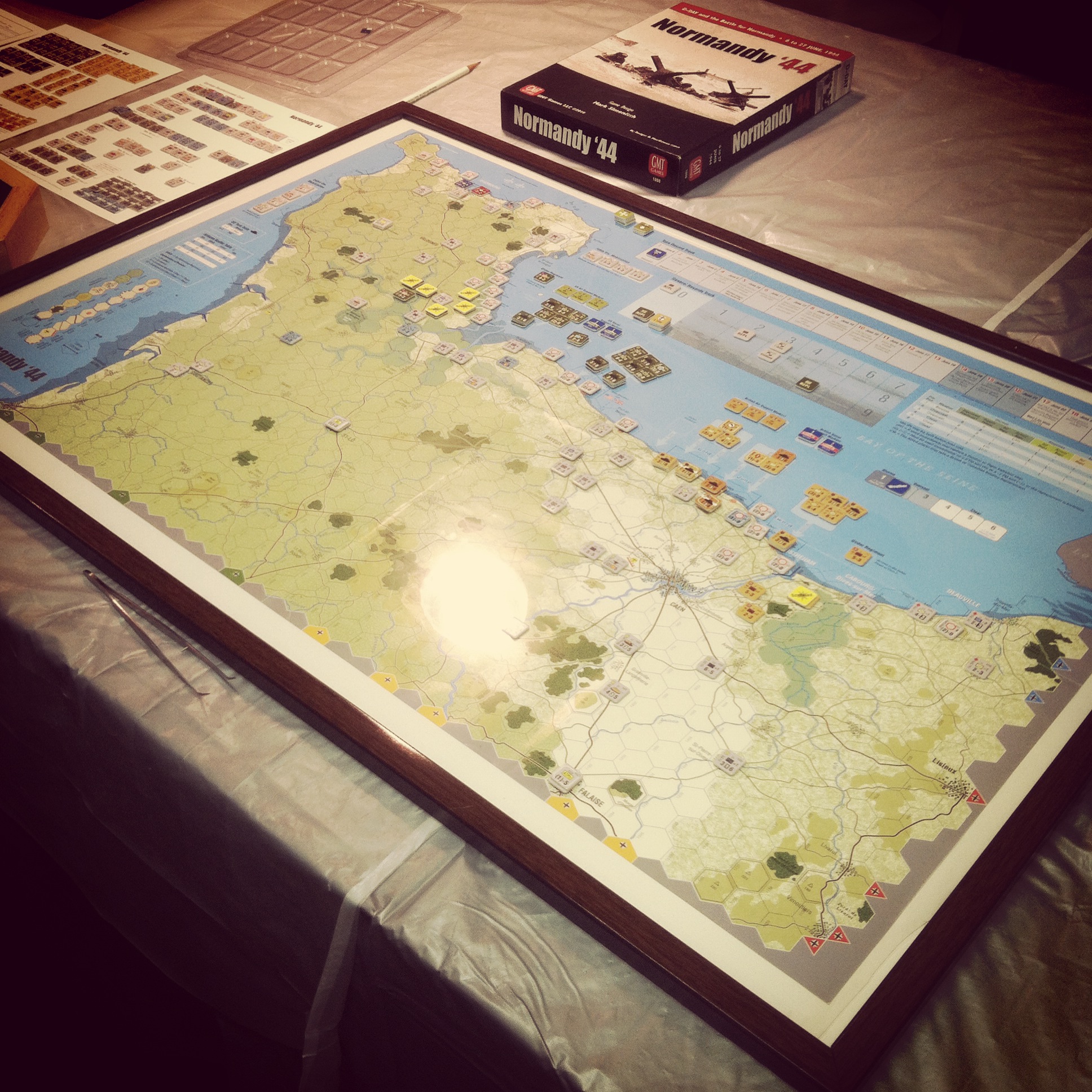
IMG_3586The invasion of France begins with Normandy ’44 at Metropolitan Wargamers

Friday kicked off after work with a few players unpacking a fresh copy of the classic Normandy ’44 from GMT Games. This one-map game covers the pre-dawn D-Day Airborne landing areas, five Allied invasion beaches and the charge to the initial inland objectives. The game scale plays with regiments and battalions with each turn representing one day of action. The small, self-contained game provides a great introduction to game mechanics at this scale with a tight, clear rules set. With a quick look at the game, I decided I’m going to have to personally give this one a shot sometime soon.

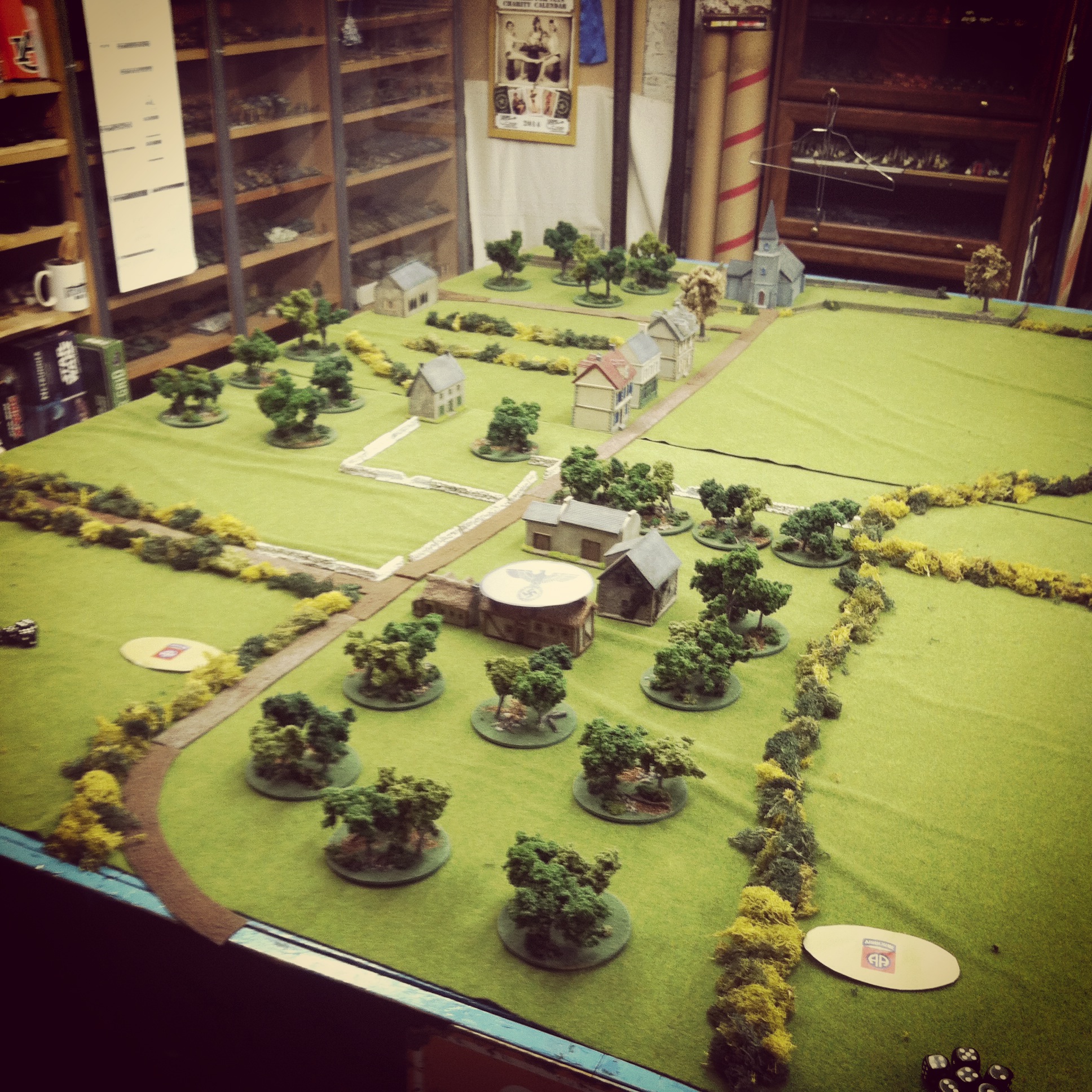
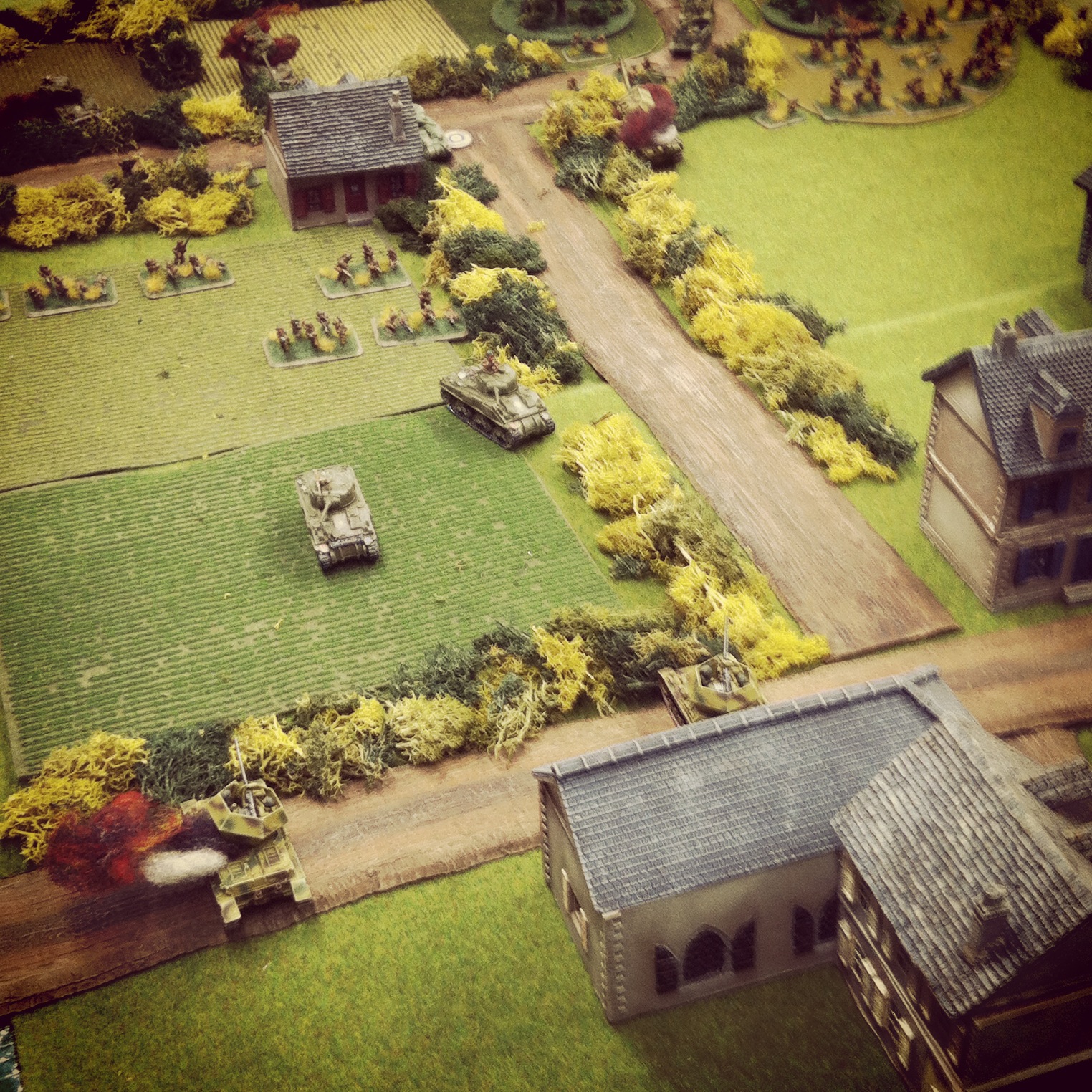
IMG_3587 US infantry blinds move toward unsuspecting German defenders at a farm outside Vierville

At the back of the club, we ran a game of our new favorite WWII tactical miniatures game, IABSM  from Too Fat Lardies. In our ongoing campaign of the Normandy scenarios in the IABSM Where The Hell Have You Been Boys? book, our game focused on the battle at Vierville-sur-Mer. With the 116th Infantry Division supported by the 5th Ranger Batallion, the Allied mission was to drive inland to capture and defend the church at Vierville.

IMG_3589

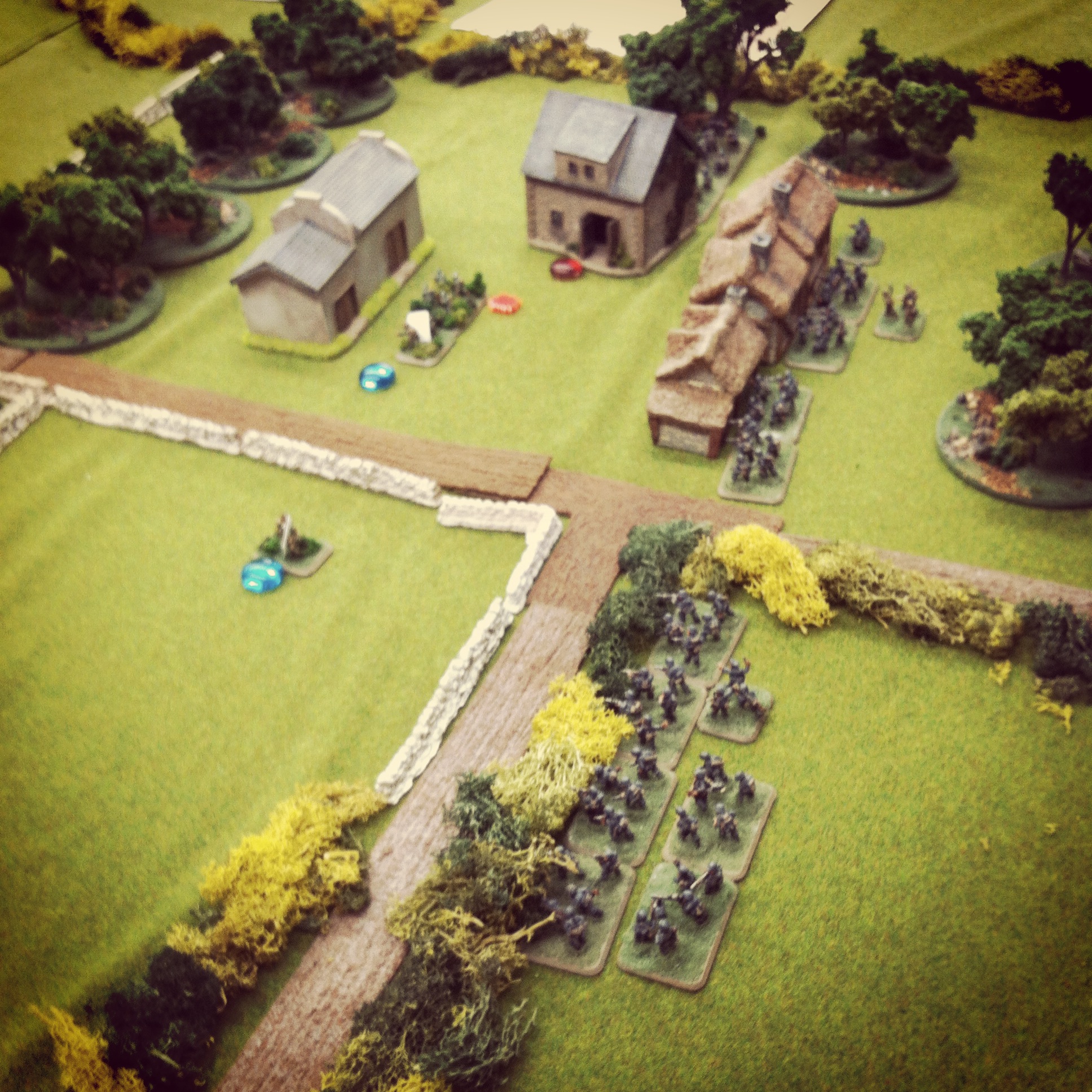
German and US units exchange fire in and around the farm at Vierville

As per the scenario, initial Allied blinds approach a farm outside Vierville where a German blind sits unknowingly in the complex of buildings. With Allied infantry closing in over dense bocage hedgerows and orchards, a firefight erupted and drove the German defenders through the buildings and into the orchard beyond.

IMG_3590

German reserves arrive at the flanks of the advancing US infantry outside Vierville

IMG_3633

Germans reinforcements push the Americans from the farm

As the first force of Germans fled the farm, their reinforcing comrades came on to the rear and flank of the US infantry. The Americans made consecutive moves of firing and moving back to defend at a series of stone walls across the road from the farm. The retreating defensive US actions held off the German onslaught until enough Americans could take up position amid Vierville’s houses. At the same time, the US Rangers moved in at the far end of town to hold the objective at the church.

IMG_3632

Americans pull back from the farm to take position in Vierville

The game eventually settled into a bloody house-to-house and hedge-to-hedge fight along the road leading toward the church. Occasional lucky shots from US Ranger light machine guns at the church also harassed the Germans lying low behind their stone wall position at the farm’s orchard. By midnight, much of the initial American force had been destroyed or was retreating to a final stand at the church held by the Rangers. While the Germans had also lost a sizable amount of their force, their heavy machine guns were still in play as they closed in through the town. This time around, we called the action at Vierville a draw.

Saturday Games

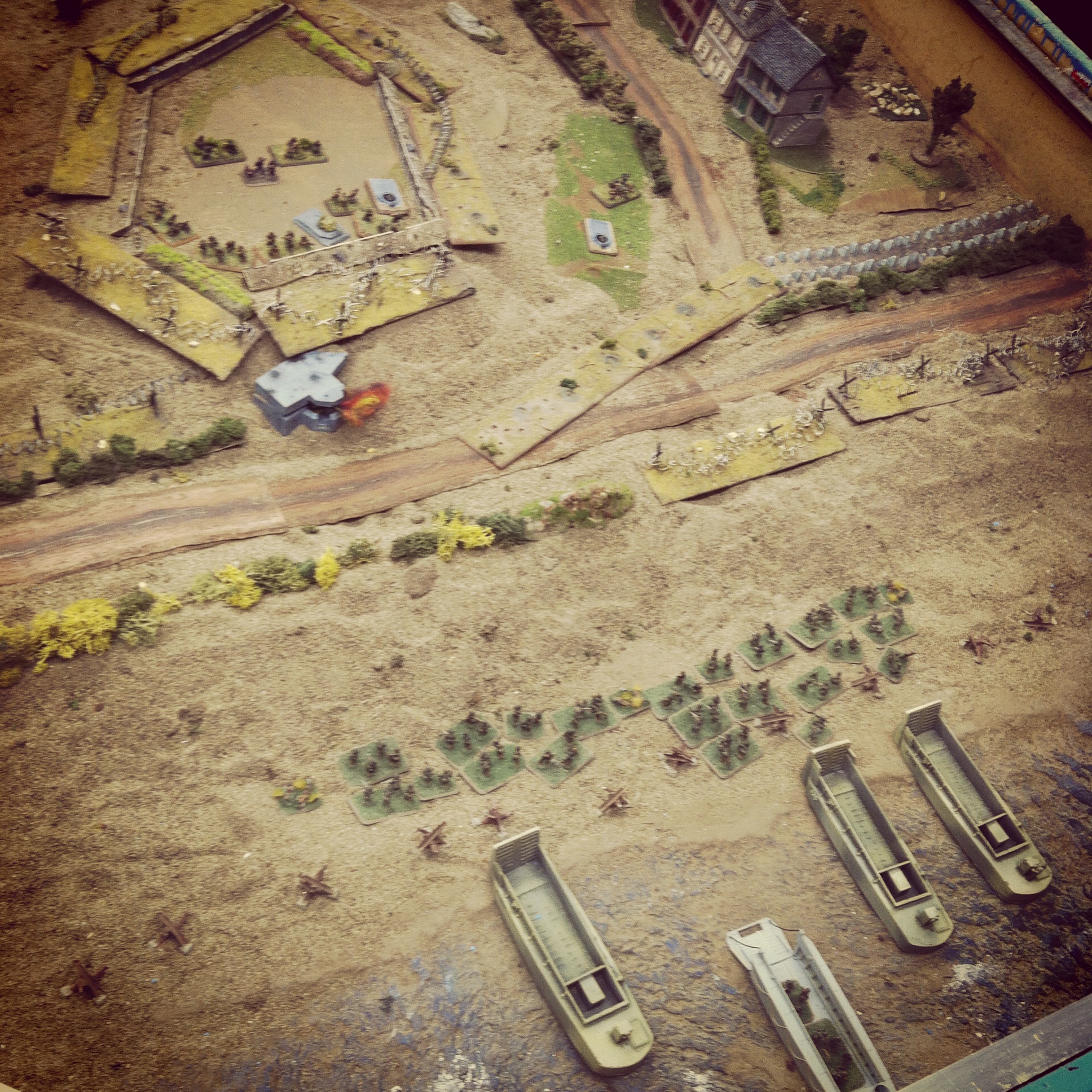
IMG_3603The Americans hit the Easy Green sector of Omaha Beach

The next day kicked-off with a running of a FOW beach landing at Easy Green on Omaha Beach. We have been play testing the FOW scenario over the past two months, tweaking our forces and strategies to cope with the clumsy beach landing rules. In our past games, the US invaders only manage to win about a third of the time. Even so, we decided no D-Day weekend was complete without a return to “Bloody Omaha” on one of the club’s award-winning sand tables.

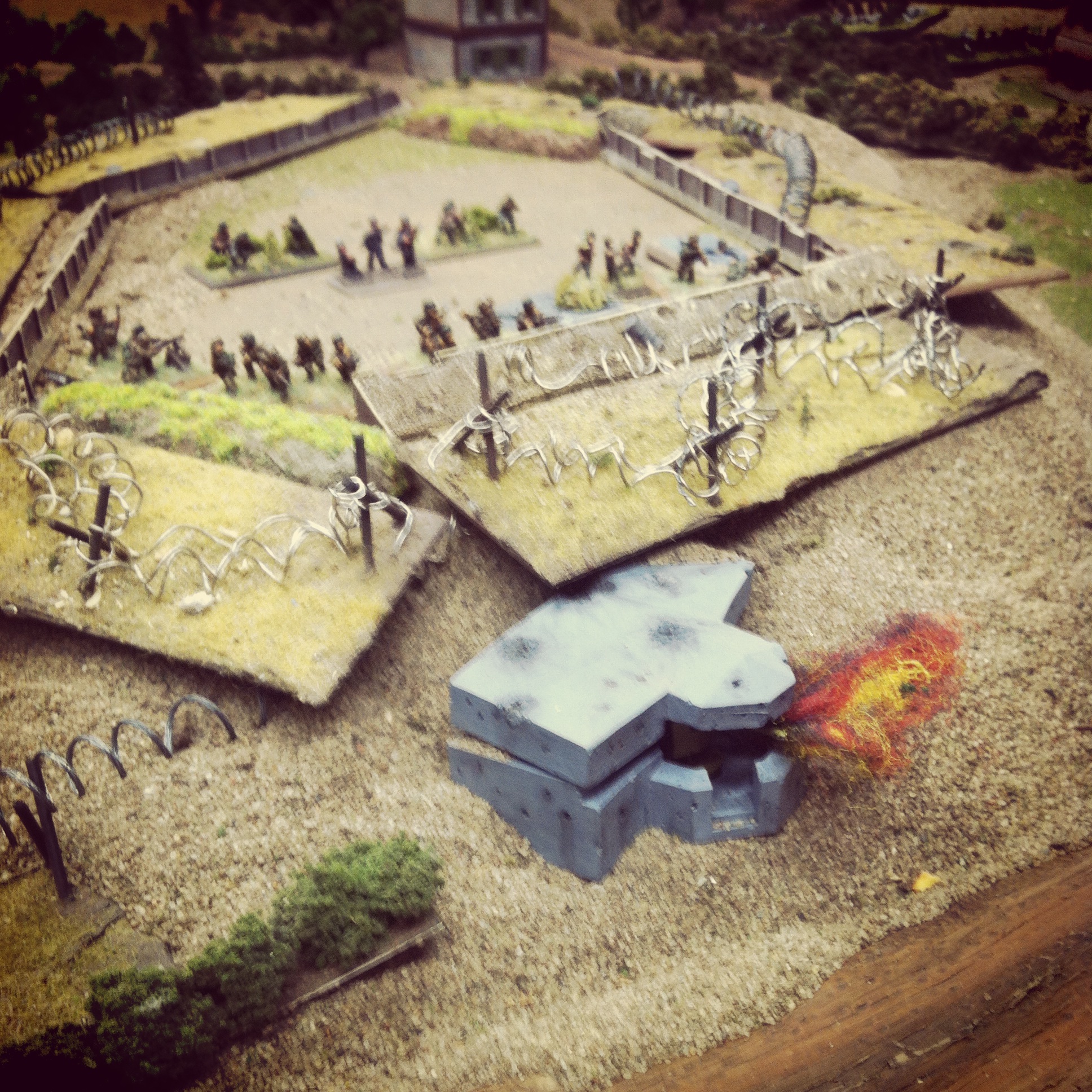
IMG_3604German defenders hold their positions behind a burning bunker

The opening turns found a lot of US boats on the beach and a quick push to the seawall. So early combined arms fire managed to destroy the main bunker at the beach, but the battle was far from over. The initial US push followed on to the left of the beach, but multiple turns at clearing the barbed wire stalled the advance as the Americans took heavy fire.

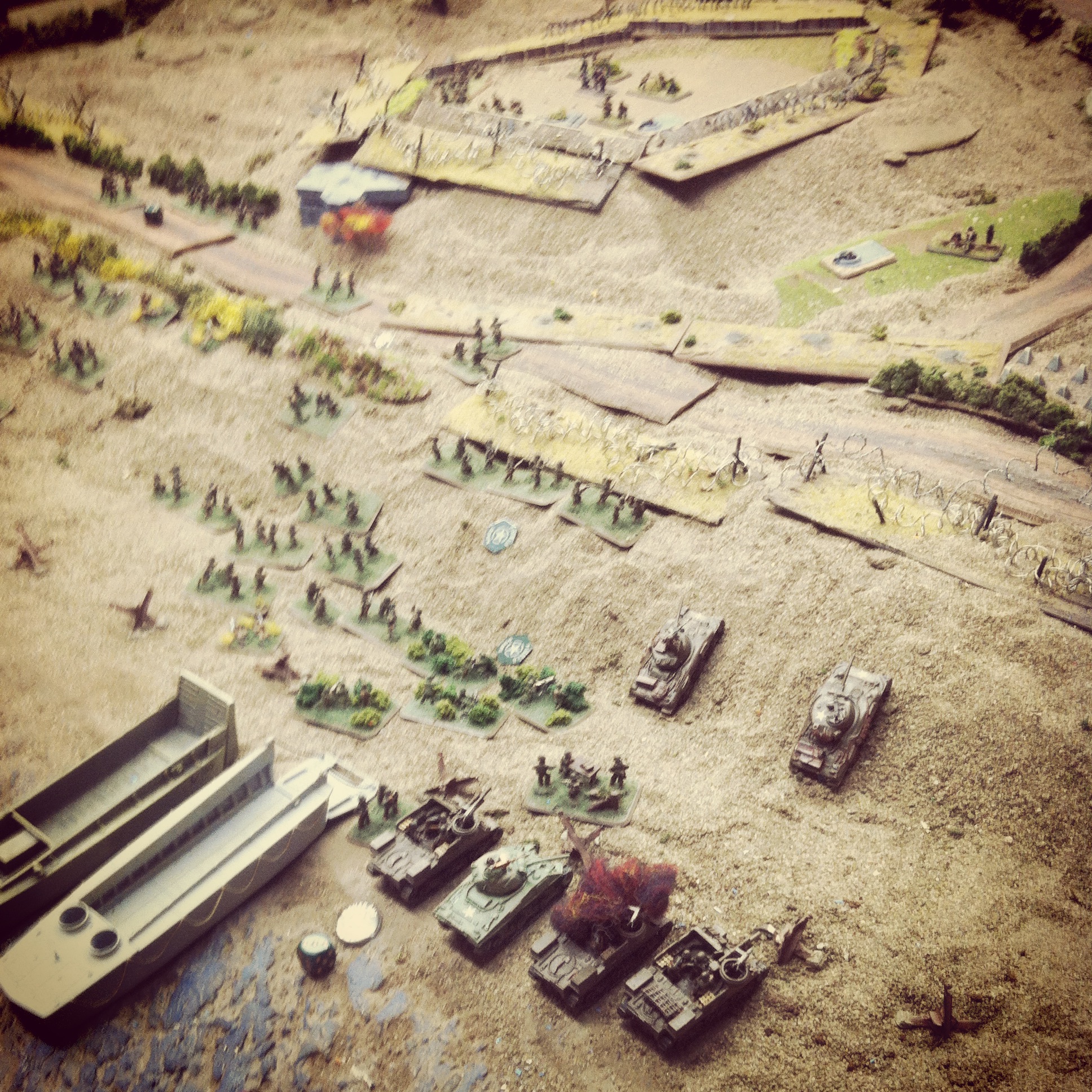
IMG_3606

American armor and artillery follow-up the infantry landings

As US armor arrived, several tanks managed to drive off the beach to the minefield position to lay down fire on the German trenches. One tank wound up spending three turns bobbing in the surf offshore only to arrive and bog for two more turns on the beach. As this most inexperienced tank crew in Normandy struggled, the other Shermans took fire from German rockets and reserve tank platoon which rolled to bulk up the beach defense. American artillery also arrived but proved pretty ineffective to the Germans at the trenches. Wave after wave of US infantry pushed to the trenches, eliminating most of the defenders but never managing to clear the barbed wire lines to seize the German position. At the final turn, the Americans just hadn’t made enough headway to control the beach.

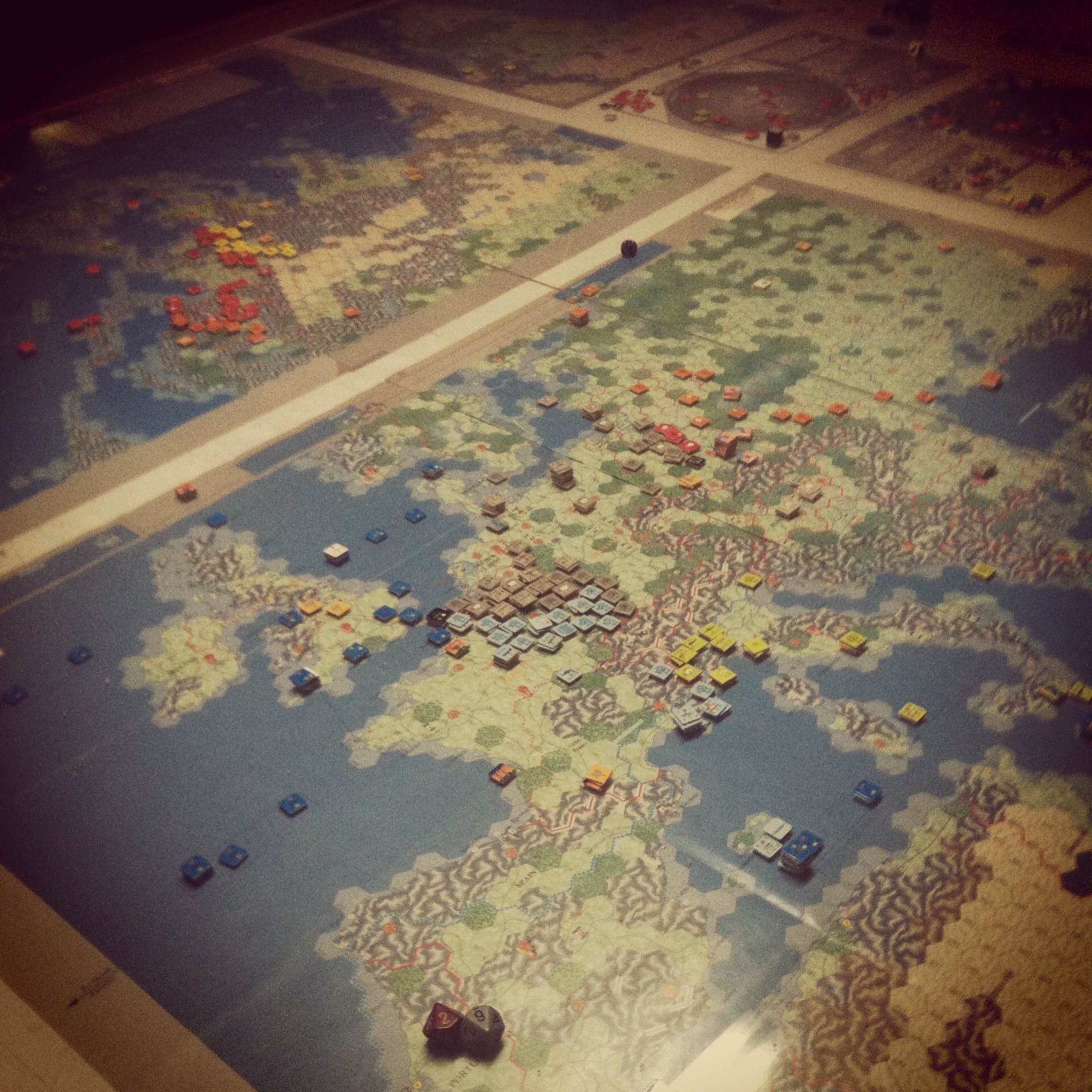
IMG_3627World In Flames continued over D-Day weekend

With action raging on the sand table, a group of club members showed up to continue playing their massive World In Flames game. Australian Design Group’s WIF from 1985 is the standard in grand-scale strategic fighting of the entire WWII period. The game’s rich playable detail, dizzying number of 1400 playing counters and sprawling maps makes it a commitment for only the most experienced gamers over many months of play.

IMG_3630Allied forces push from the beaches inland to Caen in Normandy ’44

The Normandy ’44 game from the evening before concluded with a decisive Allied victory Saturday afternoon. Pushing the Germans back from all but Utah Beach, the Allies captured Bayeux and several smaller towns. With German defenders routed from roads leading inland from the landing beaches, the victors rolled in to control half of Caen by the game’s end.

IMG_3625No one was going hungry at Metropolitan Wargamers over the weekend

Saturday also included a lot of other club members down for the usual variety of board, Euro and card games, making for a packed house. As the crowd rolled in, a longtime club member showed up with an enormous fresh-caught fish which he proceeded to gut with a huge military-style knife. With fish on the grill and food ordered in, there was plenty of food to sustain the crowd of gamers throughout the day.

We all took a mid-afternoon break to dice-off in a game, books, DVD and miniatures raffle to raise funds for the club. I was fortunate to score a copy of A Few Acres of Snow from Treefrog Games, and another lucky person picked up an unused copy of out-of-print the Games Workshop classic Dreadfleet.

IMG_3631

Initial deployment of Allied and Axis blinds in our Saturday evening IABSM scenario

As the main crowd thinned out, we ran an evening IABSM game continuing the assault beyond Easy Green. The scenario found initial US forces deployed around a small French farm with the objective of moving men off the table on the roads beyond. The Germans were tasked with preventing the American advance and seizing the farmhouse stronghold.

IMG_3607

Settling in for a contested fight at the farmhouse above Omaha Beach

Using initial blind deployment, Germans quickly moved to the farm along thick hedgerows as the Americans drove into the building for cover. Turns followed with the Americans jumping from cover to fire on the dwindling German force which returned fire over the hedges to unfortunate US infantry hanging out in the open. A US flamethrower attack from the window of the farmhouse decimated another German squad sitting close behind a nearby hedge. Pressing their luck, a group from the farmhouse made a run for the road exit only to be stalled by a reinforcing German heavy machine gun squad. Returning fire, the German MG42s were eliminated from their position in the open field. However, the damage had been done. Although the Germans had not captured the farm objective, the Americans no longer had a sufficient force to push off the table. The night ended with a German victory beyond Easy Green.

Sunday Games

IMG_3620The war continues on the Memoir ’44 Hedgerow Hell battle map

With the first days of Operation Overlord behind us, Sunday’s game focused on the breakout actions. A couple visiting players showed up for the club’s Memoir ’44 game around noon on Sunday. Using the wide Hedgerow Hell expansion map, the Allies beat the scenario odds to win the game in the Overlord scenario. There was much talk of getting larger games of Memoir ’44 back in rotation at the club soon, so hopefully getting the game back on the table will bring some renewed interest in the coming months.

 IMG_3621

The initial armored encounter outside Lingevres leaves British tanks in flames

I finished off my weekend as the British at Lingevres using the same scenario I first ran at the club a few months ago. The mission ahead for the Brits was to move into the heavily defended town and take two of the buildings. Historically, the battle played out as a tank duel between UK Sherman Firefly and German Panther tanks, and our game this past weekend played out in a similar way.

IMG_3624

A Panther meets its end at the hand of the British Royal Artillery as a close assault is attempted on another in the woods nearby

At the outset, my first platoon of tanks got a bit overly aggressive and charged into contact with the full Panther platoon at the farm outside Lingevres. With the first Firefly destroyed in the opening turns, my remaining Shermans pulled back as the Panthers rattled to the middle of the field to hold off UK infantry advancing through the woods and bocage-lined fields beyond. One Panther bogged on a hedgerow and another was destroyed in an initial volley from the Royal Artillery in the fields outside town. Several turns became ensnared in attempted infantry assaults on the third Panther in the woods, but eventually the German tank rolled away to deal with the building reinforcing infantry and tank platoon in the fields on the other side of the table.

IMG_3622British Shermans and infantry break across a field toward Lingevres

With the Panthers moving away, fresh British infantry and the surviving Shermans moved to the farm and fields beyond. British artillery fire winnowed and pinned the German platoon in the church over several turns. Artillery fire also sought to keep the reinforcing German spotter pinned to limit the effectiveness of the reserve Nebelwerfer battery which as delayed reserves to the rear of Lingevres.

IMG_3623

The duel between the Panther and Firefly ends with the British tank in flames as the remaining Shermans destroy a Panzer IV platoon in the distance

In the meantime, a multi-turn tank duel had settled in between a lone Firefly and Panther while a reinforcing Panzer IV platoon arrived at the edge of town. Both tank groups traded fire, and in the end, the Panzers were routed with two or their three destroyed and the Firefly fell to the Panther’s gun. Back at the farm field, Shermans traded fire with Pak 40s and destroyed an anti-aircraft platoon defending the town’s flank. With two Panthers left on either side of the church, Shermans on each side of town and advancing British infantry, we called the game a draw.

 Weekend Debrief

After more than 20 hours of gaming over two nights and days, I was pretty worn out, but the interest in the D-Day event had made the weekend well worth it. WWII still holds enormous interest to this day, as demonstrated not only by our weekend of gaming but by the mainstream media’s coverage of D-Day over the week leading up. In the next week, we’re kicking off an FOW Infantry Aces campaign with fresh forces hitting the tables in rounds of Italy-themed WWII games. This fall we’ll be playing out some Market Garden battles and by the winter we hope to host some Battle of the Bulge engagements. It was a pretty special weekend in Brooklyn, but for regular visitors to Metropolitan Wargamers, there’s always the next game in this very unique New York City community.

Come Play Zombicide With Me At Brooklyn Game Lab April 29th

zombibox

I’m thrilled to be lending a hand hosting an evening of Zombicide at Brooklyn Game Lab in two weeks on Tuesday, April 29th, 2014.

Since opening a few months ago, Brooklyn Game Lab has been grabbing a lot of press as the latest space in New York City to take hold of the recent boom in tabletop gaming. Through its innovative afterschool programs, the Lab has provided space for children to not only play games but to stretch their minds in developing their own ideas into playable games of heir own. When the kids head home, the Lab has been filling up evenings and weekends with adult gamers on theme nights, singles mixers nights and a recently-packed International Tabletop Day.

zombicide contents

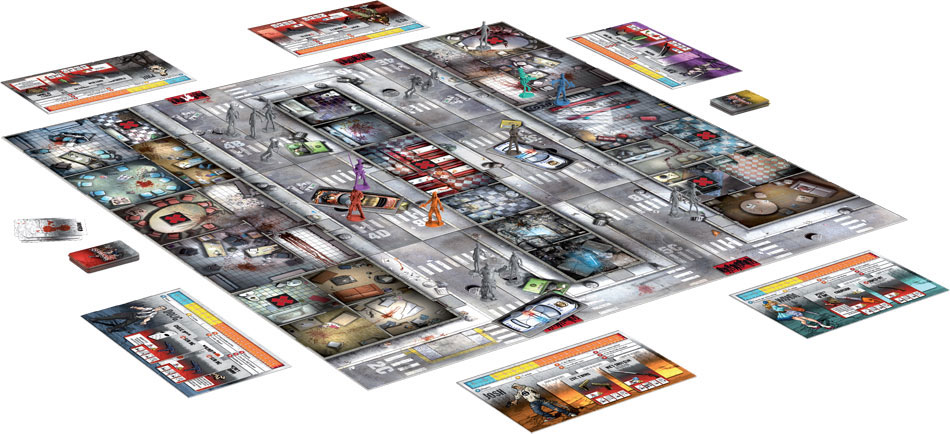
Zombicide: Season One base game from Guillotine Games

To kick off the summer, Brooklyn Game Lab (353 7th Avenue @ 10th street in Park Slope, Brooklyn) is hosting a night of the incredibly popular Zombicide board game from 7-10pm on the 29th of April. Admission for the evening is just five bucks, and I’ll be there to help run a couple simultaneous games of survival and zombie carnage.

zombifigs

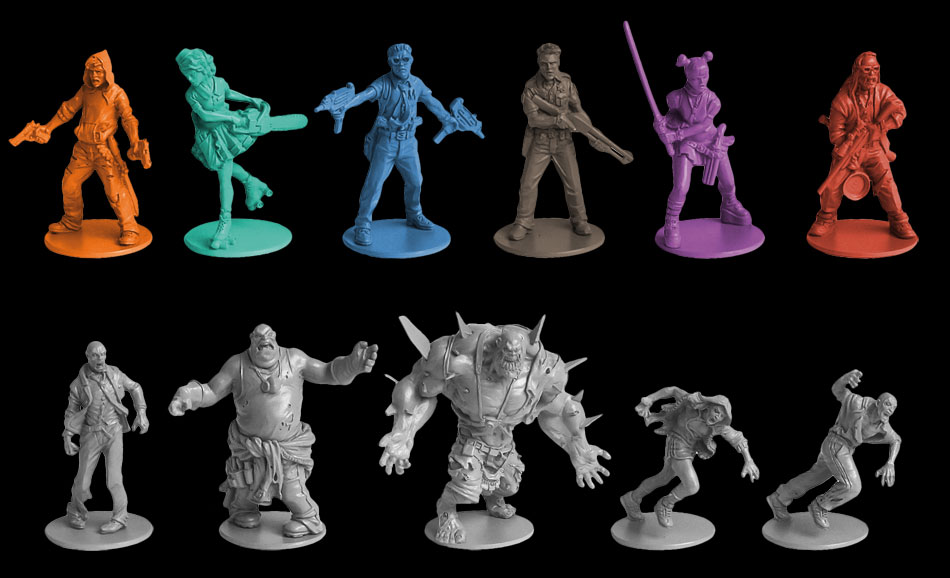
Zombicide survivor and zombie miniatures

I first played Zombicide about a year ago, and I can’t wait to drag some more people into this easy-to-learn and gorgeously-designed game where either everyone wins or everyone loses. Released in 2012 via a Kickstarter from Guillotine Games, Zombicide and its subsequent Toxic City Mall and Prison Outbreak expansions pits up to six survivors against a growing zombie horde. Players collaborate as they kick in doors, search for supplies, arm-up with a variety of weapons and mow down scores of zombies. If you’re a zombie fan, a game fan or just fascinated at the prospect of meeting some people and battling through the zombie apocalypse for an hour or two, you should definitely come by the Brooklyn Game Lab.

For more info on this an other upcoming events, check out the Brooklyn Game Lab calendar.

“The Harlem Hellfighters” by Max Brooks

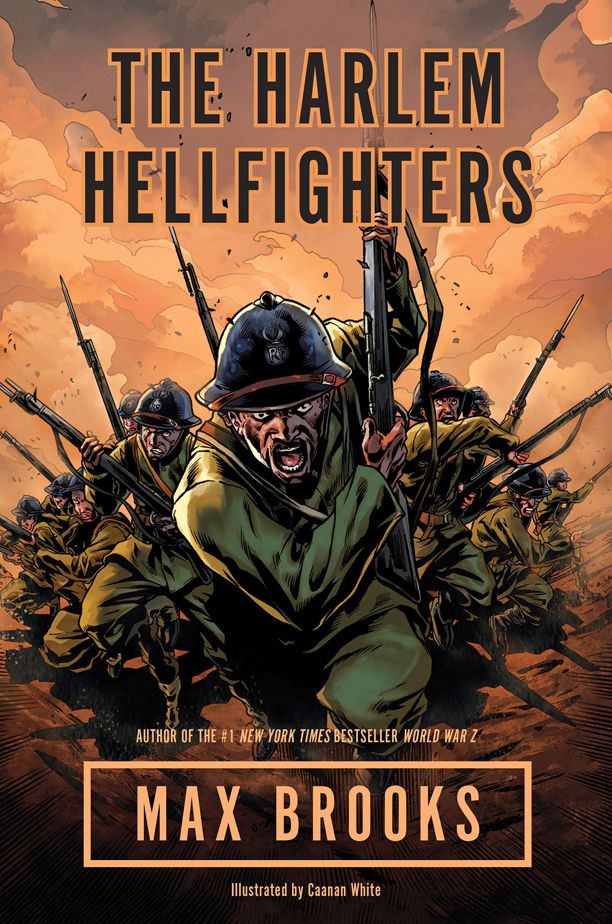
harlemhellfightersbook

My interests in American history, graphic novels and little-known accounts of war have recently intersected with gripping The Harlem Hellfighters by Max Brooks. Written by Brooks — the well-known author of World War Z — and illustrated by Caanan White, The Harlem Hellfighters recounts the struggles and victories of the 369th Infantry Division as the first African-American regiment to see combat in World War I.

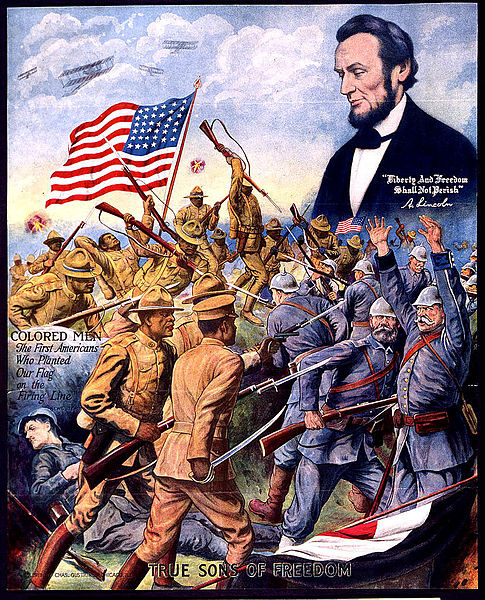
369th poster

Period poster for the 369th Infantry Regiment

The 369th was composed of a volunteers from many backgrounds reflective of the Harlem Renaissance era’s diverse black population crowding the streets of northern Manhattan. The volunteers included Caribbean and African immigrants, migrants from the American South and native-born New Yorkers. As a green fighting force, the urban laborers, artists, musicians, farm workers and students who fought as the Harlem Hellfighters went on to distinguish themselves in the late stages of WWI and became among the first American Expeditionary Forces to push over the hard-fought German lines.

369th band

James Reese Europe (left) and members of the 369th Infantry Regiment marching band

Brooks has a long-held interest in the Hellfighters, and he had tried unsuccessfully over the years to bring a script to movie or television production. Following on the international success of World War Z, Brooks decided on the graphic novel format to bring the Hellfighter story to a mass audience. Based on real characters in a fictionalized story, the book traces the regiment’s path from basic training in a Jim Crow American South to the trenches of Europe under the command of the French army. Even after winning distinction in early engagements, the members of the Hellfighters ran up against racism which followed them to Europe.

The story of band leader James Reese Europe forms just part of the tale, but is illustrative of both the acceptance of the arrival of black US troops and their rejection by the laws and traditions of white Europeans and their countrymen at home and abroad. Reese is largely credited with introducing jazz to European audiences, and although he would survive the war, he died soon after his return to the States at the hand of fellow band member. The mix of challenges, triumphs and tragedies on and off the field of battle makes the story of the 369th an incredibly compelling story every American should know.

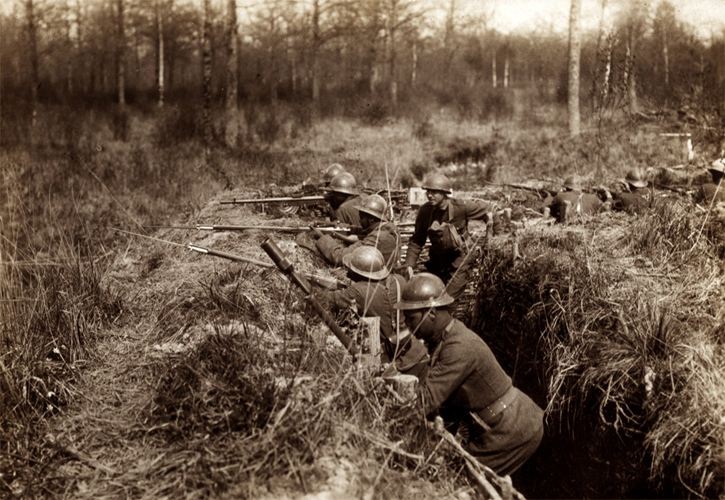
369th trenches

Troops from the 36th Infantry Regiment in the trenches

The Harlem Hellfighters is illustrated in a jagged, dark style by African-American artist White amid pages crowded with rich individual character stories and broader narratives of an era marked by the horrors of modernized warfare as well as lynchings and street-beatings. To the interested reader, there are many jumping-off points into a deeper story of the 369th and their ripple-effects on 20th-century American race history still being wrangled with today.

The 369th arrived back to the States and were celebrated with a heroic parade in New York City. The 369th Infantry Regiment Armory in northern Manhattan still stands today as one of the few monuments to this often-forgotten chapter in a war which is also largely-ignored in our teaching of US history. For the veterans of the Harlem Hellfighters, their fight in Europe would continue back home through the labor and civil rights movements in the decades to come.

Just ahead of the book’s publication in early April, Sony Pictures announced it had acquired the rights to bring the story of the 369th to the big screen with production backing from Will Smith’s Overbrook Entertainment. With the The Harlem Hellfighters and the promise of a movie adaptation, hope springs anew that 100 hundred years on the American men of the 369th get the recognition they earned in spirit and blood.


Downloading: Mapping the World at the New York Public Library

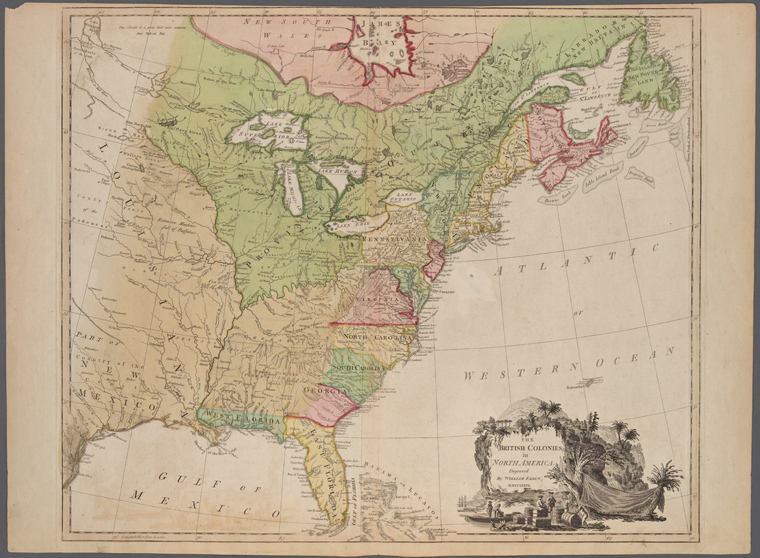
britishcolonies

As a lifelong gamer, I’ve spent many, many hours staring at maps or drawing my own. Most board games provide maps of sorts that define movement and area control. For players of Dungeons & Dragons and the like, adventure maps create much of the framework for how campaigns and role-played stories evolve. Miniature wargames, from ancients and historicals to fantasy and sci-fi, utilize three-dimensional set-ups driven by maps and the relationship of various features on the tabletop.

Late last month, the New York Public Library announced the availability of some 20,000 high resolution downloadable maps. The collection is an enormous resource for hardcore historians and hobbyists alike. Well over half the online collection naturally focuses on New York City, New York State and the surrounding areas. Beyond the New York area, the cartography goldmine grants access to hundreds of years of maps from around the world which can be viewed singly or within the context of their original books, atlases or folios.

Digging into the archive, there’s a fair amount of material certain to be of interest for gamers. Maps of Europe, Africa, Asia and the Americas portray the development of civilizations and empires over the centuries. A fair amount of material is available on the American War of Independence, particularly in the areas around New York, New Jersey and Pennsylvania. Aside from maps, there are also some engraved plates of native societies encountered by European colonists, renderings of forts and some naval views.

The entire online collection is searchable here, but here are a few highlights I’ve come across on my digital travels.

New York

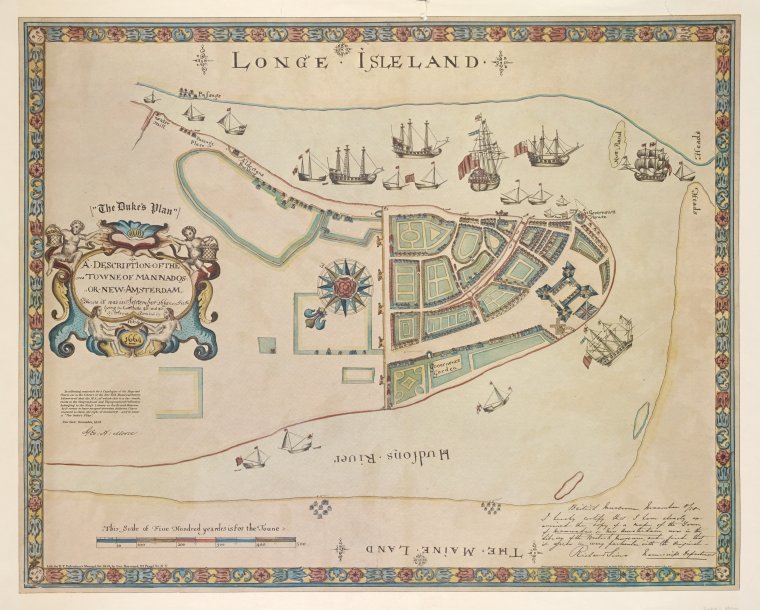
newamsterdam

New Amsterdam

navy yard

Brooklyn Navy Yard

American War of Independence

battleLI

Battle of Long Island

saratoga

Saratoga

Forts

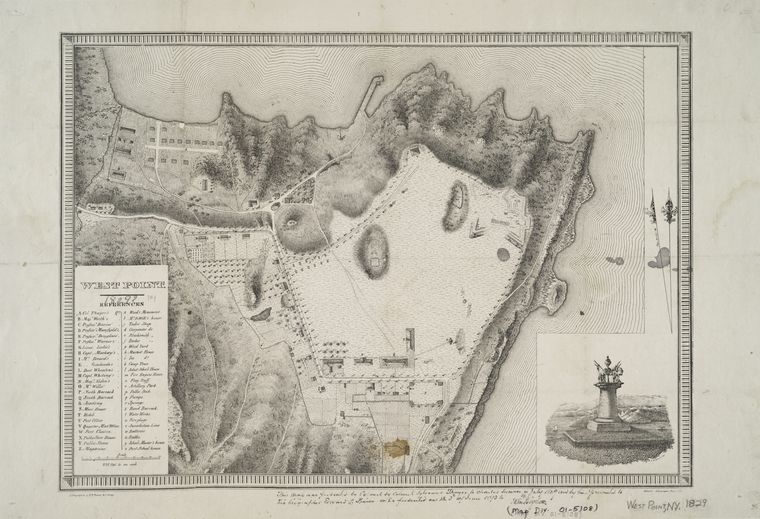
westpoint2

West Point

fortalbany

Fort Albany

Naval History

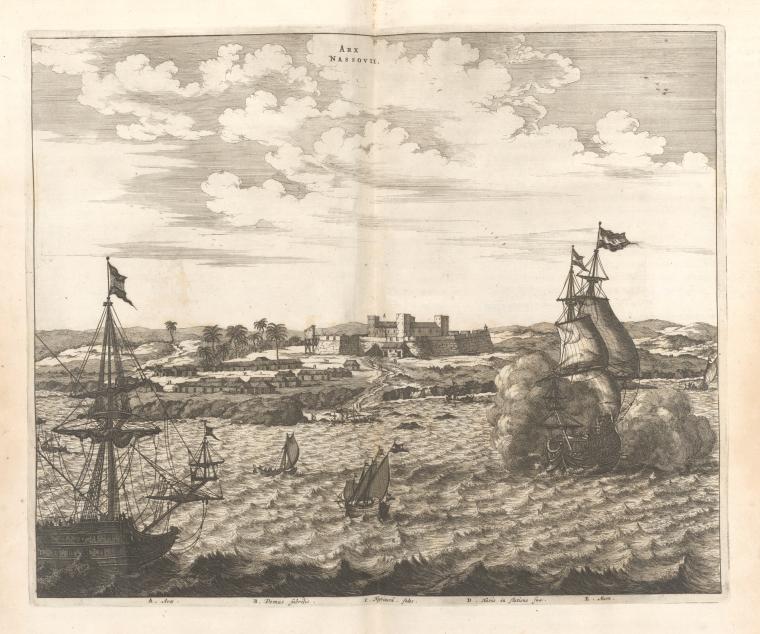
dutchportships

Dutch and Portugese Ships

british1671

Ships in the British West Indies

Europe

ancientgreece

Ancient Greece

romanempire

Roman Empire

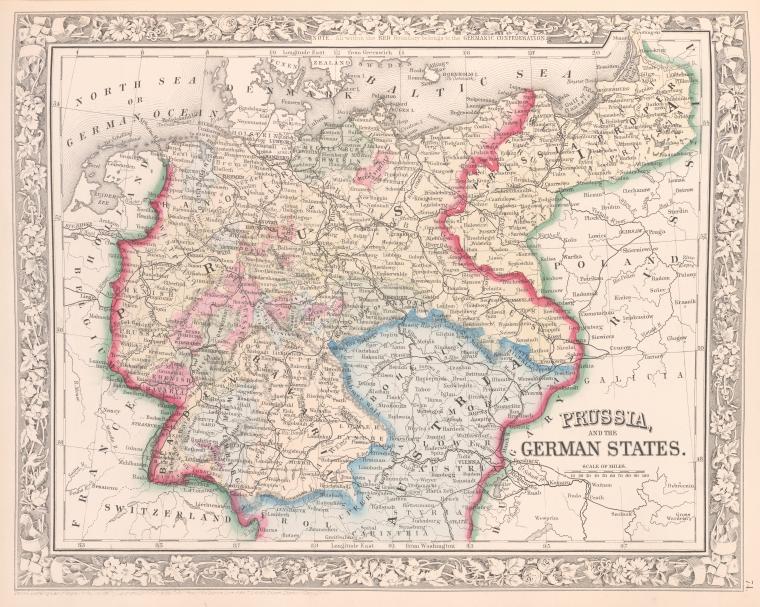
prussia1860

Prussia


Downloading: Wargame Blogging With 35 Million Images

Embed from Getty Images

I’ve written previously about my longtime career in the photo and film licensing industry, starting out in the mid-1990s as a historic photo researcher. One of my former employers, Getty Images, made a surprise announcement this week that it was making available for free some 35 million images for non-commercial use in social media and blogging. The press release stated Getty Images’ acknowledgement of the widespread use of images without proper licensing, and the new system will allow for data-gathering and one would think some form of monetization long-term.

Using the new functionality is easy with a quick image search and copy/paste of the embed code into a website like Facebook or blog platform like WordPress. Images are importantly displayed with the proper photographer and collection attribution. The Getty Images logo is also prominently shown along with buttons to share the image via Twitter or Tumblr. Clicking on the image itself returns the user to the Getty Images website for full caption information. Because the image is never actually uploaded to the blog’s hosting site, there’s an additional cost savings in storage space. It’s all fast, neat and, again — free.

For wargame bloggers, there’s an enormous amount of iconic and more obscure photographs, maps, posters and illustrations available. The black and white and color historical offering is deep. Contemporary photos of equipment, re-enactments, memorials and sites relevant to military history should also be useful for reference for wargame bloggers like myself. Not every image Getty Images represents is available for free through the embed code, and users should be careful not to grab an image requiring a license fee.

Check out the below for just a glimpse of the breadth and depth in the Getty Images offering which may very well be popping up on some of your favorite blogs very soon.

Ancient & Medieval Warfare

Embed from Getty Images Embed from Getty Images Embed from Getty Images

American War of Independence

Embed from Getty Images Embed from Getty Images Embed from Getty Images Embed from Getty Images

Seven Years War

Embed from Getty Images Embed from Getty Images

Napoleonic Wars

Embed from Getty Images Embed from Getty Images

American Civil War

Embed from Getty Images Embed from Getty Images Embed from Getty Images Embed from Getty Images Embed from Getty Images

African Colonial Wars

Embed from Getty Images Embed from Getty Images

World War I

Embed from Getty Images Embed from Getty Images Embed from Getty Images Embed from Getty Images Embed from Getty Images

World War II

Embed from Getty Images Embed from Getty Images Embed from Getty Images Embed from Getty Images Embed from Getty Images Embed from Getty Images Embed from Getty Images Embed from Getty Images

Cuban Revolution

Embed from Getty Images Embed from Getty Images

War Concepts

Embed from Getty Images

A Trip to Brooklyn’s Trainworld

trainworldbknyI’ve written several times about my lifetime love for model trains which served as my gateway to the scale modelling hobby and eventually to miniatures wargaming. Walking into a model train convention or local hobby shop as a kid was like opening an alternate fantasy world of endless possibility. On occasional nights after dinner as a young hobbyist, my dad’s announcement that we were climbing into his truck to take a trip to Kurt’s Trains & Hobbies in nearby Caledonia, NY was like declaring we were about to take a journey to another universe.

So, after some 16 years living in Brooklyn, NY I recently made my first stop at Trainworld in the Kensington neighborhood just a few subway stops from my front door. Located in an light industrial stretch of McDonald Avenue right under the elevated F line, Trainworld is an old slice of Brooklyn brimming with charmingly coarse but knowledgeably helpful staff and one of the largest inventories anywhere of model railroading and related hobby supplies.

IMG_2906Trains running on the layout at Trainworld in the Kensington area of Brooklyn, NY

Trainworld and their Trainland location in Lynbrook, NY in nearby Nassau County lay claim as “America’s Largest Discount Mail Order Discount Train Store” powered by their extensive and well-built website. The retail location in Brooklyn features a main store space packed from floor to ceiling with N, HO, O, G and S scale model trains, track, buildings, scenery and supplies. A small phone staff manages customer service queries in a second space off the main store which also features a small train layout which loops and clatters around all day long. The enormous warehouse opens through a door just past the main retail counter space, granting any walk-in customer full access to the store’s massive inventory.

IMG_2904Scale scenery supplies at Trainworld

It’s been years since I’ve had my own model railroad layout, but having a place like Trainworld nearby is a huge resource for a wargamer and miniatures modeller like myself. On my recent visit, I was able to grab a few bags of various ground cover products from Woodland Scenics right off the racks stretched the entire length of one wall. When one specific color I needed wasn’t on display, a quick call to the warehouse brought a package to the counter in about five minutes.

IMG_2905Shelves of trees and natural modelling details at Trainworld

A little further down the aisle are several shelves of ready-made model trees of varying quality, size, coloring and price point, as well as other packaged details like rocks, gravel, crop fields and a flowering meadows. All these scenic materials are just the thing  I enjoy in making my various tabletop battlefields come alive, a topic I touched on in one of my earliest posts on this blog.

I’ve got a number of scenery projects on my list for the coming months, including a re-basing of my trees and scratch-building bocage hedgerows. Discovering a place like Trainworld just 10-minutes from my apartment is going to make these projects all the easier and provide fuel for more ideas for some time to come.

A Place To Play: Brooklyn Game Lab

bgllogo

Living and gaming in New York City is all about space. While gamers worldwide enjoy games in their basements, garages, dining rooms and even dedicated spaces, gamers living in the five boroughs wage a constant struggle for tabletop real estate. It’s in this context that Brooklyn Game Lab opens today and joins a mini-boom in storefront gaming spaces and stores that have opened over the past five years throughout New York.

Brooklyn Game Lab is the vision of Robert Hewitt, a former Silcon Valley game developer, designer, co-founder of game app company HashGo and ESL teacher in Brazil. Carrying his start-up experience and a passion for games and teaching, Bob’s mission for the Brooklyn Game Lab is to provide not only a space for play but to challenge players to think about games beyond what comes right out of the box.

Located in the heart of Brownstone Brooklyn’s Park Slope, the core of the Brooklyn Game Lab is an afterschool program focusing not just on kids playing games but evaluating games and creating homebrewed expansions. The curriculum involves player self-evaluation of gaming mechanics, strategy and tactics, as well as a reward system which will allow kids to earn merits as their gaming prowess develops. Euro, cooperative, social and conquest games like Settlers of Catan, Forbidden Island, King of Tokyo, Werewolf and Small World will serve as jumping-off points.

bglahlogo

Aside from the afterschool program, the Brooklyn Game Lab also features a number of After Hours gaming events targeting adult players. Mondays are Miniatures Night with a revolving series of fantasy and war-themed minis games the likes of Star Wars X-Wing, Space Hulk, Warhammer 40K and Flames of War for experienced players and curious newcomers alike. Wild Card Night on Tuesdays invites outside groups to host favorite go-to games for their own members and drop-ins from the general public. Thursdays are Singles Night, bringing in 20-somethings to roll dice, play cards and mingle. The old mainstay, Magic: The Gathering, occupies the Friday night slot, and weekends will provide opportunity for open gaming.

The 32-seat space will focus solely on the game curriculum and  special events for the time being, although there may be room for retail and private party rentals in the future. Things are off to a great start for Brooklyn Game Lab which is opening with a fully-booked afterschool program including my oldest son who will be a particpating Monday afternoons. Meeting with Bob for coffee last month, I was glad to connect with another passionate gamer looking to put a spin on New York’s gaming spaces. Getting kids engaged in games for life and igniting a developer mindset in them makes Brooklyn Game Lab a very welcome new space for the community.