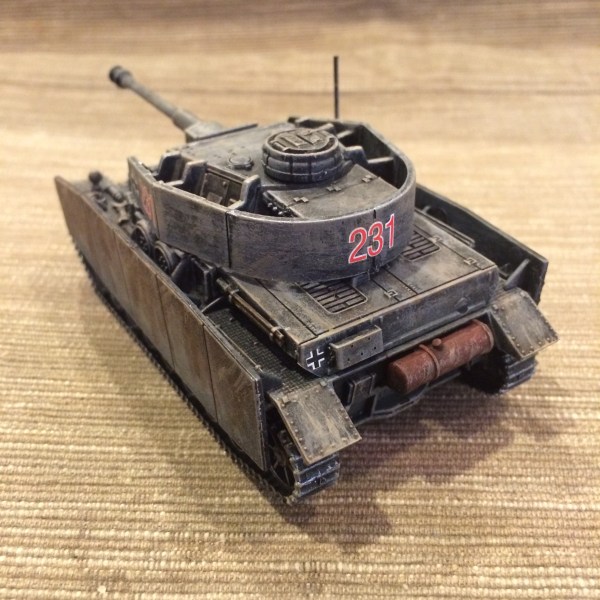
28mm: Panzer IV By Rubicon Models

PzIVWWII

With 8000-9000 Panzer IV models rolling around over the course of World War II, this German tank was ubiquitous in engagements throughout. The tank itself went through a number of evolutions in terms of guns and armor, and the chassis wound up serving in many capacities as the carriage for other ant-tank and anti-aircraft guns. If you’re a wargamer like me fielding a WWII German force, chances are you’re eventually going to need a few Panzer IVs.

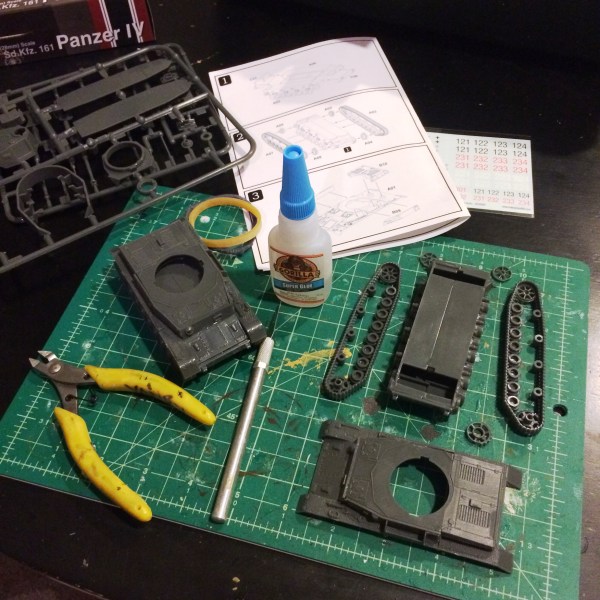
IMG_8768Unboxing the Rubicon Models Panzer IV kit

I’ve had a bit of experience in the past modelling the Panzer IV in 15mm with a kit from Plastic Soldier Company. For my 28mm models, I turned back to Rubicon Models which I had used in modelling a US M4A3 Sherman a while back. I chose Rubicon again for a consistency of scale, the clean casting of their kits and the deal I found on a pair of their Panzer IVs for under $50 USD. Unboxing their models is a real pleasure with separate sprues individually wrapped in protective plastic, clear instructions and decals included with the kits.

IMG_8776

Cutting and sorting pieces as construction begins

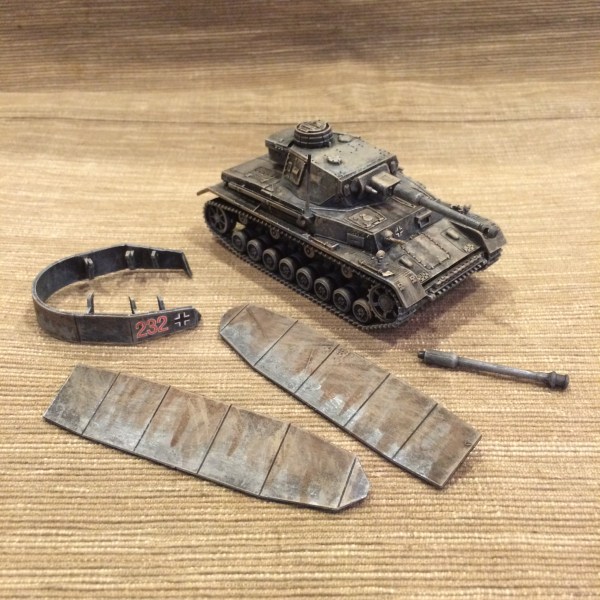
The clear step-by-step instructions make assembly a breeze as long as pieces are organized and the model is done in stages. The kit includes options for building the Panzer IV in its evolution from F2, G and H models. Uniquely, the kit allows the finished model to swap out the 75mm KwK L/43 and L/48 gun barrels with a friction fitting pin. The Schürzen on both the sides and turret are likewise removal, allowing you to effectively field two versions of the tank. For now I’m leaving the guns and Schürzen removable but I may decide to permanently glue them in the future.

Here’s my quick guide to getting the models assembled and painted:

Painting 28mm German Armor

  1. Carefully cut kit pieces from plastic sprues with small pliers.Keep pieces organized as you go and assemble the model in stages per manufacturer instructions
  2. Basecoat the model with flat black spray primer.
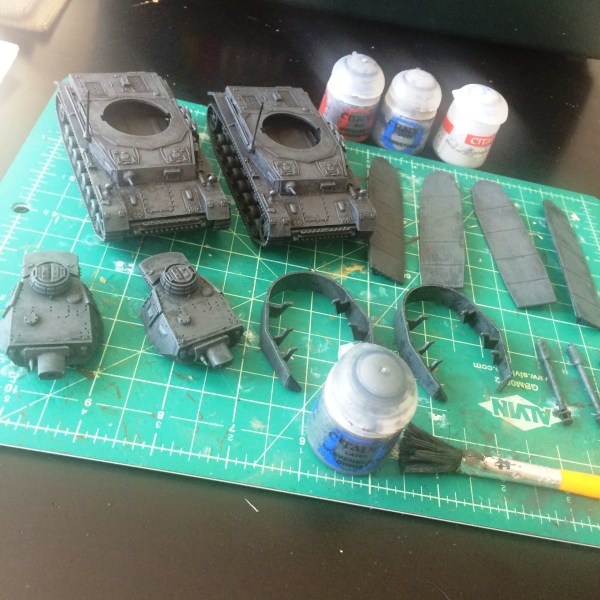
  3. Using three progressive coats of dry brushed greys, paint the entire model. I use Skavenlight Dinge, Mechanicus Standard Grey and Dawnstone (all from Citadel).
  4. Paint tracks Black.
  5. Paint wooden tool handles Dark Brown and metals parts with metallic Silver.
  6. Using a flat brush with only the very slightest amount of the same metallic Silver, dry brush the tracks. Use the same method on raised plates, hatches and edges of the entire model to create raised highlights.
  7. Paint the rear muffler a rust color by mixing Dark Brown and Red.
  8. Apply decals to the model and set the decals with Solvaset or some other decal sealer.
  9. Use a watered down Agrax Earthshade (Citadel) and add a muddy wash at edges, plate and hatch seams, muffler and on the Schurzen.
  10. Very, very lightly dry brush the entire model with Baneblade Brown (Citadel) to create a general muddied and weathered effect.
  11. Spray coat completed models with matte finish. Make sure you remove the turret so it does not stick to the main chassis during the spray coat.
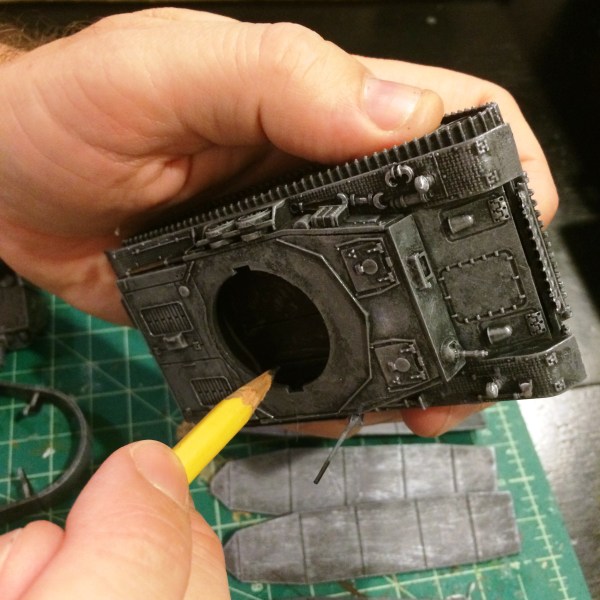
  12. Rub pencil graphite on the edges where the turret meets the chassis to ensure free rotation.

IMG_8803

Dry brush coats of greys gradually lighter greys provide most of the color

IMG_8815

Included decals provide a lot of modelling options

IMG_8817

Watery mud is applied to the Schürzen

IMG_8814

Rubbing pencil graphite where the chassis meets the turret to ensure easy rotation

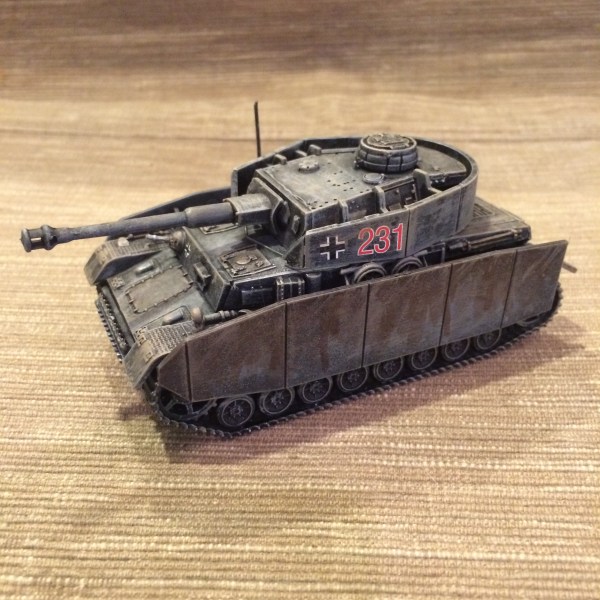
Aside from the drying time between steps, my tanks were finished in just a couple hours work over the course of a few week nights. I really love how slick the Rubicon Models kits assemble, paint up and look when completed. More views of the finished models are below, but I can’t wait to get these on the table at Metropolitan Wargamers in Brooklyn, NY and see how they perform in pushing back the Allies.

IMG_8821

IMG_8822

IMG_8823

IMG_8827

IMG_8825

28mm: German Wehrmacht and Mortar By Black Tree Design

GermanMortar

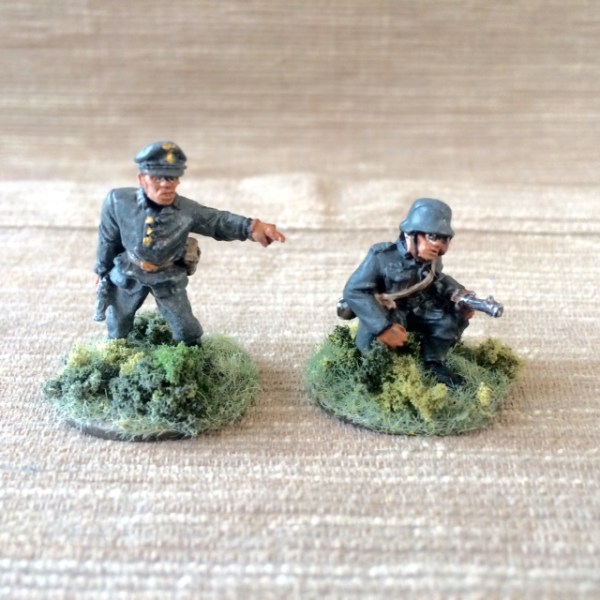
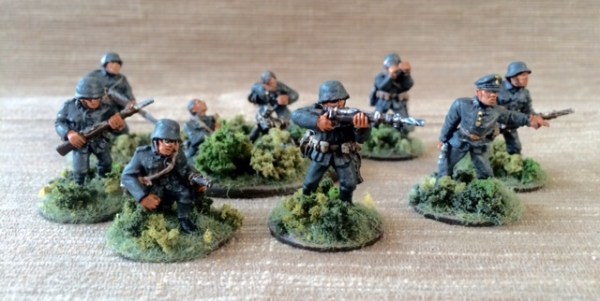
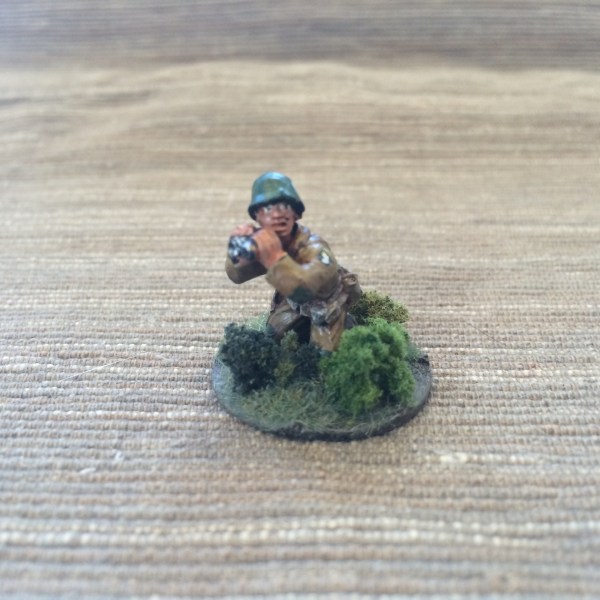
Taking advantage of the frequent sales by Black Tree Design, I’ve added some additional Wehrmacht troops to my 28mm World War II German force. Previously, I had painted up more than thirty of Black Tree’s figures, so this later order filled out my collection with a few more soldiers armed with rifles, another officer and a mortar crew with a nifty spotter with binoculars raised to his eyes.

BTD

When on sale, these metal cast models from Black Tree come in at about $1.50 USD each. This price point makes these miniatures super affordable, quick to get based and ready for painting up using my regular painting process.

Painting 28mm German Infantry

  1. Clean flash from metal models with a sharp knife and glue to metal washer or plastic bases.
  2. Apply filler putty to bases. When dry, scrape off excess with a sharp knife.
  3. Basecoat models and bases with flat black spray primer.
  4. Paint pants, helmets, soft hats, officer greatcoats and gas mask containers with Skavenlight Dinge.
  5. Paint faces and hands with Tallarn Flesh.
  6. Paint packs ans straps with Baneblade Brown.
  7. Paint boots and equipment straps Black.
  8. Paint bases, gun stocks, water bottles and helmet straps with Dark Brown.
  9. Apply Agrax Earthshade wash to webbing and packs.
  10. Dry brush pants, helmets, soft hats and officer greatcoats with Light Grey.
  11. Lightly dry brush bases and gun stocks with Baneblade Brown.
  12. Paint metal gun and water bottle parts with black and finish with a light dry brush of Metallic Silver.
  13. Dry brush gasmask containers with metallic Silver.
  14. Paint eyes with small dots of Off White and Dark Brown. Clean up around eyes with Tallarn Flesh.
  15. Mix 50/50 Tallarn Flesh and Off White and brush highlights on cheekbones, chins, forehead, nose and hands.
  16. Cover bases in white glue and cover in 50/50 mix of fine light green and dark green grass flock.
  17. Glue small pieces of clump foliage to base.
  18. Spray coat completed models with matte finish.

With about 40 of Black Tree’s models now complete, I’ve got a flexible, reliably sized force of simply outfitted Germans ready for deployment in a variety of European tabletop scenarios.

image1(1)

image2(1)

image3(1)

image4(1)

image5

28mm: German Veteran Grenadier Squad and Kubelwagen from Warlord Games

GermanGrenadiersLineUp

By 1942 the term Panzergrenadier was applied widely to German infantry. In support of Panzer divisions and then deploying on their own, the abbreviated Grenadier became the widely used term for World War II German forces. In mixed uniforms and organized into divisions utilizing combined arms, the Grenadiers were the main fighting force on the ground as Germany defended the eventual invasions by the Allies on the Eastern and Western fronts.

WGGrenadiersBox

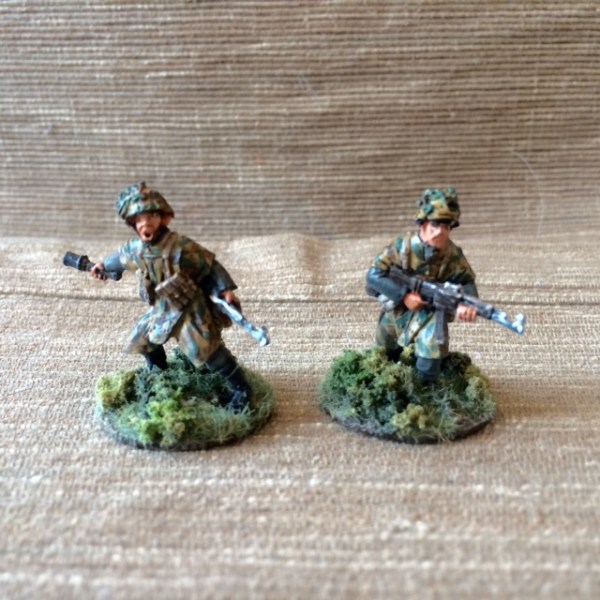
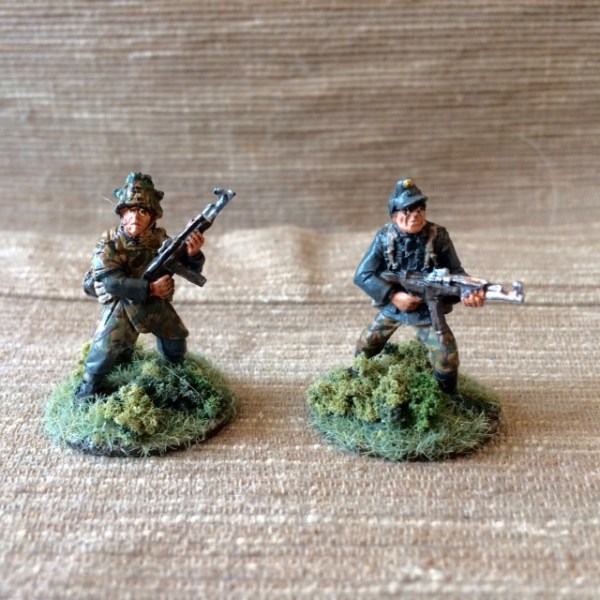
To round out my metal German collections, I picked up the Warlord Games German Veteran Grenadiers boxed set with a gift voucher at a recent convention. The ten cast figures are each armed with the Sturmgewehr 44 (StG 44) assault rifle from late in the war. I like the variety in the uniforms and kit with a mix of camouflaged pants, ponchos and helmets making each a very unique model. I could be a little happier with the face detail which comes off a bit unrealistically exaggerated at times. That said, the models all scale nicely with my other Grenadiers from Artizan Designs.

paintgerman

Painting 28mm German Grenadiers

  1. Clean flash from metal models with a sharp knife and glue to metal washer or plastic bases.
  2. Apply filler putty to bases. When dry, scrape off excess with a sharp knife.
  3. Basecoat models and bases with flat black spray primer.
  4. Paint smocks and helmets with Tallarn Sand.
  5. Paint pants, soft hats, officer greatcoat and gas mask containers with Skavenlight Dinge.
  6. Paint camouflage on helmets and smocks with alternating Waaagh! Flesh and Dark Brown.
  7. Paint faces and hands with Tallarn Flesh.
  8. Paint packs with Baneblade Brown.
  9. Paint boots and equipment straps Black.
  10. Paint bases, gun stocks, water bottles and helmet straps with Dark Brown.
  11. Apply Agrax Earthshade wash to uniforms, helmet netting, webbing and packs.
  12. Mix 50/50 Baneblade Brown and Off White and lightly dry brush packs, webbing, socks and holsters.
  13. Dry brush pants, soft hats and officer great coat with Light Grey.
  14. Lightly dry brush bases and gun stocks with Baneblade Brown.
  15. Paint metal gun and water bottle parts with black and finish with a light dry brush of Metallic Silver.
  16. Dry brush gasmask containers with metallic Silver.
  17. Paint eyes with small dots of Off White and Dark Brown. Clean up around eyes with Tallarn Flesh.
  18. Mix 50/50 Tallarn Flesh and Off White and brush highlights on cheekbones, chins, forehead, nose and hands.
  19. Cover bases in white glue and cover in 50/50 mix of fine light green and dark green grass flock.
  20. Glue small pieces of clump foliage to base.
  21. Spray coat completed models with matte finish.

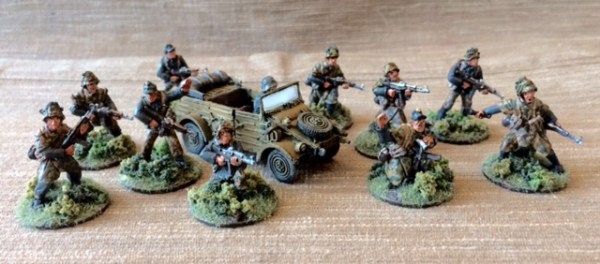
Aside from my  quick painting method of my new Grenadiers as per the above, I’ve added in the Kubelwagen model from Warlord. I love this neat little metal vehicle cast with some nice detailing and a variety of heads to choose from for the driver. The metal model glues of fast, but I was disappointed that the finicky machine gun mount broke during construction. I added a little bit of plastic to the windshield frame to add both some strength and a dash of realism to the car.

Despite a couple minor criticisms, my new Warlord Germans are a nice addition to my growing Axis force.

image1(1)

image2(1)

image3(1)

image4

image5

image6

image7

28mm: Comparing WWII models

SoldierHeights

It is indisputable that war has been under continuous change over the centuries with evolutions in arms, tactics and scale. Soldiers themselves have also changed from era to era, owing to changes in diet, fitness standards and healthcare. The size of soldiers have also been used to promote propaganda of superiority for one nation over another, often falling back on nationalistic or stereotyped perceptions of one country’s peoples over another. Thus, photos like the one above from the Boxer Rebellion are instructive but potentially do not tell the whole story of how an entire nation’s soldiers may have measured up against their allies and enemies.

A 1986 paper on the physical characteristics of US soldiers in 1864, 1919, 1946 and 1986 depicts the average World War II era US male soldier to have been 5 feet 8 inches tall and about 155 pounds. There can also be no doubt that within these averages there was a great deal of variation from man to man and at what point in their service they were measured. So, while we may be able to get at some sense of the size of the average fighting man in World War II’s US military, each man was an individual.

ADlogo

BTD

Warlordlogo

Historical miniatures gamers spend a lot of time talking about scale, and I have fielded WWII miniatures from numerous manufacturers in 6mm, 15mm and 28mm while also occasionally playing in 20mm with other collectors at Metropolitan Wargamers in Brooklyn, NY. For my recent projects, I’ve focused on 28mm US Airborne and German forces with models from Artizan Designs, Black Tree Design and Warlord Games.

I’ve sourced my 28mm WWII miniatures from three separate makers for a few reasons. Firstly, I prefer metal figures for their durability, heft on the table and quickness in getting them painted up and ready to play without a lot of assembly. Some modellers will blanch at the higher cost of metal, but my opinions of pluses justify the investment. I also prefer not to duplicate poses, so purchasing across manufacturers allows me to have every model be a unique representation of a soldier or officer in the field. Third, although some outstanding plastic options are available, I like the detail that comes through with a good metal sculpt and casting. Finally, Black Tree Design in particular runs weekly sales which makes frequent orders of their miniatures a great deal when looking to field a sizable force from any number of available WWII Axis and Allied nations.
IMG_8362

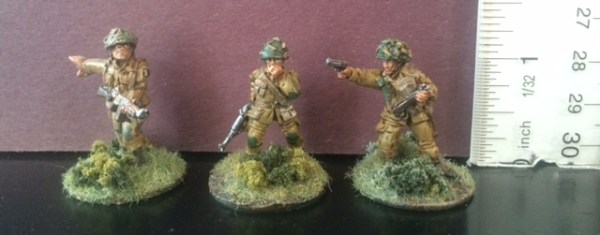
28mm US Airborne NCOs from Artizan Designs, Black Tree Design and Warlord Games (left to right)

By way of comparison, I’ve first taken a few images of US Airborne figures from the three manufacturers I use and also seem to be the most commonly cited within the WWII gamer community. In the first photo above, three NCOs stand side-by-side. The figures from Artizan and Warlord on either end show similar details in equipment and bulky helmets. The Black Tree model in the middle shows slightly less detail in the netting on the smaller helmet and carried equipment, but his pose calmly smoking a cigarette makes him one of my favorites.

IMG_8363

28mm US Airborne riflemen from Artizan Designs, Black Tree Design and Warlord Games (left to right)

In the second photo above, I’ve got three riflemen in slightly similar battle-ready poses. Again, the Artizan and Warlord figures on each end are a bit more bulky and the bandage pack strapped to the helmet of the Artizan figure creates some nice variety. At the middle, the Black Tree soldier’s standard helmet without the camouflage netting likewise breaks up the sameness of how the soldiers are kitted out without sacrificing a single bit of detail.
IMG_8367

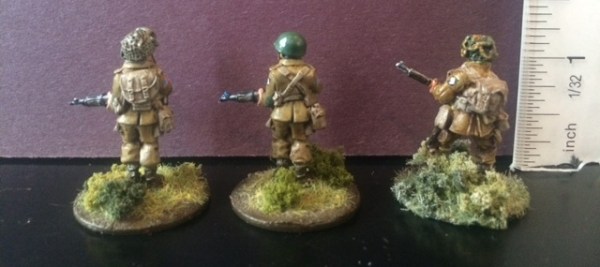
Equipment detail on 28mm US Airborne riflemen from Artizan Designs, Black Tree Design and Warlord Games (left to right)

Having a look at the equipment detail at the rear of each manufacturer’s models is also useful in the picture above. Again, the models from both Artizan and Warlord are most burdened with packs, multiple ammo pouches and canteens. The Warlord figure is also toting a shovel at his left hip and even more extra pouches. On the other hand, the Black Tree soldier is traveling a bit lighter with only a canteen to one side and an ammo pouch on the other. I take the differences in equipment as representative of different soldiers who lost, dumped or acquired more equipment depending on their specific roles and points in their mission.

IMG_8364

28mm US Airborne riflemen from Artizan Designs, Black Tree Design and Warlord Games (left to right) in front of a M4A3 Sherman from Rubicon Models

Next up, the photo above takes on the often-argued topic of soldiers and armor scale when playing at 28mm. The three riflemen stand in front of a M4A3 Sherman from Rubicon Models. To my eye, the tank does seem a bit undersized for its listed 1/56 28mm model scale when set next to soldiers from three different companies.

IMG_8365

The M4A3 Sherman from Rubicon Models and a US Willys Jeep from Warlord Games

Comparing sizes of vehicles across two manufacturers also depicts a fair amount of difference in perceived scale. One of my recently completed US Willys Jeep models from Warlord sits next to the Rubicon Sherman in the photo above. While the tank looked small against standing infantry, the Jeep looks to be a bit better at scale.

JeepTank

A photo from near the end of WWII in featuring captured German officers and US GIs in a US Jeep next to a US tank

By way of comparison, historical miniatures gamers like me often rely on WWII period photos to show variations between troops and vehicles. The photo above depicts a US Jeep alongside a tank toward the end of the war in Europe. Despite the documentary nature of photographs, they can be deceptive in representing reality in terms of the angle, perspective and depth of field from when the photo was taken. Compared to my Jeep and tank models, the photo does inform a bit about real-world scale. My model Jeep’s hood measures up at a height about equal to the treads on the tank model. That said, the historical photo perhaps doesn’t present the full story given the placement of the Jeep in the foreground with the tank behind.
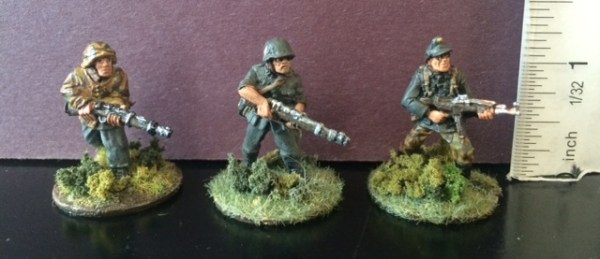
image1

28mm German infantry from Artizan Designs, Black Tree Design and Warlord Games (left to right)

Aside from my US Airborne models, I also have a good sized collection of German troops. Most of these are from Artizan and Black Tree, and I’ve only just recently added some Warlord Grenadiers armed with assault rifles to the mix. In the first photo above, I have three soldiers walking forward, guns at the ready. The partially camouflaged Grenadiers from Artizan and Warlord on either end flank a Wehrmacht soldier from Black Tree at center. With these figures I find little difference in scale and sculpt across manufacturers, and only their differing equipment, uniforms and weapons set them apart.
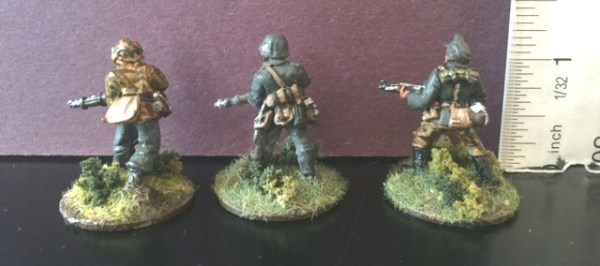
image2

Equipment detail on 28mm German infantry from Artizan Designs, Black Tree Design and Warlord Games (left to right)

Above I have some rear detail of equipment carried by soldiers from each maker. In the case of these soldier models, both the Black Tree and Warlord kit are my favorite both in detail and how it hangs from their backs and sides back with a shovel, mess kits, water bottle,s ammo pouches and rolled ponchos or bedding all included. The Artizan model is only carrying a couple items and his pack is a bit larger than that on the Warlord model, but all three form a diverse compliment of presentation.
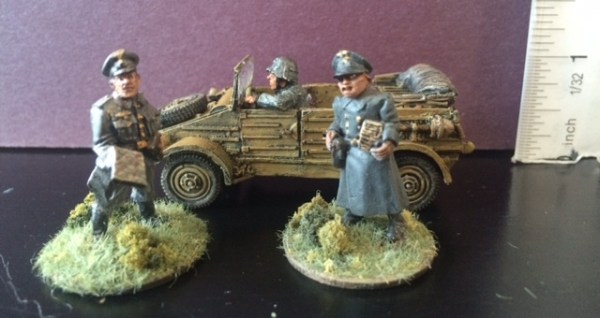
image3

28mm German officers from Artizan Designs and Black Tree Design (left to right) in front of a Warlord Kubelwagen

For comparing Germans to a vehicle, I’ve got officers from Artizan and Black Tree alongside a Warlord Kubelwagen. The officer from Black Tree is perhaps a bit broad with his sculpting but no less animated as the Artizan model who stands confidently with a battle plan and hand firmly on his left hip. The driver from Warlord sits well with scale of the standing soldiers, and the two officers look as though they would fit nicely in the rear of the car to be chauffeured to the front.

Kublewagen

A WWII photo of German officers conferring in and around a Kubelwagen

As with the US vehicles, I’ve found a historic photo for comparison with a variety of officers and soldiers standing and sitting in and around a Kubelwagen.These real life men and their small car reveal the accuracy in the models I’ve got ready for the table.

No pictures, whether taken from WWII or snapped on the workbench, are going to tell the full story of how men and machines stack up. Modellers and gamers will gravitate to a mix of models that fit their tastes in cost, material, sculpt, diversity and historical accuracy as they see fit for their use. That said, when I have a look at my 28mm metal armies recruited from three leading manufacturers, I find them all well-equipped and scaled to take the field together.

28mm: US Airborne Pathfinders And Willys Jeeps By Warlord Games

PathfindersFecPainting

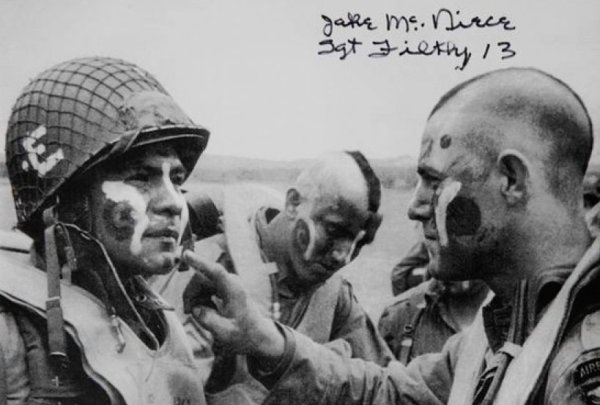
I recently picked up four US Airborne Pathfinder models from Warlord Games via special order from the good folks at The Brooklyn Strategist. As I sat down to paint them up, I did a little online searching and came across an obituary in the NY Times for Jake McNiece, a leader of the “Filthy 13” of the 101st Airborne Division which riskily night-dropped ahead of the main invasion force on D-Day.

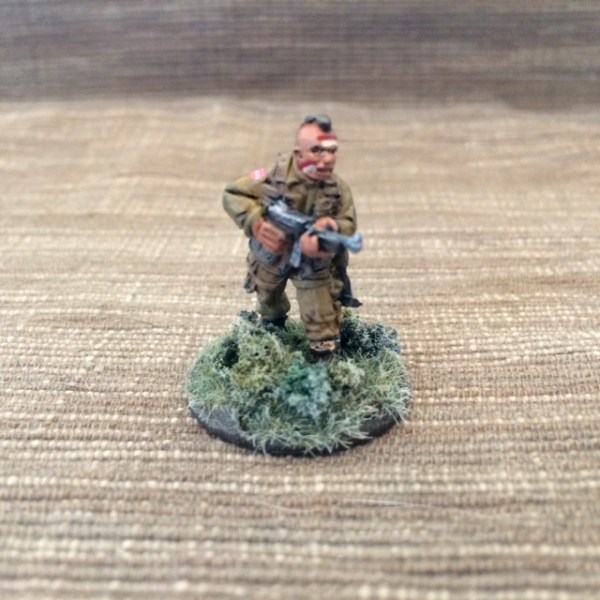
McNiece (featured in a photo above from Stars and Stripes) is credited with coming up with the iconic mohawked shaved heads and face paint worn by many of the hearty Pathfinders, and painting these figures adds some great visual diversity to any US Airborne force representing American paratroopers on D-Day. I had previously painted up Pathfinders from Artizan Designs, and these warlord models fleshed out my Pathfinders squad to a full and fearsome force.

Warlordlogo

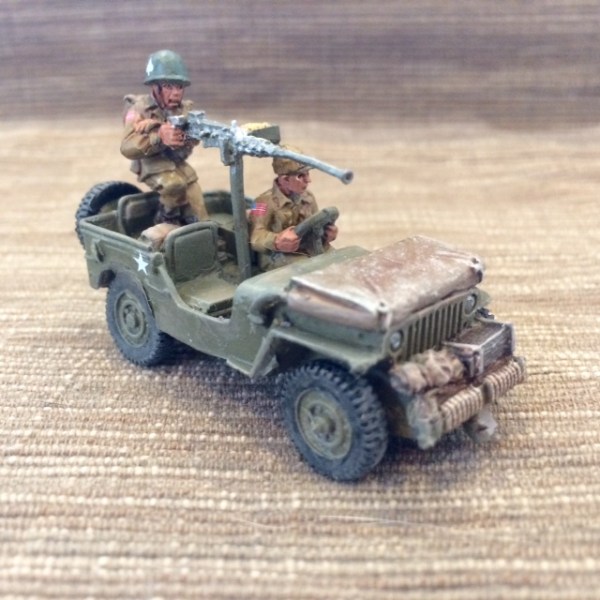
My US Airborne painting scheme is quick and gets my models table-ready in just a couple painting sessions. This latest round of painting my US Airborne collection also included a couple Warlord US Army Willys Jeep models I picked up on sale at this year’s HMGS 2016 Cold Wars Convention. I painted the driver and gunner to match my US Airborne, and they fit in nicely with my models while also adding some mobile gun support on the game table.
AB Paint Scheme

Painting 28mm US Airborne Pathfinders

  1. Clean flash from metal models with a sharp knife and glue to metal washer or plastic bases.
  2. Apply filler putty to bases. When dry, scrape off excess with a sharp knife.
  3. Base coat models and bases with flat black spray primer.
  4. Paint uniforms and bandages on helmets with Tallarn Sand.
  5. Paint helmets and knee and elbow patches with Waaagh! Flesh.
  6. Paint faces and hands with Tallarn Flesh.
  7. Paint webbing and packs with Baneblade Brown.
  8. Paint bases, boots, gun stocks and helmet straps with Dark Brown.
  9. Apply Agrax Earthshade wash to uniforms, helmet netting, webbing and packs.
  10. Mix 50/50 Baneblade Brown and Off White and lightly dry brush packs, webbing and socks.
  11. Lightly dry brush bases, gun stocks, helmet netting, holsters and elbow and shoulder patches with Baneblade Brown.
  12. Paint metal gun parts with black and finish with a light dry brush of metallic silver.
  13. Paint eyes with small dots of Off White and Dark Brown. Clean up around eyes with Tallarn Flesh.
  14. Paint thin lines of red and offwhite face paint to cheeks and foreheads of the models.
  15. Mix 50/50 Tallarn Flesh and Off White and brush highlights on cheekbones, chins, forehead, nose and hands.
  16. Cover bases in white glue and cover in 50/50 mix of fine light green and dark green grass flock.
  17. Glue small pieces of clump foliage to base.

After painting, I added a final touch with decals on shoulders and helmets from Company B, followed by a coat of Solvaset decal fixative from Walthers and a spray coat with matte finish.

This little project not only gave me a break from my regular painting but also added a bunch of new models I can field in my Bolt Action and other 28mm World War II skirmish games. Pictures below show the final results ready to drop onto the table and start rolling dice during the invasion of Normandy.

FullSizeRender

FullSizeRender0

FullSizeRender(8)

FullSizeRender(2)

FullSizeRender(3)

FullSizeRender(4)

FullSizeRender(5)

American Civil War: Converting O Scale Buildings

MPKennedyHouse

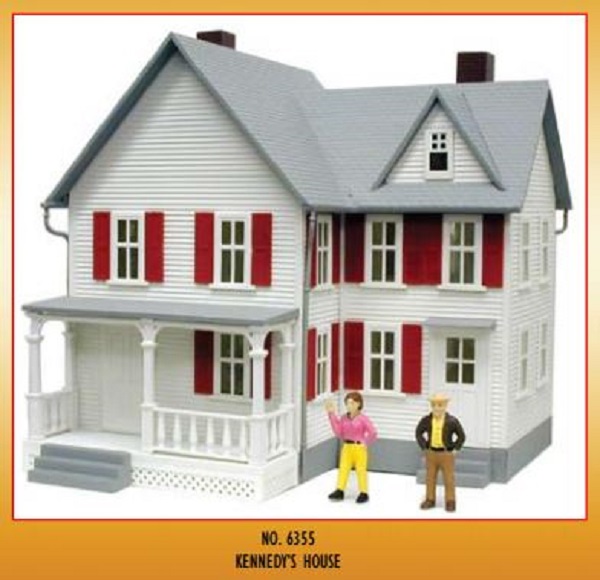
I recently scored a few free pre-assembled O scale plastic buildings made by Model Power. The houses are meant to be used in model railroad layouts and look very modern, plastic and toy like. I looked at them and thought that with a little work they might be made suitable for use for in American Civil War wargaming. I started my project with the “Kennedy’s House” model.

IMG_7898

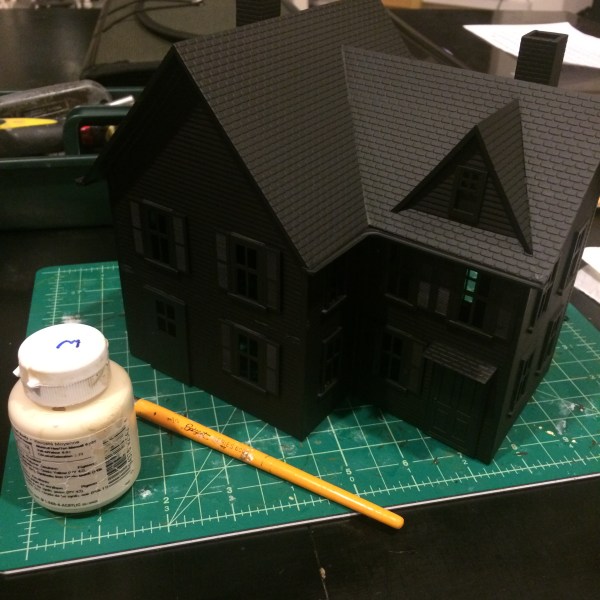
Primed flat black

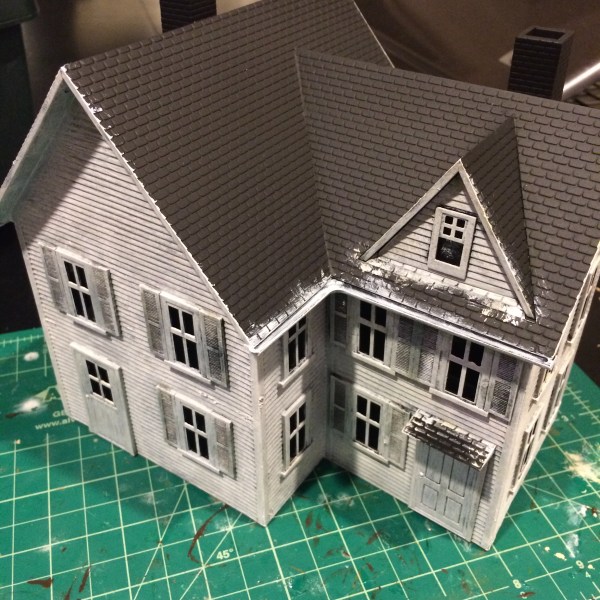
O scale structures are a little on the big side for 28mm, so the first thing I did was to remove the foundation and steps from the building. To make the house a little less grand, I also also removed the decorative front porch. After I re-glued a few loose windows and shutters, the whole model got a coat of flat black primer to knock the sheen off the plastic.

IMG_7900

First dry brush of off white on the siding

IMG_7905

Second dry brush coat in white on the siding

IMG_7906

Two coats of dry brush complete on the siding

Once the primer had set, I dry brushed all the siding, doors and windows with some off white paint. Over the first coat, I built up an additional layer of dry brushed white paint. The final effect I was building up to was a weathered look on the entire exterior.

IMG_7923

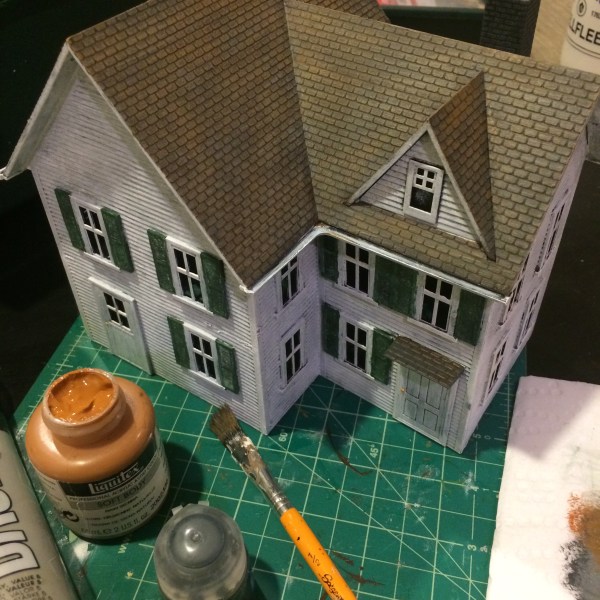
Shutters are dry brushed in green and roof gets dark brown base coat

With the siding complete, the shutters on the building’s facade were dry brushed in a dark green. Again, allowing the layers of paint beneath to show throw added to the lived-in and weathered look to the building.

IMG_7924

Roof is built up with alternating dry brush coats of grays and browns

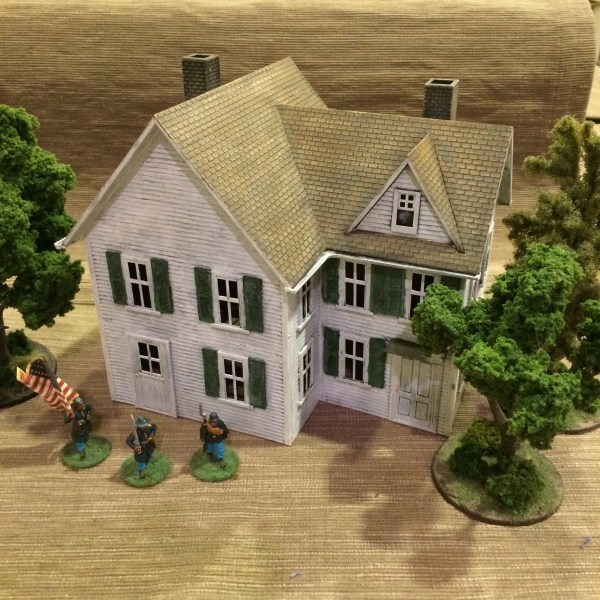
The roof’s look very modern, so I likewise built up coats of paint to make them look more like wood shake shingles. A base coat of dark brown then received two layers of dark and lighter grays, followed by some lighter brown highlights. The chimneys also got a couple coats of dry brush grays and off white to replicate a irregular stone construction. When done, the completed roof looked very much more like something found in the 19th-century.

IMG_7925

Completed conversion of the Model Power farmhouse

IMG_7927

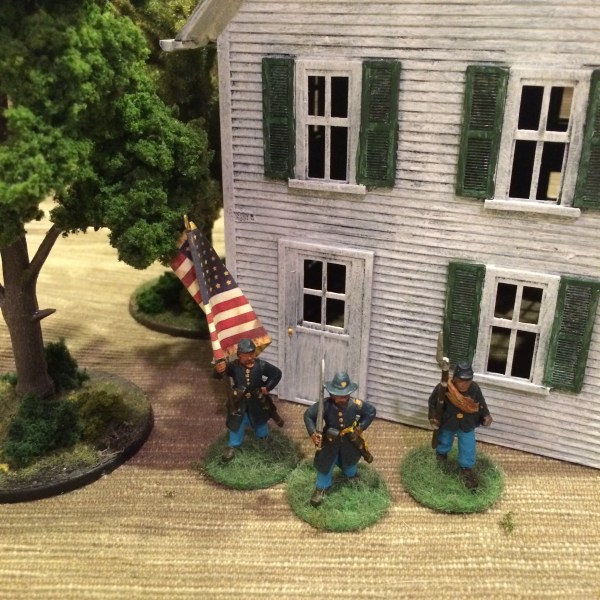
American Civil War Union soldiers standing guard at the newly completed house

Along with the Model Power buildings, I also picked up some free Woodland Scenics trees which I’ve based individually for my gaming. The trees and rehabbed farmhouse are perhaps a little on the large size for my Perry Miniatures soldiers but considering I’ve received all this terrain at no cost it will all work just fine on the table battlefield.

28mm: US .50 cal M2 HMG By Warlord Games

50calAB

The Browning .50 caliber M2HB heavy machine gun has been around for nearly 100 years, a remarkable feat in a span of years when battlefield technology has evolved immensely. The M2’s deadly flexibility in use as an infantry support weapon and mounting on aircraft, land vehicles and naval vessels has served the US and many other military organizations around the world over its history. Clearly, this gun not only has fire power but also significant staying power.

Warlordlogo

I’ve been gearing up for my first Bolt Action tournament at Nu Brand Gaming in Brooklyn, NY, and the M2 was one the one missing piece to my US 101st Airborne force I really wanted to get ready for the table. I got a deal on the metal cast model from Warlord Games and have chosen to paint it up as an Airborne support weapon unit. Some pics of the finished gun and its four-man crew are found below along with my simple approach to getting models painted up and ready for action.

AB Paint Scheme

Painting 28mm US Airborne Support Weapons

  1. Clean flash from metal models with a sharp knife and glue to metal washer or plastic bases.
  2. Apply filler putty to bases. When dry, scrape off excess with a sharp knife.
  3. Base coat models and bases with flat black spray primer.
  4. Paint uniforms and bandages on helmets with Tallarn Sand.
  5. Paint helmets and knee and elbow patches with Waaagh! Flesh.
  6. Paint faces and hands with Tallarn Flesh.
  7. Paint webbing and packs with Baneblade Brown.
  8. Paint bases, boots, gun stocks and helmet straps with Dark Brown.
  9. Apply Agrax Earthshade wash to uniforms, helmet netting, webbing and packs.
  10. Mix 50/50 Baneblade Brown and Off White and lightly dry brush packs, webbing and socks.
  11. Lightly dry brush bases, gun stocks, helmet netting, holsters and elbow and shoulder patches with Baneblade Brown.
  12. Paint metal gun, bazooka and mortar parts with black and finish with a light dry brush of metallic silver.
  13. Paint eyes with small dots of Off White and Dark Brown. Clean up around eyes with Tallarn Flesh.
  14. Mix 50/50 Tallarn Flesh and Off White and brush highlights on cheekbones, chins, forehead, nose and hands.
  15. Apply Company B decals to shoulders and helmets, followed by a coat of Solvaset decal fixative from Walthers.
  16. Cover bases in white glue and cover in 50/50 mix of fine light green and dark green grass flock.
  17. Glue small pieces of clump foliage to base.
  18. Spray coat completed models with matte finish.

IMG_7896

IMG_7895

IMG_7894

Boardgames of the American Revolution, Part II

DOIsigning

I’ve been continuing to scratch a serious American War of Independence itch for months now. Last summer I took a first pass at some of my favorite games of the period in Boardgames of the American Revolution, Part I. Since then, gamers have also been blessed with the release of Liberty Or Death: The American Insurrection, and it has fast become one of my all-time favorites among all the games I’ve played.

Away from the tabletop, I’ve been swept up in the fervor of Hamilton: The Musical and have been fortunate to catch the show twice on its record-setting Broadway run here in NYC. I’ve also recently revisited 1776 from 1969 and it’s 1972 movie adaptation. As luck would have it a new production will run for one weekend in early April at City Center here in the city, and yes, I’ve already got my tickets. A side note of Broadway trivia is that 1776‘s Tony Award-winning Broadway debut was in the same theater where Hamilton is currently running, and it too seems destined to sweep the awards in June.

But, back to games.

In this Part II, I take a look at more games of the Revolution I’ve managed to acquire and/or play in the past six months. Like the last time, this is not meant to be a comprehensive list. Despite my best efforts there are a lot more games I have yet to touch. What this round presents is again a variety in scope, mechanics and time commitment for gaming the Revolution.

WTPbox

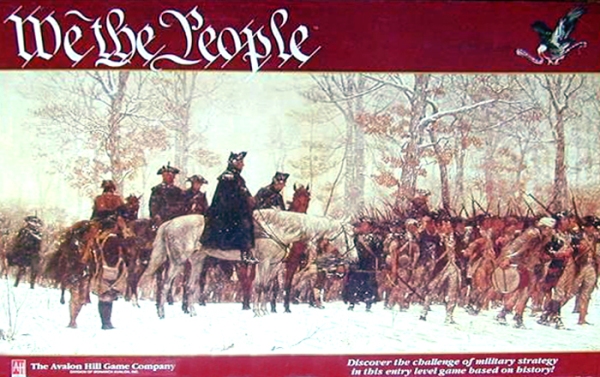
We The People (Avalon Hill)

Avalon Hill’s We The People from 1994 is a landmark in the history of modern wargaming. In taking on the well-worn American Revolution, designer Mark Herman created a number of innovations which have provided the basis for some of the most successful games of the past two decades.

Breaking from the standard hex maps of most prior wargames, WTP’s playing board of the British colonies of North America is abstracted into a series of connected key politically important locations like Long Island, Boston, Fort Niagara and Charleston. While battles play a part in controlling these areas, it is the shifts in political control that are tracked and lead to victory.

Combat in WTP was also stripped down in a few ways. Basic troop units mark the size of forces, but their quality is modified through the presence of leaders. When forces choose to clash in the game, battle cards are used to resolve various battlefield actions steeped in the terminology and effects of 18th-century warfare.

Lastly, the newly-introduced card driven game (CDG) mechanic propel the game’s action through the play of cards, rather than the more traditional roll of dice. With each hand of cards, players have the option of using them to play historically significant events which have varying results for each side of the conflict. Long term planning and success within the game often comes down to having the right cards at the right time.

An old copy of WTP sits on a shelf of club games at Metropolitan Wargamers in Brooklyn, NY, and I recently blew the dust off it for a play. Despite its status at the time of  release, I honestly don’t find myself getting this one on the table very often. That said, I feel this game’s presence in so many games I play on a regular basis, and so its true game-changing effects on the hobby reverberate to this day.

WWbox

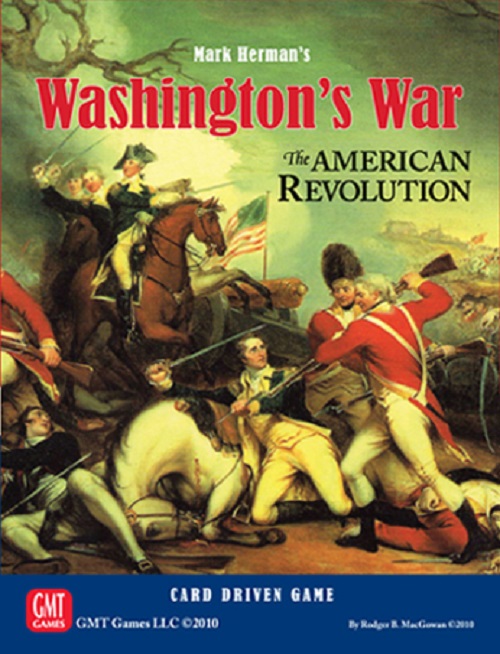
Washington’s War (GMT Games)

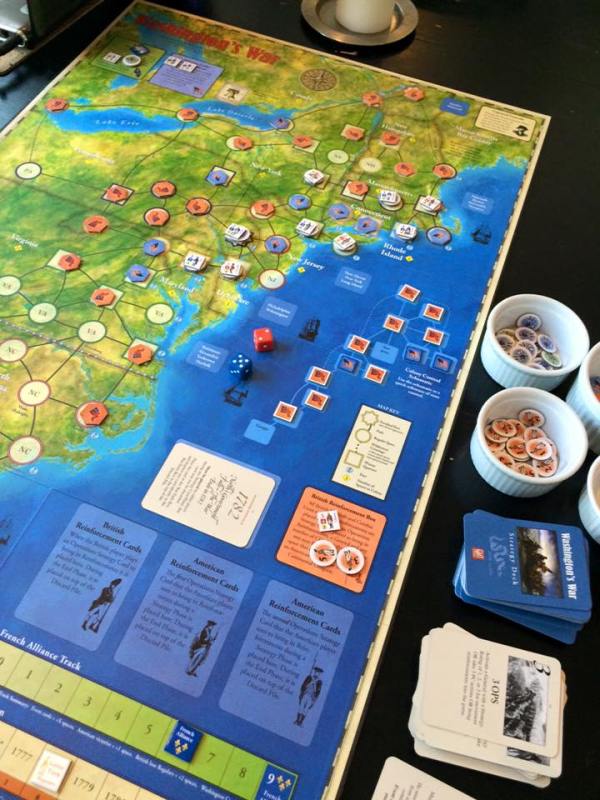
Building on the success of WTP, Herman revisited his game of the Revolution in 2010 with Washington’s War from GMT Games. Players familiar with WTP found much similarity with Herman’s original depiction of the period but with a few significant changes.

WWgame

A recent game of Washington’s War by GMT Games

The CDG mechanic was tweaked to allow for more flexible use of cards and the ability to ‘buy back’ discarded cards. WW also abandoned the battle cards for a dice-off combat resolution, making combat a quicker and more elegant part of the game. I feel the biggest change was in the more asymmetric representation of how the British and Colonial sides each play. The experienced troops of the King are strong on the coasts with their dominant naval power, and the Americans fair better inland but vie with keeping their militia in the action. Generals remain important to both sides, and the French entry to the war plays out in a way that truly captures the historical impact it had.

All the evolutions from WTP make the more recent game a quicker affair, with WW games running at about 90 minutes as opposed to the two hours or so to play WTP. The upgrades to the design and quality of the board, cards and playing pieces all brought the War of Independence into the 21st-century.

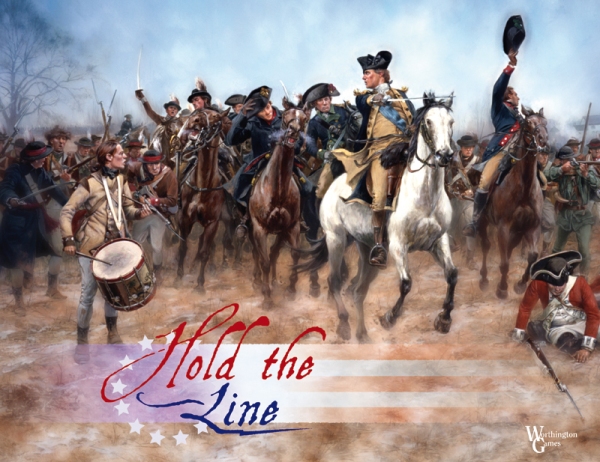
HTLbox

Hold The Line (Worthington Publishing)

In 2008 Worthington Publishing released Hold The Line, a flexible game of the Revolution with a wide appeal from beginners to experienced gamers. Building on the success of their Clash For A Continent: Battles Of the American Revolution and French & Indian War game from three years before, HTL presents a blank hexagonal hardback game board which can be laid out with dozens of included double-sided terrain tiles representing streams, bridges, hills, forests, towns, fences and entrenchments. Terrain has varying effects on line of sight and movement within the game.

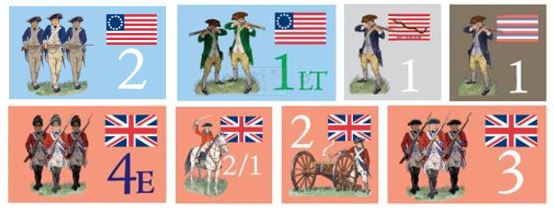
HTLpieces

Playing pieces from Hold The Line

Rectangular and square cardboard tiles represent British and Colonial elite, militia, regular and light infantry, dragoons, artillery and generic commanders. The chunky tiles are double-sided to mark losses as game battles unfold. Each turn players roll for random action points which may be spent to move, rally or fire, allowing for each commander to make choices in utilizing their troops. Additionally, the quality of troops and commander presence modify movement and fire ranges. For a simple series of rules, there’s a lot of game in HTL as even the most careful planning by one side over a series of turns can result in a foiled plan if subsequent action point rolls don’t provide enough actions to carry out a planned move or attack.

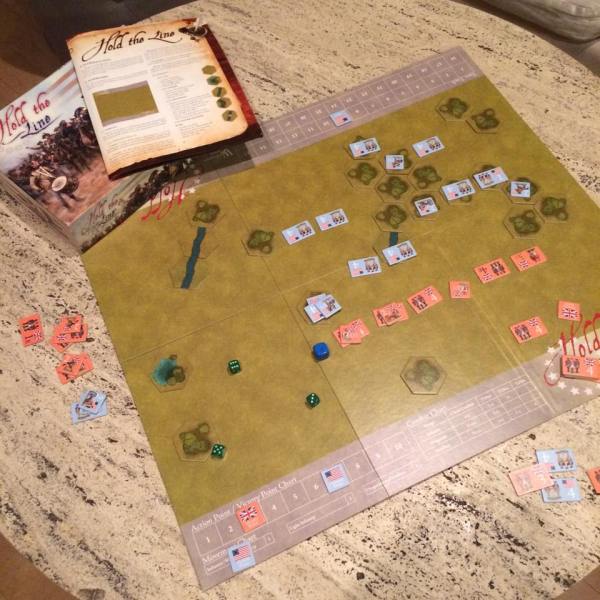
HTLGame

Hold The Line Battle of Monmouth morning scenario

HTL comes with thirteen scenarios for historic battles, each with their own page of historic background, rules and guide to set up. Additional optional rules allow for specific historic leaders, rally rules and morale modifications.Once you’ve played through the included scenarios, numerous additional battle scenarios can be found online from fans of the game. Within a simple design, flexible scenarios and a short set of rules, it’s easy to see why this currently out of print game is a favorite.


GMTBattlesAmRevbox

Battles of the American Revolution (GMT Games)

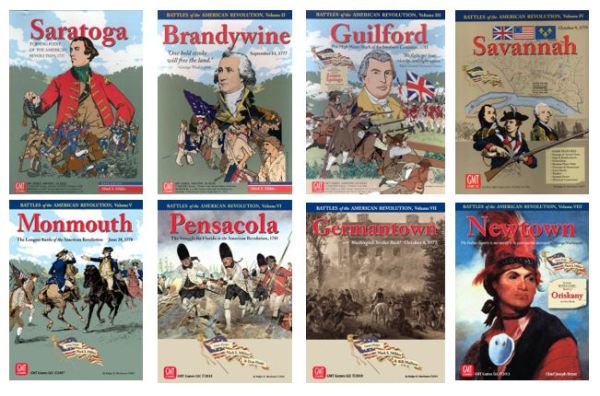
Between 1998 and 2013, GMT Games released a series of standalone games of the Battles of The American Revolution. Designed by Mark Miklos, each is a more traditional hex and counter game running three to six hours to play. For those looking to dig into eight key engagements of the War of Independence, the games offer nuances to reflect the historic events and personalities which shaped each battle wrapped in a beautiful modern design.

GMTAmRevTriPackP500

In late 2015 GMT announced the re-release of the first three games in the series — Saratoga, Brandywine and Guilford — as a tri-pack available through their P500 pre-order program. Since I have never played any of the games from the series, I jumped at the chance to get in on the deal of $45 for three games. The games will get upgrades to mounted maps and a unified rulebook, and additional expansions and tweaks to components a offered in reprints over the years will also be included.

The Revolution Continues…

Having spent the better part of 12 months playing through new and old games of the American Revolution, I find myself definitely leaning toward the more modern games. In order of personal preference, here’s my Top 10:

  1. Liberty Or Death: The American Insurrection (GMT Games)
  2. 1775: Rebellion (Academy Games)
  3. Washington’s War (GMT Games)
  4. Liberty: The American Revolution 1775-83 (Columbia Games)
  5. Hold The Line (Worthington Publishing)
  6. We The People (Avalon Hill)
  7. New York 1776 (Worthington Publishing)
  8. Trenton 1776 (Worthington Publishing)
  9. The American Revolution 1775-1783 (SPI)
  10. 1776 (Avalon Hill)

The main factors in consideration of the above for me are look, mechanic and importantly, time commitment. Some of the older games from SPI and Avalon Hill just require too much time for me at this stage in my life, and getting a quick game in with my fellow club members or my kids is a big determinant on what gets to the table these days.

What this two-part exercise has done for me is expose how such a diverse gaming experience can be pulled out of one signature conflict with a mix of maps, cardboard and cards. Playing through a span of forty years of American Revolution games, I can only wonder where some designer takes things next. Having gamed my way through the War of Independence, I’ve been spurred on to take a step backward in time to the French and Indian War and see what is revealed on the table next.

A Place To Play: The Brooklyn Strategist

IMG_7499

The Brooklyn Strategist was opened several years ago by Dr. Jon Freeman, a clinical psychologist, neuroscience researcher and life-long game fan. Situated along the main drag of Court Street in Carroll Gardens, Brooklyn, has quickly grown to be a go-to gaming space for the Brownstone Brooklyn crowds of kids, families and adults.

IMG_7503

Board games, card games and gaming accessories line the walls

The original storefront space of hardwood floors and exposed-brick walls holds a number of tables (including a stunning Sultan custom table from Geek Chic), shelves of games and accessories for sale, and a small coffee and snacks bar. In the spring of 2015, the store doubled in size next door. The new space added about a dozen more tables to accommodate the expanding children and adult programs, tournament events and growing miniatures gaming community.

The core of The Brooklyn Strategist is in its after school programming, and a packed regular schedule of events is also offered every day and night of the week. Magic: The Gathering card games are featured Mondays, Wednesdays and Fridays. Mondays also showcase ongoing Star Wars X-Wing play, and other X-Wing events are held periodically with hosting by the NYC X-Wing group. Scrabble and chess take over Tuesday nights, and opportunities abound for Dungeons & Dragons and other RPG games Wednesdays and Saturdays. Hundreds of games are on hand to pull off the shelf to play.

Paying your way at The Brooklyn Strategist is a great deal with a $10 walk-in fee, individual memberships at $25 per month, couples at $45 per month and family packages at $60 per month. Each level of membership comes with a package of discounts and perks which encourages a solid community to fill the space all week long.

IMG_7502

The expanded miniatures gaming selection includes Flames of War, Games Workshop, Star Wars X-Wing, Battle Foam cases, paints and other popular lines

This past weekend I had the opportunity to sit down with Colt Johnson who has worked hard for a year to expand the shop’s interest in miniatures gaming. Johnson said the miniatures scene is focusing right now on the “five food groups: Malifaux, Infinity, Warmachine, Games Workshop and Flames of War.” Over his time working at the store, the miniatures scene has grown from maybe a dozen players on a weekend afternoon to 40 to 50 packing the tables on a busy day. Organized miniatures tournaments, events and pick-up games rage on the tabletop battlefields, and players new to the hobby can drop in and whet their appetites using beautifully painted 28mm loaner models on hand in display cases throughout the store.

IMG_7504

Miniatures gaming and painting gears up on a recent Saturday

A Warhammer 40K escalation league just kicked off with nearly 40 players signed up to play over the coming months. On the day I was there, 40K was very much in the air. A group of players from Staten Island were settling into their first games on some beautiful tables packed with terrain. One table over, a young girl who recently hosted a birthday party for 15 other girls at the store sat painting up her latest plastic goodies from Games Workshop. As the dice rolled, a phone call came in from someone who had just moved to the city and was looking to play some 40K.

Sci-fi and fantasy miniatures gaming clearly has a big following at the The Brooklyn Strategist, but historical gaming is newly on the rise. The popular World War II 15mm game Flames of War is a recent addition to the store’s minis mix, and this past weekend also presented a demo game of the 15mm Cold War-themed Team Yankee. WWII at 28mm with Bolt Action and even some 18th-century Blackpowder gaming is also on the horizon.

While growing every aspect of miniatures gaming, Johnson is hoping to push into even more historical gaming as both a hobby and way to create excitement for local kids and adults around learning about history through gaming and modelling. No matter the game, period, theme or level of experience, everyone who finds their way to the tables at The Brooklyn Strategist will find themselves in the right place.

The Brooklyn Strategist is located at 333 Court Street in Brooklyn, NY 11231 (a short walk from the F/G train at Carroll Street). Contact them at 718-576-3035 or check them out on their website or Facebook page. For news on the miniatures scene at the shop, check out their separate wargaming Facebook page.

28mm: German PaK 40, Forward Observers and Command By Warlord Games

PaK40

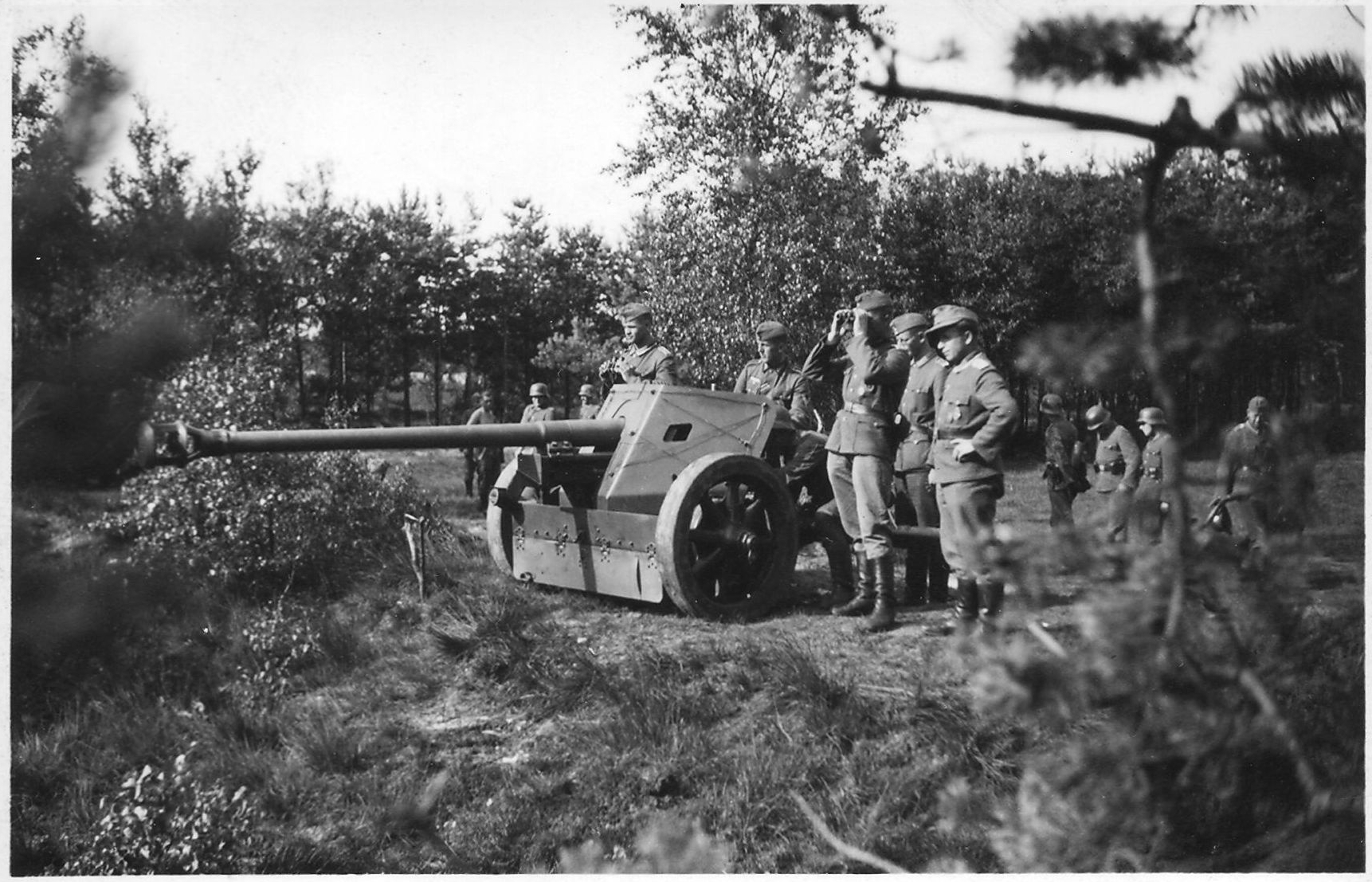
The standard anti-tank gun of German forces in World War II was the 7.5 cm PaK 40. Used throughout the war in every theater, the some 20,000 guns produced were the bane of every Allied tank. As the modern video below shows, the PaK 40 was fearsome weapon.


Warlordlogo

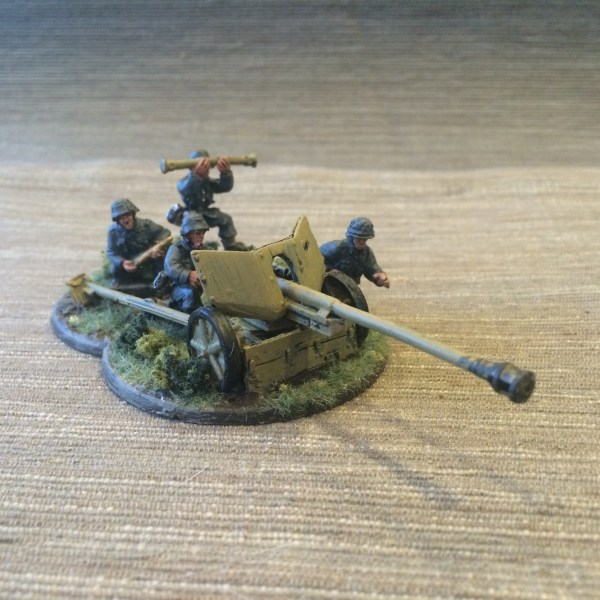
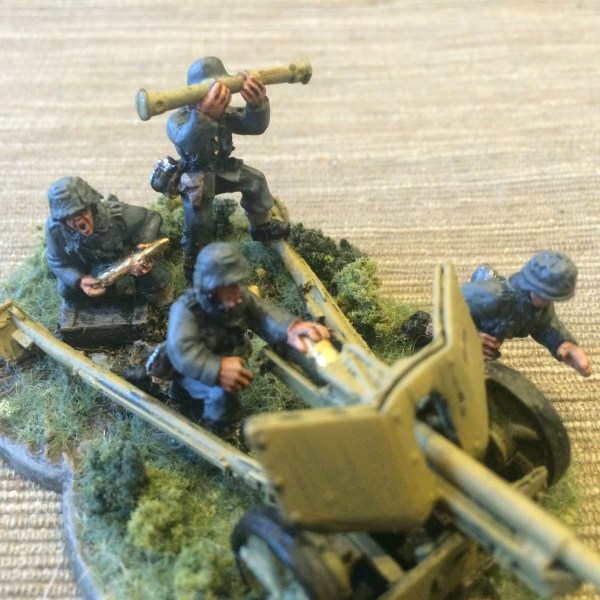
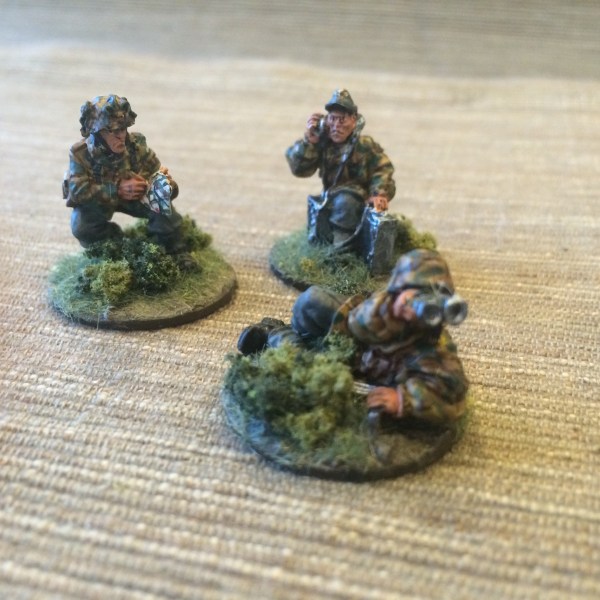
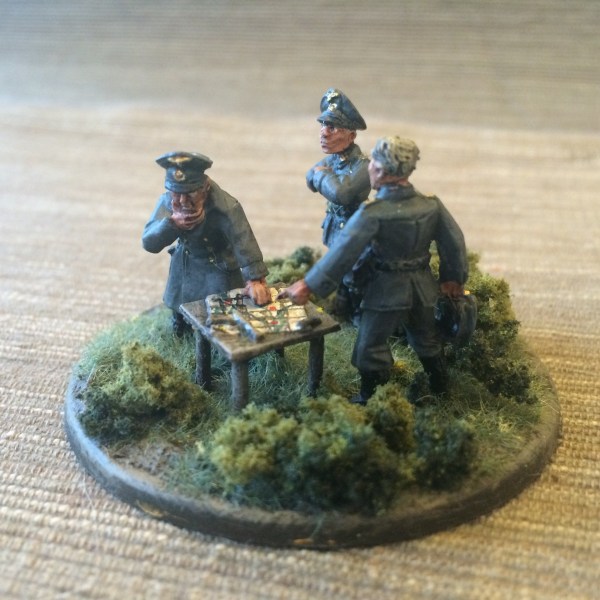
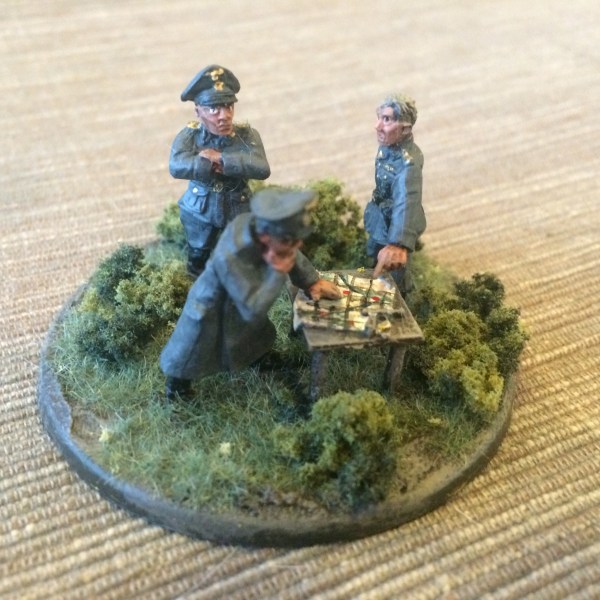
After modelling so many German infantry figures over the past year, I very much wanted to mix things up. I picked up a deal on a few blister packs of 28mm Warlord Games Bolt Action metal miniatures at last year’s HMGS Fall In! 2015 convention, including a PaK 40, a forward observer team and a German high command set. As always, the 28mm metal models from Warlord go nicely with my other Germans in both scale and sculpting. The artillery piece and the high command set both allowed me to create little tabletop battlefield vignettes while deployed with other individual models.

paintgerman

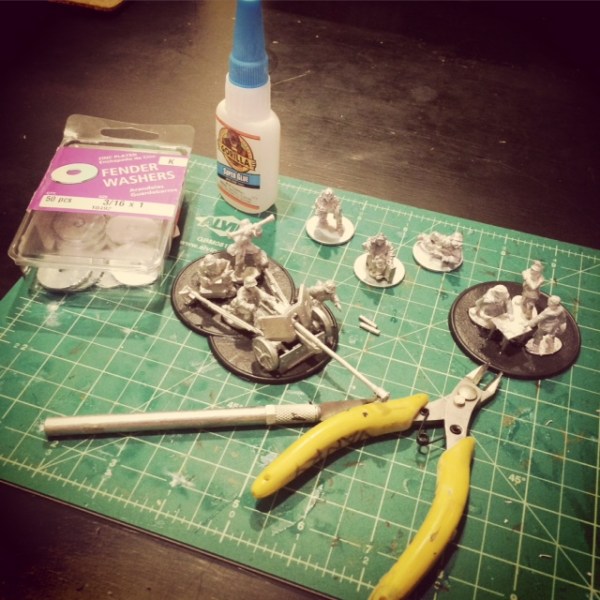
My painting approach is pretty standard for my German forces. Individual figures get a little flash clean up before being glued to metal washers. The high command set went on a 60mm plastic base from Proxie Models. The PaK 40 and its crew went on two of the 60mm bases which I cut and glued together. From there, here were the steps in detail for painting my German infantry.

Painting 28mm German Infantry

  1. Clean flash from metal models with a sharp knife and glue to metal washer or plastic bases.
  2. Apply filler putty to bases. When dry, scrape off excess with a sharp knife.
  3. Basecoat models and bases with flat black spray primer.
  4. Paint smocks and helmets with Tallarn Sand.
  5. Paint PaK 40 with Tallarn Sand.
  6. Paint pants, soft hats, officer uniforms and gas mask containers with Skavenlight Dinge.
  7. Paint camouflage on helmets and smocks with alternating Waaagh! Flesh and Dark Brown.
  8. Paint faces and hands with Tallarn Flesh.
  9. Paint packs with Baneblade Brown.
  10. Paint boots and equipment straps Black.
  11. Paint bases, gun stocks, water bottles and helmet straps with Dark Brown.
  12. Apply Agrax Earthshade wash to uniforms, helmet netting, webbing and packs.
  13. Mix 50/50 Baneblade Brown and Off White and lightly dry brush packs, webbing, socks and holsters.
  14. Dry brush pants, soft hats and officer great coat with Light Grey.
  15. Lightly dry brush bases and gun stocks with Baneblade Brown.
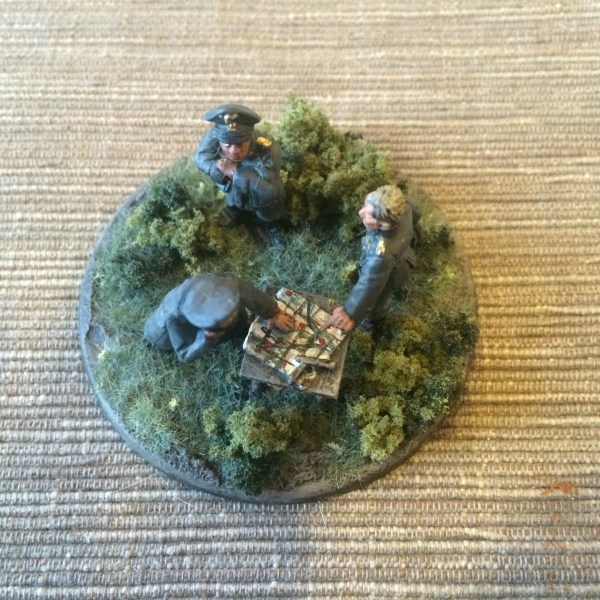
  16. The high command table also gets painted Dark Brown followed by a a dry brushing of Baneblade Brown. The map on the table is painted in Off White with lines drawn on in varying colors with a very fine brush.
  17. Paint metal gun and water bottle parts with black and finish with a light dry brush of Metallic Silver.
  18. Dry brush gasmask containers with metallic Silver.
  19. Paint eyes with small dots of Off White and Dark Brown. Clean up around eyes with Tallarn Flesh.
  20. Mix 50/50 Tallarn Flesh and Off White and brush highlights on cheekbones, chins, forehead, nose and hands.
  21. Cover bases in white glue and cover in 50/50 mix of fine light green and dark green grass flock.
  22. Glue small pieces of clump foliage to base.
  23. Spray coat completed models with matte finish.

IMG_7025

 Figures are cleaned and glued to washers and plastic bases

FullSizeRender

 Primer and base coats to uniforms and the PaK 40 are applied

And here’s the finished results. With a new Brooklyn Bolt Action group holding their first event this weekend at Nu Brand Gaming with some of us from Metropolitan Wargamers in attendance I can’t wait for some of my 28mm models to march into battle.

IMG_7442

IMG_7444

IMG_7443

IMG_7445

IMG_7441

IMG_7437

IMG_7436

IMG_7435