Downloading: Blogging War In Pictures

11290985505_26680f4f03_c

I’ve made my living for the past 17 years in the pictures business. In 1996, I arrived in New York City and landed a job with a photo-licensing company doing historic photo research. My days were spent fulfilling client requests for photos, illustrations and artwork to be used in advertising, corporate marketing, book publishing, magazines and newspapers,  documentaries, motion pictures and TV programming. Since then, I’ve gone on to work with several of the largest stock photo and film licensing companies in the world.

In my time, I’ve participated in the rapid changes in the business as it evolved from a world of photo prints kept in dusty file cabinets to the digital marketplace of images today. The proliferation of online search and digital photography databases has granted professionals and non-professionals alike enormous access to visuals illustrating  the arc of world history from the dawn of time to the latest celebrity gossip.

With this has come the significant challenges of copyright management. Companies like those that have employed me license images for a fee ranging from a couple bucks to tens-of-thousands of dollars each, depending on the use and value of the image (often based on murky concepts of scarcity and quality). With these licensing fees, photographers, archives recieve payment and people like me are able to pay the rent and feed my kids.

With images easily available online there is a lot of misinformation on in what instances a photo which may be used without paying someone a fee. Bloggers and other online outlets (and even traditional print-based users) regularly use photos under misunderstood concepts like “fair use.” In short, unless someone is granting you permission to use their works you could very well be in some sort of copyright violation and subject to significant legal and financial penalties. This is a conversation we in the licensing business have countless times a day with new and old customers alike.

For a blogger like me, I try to take as many photos myself and stick to others that are either out of copyright or used in the context of reviewing a game, book or film. Looking for great historical reference images for use online or off still remains a challenge at times, but it keeps getting easier all the time.

This past week, the British Library announced the release of nearly one million images for free use via Flickr Commons. The BL becomes the latest insitutional archive to make available enormous selections of images. For bloggers, gamers and armchair historians, these resources are incredible and hours can be spent paging through them. Other existing collections of interest for wargamers include:

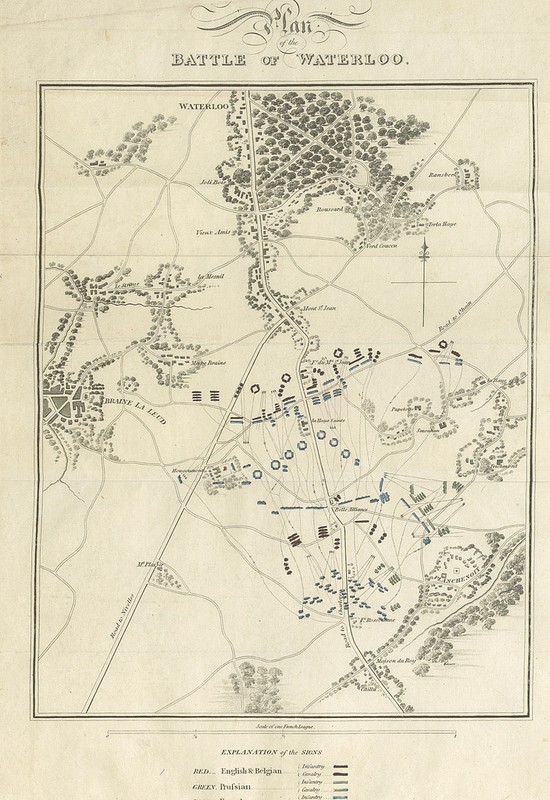
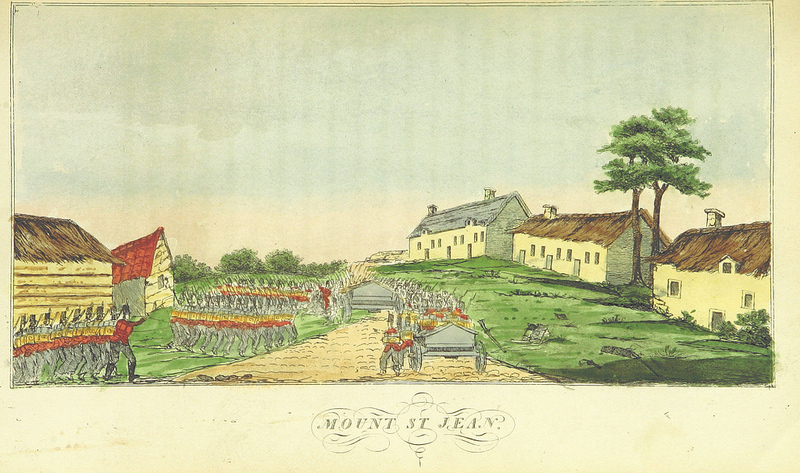
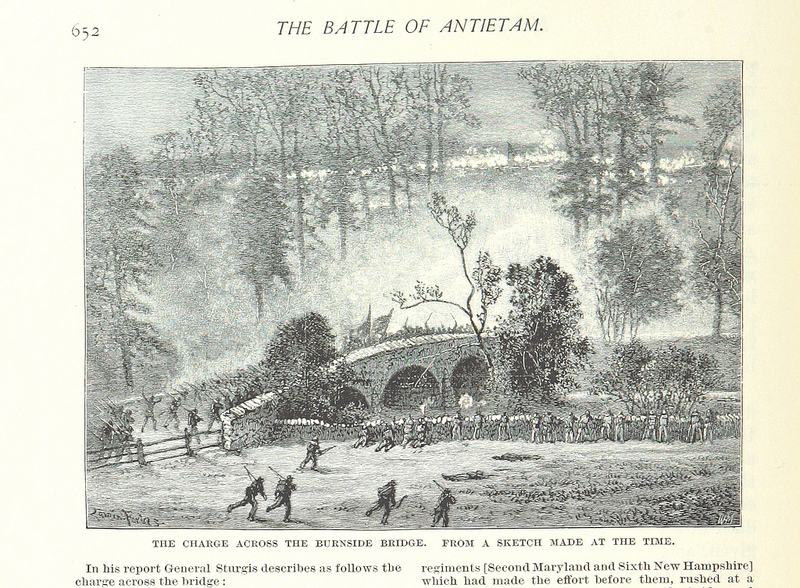
For now, below is just a taste of what’s new to be found in the British Library’s new online Flickr collection. The emphasis is on 18th-19th century history with tons of maps, engravings, diagrams and photographs. The Napoleonic Wars is documented in a ton of gorgeous color plates of uniformed soldiers, making them a perfect reference for your miniatures painting projects. The American Civil War is represented in scores of maps, portraits of various military and political leaders and lots of reference drawings of equipment and fortifications. The centuries of Britain’s colonialism is captured with a lot of material on Egypt, South Africa and the Middle East. Finally, there is a fair amount of naval and land imagery from the Spanish-American War.

Have a look for yourself and I’m sure you’ll find some obscure visual historic treasure of your own.

Napoleonic Wars

11197448323_f29a6f55fa_c

11003362935_ac6bd93346_c

11003528116_3ec187b941_c

American Civil War

11189959606_caa7577d01_c

11195430764_c3203d4309_c

11203099085_144b616820_c

11187451524_41b1288915_c

African Colonial Wars

11213541216_3036b5474e_c

11034541986_c31dcfcff5_c

11235101336_f9af33fc5b_c

Spanish-American War

11244813946_7135b5594b_c

santiago

11244838355_a6551da621_c

Retro Gaming The 70s & 80s: Dover Cut & Assemble Books

dover greenfield

I had a whole host of hobbies as a kid. There were plastic model kits from Airfix and Revell. I had a huge HO-scale train layout in my basement. Model rockets from Estes regularly launched from my back yard. Roleplaying and historical miniatures gaming finally came along, allowing me to incorporate a lot of my passion for models  into the terrain, buildings and countless metal figures I’d need for my dungeon crawls or fields of battle.

dover fort

One of my fondest early memories of scale-modelling was with the Dover Publications “Cut & Assemble” or “Easy-To-Make” books. I recall a steady flow of these books in my house with my mother picking them up with some frequency off the book racks at five-and-dimes, toy shops and book stores. There were so many of these and other activity books piled in my room as a kid, and it seemed like nearly every time we went shopping there was a new one to add to the collection.

dover village

These books offered models from many periods including ancient castles, Viking outposts, European villages, Old West towns, Victorian mansions, seaside settlements and even some modern structures. Along with the main buildings, many of the books included details like fences and walls, wells, animals, vehicles and people. These made each book a playset of its own but also allowed for a few different books to be used together. My western town might be settled right outside the fronteir fort, and civil soldier cut-outs would fight among the buildings included in the New England-themed village sets. The HO scale of the models also lent them for use with my plastic soldiers and livestock , and I’d often throw in some lichen bushes or custom-made roads to the set-up.

dover western

Assembly of the models in the Dover books did take a fair amount of time, and the details on things like porches, roofs, stairways and chimneys often involved tiny multiple folds. The hours I spent cutting and gluing together the buildings, often with minimal instructions, certainly gave me plenty of practice in a small scale. The heavy cardstock made the buildings fairly sturdy once built, making them easy to throw in a box when done playing with them.

dover soldiers

The rise of at-home printing has created a resurgence in papercraft modelling no longer constrained to books like those from Dover and Usborne Books. A lot of miniatures gamers swear by the relatively-inexpensive and quickly-accessible papercraft terrain made specifically for gamers by companies such as Paper Terrain or uploaded for free on a number of gaming sites and forums.

Despite my time paper modelling as a kid in the 70s and 80s, I’ve moved on from it with my gaming today. That said, I have been spending a fair amount of time with my youngest son who has developed an interest as of late in searching, printing and assembling Minecraft papercraft models. With his new passion for papercrafting I’m thinking that revisting the Dover books of my past with my son may be a great way to nurture a newly-seeded hobby to last another lifetime.

Collector’s Note: While some of the Dover “Cut & Assemble” or “Easy-To-Make” books are now out of print, many are still available online both new and used starting at under $10 each.

New Game Weekend: Dreadfleet

m1980418a_DFBlog_Opener

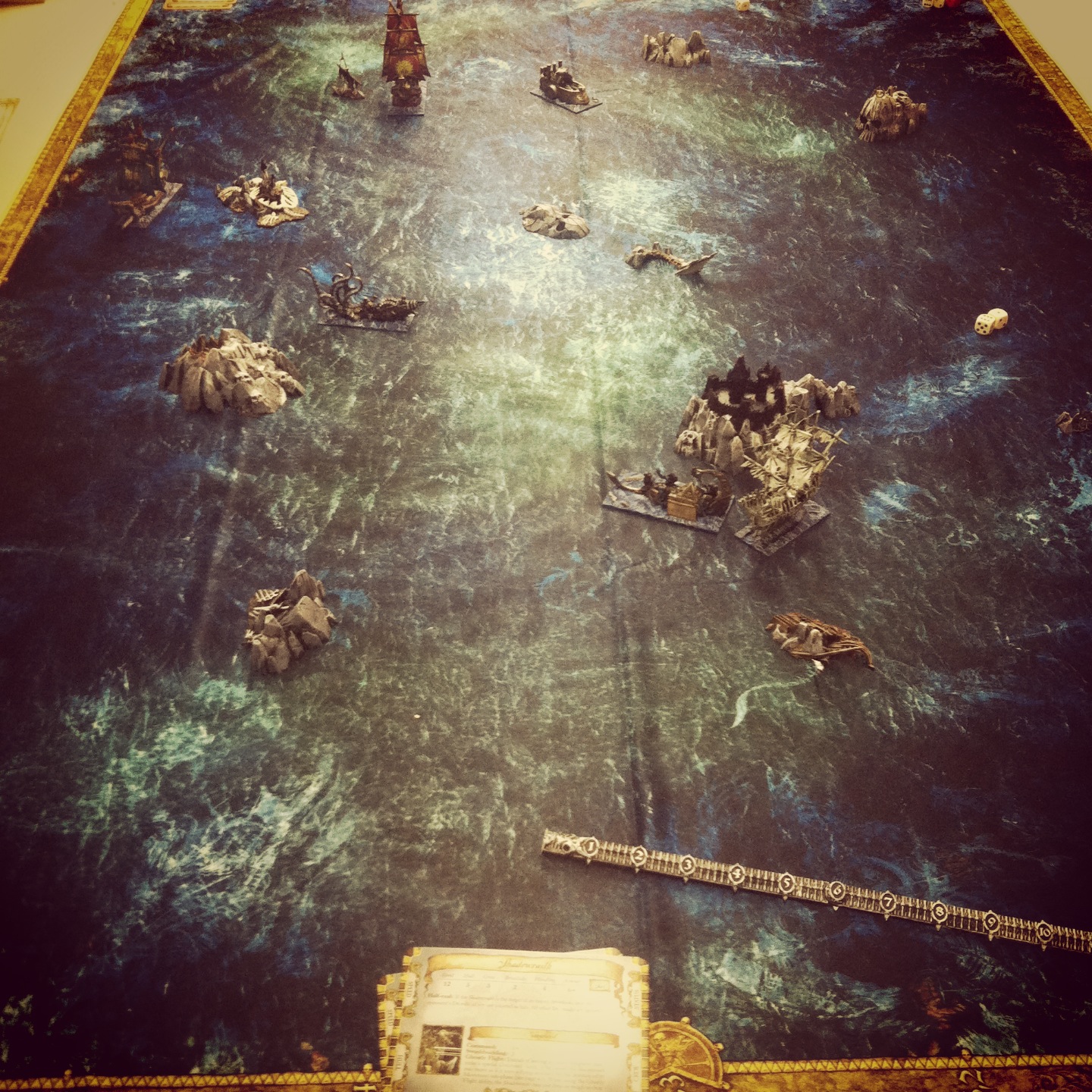
There are some games with reputations that far precede them in gamer lore, despite having few people who can say they’ve actually played them. Games Workshop’s Dreadfleet from 2011 is one of these, and this past weekend I was finally able to dip my toes into a session with this gorgeous and infamous game.

dreadcontents

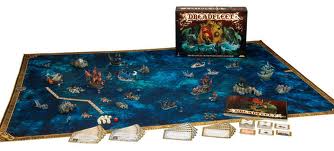
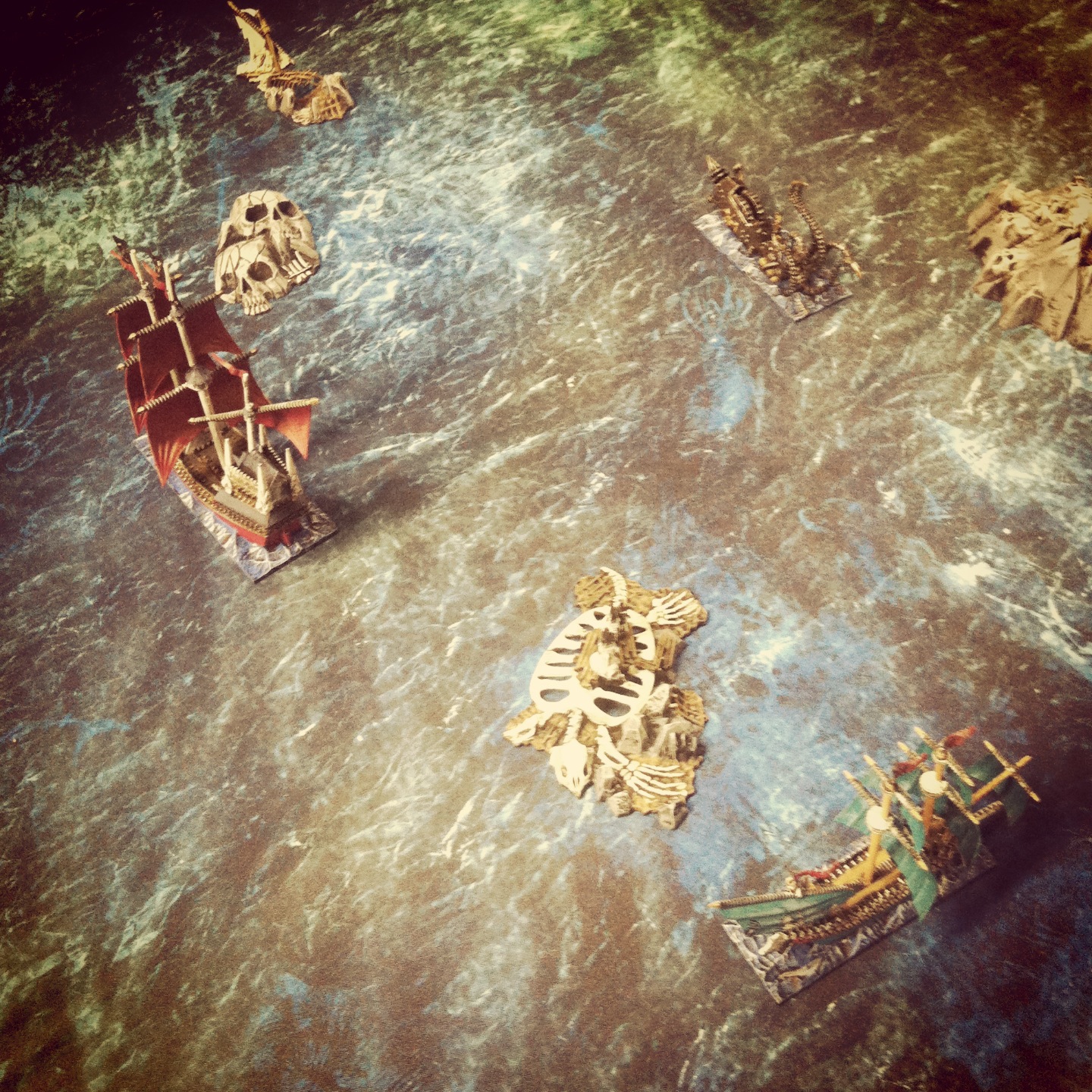
The limited-edition and now out-of-print Dreadfleet was met with mixed reviews when it was released a couple years ago. Set in the Warhammer Fantasy world with the Grand Alliance armada facing off against the undead Dreadfleet, the standalone game comes packed with incredibly intricate and delicate plastic models of ships, islands, sea monsters, treasure, ship wrecks and navigational pieces set on a beautiful printed cloth seascape playmat and accompanied by scores of cards. 

IMG_2521

The Dreadfleet table with all models painted by my brother

Playing 2 to 10 players, the game finds the two fleets squaring off with sailing and mechanical ships in a sea dotted with fortressed islands. Deep backstories accompany the lushly-illustrated rulebook, adding depth and significant game color to the captains steering their ships toward broadside cannon battles, ramming boarding parties and assaults on enemy island outposts.

IMG_2525

The Heldenhammer (left), Black Kraken (upper right) and Swordfysh (lower right) navigating around Turtle Island

The game turn begins by drawing fate cards which inject specific plot points into each round along with shifts in the wind direction and strength. Next, each captain rolls to declare orders for the round. Next, ships move while taking into account the wind conditions as well as the ship’s handling and special skills, which may include attributes of the vessel itself or the captain at the helm.

Ranged fire occurs at 6″, 12″ and 18″ distances to varying effect, and ships ramming into contact result in face-to-face boarding melees between the heroic captain characters. Captains may also call for special attacks using smaller proxy launches from their ships, creating additional deadly chaos in the water. Captains receive wounds and ships draw cumulative damage cards, many of which carry lingering effects that can only be remedied in turns spent using repair actions.

IMG_2523

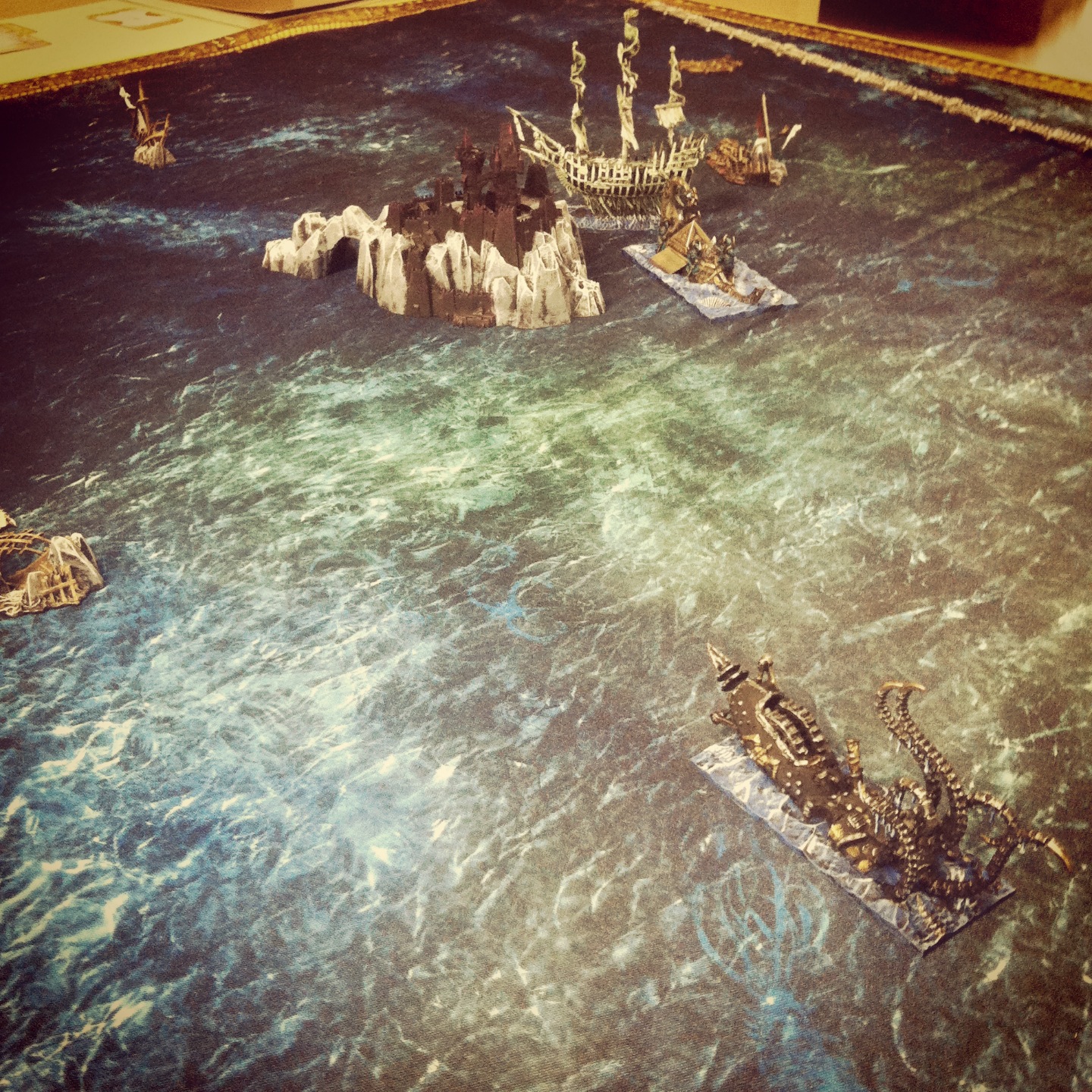
The Black Kraken sailing from Castle Island

After a few turns at Dreadfleet, the mixed reputation was pretty handily revealed. While the game is visually one of the best I’ve ever seen on the tabletop (especially showcasing the painting skills of my brother), the mechanics are incredibly complex. Hitting or sinking a ship is difficult, to say the least. With lots of ships and islands on the table, the waters of the game quickly become complex to navigate. While I love the game’s wind mechanic on the page, shifting winds foil plans constantly. Cards are exceedingly detailed and wordy, bogging the game down as these are referenced repeatedly for the uniquely specific effects and outcomes they each carry.

The dense rulebook comes replete with a number of detailed story scenarios, but all the color the authors can muster quickly drains away under the thick fog of the rules and mechanics which must be referenced again with each turn. Playing a game with multiple players on a side would easily result in a tangle of boats over many, many hours of play.

1450686_10202032642952010_1750681014_n

The Swordfysh

The original retail price for Dreadfleet of over $100 rubbed a lot of gamers the wrong way for a non-expandable game. However, the enduring love-hate relationship with the game is revealed in attempting to track down a copy for yourself. Some collectors seek these boxes out merely for the models and components, often buying multiple sets to field larger fleets. Others track them down for a chance to experience the game’s rules first hand. Unopened copies can sometimes run into the hundreds of dollars, but a friend of mine recently tracked down five copies a dealer was more than happy to part ways with for $20 each.

Having now experienced Dreadfleet first hand, I completely see why this game was left a mark on gamedom. The unparalleled look of the game just can’t offset the price and wildly complex rules which make replay value a challenge. A well-painted set of models from the Dreadfleet and Grand Alliance are sure to be a showcase on any modeller’s shelf, but hauling the game to the table may very well leaving players feeling a bit adrift.

Flames of War: Fielding the FOW Universal Carrier

UniversalC

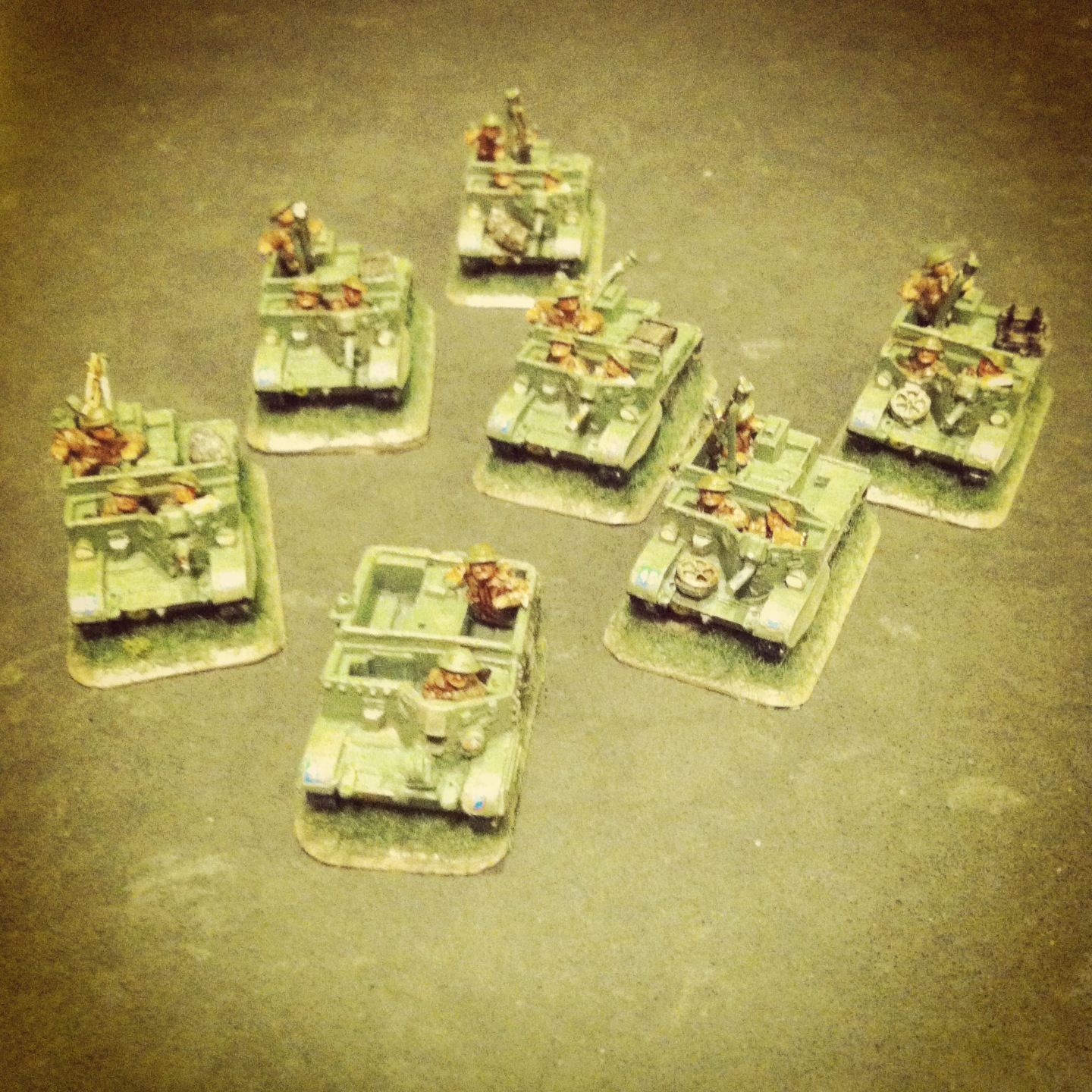
British Universal Carriers in Normandy 1944

Used extensively by Commonwealth forces in all theaters throughout WWII, the Universal Carrier served as a transport, a towing vehicle and a quick-response weapons platform for machine guns, flamethrowers, anti-tank guns and mortars. So popular were these agile and flexible vehicles that production ran until 1960 and over 100,000 eventually rolled off the assembly line, making them the most-produced armoured combat vehicle ever produced.

With my new British forces moving along, I picked up a few inexpensive packages of Universal Carriers in the flea market at Fall In! this past weekend. The models from Battlefront come three to a carded package in solid-cast resin with metal crew and gun options. The packs I got were the early war models but I decided for gaming purposes I’d fudge them a bit to make them work in my late war gaming. Along with a carrier from my Royal Artillery battery I’m also working on, I’d wind up with seven vehicles to start.

IMG_2432

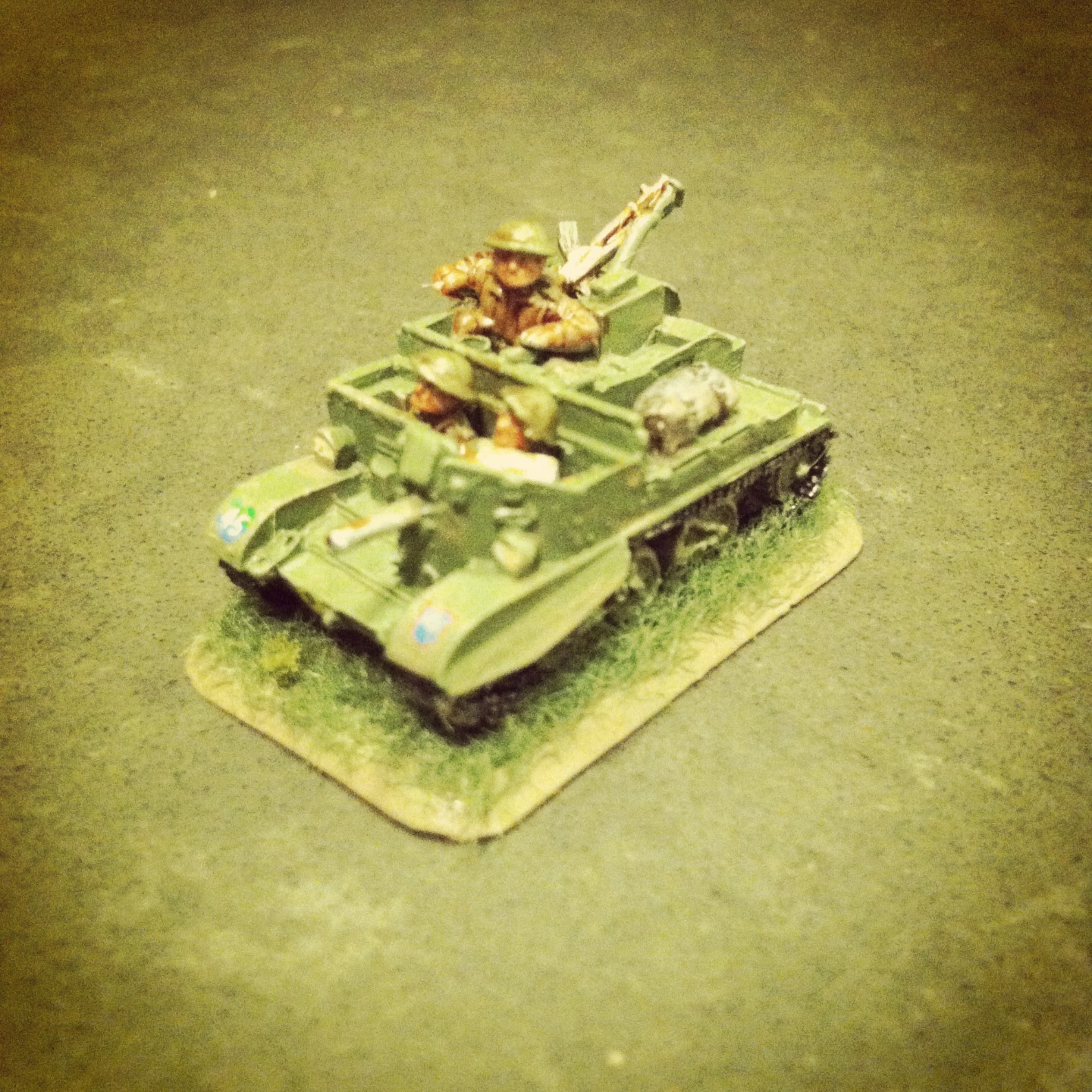
Carrier example with rear gun mounted

I chose to model my inital six carriers with extra 50 cal. machine guns, hoping to use them to quickly get into a fight and pin down German infantry with a hail of bullets. Adding the 50 cal. gun was a field modification during WWII, but without any extra parts on hand I simply clipped the barrels on the guns at the front and added a bit of plastic to make some semblence of a machine gun manned in the front seat.

IMG_2430

Carrier example with the rear gun carried in the back

Since construction is minimal, these glue-up fast. I modelled a couple of the guns in the back thrown in the back seat as if those guys were moving fast to get into action before re-mounting their guns. After a quick spray of green armor basecoat, the crew get hit with some drab, brown and flesh paints and washes. Tracks get a black base followed on with some metallic dry-brushing. Guns and other details added from some leftover tank stowage get some gun metal, browns and weathering. I decalled the carriers with the Guards Armoured markings, and then everything got a splatter of muddy earth tones.

IMG_2427

Guards Armoured carrier platoon ready for the roads and fields of Europe

With so many British troops cruising around Europe in these vehicles during the war, adding just a few of these to my growing menu of options in creating British company lists for my FOW gaming at Metropolitan Wargamers in Brooklyn, NY was a good place to start. I’ll fill in these early war models with another three of the late war models at some point, making it into a nine carrier transitional platoon of old and new model vehicles. One of the reasons I wanted to expand my Allies with UK forces was the chance to model different infantry, armour and artillery. Getting these nifty little Universal Carriers into the mix will definitely give my games some new interest on the tabletop and hopefully wreak havoc on my German opponents.

Related articles

Flames of War: Fielding the FOW Cromwell and Firefly Tank

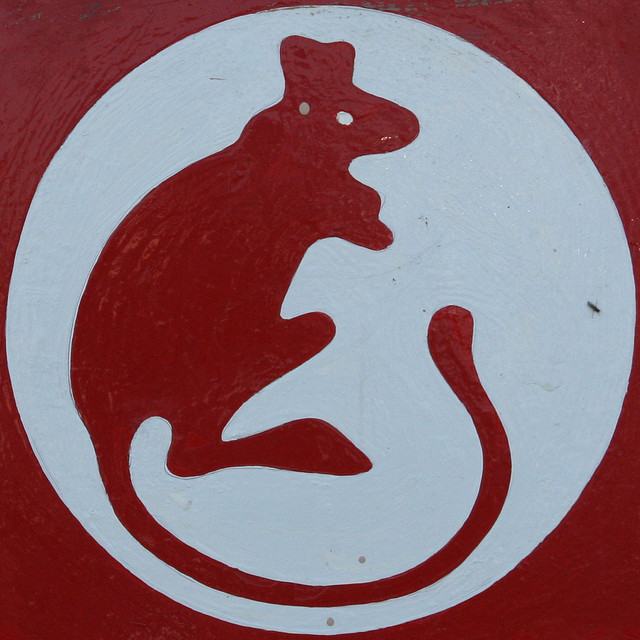
dratsBy the time of the Normandy Invasion in June 1944, the British 7th Armoured Division had already seen plenty of war. The division first distinguished itself early in the war in the dusty North African campaign, going brutally head-to-head with General Erwin Rommel’s tough Afrika Korps and earning the nickname “Desert Rats.” In the mid-war invasion of Italy, the division adapted to the southern terrain of Salerno and Naples and helped in securing the Allied push northward.

cromwellA British Cromwell in WWII Europe

fftankSherman Firefly on a street during WWII

Back in the UK following its successes in Africa and Italy, the 7th Armoured rested and retrofitted with new Cromwell and Sherman Firefly tanks in preparation as a follow-on force in the D-Day landings in mid-1944. Over the next six months, the division’s 75mm-armed Cromwells and 17-pound-gunned Fireflies were present during Operation Perch, Operation Goodwood, the Battle of Villers-Bocage, Operation Spring, Operation Bluecoat, Operation Cobra and the final pushes into the Low Countries and Germany. By the war’s end, the battle-weary Desert Rats had cemented themselves as one of the most celebrated divisions in World War II.

fowcromwellAfter being introduced to British Armoured forces with the excellent plastic Sherman and Firefly models included in Flames of War Open Fire! box set, I’ve recently swung some significant focus on building-out a decent amount of UK late-war forces. Modelling the storied 7th Armoured Division seemed like a logical next step in bringing the UK to my Allied forces on the table.
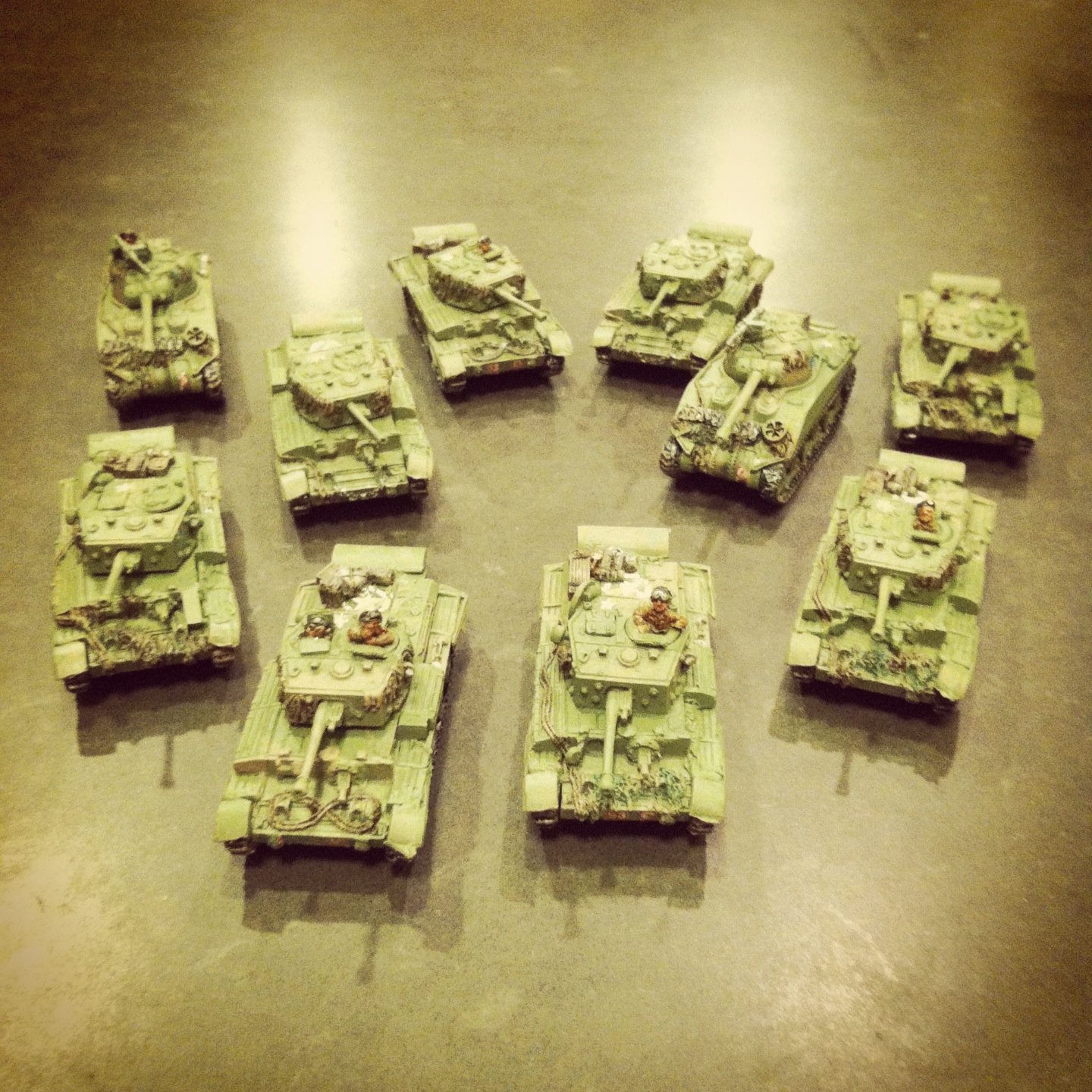
Through some serendipity, I happened to score a couple of half-price box sets of the FOW Cromwell Armoured Platoon from a fellow club member at Metropolitan Wargamers in Brooklyn, NY. Between the two boxes, I’ve been able to assemble a company command of two Cromwells plus two platoons of three Cromwells and one Firefly each. The models feature individually-cast resin tanks, each with their own detail of stowage and ragged camouflage, along with cast metal treads, gun barrels, crew and other details. Compared to curvaceous US Sherman tanks, I also really enjoy the flatter hull profile and boxy riveted turrets on the Cromwells. Although pricier than alternatives from makes like Plastic Soldier Company and Command Decision from Old Glory Miniatures, official FOW models are generally hard to beat for their heft and historical accuracy.

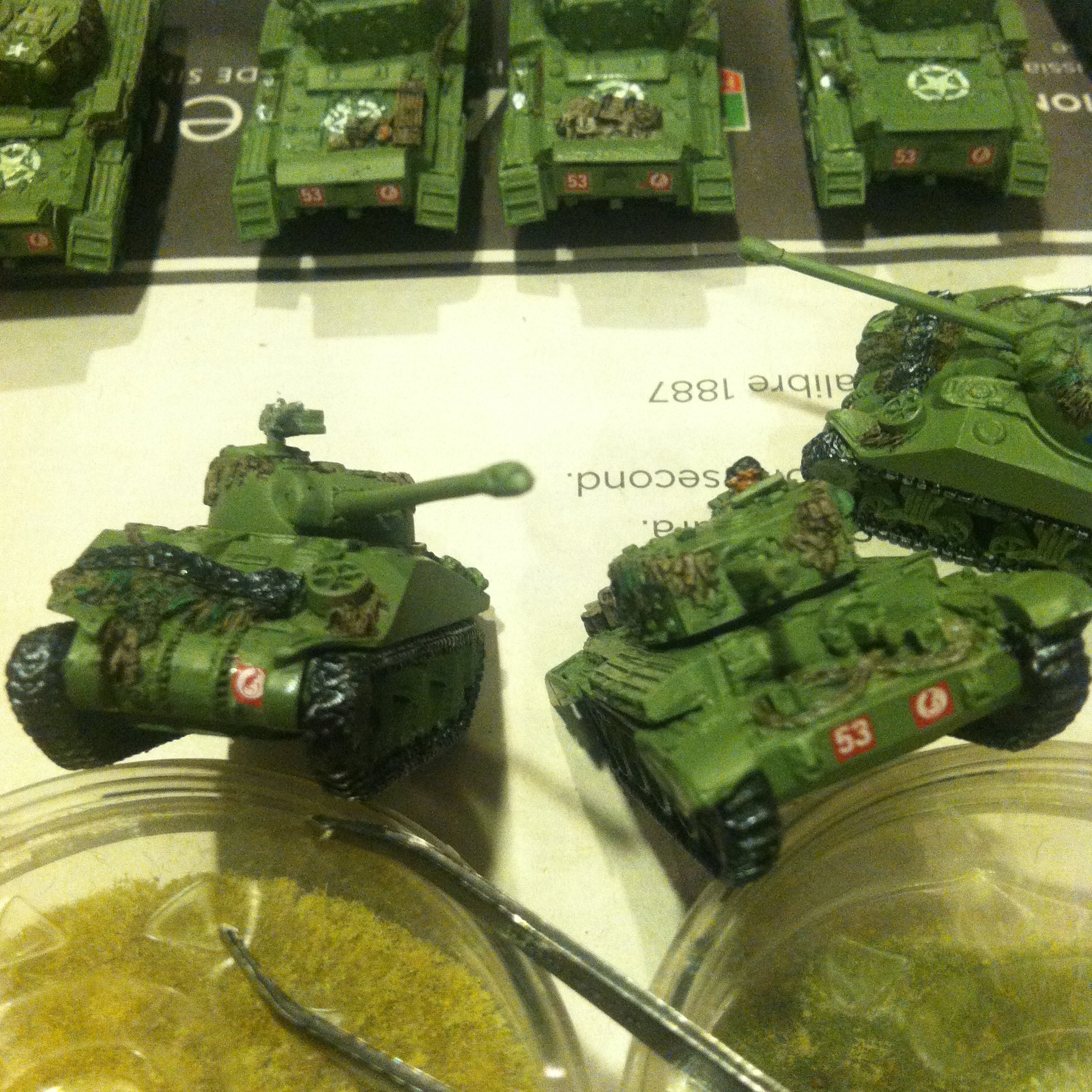
IMG_2334Primer and base coat on treads and stowage

After assembly, my models were hit with a green armor base coat. Tank treads start with a black coat followed a slight wash of metal. Tools, stowage, ropes and the other stuff on the tanks all get a mix of built-up layers of browns, greens and metallic colors. I especially liked the tiny tennis rackets strapped to a couple of the tanks, a nod to the British gentlemen who came to Europe not only equipped for war but for hopeful yet unlikely leisure pursuits. These details really create a lot of depth, interest and personality among the tanks which can otherwise get very visually redundant en masse on the table. Finally, the exposed crews get a a bit of brown-drab uniform color and some flesh tones to finish off those brave Brits.

IMG_2344Decals being applied (grrrrrr….)

I do have to say, the red-and-white Desert Rats vehicle marking has a really big cool factor for me. The FOW kits conveniently come with appropriate decals for the 7th Armoured Division, making finishing off the tanks one step easier than with competitor model-makers that don’t generally supply decals with their models. That said, I find the FOW decals to be incredibly finicky and fragile, and I found myself re-applying several to get them on just right. Once the decals are dry, all the tanks got splashed with mud here and there with some earthy dry-brushing.

IMG_2350Cromwell command section

IMG_2352One platoon of three Cromwells and one Sherman Firefly

IMG_2354Cromwell close-up

IMG_2356Sherman Firefly close-up

In terms of gameplay, I can’t wait for the 7th Armoured Division to go up against some Germans. The combined one-two punch of the faster-moving Cromwells and the hefty-gunned Fireflies should reinvigorate my games away from the sameness I’ve had in just playing with my large group of US Shermans for a couple years. Already, I want more of these platoons to really get the division bulked-out. I’m thinking a follow-up with Cromwells and Fireflies from the Plastic Soldier Company will supplement the finished FOW models nicely. Until then, the 7thArmoured are ready to roll and there’ll be more to report soon on my post-D-Day British force project.

IMG_2348The Desert Rats ready for action in France and beyond…

Related articles

Flames of War: Fielding the PSC German Heavy Weapons and FOW Artillery Command

ger8cmmortar

After focusing on my Flames of War (FOW) Allied forces for a while, I decided to throw some energy back into beefing-up and diversifying my late war Germans. Although my German troops seldom see play, getting some infantry punch on the table led me to a number of mortar and other support weapons platoons the FOW rules offer.

Battlefront, the maker of FOW, has a number of good platoons which run anywhere from about $12-20 each. Having recently tried my hand at the Allied Stuart Tank set from the growing line of 15mm WWII kits from the Plastic Soldier Company (PSC), I spotted the Late War German Heavy Weapons box. At around $25, the set looked to be an excellent and economic way to get a lot more German infantry on the table at perhaps a quarter to one-third the cost of the official FOW models.

pscgerhw

The PSC box comes with four MG 42 teams, four 8 cm mortar teams, four 12 cm mortar teams, eight Panzerschrecks and eight Panzerfausts. Also included are four Panzerschreck loaders and four ammo carriers. With about 70 bits on the sprues, this set was going to add a lot of action to my already extensive German infantry collection.

pscgerhwsheet

Cutting out and gluing-up the tiny pieces from the PSC sprues is a bit of nerve-racking task harkening back to my early years wrangling with assembling soft plastic HO scale Airfix soldiers. That said, following PSC’s simple assembly diagram (above) and keeping all the parts carefully organized on the workbench is key to getting the job done right and not losing anything along the way. Flames of War rules call for basing Panzerschreck teams in groups of four miniatures per medium stand, allowing for four total teams to be constructed from the PSC set with two Panzershrecks plus a loader and ammo carrier per team. The 8 cm mortar and MG teams likewise went on medium bases and the big 12 cm mortar teams were glued-up on larger bases. I had a few extra plastic FOW Germans on hand from a bonus promotional sprue I received from the Open Fire! box set, and adding those to the 12 cm mortar stands helped finished those off.

artycmdhw

With a bunch of new mortars in the field, I also needed to add some additional command and spotters to make them playable. FOW offers an artillery command headquarters blister pack which I added to the mix. The set comes with enough models that I was able to create three two-man spotting teams, a few command stands (adding in Panzerfausts from the PSC kit) and a nifty HQ vignette with a four figures surrounding a table with a radio operator.

IMG_2214

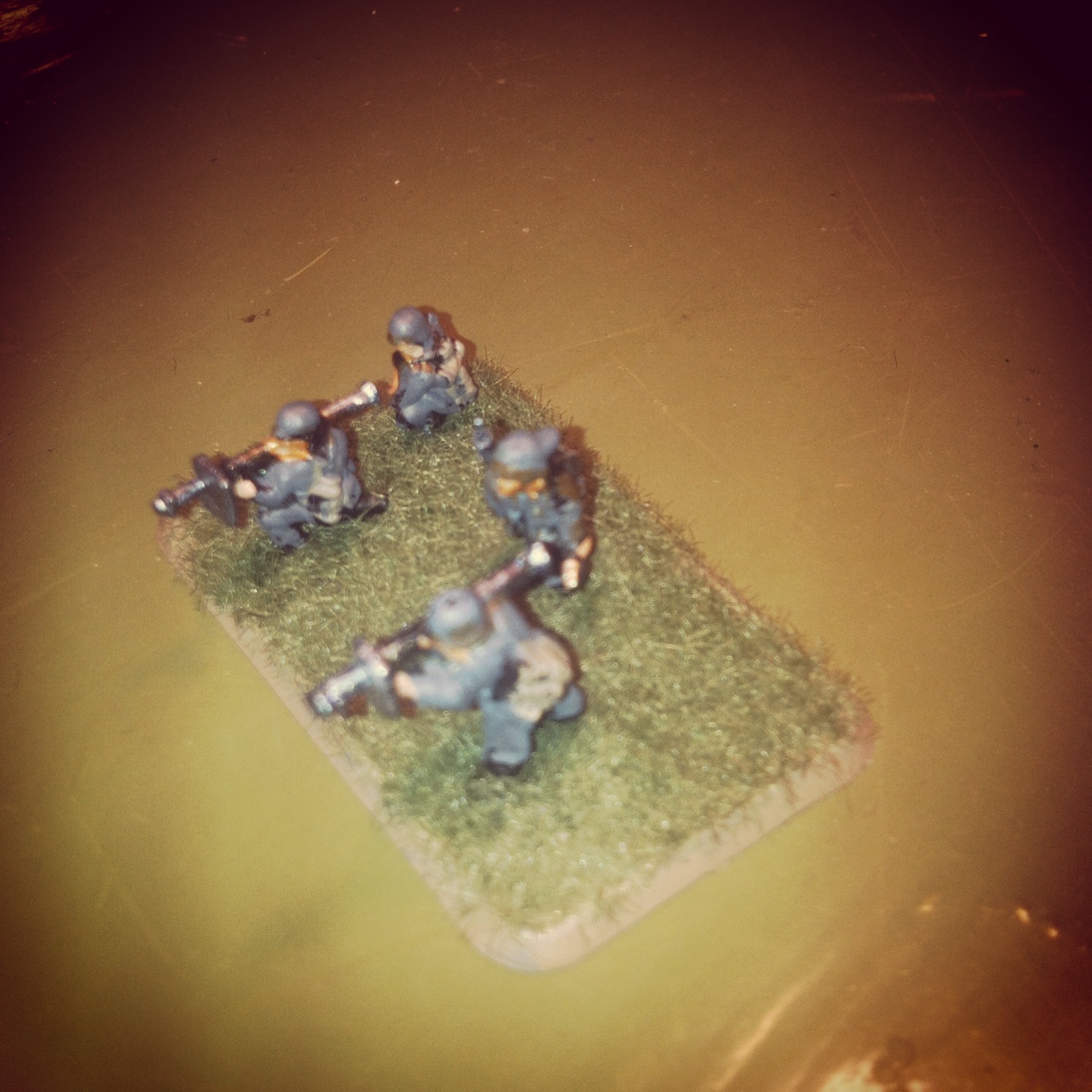
Painting Germans is a simple process for me with a base spraycoat in flat black followed by a darkish grey uniform and details picked out in flesh, blacks, browns and gun metal. The stands get finished off with some simple grass flocking and a matte varnish spray. Getting a consistent finish on the PSC models made them blend in nicely with my FOW models.

IMG_2226

For comparison’s sake, the PSC figures do tend to be a tad smaller and thinner than the typically-chunky FOW figures. Since most my PSC figures are being fielded on separate stands, I don’t see the minor scale differences being an issue at arm’s length on the tabletop battlefield. In addition, the extra poses in the PSC casting add some nice variety and animation in the troops once deployed.

IMG_2224

IMG_2217My FOW German force has long-relied on the strength of deploying large numbers of tanks in my games, so these new additions should be a nice compliment to getting more action from my German infantry. Now that it’s fall, I’m anxious to rush my new PSC and FOW Germans to the tables at Metropolitan Wargamers in Park Slope, Brooklyn and add a new season of playablity to my battleworn forces.

Flames of War: Fielding the PSC Panzer IV Tank

pniv

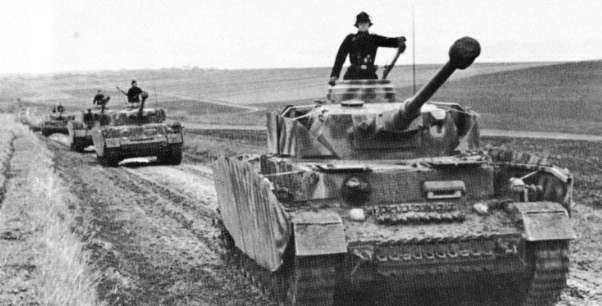
One of the greatest military impressions Germany left on the face of warfare during World War II was in its feared armored forces. The famed Tiger I heavy tank gets a lot of the glory for its independence and near idestructability, but the Panzer IV medium tank served as the real backbone of German armored forces throughout the war. With improvements to its armor and gunnery made throughout the war, the Panzer IV would prove to be a tough nut for the Allies to crack until very late in the war. Especially in the period from the D-Day landings through to the Battle of the Bulge, the Panzer IV played an ever-increasing role in attempting to stymie the Allied advance right up until the eventual fall of the Third Reich in the spring of 1945.

FOWpzIV

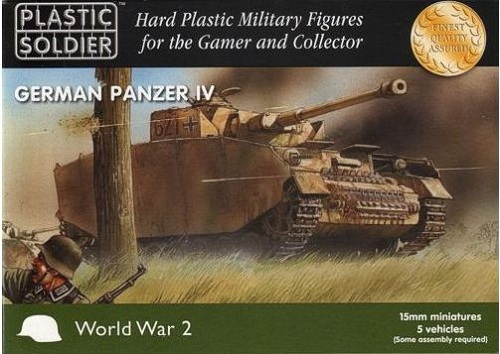
pscpziv

I already own a fair amount of German armor with Tigers, Panthers, Jagdpanzers and Stugs, but my force was sorely lacking in Panzer IVs. Most of my German tanks thus far have been from Battlefront, the makers of Flames of War (FOW). They offer a late war Panzer IV platoon in the pricey $50-60 range, depending on whether you pick the set up online or in a store. Going on some recent experience with the PSC Allied Stuart tank set, I went with the Panzer IVs from the Plastic Soldier Company (PSC) at about half the FOW cost.

pscpzivsheet

Unlike the FOW sets, PSC kits come with options to model miniatures in several periods. This allowed me to model my tanks as the later war Panzer IV Ausf H with its extra armor and gun power. Like the Airfix kits of my youth, the PSC tanks are comprised of lots of little parts. The diagrams included in the box offer clear color-coded keys to getting the correct pieces off the sprues and blow-up schematics for gluing the pieces together. If you’re like me, keeping your workspace clean and organized will prevent you from losing your mind during the multi-step assembly process. The sprues also leave some leftover parts which either go straight into the trash or into container of miscellaneous plastic for future modelling use.

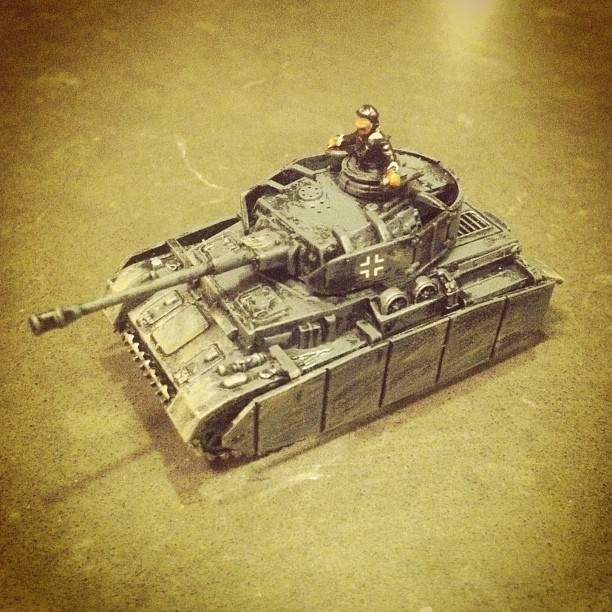
Lots of parts means lots of steps. The turrets alone are compromised of 9-10 parts and aligning the tank tread sections needs to be done carefully. I also found the hole on which the turret sits to be a bit tight, so I carefully drilled those out slightly larger. My Panzer IVs were completed with a basic grey-schemed paint job over a flat black spray base to match my existing models. With assembly, painting, decals and a matte finish finishing coat, these tanks are ready to hit the table in just a couple work sessions.

Compared to FOW models, the PSC tanks take a bit longer to put together and parts can be finicky, but I really like the PSC models when complete. The PSC tanks offer crisper molding and some fine details like a slight sag in the upper parts of the treads and hangers for the  side and turret Schurzen. Models are light, making for easier storage and transport. Putting together kits from PSC just feels a lot more like model building than what you experience with FOW and some other manufacturers.

pzivcommand

pzivplatoon

With so much economic pressure on miniature wargame funding budgets, you can’t beat getting more armor in the field for the low cost and fine results from the Plastic Soldier Company’s Panzer IV kit.

Flames of War: Modelling European Western Front Buildings

153770I got into miniatures wargaming through a combined set of interests I developed as a kid: history, role-playing and scale modelling. One of the aspects of gaming I enjoy is setting up a realistic and engaging tabletop battlefield, both for the visual effect but also to reproduce the playable advantages and challenges found in waging scenarios within scenery.

I’ve been searching high and low for an affordable and well-made set of buildings to add to my 15mm Flames of War World War II gaming set in the post D-Day Western Front. Battlefront Miniatures, the makers of Flames of War, launched their own series of buildings last year. The pre-painted buildings are beautiful, albeit a bit too perfect and pretty expensive at $40-50 each. Miniature Building Authority (MBA) has been a long-time producer of fine pre-painted buildings. Like the structures from Battlefront, MBA models feature removable roofs but also convert into ruined bombed-out versions. At $40-50 for single large buildings or for pairs of smaller ones, the MBA buildings are also pretty pricey. MBA keeps a small line in stock, but they have dozens of out-of-production models which you can also find at conventions and occasionally online. JR Miniatures is another standby in the industry, but I find their relatively low-priced line of buildings is a bit of a mixed bag in terms of casting and playability.

markivWith building up my gaming real estate on my mind, I posted to the message boards at The Miniatures Page. Some suggestions pointed to the above manufacturers, but several posters also mentioned Mark IV Miniatures. The company is run by Jeff McCarron, a second-generation gaming modeller out of Colorado who obviously puts great care and passion into his work. McCarron sells his models directly and distributes them through Musket Miniatures, and I found him to be incredibly responsive to a couple questions I had before ordering. As it turned out, a fellow member of Metropolitan Wargamers had recently picked up the large church model and a couple houses from Mark IV. After playing with his models during our big Summer FOW event and Barkmann’s Corner scenario at the club, I decided these were the buildings to sink an investment into.

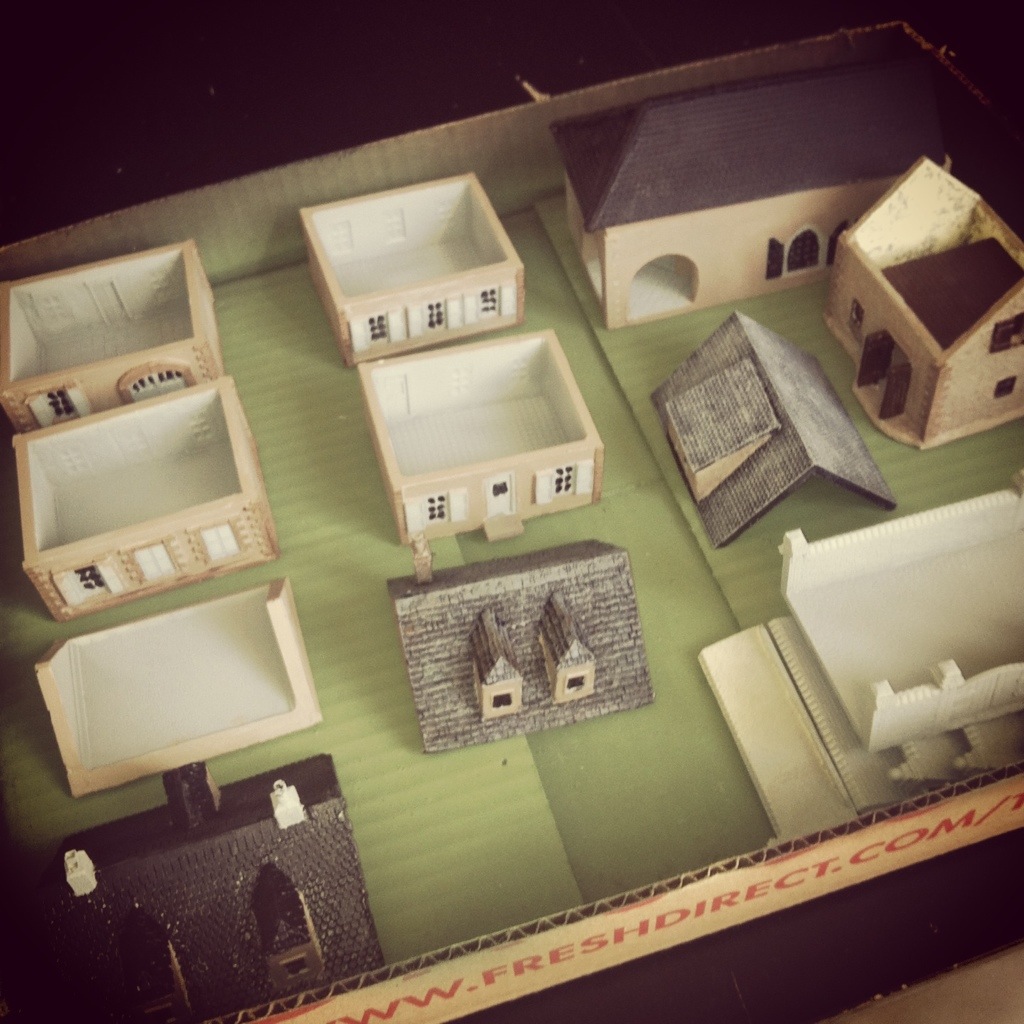
1148873_10201247963855523_305675209_nI decided to go with several two and three-story buildings, a barn, a courtyard and some walls, all ordered from Musket Miniatures. With all these models, I’d have the flexibility to set up a fairly decent-sized town or play with them as a separate farm estates. The castings arrived clean and required little tidying-up of residual flash with a knife.

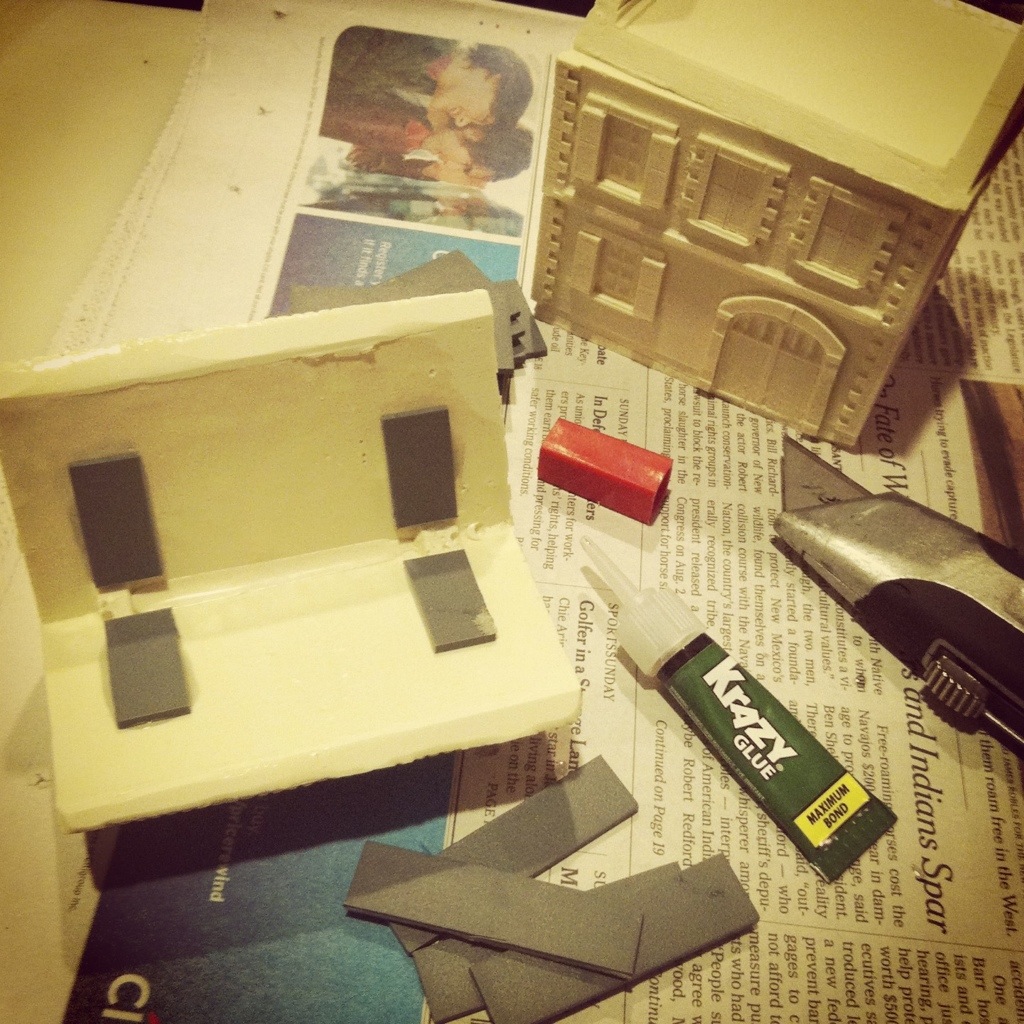
20130830-233936.jpgI did have to put in a bit of work gluing plastic tabs to the undersides of the floors and roofs to provide a snug fit for each story of the buildings. The larger one-story bank building also required a wall and metal cast windows to be glued in place.

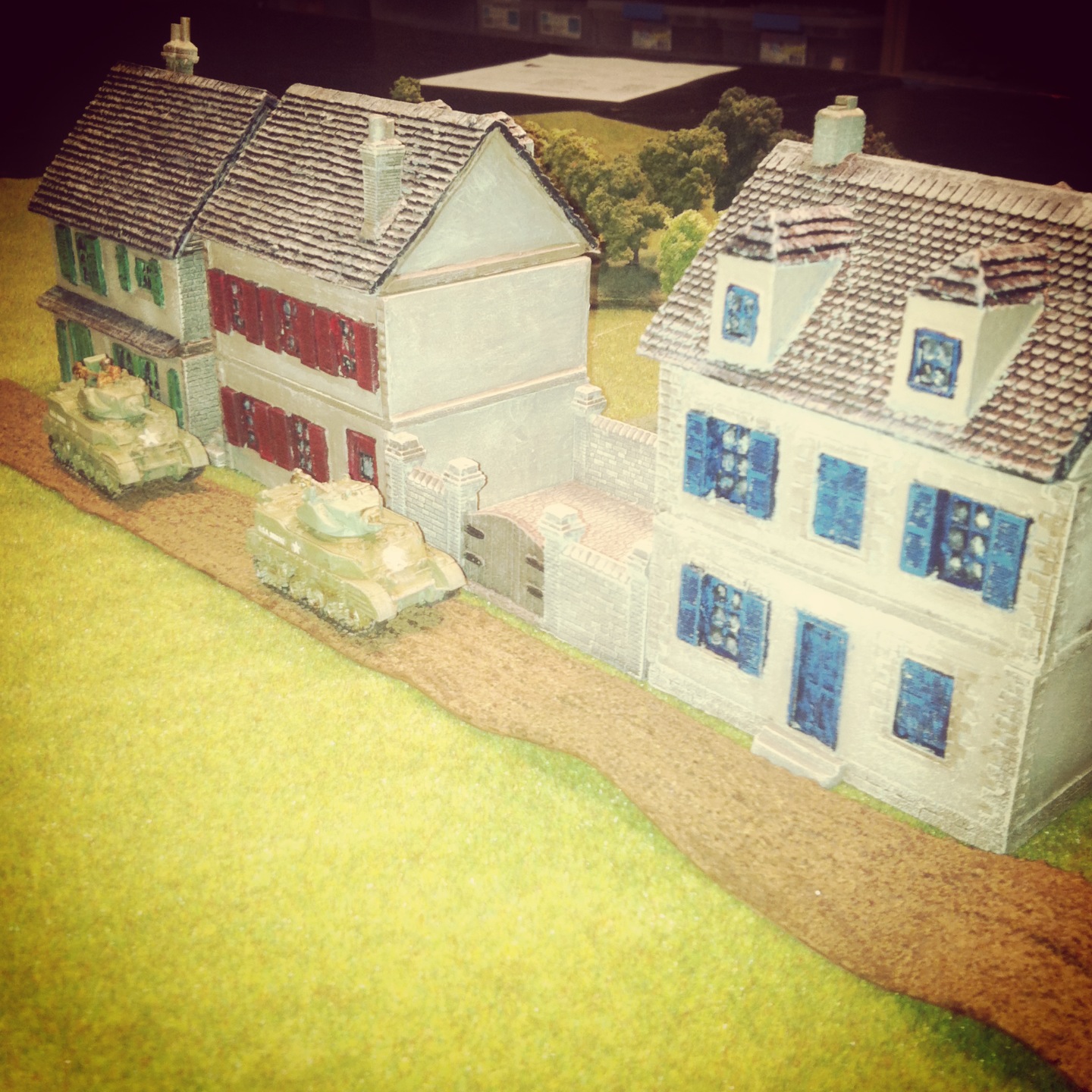
20130830-234253.jpgFor painting reference, I searched online for photos of European villages. After a light grey spray basecoat, the stucco walls of the buildings were dabbed with a bit of foam sponge in sandy gray-brown stucco and then dry-brushed with an off-white paint to add variety to the wall surfaces. Exposed stonework, the courtyard cobbles and masonry details at the corners, doors and windows all got combinations of varying shades of grays, browns and whites to create some depth.

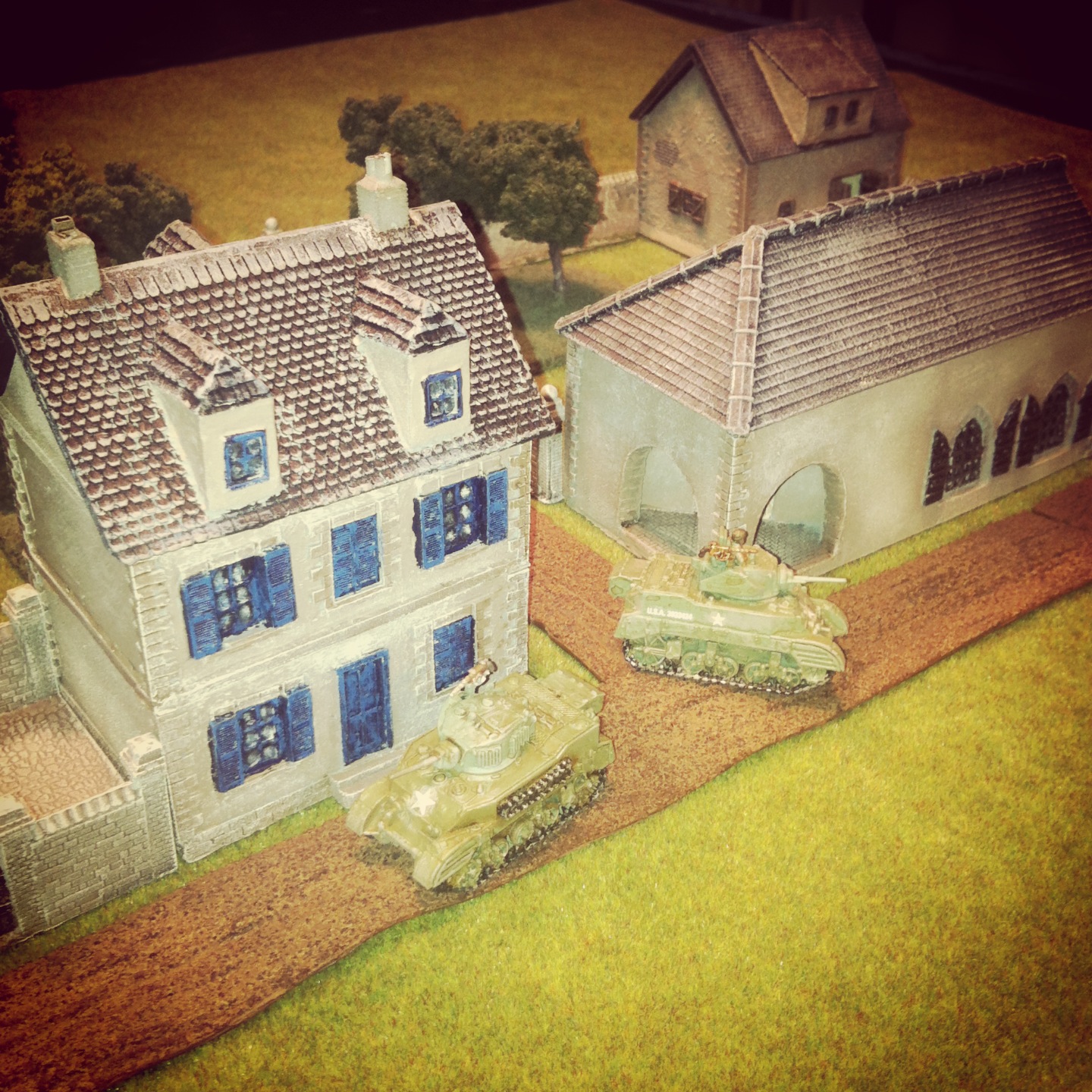
IMG_2115Shutters, doors and windows were painted with dull blue, white, green and red trim, mimicking some of the variety in paint schemes I had found in photos online. For the roofs, a black undercoat was dry brushed in a couple shades of grey with a bit of browns and dark green shades mixed in. On the barn model I glued on some thin pieces of lichen to add the look of vines covering part of the walls.

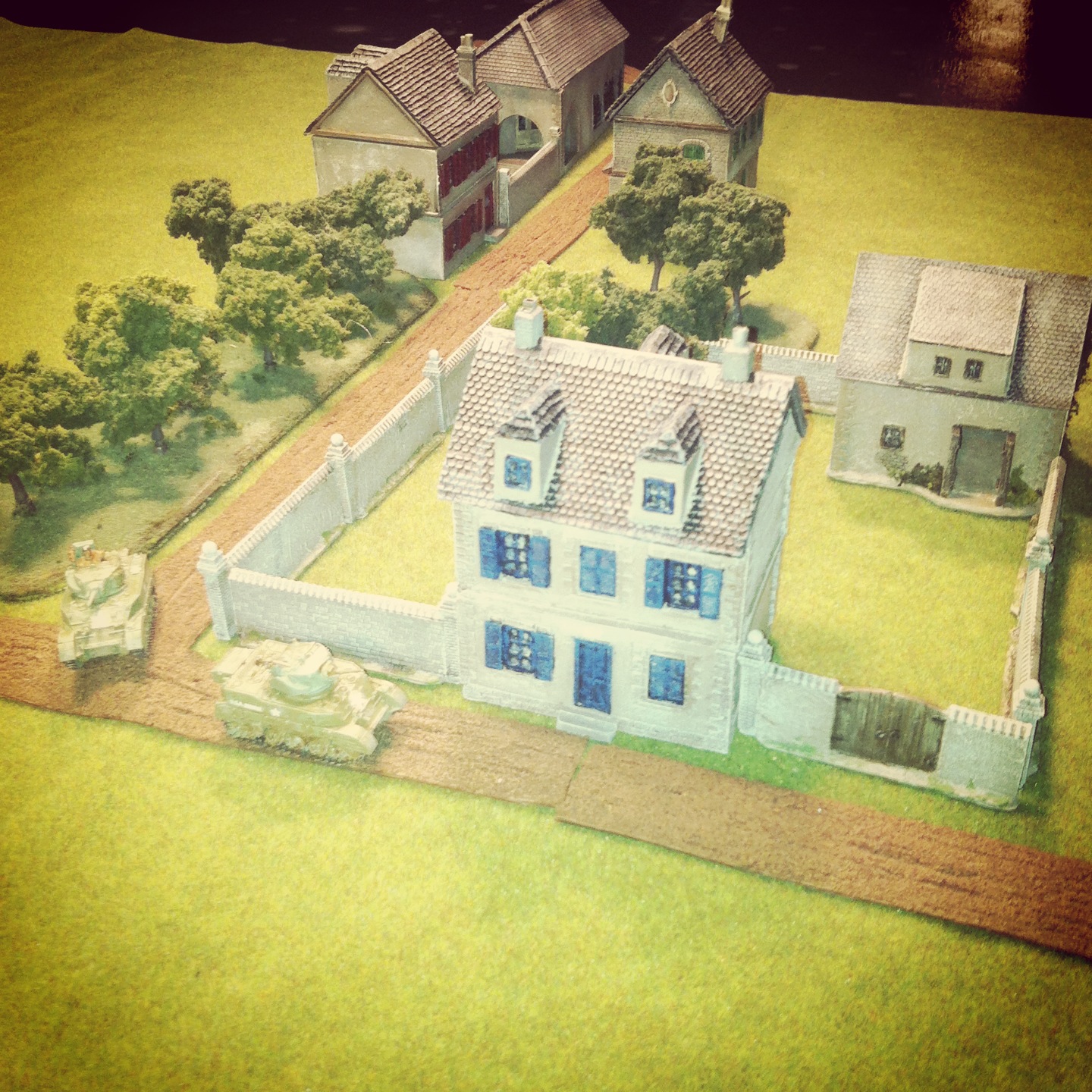
IMG_2117The walled courtyard and modular wall sections got a two-part paint scheme over the gray primer. A watered-down brown-black wash over the bricks and cobbles filled the cracks with a dark shading finished-off with an off-white dry-brushed highlighting coat. The courtyard and wall gates started with a dark brown base with a lighter brown adding aged detail to the wood. Iron hinges got a black undercoat with some rusty metal dabbed over it. The result was some very realistic stone and brickwork walls.

IMG_2112

IMG_2119

IMG_2123

IMG_2125I couldn’t be more pleased with the buildings. They’ve already seen some action on the tabletop in my recent Singling ’44 game and combining them with my existing trees, roads and lichen hedgerows really brings the battlefield to life. I’m already eying a few of the other models offered by Mark IV, including some ruined versions of the same buildings which come cast in some exciting bombed-out interior detail.

At Metropolitan Wargamers, there’s some early plans being laid for another big day of gaming to coincide with the fall’s Flames of War Tanksgiving 2013 event and there’s certain to be plenty of WWII action before then. With my new buildings from Mark IV on the table, these miniature landmarks are certain to add even more depth an interest to all out future games.

Flames of War: Fielding the PSC Stuart Tank

While the durable US M4 Sherman gets most of the glory in the annals of WWII Allied tank history, the M3 Stuart also played a significant role in providing valuable infantry and reconnaissance support throughout the war. The Stuart was originally supplied to the British ahead of the US entry into the war, but American tank crews would eventually use them throughout the European, African and Pacific war theaters. Armed with .30-calibre machine guns and a 37mm main gun, the Stuart proved itself to be a finicky yet effective part of many of the war’s major actions and campaigns, including the D-Day Normandy campaign of 1944.

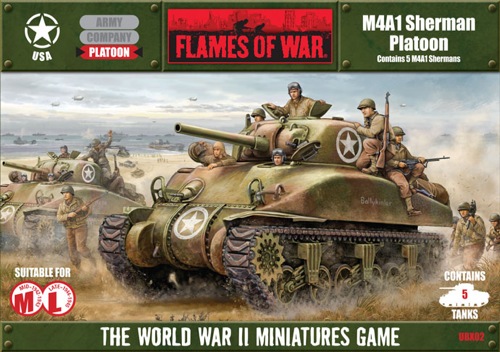
Most of the US armor I use in Flames of War gaming comes directly from Battlefront, the makers of the popular 15mm WWII wargame. Battlefront manufactures beautiful models but the company is often criticized for its prices. I already own a fair number of Battlefront’s M4 Sherman tank models. With so much of my armor tied up in the sameness of my Sherman platoons, I’ve long wanted to add some diversity in my force with a light tank platoon option.

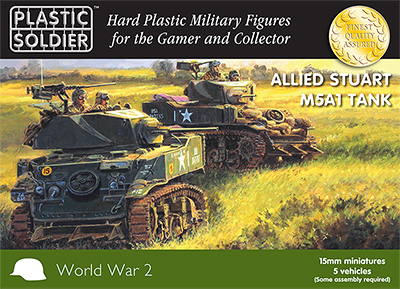
Coincidentally, the Plastic Soldier Company has recently been expanding its small but growing line of 1/72 and 15mm WWII hard plastic infantry, vehicle and armor sets. At nearly half the price of the FOW offerings, the 15mm Plastic Soldier Company boxed sets look to be a legitimate bargain alternative. As luck would have it, among their new releases from the past month was a 15mm Allied Stuart set containing five models which make up a perfect light tank platoon for my FOW force.

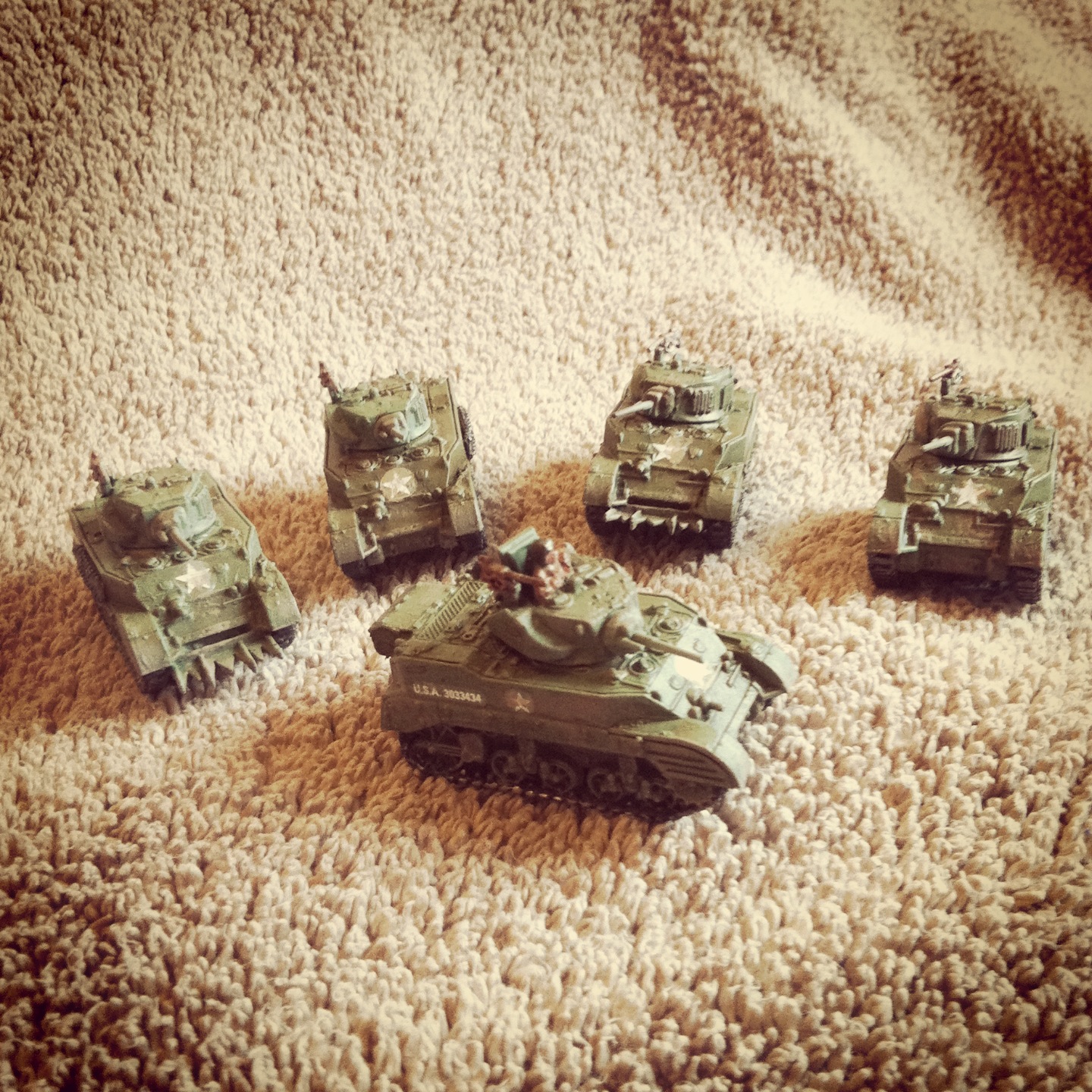
Despite the relative low cost, I approached my first go-around with the PSC with a critical eye. The Stuart set comes with enough parts for five tanks from the early, mid or late WWII periods. The flexibility of the modelling is fantastic, but it does result in a bunch of unusable waste parts left on the sprue. Gluing the models up for the late war was fast, with the finely-detailed casting going together smoothly. A relectuant criticism of these otherwise excellent models is the way in which the turrets fit to the hulls with tabs which were a bit tight for my liking. I wound up cutting the tabs off so the turrets move more freely, but this extra step did destroy the other strong points of the PSC models.

After the glue dried, the models got a coat of green armor spray followed by some black and metallic paint brushed on the treads. Tools and stowage attached to the hull were picked out in detail, and then all the tanks got a watered-down brown wash. I applied some appropriate US decals I had left over and then the tanks got some splattered mud details in a lighter mud color.

IMG_1956

The result of my Stuarts and my first experience with the Plastic Soldier Company is entirely satisfying. Not only can’t I wait to roll these fast, deadly tanks onto the table in my next game, I likewise will be anxiously awaiting what new releases the company has in store to further build-out my forces.

Flames of War: Fielding the Guards Armoured Division

guardstanks

Among the multi-national Allied forces that participated in the campaign following Operation Overlord on D-Day on June 6, 1944 were the British Guards Armoured Division. Arriving a couple weeks late to the party on June 26, the Guards would roll on to participate in many of the key post-D-Day engagements including Operation Goodwood, Operation Market Garden and the Battle of the Bulge. I’ve been encountering the Guards over and over again in Rick Atkinson’s engaging The Guns At Last Light, the latest and final volume in his “Liberation Trilogy” telling of the Allied march to victory in World War II. And so, it is great timing that I’m finally getting around to adding the Guards as my first allied group supplementing my already extensive US forces in my Flames of War gaming.

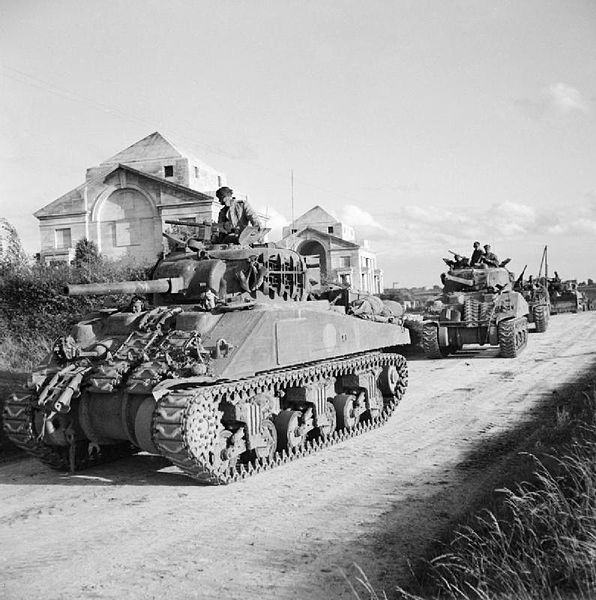
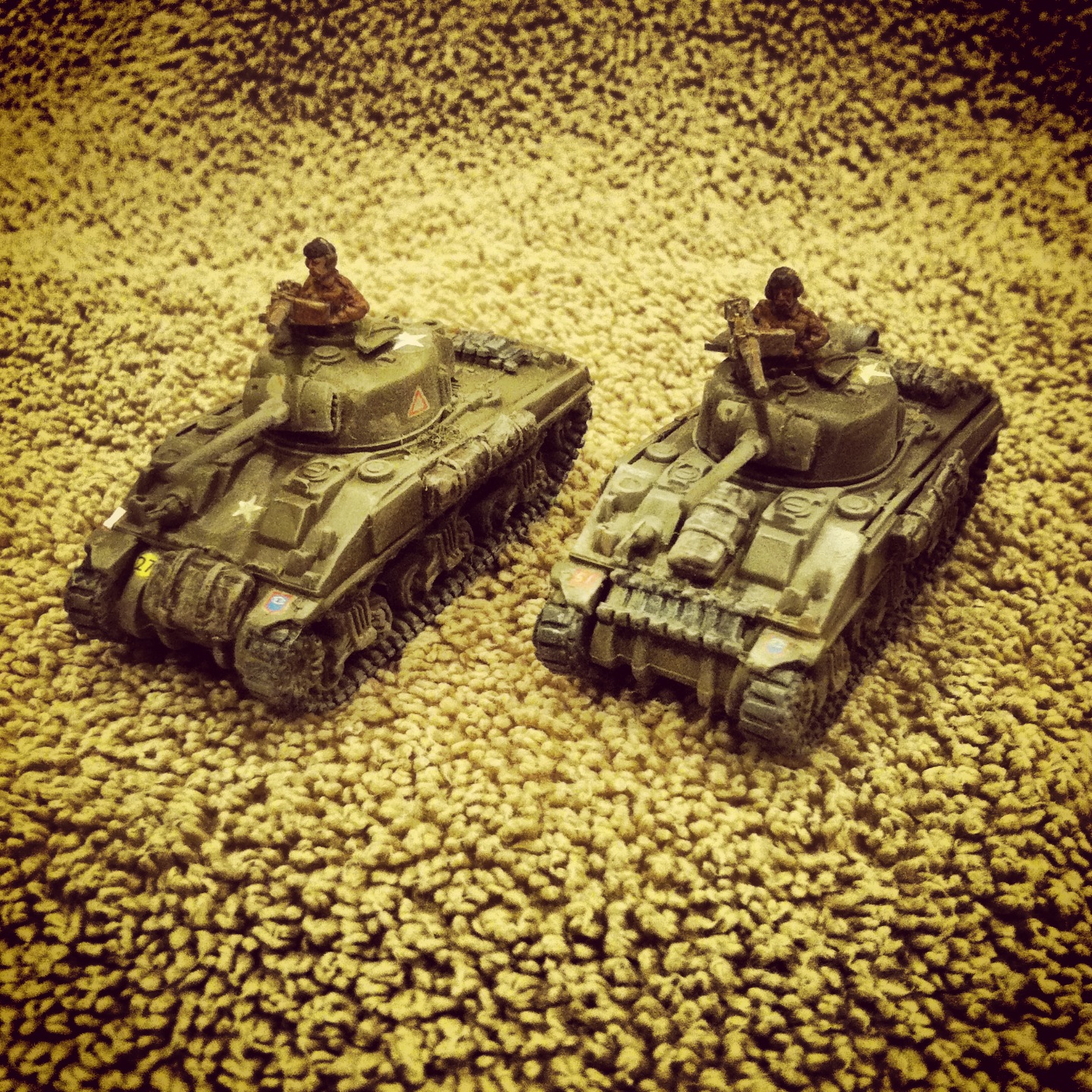
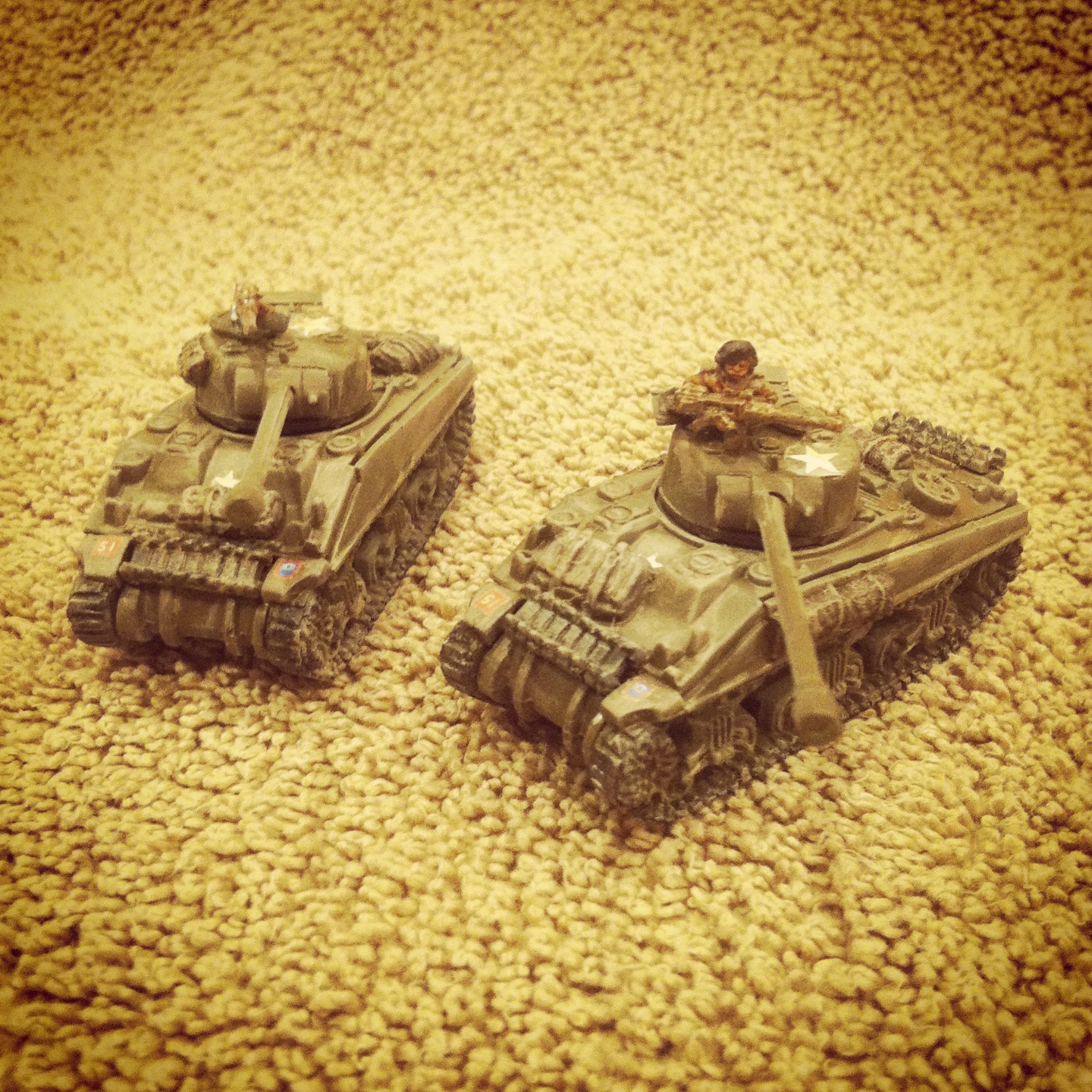
FWOFBoxI’ve been working away for half this year on finishing up the models included in the excellent Flames of War Open Fire! box set. Among all the plastic goodies included, the set offers up a nice Guards platoon to provide support to their allied US Airborne infantry. The eight models include six of the US-supplied Sherman V tanks and two of the famed Sherman Firefly tanks, retrofitted by the British with a massive 17-pound anti-tank gun.

Aside from a rather significant and well-documented issue with some parts fitting together, the models glue up pretty nicely. To the included stowage and gear included on the sprues I also added some leftover bits. A quick coat of green armor spray paint followed by black and silver lightly brushed on the treads made up the majority of the painting work. The exposed drivers received a tan uniform, black beret and radio headset picked out in detail. Crates and tool handles strapped to the hull got a quick touch of brown.

IMG_1894For decals — a big oversight in not being a part of the Open Fire! kit — I used a set from the Plastic Soldier Company and guidelines found on the Flames of War site. I found the decals from PSC to be easier to apply than those I had used from FOW in the past, but I did still use a few Allied “star” markings I had lying around from previous US tank models from FOW. With the decals dry, a bit of dried mud color and watered-down brown wash added some wear and tear around the tanks before they were hit with a matte finish.

IMG_1896

IMG_1898Now that I’ve got some Brits on the table, I’m eying some UK infantry to add some depth to my collection and flavor to my games. There’s a big full-day Flames of War gaming event coming up in just a few days at Metropolitan Wargamers, but I don’t think the Guards will be making an appearance this time around. Still, it will be good to know they’re waiting to throw in with the Yanks on another day in the near future.