28mm: US Airborne By Black Tree Design

101stabonplane

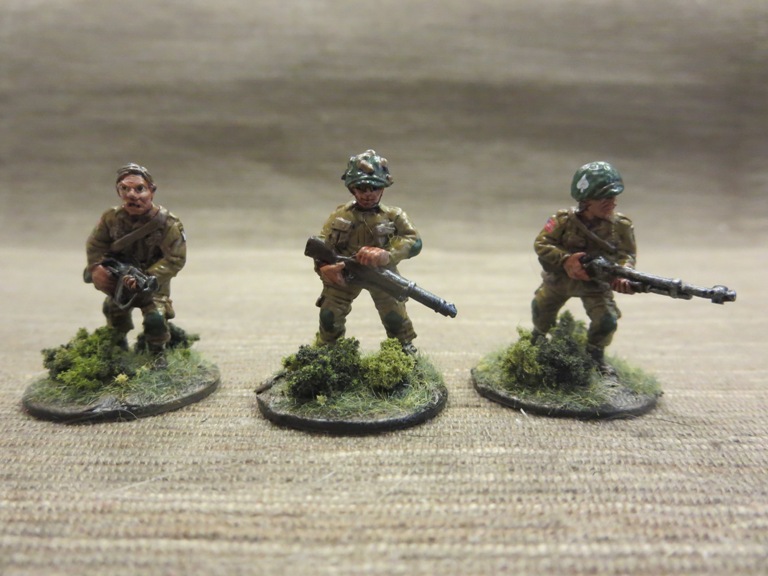
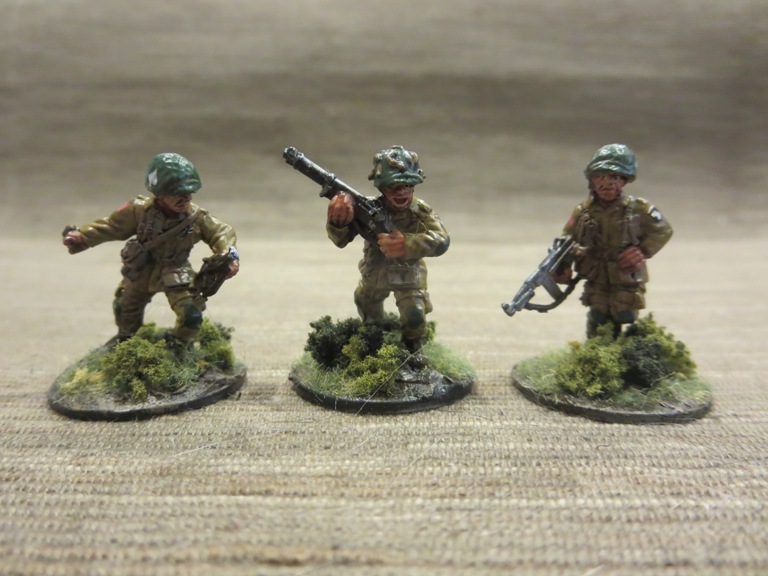
My new 28mm World War II project is marching on, and I’ve recently added some US 101st Airborne models from Black Tree Design. The UK-based BTD offers a diverse line of metal miniatures from various historical eras, fantasy, science fiction and a nifty Doctor Who offering. The WWII US Airborne line offers a nice selection of poses and weapons, so I bought into my first BTD models averaging about $2 USD per figure during one of their frequent online sales.

BTDIMG_4977Nice packaging from Black Tree Miniatures

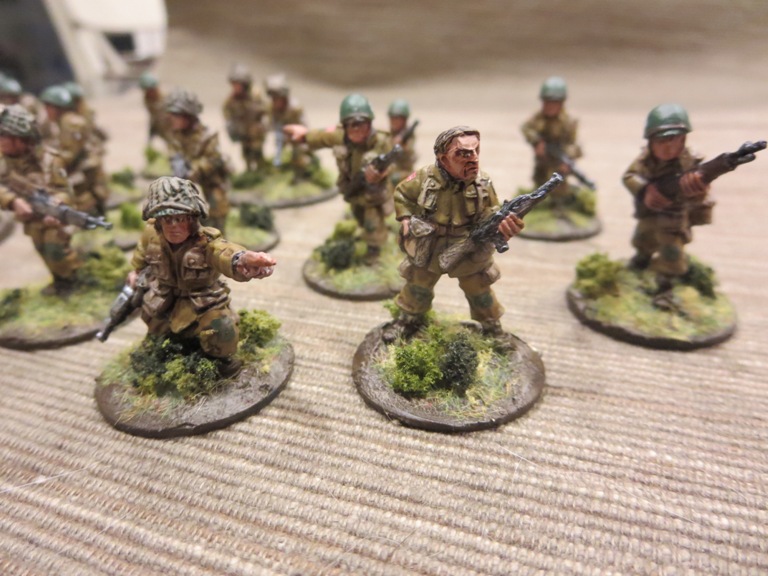
The BTD miniatures were quickly delivered in the US bagged and packaged in a little tin with a hand-written ‘thank you’ note. Compared to my earlier Airborne from Artizan Designs, the BTD models are a tad smaller and thinner but scale well on the table. Detail is a bit more sparse with less equipment slung on the backs of the paratroopers and rifles which read a bit more like that on toy soldiers. Aside from rifles, the models also came armed with Browning BARs, Thompson submachine guns and one guy hurling a hand grenade. While most of the models are set in generic poses, a few of the models show a lot of individual character with one officer calmly smoking a cigarette and another charging forward without a helmet.

AB Paint SchemeOne minor bummer was the delicate nature of some of the BTD models cast with both feet held tightly together, and one snapped off the base when I attempted to straighten his pose more upright. With the rest of the models successfully glued to bases, I painted up my first group of BTD miniatures using the same quick and simple process from my previous 28mm paratroopers.

Painting 28mm US Airborne

  1. Clean flash from metal models with a sharp knife and glue to metal washer or plastic bases.
  2. Apply filler putty to bases. When dry, scrape off excess with a sharp knife.
  3. Base coat models and bases with flat black spray primer.
  4. Paint uniforms and bandages on helmets with Tallarn Sand.
  5. Paint helmets and knee and elbow patches with Waaagh! Flesh.
  6. Paint faces and hands with Tallarn Flesh.
  7. Paint webbing and packs with Baneblade Brown.
  8. Paint bases, boots, gun stocks and helmet straps with Dark Brown.
  9. Apply Agrax Earthshade wash to uniforms, helmet netting, webbing and packs.
  10. Mix 50/50 Baneblade Brown and Off White and lightly dry brush packs, webbing and socks.
  11. Lightly dry brush bases, gun stocks, helmet netting, holsters and elbow and knee patches with Baneblade Brown.
  12. Paint metal gun, bazooka and mortar parts with black and finish with a light dry brush of metallic silver.
  13. Paint eyes with small dots of Off White and Dark Brown. Clean up around eyes with Tallarn Flesh.
  14. Mix 50/50 Tallarn Flesh and Off White and brush highlights on cheekbones, chins, forehead, nose and hands.
  15. Apply Company B decals to shoulders and helmets, followed by a coat of Solvaset decal fixative from Walthers.
  16. Cover bases in white glue and cover in 50/50 mix of fine light green and dark green grass flock.
  17. Glue small pieces of clump foliage to base.
  18. Spray coat completed models with matte finish.

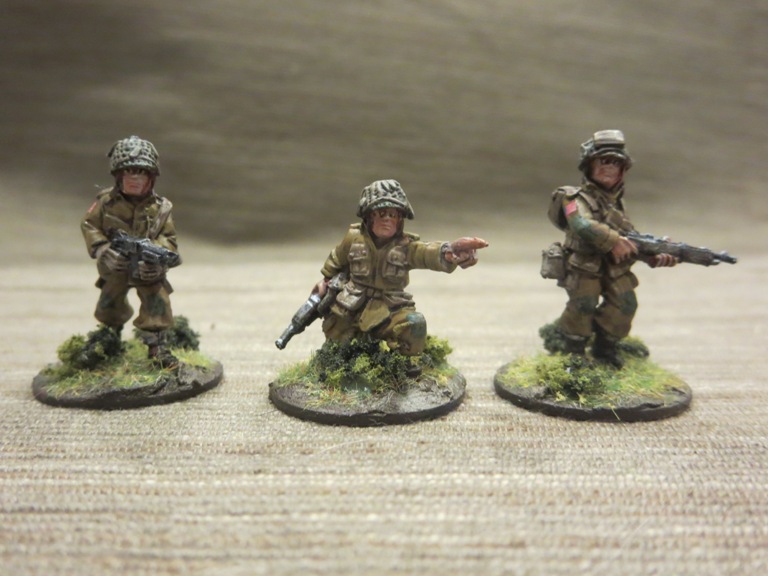
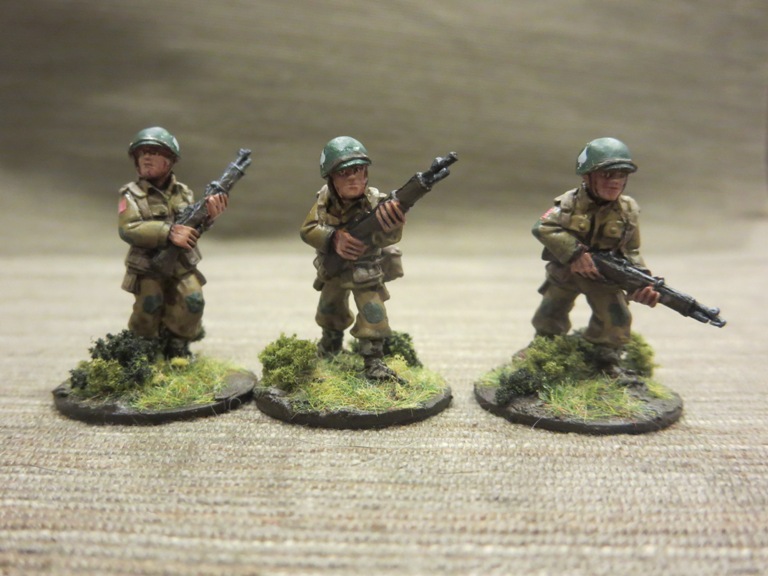
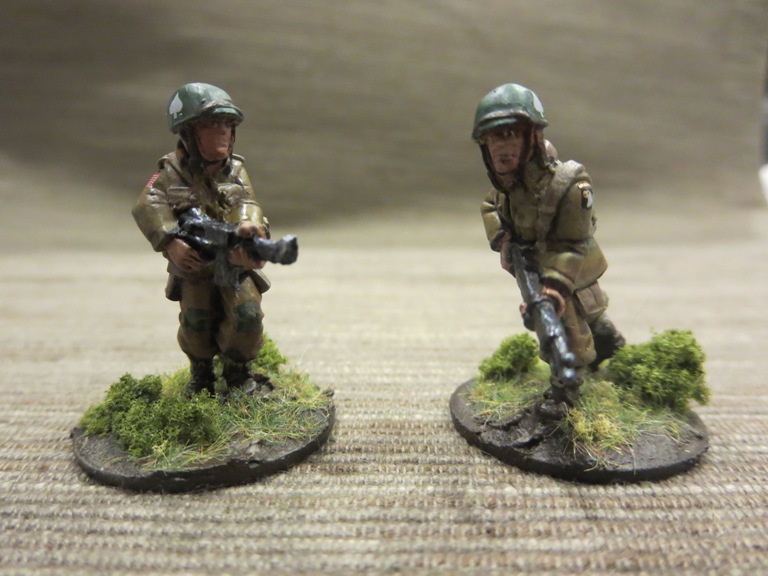
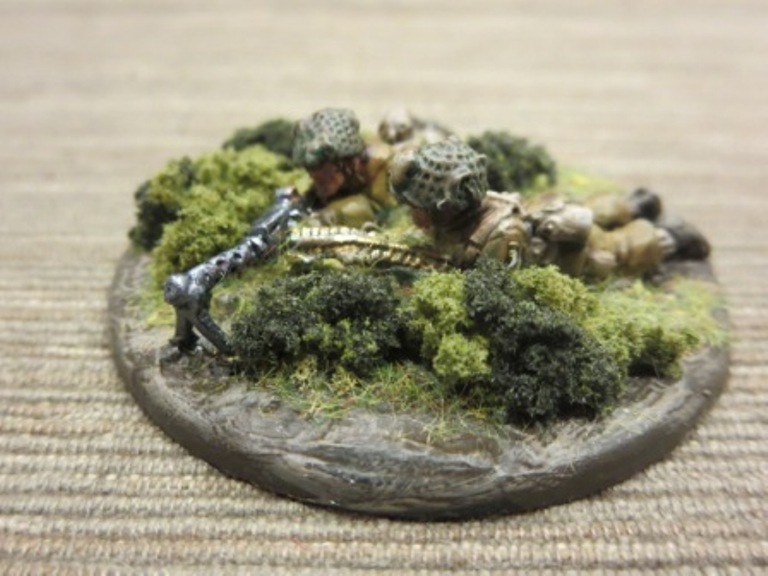
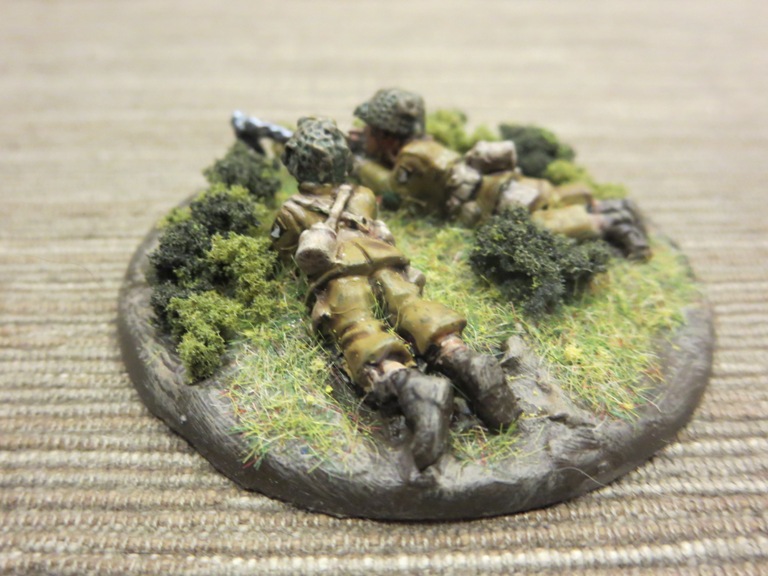
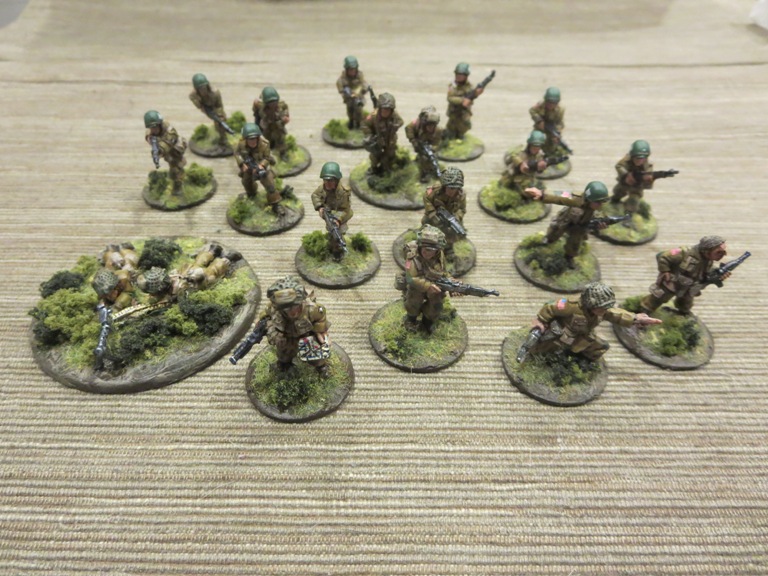
Finally, a few photos of my finished BTD US Airborne ready to hit the Normandy tabletop.

IMG_0654

IMG_0657

IMG_0659

IMG_0660

IMG_0658  IMG_0744IMG_0662

IMG_0663

28mm: US Airborne Support Weapons By Warlord Games

usairborneweapons

With my first 101st Airborne troops completed in 28mm, I’ve moved on to adding some support weapons. As a relative newcomer to World War II at this scale, I’ve also taken the opportunity to try another manufacturer’s miniatures for the sake of comparison.

WarlordlogoIn 2008, Warlord Games launched a small selection of WWII miniatures acquired from another manufacturer. To compliment the line of models, about three years ago Bolt Action came to the game scene with a slickly-designed rule set published by Osprey Publishing and a now vastly-expanding line of miniatures from multiple nations and combat theaters of WWII. The Warlord Games plastic and metal line of soldiers, artillery, transports and armor, along with the Bolt Action game system, have come to dominate the market and tournament scene for gamers playing tactical-level WWII in the larger 28mm scale.

For my first figures from Warlord Games, I stuck with a few metal models which scale nicely with my figures from Artizan Designs. The castings display a lot of exaggerated poses, animated facial expressions and detailed equipment which look great on a wargaming tabletop and reveal the influence of the designers who hail from the world of Warhammer and Warhammer 40,000 from Games Workshop.

AB Paint SchemeIn painting my first Warlord Games miniatures, I went with my same quick and simple painting scheme I’ve been using so far:

Painting 28mm US Airborne Support Weapons

  1. Clean flash from metal models with a sharp knife and glue to metal washer or plastic bases.
  2. Apply filler putty to bases. When dry, scrape off excess with a sharp knife.
  3. Base coat models and bases with flat black spray primer.
  4. Paint uniforms and bandages on helmets with Tallarn Sand.
  5. Paint helmets and knee and elbow patches with Waaagh! Flesh.
  6. Paint faces and hands with Tallarn Flesh.
  7. Paint webbing and packs with Baneblade Brown.
  8. Paint bases, boots, gun stocks and helmet straps with Dark Brown.
  9. Apply Agrax Earthshade wash to uniforms, helmet netting, webbing and packs.
  10. Mix 50/50 Baneblade Brown and Off White and lightly dry brush packs, webbing and socks.
  11. Lightly dry brush bases, gun stocks, helmet netting, holsters and elbow and shoulder patches with Baneblade Brown.
  12. Paint metal gun, bazooka and mortar parts with black and finish with a light dry brush of metallic silver.
  13. Paint eyes with small dots of Off White and Dark Brown. Clean up around eyes with Tallarn Flesh.
  14. Mix 50/50 Tallarn Flesh and Off White and brush highlights on cheekbones, chins, forehead, nose and hands.
  15. Apply Company B decals to shoulders and helmets, followed by a coat of Solvaset decal fixative from Walthers.
  16. Cover bases in white glue and cover in 50/50 mix of fine light green and dark green grass flock.
  17. Glue small pieces of clump foliage to base.
  18. Spray coat completed models with matte finish.

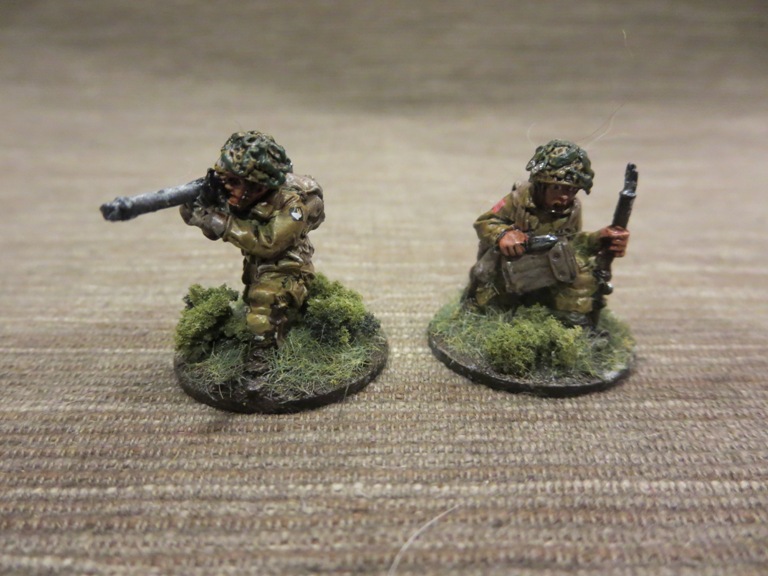
To begin, I’ve painted up a 60mm mortar team and a bazooka crew. here’s a few photos of the final results:

IMG_0649

IMG_0648

IMG_0646

IMG_0647

I’ll probably add a light machine gun and some other models from Warlord Games soon, but for now my US Airborne forces will be able to pack a bit more punch in upcoming games.

New Game Weekend: The Battle Of The Five Armies

fivearmiesbox

Like so many of my generation, J.R.R. Tolkien’s stories from the page to the screen to the game table and back again have shaped much of my life. As a fantasy-steeped child of the 1970s standing on the threshold of a lifetime of gaming and Tolkien fandom, The Hobbit (1977) and The Lord of the Rings (1978) cartoons were my first intros to the mythos of Middle-Earth. From there, I began my own journey of swords, sorcery and funny-shaped dice with Dungeons & Dragons. In my teen and college years, I plowed through Tolkien’s The Lord Of The Rings and The Hobbit books. After traveling through many pages and countless paper and pencil campaigns, Peter Jackson’s trilogy of The Fellowship of the Ring (2001), The Two Towers (2002) and The Return of the King (2003) turned another whole generation (including my own young kids) on to the story that became a worldwide phenomenon anew. Around the same time, I leaped into Game Workshop’s Lord of the Rings miniatures game and spent a fair amount of time re-fighting the battles of Middle-Earth on the tabletop in miniature. Ten more years on, Jackson returned to the prequel story of The Hobbit with An Unexpected Journey (2012), The Desolation of Smaug (2013) and The Battle of the Five Armies (2014). So, not coincidentally, gaming in the realm of hobbits, orcs, wizards and elves has also returned for a time.

hobbit5armiesposterThe Battle Of The Five Armies dominates the final movie from Peter Jackson’s Lord of The Rings and Hobbit franchises

Over four decades, I’ve come around again and again to the Battle of the Five Armies in the late-70s cartoon, my worn copy of The Hobbit, Jackson’s final blockbuster movie of last year and now with the 2014 re-issue of The Battle Of The Five Armies board game by Ares Games. The epic battle between the loose alliance of the Free Peoples of men, dwarves and elves and the evil Shadow Armies of orcs and goblins at the foot of the Lonely Mountain is a story etched into my imagination and that of many of my friends since an early age. This past week I sat down at the table with a fellow member of Metropolitan Wargamers in Brooklyn, NY for a learning game and to meet as the forces of good and evil for control of Middle-Earth.

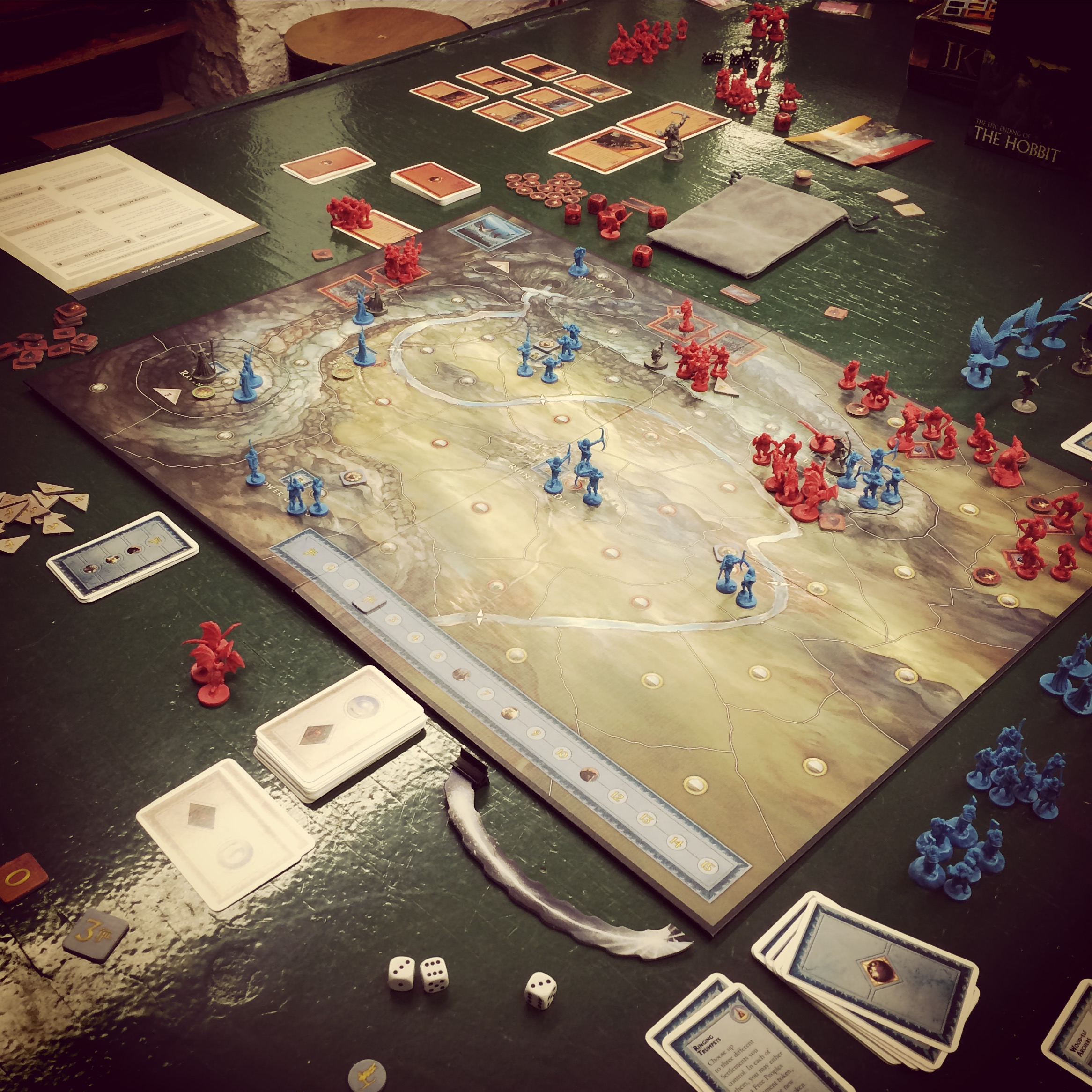
IMG_5479The Battle of the Five Armies begins

The two-player Battle Of The Five Armies retails for $89.99 USD but can be found online for about $60 USD, an incredible deal for a big box packed with fantastic components. The game contains 125 well-sculpted plastic miniatures depicting dwarves, men, elves and eagles of the Free Peoples in blue and goblins, orcs, warg riders and bats from the Shadow Armies in a ghastly red. Nine hero characters from the battle — Bard, Beorn, Bolg, Bilbo Baggins, Dain, Gandalf, the Elven King, Lord of the Eagles and Thorin — are each represented with an unique silver miniature and a character card outlining their special heroic abilities. Action and combat dice, numerous cardboard counters, dozens of Event, Fate and Story cards and a simple game board presenting the plains and mountains of the battlefield round out a greatly designed game.

The game begins on the eve of the battle with the Shadow Armies swarming in the mountains while the allied elves, men and dwarves work to create defensive position from the impending onslaught. Turns progress along a Fate track with the forces of evil racing to capture territory equaling ten points before time elapses or the Free Peoples are able to repel the Shadow Armies attack with the arrival of reinforcements or surprise allies like the Eagles from Misty Mountains or the ferocious shape-shifting man-bear Beorn.

IMG_5480The Shadow Armies and Free Peoples fight at the Eastern Spur

In each round, a single Story and Event card is drawn by each player up to a maximum hand size of six cards. The Free Peoples player then chooses to activate up to three hero characters in the round, allowing for extra recruits to appear, special magic attacks from the wizard Gandalf or a hail of arrows from the Elf King. Depending on the number of heroes activated, the Free Peoples player then also places Leadership tokens with some of their units. The Shadow Armies player then randomly selects Fate tiles to advance the Fate track, choosing as many tiles as the Free Peoples player chose to activate. Once the Fate track hits certain levels, additional heroes may appear in the game, bolstering the defenses of good. Thus, the Shadow Armies player needs to race against the Fate track to move and attack quickly and mercilessly before the Free Peoples can string together enough of a defense to win the day.

IMG_5481Gandalf releases a fireball from Ravenhill on the Shadow Armies in the distance

Dice and cards propel the action of the game. Each player throws a set of special Action dice, each depicting a specific type of activation within their turn — Character, Army, Muster, Muster/Army, Event and Will Of The West for the Free Peoples or Lidless Eye for the Shadow Armies. Beginning with the Free Peoples player, each chooses an Action die and resolves a given action. For example, an Army action allows a player to move or attack with armies or play a Character Event or Story card, and a Muster action allows recruitment or rally of armies or the play of a Muster Event or Story card. When a combat occurs, players collect their available unit cards into their hand and then roll dice based on the Combat ratings of their units. Along the way, other cards may be played to create specific events like dealing extra damage or negating leadership abilities. Terrain also plays a role in specific unit effectiveness during battle.

IMG_5485The Shadow Armies mass for a late game attack on the Free Peoples

Like many strategy games, The Battle Of The Five Armies becomes one of timing and getting the right cards, actions and forces in play. In our first learning game, the Shadow Armies quickly built up their horde and raged forward with fierce waves from the north and northeast. A heroic defense of the Eastern Spur by Lakemen fell to the orcs and their wargrider allies, and many dwarves also met their final end in a battle at Camp near the Front Gate. Gandalf held off the orcs and goblins to the west with a ranged fireball hurled from Ravenhill, saving the elven forces at the Fallen Bridge from imminent attack. As the Fate track moved in the late game to the eighth position, the Eagles were able to swoop down from their mountain aerie and attack the Shadow Armies in four areas, stalling the advance of evil. The Shadow Armies regrouped as additional recruits were placed throughout the realms defended by the Free Peoples. The Fate marker moved into the eleventh stage, releasing Beorn who sat at the southern border ready to wreak havoc on the encroaching Shadow Armies. Although many Free Peoples had fallen during the battle, the Shadow Armies weren’t close enough to strike a final fatal blow, and Middle-Earth remained free at the close of the game.

Our first game of The Battle Of The Five Armies, epic as it was, clocked in at over three hours as we got a hang of the rules. Lessons learned included the need for the Shadow Armies to always be on the attack since the arrival of more allies of the Free Peoples spells almost certain defeat for the forces of evil. Studying over the various cards and their effects, used by themselves or in combination, is also a big part of becoming an effective commander on either side of the battle.

Famously, Tolkien’s description of the Battle of the Five Armies in The Hobbit spans less than ten pages tucked in near the end of the book. For the two of us players, what we felt most from the game was how true it was to that short text and the pictures and the legends filling our imaginations over many, many years.

28mm: German Infantry And MG 42 HMG By Artizan Designs

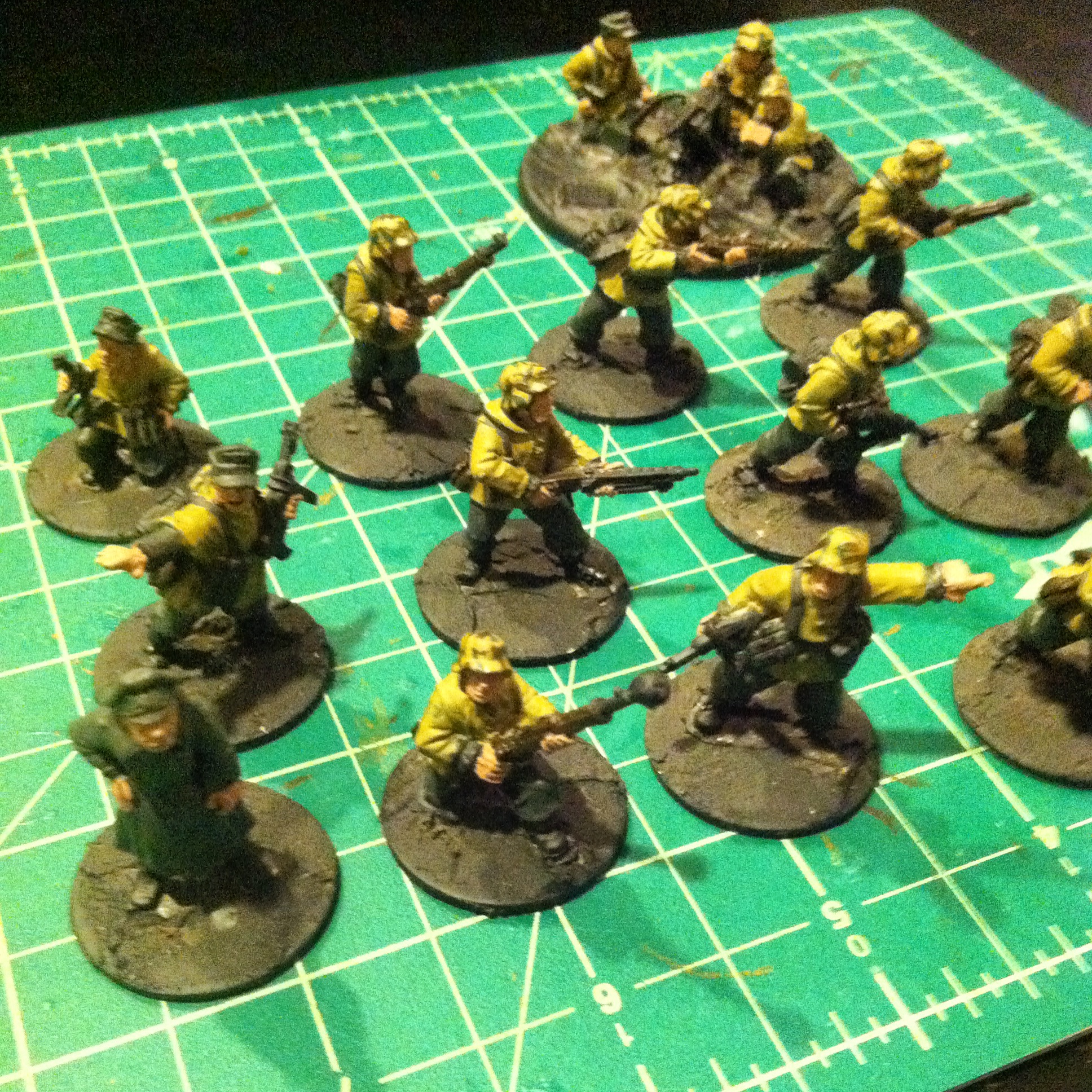
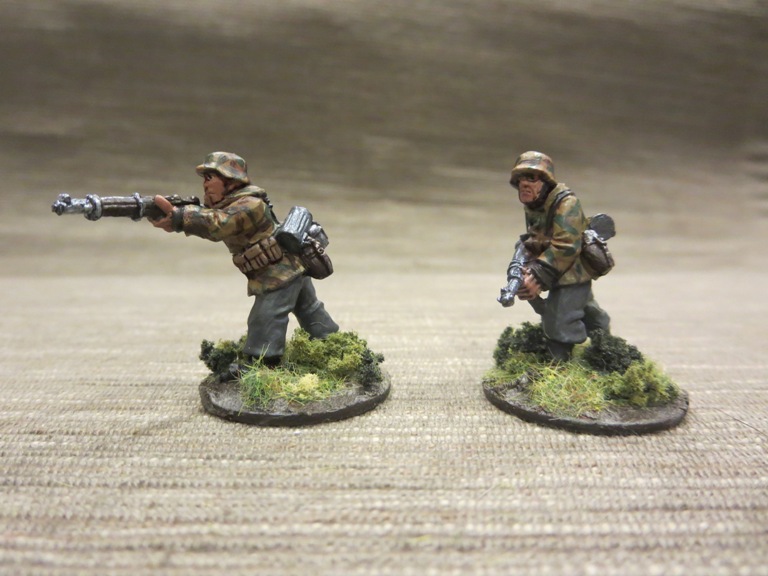
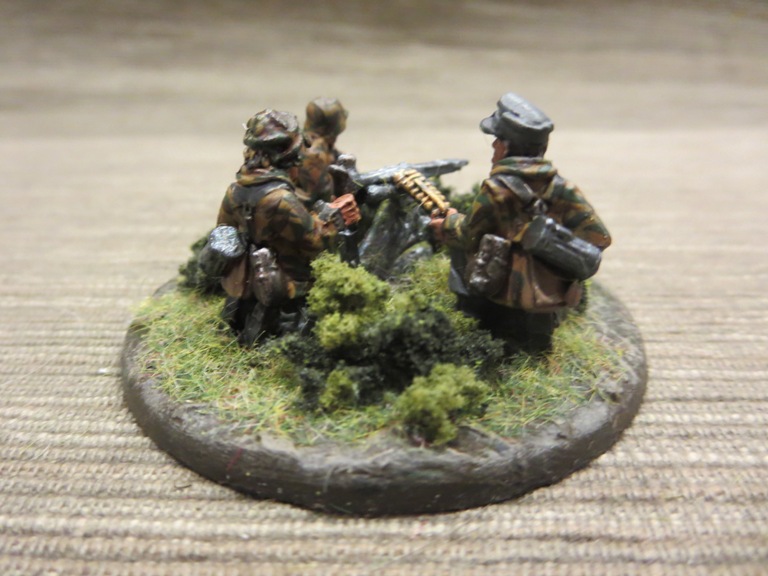
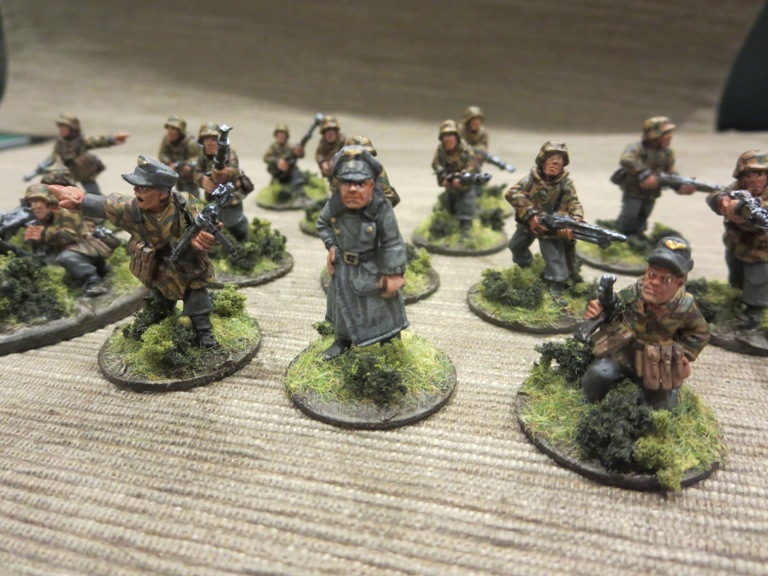
waffen After wrapping up my first 28mm US Airborne troops, I set to work on some Germans. I ordered a bunch of Late War German infantry and command, plus an MG 42 team by Artizan Designs from Brigade Games and received them speedily. The detail in the figures really pops, and the personality and variety in the poses make them really engaging at this scale. I particularly like the stern officer in his greatcoat and the other figures screaming out orders and gesturing on the move. ADlogo Painting WWII Germans for the first time at this scale, I really wanted to go for more detail than I do at 6mm or 15mm. Artizan Designs offers some great painting references on their website, including a general uniform guide and a lot of detail on German camoflage patterns. Using paints I had on hand plus a few more colors I picked up from Citadel’s paint line, I came up with a palette and painting scheme that produced some great results on my first go. paintgermanThe Artizan figures require little flash clean up before being glued to metal washers. The three man machine gun crew went on a 60mm plastic base I picked up from Proxie Models. Here’s the steps in detail for painting my German infantry.

Painting 28mm German Infantry

  1. Clean flash from metal models with a sharp knife and glue to metal washer or plastic bases.
  2. Apply filler putty to bases. When dry, scrape off excess with a sharp knife.
  3. Basecoat models and bases with flat black spray primer.
  4. Paint smocks and helmets with Tallarn Sand.
  5. Paint pants, soft hats, officer greatcoat and gas mask containers with Skavenlight Dinge.
  6. Paint camouflage on helmets and smocks with alternating Waaagh! Flesh and Dark Brown.
  7. Paint faces and hands with Tallarn Flesh.
  8. Paint packs with Baneblade Brown.
  9. Paint boots and equipment straps Black.
  10. Paint bases, gun stocks, water bottles and helmet straps with Dark Brown.
  11. Apply Agrax Earthshade wash to uniforms, helmet netting, webbing and packs.
  12. Mix 50/50 Baneblade Brown and Off White and lightly dry brush packs, webbing, socks and holsters.
  13. Dry brush pants, soft hats and officer great coat with Light Grey.
  14. Lightly dry brush bases and gun stocks with Baneblade Brown.
  15. Paint metal gun and water bottle parts with black and finish with a light dry brush of Metallic Silver.
  16. Dry brush gasmask containers with metallic Silver.
  17. Paint eyes with small dots of Off White and Dark Brown. Clean up around eyes with Tallarn Flesh.
  18. Mix 50/50 Tallarn Flesh and Off White and brush highlights on cheekbones, chins, forehead, nose and hands.
  19. Cover bases in white glue and cover in 50/50 mix of fine light green and dark green grass flock.
  20. Glue small pieces of clump foliage to base.
  21. Spray coat completed models with matte finish.

 IMG_4954 Helmets, smocks and pants base coated on the MG 42 team and infantry models

IMG_4958Infantry and officer uniforms base coated

IMG_4955Flesh base coats and helmet camouflage added to infantry and officer

IMG_4959Camouflage painted on helmets, and gun stocks and water bottles painted brown

IMG_5462

Equipment detail being painted

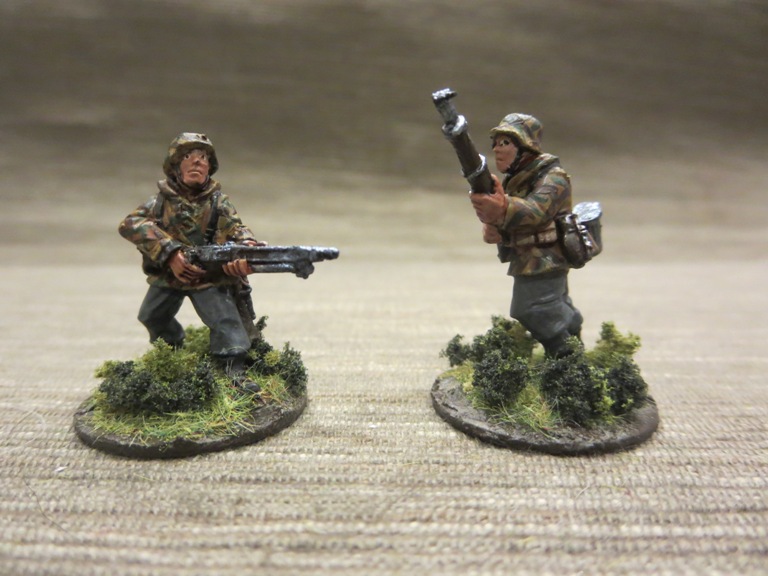
Here’s a round up of my finished German infantry from Artizan Designs…

IMG_0628

IMG_0630

IMG_0637

IMG_0636

IMG_0634

IMG_0632

IMG_0638

IMG_0639

IMG_0642

IMG_0643

IMG_0641

Now that I’ve got my core German and US forces completed, I’ll be looking to fill out forces on both sides with some additional support weapons and some more infantry from some other manufacturers. In no time at all, my 28mm force continues to grow.

The Ratzer Maps At The Brooklyn Historical Society

IMG_5425

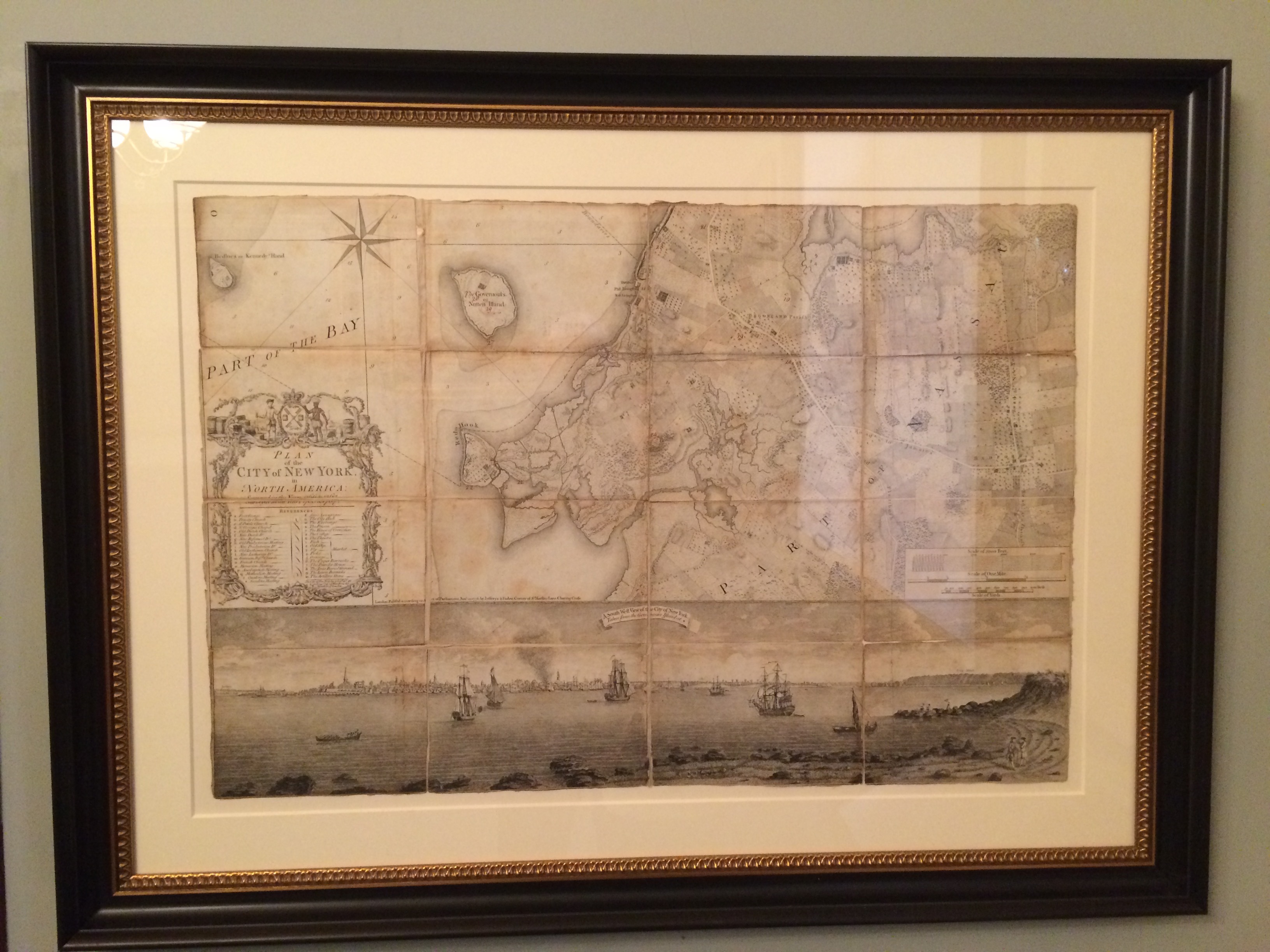
Now in its final weeks at the Brooklyn Historical Society, the tiny second floor exhibition Unlocking Two Revolutionary War Maps: The Ratzer Maps at BHS showcases two incredibly important maps of the American War of Independence and the 1776 Battle of Long Island in particular. Alternately known as the Battle of New York and the now-popular Battle of Brooklyn, the Battle of Long Island was the first of the new nation after announcing its independence on July 4, 1776 and the largest of the entire war. For anyone with an interest in the American Revolution or 18th-century New York history, these maps unlock a close-up view of the ground fought over between the British Empire and the upstart Colonials nearly 240 years ago.

IMG_5426The “Percy Map” used during the Battle of Brooklyn in 1776 (left) and the restored 1770 “Ratzer Map” (right) at the Brooklyn Historical Society

Drawn by British cartographer Bernard Ratzer in 1766-1767, the Ratzer Map is one of the seminal documents of early New York. The BHS copy of the full 1770 edition of the Ratzer Map is only one of four in known existence and showcases an early snapshot of Manhattan and nearby Brooklyn in their early days where farms and rural roads still dominated the landscape. The smaller map on display, showing only the lower portion of the Ratzer Map, was carried by British General Hugh Percy during the Battle of Long Island in August 1776. The Percy Map is now co-owned by the BHS and nearby Green-Wood Cemetery, the high ground for much of the battle, and was first put on public view in the summer on 2014 at the cemetery. The current exhibit of these maps at the BHS after a restoration of the full Ratzer map in 2011 is a wonder of 18th-century map making and 21st-century preservation.

schecterbfnyBarnet Schecter’s classic “The Battle For New York” from 2002

The exhibit features text from BHS President Deborah Schwartz and historian Barnet Schecter whose compellingly-detailed The Battle For New York: The City At the Heart Of The American Revolution has become the standard narrative of the battle. Additionally, the BHS has produced a free educational resource entitled Exploring Pre-Revolutionary New York: The Ratzer Map which digs into much of the historical detail found in the map including panoramic views of the shoreline and major landmarks of the era.

History can feel so large and abstract, buried in long ago events which are difficult to square with the present day. The Ratzer Maps at the BHS bring history remarkably into the present and allow a modern viewer to trace pivotal events along lines carefully set down on paper and battlefields more than two centuries ago.

I Ain’t Been Shot Mum: Cabourg June 6, 1944 Scenario

LandingatOmahaOn the morning of the Normandy Landings of June 6, 1944, taking the eastern sector of Omaha Beach fell to the United States 1st Infantry Division. Despite some missed targeted landing zones on the beach and heavy losses at the far ends, the exit “draws” were largely secured by mid-morning. As additional troops and supplies began to arrive, the push inland began.

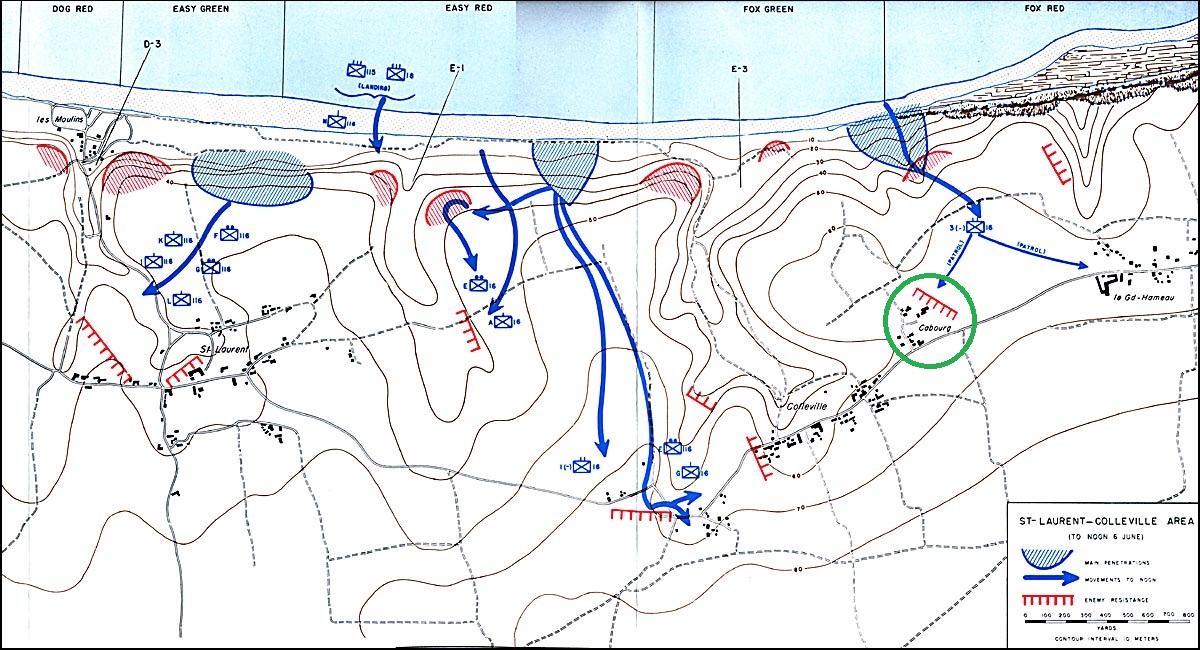
Omaha to CobourgMap of the US push to Cabourg from Omaha Beach, June 6, 1944

(via US Army Center of Military History)

Moving toward the objective of Colleville-sur-Mer, probing forces from the 1st Infantry Division pressed forward through the seaside fields of Normandy and began to encounter German defenders in various states of disarray. Tired from the fighting at the beach, the first group of Americans on patrol moved cautiously into Cabourg from the north and east while the German force scrambled to hold against any additional headway by the invaders. WhereTheHell After a couple of month hiatus, we jumped back into a 15mm World War II game at Metropolitan Wargamers in Brooklyn, NY this past weekend centering on the action at Cabourg. Using the I Ain’t Been Shot Mum rules and a post-D-Day scenario from the Where The Hell Have You Been Boys? book, all from Too Fat Lardies, our table was set to show the American advance and German defense at Cabourg.

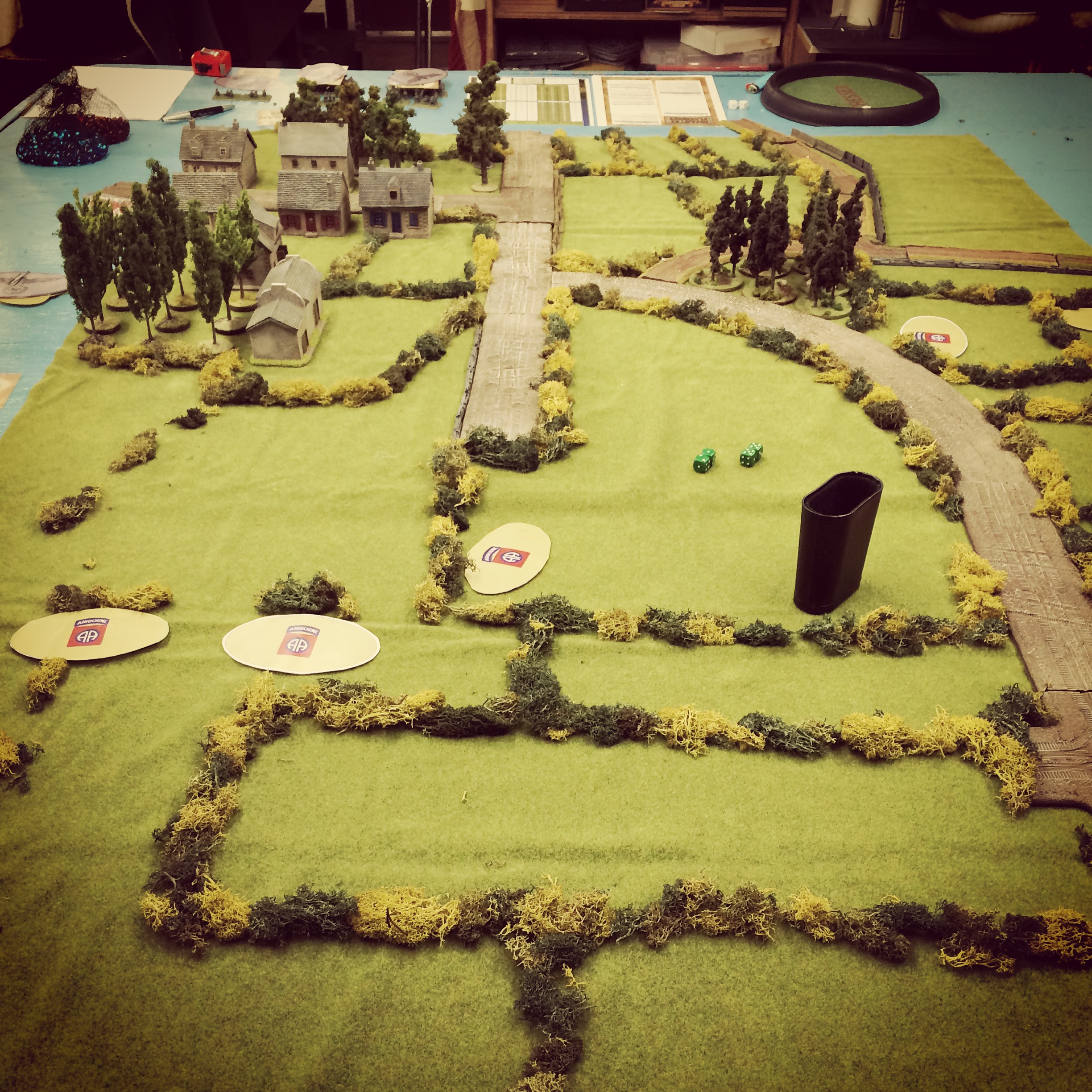
IMG_4940Initial advance of US forces on blinds from the east and north toward Cabourg

Playing on the US side, my partner and I divided our force of three rifle platoons under blinds plus three false blinds. I swung two platoons and a false blind directly at the village from the east while my teammate took the other two false blinds and a single platoon around to the north behind a copse of trees. The mass of US blinds hiding a force only half the actual size provided a great simulation of the confusion the Germans felt that morning as they also lay hidden in and around the village in defense.

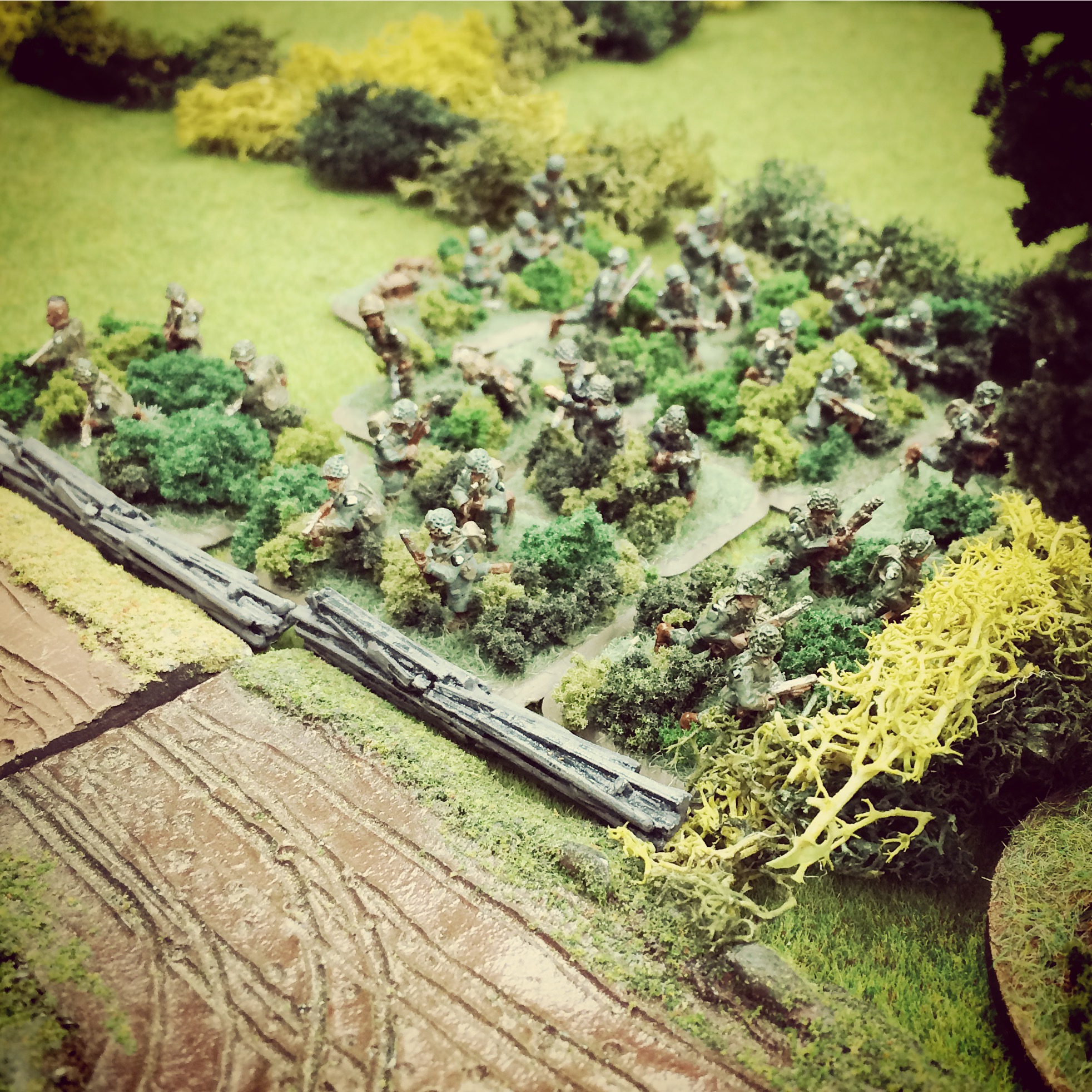
IMG_4941US forces near Cabourg on blinds from the east

IMG_4942The first US forces are revealed beyond a wood north of Cabourg

After a couple turns of US movement and prodding for Germans outside the town, the Germans spotted the Americans moving cautiously to the north. With two false blinds exposed, the third American blind revealed a rifle platoon armed with a mortar and two officers present. A false blind was also revealed near a farm at the eastern edge of the town as the Germans continued to burn up turn actions trying to find out where the Americans actually were.

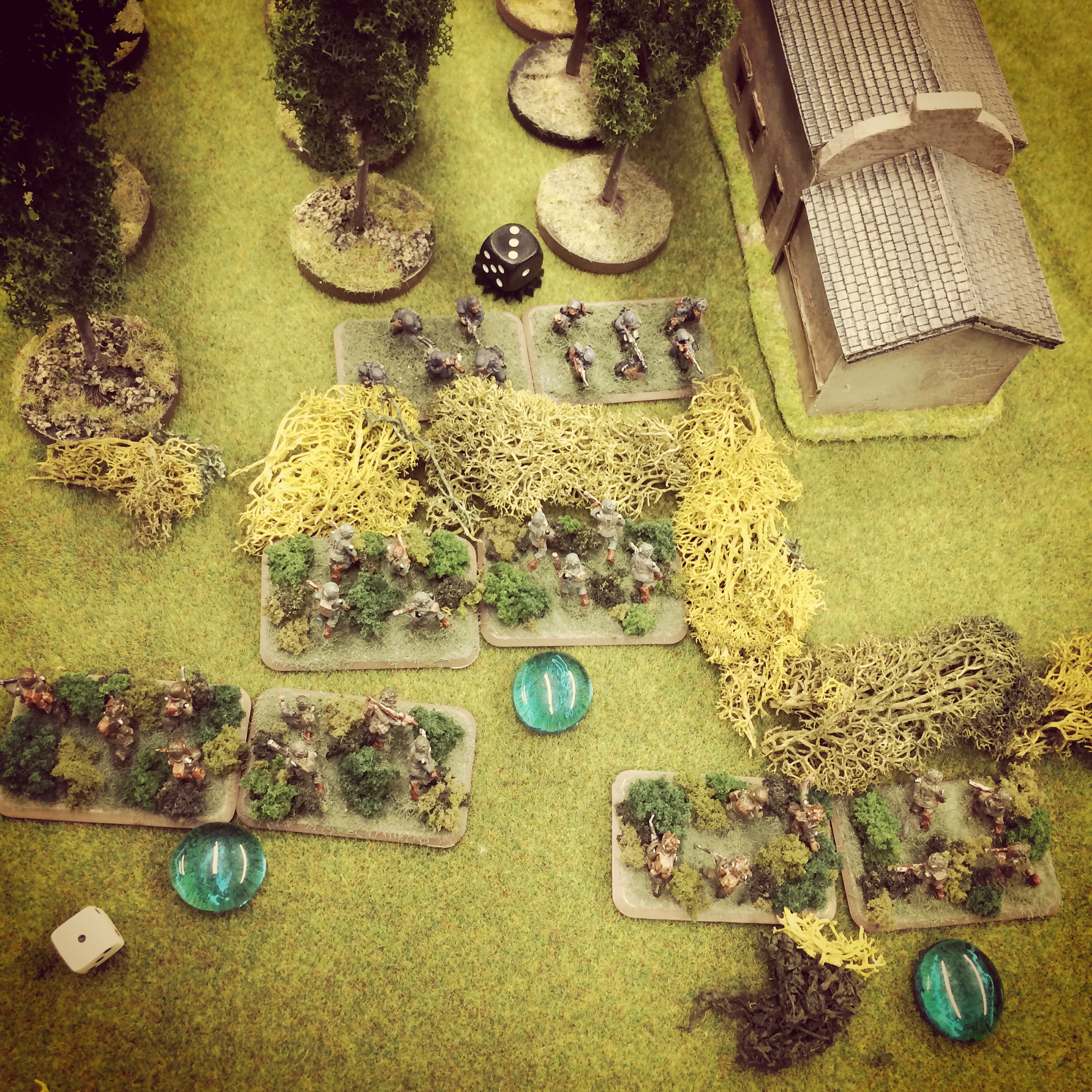
IMG_4943American and German forces simultaneously surprise each other near the farm

IMG_4944A close assault erupts in the woods behind the barn

In close proximity to each other to the rear of a barn at the farm, US and German blinds were exposed nearly simultaneously with American gunfire tearing into the outnumbered Germans. A close assault at a hedgerow quickly pushed the first German fire team to the rear and out the action for the game. The remainder of the German platoon stayed to continue on firing from within the first barn and a hede nearby.

IMG_4945The final American blind is exposed just north of the farm

IMG_4946Americans give and take fire at a hedgerow

On the other side of the farm, the final American blind revealed another rifle platoon hunkered behind a hedge lining a road to town. At long-range, shots were exchanged between German defenders in and around the barn and the Americans now shooting from both sides of the barn. The action at the east end of Cabourg settled into a stalemate of fire across the fields and around the barns.

IMG_4947US forces inch toward Cabourg across hedges and fields from the north

IMG_4949US forces stall out to the northeast of Cabourg

Back to the north of town, the lone US platoon on the moved cautiously along a road and over fields, fences and hedgerows. With the Americans creeping toward Cabourg, the Germans opened up with MG 42s positioned in an upper story of a second barn and from the garret of a farmhouse near the entry road to town. With a cross-fire of heavy machine gun pouring into the Americans at the north and east, the US advance stalled somewhat until something could be done about the German fire ripping from building windows.

IMG_4948The remnants of the first German rifle platoon look to reposition to cover

IMG_4950Americans move to assault the German machine guns at the second barn

Back at the two barns, one US platoon swung around to the rear of the barn to assault the German machine gun crew inside. With the MG 42 crew thrown back into a retreat from the barn, the surviving German rifles on the other side of the barn retreated from fire into a nearby house. Firing from their new position, the Germans stalled the Americans pushing around the barns to the village. At the same time, the other MG 42 continued to fire into the other US platoon now pinned with dwindling numbers behind a hedge.

IMG_4951German reserves arrive late in the day to defend against the American push from the north

As the engagement progressed late into the scenario, the game’s referee announced the arrival of reserves on both sides. From the west, a fresh German rifle platoon joined the fight at the road and tree line at the northern edge of town. At full strength, two German platoons focused fire on the lone American platoon which had so cautiously moved toward that end of the village. Taking casualties, the shrinking US force began to fall back over the hedges and fields from where they had just come.

On the far end of the table, three more American platoons arrived from the beach to the east. Looking to advance quickly on the road straight toward town, the US reserves just couldn’t get in the fight fast enough. With the US forces already near Cabourg greatly reduced and in retreat to defensive positions, the game was called with the Germans holding Cabourg from the American assault.

At Normandy in 1944, the result was the same and the German defense halted the US advance which broke off by mid afternoon. The IABSM scenario at Cabourg is a great illustration of the dozens of small inland battles which raged after the morning’s landings along the Normandy coast over 70 years ago, and we’ll be returning to more follow-up actions in the weeks to come.

28mm: US Airborne By Artizan Designs

ABplane

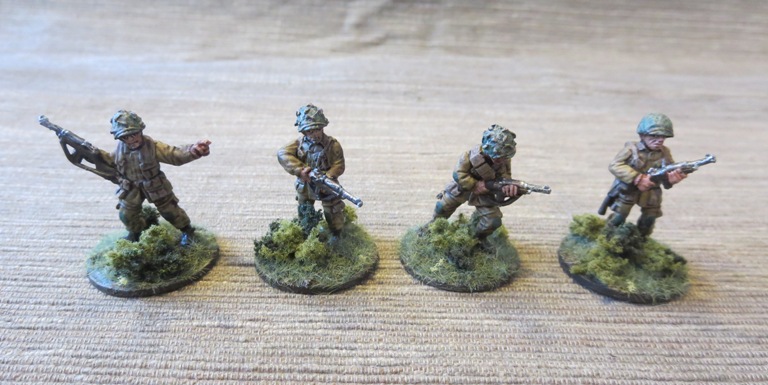
After a lot of modelling and gaming World War II over the years at the 15mm scale and some toes dipped into 6mm last year, I decided to move up to 28mm at the beginning of 2015. At this larger scale, there’s a lot less needed in terms of getting numbers of models on the table and there’s an opportunity for much more detail and personality in the figures, too. At about $2 USD per metal figure on average across a number of manufacturers, a more than healthy sized force for squad level engagements can be had with 30-40 or so figures on a side for under $100 USD.

ADlogo

To get started, I happened a  timely sale deal for Artizan Designs miniatures ordered from Brigade Games. I’m very much a late war post-D-Day player, so I purchased a variety of US Airborne riflemen, officers, characters and a M1919 30 cal. machine gun team. I really like the detail in sculpts on the Artizan figures, so the prospect of getting these guys painted up was pretty exciting.

AB Paint Scheme
Artizan Designs provides a lot of painting reference information on their site, and the US Airborne painting guide gave me a good jumping off point. I have plenty of experience painting the US 101st Airborne Division in 15mm, and the larger 28mm scale gave me the opportunity to work through a lot more detail with my miniatures. My existing paint inventory as well as a few extra colors from Citadel gave me all I needed to whip up a solid painting scheme.

CoBDecals

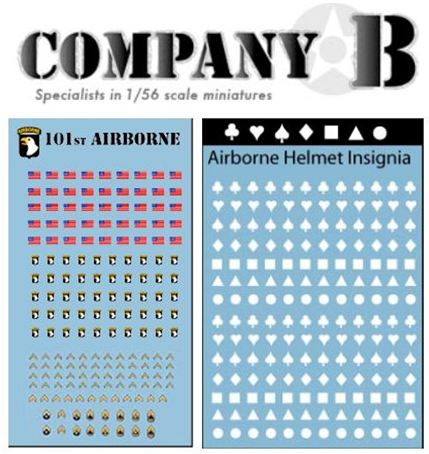
US 101st Airborne decals from Company B

To finish off my figures, I really wanted to add that last bit of realism at this scale with the appropriate patches and uniform markings. Since my painting skills don’t extend to the level of detail needed in painting patches and insignia, I was pleased to come across decals at this scale from Company B.

After some minimal flash clean-up, the individual figures got glued to metal washer bases. The prone LMG team went on a 60mm plastic base from Proxie Models and the two-man team on the move was glued to a larger metal washer. Here’s the painting guide in detail for my US Airborne:

Painting 28mm US Airborne

  1. Clean flash from metal models with a sharp knife and glue to metal washer or plastic bases.
  2. Apply filler putty to bases. When dry, scrape off excess with a sharp knife.
  3. Base coat models and bases with flat black spray primer.
  4. Paint uniforms and bandages on helmets with Tallarn Sand.
  5. Paint helmets and knee and elbow patches with Waaagh! Flesh.
  6. Paint faces and hands with Tallarn Flesh.
  7. Paint webbing and packs with Baneblade Brown.
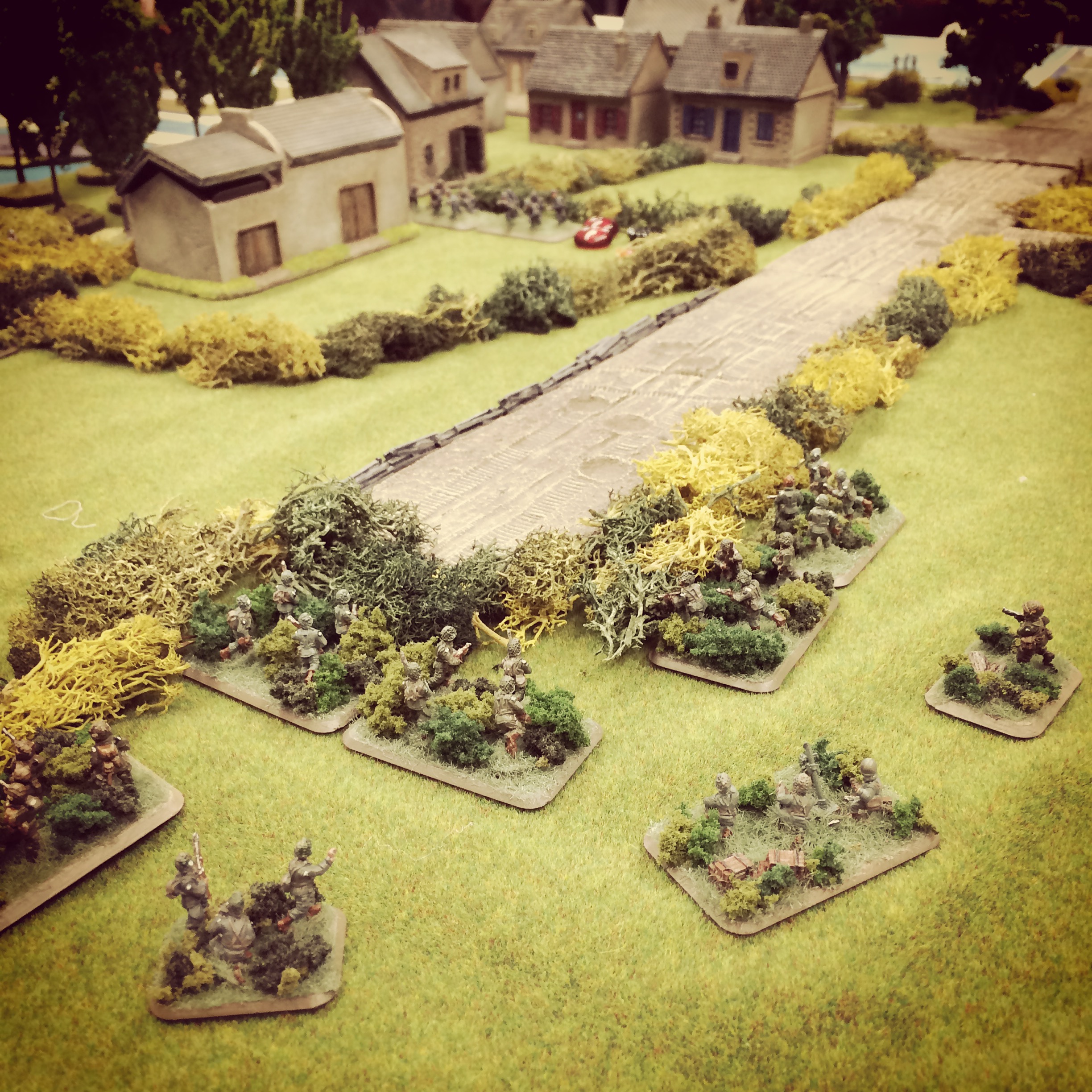
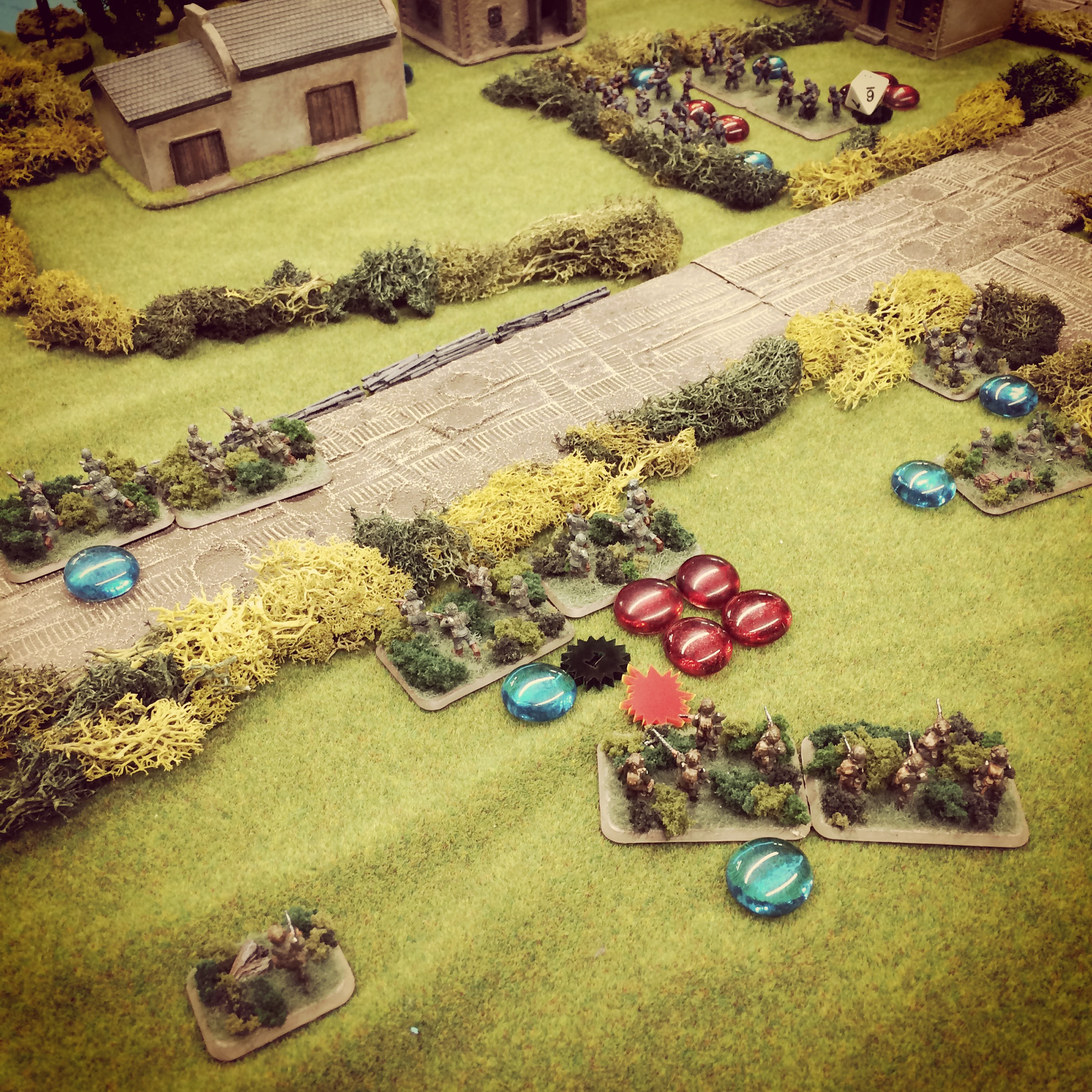
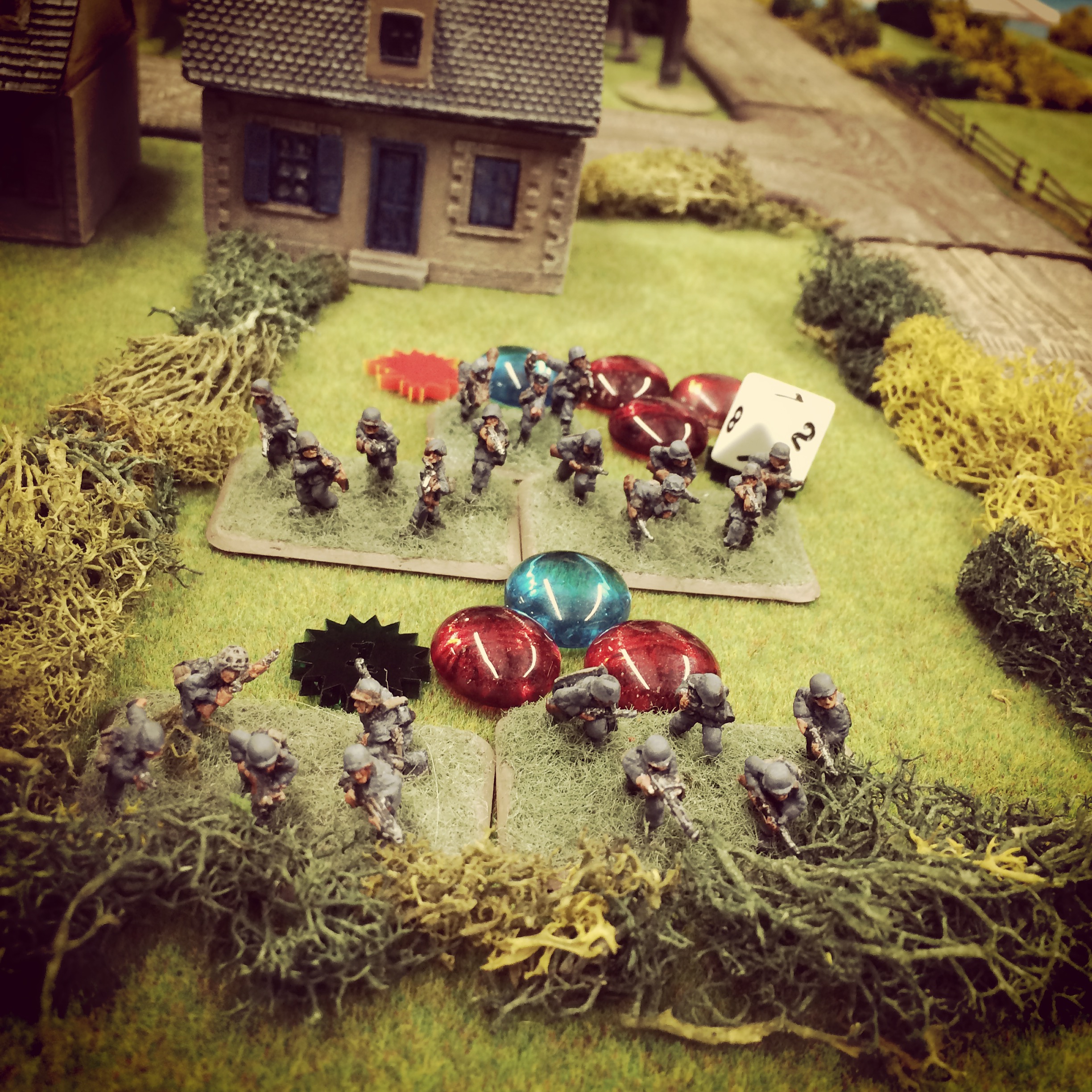
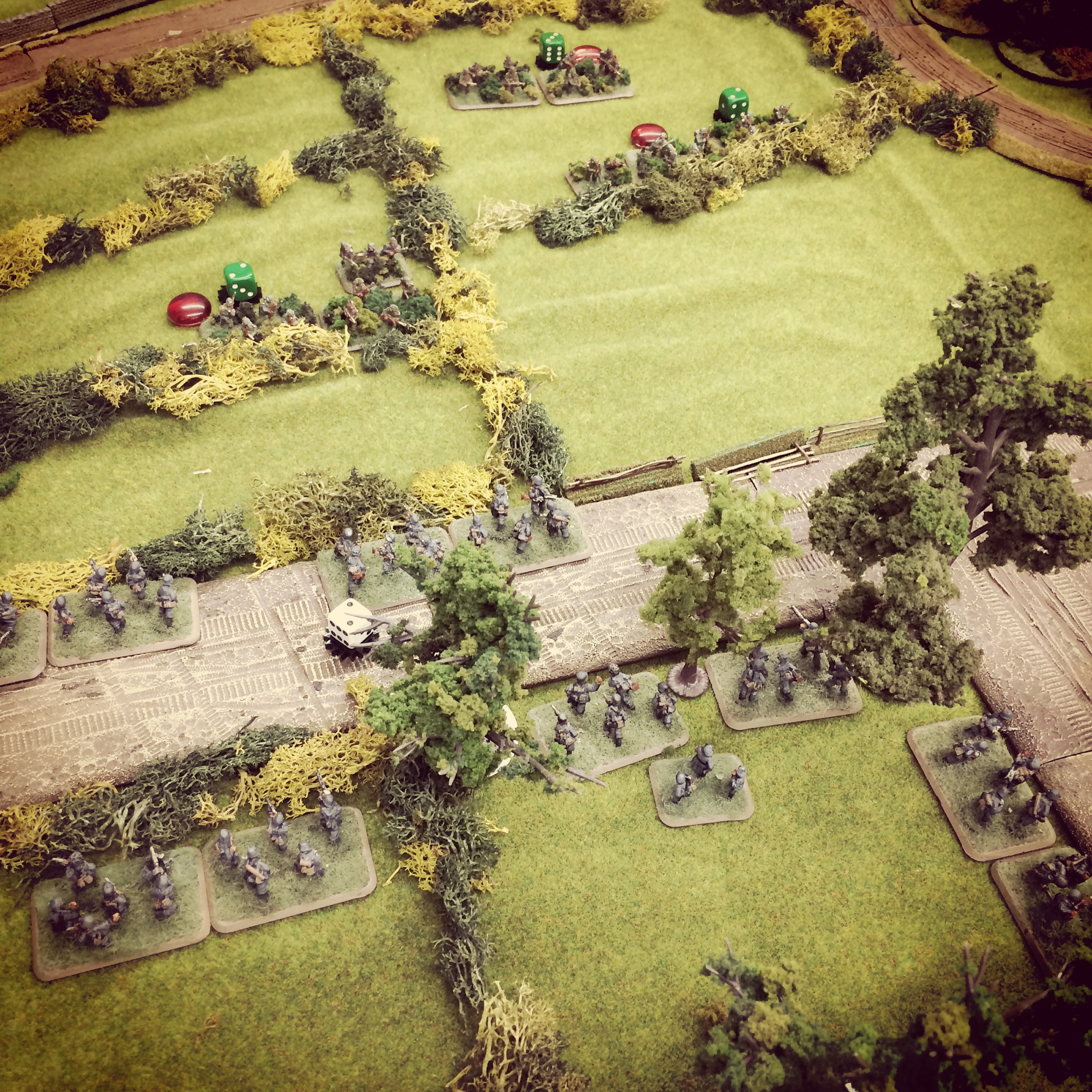
  8. Paint bases, boots, gun stocks and helmet straps with Dark Brown.
  9. Apply Agrax Earthshade wash to uniforms, helmet netting, webbing and packs.
  10. Mix 50/50 Baneblade Brown and Off White and lightly dry brush packs, webbing and socks.
  11. Lightly dry brush bases, gun stocks, helmet netting, holsters and elbow and shoulder patches with Baneblade Brown.
  12. Paint metal gun parts with black and finish with a light dry brush of metallic silver.
  13. Paint eyes with small dots of Off White and Dark Brown. Clean up around eyes with Tallarn Flesh.
  14. Mix 50/50 Tallarn Flesh and Off White and brush highlights on cheekbones, chins, forehead, nose and hands.
  15. Apply decals to shoulders and helmets, followed by a coat of Solvaset decal fixative from Walthers.
  16. Cover bases in white glue and cover in 50/50 mix of fine light green and dark green grass flock.
  17. Glue small pieces of clump foliage to base.
  18. Spray coat completed models with matte finish.

IMG_4918

Filler putty applied to US Airborne .30 cal machine gun teams

IMG_4915

Helmet and uniform base coats on US Airborne riflemen

IMG_4914

Flesh base coat on hands and faces on riflemen and command figures

IMG_4957

Uniform, helmet and flesh base coats on the .30 cal machine gun teams

IMG_4956

Washes and dry brush layers added to the .30 cal machine gun models and bases

And now, a whole series of my completed US airborne troops from Artizan Designs…

IMG_0609

IMG_0610

IMG_0611IMG_0614

IMG_0618

IMG_0621

IMG_0620

IMG_0616

IMG_0617

IMG_0615

IMG_0623

IMG_0624

IMG_0626

I still want to fill out my US forces with some additional troops and support weapons, so there will be more to come from Artizan and some other manufacturers. Getting some Germans ready for the table is another pending project on the workbench. Transport and armored vehicles are also very much on my mind. I’m also still debating rule sets, and I’ve been reading up on a variety including the popular Bolt Action from Warlord Games and Nuts! from Two Hour Wargames. With my first 28mm troops ready for action, WWII at a new scale is keeping the period exciting for what I’m certain will be another new year of painting and playing.

New Game Weekend: Acquire

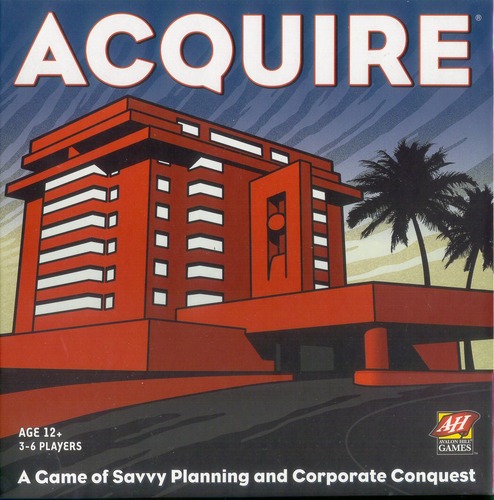
acquire box

Acquire was designed by Sid Jackson and published in 1964 as part of the 3M bookshelf series. Produced from the early 1960s through mid-1970s, 3M’s games were a bit of an oddity outside their core office, medical and industrial supplies business yet they hold a solid place in the hearts and history of the gaming community. Along with classic board games like Go, Backgammon and Chess, the 3M bookshelf games also introduced the early trivia game Facts In Five, the election-themed Mr. President and economic strategy games like Acquire. In 1976, the 3M games were sold off to Avalon Hill which was subsequently purchased by Hasbro in 1998. The chain of ownership of Acquire through the years made for multiple international editions as well as a more recent period of the game being out of print until Hasbro’s Wizards of the Coast made the game available again in 2008. For a game based in the economic mechanics of buying and selling, Acquire itself has passed through several acquisitions itself over the past five decades.

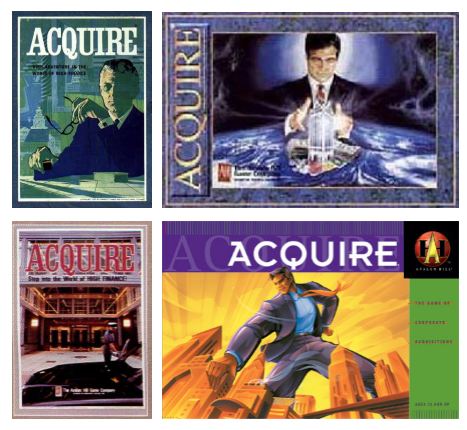
AcquireBoxesTL

Various editions of Acquire from the 1960s to 1990s

I had a chance to play the modern incarnation of this venerable game on a recent weekend at Metropolitan Wargamers in Brooklyn, NY. The latest edition of Acquire consists of relatively underwhelming card stock and paper components that is short on charm but does keep the price just under $30. The game board presents a grid of building lots marked with a number and letter combination which coincide with a set of tiles with the same markings. In turn, players play tiles and may opt to construct an available corporation once two contiguous lots are available. Constructing a new corporation gets the player a free stock certificate plus the opportunity to buy up to two more shares at the starting price.

IMG_4920

My first game of Acquire in progress

On a turn where a new corporation is not being founded, a player may instead buy up to three shares total among the existing corporations. As chains of tiles are built out, the value and cost of a stock rises. Over the course of the game, existing corporations expand and larger corporations merge with smaller ones once their chains of building lots intersect. When corporations merge, players with stock may cash out, convert shares at two to one for the new coronation’s stock or hold the old stock for when (or if) the gobbled up company finds a new space to start again on the board. Once a corporation grows to a chain of eleven tiles it becomes safe from a take over, and the game ends once every company reaches at least eleven tiles in size. Stocks are cashed in and money is counted to determine the winner.

IMG_4919

Stock certificates, tile rack and reference chart from Acquire

Acquire’s staying power rests in its simplicity coupled with a lot of strategic and tactical play mirroring something like actual investing. As in the real world, timing, location and having cash on hand to strike when an opportunity presents itself are all key factors in Acquire. The game is also almost purely competitive, and the rules as written offer no opportunity for side trading or off-board deals. Placing a tile is usually a direct benefit to the player or may be a defensive move against another player’s expansion. Swooping in to buy stock to become a majority shareholder right before a merger can cut someone else out of a hefty payout. A merger or expansion of existing companies may also benefit multiple players. The ability to quickly convert cash earned into a new investment and then flipping that into more profit rules the game.

While the modern incarnation of Acquire pales next to past editions with their better components, the game itself remains strong. The buy-sell cycle of investing hasn’t changed much over the years. For a game with a fifty-year history of itself being bought and sold, little has changed with Acquire either.

New Game Weekend: King of New York

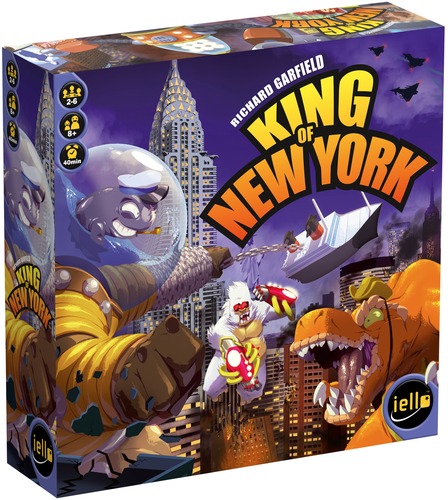
KONYbox

As the blog states, I’m a New Yorker (a Brooklynite to be exact), so playing a game based in my city of residence is always a plus. Prancing around a game board depicting the five boroughs as a towering, cartoonish monster with a nasty temper is even better. And so, King of New York hits the sweet spot for me as a gamer and occasionally cranky denizen of the city that never sleeps.

KONYmonsters

Sample monsters from King of New York

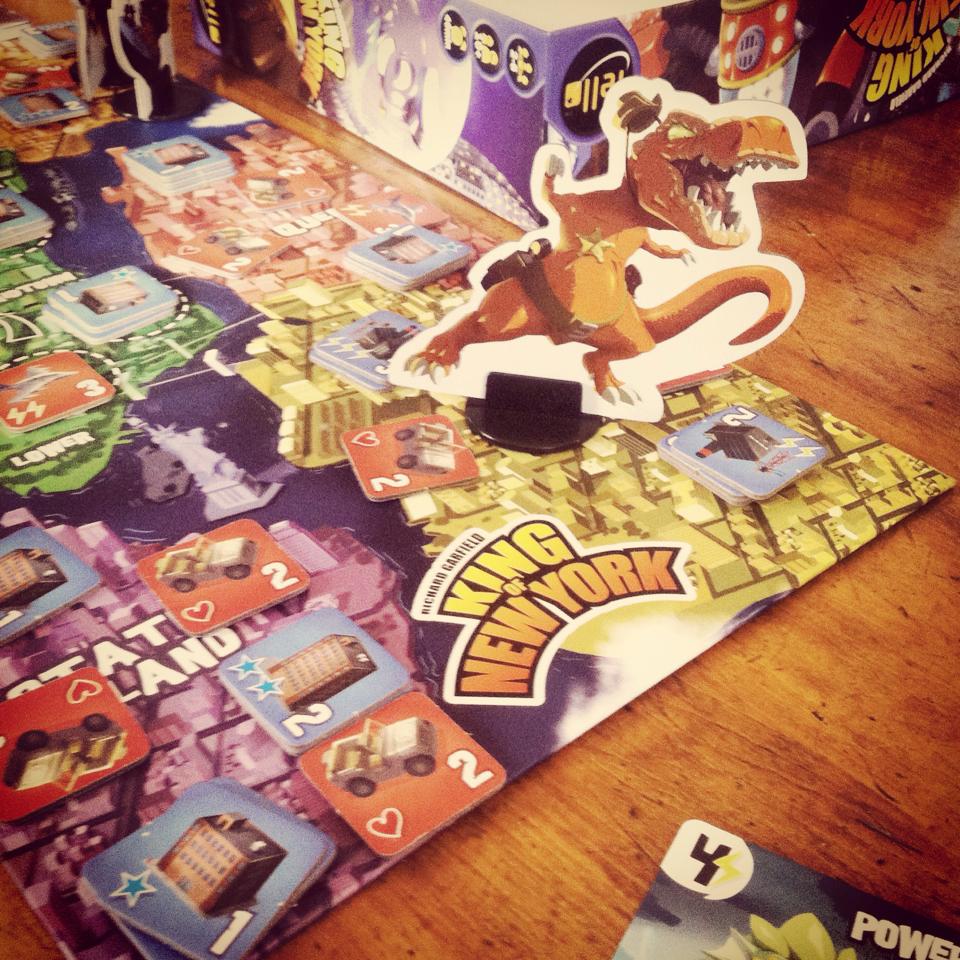
Released late in 2014 by IELLO Games, KONY is a follow-up standalone game to the popular King of Tokyo from 2011. KONY expands on KOT but it is not an expansion but a largely different game based on a similar premise and set of dice and card mechanics. Each of the 2-6 players chooses to be a gargantuan monster represented by a cardboard stand up figure and a scoring card. The monsters begin the game in one of the four outer boroughs with no more than two monsters allowed per borough. Within each borough are placed three stacks of three cardboard tiles each depicting buildings on one side and military units (jeeps, tanks and jet planes) on the reverse.

KONYcards

Sample cards from King of New York

A new set of six special dice are rolled by each player on their turn with faces for healing, attacks on other monsters, attacks on buildings, military attacks on monsters, energy cubes and victory point stars. Players roll the dice up to three times, keeping those dice they wish on each roll and re-rolling the rest. With the resulting dice, monsters resolve a number of actions. Buildings may be wrecked to earn healing points, victory points or energy cubes to purchase cards. Destroyed buildings flip over to reveal jeeps, tanks or jets which may attack other monsters in the same borough or across the board. Accumulated cubes are used to buy cards to provide permanent or one-time effects on monsters. Regular attacks take swipes at the other monsters on the board or the current “King of New York” romping northward through Manhattan. Monsters occupying Manhattan can remain on the island and earn victory points and energy cubes each turn or jump out to be replaced by an attacking monster. The first monster to earn 20 victory points wins the game to be crowned King of New York.

KONYgame

A recent game of King of New York

There’s a lot more going on in KONY than its predecessor. New dice and the building and military unit chips add options and flavor to play. Two new special cards — Super Star and Statue of Liberty — add extra mechanics to the game as cards earned through dice rolls and then swiped by other players who also roll specific results on subsequent turns. The rest of the cards can be a bit overly wordy at times yet they pump up the interest by utilizing a lot of familiar New York landmarks like Columbia University, the Unisphere in Queens, Carnegie Hall, the Holland Tunnel, the Brooklyn Bridge, the Empire State Building, Coney Island in Brooklyn and the infamous New York City Subway. Even with the new additions, KONY plays fast and fun with all ages.

If you’re a fan of King of Tokyo, giant monster films like the Godzilla series and board games set in New York City, King of New York is a towering success.

New Game Weekend: Legendary

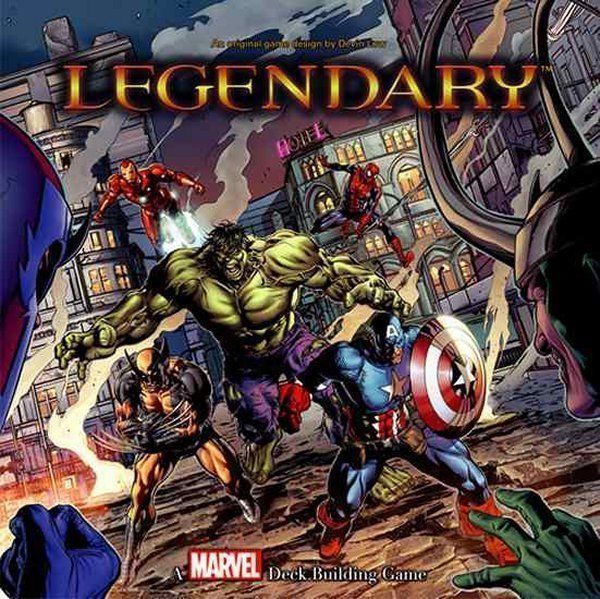
LegendaryBox

I’ve been a Marvel Comics collector and fan since the 1970s, but my gaming experience with my favorite super heroes has always been a less than satisfying experience. TSR’s Marvel Super Heroes Role-Playing Game never really played like the feel of a comic book back in the 1980s, and my brief experience with the Heroclix system in the past few years has also left me flat even with some great looking toys. And so, I was thrilled when I recently got into Legendary, a game that finally placed me directly in the midst of the wide Marvel Universe of heroes and villains.

Legendary Expansions

Fantastic Four, Paint The Town Red and Guardians of The Galaxy expansions

Released by collectibles giant Upper Deck in 2012, Legendary is a deck-building card game in which players take on the roles of super heroes doing battle with super villains in a near endless combination of scenarios and team-ups. Legendary is gloriously illustrated with all-original artwork with a hefty base game box containing heroes and foes primarily drawn from the Avengers, X-Men and Spider Man storylines. Additional expansion sets pull players into the cosmic worlds of the Fantastic Four and Guardians of the Galaxy, as well as the streets of New York populated by Daredevil, Elektra, Black Cat and Spider Woman.

Legendcards2

Sample X-Men and Spider Man cards

legendcards1

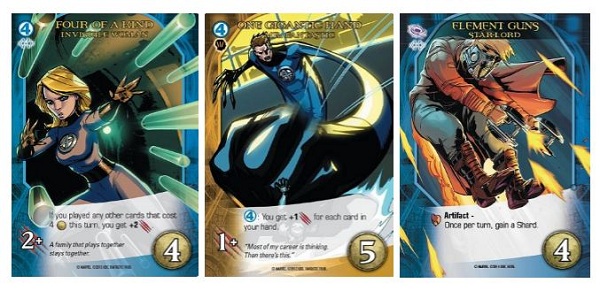
Sample Fantastic Four and Guardians of the Galaxy cards

Each hero is presented in a series of 14 cards of progressively higher value and ability. Team affiliations are depicted with small icons and values for recruiting other heroes and attacks are found at the bottom of the card. Special abilities and bonuses through interaction with other cards are listed along with colorful flavor text under the hero’s illustration. And so, each hero’s range of abilities is represented over the set of cards, allowing each character to grow in strength and use different powers or abilities throughout the game.

legendaryvillains

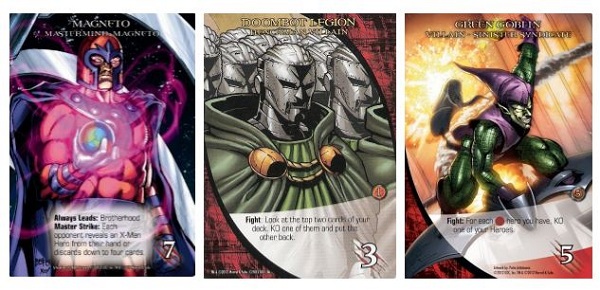
Sample Mastermind, Henchmen and Villain cards

Evil doers in Legendary are divided into three categories. Mastermind cards depict the powerful, lead villian like Doctor Doom, Magneto or Galactus within a given game and are represented with a stack of five cards. Henchmen are a group of identical cards of lower level bad guys such as Doombots and Hand Ninjas with limited abilities. Villain cards feature characters from teams of arch enemies from groups like the Sinister Six, Brotherhood of Evil Mutants, Hydra or Skrulls, each with varying abilities, effects and strength. Like the super hero cards, Villains, Masterminds

Legendaryboard

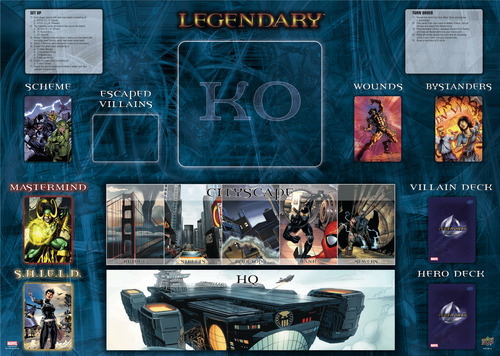
The Legendary game board

A game of Legendary is played on two levels. The players work collaboratively as a group of heroes to beat the game itself represented by the villains. If the players collectively win the game, points are tallied with each player based on the number of villains each player has defeated. The player with the most points wins. The mix of individual competition and teamwork is just one of the ways Legendary really feels like a comic book story as super heroes team up to achieve a unified goal while also performing heroic feats as individuals.

Legendary begins with the selection of a Scheme (ie scenario) which gives the conditions of victory for the heroes and villains. A Mastermind is chosen to represent the lead baddie in the game, and then Henchmen and Villain cards are selected. A Villain deck is created by shuffling in all Villains and Henchmen along with Scheme cards and Masterstrike cards which allow for attacks by the Mastermind. Depending on the number of players, a set of Hero cards are also shuffled together into a Hero deck. Choosing the mix of Heroes and Villains are sometimes dictated by the Scheme, can be done randomly or may be done by making specific selections. Part of the fun of Legendary is in the combinations of cards used to create the numerous combinations of Hero and Villain decks

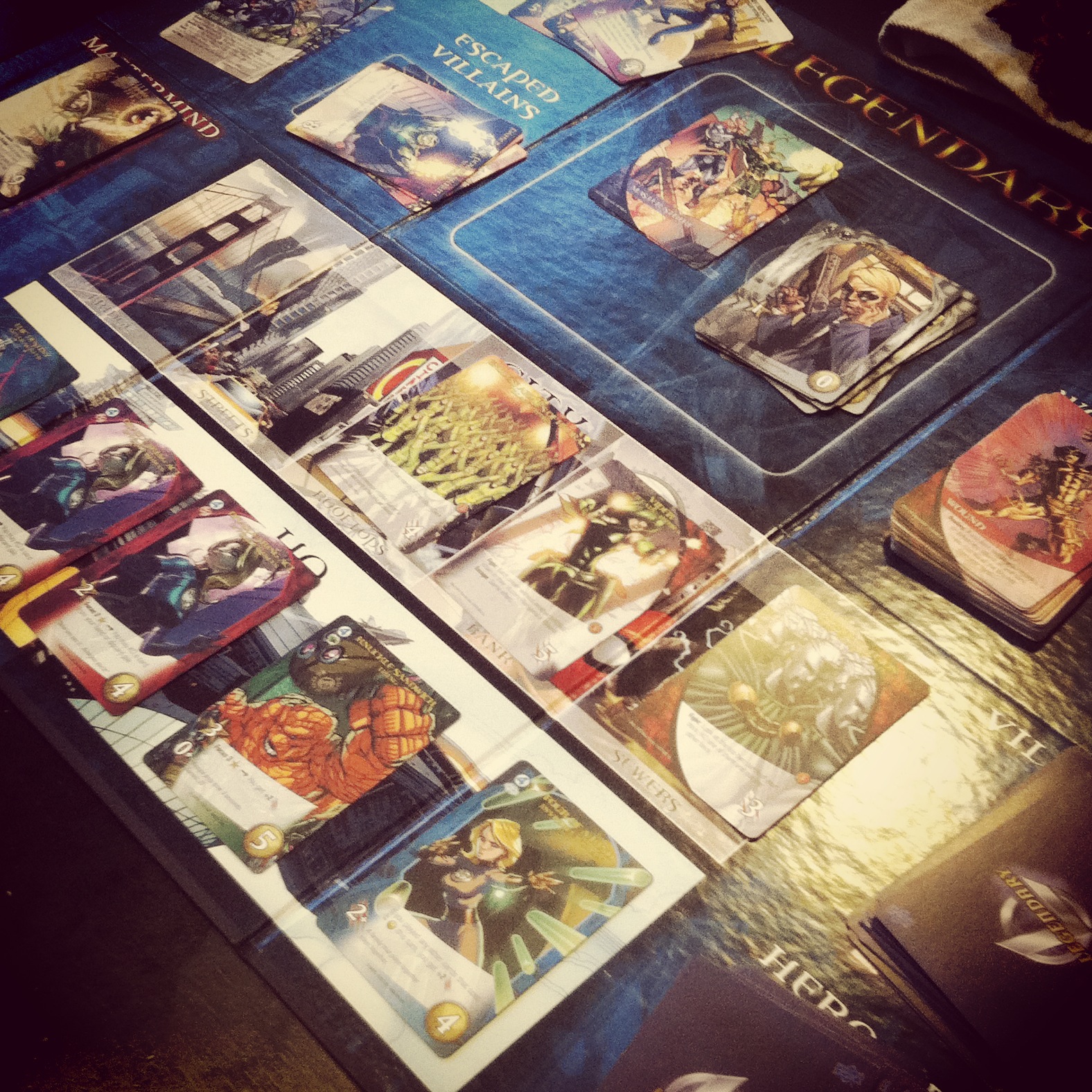
Each player is given a starter deck of identical twelve S.H.I.E.L.D. Hero cards and all other decks are placed on the Legendary game board. Six cards are drawn by each player from their shuffled starter decks. Five Hero cards are drawn from the top and laid out face up in the S.H.I.E.L.D “HQ” area and made available in turn to each player to “recruit” into their deck each turn based on recruitment points on their six cards in hand. Players may also play cards from their hand to fight Villains drawn each turn from the Villain deck and placed face up in the “City” area on the board. As each new Villain is turned up, other Villains shift down the City row and may be fought be players playing attack points on their available hand of cards. Played Hero cards also contain a variety of abilities, often used in combination with other cards to greater effect. Hero abilities can allow for extra cards to be drawn or discarded, stronger attacks, automatic defeat of Villains, extra recruitment value and numerous other special effects. Defeated Villains provide positive and negative effects on players and are then scored in a victory point pile for each player. Villains who move down the City track escape, causing negative impacts to the players. Scheme cards drawn from the Villain deck likewise cause bad things to happen. At the end of a player’s turn, a new hand is drawn back to six cards and play passes to the next player.

IMG_4855

One of my many recent games of Legendary

Legendary thus plays over a variety of turns as more Heroes are recruited into a player’s available deck, Masterminds and Villains are defeated, Bystanders are rescued and progress is made in defeating the Scheme before the bad guys win. Hero cards from the same or aligned teams combine to powerful effect, and certain Villain and Hero cards also interact in different ways. Getting the right number and combination of hero cards moving through a deck is key as the game progresses.

There are so many things I love about Legendary. Primarily, the game just “feels” like a comic book. Teams, like the Fantastic Four, X-Men or Avengers, work best together, combining skills and abilities to powerful effect against Villains. Individual Hero abilities each play with the superpowers known from the comic book canon. For example, Rogue from the X-Men is able to siphon abilities off other Heroes and Hulk rages and sometimes causes damage to Villains and Heroes alike.

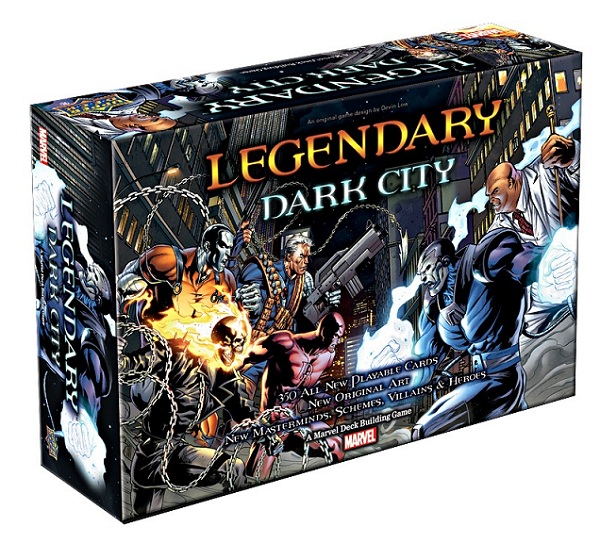
Dark City

The big Dark City expansion for Legendary

I got into Legendary in a big way over the 2014 holiday season with the base game and Fantastic Four, Paint The Town Red, Guardians of The Galaxy and Dark City expansions. With hundreds of Mastermind, Villain, Henchmen, Hero and Scheme cards available, each game plays in a nearly endless variety. With the modern Marvel Universe dating back to 1961 and re-invigorated with a constant flow of hit blockbuster movies since 2000, Legendary draws richly on the complex intersecting storylines from a half century of comic book popular culture.

Legendary has started me off in 2015 with a new game favorite and one my entire family has enjoyed playing together. As a lifelong fan and gamer, Legendary has finally given me the chance to team up with my favorite heroes from the Marvel Universe.