Downloading: A Century of British Pathé Newsreels

pathe_6da6dceb176b5785e86615b8619ffb28With today’s constant digital feed of news both major and minor, it’s fascinating to think back to an era where newsreels supplied much of the world’s news in motion. In an era still ruled by newspapers and radio, newsreel series from The March of Time, Fox Movietone News, Universal Newsreels, British Pathé and others brought events from far corners of the world to local movie house audiences. Presenting news in motion with dramatic music, voiceovers, selective edits and even reenactments, newsreels provided important foundations for how people would eventually consume video news via television in the latter half of the 20th-century and online in the 21st-century.

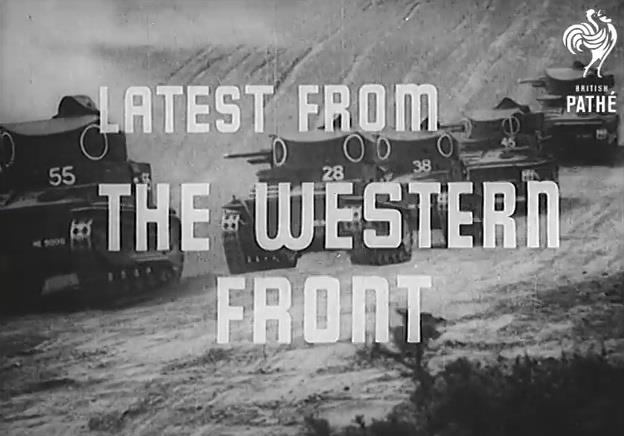
British Pathé announced this past week the availability of much of its archive of some 85,000+ HD videos available via YouTube. Some videos appear in their original full newsreels including iconic opening titles, graphics and voiceovers. The A Day That Shook The World series offers more modern edits of pivotal world events from a UK perspective. Other videos are mere snippets, often presented without sound or much context.

Topics covered in the British Pathé newsreels range from celebrity, politics and British royalty to industry, disasters, contemporary slices of life and news from the British Empire worldwide. From the historical to the humorous to the downright bizarre, the newsreel collection paints a wide picture of nearly 100 years of life on Earth.

For people with an interest in armed conflict of the 20th-century, the British Pathé collection has some gems. The Second Boer War gets a little coverage in some amazing footage from the years around the turn of the 20th-century. World War I is covered in major battles such as the Somme and Verdun, but also short features on new technologies like tanks and news from the home front.

Second Boer War

World War I

World War II coincided with the peak era of newsreels, and the British Pathé collection provides an amazing document. There are full newsreels covering the Battle of Dunkirk and the Battle of Arnhem from Operation Market Garden. The brutal siege and liberation of Stalingrad gets a lot of coverage, as does the major battles of the Pacific like Iwo Jima. Nail-biting aerial and naval combat from throughout the war is also documented in some stellar footage.

World War II

There’s a ton of additional military-themed footage in the post-WWII era covering the Cold War events, the Korean War, the Vietnam War, the Six Day War and the Falkands War. Seeing history come alive in video vignettes from British Pathé, often with more than a glint of heroic propagandist presentation, is just another opportunity to view history as contemporary audiences once saw it. With more and more archives enabling wide distribution of their photo, film, map and document collections online, armchair historians everywhere can tap into a wealth of information painting an ever-widening picture of our past.
Flames of War: Fielding the PSC Panzer IV Tank

pniv

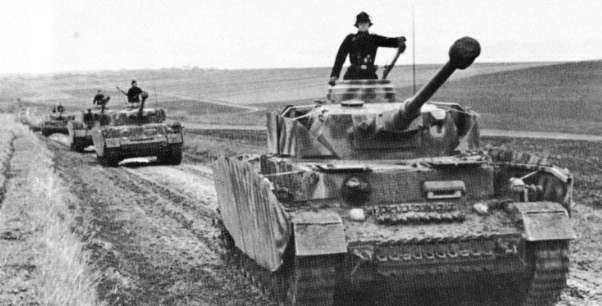
One of the greatest military impressions Germany left on the face of warfare during World War II was in its feared armored forces. The famed Tiger I heavy tank gets a lot of the glory for its independence and near idestructability, but the Panzer IV medium tank served as the real backbone of German armored forces throughout the war. With improvements to its armor and gunnery made throughout the war, the Panzer IV would prove to be a tough nut for the Allies to crack until very late in the war. Especially in the period from the D-Day landings through to the Battle of the Bulge, the Panzer IV played an ever-increasing role in attempting to stymie the Allied advance right up until the eventual fall of the Third Reich in the spring of 1945.

FOWpzIV

pscpziv

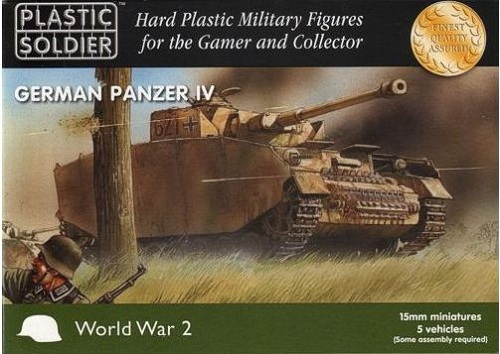
I already own a fair amount of German armor with Tigers, Panthers, Jagdpanzers and Stugs, but my force was sorely lacking in Panzer IVs. Most of my German tanks thus far have been from Battlefront, the makers of Flames of War (FOW). They offer a late war Panzer IV platoon in the pricey $50-60 range, depending on whether you pick the set up online or in a store. Going on some recent experience with the PSC Allied Stuart tank set, I went with the Panzer IVs from the Plastic Soldier Company (PSC) at about half the FOW cost.

pscpzivsheet

Unlike the FOW sets, PSC kits come with options to model miniatures in several periods. This allowed me to model my tanks as the later war Panzer IV Ausf H with its extra armor and gun power. Like the Airfix kits of my youth, the PSC tanks are comprised of lots of little parts. The diagrams included in the box offer clear color-coded keys to getting the correct pieces off the sprues and blow-up schematics for gluing the pieces together. If you’re like me, keeping your workspace clean and organized will prevent you from losing your mind during the multi-step assembly process. The sprues also leave some leftover parts which either go straight into the trash or into container of miscellaneous plastic for future modelling use.

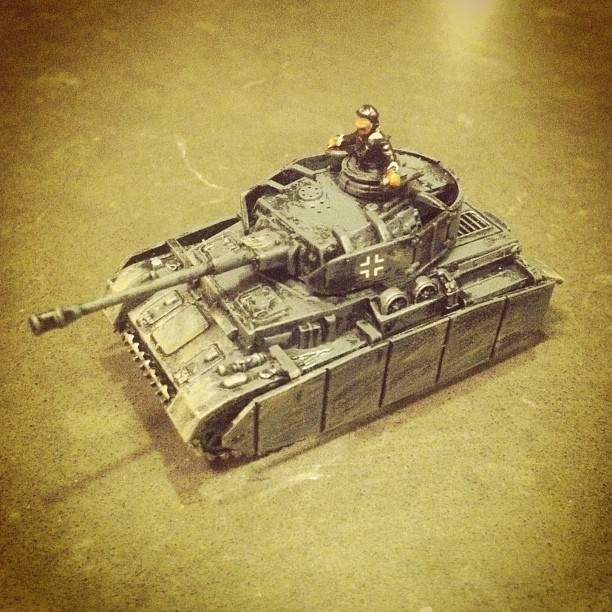
Lots of parts means lots of steps. The turrets alone are compromised of 9-10 parts and aligning the tank tread sections needs to be done carefully. I also found the hole on which the turret sits to be a bit tight, so I carefully drilled those out slightly larger. My Panzer IVs were completed with a basic grey-schemed paint job over a flat black spray base to match my existing models. With assembly, painting, decals and a matte finish finishing coat, these tanks are ready to hit the table in just a couple work sessions.

Compared to FOW models, the PSC tanks take a bit longer to put together and parts can be finicky, but I really like the PSC models when complete. The PSC tanks offer crisper molding and some fine details like a slight sag in the upper parts of the treads and hangers for the  side and turret Schurzen. Models are light, making for easier storage and transport. Putting together kits from PSC just feels a lot more like model building than what you experience with FOW and some other manufacturers.

pzivcommand

pzivplatoon

With so much economic pressure on miniature wargame funding budgets, you can’t beat getting more armor in the field for the low cost and fine results from the Plastic Soldier Company’s Panzer IV kit.

Flames of War: Fielding the PSC Stuart Tank

While the durable US M4 Sherman gets most of the glory in the annals of WWII Allied tank history, the M3 Stuart also played a significant role in providing valuable infantry and reconnaissance support throughout the war. The Stuart was originally supplied to the British ahead of the US entry into the war, but American tank crews would eventually use them throughout the European, African and Pacific war theaters. Armed with .30-calibre machine guns and a 37mm main gun, the Stuart proved itself to be a finicky yet effective part of many of the war’s major actions and campaigns, including the D-Day Normandy campaign of 1944.

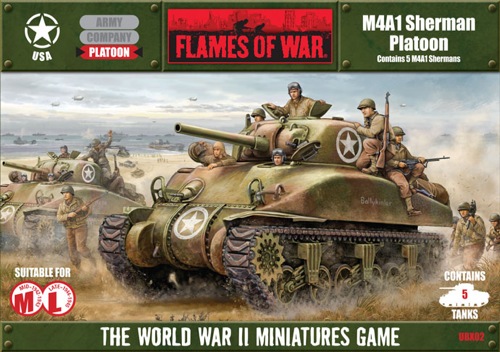
Most of the US armor I use in Flames of War gaming comes directly from Battlefront, the makers of the popular 15mm WWII wargame. Battlefront manufactures beautiful models but the company is often criticized for its prices. I already own a fair number of Battlefront’s M4 Sherman tank models. With so much of my armor tied up in the sameness of my Sherman platoons, I’ve long wanted to add some diversity in my force with a light tank platoon option.

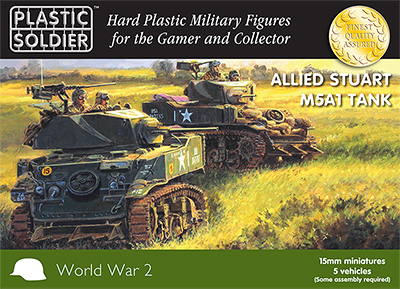
Coincidentally, the Plastic Soldier Company has recently been expanding its small but growing line of 1/72 and 15mm WWII hard plastic infantry, vehicle and armor sets. At nearly half the price of the FOW offerings, the 15mm Plastic Soldier Company boxed sets look to be a legitimate bargain alternative. As luck would have it, among their new releases from the past month was a 15mm Allied Stuart set containing five models which make up a perfect light tank platoon for my FOW force.

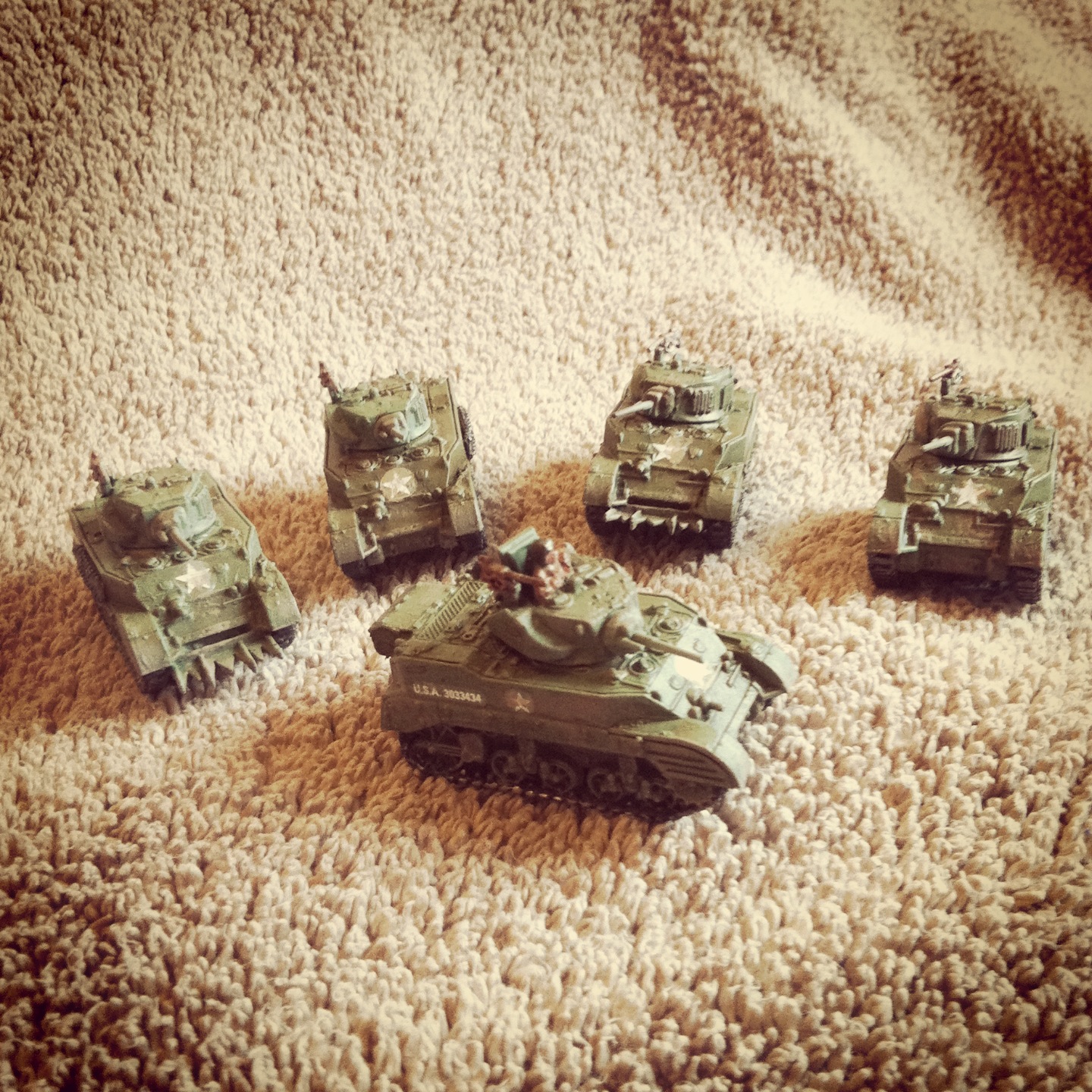
Despite the relative low cost, I approached my first go-around with the PSC with a critical eye. The Stuart set comes with enough parts for five tanks from the early, mid or late WWII periods. The flexibility of the modelling is fantastic, but it does result in a bunch of unusable waste parts left on the sprue. Gluing the models up for the late war was fast, with the finely-detailed casting going together smoothly. A relectuant criticism of these otherwise excellent models is the way in which the turrets fit to the hulls with tabs which were a bit tight for my liking. I wound up cutting the tabs off so the turrets move more freely, but this extra step did destroy the other strong points of the PSC models.

After the glue dried, the models got a coat of green armor spray followed by some black and metallic paint brushed on the treads. Tools and stowage attached to the hull were picked out in detail, and then all the tanks got a watered-down brown wash. I applied some appropriate US decals I had left over and then the tanks got some splattered mud details in a lighter mud color.

IMG_1956

The result of my Stuarts and my first experience with the Plastic Soldier Company is entirely satisfying. Not only can’t I wait to roll these fast, deadly tanks onto the table in my next game, I likewise will be anxiously awaiting what new releases the company has in store to further build-out my forces.