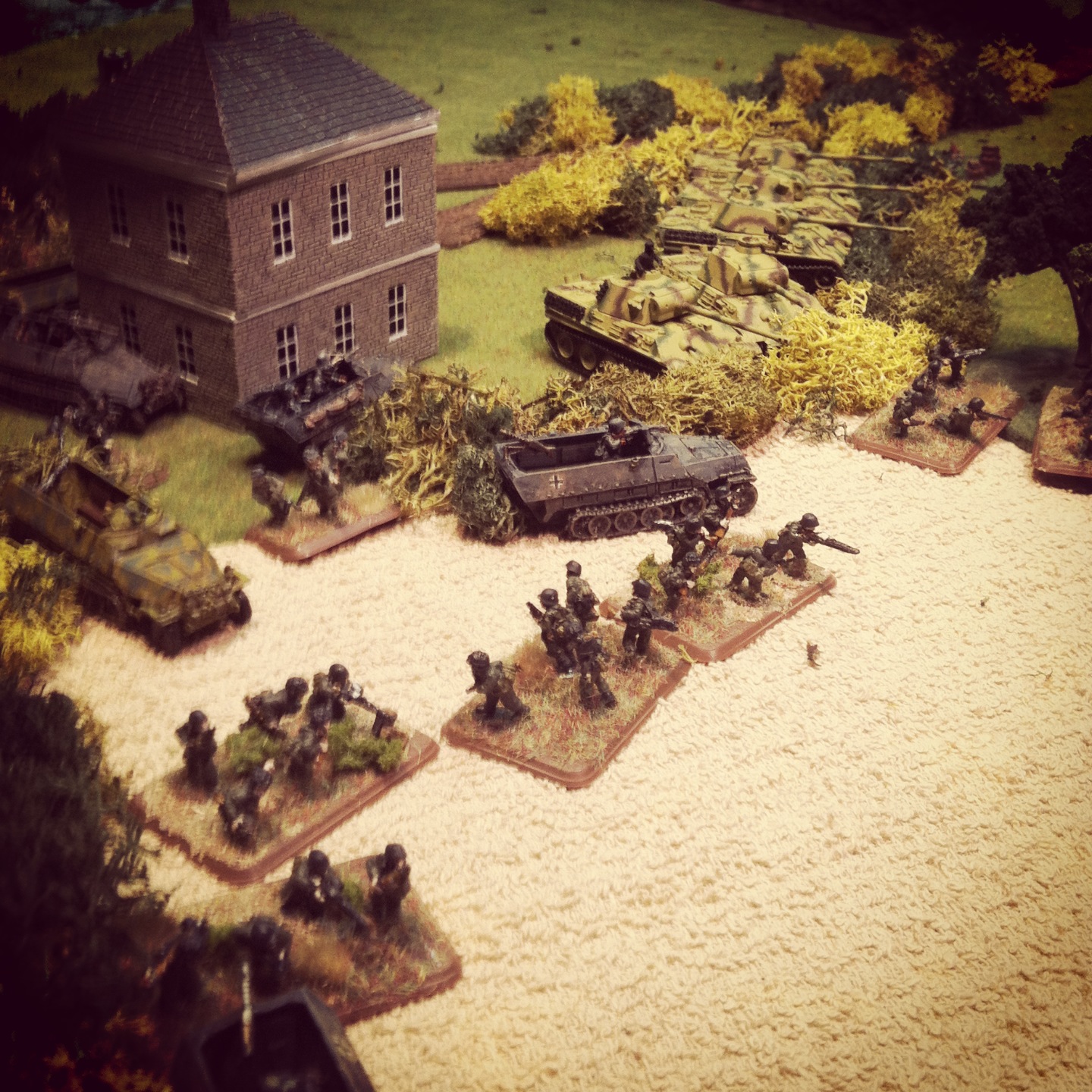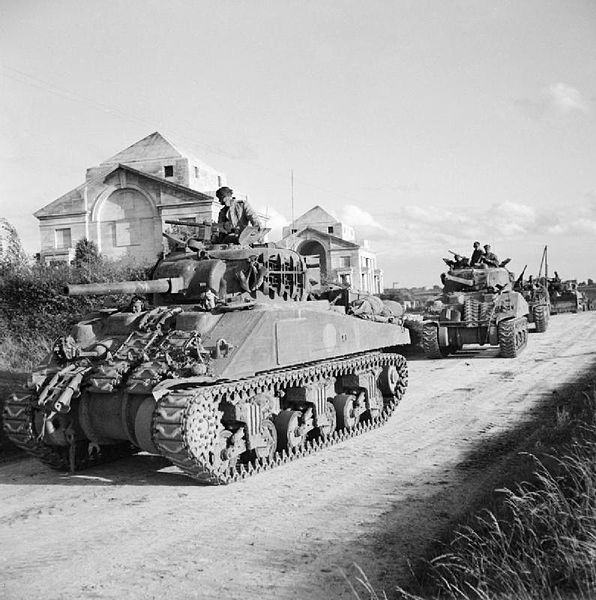
Flames of War: Singling 1944 Scenario

4tharmor

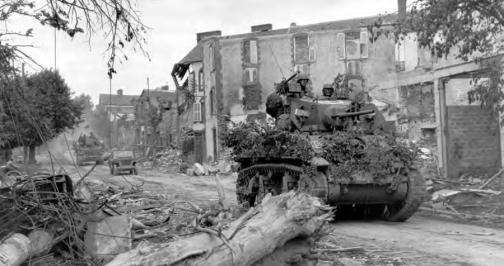
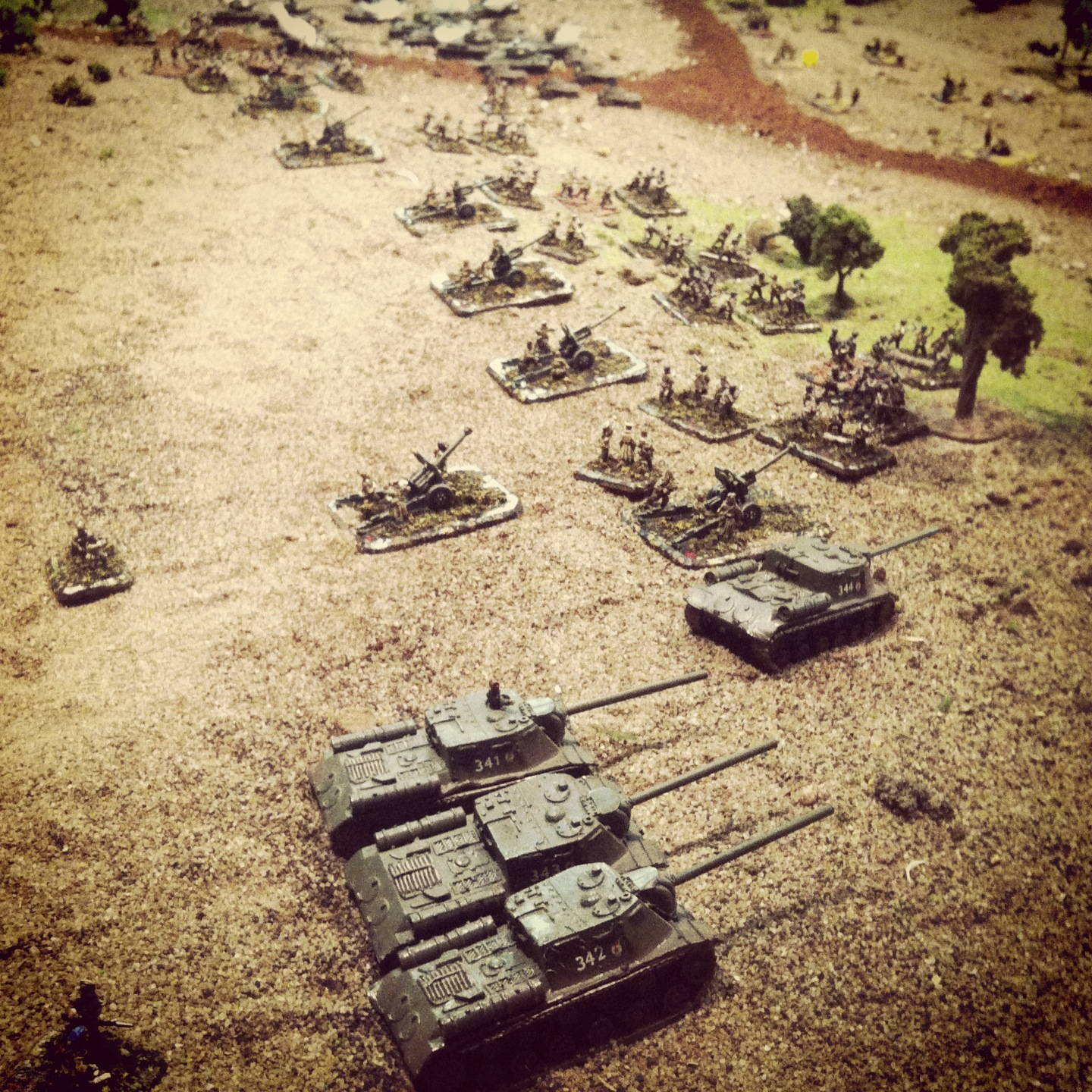
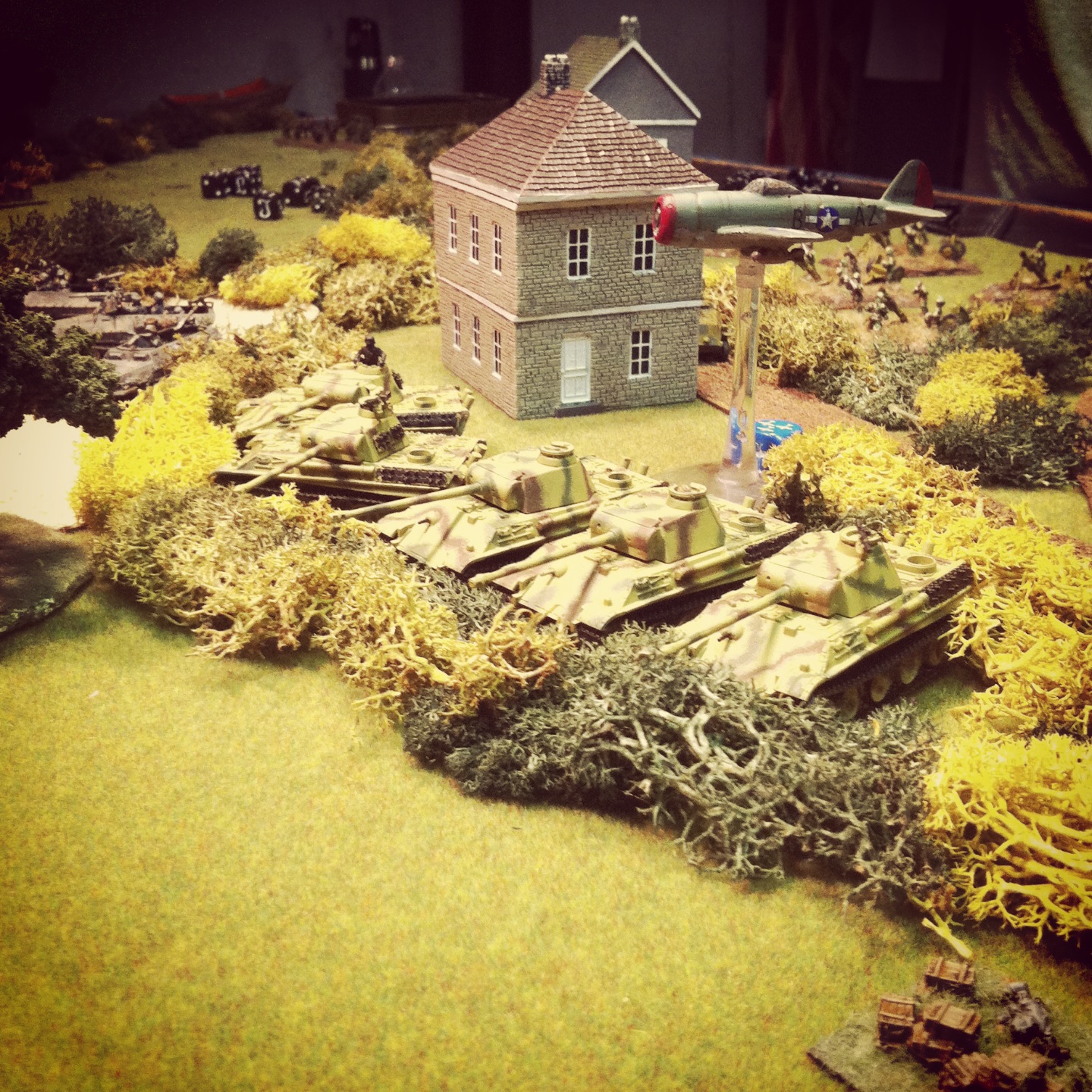
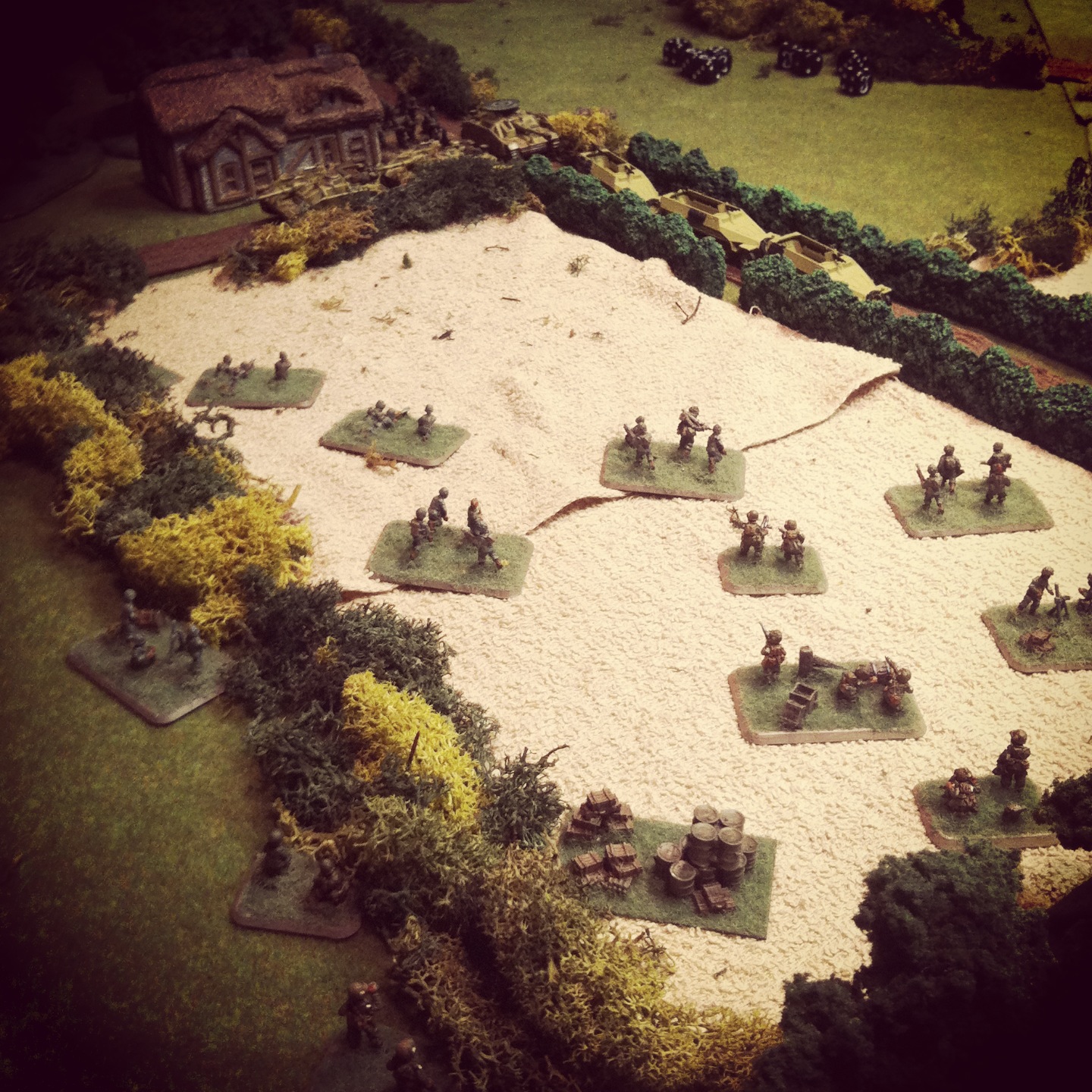
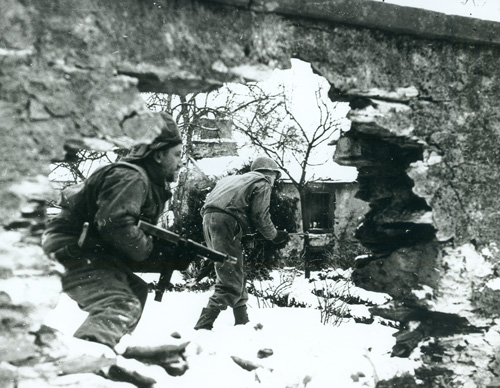
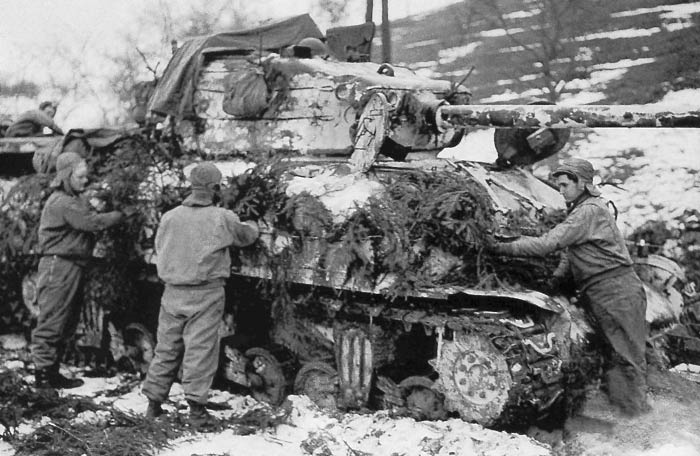
By the winter of 1944 the US 4th Armored Division had distinguished itself through a number of actions in France ranging from Operation Cobra in July and the Battle of Arracourt in September all the way through various engagements heading east toward the French-German border. Battleworn and bogged down in the wet winter slush of eastern France, the 4th Armored lumbered to the outskirts of Singling, Lorraine on December 6th, 1944. As part of the defensive Maginot Line, a hasty attack was thrown together to take the farm town with a small force of tanks and infantry. Finding themselves caught up fighting superior elements from the German 11th Panzer Division between the cottages and tight roads of the village, the day’s battle eventually fell to a stalemate and the 4th Armored pulled back. In the coming days, a hail of American artillery and subsequent ground force attacks eventually took Sibling.

SinglingMap44

The WWPD site has a handy Flames of War scenario available for the action at Singling called Abrams’ Folly. In addition, there’s some other gaming-freindly write-ups available online as well as some great historical documentation (including maps and photos) on the battle at Singling. Before heading off to an annual family vacation to Cape Cod, I had a chance to try my hand as the Americans in the Sibling scenario this past Wednesday evening at Metropolitan Wargamers in Brooklyn.

bggbookEach of us fielded 2500 points, sticking as close to possible with the forces outlined in the scenario. I used the Blood, Guts and Glory book which focuses on the armor-heavy battles in this region of France in late 1944 through early 1945. My force featured a mix of 75mm and 76mm Shermans, some tank destroyers, two armored rifle platoons and an off-table 105mm Priest battery. My German opponent started with a Panzer IV platoon, a Jagdpanther platoon, an 10.5cm leFH18 battery, a platoon of Pak 40s and a couple infantry platoons. As it was historically, the Americans were clearly in for a tough fight.

In December ’44, the US entered Sibling from the south but the scenario places the American point of entry at the western edge of the table. The Germans deployed first with infantry and Jagdpanthers in the town, the Panzer IVs to the northwest and the Pak 40s in prepared positions to the southwest. The artillery battery was positioned to the northeast of town with spotters stationed in the church belfry and the attic of a house near the town center.

siblingtable

With the first turn, the Americans rolled in around the main road to the west. Seeing the Pak 40s, all the armor rolled north toward the Panzer IVs parked around and behind a small copse of trees. Infantry platoons made way for the center and the orchard just south of the road. My US plan was to avoid the killing alley of the main road while the infantry would swoop toward an assault on the infantry and Pak 40s to the south and the armor would rumble to the north toward the German tanks.

The US 76s made quick work of the Panzer IVs in the first two turns and then turned toward the center of town. The Jagdpanthers crept out from behind buildings and took a few a shots down the road, eliminating a Sherman. A German platoon camped out in a house at the western edge of town made a misbegotten attempt at an assault on the Shermans, bailing two with Panzerfaust fire but ultimately running off when faced with return attacks from the US armor. Another Panzerfaust-wielding squad popped out from an adjacent cottage and destroyed another Sherman with a quick rear shot before being machine-gunned down. By the end of the third turn, the northwest area of the table was a snarl of burning German tanks and shaken but advancing US Shermans.

32387_10201314045587525_1920471111_n

1185574_10201313808021586_457796402_n

To the south of the road, a stalemate which would run the whole game commenced. The Priest battery struggled to range in and hit the Pak 40s on every turn, proving to be a complete waste of points. The American armored infantry platoons to the south of the road spent most of the game being pinned by German sniper fire and artillery barages, all the while struggling to progress through the orchard. Not until the fourth turn of the game did the American infantry truly get in the fight, exchanging fire with two nearby platoons of Germans but losing nearly half their number to fire from the Pak 40s and German heavy machine guns.

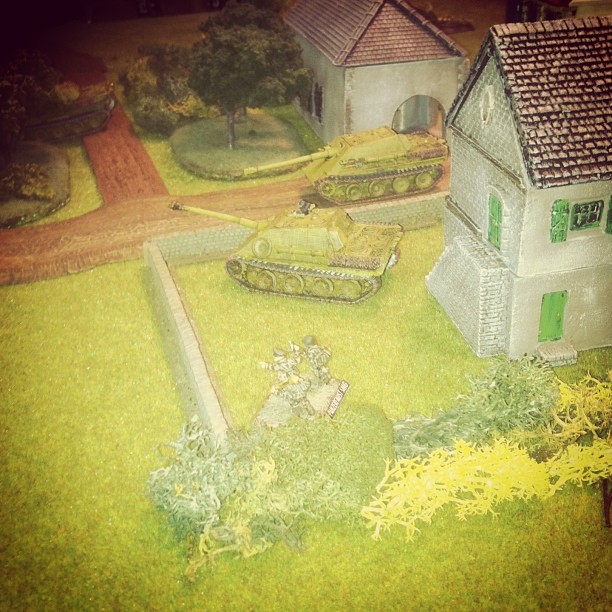
In turn four, things got bad for the Germans. After littering the field north of town with charred wrecks of US armor, several American tanks broke to the middle of town toward the three remaining Jagdpanthers. A near-certain side blast to one Jagdpanther glanced off with no effect, but then an extremely lucky shot from a US 76 destroyed the Jagdpanther command tank. While the Germans scrambled to appoint a new command tank, the Americans ganged up to destroy one of the two remaining Jagdpanthers. With the platoon reduced to just one remaining tank, the German player rolled and failed a morale check and the last tank fled the center of town.
267391_10201314392956209_640393299_n

1235934_10201314392676202_1206092596_n

With the center of town secured, all German armor destroyed, a stalled infantry firefight to the southwest and the American tanks advancing to the German artillery battery, the game was called at the fifth turn. I was honestly surprised by the American victory, upsetting the historic outcome of the battle. We stood around for some after-action what-ifs for both sides while packing up the table, and clearly there could be improvements in choices of forces and tactics the next time we head back to Singling.

New Game Weekend: Letters From Whitechapel

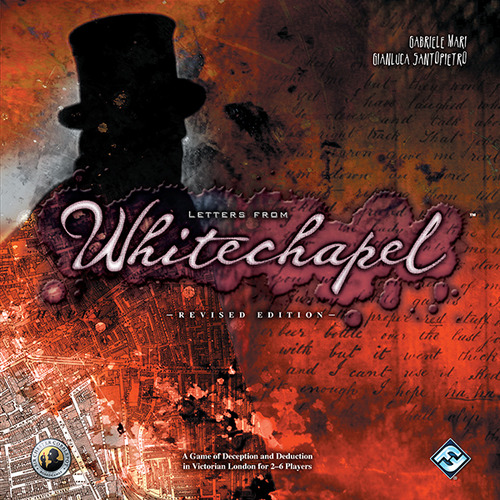
ripperbox

This fall will be the 125th anniversary of one of the most famed unsolved crime cases in history and a story that continues to fascinate to this day. The Jack the Ripper case, also known as the Whitechapel Murders for the section of London where the killings occured in 1888, involved the gruesome homicides of (at least) five prostitutes by a still-unknown perpetrator. Much like today’s high-profile crimes, the case held Victorian London in a state of rapturous horror as an anxious police force, press and citizenry obsessed over the murders and hunt for the suspect. Graphic crime-scene photos, mysteriously cryptic letters and speculation on potential suspects – from butchers to surgeons to members of the British royal family – combine to make to make the lore of “Ripperology” a thing of modern legend.
Jack The Ripper in Pop Culture

From a pretty early age, I had a macabre interest in Jack The Ripper. Aside from the countless true-crime books on the case, Jack The Ripper has made it to the big and small screen dozens of times over the years. I love the moody 1928 silent picture Pandora’s Box starring Louise Brooks as a wayward innocent who falls into a life of prostitution before becoming a victim of Jack. The 1979 movie Time After Time adds a sci-fi spin on the case with Malcolm McDowell as H.G. Wells chasing Jack The Ripper through time to modern day San Francisco. My favorite by far has to be the 1988 Golden Globe-winning TV miniseries Jack The Ripper with Michael Caine chewing the scenery as the real-life Scotland Yard chief investigator of the Whitechapel Murders Inspector Frederick Aberline. Made on the centennial of the case, the series focused on the theorized link of the murders to the British royal family and re-introduced the case to a new generation of Ripper-obsessives like myself.

Pandora’s Box

Time After Time

Jack The Ripper

fromhellcoverOf all the movies and books I’ve encountered about Jack the Ripper nothing can hold an oil lamp to Alan Moore and Eddie Campbell‘s 1999 graphic novel masterpiece, From Hell. Orginally released in a 10-issue serial and now available as a bound edition, From Hell is one of the most dizzyingly complex stories I’ve ever read. This is also Moore at his most obsessive with nearly 600 pages of slowly-building detail ultimately pointing to a grand and ancient conspiracy. The muddy black-and-white ink drawings of Campbell perfectly capture the grime of the streets of 19th-century London and the unhinged mind of a serial killer. The depth of research and detail in the characters and places surrounding the case really can’t be described, and it’s this complexity in the book that has driven me back to re-read it a number of times over the years. Johnny Depp starred in a 2011 film adaptaion of the story, but honestly I’ve never been able to bring myself to watch it given how much I love Moore and Campbell’s original series. A new book, The From Hell Companion, goes behind the scenes to the story and visual development of the book, and I’m certain I’ll be picking up a copy very soon.

Letters From Whitechapel

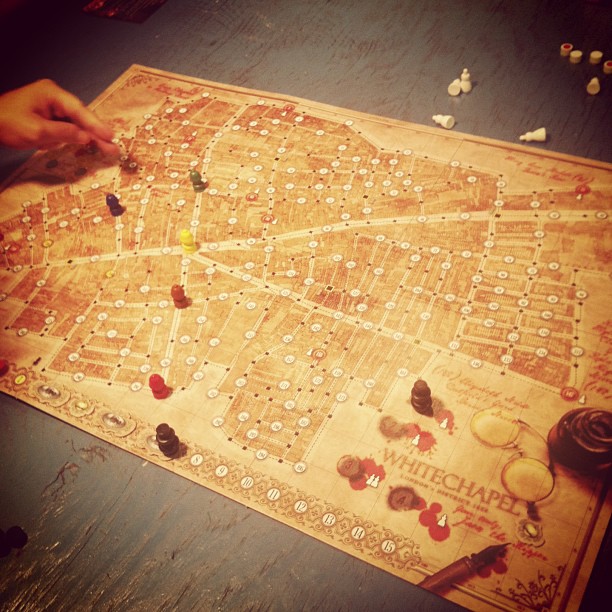
With a long-time interest with Jack The Ripper, I was thrilled to get a chance to play Fantasy Flight Game’s Letters From Whitechapel recently at Metropolitan Wargamers. The game presents a historically-accurate map of Whitechapel with its intricate cobblestoned streets and alleys on which a group of police officers attempt to track down and apprehend Jack The Ripper before his murderous spree comes to a bloody end.

rippercontents

In the game, one player is elected to play as Jack while the other players take on the roles of patrolling London policemen. Behind a special screen, Jack denotes his hidden home base on a special sheet before placing tokens on the board at the location of possible victims. The police players then secretly place the starting locations of their patrolling officers. Then, all starting places for the police and prostitutes are revealed and markers are placed on the board. Going first, Jack then decides whether to kill his first victim or delay for time. Once the victim is murdered, a red token is placed to denote the scene of the crime and the police pawns are moved up to two black squares at a time.

1157510_10201267172015715_1763666450_n

Jack the Ripper then moves each turn in secret between numbered spaces, marking the locations on his sheet away from view from the police players. A carriage token allows Jack to move two spaces and slip by police potentially blocking his path. An alley token lets jack slip through a dark back passage within any given city block. After each move by Jack, the police move and choose to investigate nearby areas or speculate on and adjacent location of Jack and make an arrest. If a player investigates a space where Jack has been, a clue is revealed and marked on the board. Turns alternate with Jack moving and the officers attempting to string together his movements through discovering more clues. Jack attempts to get back to his secret hideout before being found out by the inspectors within the set time of the round. If Jack is successful, the next round begins with a reset of the board and a new potential victim being placed.

Letters from Whitechapel is basically a cat-and-mouse game with the police players attempting to decode Jack’s possible routes of movement in order to close in and capture him. In my first game, it took us two rounds to track down a very elusive Jack who ran devious circuitous routes back toward his hideout. After the first round, we felt fairly confident we had narrowed his home base to one of three areas of the board, and we finally caught him in the second round by focusing on those areas. The game involves a lot of discussion among the police players with various theories of Jack’s whereabouts bandied across the table throughout the game.

For gamers with more than a little Jack The Ripper interest coupled with a desire to play out a game of hidden movement of the opponent, Letters From White Chapel is incredibly satisfying. With 125 years of the unsolved Whitechapel Murders behind us and probably many more to come, having a go at bringing Jack The Ripper to justice makes for an intriguing couple hours of play.

New Game Weekend: King Of Tokyo & Chinatown

A fun, quick boardgame is a good thing any time, and this past weekend at Metropolitan Wargamers in Brooklyn I tried my hand at a couple which were new to me. In King of Tokyo and Chinatown, players get to run through some very quick gaming (less than hour each) under very different mechanics and themes.

King Of Tokyo

KOTcontents

Whether you’re a fan of old Godzilla movies, remember playing with Shogun Warriors toys in the 1970s or caught this summer’s Pacific Rim, 2011’s King of Tokyo may be just the thing for you. Battling as giant monsters like Gigazaur, Cyber Bunny, Alienoid, Meka Dragon or Pandakai, players duke it out through a cartoonishly-funny game to become the ultimate King of Tokyo.

KOTgame

Each turn, a player rolls six special dice with values of 1 through 3 or a symbol indicating an Attack, Heal or Energy result. Numbers score victory points, Attacks take swipes at other monsters, Heals allow you to regain health points or evolve your monster, and Energy results allow for the collection of green cubes to spend on special ability cards. With three Heart results, not only does your monster heal but it also allows you to pull an Evolve card which gives you monster specific upgrades. Players choose to re-roll some or all of their dice three times each turn before finishing up and passing the dice.

Through the “king of the hill” action of the game, monsters jump in and out of Tokyo to heal and avoid being attacked by the other menacing players. Once you’re strong enough, you can choose to charge your monster back into Tokyo. The special ability and evolution cards give you added strengths to affect your and your opponents’ monsters. The expansions for the game add additional cards and room for 5-7 players so two monsters can occupy Tokyo and nearby Tokyo Bay simultaneously. The artwork of the cards and combinations of monster evolutions and special cards makes for a lot of variety and fun as the monsters pound away at each other until 20 victory points are achieved or all other monsters are destroyed.

Chinatown

CTbox

There’s no battling monsters or references to Roman Polanski’s classic 1974 modern noir movie Chinatown in the boardgame Chinatown, but a different kind of intrigue abounds on these streets. Released in 1999 by Z-Man Games, Chinatown is a club favorite at this point for its pure economic strategy play. In the game, a map shows a series a of city blocks with numbered lots all set within the street grid of Chinatown. In six turns (or years), each player first draws and selects random building lots and businesses. Businesses include such common Chinatown landmarks like dim sum restaurants, pet stores, antique shops, florists, jewelers, laundries and factories. Players need to build businesses on their lots to earn rent. For example, a tea house requires three contiguous lots to complete while a restaurant requires six. The bigger the business, the more rent collected at the end of each turn. Partially-completed businesses can score modestly (maybe $10,000 per turn) but a sprawling big business can earn big money each round ($100,000 or more). Strategy might focus on completing multiple small businesses, one or two larger ones or a mixture of businesses of all sizes. The player with the most money at the end of the game wins.

CTgame

Unlike a more typical economic game like Monopoly, Chinatown is very fluid and involves little in the way of traditional game mechanics. There is no set play within a turn, no dice and a minimal amount of chance in the game. Players can buy or trade combinations of lots, businesses and money through an open negotiation process which only ends when there’s an agreement for no more that round. You might offer a business another player needs in exchange for a building lot you need on one of your blocks. During the draw phase, not only are you thinking of the lots you need to build your businesses but those which may prove valuable to your opponents. Balancing what you earn in a trade and what another player may gain in the exchange makes for both a competitive and collaborative game, much like the environemnt you would fine in any dense Chinatown.

Whether you’re up for some giant monsters slugging it out in Tokyo or some urban development on the crowded streets of Chinatown, both King of Tokyo and Chinatown make for very different but very entertaining games. At just around $40 each, these games are a sure thing for any group of new or experienced gamers looking for some quick yet engaging play.

New Game Weekend: Escape…From The Temple Curse

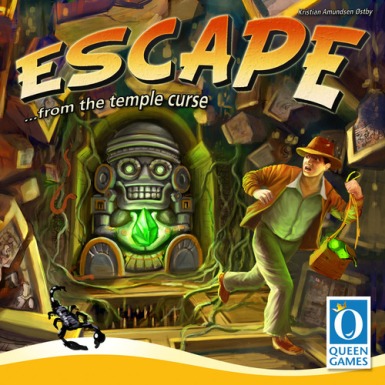
escape As I’ve previosuly written, I grew up on Indiana Jones and the cliffhanger world adventurer genre in re-runs of old movie serials. Games like Fortune and Glory are loads of fun in taking on the guise of a rustic hero globetrotting to exotic locales in search of treasure and reknown while dodging enemies looking for to dastardly foil your mission. A few weeks ago at Metropolitan Wargamers I had a chance to run through a few games of another adventurer game, Escape…From The Temple Curse from Germany’s Queen Games. Released in 2012 after a successful Kickstarter campaign, Escape is a fast-paced game in which you and your fellow player-adventurers race through a temple collecting treasures and escaping before the temple collapses.

escapecontentsEscape begins with each player placing their adventurer on the starting temple tile. Simultaneously, players begin furiously rolling five dice apiece. Rolling a green adventurer allows a move while a blue key or red torch reveals a new room, opens a treasure or allows for a gem to be picked up. A black mask “curses” a die which is set aside and cannot be used in a subsequent roll. Once a gold mask is rolled, up to two cursed black mask dice can be put back into play. Players may share dice results if they occupy the same chamber, adding a collaborative element to the game. Quick-paced decisions need to be made constantly as players need to stay close enough together to help each other but also spread out to cover enough ground to gather gems to unlock the exit to the temple.

Unlike most games I play over many hours, Escape plays out in no more than 10 minutes of real time. The game uses an actual recorded soundtrack which builds in intensity over the course of the game until a warning sounds and the temple crashes to ruins. Not only does the soundtrack serve as a game timer, but it also adds a real cinematic aspect to the game. It’s as if you’re playing through an old Saturday matinee movie serial.

Playing the game is crazy, even more so as the number of players increases. From the moment the soundtrack begins, people are rolling dice, shouting to each other, mapping new routes, running into roadblocks, collecting gemstones, falling victim to a curse or finding a treasure. Two expansions make offer additional temple tiles as well as curse and treasure markers. Curses might make a player lose a die if it rolls off  the table or force them to not speak. Treasures do such things as reveal magic doors between chambers or transport you magically to another part of the temple.

The game plays so fast that any decent gaming session allows for multiple games to be played with increasing difficulty by adding in more of the expansion elements. In the few games I played with the maximum of five players at Metropolitan Wargamers, we successfully escaped the temple at around the 8-to-9-minute mark each time. Although our bunch at the club was compromised of experienced gamers in our 20s-40s, Escape is simple enough in its rules that families would find the game to be a kick. Regardless of the make up of the players, Escape…From The Temple Curse is loads of fun for anyone looking to live out their cinematic adventure fantasies in a manic and fun-filled tabletop game.

Flames of War: Fielding the PSC Stuart Tank

While the durable US M4 Sherman gets most of the glory in the annals of WWII Allied tank history, the M3 Stuart also played a significant role in providing valuable infantry and reconnaissance support throughout the war. The Stuart was originally supplied to the British ahead of the US entry into the war, but American tank crews would eventually use them throughout the European, African and Pacific war theaters. Armed with .30-calibre machine guns and a 37mm main gun, the Stuart proved itself to be a finicky yet effective part of many of the war’s major actions and campaigns, including the D-Day Normandy campaign of 1944.

Most of the US armor I use in Flames of War gaming comes directly from Battlefront, the makers of the popular 15mm WWII wargame. Battlefront manufactures beautiful models but the company is often criticized for its prices. I already own a fair number of Battlefront’s M4 Sherman tank models. With so much of my armor tied up in the sameness of my Sherman platoons, I’ve long wanted to add some diversity in my force with a light tank platoon option.

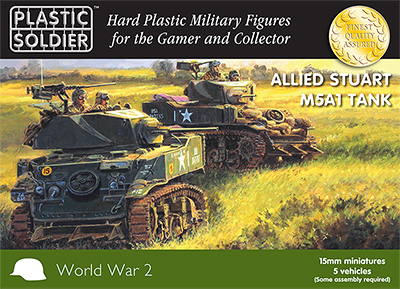
Coincidentally, the Plastic Soldier Company has recently been expanding its small but growing line of 1/72 and 15mm WWII hard plastic infantry, vehicle and armor sets. At nearly half the price of the FOW offerings, the 15mm Plastic Soldier Company boxed sets look to be a legitimate bargain alternative. As luck would have it, among their new releases from the past month was a 15mm Allied Stuart set containing five models which make up a perfect light tank platoon for my FOW force.

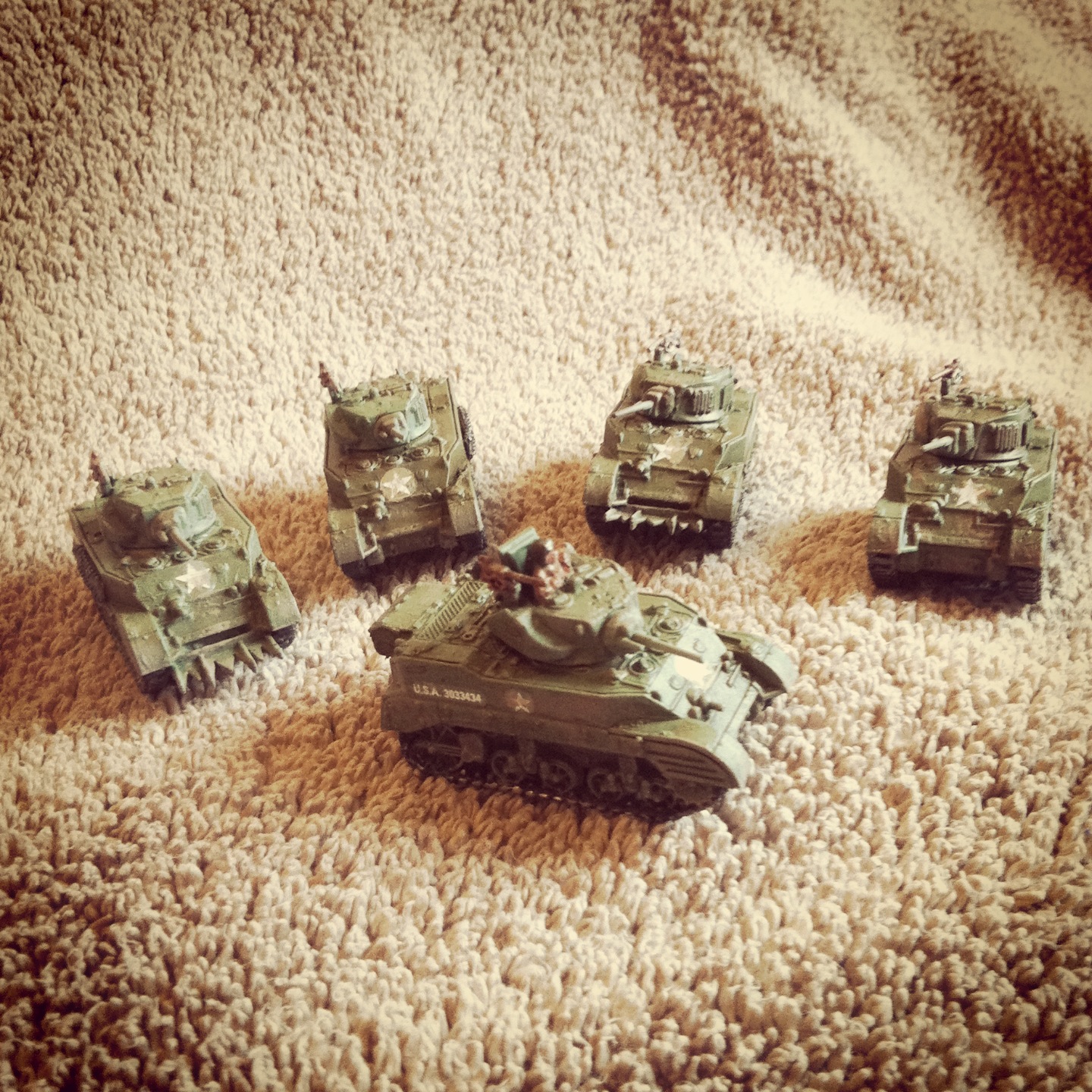
Despite the relative low cost, I approached my first go-around with the PSC with a critical eye. The Stuart set comes with enough parts for five tanks from the early, mid or late WWII periods. The flexibility of the modelling is fantastic, but it does result in a bunch of unusable waste parts left on the sprue. Gluing the models up for the late war was fast, with the finely-detailed casting going together smoothly. A relectuant criticism of these otherwise excellent models is the way in which the turrets fit to the hulls with tabs which were a bit tight for my liking. I wound up cutting the tabs off so the turrets move more freely, but this extra step did destroy the other strong points of the PSC models.

After the glue dried, the models got a coat of green armor spray followed by some black and metallic paint brushed on the treads. Tools and stowage attached to the hull were picked out in detail, and then all the tanks got a watered-down brown wash. I applied some appropriate US decals I had left over and then the tanks got some splattered mud details in a lighter mud color.

IMG_1956

The result of my Stuarts and my first experience with the Plastic Soldier Company is entirely satisfying. Not only can’t I wait to roll these fast, deadly tanks onto the table in my next game, I likewise will be anxiously awaiting what new releases the company has in store to further build-out my forces.

Flames of War: Barkmann’s Corner Scenario

panther

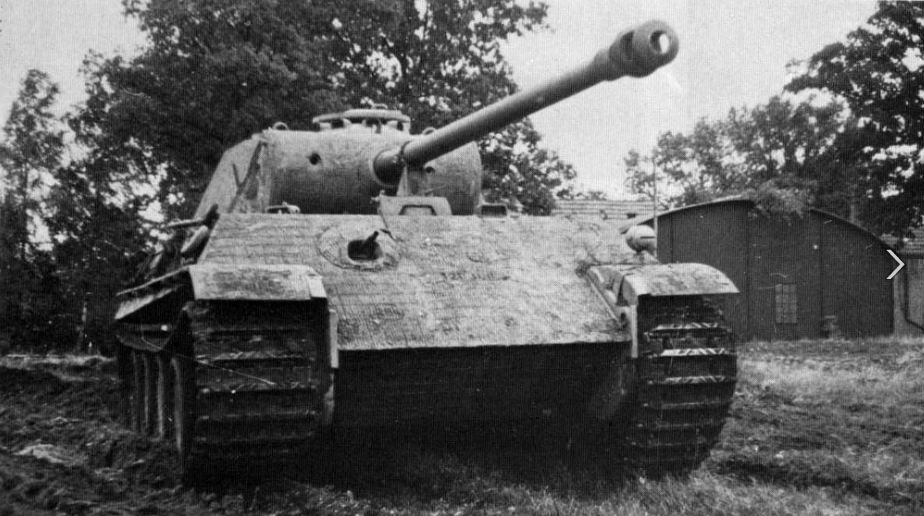
Ernst Barkmann was one of the top German tank aces to fight in World War II. Commanding a Panther tank, Barkmann served throughout the entire war on both the Eastern and Western Fronts. Not only was he deadly while at the command, but his crew became adept at making on-the-fly field repairs and getting back into action. By the time he surrendered to British forces in the spring of 1945, Barkmann had become one of the most decorated German tank commanders of the war. He was not yet 26 years of age.

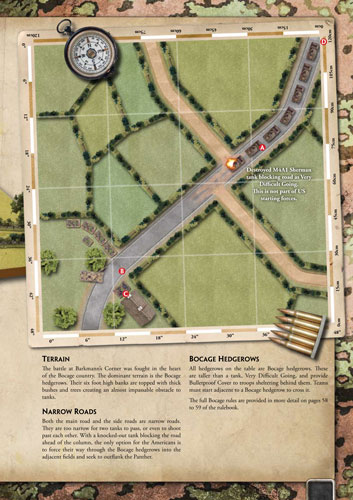
barkmannmapFlames of War offers a special Ernst Barkmann warrior set which includes Barkmann commanding his Panther plus a separate mobile repair shop. FOW also provides free scenario rules for the famed “Barkmann’s Corner” engagement from July 27, 1944. Fought in the Normandy region of France, the small battle is a classic in which Barkmann’s single tank went up against a column of over a dozen US Sherman tanks. In the end, nine Shermans and other vehicles were destroyed before Barkmann was able to slip away to safety. I’ve had the Barkmann model painted up for a few years, but I had never fielded it in a game of his most famed run-in with the Americans. With a frequent summer guest of the Metropolitan Wargamers club leaving NYC for home in Florida this coming week, the two of us got together this past weekend to have a go at the scenario.

As per the rules, the small 4′ x 4′ playing area is set with fields and roads heavily crisscrossed with the high bocage hedgerows of Normandy in which I love to set my games. Barkmann’s tank and his supporting Panzergrenadier platoon begin dug into positions around a small farm at one end of the board. In the opposite corner, the US tank command group and their first platoon of M4A1s begin the game slowly rolling down the narrow road but blocked by a burning tank. The first platoon is strengthened by the presence of Staff Sgt. Lafayette Pool, another special figure offered from FOW. Historically, Pool wasn’t at this engagement but the inclusion of the hard-charging tank ace from Texas helps balance the scenario a bit. Two larger platoons of Shermans lie in the column off the board but enter on turn two and three. The Americans need to keep things moving and Barkmann’s there to stop them.

With the first turn, the US armor column begins down the road toward the farm objective in the near distance.

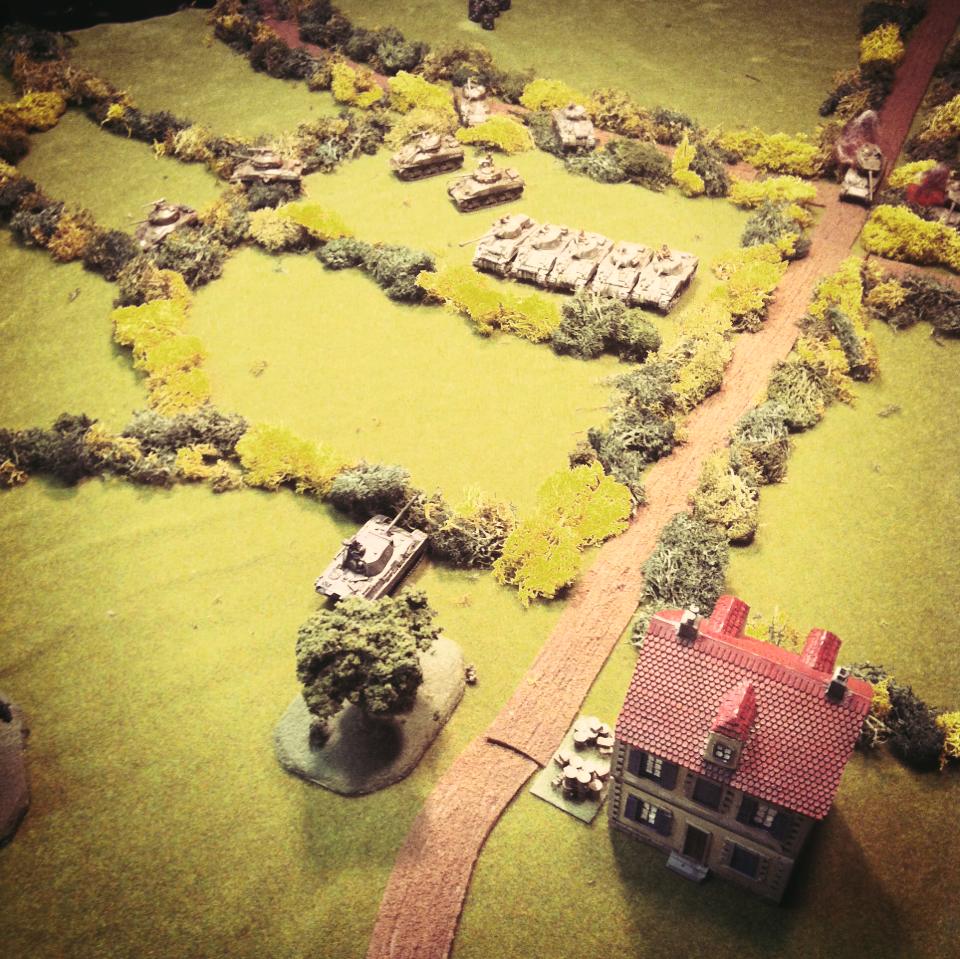
bark1Barkmann lies in wait behind a small copse of trees with the Panzergrenadiers gone to ground behind the bocage.

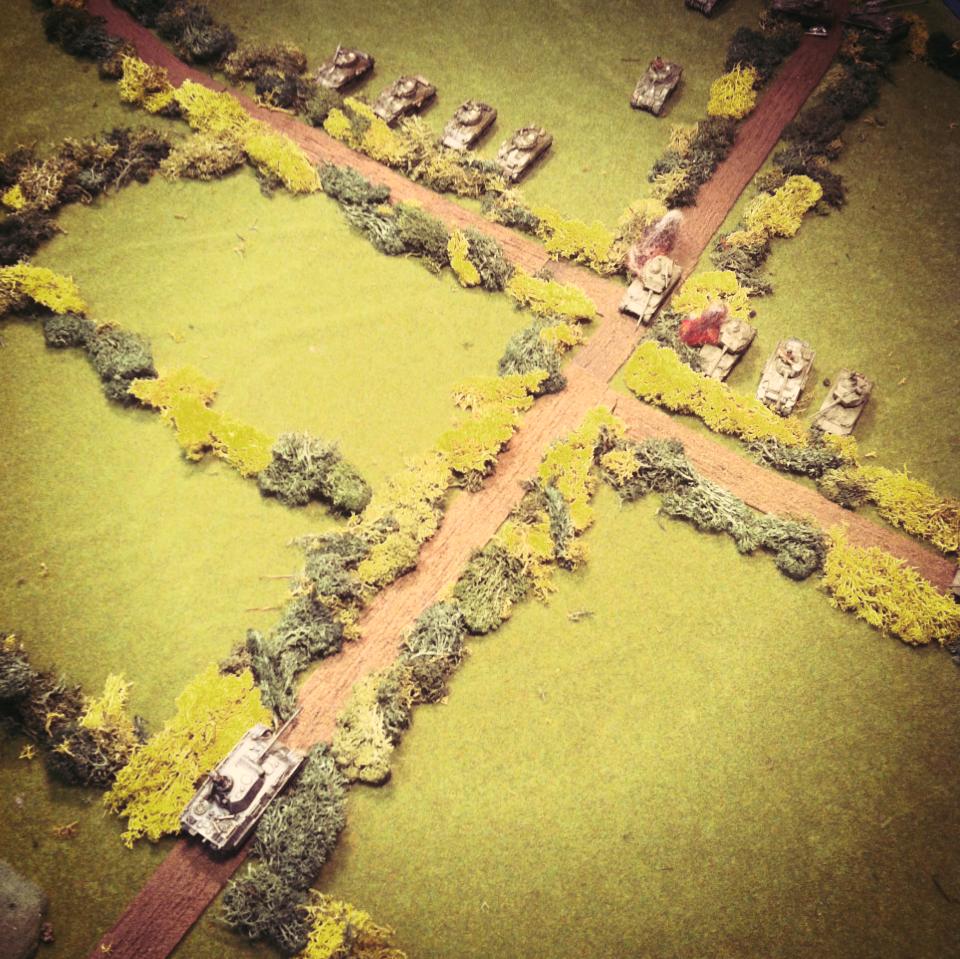
1075723_10201126852027803_1689119621_nIn the next few turns as the Americans slowly moved over the dense bocage lining the roads, the US plan became clear. The command tanks and Pool’s platoon headed toward the house and the German right flank. The remainder of the Shermans broke toward the German center and left, bogging repeatedly along the way. In the meantime, Barkmann moved to the far side of the farm house to protect his side and line up several shots on Pool’s platoon.

995453_10201126853307835_1344971388_n

3637_10201126853787847_675127225_nWith the Americans splitting in two directions and the German infantry safely in the house, Barkmann took several side shot’s at Pool’s platoon and then rode bravely to the road to begin taking shots at the approaching center Shermans. As Pool became the final survivor of his platoon, Barkmann swung his attention back to his left flank and the bulk of the closing US force which had freed itself from a series of challenging bogged turns.

992833_10201126854147856_848082758_n

538975_10201126854827873_1979156013_n

538971_10201126855507890_695500397_n

1012007_10201126856347911_1734345823_nAs the two largely-intact surviving Sherman platoons continued to attempt a flanking move on Barkmann, his Panther was forced into movement each turn to align shots and stay covered. Pool also managed to pour fire into the farmhouse with his main gun, eliminating some of the Panzergrenadiers before fleeing the table on a failed motivation test. With the twelfth and final turn, Barkmann had backed himself up to the house to protect the objective and eliminated a couple more tanks along the way. Had there been one more turn and roll of the dice, and the game would’ve gone for the Americans.

1011343_10201126857107930_1603972880_nAfter the large Total War scenarios at the club the previous weekend, it was a welcome break to play a small yet engaging battle with a limited amount of models to command. The bocage is the great equalizer in the scenario, providing alternate turns of benefit and frustration to each side as movement is stalled and lines of sight are blocked. Having read a number of historic accounts of the field-to-field fighting throughout Normandy in the spring and summer of 1944, the Barkmann’s Corner scenario went a long way in showing that choosing where you fight can be one of the most important factors in the outcome.

Related articles

Flames of War: Metropolitan Wargamers Summer 2013 FOW Day

Taking advantage of a renewed interest in the popular Flames of War 15mm miniatures WWII wargame, Metropolitan Wargamers in Park Slope, Brooklyn hosted a big day of gaming this past weekend. Both experienced and new players alike came together on two of the club’s largest tables to play to big scenarios over the better part of Saturday afternoon.

Metropolitan Wargamers

MWGFOWI mention it often, but the amazing group of people who make up the Metropolitan Wargamers club bears mentioning again. The club will celebrate its 20th anniversary next year, and it’s a real gamers paradise for those of us living in New York City. Visitors and a core group of long-time members drop by the club throughout the week and engage in all manner of games, from boardgame favorites and card games to large scale historical miniatures battles and grand strategic campaigns. The club’s space occupies an entire basement-level of a typical Brooklyn rowhouse and is lined with shelves full of games and miniatures collected by members over two decades. Playing space includes a number of the club’s award-winning sand tables, regular tables and racks on which ongoing games can be stored as they are played out over the course of weeks or even months.

The club is an incredibly diverse and supportive environment for those of us who share our common passion in gaming. With 2014’s anniversary coming up, I hope to dedicate more space here in the near future with some history and perspectives from members.

Summer 2013 FOW Day

totalwarThe folks at Flames of War provide special Total War rules for gaming large-scale matches like those we played this past weekend. With a few weeks of planning, I helped round up 10 players for the day’s game. We settled on two games from the late war, one each on the Eastern and Western Front. The Western Front game featured two teams of two players each on the German and US sides with each team running 3000 points on a 4’x8′ table. On the Eastern Front, two three-player teams squared off in a tank-heavy scenario on one of the club’s famed sand tables with each team compromised of 5000 points. Each game featured endgame objectives and were slated to run to eight turns. With games these large, we were up for a very long day of action.

On the Eastern Front, the table was wide open with widely-sloping sculpted sand hills, small copses of trees along each long side and a Y-shaped road bisecting the table. I spent the day riveted to my own game on the Western Front table, but the German and Russian armor spent the day pounding away at each other. By mid-day, things had looked pretty good for the Germans as many destroyed Russian tanks stood smouldering midfield. All that changed in the latter half of the game as the Russians rallied to victory.

IMG_1908

IMG_1912

My game on the Western Front featured a generic French landscape cut up into winding narrow roads lined with the notoriously difficult bocage hedgerows which stymied both sides in the engagements fought in the region throughout 1944 and 1945. A church stared across the board to a stone bridge crossing a narrow stream to a small village. On the other end of the table, a small farm was set beside two wheatfields with two more rural stone houses in the near distance.

IMG_1903Our US plan was to place the majority of our armor on our right flank, supported by mobile infantry deployed in a small wood. On the left flank, the US Airborne deployed just outside the wheatfields with its small parachute battery to the rear. At the center of the board, our M7 Priests with their 105mm guns formed another battery while one lone Airborne platoon pushed to hold the buildings in the town with a vantage covering the bridge.

The game started poorly for the Americans as the Germans quickly pummeled the American Shermans and kept the infantry hiding in the woods. In the center, the US infantry struggled to occupy the buildings as the Germans quickly rolled five exceedingly threatening tanks behind a row of bocage overlooking two objectives. The American’s P7 Thunderbolt was likewise ineffective through the first few turns of the gaming, missing all targets except on German tank which burst into flames while bogged over a hedgerow.

IMG_1918

IMG_1906

IMG_1916

The fight on the American left went better from the start as the US Airborne filled the wheatfields and headed for the hedge and road beyond. A brief scare from a platoon of German Stugs, a row of halftracks and a platoon occupying the farmhouse  was solved with our trusty American Shermans. With a combination of artillery bombardments, heavy fire from the US tanks and some shooting from the advancing Airborne, the crossroads in front of the farm was turned into a smoking mass of destroyed German armor. Just as the German right flank stood wide open to the rolling Shermans, the command tank bogged in the woods where it and its entire platoon would remain for the rest of the game.

IMG_1914

IMG_1924By mid-game things looked good for the Germans, but the resilience of the Americans would prove to be the edge in the second half. The American armor was pretty torn up on our right flank, but the US kept making some remarkable morale rolls to stay on in the fight with the dwindling German tanks. At the center, the Priests had lost one of their guns but snuck back into cover to continue taking direct shots across the river at the remaining German armor. The US Airborne platoon occupying the town’s buildings risked a run toward the river, taking casualties along the way despite the smoke covering the German line on the far side. The fight between the wheatfields and adjoining treeline saw the Germans and Americans whittling each other down.

IMG_1926

IMG_1910

IMG_1920

IMG_1928

In the final turn, the 101st Airborne finally got in close enough for a tank assault, destroying one tank and pushing another back from an objective. It was a bloody fight, but in the end it was an American victory with four of six objectives held. On both tables, it had been a good day for the Allies.

And it was a long one, too. With a nearly eight hours of gaming and only brief breaks to grab a drink from the fridge up front or a hotdog off the grill out back, the two games had been exhausting but enjoyed by everyone – win or lose. That’s the kind of spirit we at the club experience every week, and already there’s some after-action discussion about when we’re planning our next big Flames of War day in Brooklyn.

Flames of War: Fielding the Guards Armoured Division

guardstanks

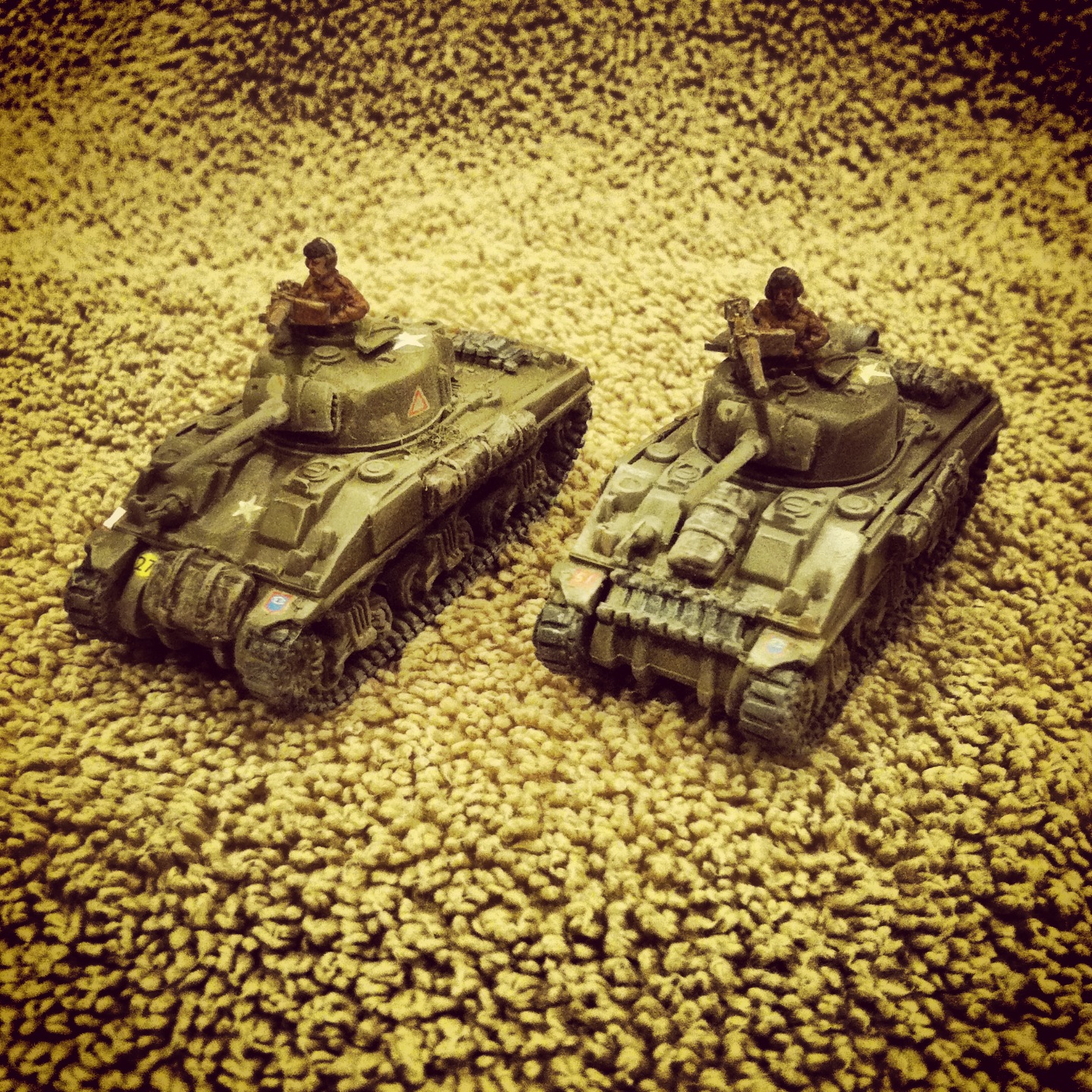
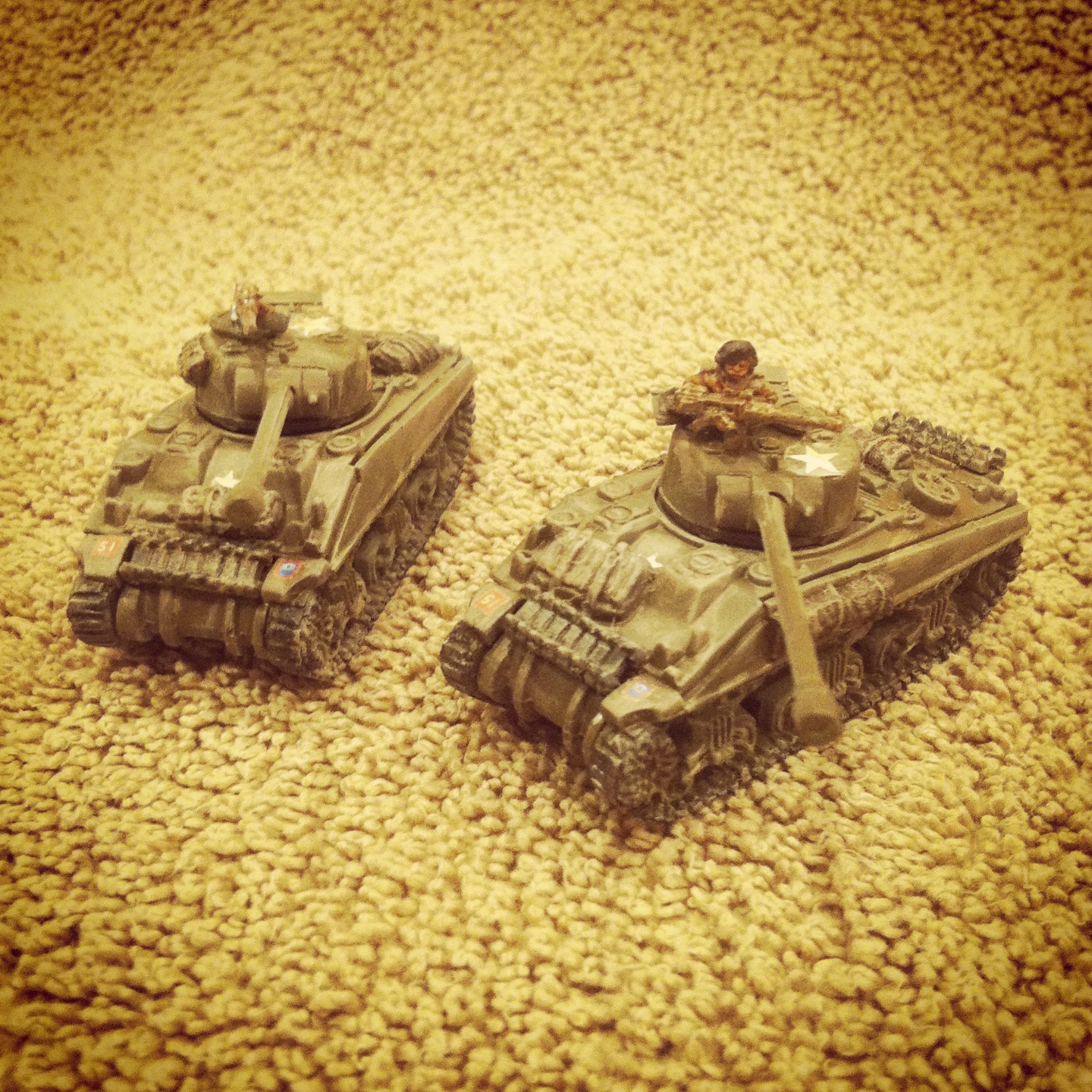
Among the multi-national Allied forces that participated in the campaign following Operation Overlord on D-Day on June 6, 1944 were the British Guards Armoured Division. Arriving a couple weeks late to the party on June 26, the Guards would roll on to participate in many of the key post-D-Day engagements including Operation Goodwood, Operation Market Garden and the Battle of the Bulge. I’ve been encountering the Guards over and over again in Rick Atkinson’s engaging The Guns At Last Light, the latest and final volume in his “Liberation Trilogy” telling of the Allied march to victory in World War II. And so, it is great timing that I’m finally getting around to adding the Guards as my first allied group supplementing my already extensive US forces in my Flames of War gaming.

FWOFBoxI’ve been working away for half this year on finishing up the models included in the excellent Flames of War Open Fire! box set. Among all the plastic goodies included, the set offers up a nice Guards platoon to provide support to their allied US Airborne infantry. The eight models include six of the US-supplied Sherman V tanks and two of the famed Sherman Firefly tanks, retrofitted by the British with a massive 17-pound anti-tank gun.

Aside from a rather significant and well-documented issue with some parts fitting together, the models glue up pretty nicely. To the included stowage and gear included on the sprues I also added some leftover bits. A quick coat of green armor spray paint followed by black and silver lightly brushed on the treads made up the majority of the painting work. The exposed drivers received a tan uniform, black beret and radio headset picked out in detail. Crates and tool handles strapped to the hull got a quick touch of brown.

IMG_1894For decals — a big oversight in not being a part of the Open Fire! kit — I used a set from the Plastic Soldier Company and guidelines found on the Flames of War site. I found the decals from PSC to be easier to apply than those I had used from FOW in the past, but I did still use a few Allied “star” markings I had lying around from previous US tank models from FOW. With the decals dry, a bit of dried mud color and watered-down brown wash added some wear and tear around the tanks before they were hit with a matte finish.

IMG_1896

IMG_1898Now that I’ve got some Brits on the table, I’m eying some UK infantry to add some depth to my collection and flavor to my games. There’s a big full-day Flames of War gaming event coming up in just a few days at Metropolitan Wargamers, but I don’t think the Guards will be making an appearance this time around. Still, it will be good to know they’re waiting to throw in with the Yanks on another day in the near future.

Flames of War: Hunner Park 1944 Scenario

nijmeganab

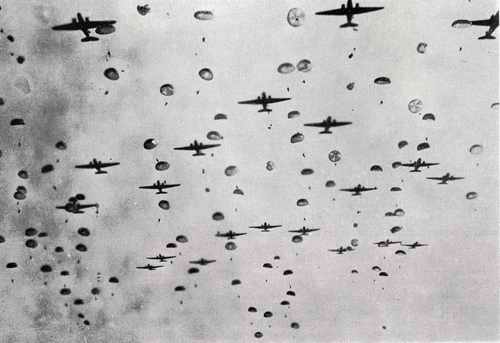
In September 1944, Allied forces launched the now-infamous Operation Market Garden. Fought in the Netherlands and Germany, the ill-fated plan was an attempt to aggressively take and control various river crossings through a series of bold airborne and armored assaults along key German strongpoints.

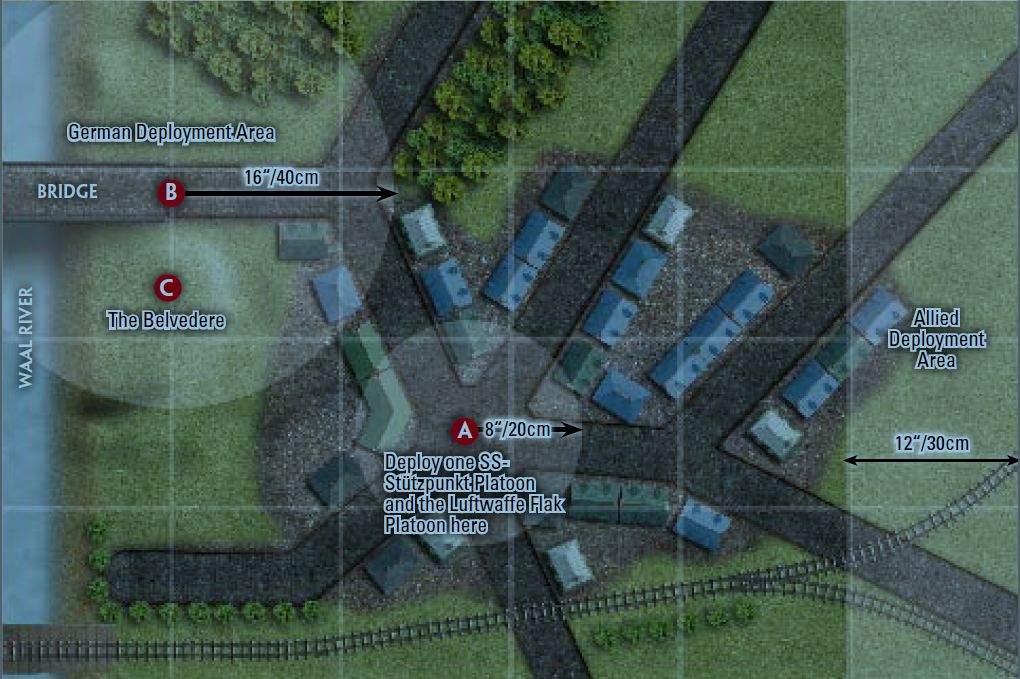
This past weekend at Metropolitan Wargamers, two of us threw together a quick Flames of War game based on the doomed Allied attempt to take the large bridge over the Waal River at Nijmegen, the oldest city in the Netherlands. Battlefront Miniatures, the makers of Flames of War, offer a PDF of the Hunner Park scenario which we used to broadly set the scene using the diagram below.

hpmap

We each fielded small, relatively balanced 1000 point forces. My US Airborne company consisted of two parachute rifle platoons, a machine gun support platoon and a US tank platoon consisting of four Shermans. The German Fallschirmjägers fielded two rifle-machine gun platoons, a heavy-machine gun support platoon and a three-tank Panzer IV platoon. The Germans deployed one rifle-machine gun platoon in the center of the town and the rest near the bridge, as per the scenario rules. My US Airborne deployed fully along the far edge.

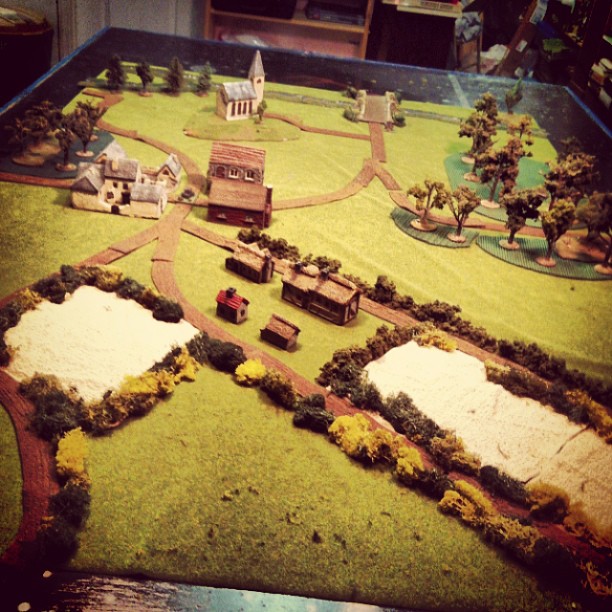
1017331_10201039903174136_1883265778_nThe scenario’s goals call for the US Airborne to take the bridge and center of town with the Germans playing a defensive game, all within the six turn time limit. Since the Allies are at a pretty clear historical disadvantage in the scenario, I modified the game’s terrain to include some additional bocage and cover at the American end of the table to help balance the game.

My plan was to quickly run one parachute rifle platoon along the side of the table, into the woods and up the road to the bridge while the remainder of my force would slug it out against the German platoons hunkered down in the town. After one turn of movement, the second turn found the US Shermans and machine gun platoon pouring fire into the Germans occupying the town’s buildings but with no result. My other rifle platoon ran at the double to occupy the woods opposite the town while a German rifle-MG platoon and their heavy MG platoon converged to meet them.

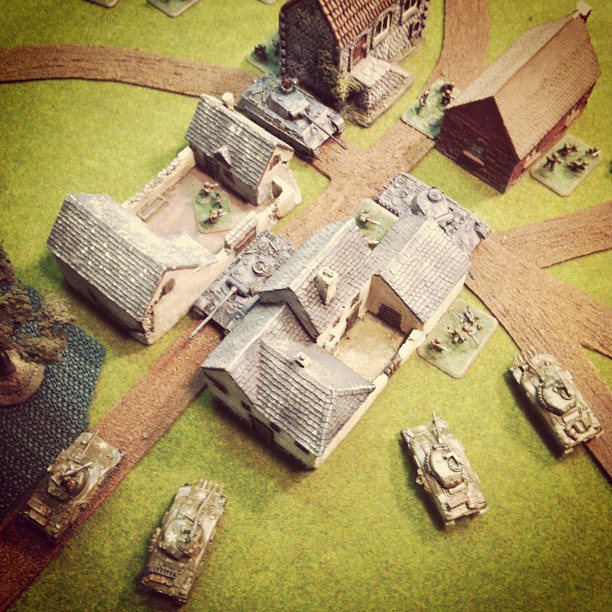
227419_10201040232582371_1708827010_nBy the third turn, the Panzers showed up in the middle of town and quickly destroyed their first Sherman tank. In the woods, the German and US platoons began exchanging fire with the Americans finding themselves pinned after the first firefight and the Germans already taking heavy casulties. Through turns four and five, the Panzers went on to destroy two more Shermans while the American machine gun platoon and additional rifle platoon began to make headway with the German infantry hidden in the buildings. Over in the woods, the tough American Airborne managed to destroy the two German platoons and finally rolled to unpin themselves. It was a bit too little too, late. By the time of the sixth and final turn, the game was pretty well lost for the Americans as the final Sherman fled the field, a last-ditch US assault on the pinned Germans holding the  town was repulsed and the German armor rolled back to meet the Americans just emerging from the woods.

Historically, Operation Market Garden was an Allied debacle, so our game play of the scenario near the Nijmegen bridge wasn’t too far off. With just under three hours to play, the game did offer a quick, varied bit of play with plenty of opportunity for both sides to get some decent shots in. It was also a good warm-up as we prepare for a large all-day Flames of War event next Saturday at the club when I hope my US Airborne roll a bit better toward victory in Europe.

Flames of War: Foy 1945 Scenario

With a big full day of Flames of War gaming coming up at Metropolitan Wargamers on July 20th a few of us got together for a practice game this past weekend. There’s a renewed interest in FOW at the club as of late, and one of the great things about the group is the way experienced and new players alike come to learn together.

Wanting a manageable but interesting late war Western Europe scenario with US Airborne and German forces, we settled on the Battle of Foy from January 1945. The battle was just one small part of the brutal and much larger Battle of the Bulge campaign in the Ardennes forest region of France, Belgium and Luxembourg during the winter of ’44-’45. The engagement near Foy is featured dramatically in an episode from HBO Band of Brothers miniseries (clip here), so I was looking forward to trying my hand at commanding Easy Company from the 101st Airborne Division on the table for the day.

The FOW website offers a downloadable PDF outlining the scenario which fairly represents the German defensive position in and around Foy. No guidelines are given on the make-up of forces, but we decided on 1780 points on a side with flexibility beyond the historic record. The US Airborne begins in two divided deployment areas with I Company pinned due to indecision by its commander Lt. Norman Dike. Only by the daring sprint across open ground by Ronald Spiers sent on orders by Capt. Richard “Dick” Winters to relieve Dike of command can I Company join the assault on Foy. In the FOW scenario, the US forces have six turns to wrest control of one of two objectives from the defending Germans. The Germans must hold their ground against the bravery and skill of Easy Company.

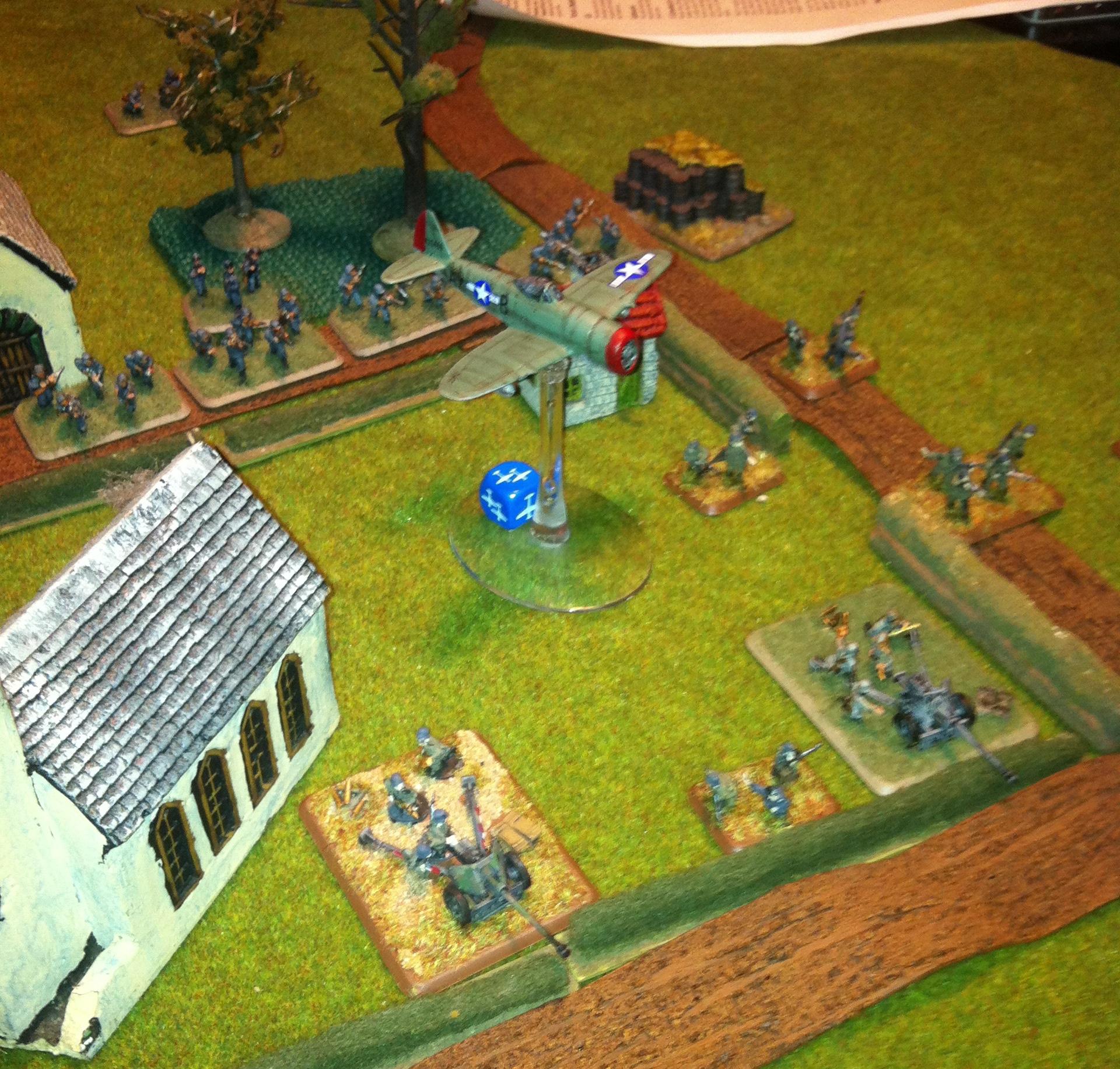
The US struck first with an airstrike from their P-47 Thunderbolt taking out two of the three German PaK 40 anti-tank guns tucked behind the churchyard walls at the center of town. After being pinned by the P-47, the anti-tank platoon wound up rolling poorly and remained pinned and ineffective for the remainder of the game.

That was pretty much the last major good story the US could tell for the rest of the game. Some house-to-house fighting took place along the German right flank with the Airborne eventually beating the Germans back from the protection of the row of houses along the road to town. The American Sherman tank platoon rolled up the center but remained stuck for the whole game attempting to machine-gun the German platoons dug in behind the churchyard walls. Four of the five tanks wound up taking fire and being destroyed where they sat.

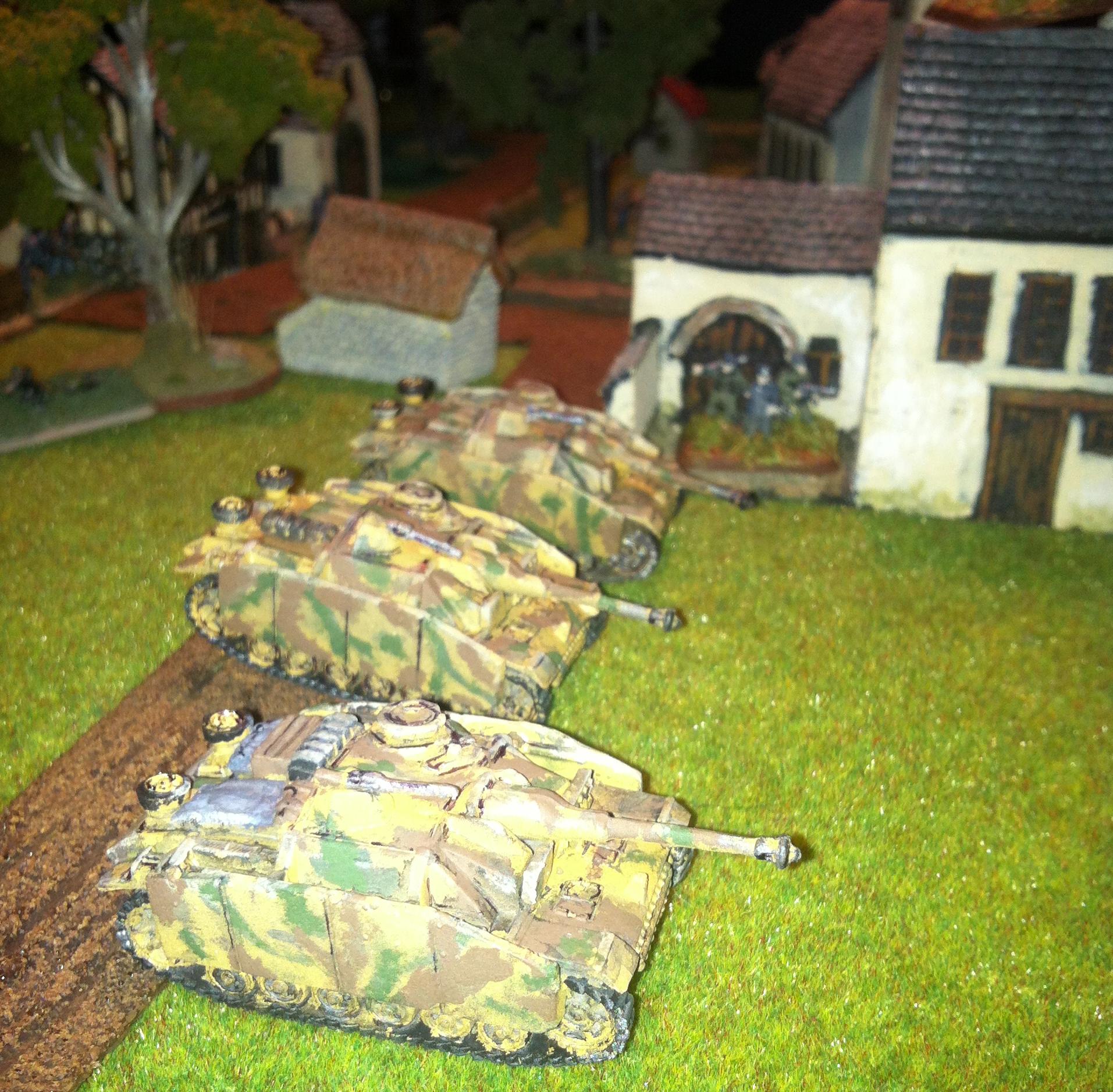
With the US infantry moving too slowly on both sides of the table, the Germans rolled their armored reserves in on turn three as their Stug platoon entered the table to hold off any US advance on the German right flank.

US volleys from the parachute artillery platoon tucked far back in the field did little more than occasionally eliminate a few German infantry and keep the units protecting the objective on the German left flank pinned.

Aside from a deadly late game P-47 strike on the German mortars which had harassed the Americans for the entire game, US air support never did much more for the rest of the game. By the sixth turn, the final German Panzer IV armor support rolled onto the table. With both flanks locked down by the Germans, a final desperate US attempt at dual assaults on the German armor platoons were ineffective. With three American platoons eliminated and most others with heavy casualties, the US ceded victory to the Germans in a revisionary result from the actual American victory in 1945.

Games like this are fun but also an opportunity to consider lessons learned. My US 101st Airborne was entirely too cautious and didn’t get into the fight fast enough, losing the opportunity to control the town’s center before the arrival of the German armor. My machine gun platoon got stuck mid-field and got chewed up bit by bit without having the opportunity to truly unleash its full effectiveness on the Germans who remained out of range and dug in for most of the game. Other infantry platoons hung back too much in the woods or buildings and never really got up in the fight.

With a much larger game coming up in a few weekends, I see that taking greater advantage of Easy Company’s aggressive, daring and deadly experience is going to be key to an Allied victory. Looking back at our re-running of the battle at Foy this past weekend, I can see I was a little too much like the wavering Lt. Dike and never let the heroics of individuals like Ronald Spiers to take over.