New Game Weekend: Cuba Libre

clbox

The GMT COIN series of games have fast become favorites at Metropolitan Wargamers in Brooklyn, NY. The series focuses on 20th-century insurgencies including Andean Abyss in modern Columbia, A Distant Plain in Afghanistan and the Viet Nam War-themed Fire In The Lake to be released in 2014. Future planned games will focus on conflict in Angola and Iraq. This past weekend I got a chance to play the second in the series, Cuba Libre, set in the Cuban Revolution period of 1957-1958.

The game plays up to four players, each taking on the role of either Fidel Castro’s 26th of July Movement leftists guerrillas, Cuban President Fulgencio Batista’s Government troops and police,  anti-Batista/anti-Communist student Directorio forces or the corrupt Syndicate of casino-owners led by American gangster Meyer Lansky. Using traits unique to each faction, the game plays through a fast-shifting series of diplomatic, economic and militaristic actions toward victory conditions unique to each group.
CCNapRussiansCutnerGMT’s Cuba Libre game board

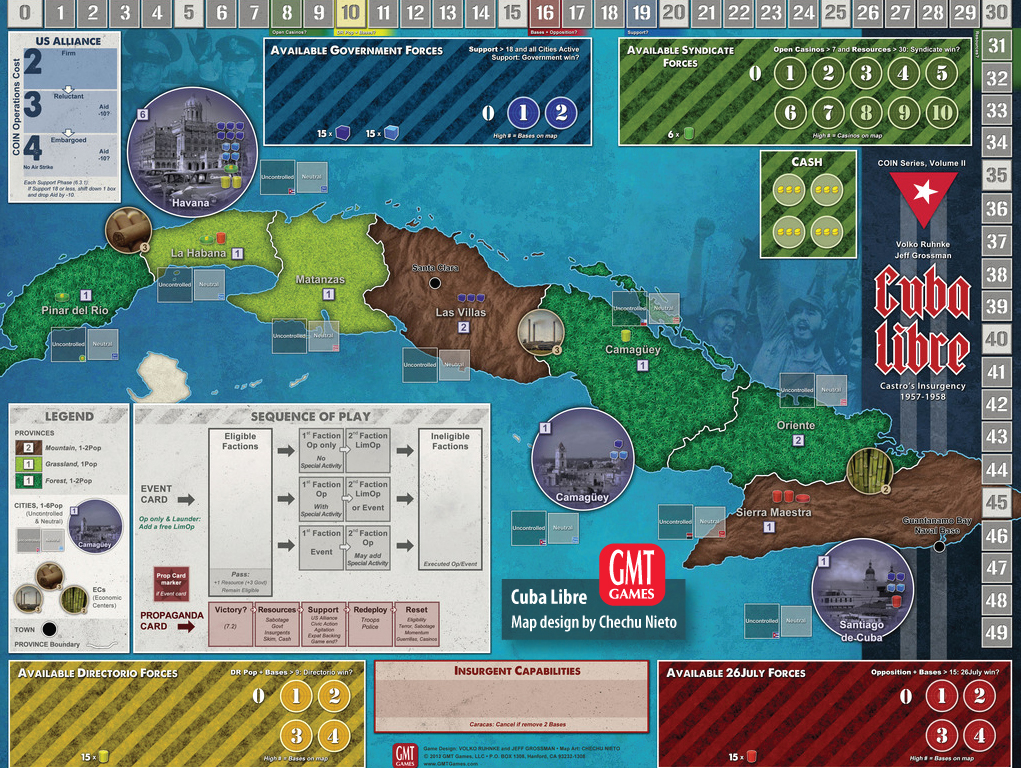
Like other COIN games, Cuba Libre is compromised of a relatively simple map, abstract wooden play pieces, cardboard markers and a stack of 48 event cards. The map features the island of Cuba split into mountain, jungle and grassland areas, cities and three economic centers for the production of sugar cane, tobacco and coal. Each area carries a population point value from a high of 6 in the capital of Havana down to 1 in the smaller cities and rural areas. The factions begin with unique set-up conditions with Government troops and police primarily clustered in the cities, July 26th guerrillas in their hidden mountain camps, Directorio forces hiding in Havana and Syndicate casinos in the vacation destinations at the western end of the island.

Cities and territories are controlled when one faction’s pieces outnumber the sum of all others in the space. Each space also exists in one of five states of political stability from the pro-government Active Support to Neutral to the rebellious Active Opposition. The game’s shifting control of space and political conditions plays to specific victory conditions.

clcardsSample cards from Cuba Libre

Much of the game’s action is driven by Cuban Revolution-themed event cards which determine the turn order in each round and possible special outcomes. Each card is neatly illustrated with a period photograph, some short historic flavor text and events which may help or harm one or more factions. Players make choices in activating the event card each round or opting for a combination of Operations or Special Activities, again unique to each faction. For example, July 26th rebels can choose from Operations like March, Attack or Terror and Activities like Infiltrate or Kidnap. Government forces may play Operations like Sweep, Train or Garrison and Activities like Air Strike or Reprisal.

IMG_2863Cuba Libre at Metropolitan Wargamers

There is a ton going on in Cuba Libre, and the game’s flow can quickly turn. In my first game, the Syndicate player quickly moved toward victory conditions by building multiple casinos. My son, playing as the Government, made side deals on different turns with the Directorio and Syndicate players. My July 26th forces managed to throw much of the board into open rebellion but I could never amass enough of my guerillas where I really needed them. Cutting the game a bit short in the end, we scored it as a Government victory.

Learning how to leverage the strengths of a particular faction makes for a lot of replay value in Cuba Libre. The mix of simple components, plenty of space for strategic options and actual history baked in is what makes this and the other COIN Series games from GMT among the best being produced today.

castro¡Viva la Revolución!

New Game Weekend: Civilization & Advanced Civilization

CivAdvCivBoxesEarlier in the week I posted about the elegantly quick board game Eight-Minute Empire: Legends I first had a chance to play last weekend at Metropolitan Wargamers in Brooklyn, NY. After a brief, engaging 20 minutes with Legends, I joined four other players in another game that was also new to me and a completely different experience — Advanced Civilization.

CivMapCivilization game board with Western expansion map to the left

Civilization by UK game designer Francis Tresham was published by Avalon Hill in 1981 and introduced a number of now-standard gaming elements found in many board and video games today. Ten years later, Advanced Civilization offered some refinements, additions and simplifications to the game. Playing with 2-8 players and running to 8, 10, 12 or more rivetingly-complex hours, Civilization has become one of the signature games of the past 40 years.

CivASTAdvanced Civilization’s innovative  Archaeological Succession Table (AST)

At its core, Civilization is an area control game played in the Mediterranean region in an 8000-year period spanning the Stone Age through the Iron Age. Each player picks a civilization and places a single population marker in a territory in their color-coded beginning edge of the board. Territories each support varying numbers of population, indicated in each area. Population doubles each turn, so one marker grows to two. If the space cannot sustain more than the noted number of population markers, players must move and expand their population to new territories or “starve” population down to the maximum load for the territory. A population census grid on the Archaeology Succession Track (AST) notes population growth of each civilization and determines the order of play the following turn.

Moving six population markers to a space with a black square allows the settlement of a city, and twelve may settle a city in a blank space. Establishing cities allows the harvesting of goods the likes of Hides & Ochre, Salt & Timber or Gems & Dye. Drawn in turn order, the stacks of commodities cards also hide calamity cards which have adverse effect on a civilization through such things as Famine, Civil War, Flood or Volcano. Each round includes trading where players must keep certain untradeable calamities while trading away certain goods and other calamities in the quest to collect sets of cards which may then be turned into technologies. The technologies build upon each other through the building of a Technology Tree (“Tech Tree”) which advances with additional abilities and protections for the civilization. Simple beginning  technologies like Pottery, Mythology and Music aid early societies but lose importance over time. Philosophy, Democracy, Law, Trade Empire, Advanced Military and Golden Age technologies score the greatest points and advance a society through the  Stone, Bronze and Iron Ages to eventual victory.

IMG_2859Advanced Civilization at Metropolitan Wargamers

The AST and Tech Tree become the major machines in propelling the game forward, and evolutions of these elements have been incorporated into countless board and video games since their introduction with Civilization. These two innovations make Civilization and other subsequent games like Clash of Cultures focused more largely on elements of managing resources and cultural advancement than traditional combat-focused area control games like Risk. Resource management and building based on collection of resources shows up in so many games, prominently so in the widely-popular  Settlers of Catan. Somewhat controversially, the video and board game versions of the Sid Meir’s Civilization franchise owes a great deal both in its mechanics to the Avalon Hill game which preceded it in theme and name.

Civilization is incredibly compelling and eerily historic in how it plays and forces the hand of history. Players who begin with small civilizations are forced into territorial expansion through population growth or risk starvation of their people. Once cities thrive, feeding those cities becomes another concern and reason for more expansion. Soon, players find themselves in a loop where development begets expansion begets development. Isolated societies have to begin moving farther afield over land of through developing shipbuilding and sailing technologies. Resources become important to build technologies to further enhance and protect their civilization. By building more cities, more valuable goods are obtained and more advanced technologies may be developed. With all players expanding their societies by mid-game, civilizations eventually must compete for room in the region. War becomes somewhat inevitable, but diplomacy and mutual-beneficial trade also gain special importance as the game moves on and civilization begin to settle into specific paths to winning the game.

Of the hundreds of games I’ve played, I now understand why Civilization holds a special place in the hearts of gamers. Committing to hours upon hours of play becomes a game mechanic unto itself as players of Civilization must maintain focused attention on mentally-exhausting detail. Yes, Civilization is a game, but a marvelously intriguing one to play in the context of our own world where population, space, resources and technologies play out with increasingly dire importance as human civilization marches toward our own eventual historical endgame.

New Game Weekend: Eight-Minute Empire: Legends

emelogo

Most of the games I play can take hours to get through, leaving me satisfied but often downright exhausted by the time I’m cleaning up the pieces on the tabletop and putting them back in the box. Finding a game that is a challenge but a quick play can be a tall order. This past weekend at Metropolitan Wargamers in Brooklyn, NY, I had a chance to play through the new Eight-Minute Empire: Legends and discovered in it a gorgeous little game easily playable in about 20 minutes.

Eight-Minute Empire: Legends is yet another Kickstarter success from last year and a follow-up to the original Eight-Minute Empire which was also Kickstarted in late 2012. The original game is now out of print, but fortunately the new Legends version is playable as a standalone.

emecontents

Cards and island tiles from Eight-Minute Empire: Legends

The game plays with a classic area control mechanic on a modular set of two-sided tiles featuring islands connected by bridges and separated by sea. Players begin with a set of colored cube “armies” in a central location. Play runs a set round of turns based on the number of players (2-4) with all the action driven by 35 cards laid out six at a time near the board. Cards allow combinations of movement, placing new armies, building cities, destroying opponent’s armies or other special actions (like a “flight” ability over water spaces).

As the turns progress, cards are picked up (for free) or purchased (for 1-3 coins) depending on their position in the row. Players buy cards in turn using coins handed out at the beginning of the game. After a card is acquired , the the whole row of cards slides up and a new card is turned over. The shifting positions and costs of the cards plays heavily in the strategy as each player bides their time to snatch a card they want for the least cost possible. With each turn, the value of cards quickly rise or fall, depending on each player’s personal strategy.

IMG_2860Eight-Minute Empire: Legends hits the table at Metropolitan Wargamers

When the turns are up, players score victory points based on the control of territory spaces or dominance of an entire island. Additionally, collecting specific sets of cards score more victory points. In our game, my three opponents primarily focused on slugging it out for territory on the board while I focused on collecting cards. I managed to collect two “Mountain” cards for a couple extra victory points at the end, and I also scored points for having the most cards with blue crystals. One other player collected a bunch of “Dire” cards illustrated with menacingly evil images. After a few plays through the game, I could see how players might gain familiarity with the available cards plan their strategies with a bit more focus.

For a tiny game, it packs a punch and variety within a nifty fantasy theme. Eight-Minute Empire: Legends is a great game to have on hand — maybe tossed at the bottom of your bag — and ready to go when a swift game of conquest is just the thing to fill a  half-hour of competitive fun.

New Game Weekend: 1775 Rebellion

1775box

Late this past week, the Washington Post ran a lengthy article on game designer and CIA analyst Volke Ruhnke. Ruhnke’s games are popular at Metropolitan Wargamers, including his COIN (Counterinsurgnecy) series from GMT Games, including the two 2013 releases of  Cubra Libre (Cuba) and A Distant Plain (Afghanistan). The basic mechanics of these games and other historicals like them involve simple map game boards, wooden blocks placed in area control of spaces and detailed cards driving player actions.

While Ruhke’s games from GMT focus on 20th-century insurgencies in Southeast Asia, the Middle East and Central and South America, Academy Games has been producing games for a couple years framed in similar mechanics but focused on US history with their Birth of America series. Thus far, the series consists of  1812: The Invasion of Canada, published two years ago  to conicide with the 200th-anniversary of the War of 1812, and 1775: Rebellion, an American Revolution game. Next up for Academy Games is an Underground Railroad-themed game called Freedom which was successfully funded on Kickstarter last year.

1775backbox

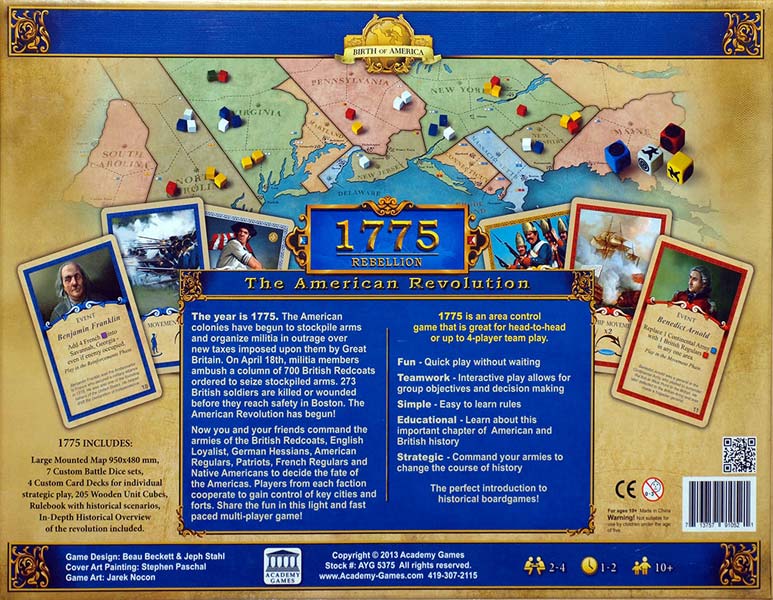
Back of the box for 1775: Rebellion showing game contents

This past weekend I had an opportunity to play 1775 for the first time, and if you’ve got a passion for board games and American history like me, you need to give this one a try yourself.

IMG_2754

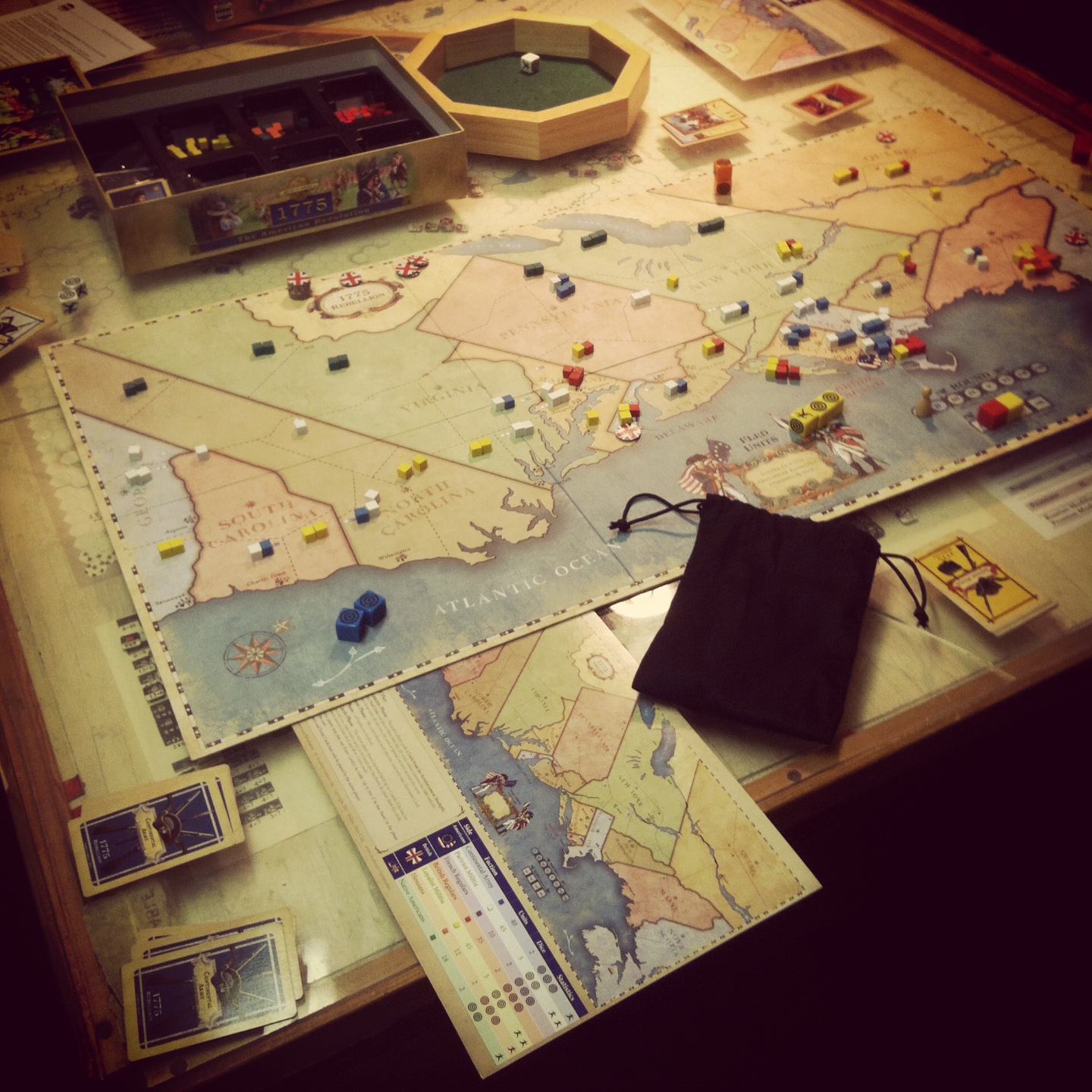
Game set up for 1775: Rebellion

The board presents a map of ther thirteen original American colonies, plus Quebec and Nova Scotia to the north, at the dawn of the War of Independence. Two to four players begin the game as American Regulars, Colonial Militia, British Redcoat Regulars and English Loyalists deployed throughout the colonies. On the western frontier are unaligned Native Americans, and throughout the game opportunities arise for Hessian and French forces to join the conflict. All forces in the game are indicated through simple color-coded cubes with American Colonists in blue and white, British in red and yellow, Native Americans in green, French in purple and Hessians in orange.

1775movementcards

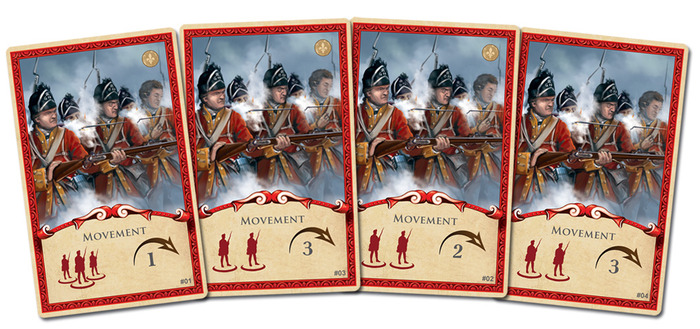
Sample movement cards from 1775: Rebellion

The action of the game is propelled by movement and event cards. Each player draws three cards to their hand and may play one movement and up to two event cards during their turn. Movement cards indicate one or more allied army’s movement from one to three spaces in a turn. Native American, Hessian and French forces cannot move until another force moves to their space and joins in alliance with them. Moving forces cannot move through enemy-occupied areas, and movement to a space containing enemy forces results in a battle.

1775cards

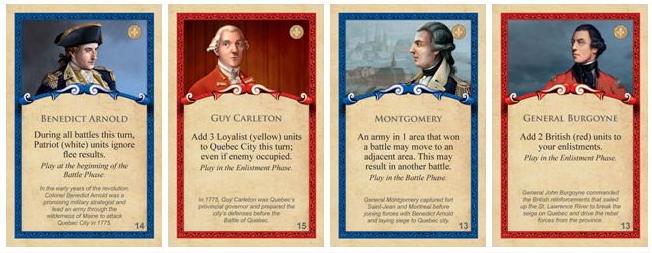
Sample event cards from 1775: Rebellion

Event cards depict historic personalities such as generals or statesmen and other occurences from the Revolutionary period like Paul Revere’s Ride, signing of the Declaration of Independence or the creation of the American flag by Betsy Ross. Each event card allows for things like additional forces to arrive or extra movement.


IMG_2755

Turn 1 with the Americans moving on British-occupied Boston

Combat is resolved with dice color-coded to each force. Dice faces show hits, blank sides and flee indicators. Defending forces roll first in a combat. Hits destroy an enemy unit, returning it to the reinforcement pool. A blank result allows the option for a unit to retreat to a neighboring allied-controlled space. A flee roll removes a unit to the flee space to be replaced at the beginning of that player’s next turm. Dice for each force are weighted differently, so British Redcoats don’t hit as often but never flee while Hessians hit more frequently but flee more readily.

1775trucecards

Truce cards from 1775: Rebelllion

The game proceeds in random turn order each round with players deploying reinfocements into occupied cities and retrieving fled units. The object of the game is to control the most colonies before the game ends after turn three with the play of two truce cards on each side. Colonies are only controlled when every space in the colony is controlled by allied forces.

IMG_2757

Turn 3 with the American truce card played and British advancing from the north

In our four-player game this past weekend, my team’s Colonists initially attempted to oust the British from Boston but were repelled. The British advanced from Canada into northern New York, New Hampshire, Massachusetts and Connecticut. The Colonists picked up Native American allies in Western Pennsylvania and took control of the colony while a stalemate resulted in New England. With a mass of British-allied reinforcements to the north, the Colonists recieved French reinforcements in turn three and quickly took control of two colonies to the south. Colonists quickly played their second truce card and ended the game with more colonies in our control.

Although our intro game was a quick one, I’m very much looking forward to trying 1775: Rebellion again using different paths to victory. The game’s rules are short and the components simple, but there’s a lot of strategic heft to the game. For adults, or even smart kids, with a thing for early American history, I can’t recommend 1775: Rebellion enough.

Gaming The Rails

HSCPA

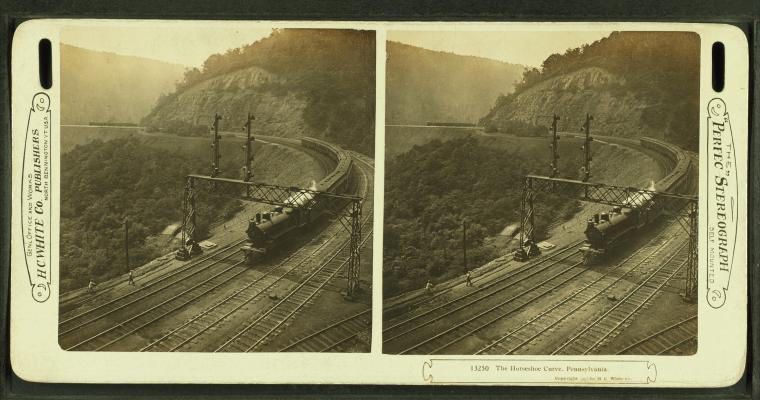
I’ve been a railfan for as long as I’ve been a gamer. I grew up taking daily school bus rides past the rail yards of the short line Genesee & Wyoming Railroad. As a kid, my brothers, father and I built an enormous HO scale model railroad in our basement, complete with mountains, tunnels, trestles, lamp-lit streets and a working waterfall. After graduate school, I found myself living in Western Pennsylvania surrounded by and visiting railroad landmarks like the Gallitzin Tunnels, Horseshoe Curve National Landmark and East Broad Top Railroad. To this day, I rarely walk by a magazine rack without leafing through the latest issue of Model Railroader Magazine. There’s just something about trains.

For dual fans of railroading and gaming like me, there are a lot of options. Railroads lend themselves to gaming with their familiar cultural history coupled with thematic economic and mission/route-completion mechanics. Real-world competition among railroad companies, investors and promoters also contributes easily to any game presented within a railroading context.

AARailBaronAvalon Hill’s Rail Baron from 1977 is widely considered the grandfather of railroad games. Based on a 1974 board game called Box Cars, Rail Baron presents players with a map of the US with 28 historic railway routes. Players compete, as did the railroad moguls of the past, to complete routes, upgrade to faster trains and collect more cash to pour back into their empire. Rail Baron became one of AH’s all-time best-selling games, and most modern railroad board games owe more than a little to this classic.

Ticket

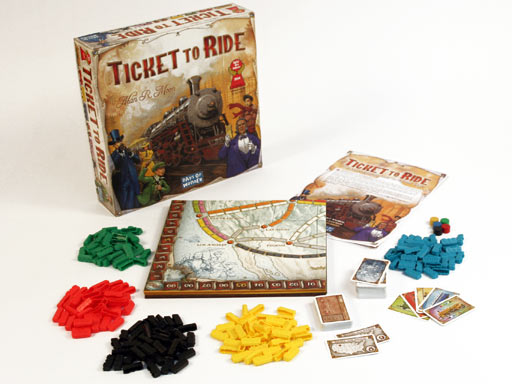
A longtime favorite at my house is Ticket To Ride, the award-winning 2004 game from Days Of Wonder. TTR is a pretty straightforward game where players complete routes between US cities, scoring points based on the length of the rail line and connections made along the way. Players balance holding cards in their hands attempting to build more longer valuable routes with the risk of their opponents building the highly-prized lines before them. The game is great for kids since play is fairly straightforward with little-to-no reading required, and various expansions have added to the replay of the game over the years.

steam box

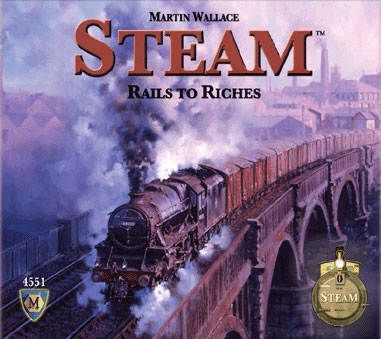
A couple weeks ago I had occasion for a first play through Steam at Metropolitan Wargamers in Brooklyn, NY. Steam, released by Mayfair Games in 2008, is similar to many train games in that it has a a route-completion component. The basic game comes with a two-side board featuring the US Northeast and the European Rhine/Ruhr region on the flipside. Aside from building routes, players transport goods between cities and upgrade towns to become new hubs. The game is competitive, but players can also balance sharing the wealth over some lines as tracks are strategically completed. Various map expansions add geographic possibilities in Europe, Africa, Asia and the West Coast of the US. Steam Barons expands the game further with a heavier economic mechanic of investing in the stock of multiple railways.

IMG_2658

In my first play through Steam I really enjoyed the Eurogame feel with choices made each round in various focuses of upgrading trains, building track, establishing new stations and moving goods. Bidding for turn placement also becomes increasingly important throughout the game as the board becomes crowded with competing routes and available goods begin to dwindle. Access to capital also shifts during the game, as access to lots of money becomes less important late in the game after a focused growth mode early on. Having played through the game, I’m anxious to give it another ride soon with the Steam Barons expansion’s added stock market elements.

RussianRR

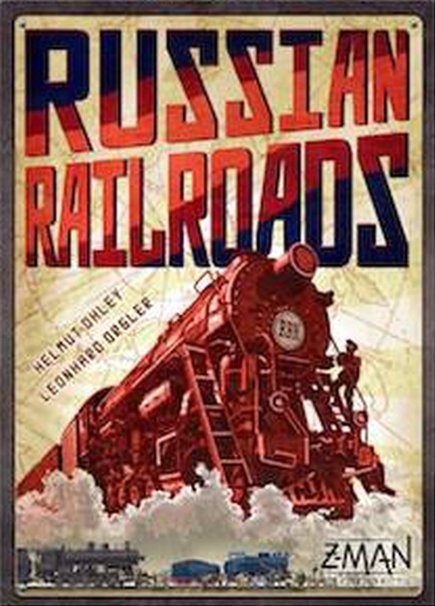
The latest favorite rail game hitting the table at the club in Brooklyn is last year’s Russian Railroads from Z-Man Games. In classic Eurogame style, Russian Railroads is driven by worker placement mechanics as players push to develop increasingly technological superior trains ahead of the competition. While I haven’t had a chance to play the game yet, it did make a lot of people’s top games of the year, so I’m certain to jump into a game in the very near future.

Like myself, I’ve found a lot of gamers who are passionate about trains. Maybe it’s the competition inherent in railroad history that make them appealing. It could also just be the boyish thrill big trains never cease to bring. Regardless, like a passenger waiting at some rural depot with ticket in-hand, we’re all waiting for the next train to arrive with the possibility of adventure and fortune somewhere down the tracks.

2014: Opening New Fronts

wraondsnyIn the middle of 2013 I somewhat unexpectedly re-launched Brooklyn Wargaming with a new design and a renewed posting vigor. Since then, I’ve had more than 10,000 visits from readers all over the world. Together with these folks I’m sure to never know, we share a continued passion for gaming I am committed to infusing in every one of my postsings here.

My World War II Flames of War posts are clearly the favorites for visitors to the site. My FOW After Action Reports continue to garner a lot of daily views, and people in particular seem to love the Barkmann’s Corner scenario I played in July at Metropolitan Wargamers in Brooklyn, NY. More AARs and building-out my various national forces in my FOW Modelling posts will be a big part of 2014.

As for other stuff on the site, my few posts on Warfare In The Age of Reason are quickly shooting to the top of popularity. I really enjoy writing up my plays a variety of board and card games through my New Game Weekend posts, and taking a look backward at Retro Gaming The 70s & 80s often result in emails from people like me who have fond memories of hours spent at play in the past.

Looking to 2014, here’s where my focus will continue and grow on Brooklyn Wargaming and the tabletop each week.

World War II

For years, I’ve played a lot of FOW with a big focus on Western Europe. To start the year, I’ll be playing a beach landing or two as a way to prep for the 70th anniversary of D-Day this summer, and I’ve also got a handful of other historic scenarios I’ve been working-up over the past few months.

a3ee242c52

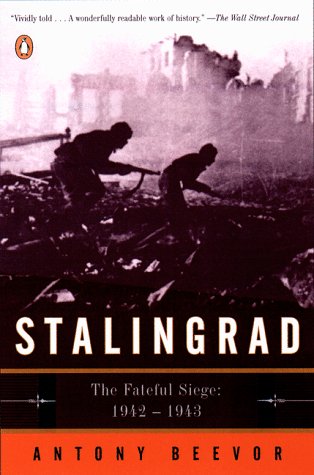
Over Thanksgiving, my brother (another lifelong gamer like myself) handed me a copy of Antony Breevor’s Stalingrad and told me it was the best military history book he’d ever read. The highly-readable account of the vicious siege of Stalingrad has gotten my hooked on the idea of expanding my WWII gaming into the Eastern Front in the new year.

Desperate-Measures

As a first step toward this front of the war, I picked up the new FOW Desperate Measures book. While this intelligence briefing is centered on the closing months of the war battled among German and Soviet forces, there’s also a newly-released updated edition of the FOW Red Bear book which gives a broader look at the Allied forces on the Eastern Front. These resources coupled with my historical reading on Stalingrad have whet my appetite for fielding some large masses of Russian forces on the table. A couple other guys at the club in Brooklyn have already started putting together some of Stalin’s finest and I’m very much looking forward to the Eastern Front opening up my WWII gaming with some scenarios this year.

716532

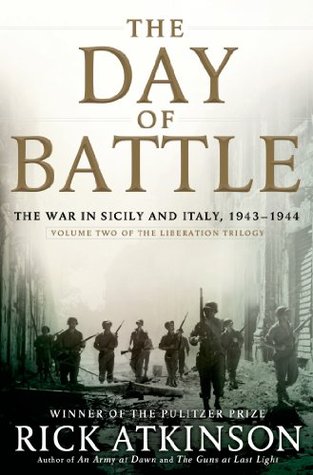
I spent a chunk of the past year reading Rick Atkinson’s Guns At Last Light, the third book in his World War II Liberation Trilogy. The book’s focus on the D-Day landings through the campaigns in Western Europe to the fall of the Third Reich squares with the majority of my FOW gaming from the past year. Working my way back through Atkinson’s books, I’m just starting in on The Day Of Battle for Christmas. As with my new swing in interest toward the Soviets and Eastern Front, I’m looking to Atkinson’s second WWII book to fill in my knowledge on the southern European campaigns in Sicily and Italy. Whether I get some Italian troops on the table by year’s end remains to be seen, but I’m really looking to 2014 as another big year of WWII gaming and learning.

Seven Years War

I grew up in Western New York State and then lived for a period of time in Western Pennsylvania, so the French and Indian War has always lingered as an interest but has never found its way into my gaming.

lastmohicanpen

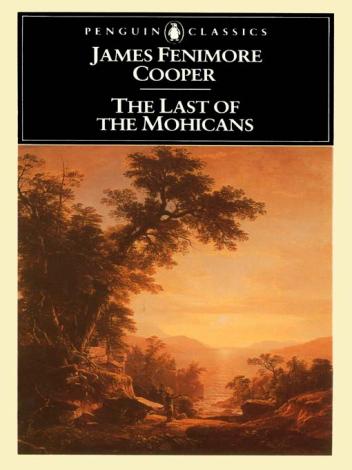
James Fenimore Cooper’s The Last of the Mohicans and other books in his Leatherstocking Tales series have also been favorites since boyhood. These colorful stories are set within the wilderness backdrop of the colonial wars of the Americas fuel much of my love for the French and Indian War period, and my visits to historic sites like Fort Niagara and Fort Necessity have added physical understanding to the frontier conflicts of the period.

ageofreasonrules

Toward the end of 2013, a fellow club member introduced me to the Warfare In the Age Of Reason rules and the Seven Years War. While my experience gaming battles from the period have thus far had a European focus, my long-time interest in what most consider the world’s first global-scale war holds tremendous interest for me. To this end, I hope to make wargaming the Americas front with the FIW a project for the coming year. Modelling 15mm miniatures of colonists, French, British and Native Americans, along with requisite early American frontier terrain, is sure to be making an appearance here in the coming months.

World War I

While I’m on the subject of world wars, I can’t help but acknowledge the calendar and the 100th anniversary of the beginnings of World War I this coming July.keegan_first_l

My only real exposure to the war so far has been with John Keegan’s excellent The First World War. I’ve read a half-dozen of Keegan’s books, and his 1999 overview of the Great War gave me a solid introduction to a war that’s often overlooked by most Americans like myself. Clearly this is a major period in modern warfare I could stand to learn more about.

9780385351225_p0_v1_s260x420

To get myself back into the period, I’m planning on reading Max Hasting’s Catastrophe 1914: Europe Goes To War which made many top nonfiction lists at the end of 2013. I’ve only gamed WWI once with a 28mm French-German trench warfare scenario at a convention back in 2011, but there are a number of club members with miniatures from the period I may prod into using in some games this year. There are also rumors afoot that the makers of FOW are expanding into WWI just in time for this year’s anniversary, but for now I think some time with a few good books should be enough tribute from me in 2014.

And…

I can’t really tell with complete certainty where this coming year in gaming will take me. Like with most battle plans, a grand strategy can be laid out but actual events often unfold very differently in the fog of war. I can say there will be more miniatures, more scenarios and more completely fresh games to come here on Brooklyn Wargaming by New Year’s Day 2015. For now, here’s to old fronts not forgotten from 2013 and new fronts to come in 2014.

New Game Weekend: Guillotine

1000w

The French Revolution is a period where one can typically find little to laugh about, unless the mass slaughter of tens-of-thousands of people tickles your historical fancy or massages your deep-seeded hate for European aristocracy. The bloody period did much to shape modern world politics, abolished slavery in French-held territories and opened the door to the rise to Napoleon Bonaparte, but the popular symbol that lingers in most people’s minds is the guillotine.

Developed as an efficient and humane manner of execution, the guillotine was a perfect symbol for the Age of Enlightenment-fuelled violence of the French Revolution — a combination of vicious violence and modern invention. Executions of King Louis XVI, Queen Marie Antoinette and countless other nobles and members of the ruling class were public events during the Reign of Terror of the Revolutionary period. Ironically, Maximilien Robespierre, one of the architects of the Reign of Terror would also meet his death at the guillotine when public sentiment turned against the violence of the era. Beyond the French Revolution, the guillotine would remain a prominent mode of execution for prisoners worldwide and a mode of terror for governments such as the German Third Reich well into the late 20th-century.

71J8NHH913L

Guillotine, the 1998 card game from Wizards of the Coast, uses the Reign of Terror as a jumping-off point for an unlikely comical, fast-paced and enjoyable game. Playing in about a half-hour, the game is framed over three days (or rounds) of executions with a steady flow of nobles lined up ready to be rid of their heads. Players score points through the value of nobles executed, playing cards to garner extra points, bump valuable nobles to the head of the line and steal from other players along the way.

The game is set up with an initial queue of 12 nobles lined up before a cardboard standing guillotine. Players are then dealt five Action cards to begin. Each player’s turn involves three steps. First, a player may use an Action card as an option. Next, the player collects the Noble at the front of the line, adding the card to their pool of victims points in front of them. Finally, the player draws back an Action card from the pile.

Once a line of nobles is eliminated at the guillotine, the day ends and the next row of 12 nobles is dealt out with play continuing in turn. After the second day and a third day of executions is complete, players score points from their collected noble victims and the highest score wins.

guillotine game

Within the game there’s a surprising amount of strategy as players not only collect their own most valuable victims, but also do what they can to prevent their opponents from doing the same through play of Action cards.

Action cards bump nobles up and down the line, reshuffle the line, cause other players to lose nobles they’ve collected and rescue potentially-high-scoring nobles from a certain death.

Potential Noble victims come in color-coded cards: Civic (green), Royalty (purple),  Church (blue), Military (red) and Negative (grey). The grey-colored cards have negative point values, killing innocents or other crowd favorites. Collecting cards in certain color may result in additional bonus points made active by playing specific Action cards. Collecting combinations of nobles like the Count and Countess together or multiple Palace Guards can also reap bonus points.

Managing your own Action cards, your pool of scored nobles and the line of upcoming noble victims creates a great deal of dynamic play within the simple card-based mechanic. The card illustrations are comical and include a number of historical personalities such as Louis XVI, Marie Antoinette and Robespierre himself, offering a mildly-educational element to the broadly-historical game.

While execution is a grisly theme, older kids will find the game to be entertaining when played along with a group of adults. Like a lot of historically-themed gaming, the nastier bits are pretty well glossed-over in Guillotine. The game does provide some great entertainment for a fast and fun Reign of Terror of your own as the dishes are cleared, the desserts are gobbled up and the last of the French noble class is once again marched to their doom.

Warfare In The Age Of Reason: Battle of Moys 1757

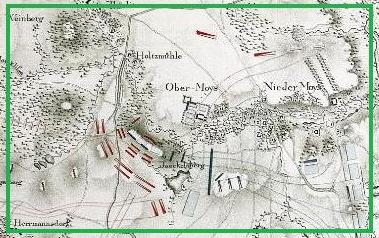
moysfullA c. 1790 map of the Battle of Moys, September 7, 1757

This past weekend at Metropolitan Wargamers in Brooklyn, NY, there was some focused excitement around around two big boardgames. One group of players was huddled around an ongoing campaign using the very popular Zombicide and its new expansions. Another crowd anxioulsy anticipated the arrival of the newly-released Designer’s Edition of the old Steve Jackson Games sci-fi battle classic Ogre which comes in a monstrous 30-pound box overflowing with huge game maps, 3D models and more than 500 cardboard playing pieces.

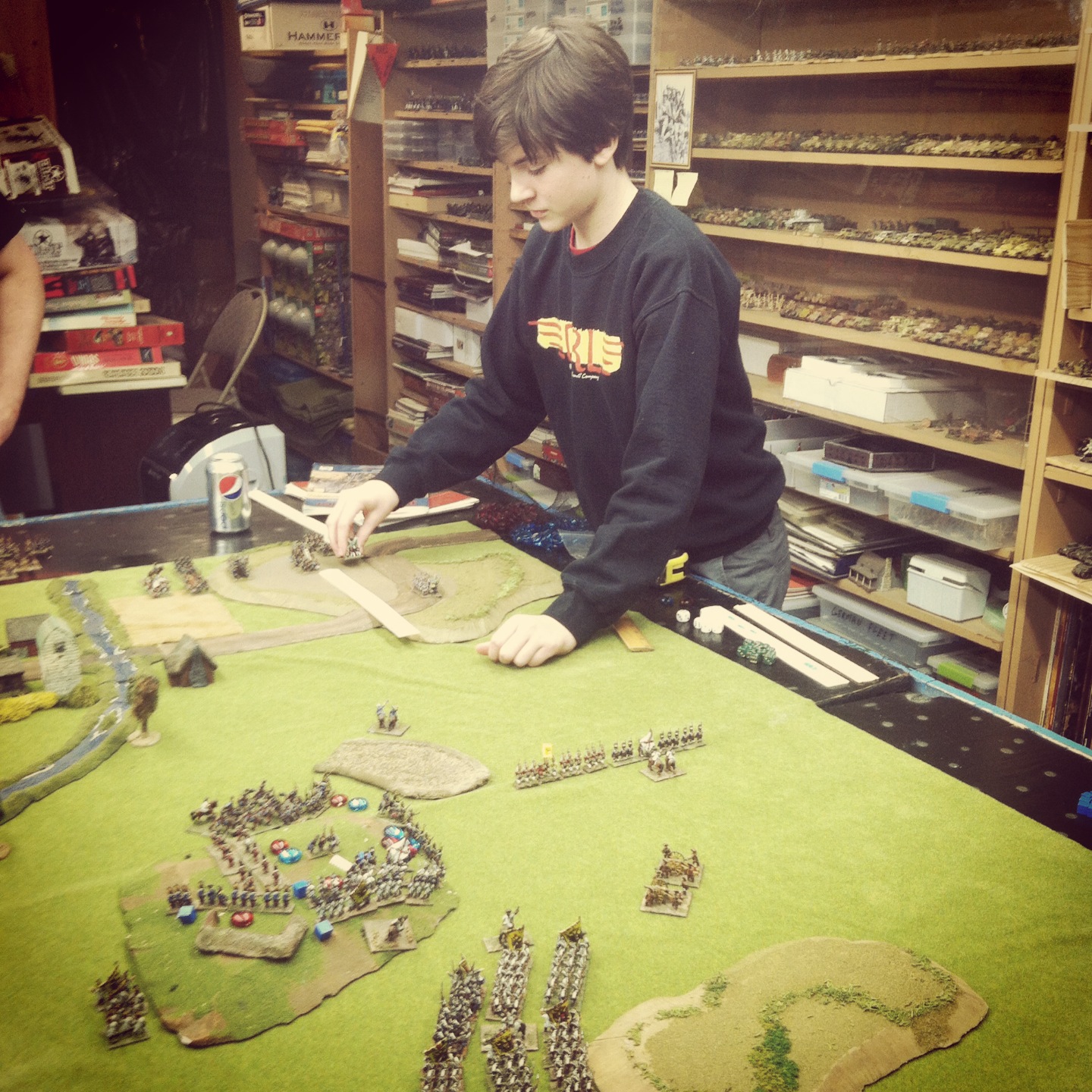
At the back of the club, four of us had a go at a game of more traditional historical miniatures wargaming our club was founded on nearly 30 years ago. After a long hiatus, our club President had decided to blow the dust off his “Warfare In The Age Of Reason” rules from Emperor’s Press and host a few of us for a learning game of the Battle of Moys from the Seven Years War. After so many hours spent with World War II miniatures gaming with Flames of War, it was great to dig into a period ruled by wigs, muskets and traditional European battlefield tactics.

moysdetailMap detail of the area of the game scenario

The Seven Years War was a different kind of world war from a very different era. Fought throughout Europe, along the West African coast and in the colonial outposts of India, the Philippines and the Americas, the war raged from 1756-1763 between various kingdoms and alliances competing for land and trade worldwide. By the fall of 1757, several major battles had already been fought including the Prussian defeat of Austrian defenders at the Battle of Prague in May 1757 and the Austrian defeat of Prussians in answer at the Battle of Kolin a month later.

Near Moys in modern Poland on September 7th, 1757, a 26,000-man Austrian force led by General Franz Leopold von Nádasdy moved toward routing an isolated and retreating Prussian force half its size commanded by Lieutenant- General Hans Karl von Winterfeldt.  A small group of advance Prussian troops were posted on the Jäkelsberg outside of Moys but the majority of the army lay encamped at a distance. Rather than attack at first light of dawn, the Austrians waited for the Prussians to complete their breakfasts and morning drills before moving columns of Grenadiers on the defending Prussians. As subsequent Austrian waves pushed onto the heights, Hussars met the retreating Prussians. Surprised by the Austrian attack, Prussian leadership rushed reinforcements from nearby Gorlitz to the fight, briefly retaking the Jäkelsberg. The battle for the raged back and forth, but by mid afternoon the Austrians had deployed lines of regulars in the neighboring plains and forced an eventual Prussian retreat.

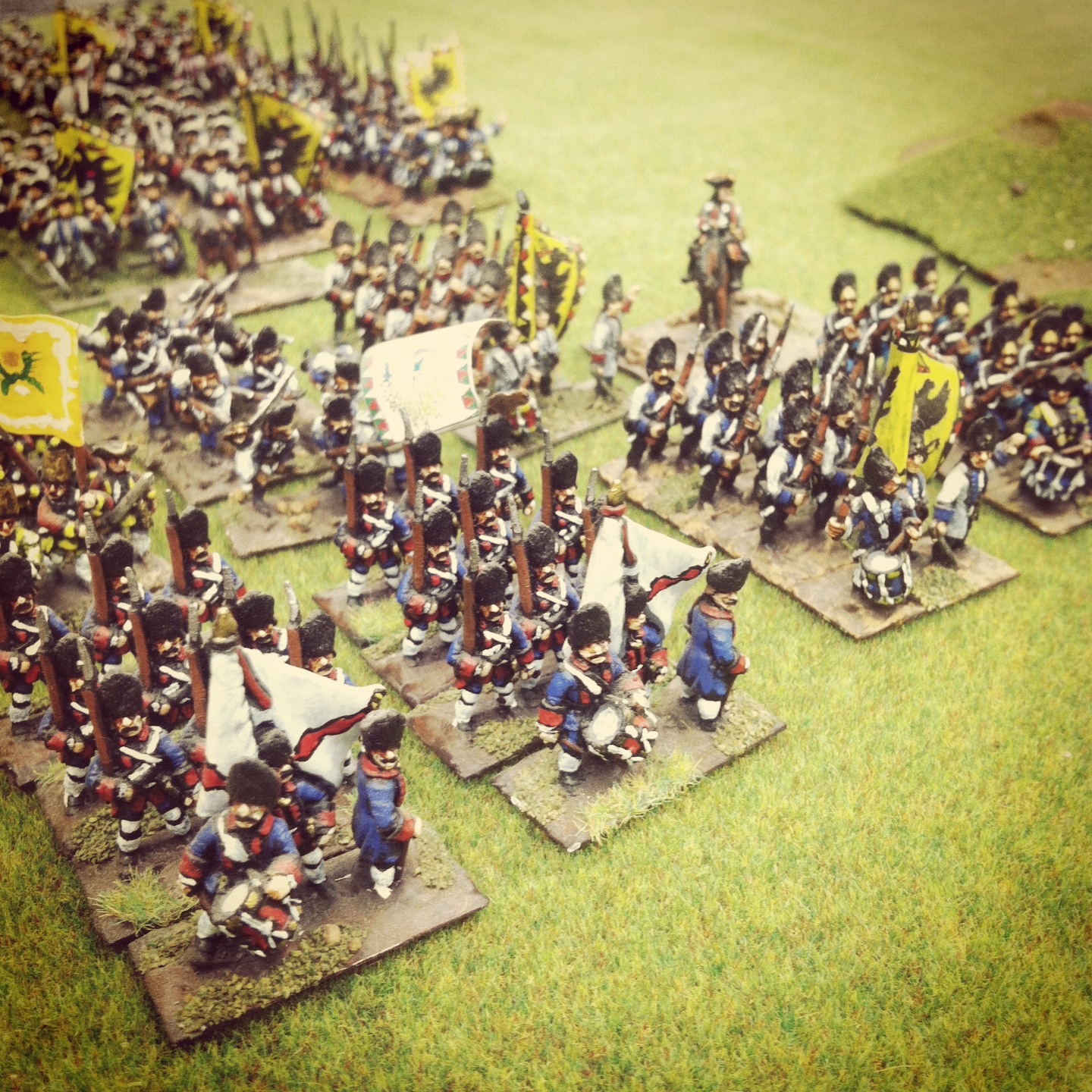
IMG_2537Austrian Grenadier columns enter the field toward Moys

Our game began with advancing Austrian Grenadiers and artillery moving in column on the central Jäkelsberg objective hill. With short firing range for small arms, there were a couple turns of movement and positioning from column into line as the Prussians remained stationary in their positions on the hill.

IMG_2539Prussians on the Jäkelsberg spot the advancing columns of Austrians

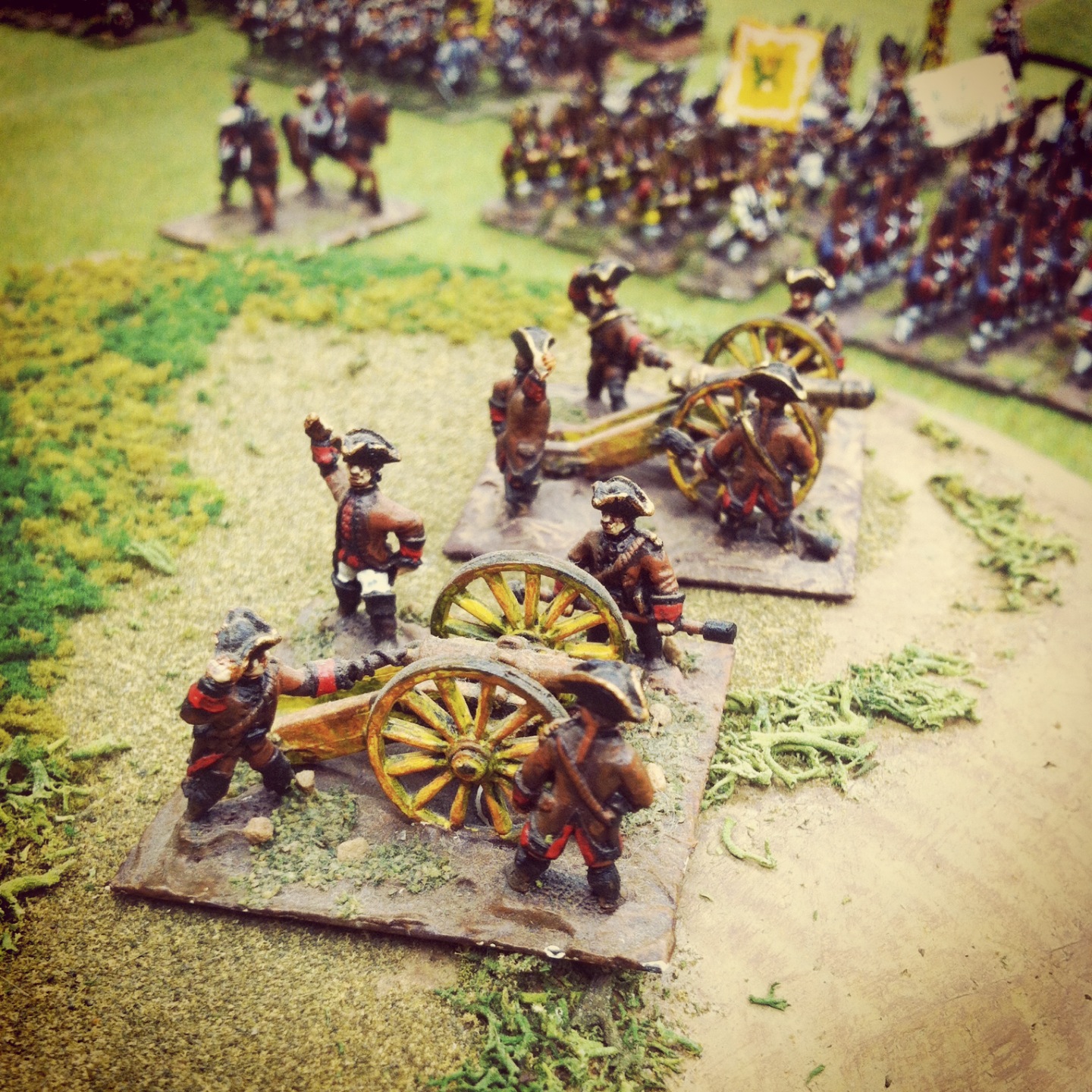
The Austrian medium cannons also began the game out of range, necessitating them to spend a turn moving and getting into position to fire on the Prussian lines.

IMG_2556Austrian guns deploy on a hill near the Jäkelsberg

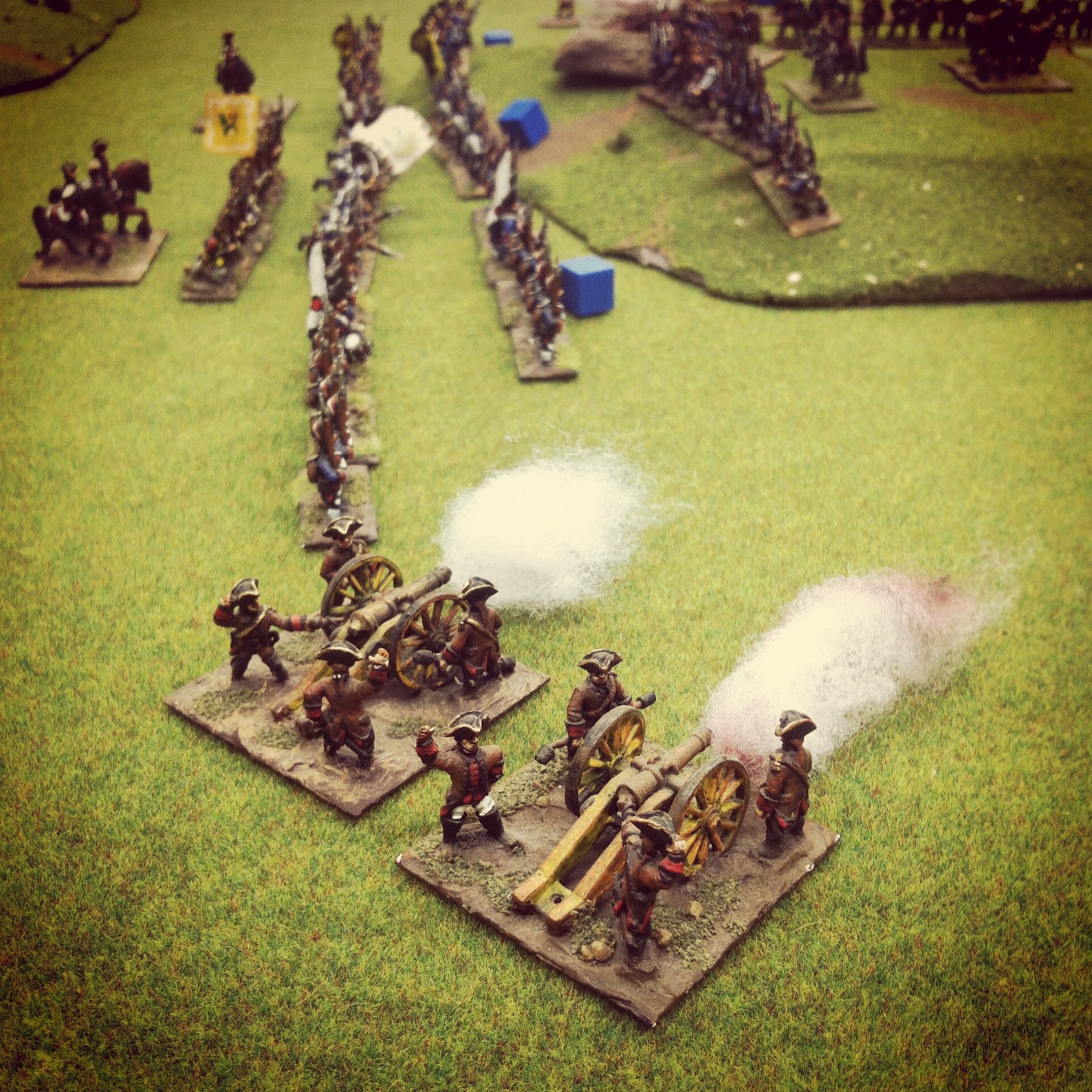
By the third turn, the lines of advancing Austrians began softening-up the Prussian left and center with musket volleys as cannon likewise opened fire. On the far side of the hill, Hussar cavalry raced to the flank and skirmishers moved toward the right lines.

IMG_2555Austrian lines advance on the Jäkelsberg as guns fire

With things on the Jäkelsberg heights looking bad for the Prussians, fresh columns of Austrian regulars advanced on the field in turn four and immediately broke toward the open fields on the far side of the battle.

IMG_2557Fresh Austrian columns arrive

On the Jäkelsberg, the Prussian cannon position was overwhelmed by advancing Austrians and the remaining Prussian infantry lines were closed in on three sides.

IMG_2558Austrians take the Jäkelsberg to the left, form lines to the right and fresh columns arrive at the rear; Prussian reinforcements arrive in the distance

With the Austrian objective of taking the Jäkelsberg nearky achieved by turn six, over a hlaf-dozen late-arriving columns of Prussians began arriving on the table in the distance. To the right rear of the Austrians, a Prussian cavlary contingent also arrived and moved to flank the deploying Austrian lines in the field.

IMG_2559As the Austrians overrun Prussian positions to the left, my son’s reinforcements arrive at the edge of the field

The Prussian cavalry made a move to charge the fresh Austrian arrivals in the rear, and one column quickly moved to defend in square formation. Cannon blasts from the Austrian guns routed the Prussian cavlary, driving them toward retreat off the board. By the seventh turn, the new Prussian lines were marching toward the Austrians who were already massig several ranks deep. With the Jäkelsberg held by the Austrians and their lines likewise controlling the open field, we called the game with a repeat historical victory for Austria.

ageofreasonrulesThe Battle of Moys was my first time playng with the popular “Warfare In The Age Of Reason” rules. Having not played a pre-20th-century miniatures game in quite some, I loved the tactics of movement, fire and charges. In the period and game, fighting occurs at very close range, making movement and protecting flanks and rear key to victory. Forcing your opponent into disorder or routing becomes as important as the number of casualties inflicted.

I found the rules to be simple, with the move order determined by drawn cards. Dice throws for morale checks, arms fire and charges all occur with a simple mechanic of adding or subtracting the number of dice according to the position and condition of your forces. Fighting in close quarters causes the battlefield to quickly shift throughout the game as lines and columns ebb and flow for position on the board.

With the fairly large scale Battle of Moys under my belt, I’m looking forward to studying up on the “Warfare In The Age Of Reason” rules and Seven Years War period a bit more. The 18th-century tactics,  colorful troops and special rules according to nationalities and fighting quality provides for a ton of unique fun in a vast world war period I look to get back to again very soon.

New Game Weekend: Dixit Journey

dixitbox

I play a lot of games with my kids. I started them at an early age, so they have a pretty healthy knowledge and love for hefty wargaming miniatures games like Flames of War and elaborate strategy games like Settlers of Catan, Village, Canterbury and Civilization. Even with a big stack of boardgames crowding our shelves, we regularly run into new games that capture our imagination in new ways. After several rounds of of Dixit Journey with three generations of my family over the Thanksgiving weekend, we have a new favorite in our constantly-growing list of favorites.

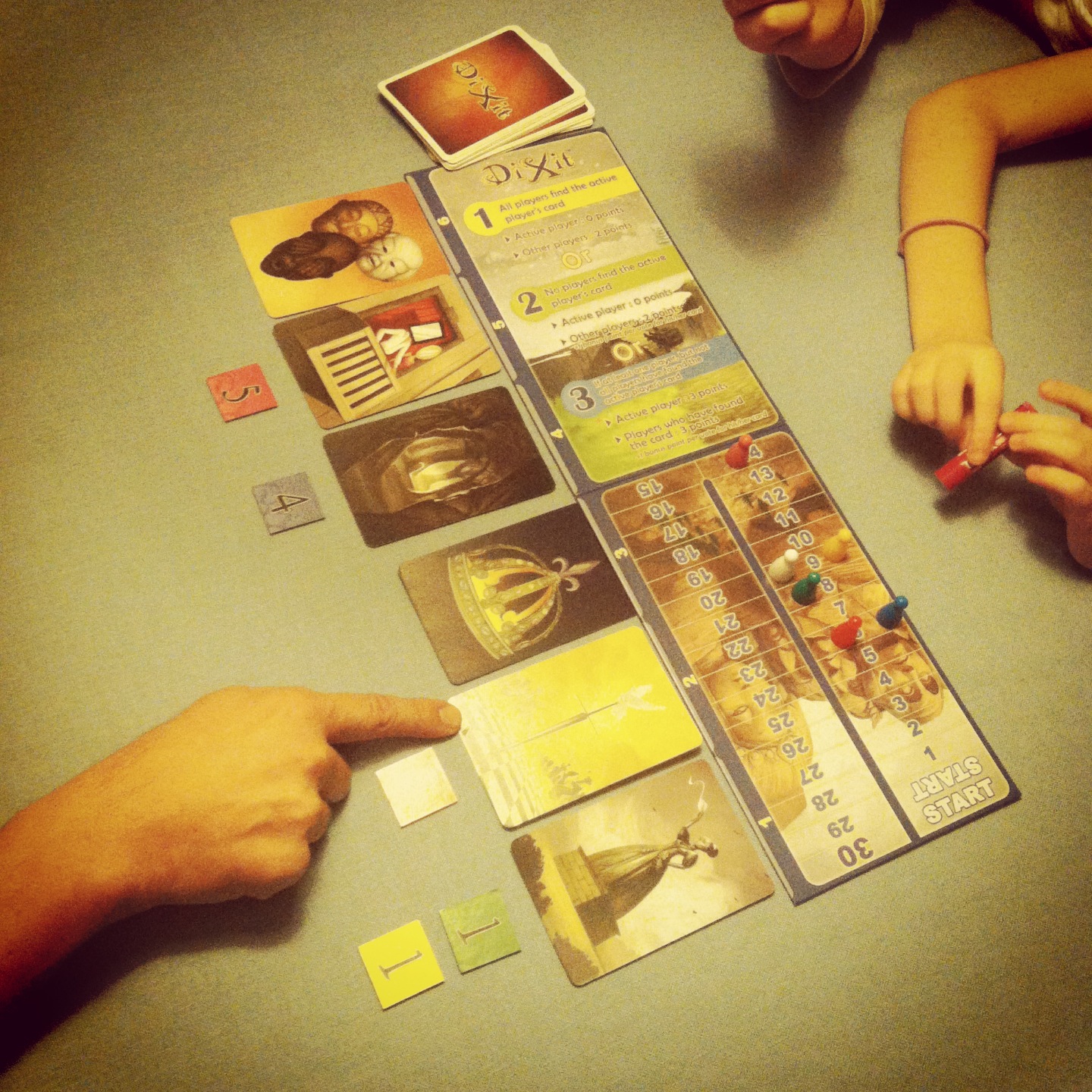
journeycontentsDixit Journey is a variation on the family of games and expansions from Asmodee , an award-winning French Eurogame publisher. In essence, Dixit is a storytelling game with the only real skill needed is your imagination. Each round a storyteller player secretly selects an illustrated card from their hand of six cards and announces a clue somehow referenced by the picture on the card. Anything can be used for a clue — song lyrics, characters from a book, famous quotes, historical figures, TV shows, sounds, news stories, etc. — provided it somehow references something depicted on the card. After the clue is announced, the other players then likewise secretly select a card from their hands which they think may also depict the clue in some way.

Cards are then revealed and laid out along the edge of the board. All players except the storyteller then place their guesses on the card they think is the storyteller’s card. Player guesses are then revealed with points going to the storytller if their card is selected and to other players whose cards were also guessed on. Choosing an overly-obvious card and clue combination everyone guesses correctly results in no points for the storyteller, so balancing a clue and card pairing that is both guessable but not too literal is key to the winning the game.

IMG_2518

Like many Eurogames, Dixit is simple on the surface with minimal rules and reading but creatively open in how it plays out. In our games, one clue was given as an interpretive dance of sorts. Other clues included movie references, literary allusions and just flat-out odd phrases inspired almost wholly by the cards themselves. Part of the fun of the game is to see how it plays out with different people’s minds interpretting the same clue in multiple cards.

For a taste of how a game of Dixit plays, check out  the episode below of Wil Weaton’s always entertaining Tabletop web series.

Dixit is a gorgeous game with trippy, weird and abstract cards that may be reused over and over again. The many expansions available add more storytelling possibilities to the game, and the Journey edition makes some improvements on the scoring and game board included in the first edition box. Playing in about a half hour and with multiple players or even teams, Dixit makes for a great nighttime game with family or friends of all ages after the dinner plates are cleared.

New Game Weekend: Dreadfleet

m1980418a_DFBlog_Opener

There are some games with reputations that far precede them in gamer lore, despite having few people who can say they’ve actually played them. Games Workshop’s Dreadfleet from 2011 is one of these, and this past weekend I was finally able to dip my toes into a session with this gorgeous and infamous game.

dreadcontents

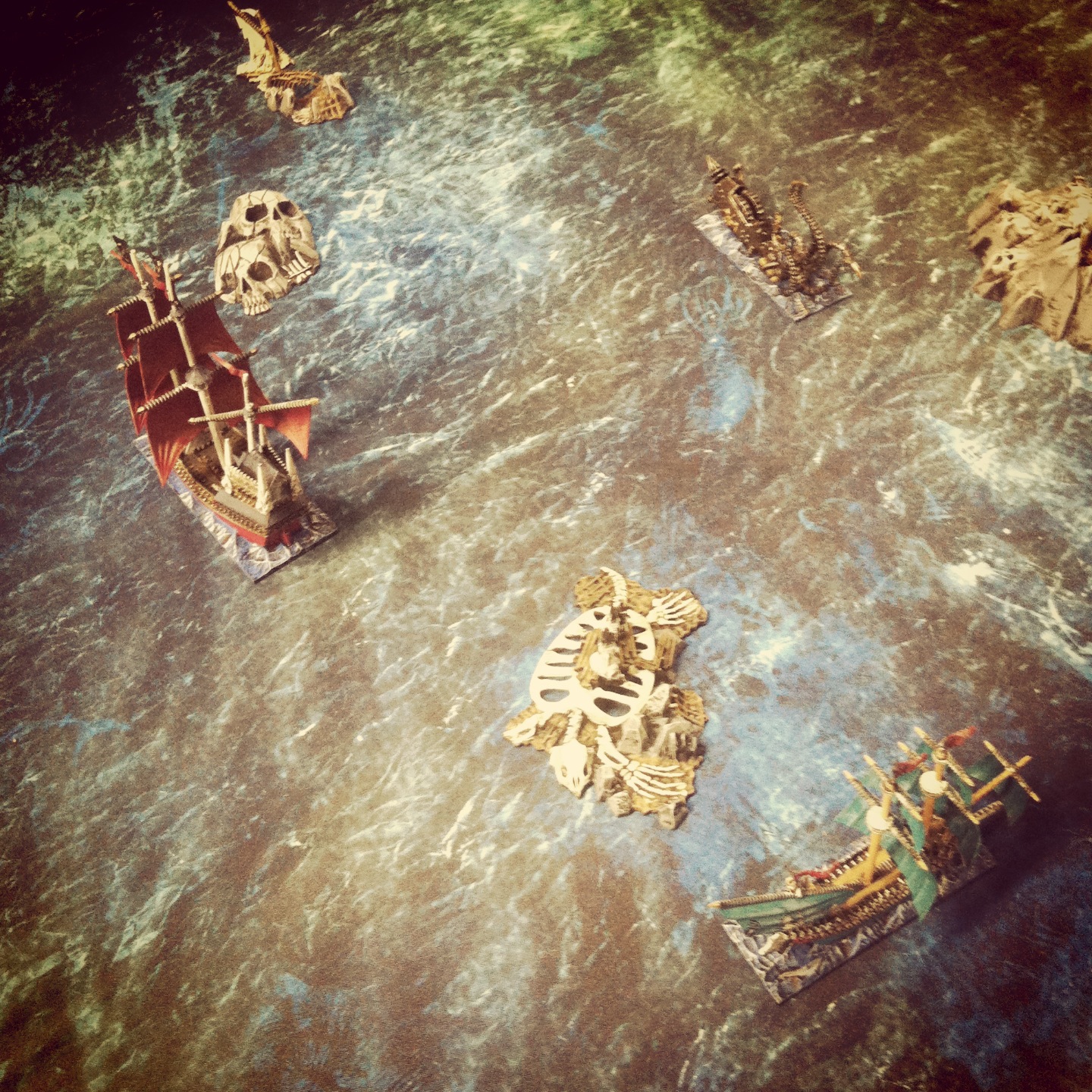
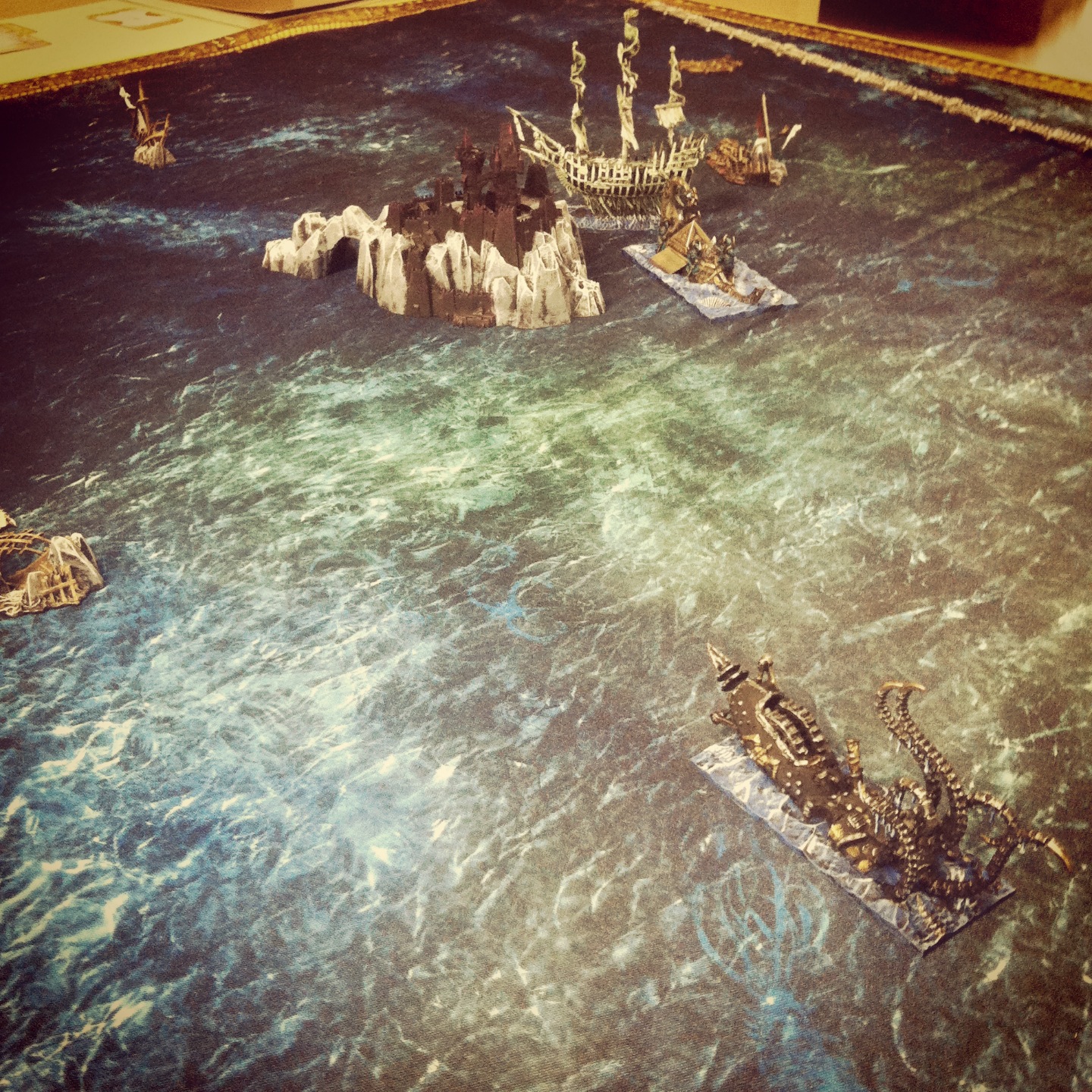
The limited-edition and now out-of-print Dreadfleet was met with mixed reviews when it was released a couple years ago. Set in the Warhammer Fantasy world with the Grand Alliance armada facing off against the undead Dreadfleet, the standalone game comes packed with incredibly intricate and delicate plastic models of ships, islands, sea monsters, treasure, ship wrecks and navigational pieces set on a beautiful printed cloth seascape playmat and accompanied by scores of cards. 

IMG_2521

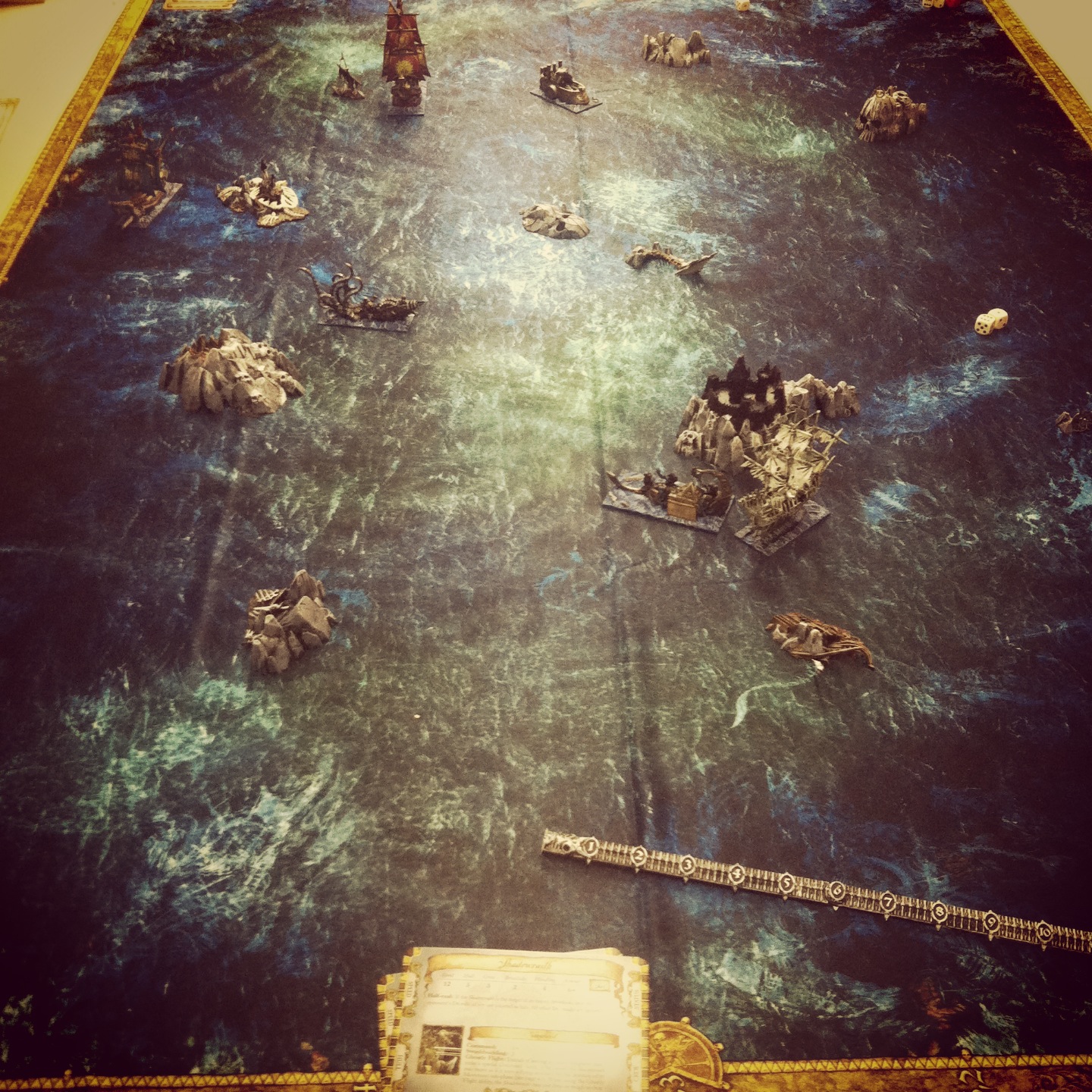
The Dreadfleet table with all models painted by my brother

Playing 2 to 10 players, the game finds the two fleets squaring off with sailing and mechanical ships in a sea dotted with fortressed islands. Deep backstories accompany the lushly-illustrated rulebook, adding depth and significant game color to the captains steering their ships toward broadside cannon battles, ramming boarding parties and assaults on enemy island outposts.

IMG_2525

The Heldenhammer (left), Black Kraken (upper right) and Swordfysh (lower right) navigating around Turtle Island

The game turn begins by drawing fate cards which inject specific plot points into each round along with shifts in the wind direction and strength. Next, each captain rolls to declare orders for the round. Next, ships move while taking into account the wind conditions as well as the ship’s handling and special skills, which may include attributes of the vessel itself or the captain at the helm.

Ranged fire occurs at 6″, 12″ and 18″ distances to varying effect, and ships ramming into contact result in face-to-face boarding melees between the heroic captain characters. Captains may also call for special attacks using smaller proxy launches from their ships, creating additional deadly chaos in the water. Captains receive wounds and ships draw cumulative damage cards, many of which carry lingering effects that can only be remedied in turns spent using repair actions.

IMG_2523

The Black Kraken sailing from Castle Island

After a few turns at Dreadfleet, the mixed reputation was pretty handily revealed. While the game is visually one of the best I’ve ever seen on the tabletop (especially showcasing the painting skills of my brother), the mechanics are incredibly complex. Hitting or sinking a ship is difficult, to say the least. With lots of ships and islands on the table, the waters of the game quickly become complex to navigate. While I love the game’s wind mechanic on the page, shifting winds foil plans constantly. Cards are exceedingly detailed and wordy, bogging the game down as these are referenced repeatedly for the uniquely specific effects and outcomes they each carry.

The dense rulebook comes replete with a number of detailed story scenarios, but all the color the authors can muster quickly drains away under the thick fog of the rules and mechanics which must be referenced again with each turn. Playing a game with multiple players on a side would easily result in a tangle of boats over many, many hours of play.

1450686_10202032642952010_1750681014_n

The Swordfysh

The original retail price for Dreadfleet of over $100 rubbed a lot of gamers the wrong way for a non-expandable game. However, the enduring love-hate relationship with the game is revealed in attempting to track down a copy for yourself. Some collectors seek these boxes out merely for the models and components, often buying multiple sets to field larger fleets. Others track them down for a chance to experience the game’s rules first hand. Unopened copies can sometimes run into the hundreds of dollars, but a friend of mine recently tracked down five copies a dealer was more than happy to part ways with for $20 each.

Having now experienced Dreadfleet first hand, I completely see why this game was left a mark on gamedom. The unparalleled look of the game just can’t offset the price and wildly complex rules which make replay value a challenge. A well-painted set of models from the Dreadfleet and Grand Alliance are sure to be a showcase on any modeller’s shelf, but hauling the game to the table may very well leaving players feeling a bit adrift.