28mm: US Airborne Pathfinders And Willys Jeeps By Warlord Games

PathfindersFecPainting

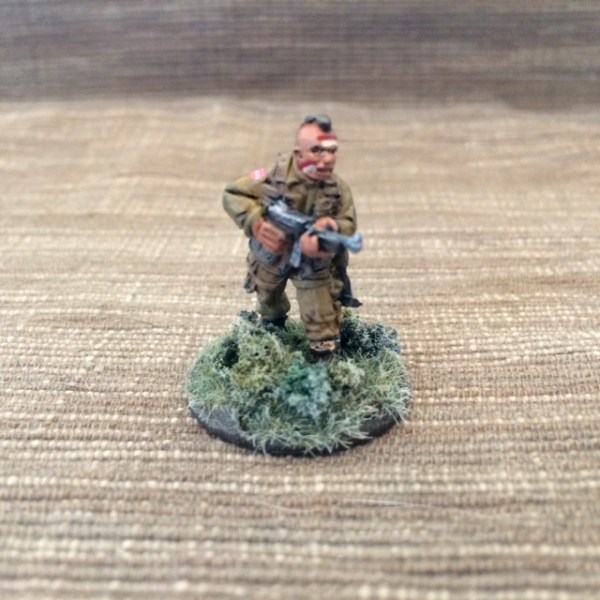
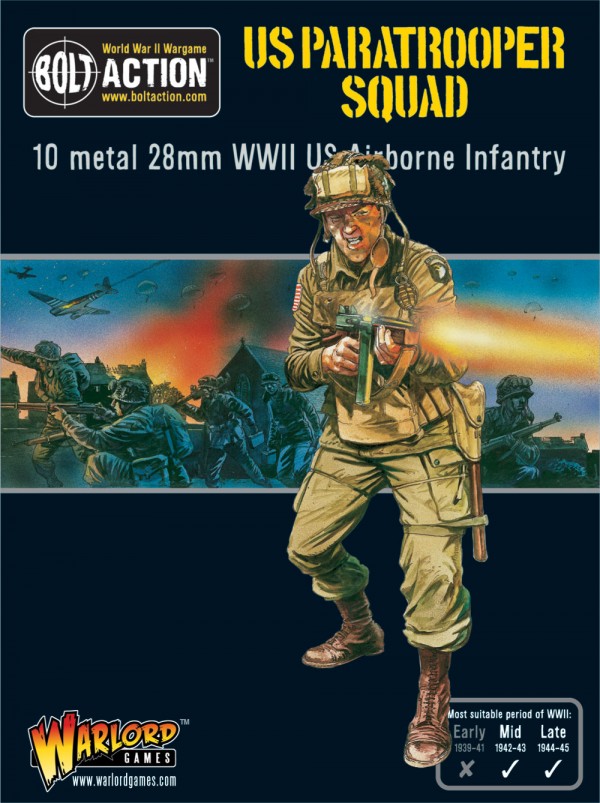
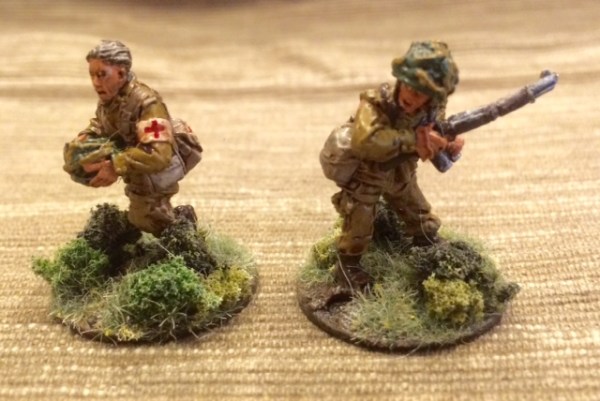
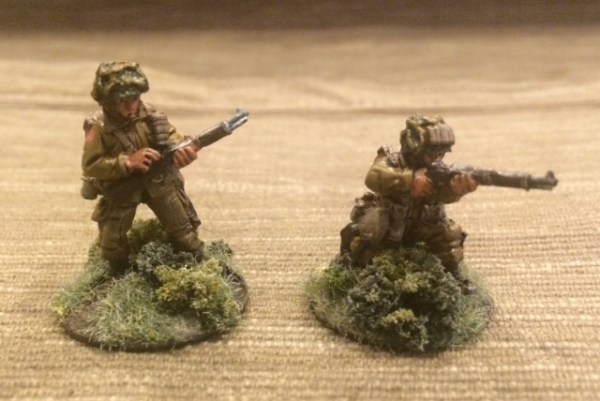
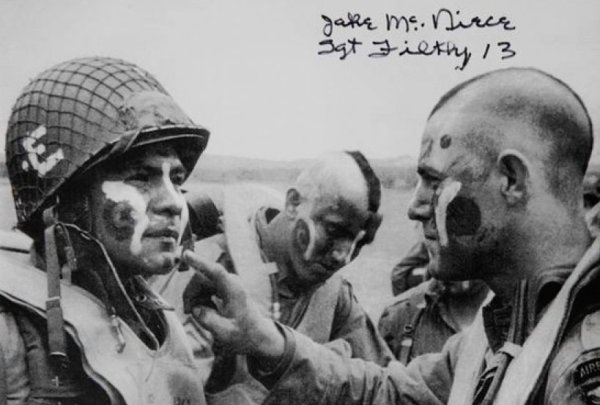
I recently picked up four US Airborne Pathfinder models from Warlord Games via special order from the good folks at The Brooklyn Strategist. As I sat down to paint them up, I did a little online searching and came across an obituary in the NY Times for Jake McNiece, a leader of the “Filthy 13” of the 101st Airborne Division which riskily night-dropped ahead of the main invasion force on D-Day.

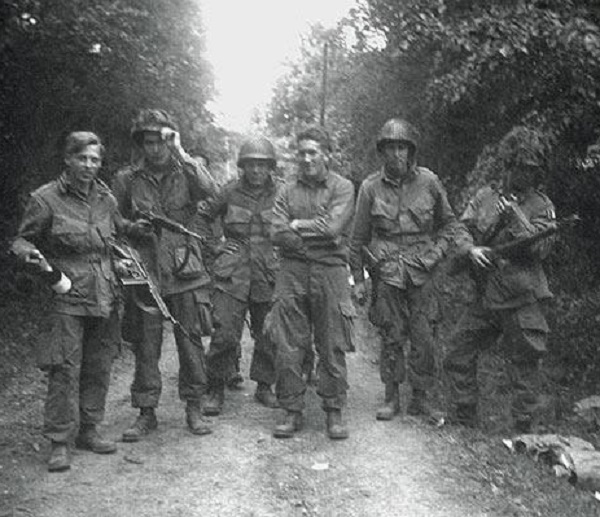
McNiece (featured in a photo above from Stars and Stripes) is credited with coming up with the iconic mohawked shaved heads and face paint worn by many of the hearty Pathfinders, and painting these figures adds some great visual diversity to any US Airborne force representing American paratroopers on D-Day. I had previously painted up Pathfinders from Artizan Designs, and these warlord models fleshed out my Pathfinders squad to a full and fearsome force.

Warlordlogo

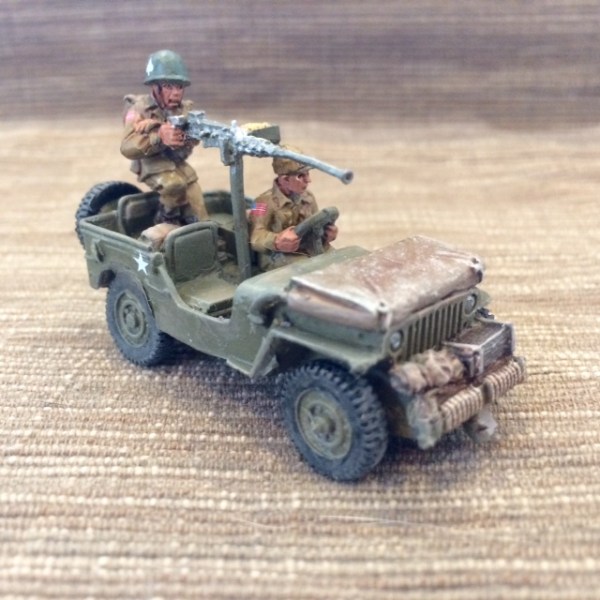
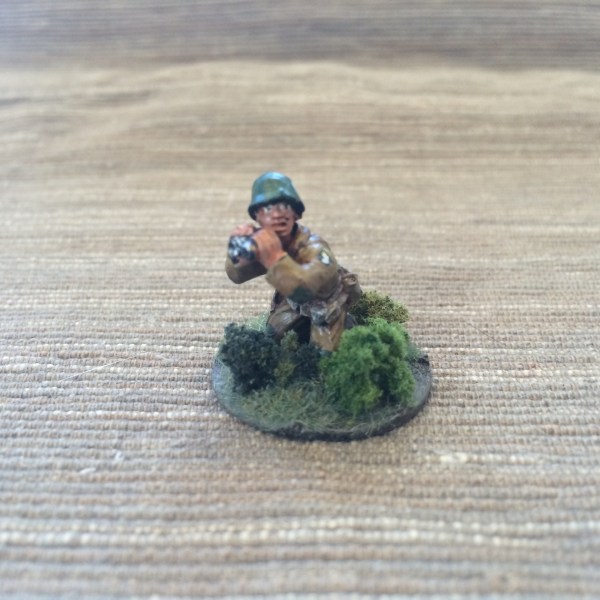
My US Airborne painting scheme is quick and gets my models table-ready in just a couple painting sessions. This latest round of painting my US Airborne collection also included a couple Warlord US Army Willys Jeep models I picked up on sale at this year’s HMGS 2016 Cold Wars Convention. I painted the driver and gunner to match my US Airborne, and they fit in nicely with my models while also adding some mobile gun support on the game table.

AB Paint Scheme

Painting 28mm US Airborne Pathfinders

  1. Clean flash from metal models with a sharp knife and glue to metal washer or plastic bases.
  2. Apply filler putty to bases. When dry, scrape off excess with a sharp knife.
  3. Base coat models and bases with flat black spray primer.
  4. Paint uniforms and bandages on helmets with Tallarn Sand.
  5. Paint helmets and knee and elbow patches with Waaagh! Flesh.
  6. Paint faces and hands with Tallarn Flesh.
  7. Paint webbing and packs with Baneblade Brown.
  8. Paint bases, boots, gun stocks and helmet straps with Dark Brown.
  9. Apply Agrax Earthshade wash to uniforms, helmet netting, webbing and packs.
  10. Mix 50/50 Baneblade Brown and Off White and lightly dry brush packs, webbing and socks.
  11. Lightly dry brush bases, gun stocks, helmet netting, holsters and elbow and shoulder patches with Baneblade Brown.
  12. Paint metal gun parts with black and finish with a light dry brush of metallic silver.
  13. Paint eyes with small dots of Off White and Dark Brown. Clean up around eyes with Tallarn Flesh.
  14. Paint thin lines of red and offwhite face paint to cheeks and foreheads of the models.
  15. Mix 50/50 Tallarn Flesh and Off White and brush highlights on cheekbones, chins, forehead, nose and hands.
  16. Cover bases in white glue and cover in 50/50 mix of fine light green and dark green grass flock.
  17. Glue small pieces of clump foliage to base.

After painting, I added a final touch with decals on shoulders and helmets from Company B, followed by a coat of Solvaset decal fixative from Walthers and a spray coat with matte finish.

This little project not only gave me a break from my regular painting but also added a bunch of new models I can field in my Bolt Action and other 28mm World War II skirmish games. Pictures below show the final results ready to drop onto the table and start rolling dice during the invasion of Normandy.

FullSizeRender

FullSizeRender0

FullSizeRender(8)

FullSizeRender(2)

FullSizeRender(3)

FullSizeRender(4)

FullSizeRender(5)

Boardgames of the French and Indian War

BraddockFIW

To understand the founding of the United States, you have to understand the American Revolution, and to understand the American Revolution, you need to understand the French and Indian War. As I’ve learned more about these wars in my adult life, I’m increasingly surprised the FIW gets such short shrift in American education and the general cultural conversations of the country’s history.

FIWMapOperations

Major campaigns and battles of the French and Indian War, 1754-1763

As I’ve written about previously, I’ve spent a lot of time touring many sites where the French and British vied for control of the continent in the mid-18th-century. In that era the French held much of the country west and north of the Alleghenies while the British possessed the eastern regions of the coast. As an extension of the Seven Years War in Europe and around the globe, the French and British empires fought over territory in America during the FIW and pulled numerous native Indian tribes into complicated alliances along the way. The clash of cultures and motives among Europeans and native peoples carried ripple effects for years to come and old grudges from the period led directly to the American Revolution some two decades later.

FIWBooksSome of my recent reading on the French and Indian War

My time spent touring various sites around the company has been supplemented by a stack of books. Fred Anderson’s Crucible of War (2001) weighs in at over 900 pages and provides a super comprehensive treatment of the war in depth. The French and Indian War (2006) by Walter Borneman provides a similar overview with detail stripped way back into a more historical narrative. For a focus on how Indian peoples shaped the 18th-century European settlement and wars for the continent, Peter Silver’s Our Savage Neighbors (2007) gives some fantastic insights which are usually breezed over in most histories. Finally, I’ve recently picked up a copy of Braddock’s Defeat (2015) by David Preston. This book provides a great bridge story on how a key campaign on the western frontier of Pennsylvania in 1755 echoed through the events of the FIW into the American Revolution and history beyond.

With many miles traveled and pages read, getting to play boardgames of the FIW — both tactically and strategically — has provided me the opportunity to roll up my sleeves and experience the wilderness roads, forts, settlements and battlefields of this fascinating period.
WWbox

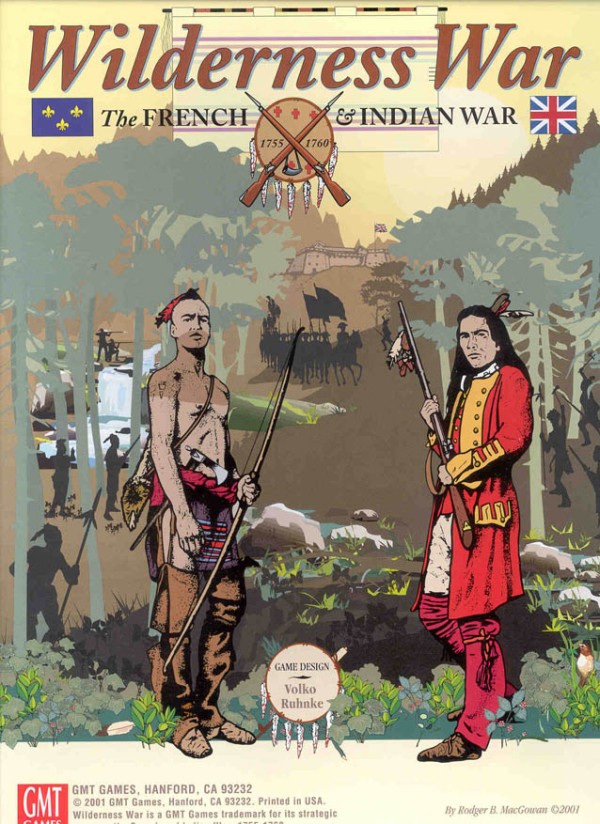
Wilderness War (GMT Games)

My longtime favorite of FIW games is GMT’s Wilderness War from 2001. Designed by Volko Ruhnke, WW is not only the standout game of the period but also ranks among the best of modern wargames depicting any period. The game’s gorgeous hardbound game board defines the game as the war was fought amid the geography of the Northeast with point-to-point connections between major landmarks, cities, settlements and forts.

WWcards

Sample strategy cards from GMT’s Wilderness War

Strategy cards featuring both abstracted military actions like recruiting troops and militia, building siege works or conducting campaigns and period-specific events and personalities drive the game. Alternatively cards are played for points to activate leaders, forces stacked with a leader or individual units. Points may also be spent to construct stockades and forts to defend against attack a provide a safe haven during wintering periods.

IMG_4433

Wilderness War by GMT Games

For me, the three key strategies to WW are in defending the important interior frontier, remaining exceedingly mindful of troop positions as winter seasons approach and playing a long game of carefully-planned campaigns. All of these factors are incredibly well factored into a game which balances abstraction with historic events, all of which can be experienced with a solid few hours of play.

image

The French and Indian War (Decision Games)

For another grand strategic experience of the FIW, Strategy & Tactics magazine issue #231 from Nov/Dec 2005 by Decision Games offers up a full campaign level game with The French and Indian War. Traditional wargamers will feel right at home with this hefty game although it does offer some unique elements.

SandTFIW

S&T’s FIW map and counters organized in tray

Right off the bat, experienced gamers will notice a departure with the game map laid out on a square grid instead of the more typical hex style. Past the square grid, the map itself is gorgeous with well-delineated terrain, clear colonial control boundaries and abstracted French and British home country holding areas across the Atlantic in Europe. Charts and tables for terrain effects, supply points, balance of power and colonial control displayed right around the board. The tiny cardboard playing chits likewise feature some simple and colorful art clearly differentiating units types and nationalities. In all, there’s a lot to love visually in this magazine game.

Gameplay goes a long way toward representing the build up of tensions and eventual outbreak of war between the French and British in North America. Yearly turns between 1758 and 1762 are split into four seasons each, and the results of battles occupation of cities and towns shifts the Balance of Power track which drives income, initiative, random events and negotiating strength. The relatively weak and poor British at the start of the game quickly gain strength as the Seven Years War breaks out and men, money and ships begin to arrive from Europe. For the French, they have to take some early victories and then hold key cities like Quebec through the late game. Victory in one of the three included scenarios is determined by a straight points system accumulated during the game largely by capturing cities and settlements.

Aside from the game rules themselves, the magazine holds over 20 pages of background on the FIW, major battles and quick bios on some of the conflict’s major personalities. This plus some nice maps and a short bibliography makes for a great package for those wanting a relatively comprehensive experience of the war. Being a magazine game, there are a couple discrepancies in the rules here and there, but the design and heft of the game is entirely satisfying.

HTLFIW

Hold The Line: French and Indian War (Worthington Publishing)

The 2008 French and Indian War Expansion Set for the popular Hold The Line series by Worthington Publishing downshifts into a more tactical presentation of the war without sacrificing the flavor of the era.
Snowshoes

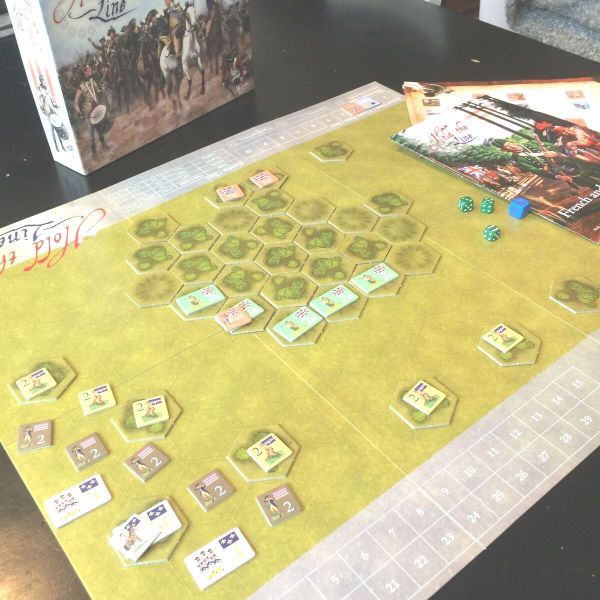
Scenario set-up for the Battle of Snowshoes for the HTL FIW expansion

Adding to the HTL base game components,  the FIW expansion comes with Indian, Ranger and French unit tiles to be played with using the British and Militia pieces in the original. Additional terrain hex tiles  are included to represent lakes, boats forts and Indian villages, all of which played important roles in the wilderness battleground of the FIW. Five historic scenarios round out gameplay which will be any lover of the original HTL.

HTLKick

The 2016 remastered HTL French and Indian War game

The HTL series has been remastered in 2016 with a successfully funded recent Kickstarter campaign. The new version has some serious upgrades with plastic miniatures from the Plastic Soldier Company and redesigned board and tile artwork. For both the American Revolution and FIW sets there were a bunch of extra scenarios and options to buy add-on miniatures. The new game looks fantastic and breathes new life into an already immensely enjoyable game on the era of 18th-century American colonial conflict.

AFewAcrescover

A Few Acres of Snow (Treefrog Games)

A Few Acres of Snow, designed by Martin Wallace and published in 2011 by Treefrog Games, is my other go-to game on the period. While not strictly a game confined to the FIW, AFAOS takes two players through the broader French-British colonial period in North America.

Playable in just over an hour, AFAOS is an area control deck-building game where British and French players draft cards into and out of their hands in order to move, settle, construct, skirmish and conduct sieges. Managing cards gives the game a campaign feel as several turns may be taken up getting all the right cards in place before executing a plan. The British player generally has more financial and naval strength while the French are much more agile and open to trade opportunities in the wilderness interior. Essentially, the game captures the overall character of the opposing forces and provides for a ton of strategic play within a simple, gorgeous design.

AFAOSJan16

A recent game of  A Few Acres of Snow by Treefrog Games

The major downside to AFAOS that many critics will bring up is a broken mechanic within the game where one side can all but sew up a victory through a specific series of opening moves. I’m not going to provide any details since players agreeing to play fairly and ignoring this one issue with an otherwise perfect and wildly popular game is how I choose to play the game. The look and flow of AFAOS makes it what I consider to be the best at introducing even inexperienced gamers to the period.

StruggleForNewFrance

Struggle For New France (Schutze Games)

I picked up a copy of 2013’s Struggle For New France designed by Bill Molyneaux and published by Schutze Games in a charity auction at HMGS Fall In! 2015. It’s a super simple beginner’s game playable in about 90 minutes with event cards and point to point movement. With just a few pages of rules, including a solo game option, SFNF is a lean game designed for swift play while still reflecting the basic character of the war.

IMG_7723

Set-up for a play through Struggle For New France by Schutze Games

The relatively inexpensive game has a compact yet beautiful 11″ x 17″ color map, over 60 cards and over 175 small printed wooden tiles. Play is quick with a hand of five cards for each player, of which one can be played per season. In a season, both sides move and battle using standardized movement for regulars and Indians plus bonuses for having a leader stacked with a force. Forts, fortresses and Indian villages give defensive modifiers in battle along with leaders present and any cards added to the battle modifiers. Areas won or lost provide victory points, all tracked on either side of the map. After four seasons of play, cards are refreshed and the next turn year begins. Playing from the entire course of the war, British win at 50 points and taking Quebec, Montreal and Louisburg, and the French win with 45 points. While by no means as rich an experience as the offerings from GMT and Decision Games, SFNF achieves a remarkable amount in strategic experience of the FIW.
FIWBattleCollection

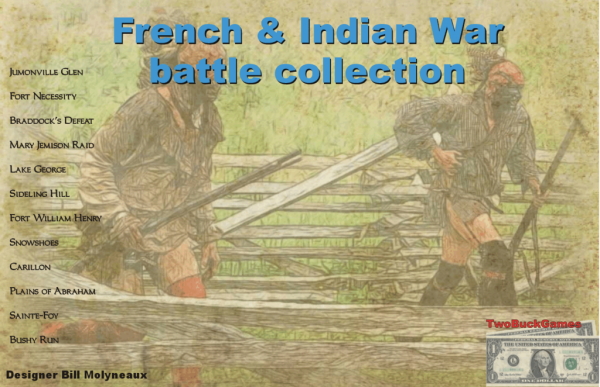
French & Indian War Battle Collection (Two Buck Games)

Another charity auction win at Fall In last year was 2014’s French & Indian War Battle Collection by Two Buck Games. The game makes a nice companion to SFNF and is also designed by Molyneaux. Like SFNF, this is an easy game but with a pack of twelve major battles and engagements of the war instead of a grand campaign style of play. Each scenario is playable in anywhere from well under an hour to maybe two hours maximum. While not big on design, the game does allow a player to get down to the tactical level in some very small engagements including some personal favorites like Jumonville Glen, Fort Necessity and the Mary Jeminson Raid.

FtNecessGame

The Fort Necessity scenario from The French & Indian War Battle Collection

A brief set of rules is supplemented with specific scenario outlines for set-up and play. Maps for each scenario are printed front and back on card stock, and 88 counters come with generic information to make for flexible use representing a variety of regular and irregular French, British and Indian units at each battle or skirmish. As this is a tactical game, units move just one hex and may only by stacked alone or with an officer. Leaders die easily in combat, Indians are dangerously flexible on the attack and terrain can play a big role in a game’s outcome. All these factors make planning an attack or defense finicky down at the ground level and FIBWBC goes a long way toward mimicking the feel of up-close engagements during the period.
Empiresbox

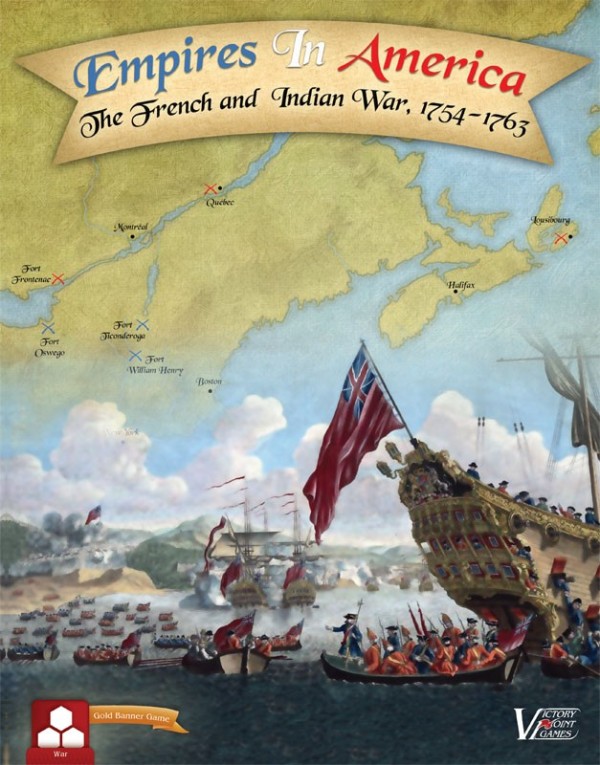
Empires In America (Victory Point Games)

My latest addition to my FIW games is the recent second edition reprint of Empires In America from the States of Siege series by Victory Point Games. This one stands apart from the others here as a purely solo game with the player’s French and Indian allies pitted against the game’s British and their allied Indian forces.

IMG_7893

My first try at the re-issue of Empires In America by Victory Point Games

It took me a few times to get a handle on the single player flow of the game and I was beaten by the non-player AI in my first two games. Having played through it about a half dozen times now, I’ve finally got the hang of it with quick play and a fairly rich experience. Leaders wind up being key in winning the game much as leadership could make the difference during battles during the war.

IMG_3945

Photo from my visit to Fort Necessity in the summer of 2014

So where to start with the French and Indian War?

The 21st-century has already given us a bunch of fantastic games to take us back to the forest, rivers and battles of the French and Indian War of some 260 years ago. Despite having a half-dozen of the recent FIW games under my belt, there area always more games to play. Wilderness Empires, also by Worthington Publishing, puts the war in a block game format with beautifully-illustrated event cards and game board. Columbia Games re-released its 1972 classic block game of Quebec 1759 in 2009, and the game still stands as probably the best way to experience this pivotal siege of the war.

For me, Wilderness War sits at the top of the list for its design and depth, not only for the FIW but among all the games I play. A Few Acres of Snow, Empires In America and Hold The Line likewise win big design points for me, and their speed of play sacrifices nothing in telling the story of the period. A gamer wishing to get into the FIW with a couple very different yet always rewarding gaming sessions could hardly do better by starting with these games.
28mm: US Airborne Squad and HQ By Warlord Games

101ABRoad

Despite all the planes, ships, artillery and tanks, the the core of US fighting forces in during World War II was the squad of American men armed with M1 rifles. General George Patton called the weapon “the greatest battle implement ever devised,” and in the hands of a small groups of US Airborne troops the tide of the war tipped after the Normandy invasion in June 1944.

BAParaSquadBox

For my 28mm WWII Bolt Action gaming, I exclusively use metal miniatures and I don’t duplicate poses. What this means is that I’m working my way through all the models available from a few manufacturers. For my latest additions to my US 101st Airborne force, I picked up the US Paratrooper Squad box and the US Airborne HQ package, both from Warlord Games.

IMG_7965

Warlord Games Bolt Action US paratrooper squad and HQ figures

You really can’t beat metal casting for detail and personality, and these models are no different. The HQ set has a nifty medic model on the run and an officer firing his pistol while cradling his Thompson submachine gun in the other arm. A third figure is dropping his binoculars to the side and shouting over his shoulder while another model holds a SMG and barks orders into his radio handset nestled under his chin. The paratrooper squad box gives a good mix of men armed with rifles, a NCO and two others carrying SMGs, and a two-man light machine gun team.

AB Paint Scheme

As always, my painting is straightforward — I want the models to look historical yet unique to my style, and I want to put them to use on the table quickly.

Painting 28mm US Airborne

  1. Clean flash from metal models with a sharp knife and glue to metal washer or plastic bases.
  2. Apply filler putty to bases. When dry, scrape off excess with a sharp knife.
  3. Base coat models and bases with flat black spray primer.
  4. Paint uniforms and bandages on helmets with Tallarn Sand.
  5. Paint helmets and knee and elbow patches with Waaagh! Flesh.
  6. Paint faces and hands with Tallarn Flesh.
  7. Paint webbing and packs with Baneblade Brown.
  8. Paint bases, boots, gun stocks and helmet straps with Dark Brown.
  9. Apply Agrax Earthshade wash to uniforms, helmet netting, webbing and packs.
  10. Mix 50/50 Baneblade Brown and Off White and lightly dry brush packs, webbing and socks.
  11. Lightly dry brush bases, gun stocks, helmet netting, holsters and elbow and shoulder patches with Baneblade Brown.
  12. Paint metal gun parts with black and finish with a light dry brush of metallic silver.
  13. Paint eyes with small dots of Off White and Dark Brown. Clean up around eyes with Tallarn Flesh.
  14. Mix 50/50 Tallarn Flesh and Off White and brush highlights on cheekbones, chins, forehead, nose and hands.
  15. Apply Company B decals to shoulders and helmets, followed by a coat of Solvaset decal fixative from Walthers.
  16. Cover bases in white glue and cover in 50/50 mix of fine light green and dark green grass flock.
  17. Glue small pieces of clump foliage to base.
  18. Spray coat completed models with matte finish

First some finished pictures of the command models:

FullSizeRender

FullSizeRender(2)

FullSizeRender(1)

And some shots of the completed squad:

FullSizeRender(3)

FullSizeRender(5)

FullSizeRender(6)

FullSizeRender(7)

FullSizeRender(8)

FullSizeRender(9)

International Tabletop Day Events In NYC – April 30th, 2016

ITTDlogo

On Saturday April 30th, 2016, new and old gamers alike will crowd tables worldwide for International Tabletop Day. Now in its fifth year, the day has been spreading with the hobby each year with day-long events packed with gaming, food, drinks, community and yes, even exclusive swag, prizes and discounts at some locations. Even Barnes & Noble is getting in on the event this year with hosted games starting around 4pm at many locations nationwide. I’ll be spending the day with my own group at Metropolitan Wargamers in Brooklyn, NY, as I do most weekends throughout the year.

Those looking for their own place to play will find many spots throughout New York City. Below are my picks for the day, and I strongly urge you to check out each store’s website for full details.

The Brooklyn Strategist

333 Court Street, Brooklyn, NY. 718-576-3035

The Brooklyn Strategist has an enormous line-up of overlapping events all day from 11am to 11pm. Board game, miniature games and painting, and RPG games will run throughout the day in two large storefront rooms of tables plus the shop’s outdoor garden space (weather permitting). Many of the boardgames will be run by the designers themselves, and the miniatures gaming will range from sci-fi and fantasy to historical eras from ancients to World War II. Special discounts are also available for the day from the store’s big inventory of games, miniatures and supplies, and the usual selection of delicious snacks and drinks will be available at their in house cafe.

Geekerylogo

The Geekery HQ

42-11 Broadway, Astoria, NY. 718-606-2853

This Queens gaming outpost will be open all day with a big slate of opportunities to take home gaming loot. Playing, hosting or winning games throughout the day earn participants points toward a ton of limited edition and promotional games. A raffle for the non-profit organization Kaboom! will also allow players to support children’s playgrounds while spending the day at the tabletop.

Logo Footer

The Uncommons

230 Thompson Street, New York, NY. 646-543-9215

Located in Greenwich Village just South of Washington Square Park, The Uncommons is the go-to board game cafe in Manhattan. Tabletop Day events will run from 2pm til 11:30pm, and it’s the perfect casual gaming spot with a collection of hundreds of board and card games for play and sale. There’s also a super solid selection of coffee, craft beers and snacks to keep your gaming fueled all day long.

297267_218004031582457_3582221_n

Twenty Sided Store

362 Grand Street, Brooklyn, NY. 718-963-1578

Williamsburg’s premier gaming store will be running games from noon to 9pm with hourly raffles for give-aways. Every game will be game-mastered by experienced players, making the event perfect for new and veteran players. People should RSVP for the event to attend and get instantly signed up for the day’s drawings of exclusive stuff.

American Civil War: Converting O Scale Buildings

MPKennedyHouse

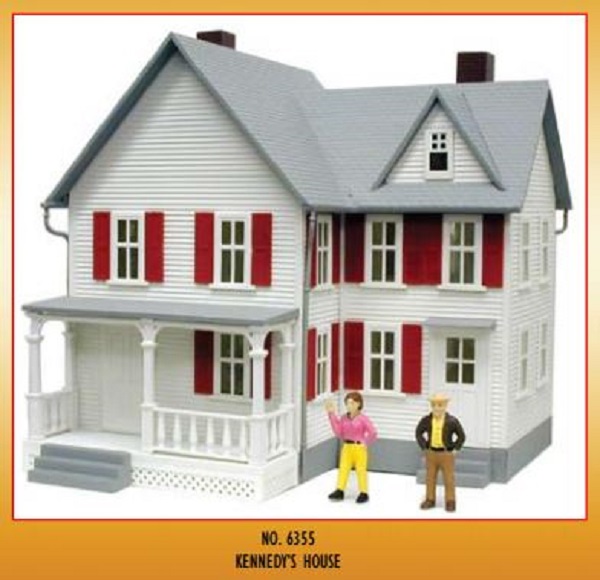
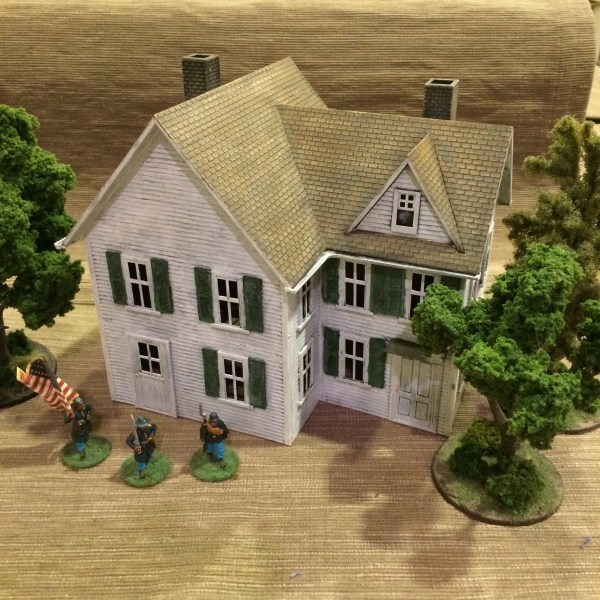
I recently scored a few free pre-assembled O scale plastic buildings made by Model Power. The houses are meant to be used in model railroad layouts and look very modern, plastic and toy like. I looked at them and thought that with a little work they might be made suitable for use for in American Civil War wargaming. I started my project with the “Kennedy’s House” model.

IMG_7898

Primed flat black

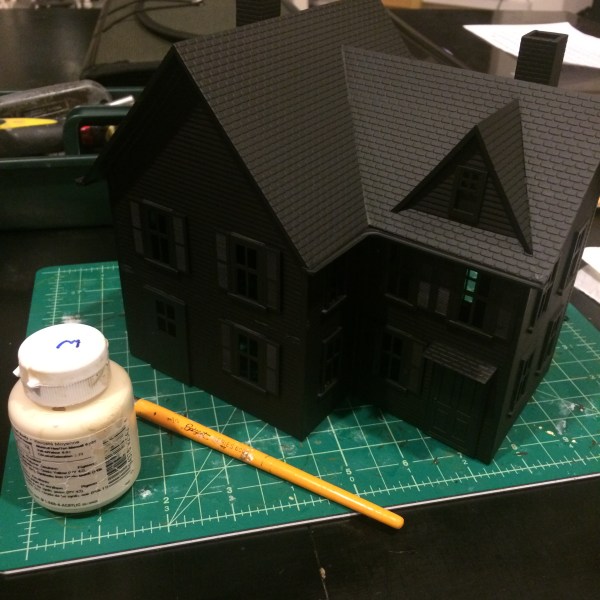
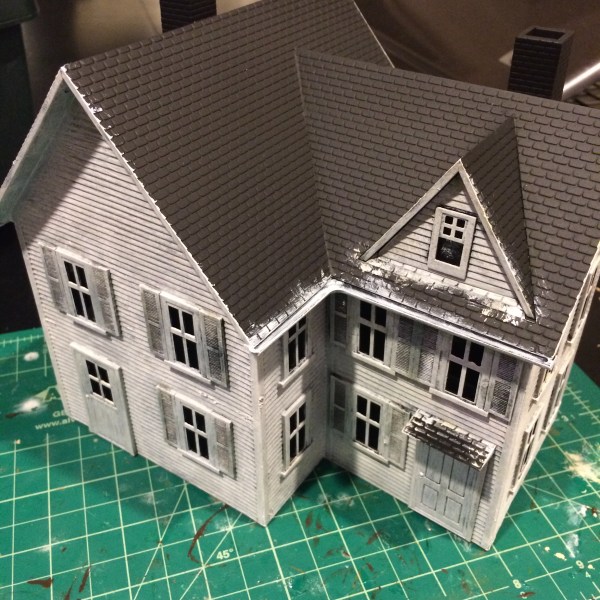
O scale structures are a little on the big side for 28mm, so the first thing I did was to remove the foundation and steps from the building. To make the house a little less grand, I also also removed the decorative front porch. After I re-glued a few loose windows and shutters, the whole model got a coat of flat black primer to knock the sheen off the plastic.

IMG_7900

First dry brush of off white on the siding

IMG_7905

Second dry brush coat in white on the siding

IMG_7906

Two coats of dry brush complete on the siding

Once the primer had set, I dry brushed all the siding, doors and windows with some off white paint. Over the first coat, I built up an additional layer of dry brushed white paint. The final effect I was building up to was a weathered look on the entire exterior.

IMG_7923

Shutters are dry brushed in green and roof gets dark brown base coat

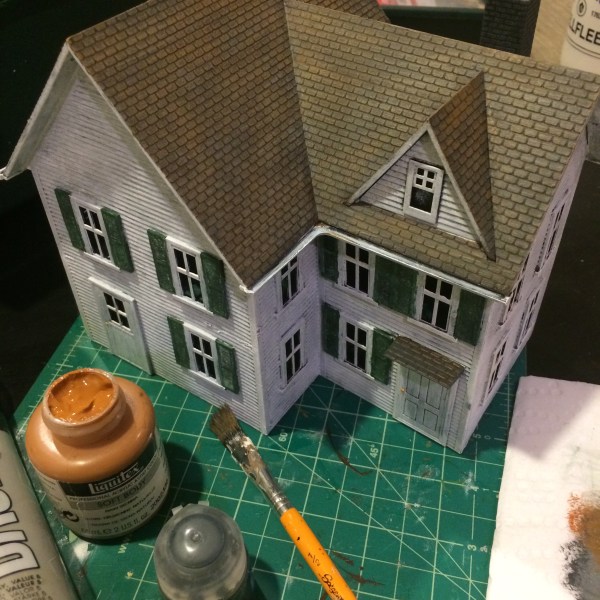
With the siding complete, the shutters on the building’s facade were dry brushed in a dark green. Again, allowing the layers of paint beneath to show throw added to the lived-in and weathered look to the building.

IMG_7924

Roof is built up with alternating dry brush coats of grays and browns

The roof’s look very modern, so I likewise built up coats of paint to make them look more like wood shake shingles. A base coat of dark brown then received two layers of dark and lighter grays, followed by some lighter brown highlights. The chimneys also got a couple coats of dry brush grays and off white to replicate a irregular stone construction. When done, the completed roof looked very much more like something found in the 19th-century.

IMG_7925

Completed conversion of the Model Power farmhouse

IMG_7927

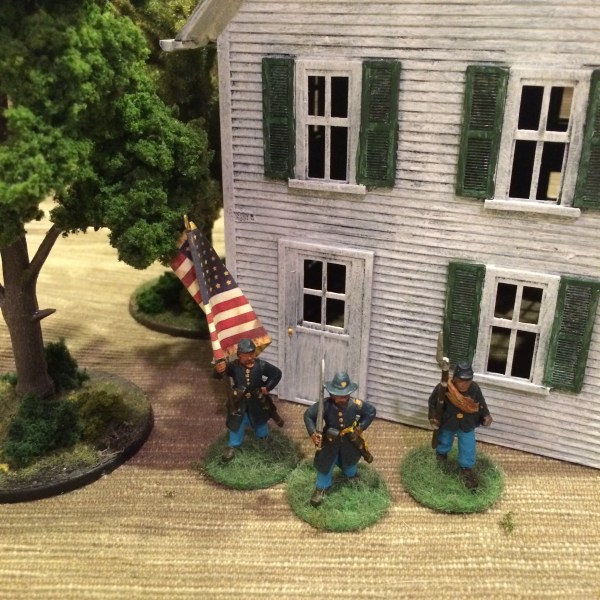
American Civil War Union soldiers standing guard at the newly completed house

Along with the Model Power buildings, I also picked up some free Woodland Scenics trees which I’ve based individually for my gaming. The trees and rehabbed farmhouse are perhaps a little on the large size for my Perry Miniatures soldiers but considering I’ve received all this terrain at no cost it will all work just fine on the table battlefield.

28mm: US .50 cal M2 HMG By Warlord Games

50calAB

The Browning .50 caliber M2HB heavy machine gun has been around for nearly 100 years, a remarkable feat in a span of years when battlefield technology has evolved immensely. The M2’s deadly flexibility in use as an infantry support weapon and mounting on aircraft, land vehicles and naval vessels has served the US and many other military organizations around the world over its history. Clearly, this gun not only has fire power but also significant staying power.

Warlordlogo

I’ve been gearing up for my first Bolt Action tournament at Nu Brand Gaming in Brooklyn, NY, and the M2 was one the one missing piece to my US 101st Airborne force I really wanted to get ready for the table. I got a deal on the metal cast model from Warlord Games and have chosen to paint it up as an Airborne support weapon unit. Some pics of the finished gun and its four-man crew are found below along with my simple approach to getting models painted up and ready for action.

AB Paint Scheme

Painting 28mm US Airborne Support Weapons

  1. Clean flash from metal models with a sharp knife and glue to metal washer or plastic bases.
  2. Apply filler putty to bases. When dry, scrape off excess with a sharp knife.
  3. Base coat models and bases with flat black spray primer.
  4. Paint uniforms and bandages on helmets with Tallarn Sand.
  5. Paint helmets and knee and elbow patches with Waaagh! Flesh.
  6. Paint faces and hands with Tallarn Flesh.
  7. Paint webbing and packs with Baneblade Brown.
  8. Paint bases, boots, gun stocks and helmet straps with Dark Brown.
  9. Apply Agrax Earthshade wash to uniforms, helmet netting, webbing and packs.
  10. Mix 50/50 Baneblade Brown and Off White and lightly dry brush packs, webbing and socks.
  11. Lightly dry brush bases, gun stocks, helmet netting, holsters and elbow and shoulder patches with Baneblade Brown.
  12. Paint metal gun, bazooka and mortar parts with black and finish with a light dry brush of metallic silver.
  13. Paint eyes with small dots of Off White and Dark Brown. Clean up around eyes with Tallarn Flesh.
  14. Mix 50/50 Tallarn Flesh and Off White and brush highlights on cheekbones, chins, forehead, nose and hands.
  15. Apply Company B decals to shoulders and helmets, followed by a coat of Solvaset decal fixative from Walthers.
  16. Cover bases in white glue and cover in 50/50 mix of fine light green and dark green grass flock.
  17. Glue small pieces of clump foliage to base.
  18. Spray coat completed models with matte finish.

IMG_7896

IMG_7895

IMG_7894

Boardgames of the American Revolution, Part II

DOIsigning

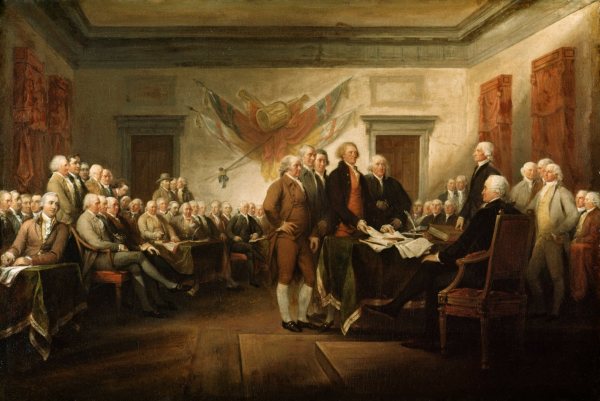
I’ve been continuing to scratch a serious American War of Independence itch for months now. Last summer I took a first pass at some of my favorite games of the period in Boardgames of the American Revolution, Part I. Since then, gamers have also been blessed with the release of Liberty Or Death: The American Insurrection, and it has fast become one of my all-time favorites among all the games I’ve played.

Away from the tabletop, I’ve been swept up in the fervor of Hamilton: The Musical and have been fortunate to catch the show twice on its record-setting Broadway run here in NYC. I’ve also recently revisited 1776 from 1969 and it’s 1972 movie adaptation. As luck would have it a new production will run for one weekend in early April at City Center here in the city, and yes, I’ve already got my tickets. A side note of Broadway trivia is that 1776‘s Tony Award-winning Broadway debut was in the same theater where Hamilton is currently running, and it too seems destined to sweep the awards in June.

But, back to games.

In this Part II, I take a look at more games of the Revolution I’ve managed to acquire and/or play in the past six months. Like the last time, this is not meant to be a comprehensive list. Despite my best efforts there are a lot more games I have yet to touch. What this round presents is again a variety in scope, mechanics and time commitment for gaming the Revolution.

WTPbox

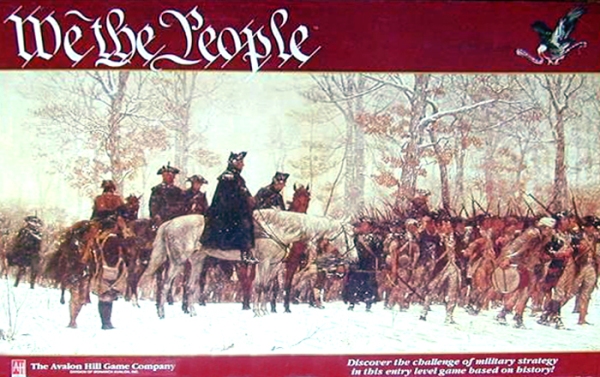
We The People (Avalon Hill)

Avalon Hill’s We The People from 1994 is a landmark in the history of modern wargaming. In taking on the well-worn American Revolution, designer Mark Herman created a number of innovations which have provided the basis for some of the most successful games of the past two decades.

Breaking from the standard hex maps of most prior wargames, WTP’s playing board of the British colonies of North America is abstracted into a series of connected key politically important locations like Long Island, Boston, Fort Niagara and Charleston. While battles play a part in controlling these areas, it is the shifts in political control that are tracked and lead to victory.

Combat in WTP was also stripped down in a few ways. Basic troop units mark the size of forces, but their quality is modified through the presence of leaders. When forces choose to clash in the game, battle cards are used to resolve various battlefield actions steeped in the terminology and effects of 18th-century warfare.

Lastly, the newly-introduced card driven game (CDG) mechanic propel the game’s action through the play of cards, rather than the more traditional roll of dice. With each hand of cards, players have the option of using them to play historically significant events which have varying results for each side of the conflict. Long term planning and success within the game often comes down to having the right cards at the right time.

An old copy of WTP sits on a shelf of club games at Metropolitan Wargamers in Brooklyn, NY, and I recently blew the dust off it for a play. Despite its status at the time of  release, I honestly don’t find myself getting this one on the table very often. That said, I feel this game’s presence in so many games I play on a regular basis, and so its true game-changing effects on the hobby reverberate to this day.

WWbox

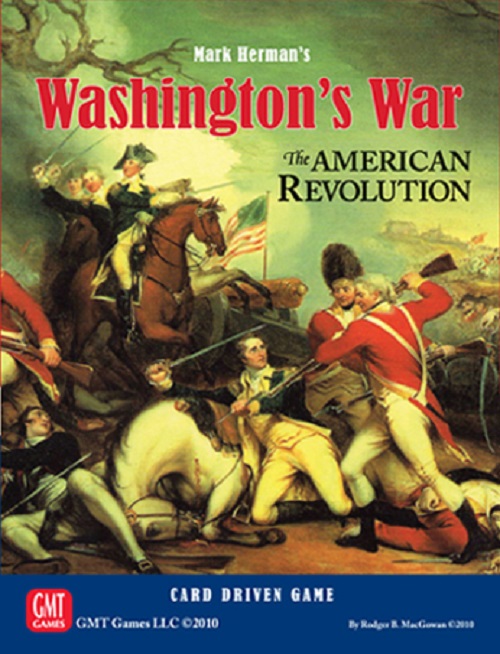
Washington’s War (GMT Games)

Building on the success of WTP, Herman revisited his game of the Revolution in 2010 with Washington’s War from GMT Games. Players familiar with WTP found much similarity with Herman’s original depiction of the period but with a few significant changes.

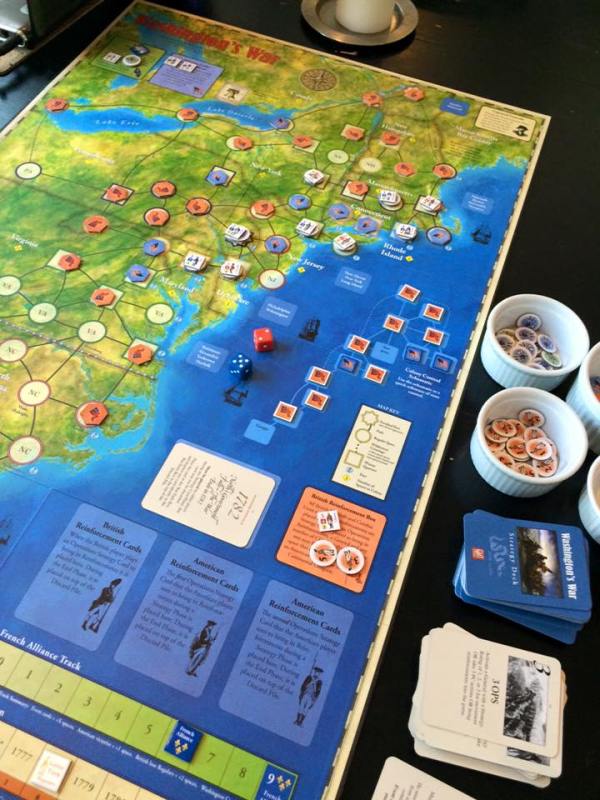
WWgame

A recent game of Washington’s War by GMT Games

The CDG mechanic was tweaked to allow for more flexible use of cards and the ability to ‘buy back’ discarded cards. WW also abandoned the battle cards for a dice-off combat resolution, making combat a quicker and more elegant part of the game. I feel the biggest change was in the more asymmetric representation of how the British and Colonial sides each play. The experienced troops of the King are strong on the coasts with their dominant naval power, and the Americans fair better inland but vie with keeping their militia in the action. Generals remain important to both sides, and the French entry to the war plays out in a way that truly captures the historical impact it had.

All the evolutions from WTP make the more recent game a quicker affair, with WW games running at about 90 minutes as opposed to the two hours or so to play WTP. The upgrades to the design and quality of the board, cards and playing pieces all brought the War of Independence into the 21st-century.

HTLbox

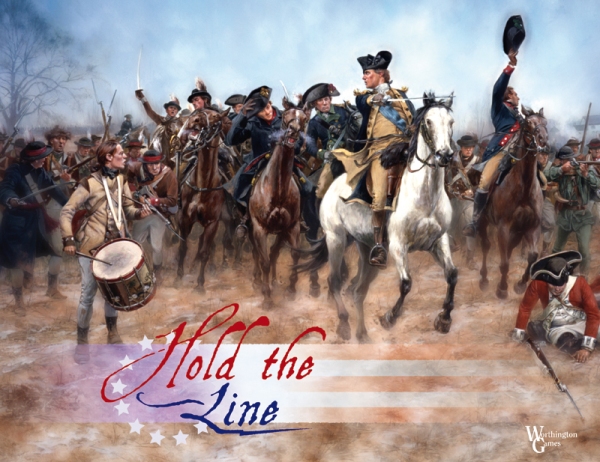
Hold The Line (Worthington Publishing)

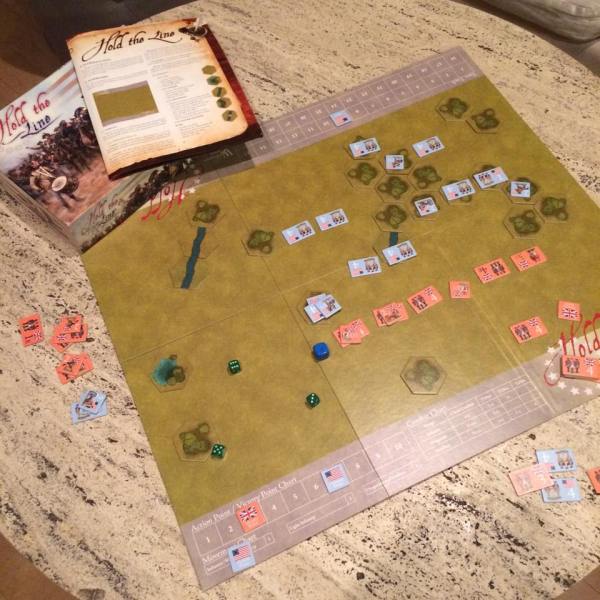
In 2008 Worthington Publishing released Hold The Line, a flexible game of the Revolution with a wide appeal from beginners to experienced gamers. Building on the success of their Clash For A Continent: Battles Of the American Revolution and French & Indian War game from three years before, HTL presents a blank hexagonal hardback game board which can be laid out with dozens of included double-sided terrain tiles representing streams, bridges, hills, forests, towns, fences and entrenchments. Terrain has varying effects on line of sight and movement within the game.

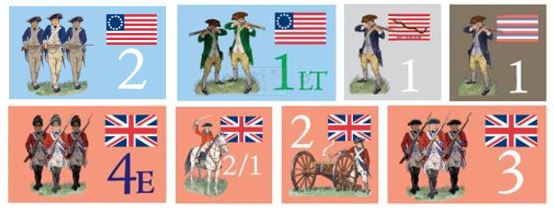
HTLpieces

Playing pieces from Hold The Line

Rectangular and square cardboard tiles represent British and Colonial elite, militia, regular and light infantry, dragoons, artillery and generic commanders. The chunky tiles are double-sided to mark losses as game battles unfold. Each turn players roll for random action points which may be spent to move, rally or fire, allowing for each commander to make choices in utilizing their troops. Additionally, the quality of troops and commander presence modify movement and fire ranges. For a simple series of rules, there’s a lot of game in HTL as even the most careful planning by one side over a series of turns can result in a foiled plan if subsequent action point rolls don’t provide enough actions to carry out a planned move or attack.

HTLGame

Hold The Line Battle of Monmouth morning scenario

HTL comes with thirteen scenarios for historic battles, each with their own page of historic background, rules and guide to set up. Additional optional rules allow for specific historic leaders, rally rules and morale modifications.Once you’ve played through the included scenarios, numerous additional battle scenarios can be found online from fans of the game. Within a simple design, flexible scenarios and a short set of rules, it’s easy to see why this currently out of print game is a favorite.


GMTBattlesAmRevbox

Battles of the American Revolution (GMT Games)

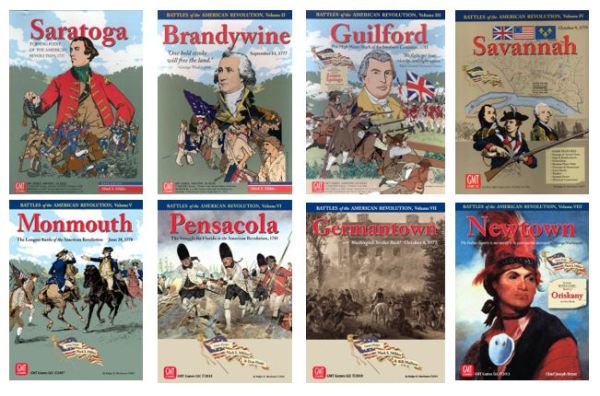
Between 1998 and 2013, GMT Games released a series of standalone games of the Battles of The American Revolution. Designed by Mark Miklos, each is a more traditional hex and counter game running three to six hours to play. For those looking to dig into eight key engagements of the War of Independence, the games offer nuances to reflect the historic events and personalities which shaped each battle wrapped in a beautiful modern design.

GMTAmRevTriPackP500

In late 2015 GMT announced the re-release of the first three games in the series — Saratoga, Brandywine and Guilford — as a tri-pack available through their P500 pre-order program. Since I have never played any of the games from the series, I jumped at the chance to get in on the deal of $45 for three games. The games will get upgrades to mounted maps and a unified rulebook, and additional expansions and tweaks to components a offered in reprints over the years will also be included.
The Revolution Continues…

Having spent the better part of 12 months playing through new and old games of the American Revolution, I find myself definitely leaning toward the more modern games. In order of personal preference, here’s my Top 10:

  1. Liberty Or Death: The American Insurrection (GMT Games)
  2. 1775: Rebellion (Academy Games)
  3. Washington’s War (GMT Games)
  4. Liberty: The American Revolution 1775-83 (Columbia Games)
  5. Hold The Line (Worthington Publishing)
  6. We The People (Avalon Hill)
  7. New York 1776 (Worthington Publishing)
  8. Trenton 1776 (Worthington Publishing)
  9. The American Revolution 1775-1783 (SPI)
  10. 1776 (Avalon Hill)

The main factors in consideration of the above for me are look, mechanic and importantly, time commitment. Some of the older games from SPI and Avalon Hill just require too much time for me at this stage in my life, and getting a quick game in with my fellow club members or my kids is a big determinant on what gets to the table these days.

What this two-part exercise has done for me is expose how such a diverse gaming experience can be pulled out of one signature conflict with a mix of maps, cardboard and cards. Playing through a span of forty years of American Revolution games, I can only wonder where some designer takes things next. Having gamed my way through the War of Independence, I’ve been spurred on to take a step backward in time to the French and Indian War and see what is revealed on the table next.

On The Trail of the Sullivan-Clinton Campaign

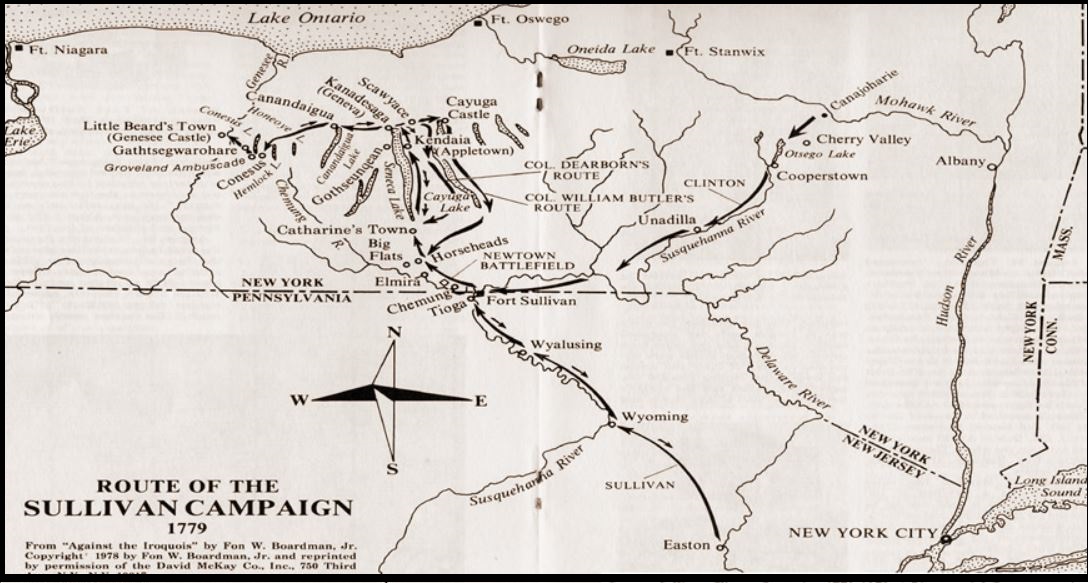
SullivanClintonMap

As I’ve written here many times before, I grew up amid the fields of great wars which shaped world history for more than two centuries hence. These conflicts of the 18th-century — the French and Indian War and the American War of Independence — partially played out in my childhood backyard of Western New York State. It was there in the 1750s-1780s where the European powers of France and England, many American indigenous civilizations and upstart Colonial settlers clashed over the continent savagely and ultimately formed the North American continent we know to this day.

A few months ago I had occasion to journey back again from my current home in Brooklyn to my original hometown in the Genesee Valley of Western New York. In doing so, I was able to partially retrace the movement of once-great alliances of armies and tribes of 1779.

Idealized images of the American War of Independence

Tracing the route of the Sullivan-Clinton Campaign uncovers some of the complexity to the story of the American Revolution and the country’s creation myths. Like most Americans, my view of the War of Independence was shaped at an early age with idealistic impressions of the era, its events and its legendary personalities — the Boston Tea Party, the Boston Massacre, Colonial Minutemen firing at British Redcoats, Paul Revere’s ride, Washington crossing the Delaware River, Betsy Ross sewing the first American flag and Molly Pitcher at the Battle on Monmouth. The portrayal of history with a heroic flourishes is not uncommon for sure, but stops along the Sullivan-Clinton Campaign route boldly reveal where many of our gaps between legend and reality persist in how we interpret our history.

The Sullivan-Clinton Campaign

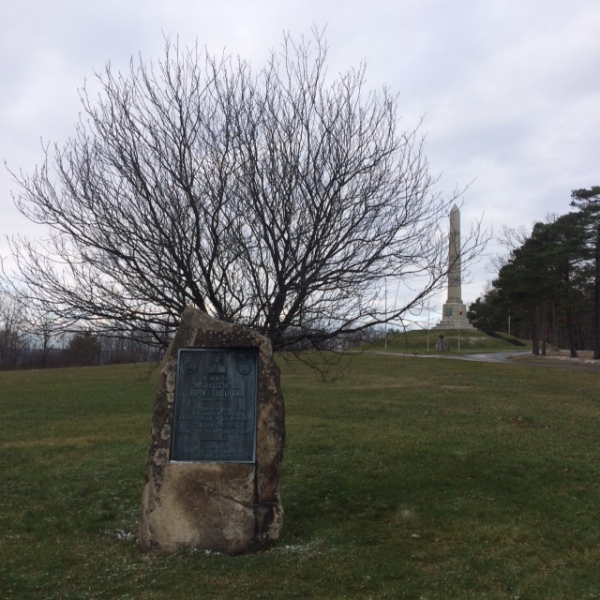
IMG_7308

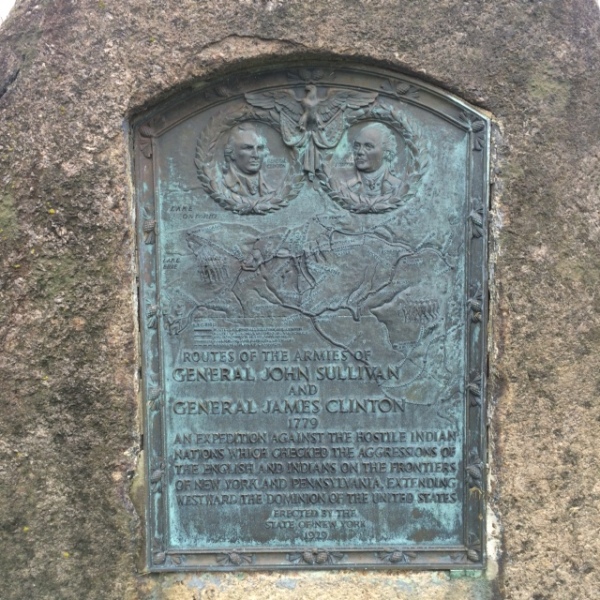
Monument to the Sullivan-Clinton Campaign erected at various sites throughout the region on the 150th anniversary in 1929

By the summer of 1779, the American Revolution was at its midpoint. The surrender of the British at the Battle of Saratoga in October 1777 encouraged France to join the war in 1778. Even with much-needed support flowing to the Colonies, the alliance between the Iroquois Confederacy and the British was holding the New York State frontier in the hands of England. Encouraged by British and Tory sympathizers operating from Fort Niagara across Western New York, the Iroquois harassed and killed settlers in the Mohawk Valley and also provided support to the British army in the form of food supplies.

In retaliation, General George Washington set his eyes on crushing the Iroquois alliance to “war upon them in their own style; penetrate their country, lay waste their villages and settlements.” The task was assigned to Major General John Sullivan with Brigadier General James Clinton acting as second in command. Sullivan set off northwest from Easton, PA and joined Clinton at Tioga near present day Athens, PA at the New York border in August 1779. Against military tradition, Washington assigned a major portion of the Continental Army (four brigades of over 4500 men) away from the front against the British. Committing such a sizable amount of men and supplies to the back country campaign points to the importance Washington placed on the mission.

Newtown Battlefield

NewtownMap

Setting out from their encampment on August 26, 1779, the well-supplied columns of the Clinton-Sullivan force marched along the Chemung River. Three days later, the expedition encountered Royalist forces comprised of a handful of British regulars, a couple hundred Tory militia and perhaps 1000 Iroquois warriors lying in wait in well-hidden earthworks.

IMG_7343

A view from atop the Newton Battlefield park

The militia at the Battle of Newtown were the famed Butler’s Rangers, commanded by Loyalist John Butler. Butler’s relationship with the British stretched back to the French and Indian War with his irregular troops participating in a number of key battles in Upstate New York and the Northeast region. Known for their green jackets and tactics which departed from standard 18th-century European line fighting, Butler’s Rangers were well-adapted to fighting in the thick woods of the American frontier. Leading the Iroquois at Newtown was Joseph Brant, a Mohawk who had likewise begun his military career fighting alongside British forces in the French and Indian War.

IMG_7347

Monuments to John Sullivan and the battle at Newtown Battlefield

Despite their dug in positions, Loyalist forces were greatly outnumbered at Newtown and a plan was quickly devised by Sullivan once the enemy’s presence was revealed. With Colonial cannon fire pouring into Loyalist positions, flanking troops were sent east and west. Despite relatively low casualties on both sides, the Loyalist forces ceded the field. The Battle of Newtown, the largest engagement of the Sullivan-Clinton campaign, left a lasting impression on the Iroquois in particular who retreated from the Colonial’s guns and superior numbers.

Groveland Ambuscade

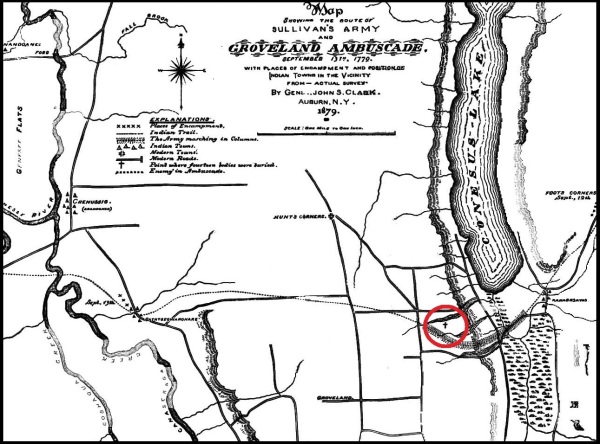
AmbuscadeMap

 Map of the Genesee Valley and the site of the ambush of the Boyd-Parker expedition on September 13, 1779

After Newtown, Sullivan and Clinton continued marching northwest. With the Iroquois on the run westward, the Colonials cut a swath of destruction against largely civilian tribes people. Fields of crops were cut down and dozens of villages were burned. What we would deem today as atrocities were meted out on the Iroquois population of the Finger Lakes Region with Washington’s orders of a scorched-earth mission delivered mercilessly.

IMG_7301

Roadside sign to the Groveland Ambuscade

By mid-September 1779, the Sullivan-Clinton expedition had reached up through the Genesee Valley. In the dense terrain differing from the wider fields of Newtown a month prior, the Colonials were slowed and at a disadvantage without opportunities to use their cannon effectively. On September 12, Clinton assigned Lt. Thomas Boyd, Sergeant Michael Parker and just over 20 men to find the Iroquois village of Little Beard’s Town. Lying again in ambush were Butler’s men and hundreds of Senecas.

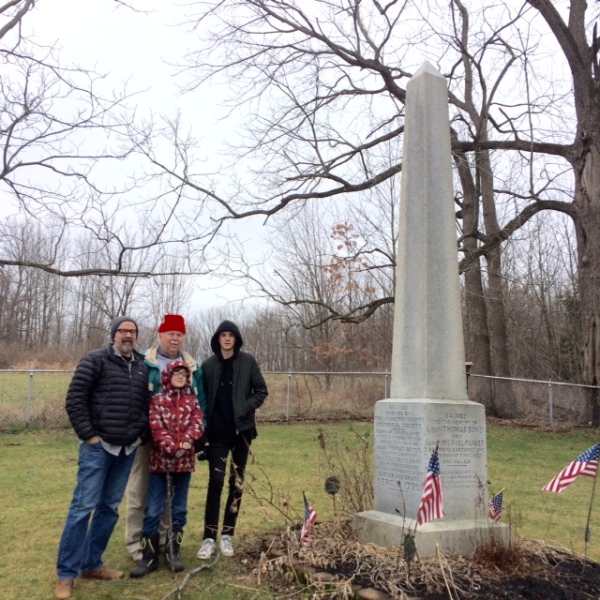
FullSizeRender

Me, my father and sons at the Groveland Ambuscade monument

The following morning on September 13, 1779, Boyd’s scouting party engaged in a brief gunfight with a half-dozen Senecas near Conesus Lake and present-day Groveland. Against the advisement of his guide, Boyd pursued the Indians into a trap where they were quickly surrounded by Butler and Brant’s large force. In the ensuing ambush, about a dozen of Boyd’s men were killed. As the smoke cleared, another twelve men were captured along with Boyd and Parker themselves. Today, the Groveland Ambuscade park and monument marks the place of this quick and yet bloody skirmish.

Boyd-Parker Park

BoydParkerSign

Historical marker at the Boyd-Parker “torture tree” site in Cuylerville, NY

The captured Colonials were led to nearby Little Beard’s Town some five miles west of the ambush near present day Cuylerville, NY. After enduring a summer of unrelenting viciousness at the hands of the Sullivan-Clinton campaign, Brant was anxious to confront his now-imprisoned enemies face to face. With his questioning over, Brant left the men to the Senecas who tortured and killed Boyd, Parker and all but one of their men.

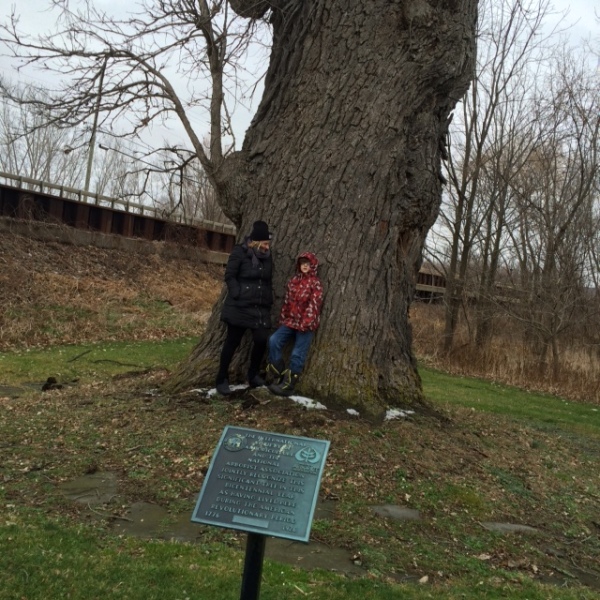
IMG_7306

My wife and son at the Boyd-Parker “torture tree”

The centerpiece of the present day Boyd-Parker Park is the infamous “torture tree.” Soaring over 70 feet high and some 24 feet in circumference, the 250-year-old bur oak tree is a direct living link to the past events of the valley centuries ago. While legend has it the tree is the actual spot where Boyd and Parker met their end through horrendous acts of torture, the name is dubious since no actual documentation exists to prove the exact tree’s location.Two days after the deaths of the Boyd and Parker’s group, Sullivan’s main force arrived to destroy Little Beard’s Town and bury their comrades.

BoydParkerShrine

One of many plaques at the Boyd-Parker park

In the weeks following the events in the Genesee Valley toward the end of September 1779, Sullivan and Clinton’s expedition force began to disband to winter quarters. While a decisive blow had not been dealt to the Iroquois, thousands of Indians were dispersed throughout Western New York and into Canada as winter set in with starvation and disease devastating the already weakened population.

Memory of the Sullivan-Clinton Campaign

Touring the landscapes and monuments of the Sullivan-Clinton Campaign in the Genesee Valley is a remarkable experience. Attempting to place yourself back in a time of a region dotted with large Indian towns, large fields of mature agriculture and scattered white settlers takes a great leap of imagination. The modern plaques and signage along roadsides and memorial parks document the events of 1779 with words like “hostile” and “aggression” applied repeatedly to the Iroquois who peacefully lived their lives for centuries before becoming embroiled in the wars of Europeans and American colonists. On the flip side, the upstart Colonials who set on a single-minded destructive campaign against the locals are portrayed heroically as “undaunted” and sacrificially giving their blood for “American freedom.” Following the trail of history today leads to ongoing battles of a different sort — battles to square the nation’s history myths with the realities of the events of over two centuries ago.

New Game Weekend: Liberty Or Death: The American Insurrection

LOD Box

A package containing my most highly-anticipated game of early 2016 arrived a couple weeks ago, and I finally unpacked and played all the glory that is Liberty Or Death: The American Insurrection by GMT Games.

Designed by Harold Buchanan in consultation with the creators of of GMT’s COIN series of  games (including Volko Ruhnke), LoD places the American Revolution within the context of an 18th-century counterinsurgency on the American continent. Buchanan is a true inspiration as a first time game designer at midlife putting his passion for the period to work on the tabletop. Interviews at The Tattered Board podcast and Grogheads reveal Buchanan’s story of a lifelong gamer (with a degree from MIT in Finance and Game Theory) whose kids have grown up and out of the house, allowing him the time to pursue game design. His love of the Revolution and gaming has truly paid off with LoD.

IMG_7530

GMT’s Liberty Or Death hits the table for the first time

I’ve played multiple games of Cuba Libre and Fire and In The Lake from the COIN series over the past couple years, and those familiar with the mechanics of these games will find much familiarity and a few new differences in LoD. The game presents the American Revolution as one among four factions — British, Colonial, French and Indian — each vying for their own victory conditions. The British control both Regular (red cubes) and irregular Tory (green cubes) forces, the Colonials play with Continentals (blue cubes) and irregular Patriot Militia (blue cylinders), the French use Regular (white cubes) troops and the Indians field irregular War Parties (tan cylinders). Two loose alliances of British/Indian and Colonial/French work in concert to move and occupy city and Colony territory while battling, building forts and settlements and controlling political dissent.

The British press the war in New York

As in the other COIN games, LoD action is driven through a set of beautifully-designed cards. Cards provide varying turn order with depictions of historical events a player may choose to play or not play according to their force’s (or their ally’s) advantage. Alternatively, players may opt to perform a series of other combinations of actions specific to their nationality to move, battle, skirmish or raid, muster forces, build forts and villages, manage coastal blockades, promote propaganda or share in economic support and trade. An active card is in play with a look ahead also granted to the next card to be played, giving the game a true campaign feel as future moves are plotted, executed or thwarted.

Once a series of cards are played through, a season ends with the draw of a random “Winter Quarters” card. These cards, each with their own individual effect, create a round of actions where victory conditions are checked, resources are gained or spent, forces redeploy or are removed from the game and leaders may change. The variable combinations of turn order, events and actions contribute to the significant replay value of LoD, as even similar periods of campaigns may play out very differently in each sitting.

The French arrive to support the Colonists in Massachusetts

One of my favorite aspects that sets LoD apart from many games is the relative non-involvement of the French early in the game. The French player does not start on the board at all, but instead spends the early game offering monetary support to their Colonial allies. Once certain conditions are met in terms of Colonial victories over the British, the French enter the game by landing troops and offering naval support and blockades of coastal city ports. A French victory is achieved through the accumulation of British casualties and opposition to British rule.

The Indians are likewise an interesting faction with their main concern of building villages in territories while helping the British maintaining their hold on the hearts and minds of the colonies. Indian war parties assist the British through harmful raids which reduce the effectiveness of the Colonials while also advancing their tribal territorial expansion. Victory for the Colonists comes through the British casualties and holding the growth of Indian villages to a minimum against the construction of Colonial forts. A British win arrives with the accumulation of Colonial casualties and support for the King.

LOD Leaders

Historic leaders are a new mechanic in LoD

Another way LoD differs from other COIN games is the insertion of leaders to each force, such as Gage, Washington, Rochambau or the Indian chief Cornplanter. As the game goes on, some leaders may randomly swap out for others, making it yet another variable for players to manage. With each leader holding their own set of unique abilities and modifiers, players need to work effectively to utilize them knowing full well they may be replaced in future turns.

Each faction also receives a “Brilliant Stroke” card for one-time use in the game to trump another player’s turn and perform an extra series of free actions. Additionally, the French’s entry comes with the achievement of game prerequisites and play of their unique “Treaty of Alliance” card. Figuring out the exact moment to deliver a big, often game-changing, play with one of these special “Brilliant Stroke” cards looms large in the mix of decision making throughout the game.

Examples of LoD cards featuring key personalities and events of the war

The entire design of the LoD is wonderful, with a rich playing board hinting at design elements of 18th-century maps without any compromise to game play. The cards are likewise rich in their look and content, each summarizing an aspect of the war or its politics in just a few lines of text and game effects. The rules and playbook are well done, and the designers notes by Buchanan and Ruhnke are well-worth a read for historical background and tips to playing to the strengths of each faction.

“The British Return To New York” scenario at Metropolitan Wargamers

A game of LoD may be played in one of three campaigns of varying length. A short late war game from 1778-1780 is outlined in “The Southern Campaign,” and a mid-length “British Return to New York” scenario runs in the early war of 1776-1779. Players wishing to roll up their sleeves for a long game can tackle most of the war in the  1775-1780 period with “A People Numerous and Armed.” Each scenario provides specific starting situational set-ups as well a guide to creating decks of cards for the campaign seasons with the game. A brief guided intro scenario also makes a first-time walk through of the game time well spent.

Since receiving the game, I’ve run through the introductory scenario plus multiple plays through both he the Southern and New York campaign scenarios. In a most recent game with some players both new and experienced with the COIN series at Metropolitan Wargamers in Brooklyn, NY, the Indians had the frontier ablaze and my French were far too late to the action except for dumping money into the rebellion. The British forces had much of the East Coast and South locked down without much trouble from my tardy French navy. Ultimately, the Colonials squeaked out a minor victory and had some very lucky battle results in upstate New York.

With my life split between growing up in Western New York and living in New York City for the past 20 years, the American Revolution was been a near-constant presence in my life for decades. As a run-up to the release of LoD I threw myself into classic and contemporary games of the American Revolution, playing the period in a variety of mechanics and design. With a few games of Liberty of Death under my belt, I’m thrilled to have the period refreshed anew, and the game will be very much at home with my other American Revolution games.
A Place To Play: The Brooklyn Strategist

IMG_7499

The Brooklyn Strategist was opened several years ago by Dr. Jon Freeman, a clinical psychologist, neuroscience researcher and life-long game fan. Situated along the main drag of Court Street in Carroll Gardens, Brooklyn, has quickly grown to be a go-to gaming space for the Brownstone Brooklyn crowds of kids, families and adults.

IMG_7503

Board games, card games and gaming accessories line the walls

The original storefront space of hardwood floors and exposed-brick walls holds a number of tables (including a stunning Sultan custom table from Geek Chic), shelves of games and accessories for sale, and a small coffee and snacks bar. In the spring of 2015, the store doubled in size next door. The new space added about a dozen more tables to accommodate the expanding children and adult programs, tournament events and growing miniatures gaming community.
The core of The Brooklyn Strategist is in its after school programming, and a packed regular schedule of events is also offered every day and night of the week. Magic: The Gathering card games are featured Mondays, Wednesdays and Fridays. Mondays also showcase ongoing Star Wars X-Wing play, and other X-Wing events are held periodically with hosting by the NYC X-Wing group. Scrabble and chess take over Tuesday nights, and opportunities abound for Dungeons & Dragons and other RPG games Wednesdays and Saturdays. Hundreds of games are on hand to pull off the shelf to play.

Paying your way at The Brooklyn Strategist is a great deal with a $10 walk-in fee, individual memberships at $25 per month, couples at $45 per month and family packages at $60 per month. Each level of membership comes with a package of discounts and perks which encourages a solid community to fill the space all week long.

IMG_7502

The expanded miniatures gaming selection includes Flames of War, Games Workshop, Star Wars X-Wing, Battle Foam cases, paints and other popular lines

This past weekend I had the opportunity to sit down with Colt Johnson who has worked hard for a year to expand the shop’s interest in miniatures gaming. Johnson said the miniatures scene is focusing right now on the “five food groups: Malifaux, Infinity, Warmachine, Games Workshop and Flames of War.” Over his time working at the store, the miniatures scene has grown from maybe a dozen players on a weekend afternoon to 40 to 50 packing the tables on a busy day. Organized miniatures tournaments, events and pick-up games rage on the tabletop battlefields, and players new to the hobby can drop in and whet their appetites using beautifully painted 28mm loaner models on hand in display cases throughout the store.

IMG_7504

Miniatures gaming and painting gears up on a recent Saturday

A Warhammer 40K escalation league just kicked off with nearly 40 players signed up to play over the coming months. On the day I was there, 40K was very much in the air. A group of players from Staten Island were settling into their first games on some beautiful tables packed with terrain. One table over, a young girl who recently hosted a birthday party for 15 other girls at the store sat painting up her latest plastic goodies from Games Workshop. As the dice rolled, a phone call came in from someone who had just moved to the city and was looking to play some 40K.

Sci-fi and fantasy miniatures gaming clearly has a big following at the The Brooklyn Strategist, but historical gaming is newly on the rise. The popular World War II 15mm game Flames of War is a recent addition to the store’s minis mix, and this past weekend also presented a demo game of the 15mm Cold War-themed Team Yankee. WWII at 28mm with Bolt Action and even some 18th-century Blackpowder gaming is also on the horizon.

While growing every aspect of miniatures gaming, Johnson is hoping to push into even more historical gaming as both a hobby and way to create excitement for local kids and adults around learning about history through gaming and modelling. No matter the game, period, theme or level of experience, everyone who finds their way to the tables at The Brooklyn Strategist will find themselves in the right place.

The Brooklyn Strategist is located at 333 Court Street in Brooklyn, NY 11231 (a short walk from the F/G train at Carroll Street). Contact them at 718-576-3035 or check them out on their website or Facebook page. For news on the miniatures scene at the shop, check out their separate wargaming Facebook page.