The Four-Decade History and Future of NYC’s Trailblazing Metropolitan Wargamers

Editorial note: I wrote this article in May of 2024 on the occasion of the 40th anniversary of Metropolitan Wargamers. The article was originally published by SDHist here.

Background

Metropolitan Wargamers (MWG) was founded in 1984. The club is New York City’s premier and longest-operating gaming organization in the five boroughs with its own dedicated private gaming spaces.

MWG grew out of of the New York Wargamers Association (NYWA), founded in the early 1970s as an affiliation of local Napoleonic miniatures players. By the early 80s, some members of the group split off to form what would become MWG. The club’s first permanent yet short-lived home was on Steinway Street in Queens in a cramped second-story apartment with a couple of small tables and a leaky hole in the roof.

After losing this space, the club moved to its largest space at 20 Broadway in Williamsburg, Brooklyn. In the early 90s, the club was regularly listed in the “Opponents Wanted” section of Avalon Hill’s The General magazine. It touted “its own 2,000 square foot loft for boardgames and miniatures” and “facilities and members to play any game, anytime.”

Occupying the entire second floor of a warehouse, the Broadway space held six tables (plus a poker table) and lines of shelves along the walls holding miniatures, games and an enormous collection of military and history books and magazines. With a dingy couch, a threadbare area rug, peeling linoleum floors, overhead fluorescent lighting, a closet with a cold-water sink and toilet, and an industrial heater mounted to the corner of the ceiling, the Metropolitan Wargamers in Williamsburg reflected the grit of a Brooklyn since largely faded into memory.

For years, a small, dedicated group of about a dozen members struggled to scrape together money to cover rent and keep the club operating. The Broadway building was sold (and subsequently demolished) during the Brooklyn real estate development boom of the early 2000s.,After that, the club moved to its current location in the basement of a four-story, eight-unit 1920 apartment building at 522 Fifth Street in the heart of Park Slope, Brooklyn. (Entrance door pictured above.)

Set-Up

When the club arrived at its new Park Slope home, it was a raw, unused space. About $300 was initially invested in building new tables and shelves. It is still very much a semi-raw basement with a painted concrete floor and brick and stone foundation walls.

We have a front room with three 4’ x 5’ tables, each with multiple racks underneath to hold games in progress, plus a small 4’ x 4’ kitchen style table we salvaged off the street.

The front room at Metropolitan Wargamers.

Moving down a narrow hall, we have our “monster game” table measuring 8’ x 8’ which plays host to large footprint multi-month games such as World In Flames or Pacific War. The three tables at the rear of the club (two at 5’ x 8’ and one at 5’ x 10’) all have removable tops, handy for hosting months-long games like Empires In Arms or a big RPG dungeon crawl miniatures campaign.

The back room at Metropolitan Wargamers, featuring sand tables and walls of lined with miniatures and games.

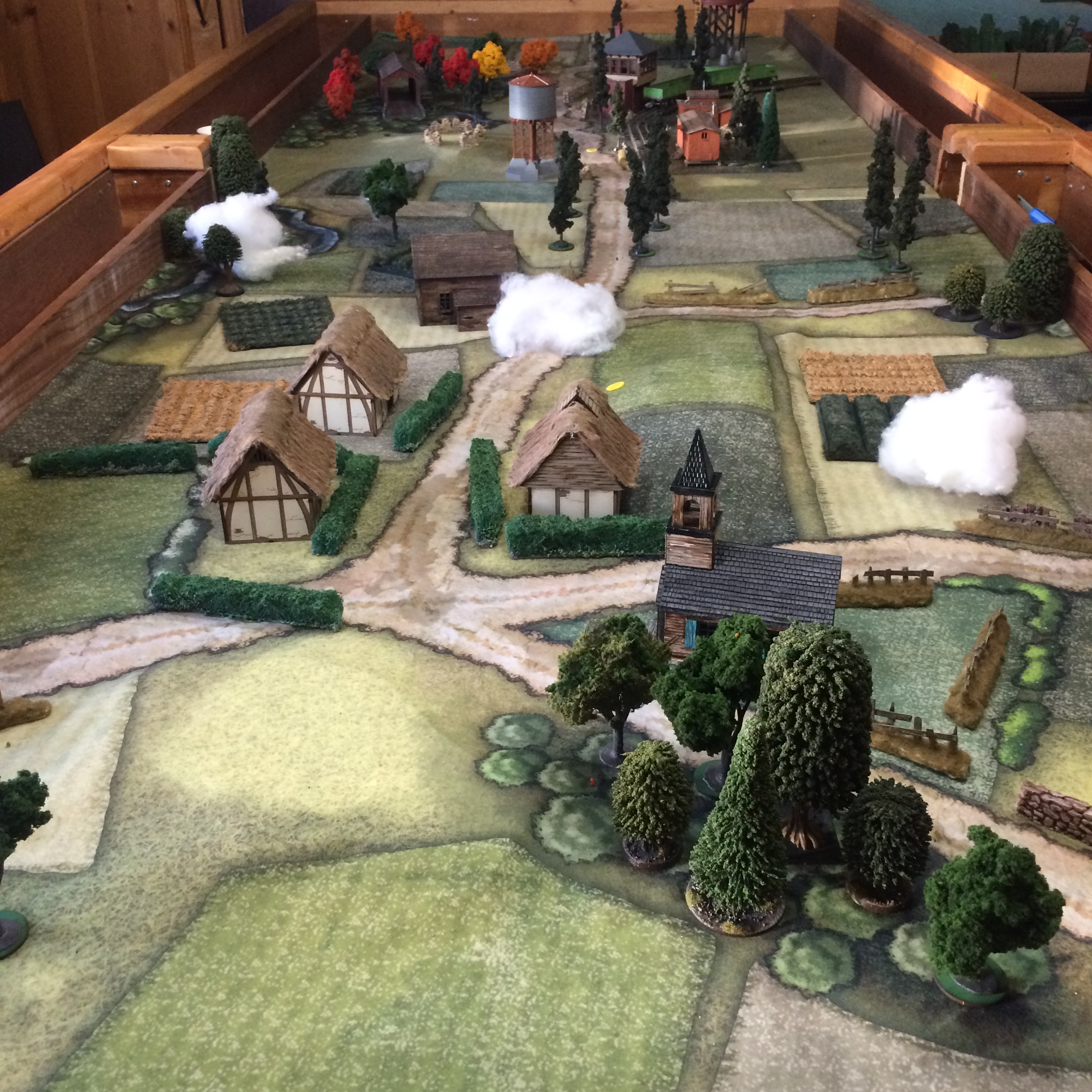
Most uniquely, lifting the covers off two of the tables reveals sand tables for miniatures gaming. World War II miniatures games such as Battleground, Flames of War, O Group and Bolt Action have often been played on these sand tables.

A recent game of O Group in 15mm, with members and visiting guest from Detroit, on one of the club’s sand tables.

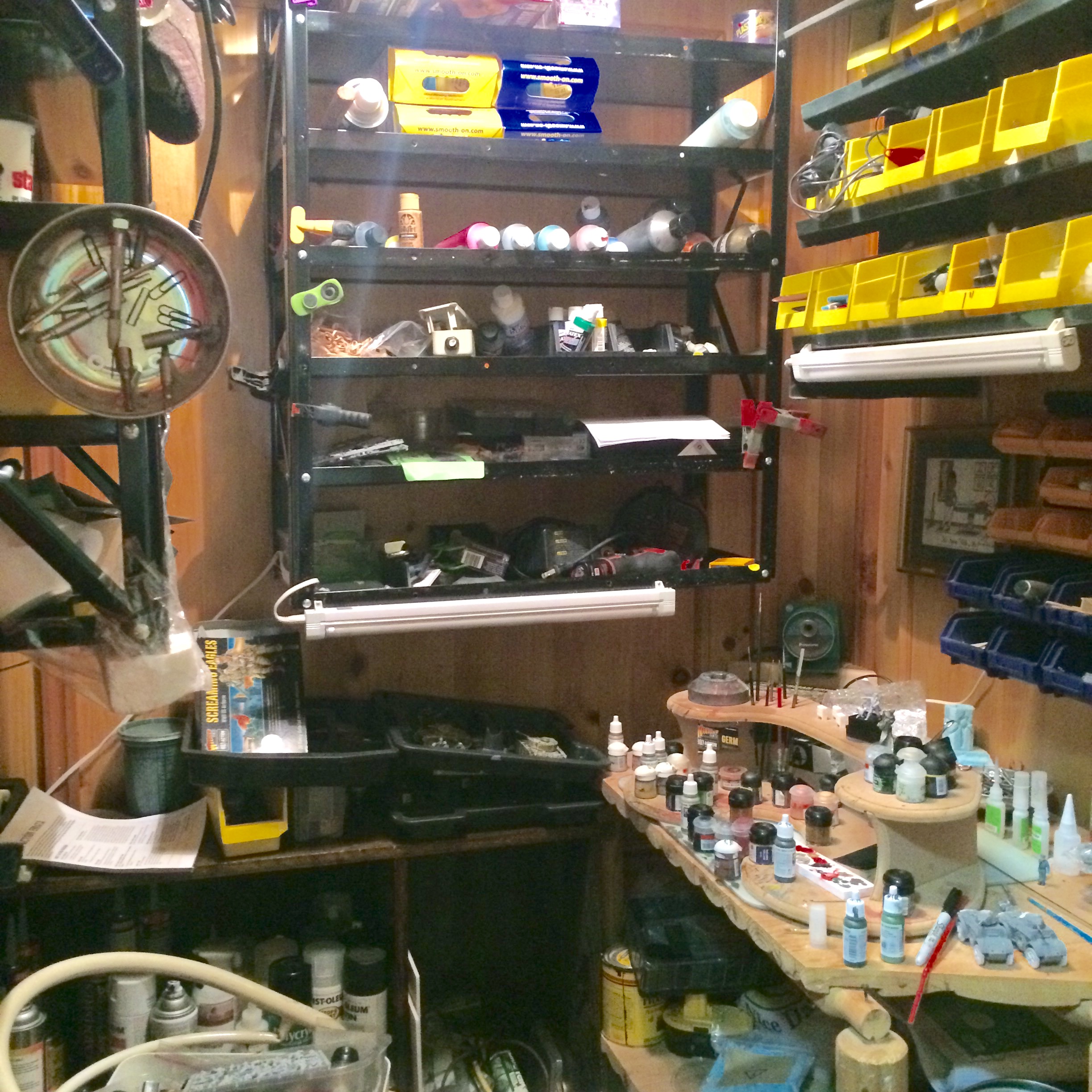
Shelves line the walls of the club, and first-time visitors usually gaze in awe at their contents of hundreds of games and thousands of miniatures. Shelves in the rear hold club-owned terrain – trees, buildings, gaming mats, rivers, roads, hills, and buildings ranging from historical periods to sci-fi and fantasy in multiple scales. A tall rack holds a dozen 4’ x 4’ sheets of plywood where more in-progress games can be stowed. Most of the shelves are rented by members to store personal collections of games and miniatures.

A 20mm Battleground game on one of the club’s sand tables.

Creature comforts at the club are few. There’s a refrigerator, microwave and coffee maker at the front, a tiny bathroom at the rear, and stairs up and out the back to a small private yard. The yard is used to spray-paint miniatures, and is where we’ll throw food on the grill during warm months.

The Battle of the Monongahela in 28mm using Muskets & Tomahawks rules at the club (figures and scenario by the author).

We finally installed free Wi-Fi within the past two years. Other than that, not a lot has changed since we made the move twenty years ago, and the club remains a bare-bones space solely focused on gaming.

Rules

So how do we manage this gamer’s paradise nestled on a side street in one of the more expensive neighborhoods in Brooklyn? We are fortunate to have a very good relationship with our landlord, who rents us the space for what is far below what he charges for one of his $3200 per month two-bedroom apartments upstairs.

Visitors attend for free as guests their first time at the club, and then pay a weekly fee of $15 whenever they stop by to play again. There’s an option for regular guest players to pay $40 per month for as much gaming as they want, provided they are there with one of our members.

Members and guest playing Root at the club.

The real magic comes in being voted in as a member of MWG after a 3-month probationary period of paying a monthly fee. With membership comes a set of keys to the club, granting 24/7 access to the space. That said, some visitors pay at the weekly rate for years without becoming members. For gamers largely living in small NYC apartments, the monthly fee of $40 for membership and $20 for a private shelf is a real deal.

Over the past ten years, membership has held steady at around 35 in number, give or take. We each pay our nominal fees, which pays for rent, utilities, cleaning supplies (one member pays no fees and handles all our cleaning and maintenance work) and whatever else comes up like building new shelves or replacing major things like the sink. Because our costs are relatively fixed, we’ve been able to maintain our very reasonable fee structure for years.
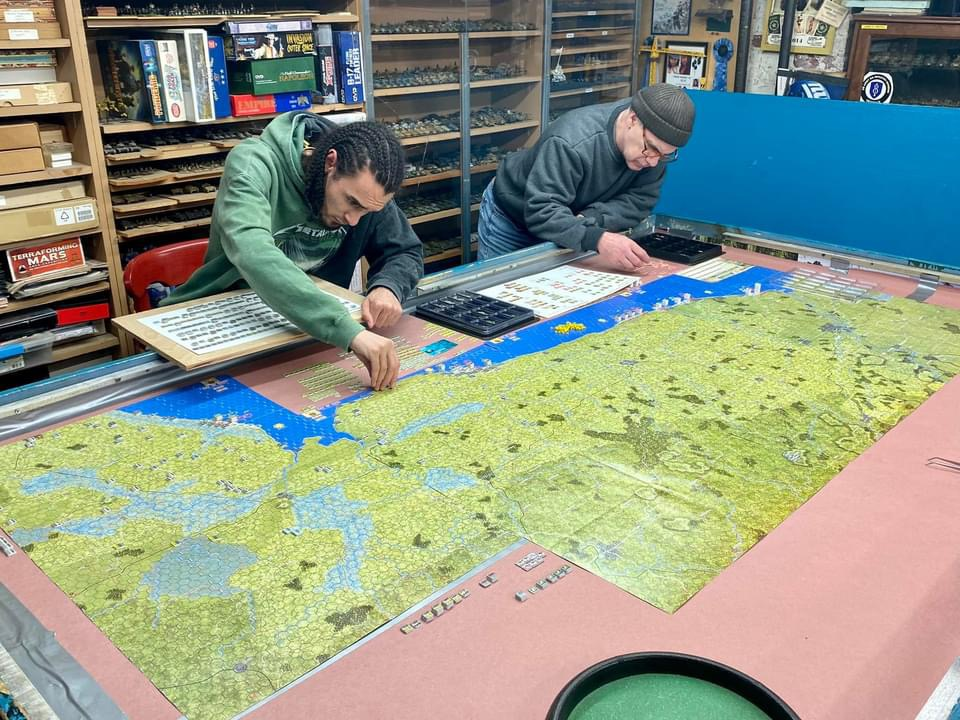
Father and son team James Jr. and James Sr. are often found playing big WWII hex and counter games, like Day of Days, over weeks on the club’s tables. James Jr. is just one of the people who have grown up in the club.

Modern gaming cafes in the city typically charge $15 for three to four hours of play, so the club is a bargain for serious gamers looking to clock many hours or even entire days of gaming. Unlike these café spaces, however, we are not open to walk-in traffic.And we don’t keep regular hours, so arrangements to visit are coordinated through an online club message board and via our social media channels on Facebook and Instagram.

Leviathans on the table surrounded by brick arches in the front room of the club. Second from left is Frank, our venerable eldest member and honorary Master of Arms.

Minors aren’t allowed without parents, but we’ve seen a few kids grow up within the club and come back to visit and play. We also don’t rent our space out, although we’ve been asked many times over the years.

Historical Notes

Membership has evolved greatly over the decades at MWG. Our founding members were largely working class first- and second-generation Italian, Irish and Greek New Yorkers who came of age in the 60s, 70s and 80s when New York City was a very different place. Stories abound with some members carrying knives and guns coming to and from the club in Williamsburg.
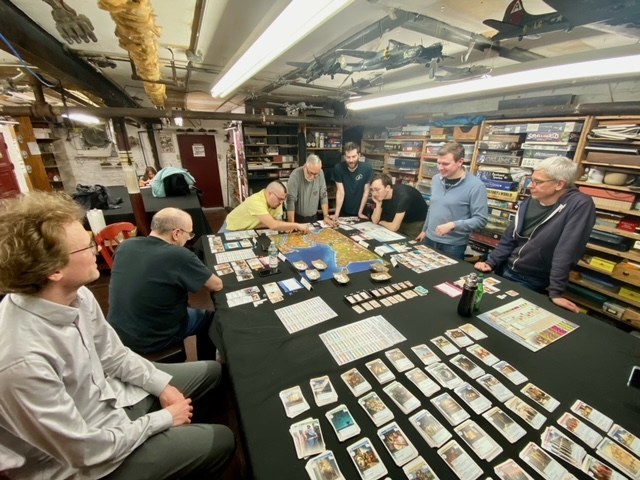
A day-long, 10-player game of MegaCiv at the club. Club founder Tony is second from left.

Today, about half our current membership reflects the modern influx of GenXers and Millennials who flocked to the city since the mid-90s. Our membership ranges in age from mid-20s to mid-80s. We’ve only ever had a few women as members at any given time. We’re fortunate to have many of the old guard around to share our history and that of the hobby with newer arrivals.

The games we play at MWG have also changed significantly. In its first decade, the club was almost exclusively home to historical miniatures gaming including Ancients, Hundred Years War, Napoleonic, American Civil War and World War II, all at multiple scales. Some board gaming from classic publishers like Avalon Hill and SPI also made regular appearances. Through the 1990s and into the 2000s, Warhammer Fantasy, Ancients and 40K rose to prominence, as did a greater interest in emerging Eurogames.
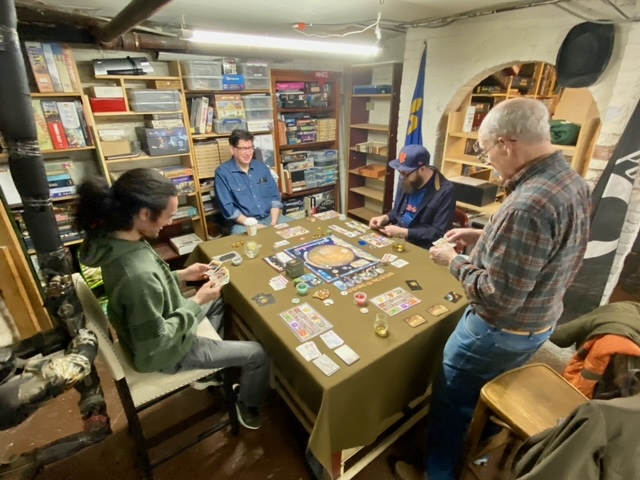
Club favorite Terraforming Mars shows up on the tables about once a week. Club founder Joe is at right.

While miniatures, including WWII, ACW, French & Indian War, Robotech, Epic 40K, Star Wars: Legion and Marvel: Crisis Protocol, have been played recently, most of the club’s gaming interests have moved toward a focus on modern board games and wargames in the past 10 years. RPGs have also continued to have a small but consistent presence at the club throughout its history.

Over its history, MWG has also been an incubator for game design and playtesting. A number of our earliest members spent time at the offices of SPI here in NYC in the 70s and 80s playtesting now-classic games. The club has included prominent designers in its membership, including Adam Starkweather (IGS, MMP) and Carl Fung (SCS and BCS, MMP), newer designers like Mike Willner (Prelude to Revolution, Compass Games) and Mike Lorino (Seminal Catastrophe, Vuca Simulations), and GMT Games Art Director Justin Martinez.

Members have won multiple awards at regional Historical Miniatures Gaming Society (HMGS) conventions. And the club continues to host visitors from across the country and around the world. That has included gamers from Spain, the UK and Australia.

Running an organization like ours has not been without its challenges. We’ve had more than a couple floods, weathered some internal controversies, and survived an extended shutdown during the COVID-19 pandemic (during which time most members continued paying dues and we received a grant from HMGS to offset a financial shortfall). Most recently there has been some conversation about changing our name to Metropolitan Tabletop Gamers to potentially broaden our appeal, but we continue to see new people show up almost every week just as we are.
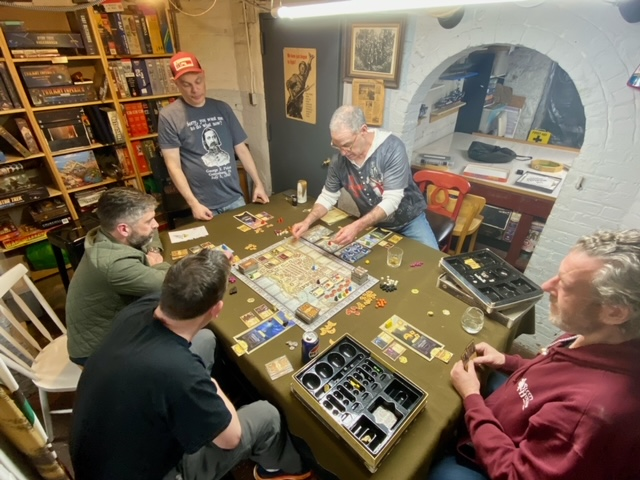
Another club favorite, Lords of Waterdeep, often serves as the opening or closing game of a day.

In 2024, Metropolitan Wargamers is celebrating its 40th anniversary. I’ve been fortunate to serve as President of MWG for the past ten years, and it remains one of the more unique communities of which I’ve been a part. The hobby, the city, the club, and its members have all changed over the years, but our core personality has remained intact as a community of dedicated gamers.

Touring the Battle of Brooklyn at Green-Wood Cemetery

BattleofBrooklynForce.jpg

This past Sunday a fellow member of Metropolitan Wargamers and I climbed aboard a trolley tour at historic Green-Wood Cemetery. The occasion was the cemetery’s annual Battle of Brooklyn Commemoration, fortuitously held this year on the exact date — 241 years later — of the battle on August 27, 1776.

schecterbfny

Leading the two-hour tour were the cemetery’s resident historian, Jeff Richman, and Barnet Schecter, historian and author of The Battle for New York. Schecter’s book is the long-held standard text on the battle, variously known as the Battle of Long Island or the Battle of Brooklyn. I’ve had a copy of his book for years and I’ve heard him lecture previously, but the tour offered a great chance to get up close with both Schecter and Richman as they spun a narrative of the battle’s events more than two centuries previous.

IMG_1549

Barnet Schecter presents the view toward eastern Long Island where British troops were observed landing in August 1776

One of the first stops on the tour was along a ridge affording an southeast-facing view from the cemetery out into Long Island. From this position, the historians presented with some certainty,  General George Washington and his staff were able to make their first accounting of the landing of General William Howe’s British forces at Gravesend Bay August 22nd-24th. The prospect sits atop a terminal moraine known as the Heights of Guan, the furthest point of a glacier’s advance millennia ago, and opens into a wide view across the flatlands of Brooklyn where only farms, fields and open ground stood between British and Continental forces. On the beautiful, clear morning of the tour, our view stretched to the horizon, making it easy to imagine how important the high ground had been in an era when first-hand observation was often the only information a commander had to go on in the field. From this view, Washington’s observations came to the (incorrect) conclusion the bulk of the British force would march here to his west flank and attack. The British command had other plans.

IMG_1550

The mausoleum of Robert Troup, lieutenant colonel of the Continental Army

Green-Wood being the final resting place of many prominent New Yorkers of the past couple hundred years, there were several stops along the tour at notable graves. One example was at the mausoleum of Robert Troup. A college roommate of Alexander Hamilton and junior officer in the Continental Army at the time of the battle, Troup was one of just five men sent to stand watch at the far east flank of Washington’s position at the Jamaica Pass on the eve of the battle. Unfortunately for the Colonials, the British secretly divided their force on the evening of August 26th and silently marched some 10,000 men, 40 guns and a long baggage train through the darkness to Jamaica Pass. In this audacious flanking maneuver, the British would capture Troup and his comrades and begin closing on an unsuspecting Washington from the east.

IMG_1555

The Delaware Regiment monument at Green-Wood Cemetery

Washington had thrown the bulk of his force on the west flank, led by William Alexander (aka “Lord Stirling”). Just as the British were moving in from the east, a British decoy force led by James Grant had made its way toward Stirling’s lines. Our tour traced Grant’s advance and made our next stop near the approximate site of the first clash of Stirling and Grant late on August 26th. The skirmish, now remembered in a typical mixture of fact and folklore, was recounted as being fought through near a watermelon patch at the now-vanished Red Lion Inn. This far edge of the cemetery property now houses a parking lot and maintenance sheds, so it really takes a stretch of the imagination to transport oneself to those opening shots of the battle. The one nod to the historic events there is in a relatively recent monument to the the Delaware Regiment which would play a part near this spot the following day as the Battle of Brooklyn commenced.

IMG_1557

Our guides for the morning, Jeff Richman (left) and Barnet Schecter (right)

It was here, Richman and Schecter both pointed out, that American troops for the first time in the war formed European-styled firing lines and exchanged volleys with British soldiers, then the most powerful military force in the world. Our tour then followed the action of the Colonial’s right flank as Stirling’s men -including the Delaware regiment and Pennsylvanians — repositioned at an angled rise, firing into Grant’s advancing troops. It was there that two distant cannon blasts, far to east, signaled the surprise advance of the main British lines that had snuck through the Jamaica Pass overnight. In one echoing report, the British had announced themselves and the Americans found themselves enveloped by a force more than twice its size.

IMG_0529

The statue of Minerva, placed atop Battle Hill by Charles Higgins in 1920

Following the retreat of Stirling’s troops, we made our way to our final tour stop at what became known as Battle Hill in the 20th-century. Standing before the statue of the goddess Minerva, Richman recounted the story of the monument’s placement by Charles Higgins, an Irish immigrant who made his fortune in India ink. Archival research unveiled Higgins’s original intent to have the statue face the Woolworth Building although we can be thankful today for its dramatic placement facing of the Statue of Liberty across the harbor.

IMG_1561

And it was on the hill 241 years ago this past weekend where a couple hundred Americans seized the 200-foot hill and held off 2000 British troops over several attacks. Out of ammunition, the Colonials eventually surrendered but they allowed for the majority of Stirling’s men to slip toward the Gowanus Creek. There, outgunned and outnumbered, the Americans (led by the 1st Maryland Regiment) made head-on attacks British dug in at the Vechte–Cortelyou House, known today as the Old Stone House. Once again, the sacrifices and delaying actions of Stirling’s force against the British allowed the vast majority of the Americans to flee toward the East River. Two evenings later, on August 29, 1776, Washington led a nighttime evacuation to Manhattan. Not only had the young Continental Army and most of its leadership been saved, but most probably the Revolution was saved, too.

I’ve lived in Brooklyn for more than twenty years and I’m an avid history fan, but sharing a morning with two passionate guides walking historic ground really brought long-ago events alive anew. New York and Brooklyn are not places that evoke the Revolution for most Americans. Boston, Lexington-Concord, Bunker Hill, Saratoga and Yorktown — those are sites of the War of Independence we all learn as children, not Brooklyn. But both Richman and Schecter hit on the importance of the Battle of Brooklyn over and over again on the tour — the first battle after the Declaration of Independence as Americans; the largest battle of the American Revolution; the first time Americans faced British in traditional open field battle; and, the event where Washington managed to snatch a victory (of sorts) out of a defeat. The war continued another seven years, but had the events in Brooklyn gone differently it may very well have ended less than two months after tAmericans had taken the radical first steps toward independence. One thing we Brooklynites are good at is promoting our local brand, but when it comes to the Battle of Brooklyn, it most certainly warrants repeated commemoration every August.

International Tabletop Day Events In NYC – April 30th, 2016

ITTDlogo

On Saturday April 30th, 2016, new and old gamers alike will crowd tables worldwide for International Tabletop Day. Now in its fifth year, the day has been spreading with the hobby each year with day-long events packed with gaming, food, drinks, community and yes, even exclusive swag, prizes and discounts at some locations. Even Barnes & Noble is getting in on the event this year with hosted games starting around 4pm at many locations nationwide. I’ll be spending the day with my own group at Metropolitan Wargamers in Brooklyn, NY, as I do most weekends throughout the year.

Those looking for their own place to play will find many spots throughout New York City. Below are my picks for the day, and I strongly urge you to check out each store’s website for full details.

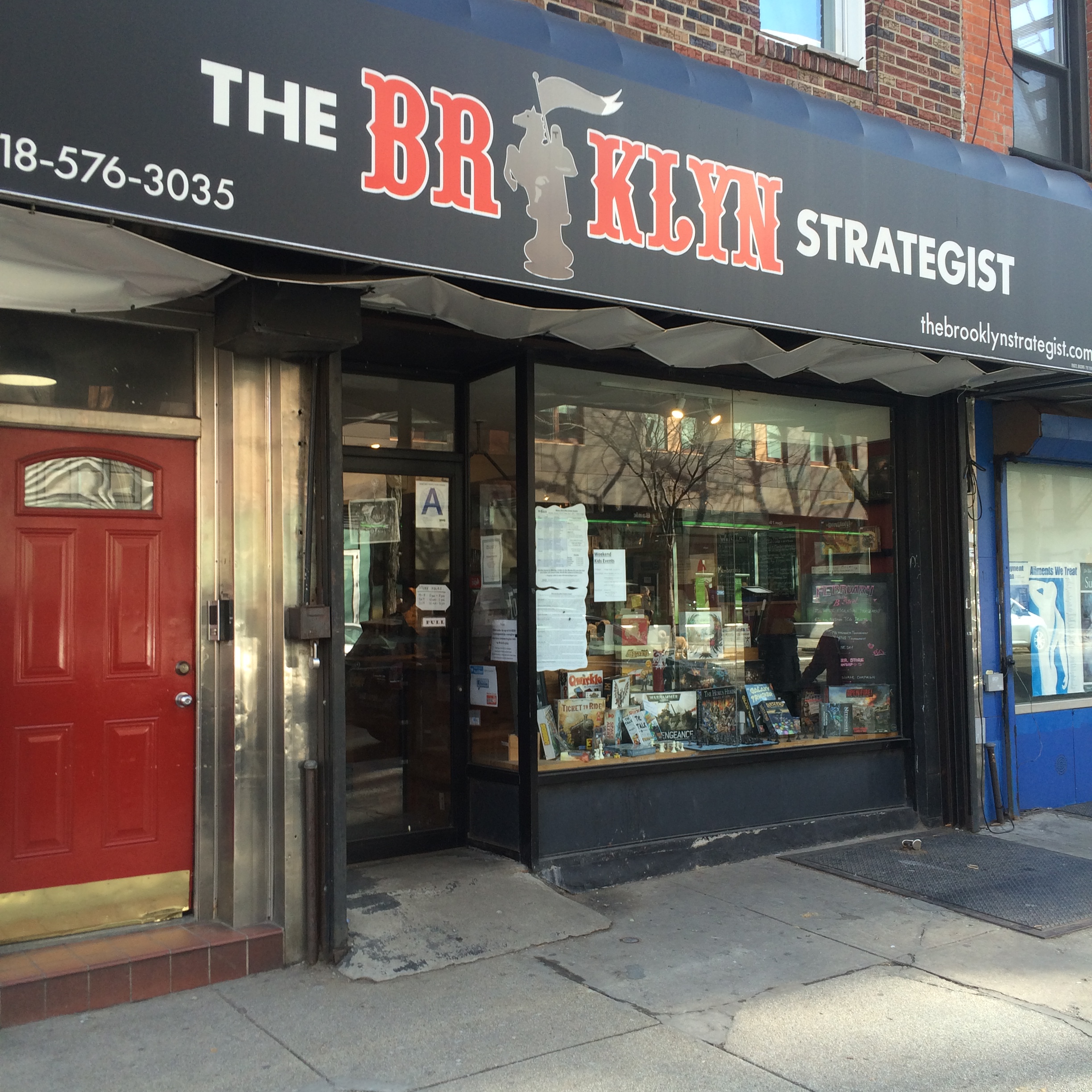
The Brooklyn Strategist

333 Court Street, Brooklyn, NY. 718-576-3035

The Brooklyn Strategist has an enormous line-up of overlapping events all day from 11am to 11pm. Board game, miniature games and painting, and RPG games will run throughout the day in two large storefront rooms of tables plus the shop’s outdoor garden space (weather permitting). Many of the boardgames will be run by the designers themselves, and the miniatures gaming will range from sci-fi and fantasy to historical eras from ancients to World War II. Special discounts are also available for the day from the store’s big inventory of games, miniatures and supplies, and the usual selection of delicious snacks and drinks will be available at their in house cafe.

Geekerylogo

The Geekery HQ

42-11 Broadway, Astoria, NY. 718-606-2853

This Queens gaming outpost will be open all day with a big slate of opportunities to take home gaming loot. Playing, hosting or winning games throughout the day earn participants points toward a ton of limited edition and promotional games. A raffle for the non-profit organization Kaboom! will also allow players to support children’s playgrounds while spending the day at the tabletop.

Logo Footer

The Uncommons

230 Thompson Street, New York, NY. 646-543-9215

Located in Greenwich Village just South of Washington Square Park, The Uncommons is the go-to board game cafe in Manhattan. Tabletop Day events will run from 2pm til 11:30pm, and it’s the perfect casual gaming spot with a collection of hundreds of board and card games for play and sale. There’s also a super solid selection of coffee, craft beers and snacks to keep your gaming fueled all day long.

297267_218004031582457_3582221_n

Twenty Sided Store

362 Grand Street, Brooklyn, NY. 718-963-1578

Williamsburg’s premier gaming store will be running games from noon to 9pm with hourly raffles for give-aways. Every game will be game-mastered by experienced players, making the event perfect for new and veteran players. People should RSVP for the event to attend and get instantly signed up for the day’s drawings of exclusive stuff.
A Place To Play: The Brooklyn Strategist

IMG_7499

The Brooklyn Strategist was opened several years ago by Dr. Jon Freeman, a clinical psychologist, neuroscience researcher and life-long game fan. Situated along the main drag of Court Street in Carroll Gardens, Brooklyn, has quickly grown to be a go-to gaming space for the Brownstone Brooklyn crowds of kids, families and adults.

IMG_7503

Board games, card games and gaming accessories line the walls

The original storefront space of hardwood floors and exposed-brick walls holds a number of tables (including a stunning Sultan custom table from Geek Chic), shelves of games and accessories for sale, and a small coffee and snacks bar. In the spring of 2015, the store doubled in size next door. The new space added about a dozen more tables to accommodate the expanding children and adult programs, tournament events and growing miniatures gaming community.

The core of The Brooklyn Strategist is in its after school programming, and a packed regular schedule of events is also offered every day and night of the week. Magic: The Gathering card games are featured Mondays, Wednesdays and Fridays. Mondays also showcase ongoing Star Wars X-Wing play, and other X-Wing events are held periodically with hosting by the NYC X-Wing group. Scrabble and chess take over Tuesday nights, and opportunities abound for Dungeons & Dragons and other RPG games Wednesdays and Saturdays. Hundreds of games are on hand to pull off the shelf to play.

Paying your way at The Brooklyn Strategist is a great deal with a $10 walk-in fee, individual memberships at $25 per month, couples at $45 per month and family packages at $60 per month. Each level of membership comes with a package of discounts and perks which encourages a solid community to fill the space all week long.

IMG_7502

The expanded miniatures gaming selection includes Flames of War, Games Workshop, Star Wars X-Wing, Battle Foam cases, paints and other popular lines

This past weekend I had the opportunity to sit down with Colt Johnson who has worked hard for a year to expand the shop’s interest in miniatures gaming. Johnson said the miniatures scene is focusing right now on the “five food groups: Malifaux, Infinity, Warmachine, Games Workshop and Flames of War.” Over his time working at the store, the miniatures scene has grown from maybe a dozen players on a weekend afternoon to 40 to 50 packing the tables on a busy day. Organized miniatures tournaments, events and pick-up games rage on the tabletop battlefields, and players new to the hobby can drop in and whet their appetites using beautifully painted 28mm loaner models on hand in display cases throughout the store.

IMG_7504

Miniatures gaming and painting gears up on a recent Saturday

A Warhammer 40K escalation league just kicked off with nearly 40 players signed up to play over the coming months. On the day I was there, 40K was very much in the air. A group of players from Staten Island were settling into their first games on some beautiful tables packed with terrain. One table over, a young girl who recently hosted a birthday party for 15 other girls at the store sat painting up her latest plastic goodies from Games Workshop. As the dice rolled, a phone call came in from someone who had just moved to the city and was looking to play some 40K.

Sci-fi and fantasy miniatures gaming clearly has a big following at the The Brooklyn Strategist, but historical gaming is newly on the rise. The popular World War II 15mm game Flames of War is a recent addition to the store’s minis mix, and this past weekend also presented a demo game of the 15mm Cold War-themed Team Yankee. WWII at 28mm with Bolt Action and even some 18th-century Blackpowder gaming is also on the horizon.

While growing every aspect of miniatures gaming, Johnson is hoping to push into even more historical gaming as both a hobby and way to create excitement for local kids and adults around learning about history through gaming and modelling. No matter the game, period, theme or level of experience, everyone who finds their way to the tables at The Brooklyn Strategist will find themselves in the right place.

The Brooklyn Strategist is located at 333 Court Street in Brooklyn, NY 11231 (a short walk from the F/G train at Carroll Street). Contact them at 718-576-3035 or check them out on their website or Facebook page. For news on the miniatures scene at the shop, check out their separate wargaming Facebook page.

A Place To Play: Nu Brand Gaming

image

Tucked away on a residential side street in Sunset Park, Brooklyn is an inviting tabletop miniatures players paradise. Located in a former chiropractor’s office decked out in knotty pine paneling, wall to wall carpeting and an assortment of Americana and Wild West decor, Nu Brand Gaming opened in 2015 and is one of the newest and best gamer play spaces in the city.

image

One of the many racks of terrain throughout the space

Nu Brand is operated by Ade Sanya, the resident owner of the building and son of the doctor who formerly served patients in the rooms where dice are now rolled and minis are pushed on tabletop battlefields.  With his family living upstairs, Ade has spent the past year creating an incredibly comfortable and inviting space for gamers focused on historic, fantasy and sci-fi miniatures. His skills as a carpenter and set builder are evident in the sturdy tables and racks of terrain found in the half-dozen well-lit rooms which radiate off the central hallway.

image

Hobby room with supplies and tools to lend

A small hobby room sits at the back of the building where tools and supplies are available for use by members and drop-ins who come to spend time modelling at one of the many comfortable work places throughout the rooms. A small galley kitchen offers drinks, snacks and a refrigerator for visitors to store their own food. Secured storage lockers are also made available to members to store their gaming gear.

IMG_7465

 Miniatures painting in the back room

Membership runs $30 a month at Nu Brand, and a day rate of just $10 is available for people who come to just give the place a try or participate in one of the many growing number of events scheduled. Members can also take advantage of retail discounts with several suppliers Nu Brand is working with to bring product to the community. The space is generally open Wednesdays, Fridays and Saturdays.

IMG_7455

German Fallschirmjager and US Airborne troops clash in a Bolt Action game

IMG_7458

US Airborne assault a German tank in Bolt Action

IMG_7459

More Bolt Action gaming

My first visit to Nu Brand this past weekend found ten gamers playing in a day-long series of Bolt Action 28mm World War II games. Tables were gorgeous — from the towns of late-war Western France and the wintery ruins of an Eastern Front forest to an urban town fight and a clash on a Pacific Island. At the end of the day’s events, certificates were awarded for best painting and force lists, a raffle was held and announcements were made for the new monthly Brooklyn Bolt Action campaign kicking off at Nu Brand this month.

IMG_7462

One of the  Warmachine battles in action

IMG_7460

More War Machine gaming

As WWII battles raged in several rooms, other players were occupied with Warmachine and other fantasy games, and four hobbyists were camped out in the back painting away at their miniatures. A variety of games like Star Wars X-Wing, Beyond the Gates of Antares, Malifaux, Mage Wars and Warhammer 40K are played regularly at Nu Brand. Newbies and experts alike all find a spot at Nu Brand. No matter the game, the love of the craft and gaming in the hobby — no matter the era or theme — is evident with everyone who crowds the tables each week.

IMG_7450

Urban terrain set up on one of the many tables

IMG_7466

Modular tables allow for flexible game sizes

The hum of activity and welcoming environment was evident for regulars and newcomers alike at Nu Brand Gaming on my first visit. Aside from myself, two other members of Metropolitan Wargamers were along for the day and we were able to meet and play with a whole host of new people and veteran players who were connected to friends-of-friends throughout the New York City area. Like so many of us in the wide gaming community “keeping table top gaming alive” is the mission of Nu Brand Gaming, and this marvelous place to play is a fantastic new outpost to seize this objective.

Nu Brand Gaming is located at 194 31st Street in Brooklyn, NY 11232 (a short walk from the D/N/R train at 36th Street). Contact them at 646-696-4132 or check them out on their website or Facebook page.


News 12 Brooklyn Visits Metropolitan Wargamers

11209682_10206667634583904_3605183596875950904_n

I was fortunate to be elected as President of Metropolitan Wargamers in Brooklyn, NY a few months back, having been a visitor and then a member for much of the past ten years. Our club occupies a private basement space on a quiet residential street in the heart of historic Park Slope. Members have 24/7 access to the space, and the walls are lined with shelves holding all manner of miniatures and board games covering just about every scale and genre imaginable. We meet up to game practically every day of the week, and our weekends can see board games and miniatures scenarios playing out on our multiple tables, including several sand tables. The games we play can last ten minutes to ten months. Our membership spans a large age group of early 20s to mid-70s, and we hail from a wide variety of backgrounds and interests. What our membership has shared in over three decades of existence is a passion for gaming, and Metropolitan Wargamers continues to be one of the premier gaming spaces in New York City.
Recently, we were visited by a News 12 Brooklyn reporter who captured just a little bit of the flavor of our corner of the New York City gaming universe.

If you’re interested in joining our group, please register at our NYC Wargamers Yahoo group, introduce yourself and come by to play a game.

NewMWGLogo

The Ratzer Maps At The Brooklyn Historical Society

IMG_5425

Now in its final weeks at the Brooklyn Historical Society, the tiny second floor exhibition Unlocking Two Revolutionary War Maps: The Ratzer Maps at BHS showcases two incredibly important maps of the American War of Independence and the 1776 Battle of Long Island in particular. Alternately known as the Battle of New York and the now-popular Battle of Brooklyn, the Battle of Long Island was the first of the new nation after announcing its independence on July 4, 1776 and the largest of the entire war. For anyone with an interest in the American Revolution or 18th-century New York history, these maps unlock a close-up view of the ground fought over between the British Empire and the upstart Colonials nearly 240 years ago.

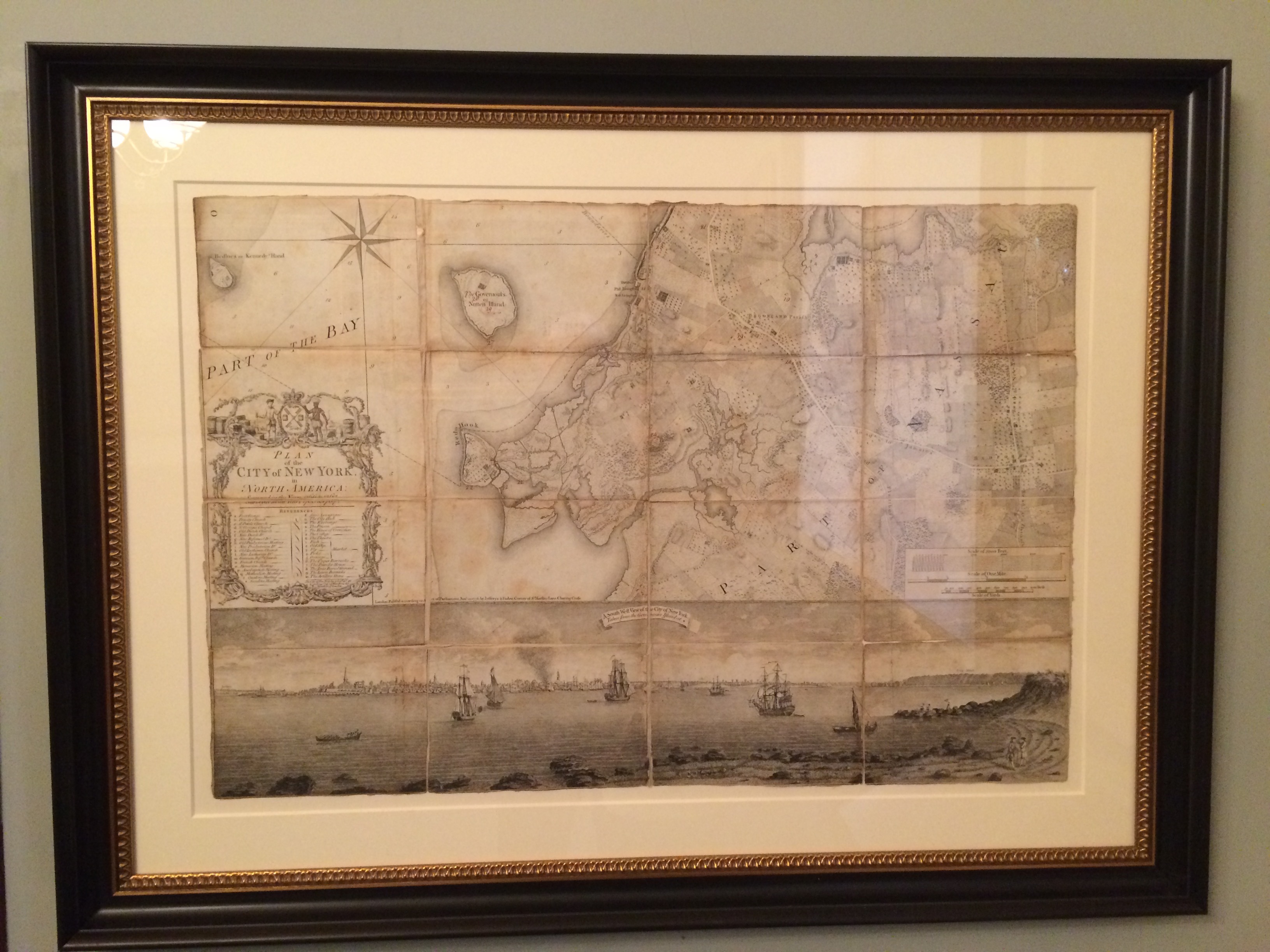
IMG_5426The “Percy Map” used during the Battle of Brooklyn in 1776 (left) and the restored 1770 “Ratzer Map” (right) at the Brooklyn Historical Society

Drawn by British cartographer Bernard Ratzer in 1766-1767, the Ratzer Map is one of the seminal documents of early New York. The BHS copy of the full 1770 edition of the Ratzer Map is only one of four in known existence and showcases an early snapshot of Manhattan and nearby Brooklyn in their early days where farms and rural roads still dominated the landscape. The smaller map on display, showing only the lower portion of the Ratzer Map, was carried by British General Hugh Percy during the Battle of Long Island in August 1776. The Percy Map is now co-owned by the BHS and nearby Green-Wood Cemetery, the high ground for much of the battle, and was first put on public view in the summer on 2014 at the cemetery. The current exhibit of these maps at the BHS after a restoration of the full Ratzer map in 2011 is a wonder of 18th-century map making and 21st-century preservation.

schecterbfnyBarnet Schecter’s classic “The Battle For New York” from 2002

The exhibit features text from BHS President Deborah Schwartz and historian Barnet Schecter whose compellingly-detailed The Battle For New York: The City At the Heart Of The American Revolution has become the standard narrative of the battle. Additionally, the BHS has produced a free educational resource entitled Exploring Pre-Revolutionary New York: The Ratzer Map which digs into much of the historical detail found in the map including panoramic views of the shoreline and major landmarks of the era.

History can feel so large and abstract, buried in long ago events which are difficult to square with the present day. The Ratzer Maps at the BHS bring history remarkably into the present and allow a modern viewer to trace pivotal events along lines carefully set down on paper and battlefields more than two centuries ago.

New Game Weekend: King of New York

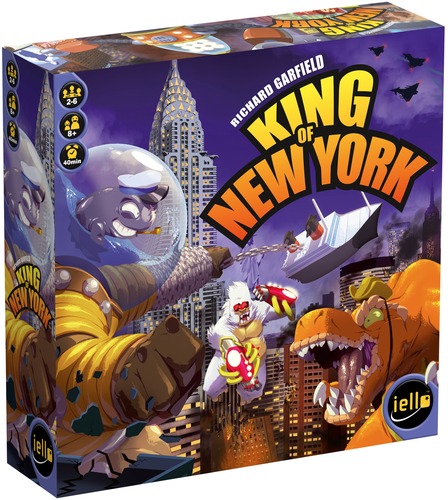
KONYbox

As the blog states, I’m a New Yorker (a Brooklynite to be exact), so playing a game based in my city of residence is always a plus. Prancing around a game board depicting the five boroughs as a towering, cartoonish monster with a nasty temper is even better. And so, King of New York hits the sweet spot for me as a gamer and occasionally cranky denizen of the city that never sleeps.

KONYmonsters

Sample monsters from King of New York

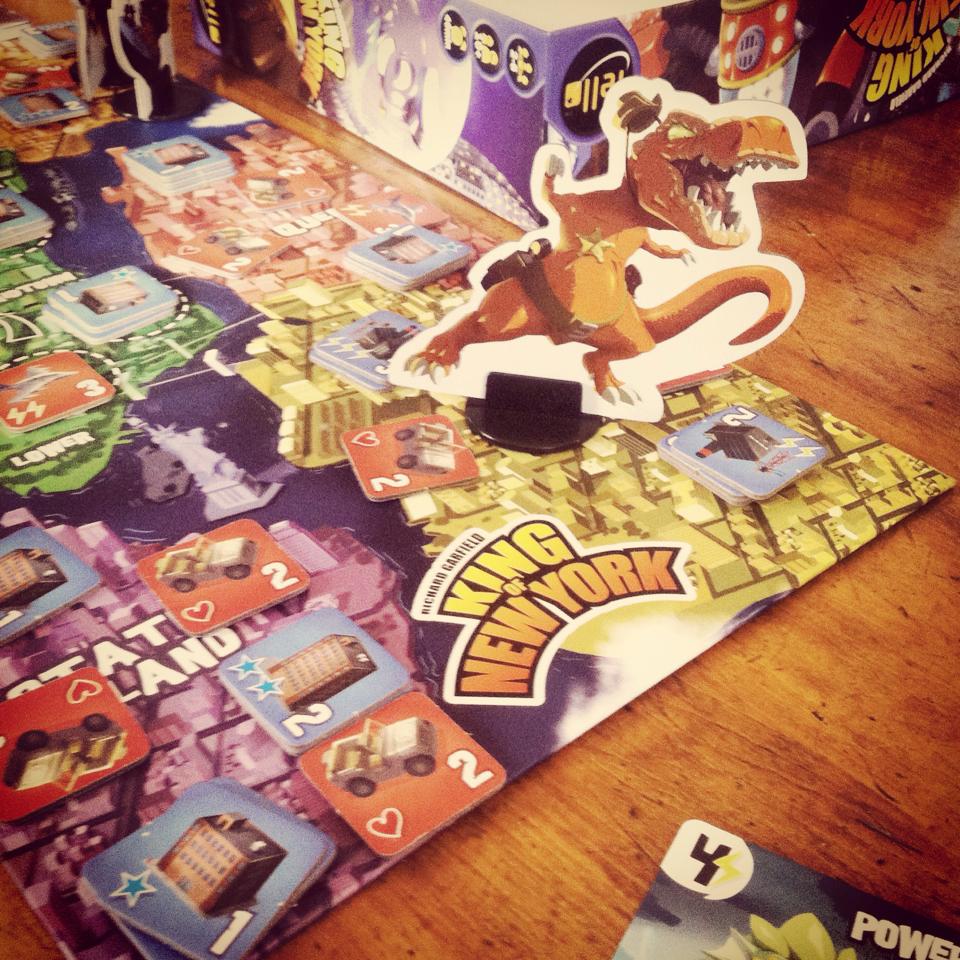
Released late in 2014 by IELLO Games, KONY is a follow-up standalone game to the popular King of Tokyo from 2011. KONY expands on KOT but it is not an expansion but a largely different game based on a similar premise and set of dice and card mechanics. Each of the 2-6 players chooses to be a gargantuan monster represented by a cardboard stand up figure and a scoring card. The monsters begin the game in one of the four outer boroughs with no more than two monsters allowed per borough. Within each borough are placed three stacks of three cardboard tiles each depicting buildings on one side and military units (jeeps, tanks and jet planes) on the reverse.

KONYcards

Sample cards from King of New York

A new set of six special dice are rolled by each player on their turn with faces for healing, attacks on other monsters, attacks on buildings, military attacks on monsters, energy cubes and victory point stars. Players roll the dice up to three times, keeping those dice they wish on each roll and re-rolling the rest. With the resulting dice, monsters resolve a number of actions. Buildings may be wrecked to earn healing points, victory points or energy cubes to purchase cards. Destroyed buildings flip over to reveal jeeps, tanks or jets which may attack other monsters in the same borough or across the board. Accumulated cubes are used to buy cards to provide permanent or one-time effects on monsters. Regular attacks take swipes at the other monsters on the board or the current “King of New York” romping northward through Manhattan. Monsters occupying Manhattan can remain on the island and earn victory points and energy cubes each turn or jump out to be replaced by an attacking monster. The first monster to earn 20 victory points wins the game to be crowned King of New York.

KONYgame

A recent game of King of New York

There’s a lot more going on in KONY than its predecessor. New dice and the building and military unit chips add options and flavor to play. Two new special cards — Super Star and Statue of Liberty — add extra mechanics to the game as cards earned through dice rolls and then swiped by other players who also roll specific results on subsequent turns. The rest of the cards can be a bit overly wordy at times yet they pump up the interest by utilizing a lot of familiar New York landmarks like Columbia University, the Unisphere in Queens, Carnegie Hall, the Holland Tunnel, the Brooklyn Bridge, the Empire State Building, Coney Island in Brooklyn and the infamous New York City Subway. Even with the new additions, KONY plays fast and fun with all ages.

If you’re a fan of King of Tokyo, giant monster films like the Godzilla series and board games set in New York City, King of New York is a towering success.

Battle of Brooklyn Commemoration at Green-Wood Cemetery

bobengraving

Buried and hidden amid the 21st-century streets and neighborhoods of New York City is an enormous trove of history of the nation’s formative years and the battles waged here during the American War of Independence.

I live on a former battleground where British and American troops fought the first and largest battle of the Revolution, the Battle of Brooklyn. Here in late August of 1776, just weeks after the Declaration of Independence was signed, some 35,000 British troops landed to face 10,000 Americans seeking to defend their new country. The series of engagements became a running retreat for General George Washington to the edge of Long island, over the East River, north through Manhattan and then on to safety in New Jersey and Pennsylvania.

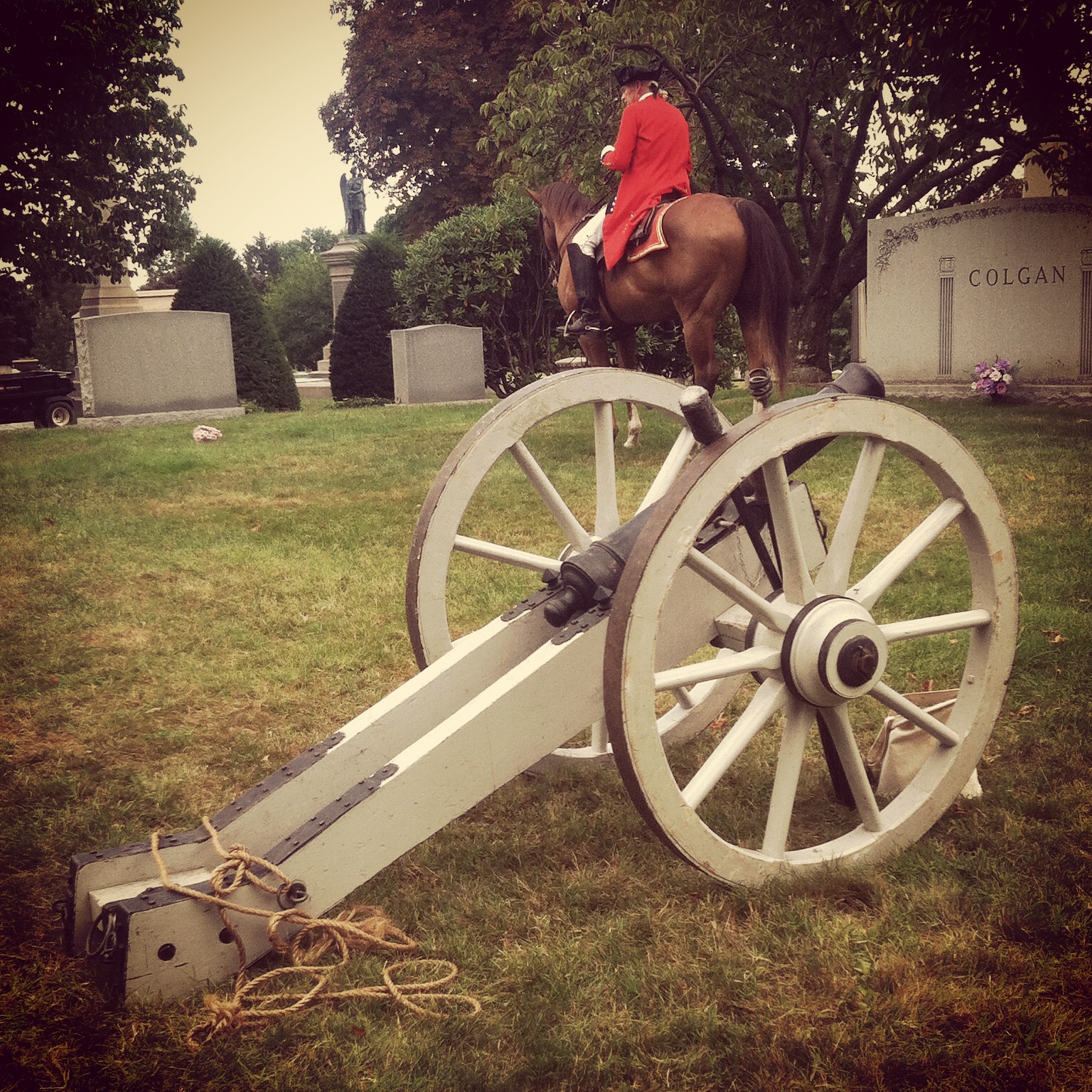
At historic Green-Wood Cemetery near my home, the Battle of Brooklyn’s 238th anniversary was commemorated this past weekend with reenactors, period weapons demonstrations, military music, a parade featuring more than eighty regimental flags and speeches by various local dignitaries. Also on display was the “Percy Map,” a contemporary map of the American positions during the battle made by British General Hugh Earl Percy. The map was recently acquired through a joint partnership between Green-Wood and the Brooklyn Historic Society and will be on display again beginning this week at the society’s exhibit “Unlocking Two Revolutionary War Era Maps.”

schecterbfny

Various local dignitaries such as Borough President Eric Adams and historian Barnet Schecter spoke during the official ceremonies held near the monument to the Battle of Brooklyn at Battle Hill in the cemetery this weekend. Schecter’s seminal 2002 book, The Battle For New York: The City At The Heart Of The American Revolution, places New York at the center of the War of Independence and grandly documents the events leading up to the Battle of Long Island and its aftermath. Using extensive primary written sources from the period, Schecter shows how the British obsession with maintaining control of New York drained precious resources from other fronts in the war and strengthened the newly-born nation’s resistance to their former English rulers. Schecter’s book documents that British General William Howe’s failure to follow-up his victories  during the August and September 1776 campaign allowed Washington’s army to retrench and prolong the war another seven years until eventual American victory.

Schecter’s book is a must-read for those of us interested in the story which unfolded here in the early days of the new American republic’s fight against overwhelming odds with the world’s most dominant military power at the time. Like the hundreds of other people in attendance at Green-Wood Cemetery, experiencing the place where the United States fought its first formative battle brought this history alive again on a sunny afternoon in Brooklyn, New York.

IMG_4128A Revolutionary War era encampment stood near the entrance to Green-Wood Cemetary

IMG_4126A variety of reenactors spoke to attendees about the soldier’s experience during the American War of Independence

IMG_4127Firing demonstrations of artillery pieces and mounted British officer reenactors helped bring the Revolutionary War period to life

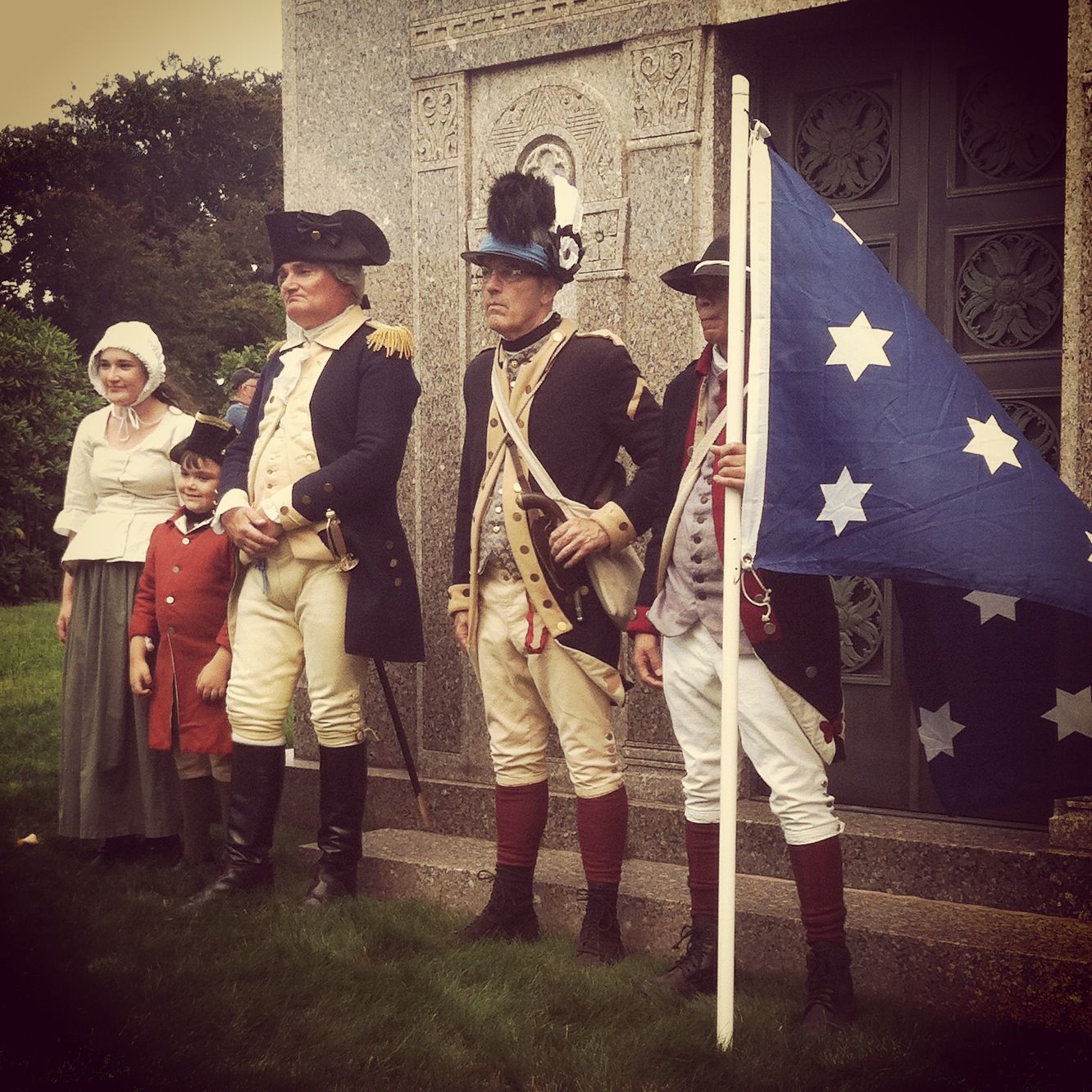
IMG_4130Reenactors portraying General George Washington and his staff were present

IMG_4129The United States Marine Academy Regimental Band provided musical accompaniment for the ceremonies

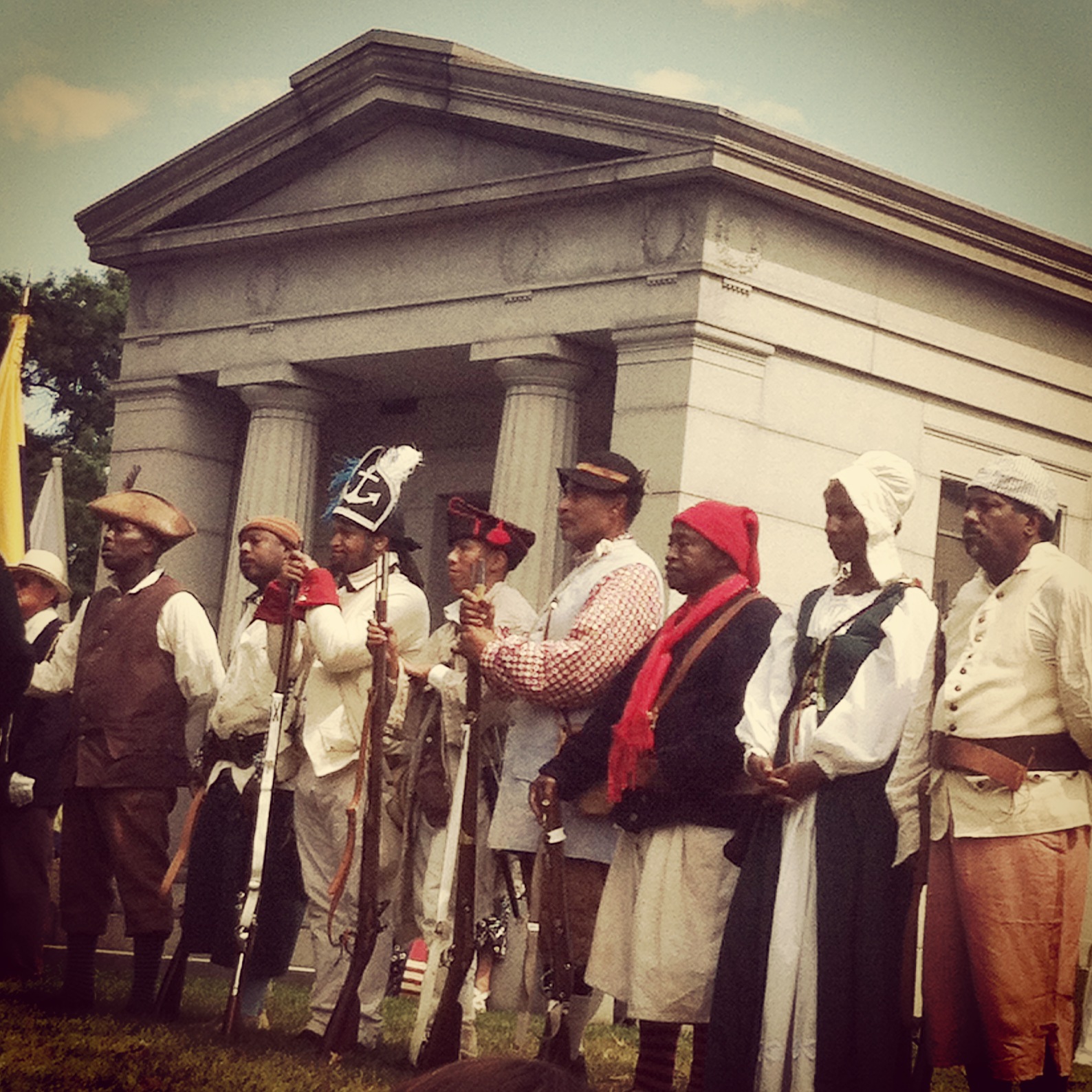
IMG_4131Reenactors were recognized for their depiction of African-American contributions to the War of Independence

New York Harbor Defense History and Civil War Weekend at Governors Island

CastlewilliamsgiShuttling back and forth between Brooklyn and Manhattan every day on the New York City subway system, it’s sometimes easy to forget I live and work in area surrounded by coasts. This past weekend I hopped a free mid-morning ferry from Brooklyn to Governors Island National Monument for some immersion in NYC’s coastal defense history and annual Civil War Weekend sponsored by the National Park Service.

New York Harbor Defense History

From the beginning of European settlement of New Amsterdam on the island of Manhattan by the Dutch in the early 1600s, the importance of New York Harbor as a gateway to a system of  trade and military defense was clear. The Dutch colony’s main defense at Fort Amsterdam eventually ceded to the British who maintained fortifications on the spot until after the American Revolution. In the post-Revolution centuries, the defense of New York Harbor remained a focus of the US military against foreign and domestic would-be aggressors.

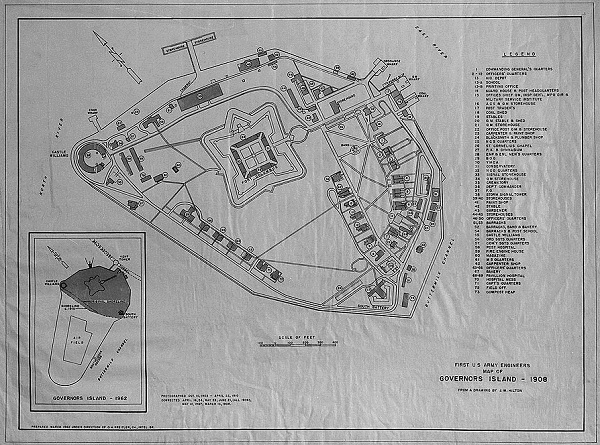
Governorsislandplan1908 US Army Corps of Engineers map of Governors Island with Fort Jay (center) and Castle Williams (left)

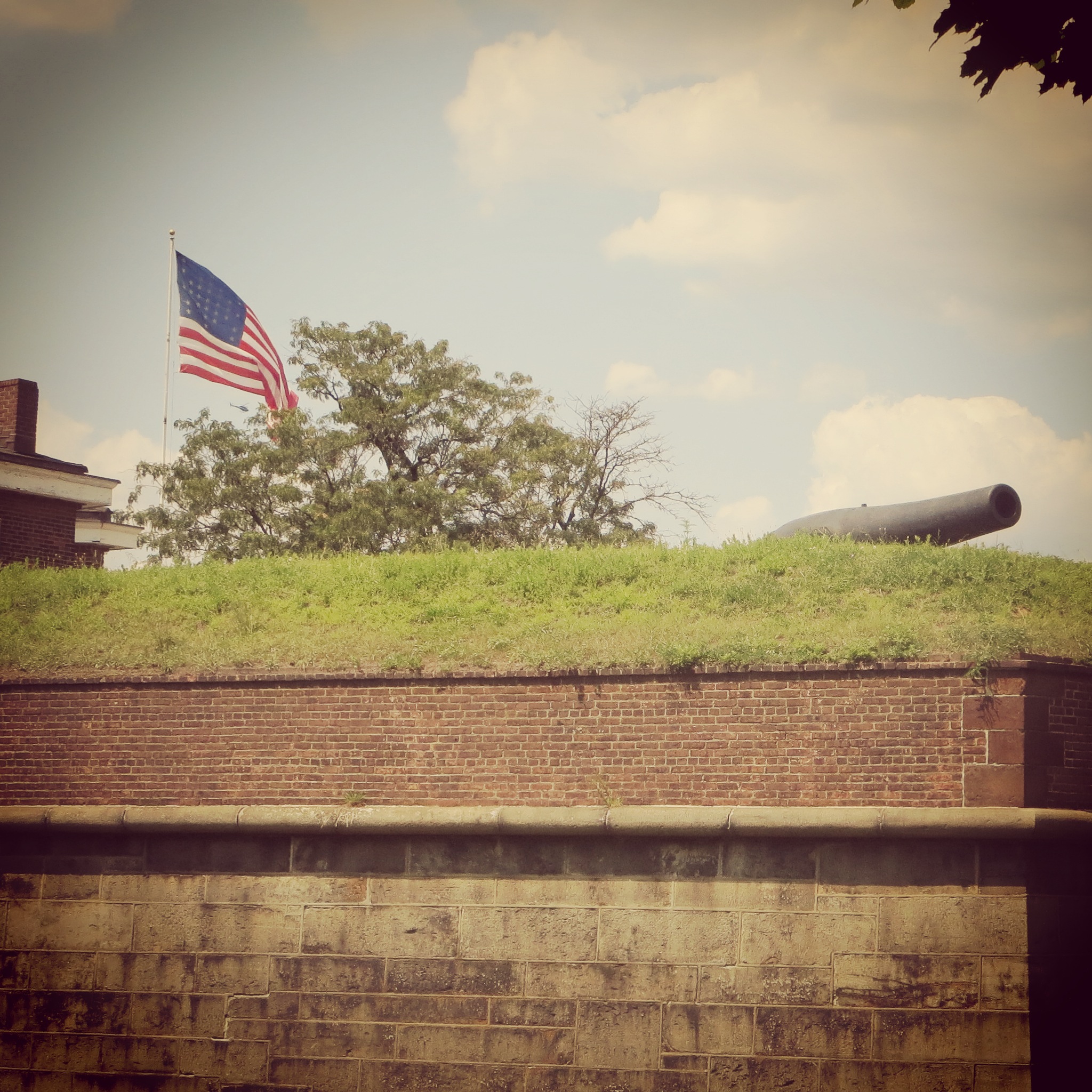
Governors Island offers a good historic overview of the development of New York’s coastal defense works from the 18th through 19th centuries. Fort Jay dates from the late 18th-century when American colonists and British troops exchanged control of the island with various earlier wood and earth forts. The existing facility is a classic European-style star fort with masonry and earthen walls is typical of the design built all over the world from the 15th through 19th centuries. Entering through elaborate gates, a visitor walks into a peacefully idyllic central courtyard surrounded by Greek Revival colonnaded buildings with welcoming porches. Several cast iron Civil War era 10 and 15 inch Rodman cannons survive on the fort’s walls, pointing toward the harbor.

IMG_4073Guns overlook New York Harbor from Fort Jay

The later Castle Williams was built between 1807 and 1811 as a fortification just ahead of the War of 1812. The state-of-the art, circular casemate sandstone pile was designed by Col. Jonathan Williams, at the time the chief of the US Army Corps of Engineers. The first fort designed by an American engineer, Castle Williams presents three tiers of gun ports from which a nearly 360-degree field of defensive fire across the harbor.

IMG_4074The imposing walls of Castle Williams

Together with Fort Wadsworth on Staten Island, Fort Wood (today the base of the Statue of Liberty on Liberty Island), Castle Clinton at the southern tip of Manhattan and Fort Gibson at today’s Ellis Island, Fort Jay and Castle Williams served as part of the interlacing network of forts protecting New York Harbor through the 19th-century. Both Fort Jay and Castle Williams would go on to other roles as the site of a Confederate prisoner of war camp during the Civil War, a US Army prison in the middle of the 20th-century and the site of a large US Coast Guard base until closing in 1996. Gone is the military use of Governors Island today, but the spaces still serve the public as place to walk amid important and usually unseen history of New York.

Civil War Weekend

Each August the National Park Service presents the only Civil War encampment of reenactors in New York City. With about a dozen tents in a small camp and more than twenty staff and volunteer reenanctors, the weekend’s events gives New Yorkers an up-close glimpse of a solder’s life during the Civil War.

IMG_4068Reenactors encamped at Governors Island

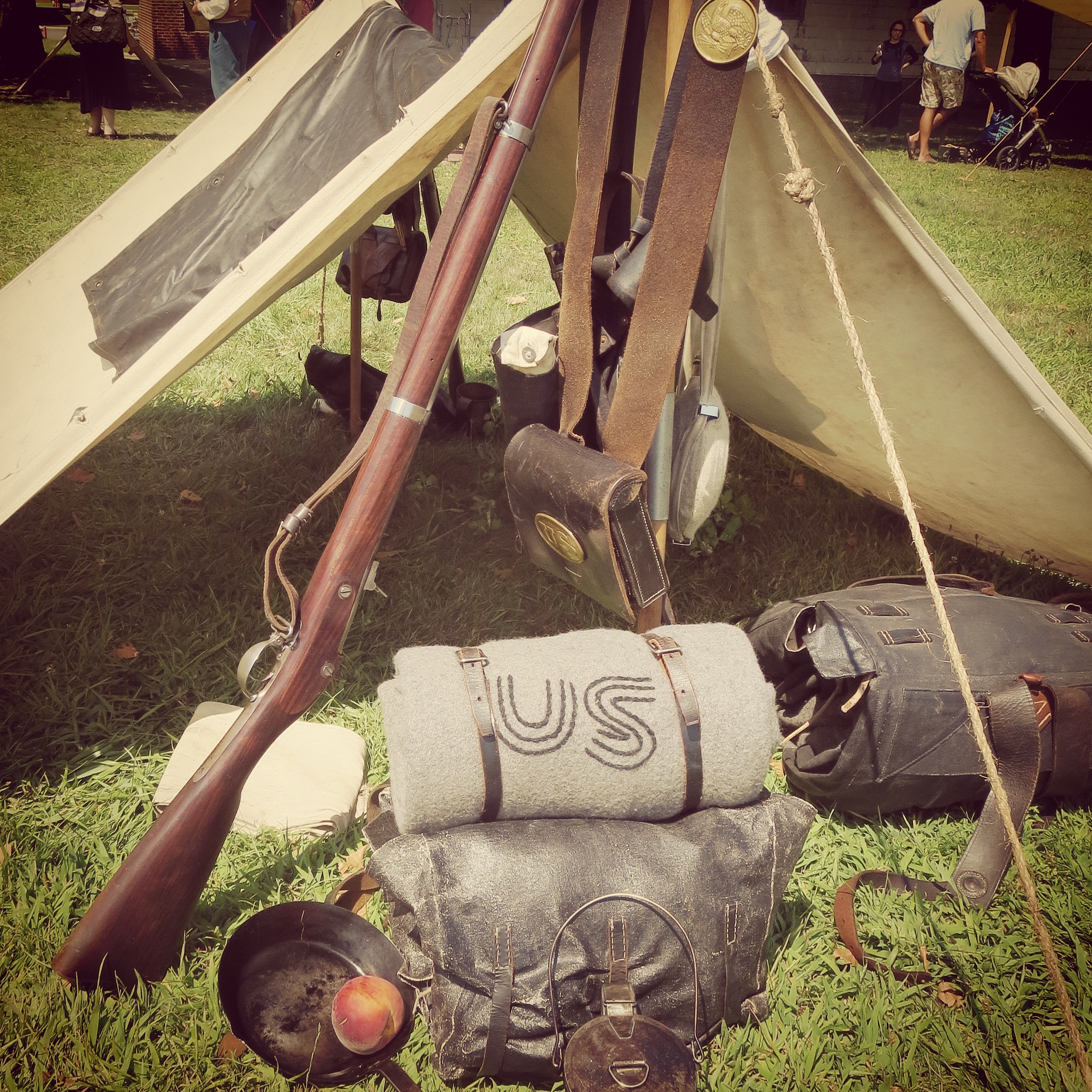
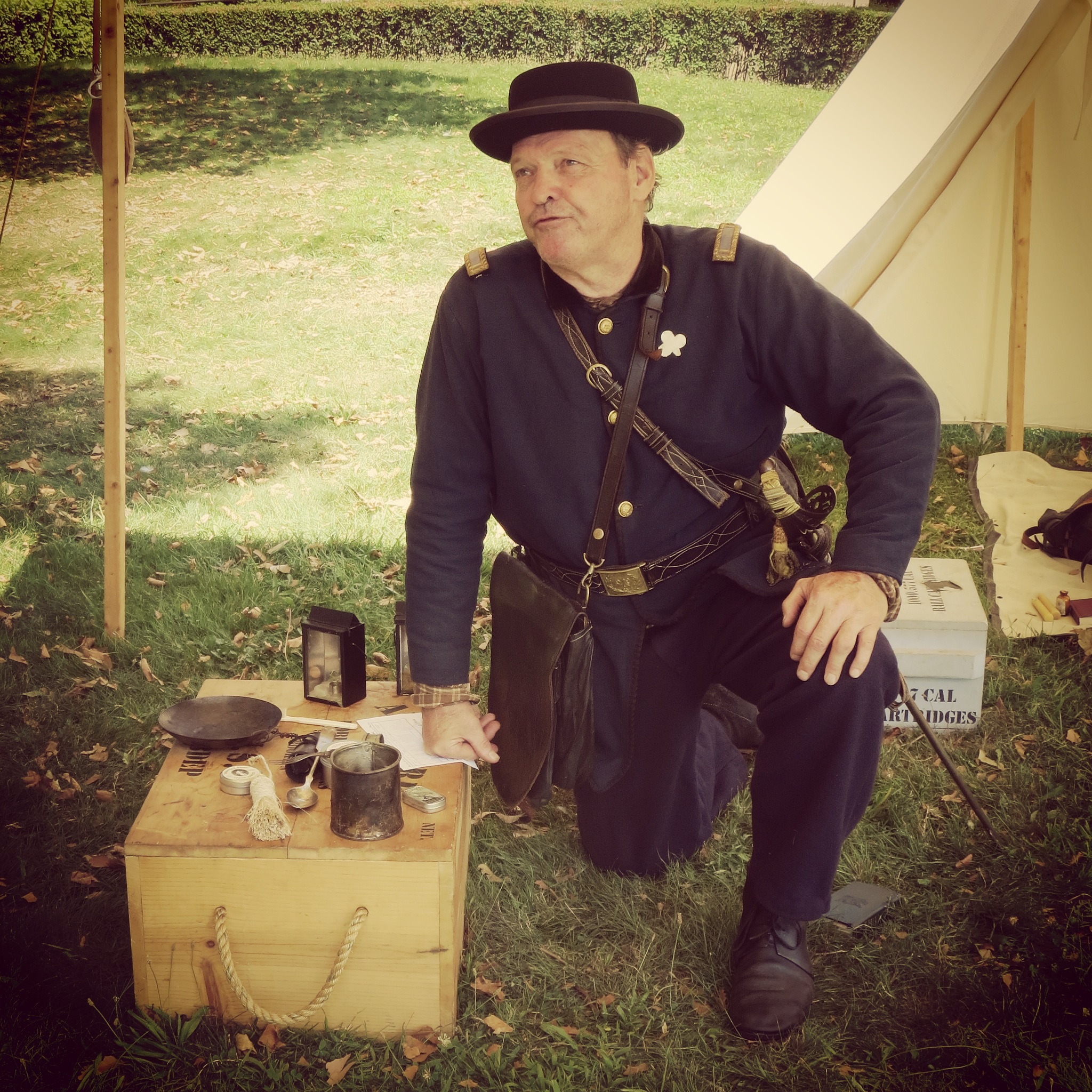
IMG_4076A Civil War era soldier’s equipment sits at the ready in camp

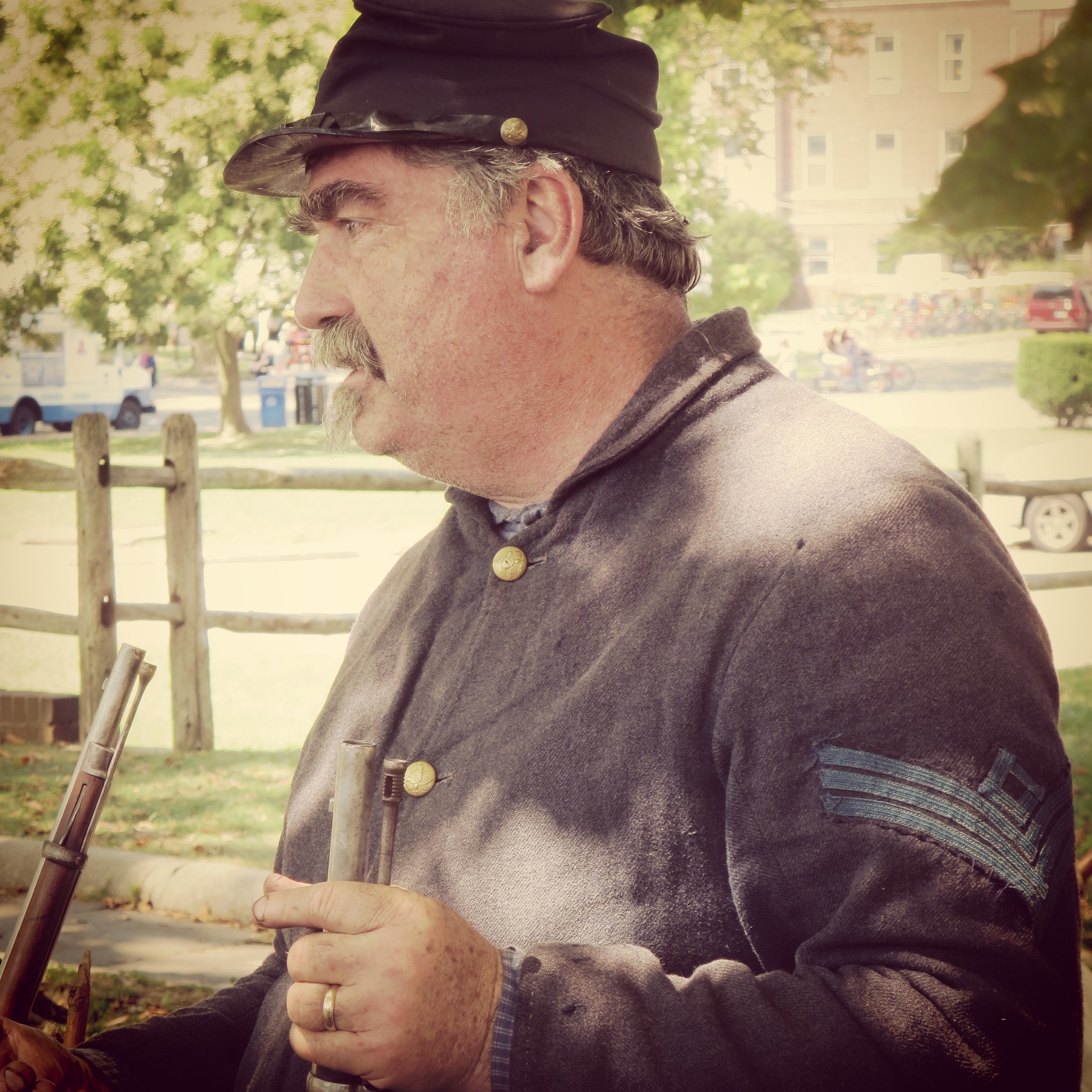
IMG_4072A reenactor discusses a Civil War soldier’s life with visitors to Governors Island

IMG_4075An officer reenactor speaks with with visitors to Governors Island

Aside from an opportunity to speak with reenactors and view some typical soldier’s equipment and life in camp, demonstrations of canon firing, drilling and infantry weapons are presented. For the less militarily-minded, period music was also offered in the comfort of shaded grass and rocking chairs inside the walls of Fort Jay.

IMG_4069Officer inspection of the troops at Governors Island

IMG_4070Canon firing demonstration during Civil war Weekend at Governors Island

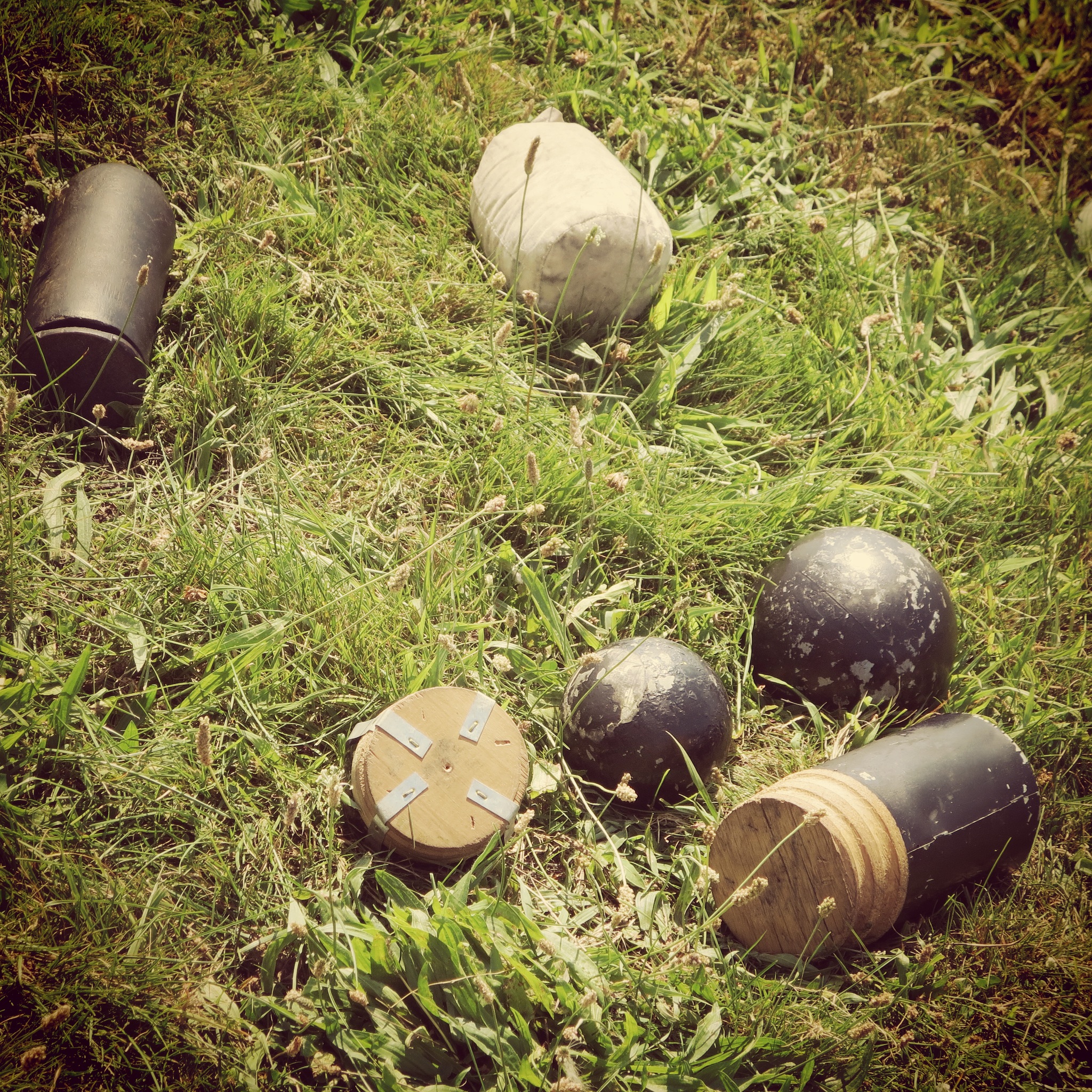
IMG_4071Civil War era cannon shot, canister and ordinance loads

Although the use of Governors Island has primarily been military for several centuries, visiting the island today serves up multiple experiences. While the historic forts and sites under the governance of the National Park Service occupy approximately 22 acres to the north, the remaining 150 acres is now overseen by the Trust for Governors Island. The Trust has worked to create an oasis of recreational areas for picnicking, play, bike riding, strolling and relaxing among historic buildings, allays of trees, wide grassy lawns, outdoor sculpture and newly designed landscapes. Whether you are a visitor looking for a step back into American history or just unwind from the city’s usual hustle, Governors Island can give a whole new perspective on New York at the center of the harbor and world.