Micro Armour: Getting Started

GHQlogo

After years of wargaming World War II with Flames of War, I’ve been looking for a change of pace for the period. I’ve recently caught up on the vast majority of my modelling projects, including fairly extensive American, British and German Late War forces as well as a bunch of terrain. I’ve also been interested in playing larger battles, something that becomes a bit unwieldy with FOW. In looking for a way to expand my WWII gaming experience, I’ve been weighing factors of scale, cost, storage and time. After a lot of thought, I’m going small and getting started with WWII in micro scale.

The standard in micro scale gaming is GHQ. Founded in the late 1960s and based just outside Minneapolis, Minnesota, GHQ manufactures an extensive line of pewter miniatures for WWII, Modern, Napoleonic, American Civil War and various naval eras. In the early 1990s, GHQ also began offering N and HO scale vehicles targeting model railroading enthusiasts. Along with their gaming models, the company has developed a number of rulesets and terrain-building supplies appropriate for various eras of combat at the micro scale level. For over 40 years GHQ’s models have been held in high regard by wargamers as well as the US military which uses the company’s products for training and planning excercises.

WWIIscales

World War II miniatures scale comparisons (from www.historicalwargames.net)

The 1/285th (6mm) scale of GHQ’s WWII models offers a number of differences and potential advantages to larger scales, such as 1/100th (15mm) FOW miniatures and 1/56 (28mm) models from the expanding Bolt Action game line from Warlord Games.

  • Scale: In 6mm micro scale, an entire infantry platoon can be represented with approximately 3-5 figures mounted to a small square or round base. An inch on the table approximates 100 yards on the battlefield. This allows for larger multi-company or battalion level games compared to smaller single company and platoon skirmish games at a 15mm or 28mm scales.
  • Cost: Wargaming at any scale is an investment, but micro scale allows for the depiction of large battles for a fraction of the cost of larger scales. The starter sets from GHQ provide around twenty tanks for $40, making individual armour models just a couple bucks each compared to the 15mm scale where tanks can run easily to triple that cost. Fielding an entire 6mm infantry and armor company might run just $10-20 while that same company at 15mm could run hundreds of dollars. And, since each micro scale tank represents a platoon and a platoon in FOW may run to maybe six tank models (or more), the game scales cheap and fast into grand scale engagements.
  • Storage: As the website says, I live in Brooklyn, NY, so storage is always an issue for my board games, cards games, miniatures, terrain and hobby supplies. I keep a lot of my miniatures at my local club, Metropolitan Wargamers, but I like having stuff around the apartment for when the gaming mood hits. At the micro scale level, dozens of tanks, infantry and vehicles can be carried in a shoulder bag or kept in a drawer. Compared to my FOW collection which sprawls over multiple bags and boxes, micro scale makes for some quick and easy game deployment just about anywhere.
  • Time: Painting micro scale takes a fraction of time compared to larger scales. A quick spray of white primer followed by a thinned color basecoat, a couple dots of detail, a wash and maybe a tiny decal is all that’s needed to get forces on the table and ready to game.
IMG_3211GHQ’s US Shermans vs. German Panzer IVs box set

IMG_3210GHQ’s US Armoured Infantry Command 1944 box set

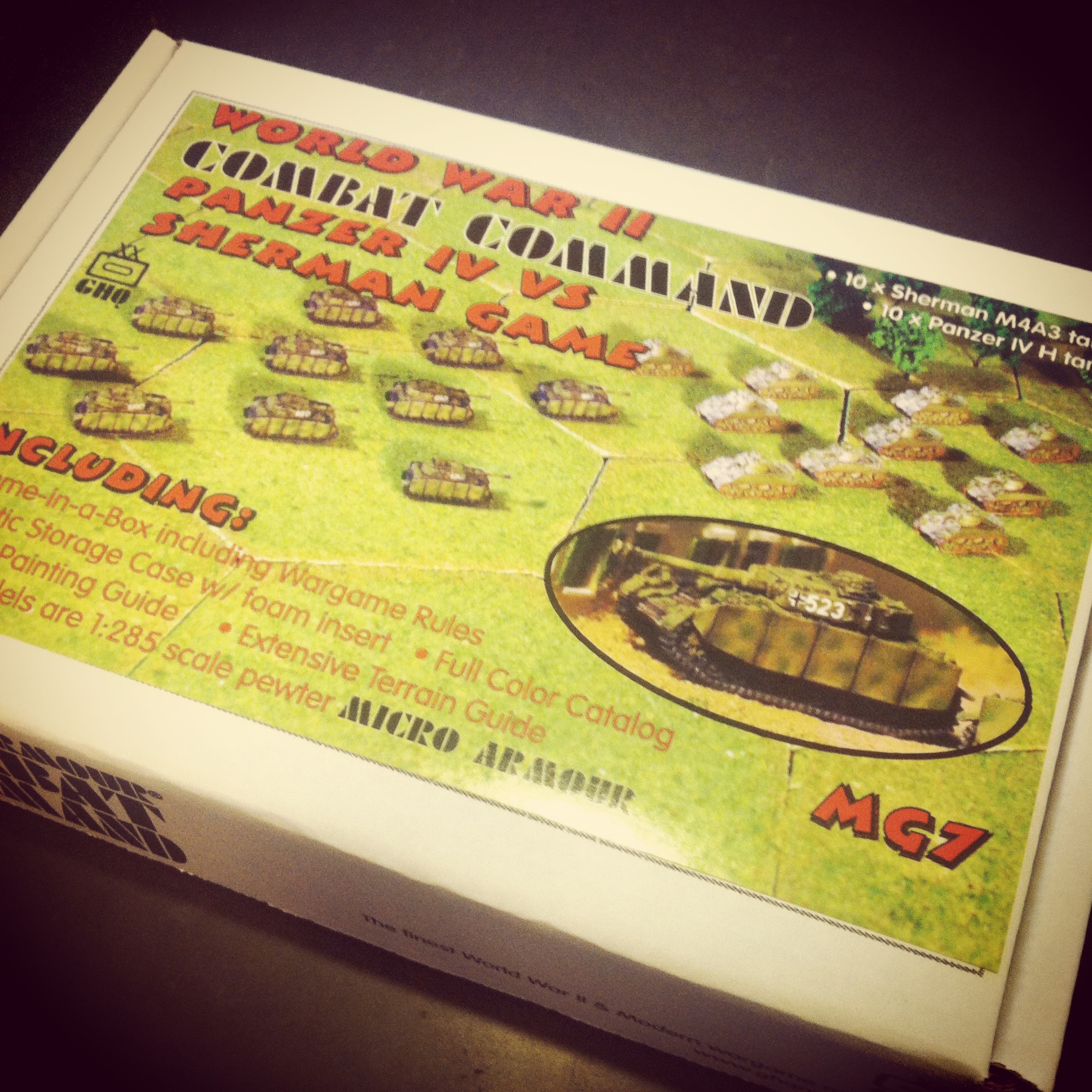
To get started at the micro scale, I ordered two sets from GHQ. The Shermans vs. Panzer IVs Battle Box comes with ten tanks per side, a storage case and a set of rules — everything needed to get a game started. To this, I added the US Armoured Infantry Command 1944 set with additional tanks, half-tracks, jeeps, armoured cars and a bunch of infantry. To get some Germans into action, I think I’ll be going for the German Kampfgruppe 1944 for a nice mix of infantry, transport, Marders and even some horse and wagon teams.

IMG_3214Assembly of my first GHQ micro armour sets

In well under less than an hour’s initial work, my first sets of micro armour glued up fast with some careful organization of parts and assembly with superglue and tweezers. Already I’m loving getting so many models ready for paint and then on to the table in no time at all. The saying is “go big or go home” but my new micro armour project looks like its already going to be a massive amount of fun in a very small package.

New Game Weekend: Shoot N’ Skedaddle

sns

One of my favorite parts of attending gaming conventions is playing scales, periods and scenarios I usually don’t game. Getting the chance to play in scenarios run by the authors of rules is also a big bonus opportunity to experience a game “straight from the horse’s mouth,” so to speak. This past weekend at Fall In! I had one of those rare sessions that hit all these marks, playing in an Old West 28mm skirmish game of Shoot N’ Skedaddle by Oscar Turner.

Since I was a kid, I’ve been a big fan of Westerns. Starting with re-runs of the old Lone Ranger TV show and radio serials, I graduated up through American Western classics like Red River and The Searchers to the Italian “Spaghetti Westerns” of Sergio Leone and Clint Eastwood. Over the years I’ve remained dedicated to the now-declining genre, and I’m an enormous fan of Eastwood’s later Unforgiven and Quentin Tarantino‘s Django Unchained

unforgiven

1992’s Academy Award-winning Unforgiven, produced, directed by and starring Clint Eastwood

Like a lot of American boys, my  interest in Western TV, radio and movies spilled over into my play time. I spent a lot of time gunfighting on my bedroom floor in the 1970s with Gabriel Lone Ranger dolls  and the earlier Marx Johnny West toys. I also had plenty of cheap dimestore plastic cowboys and indians, plus a pretty substantial collection of the cowboys and indians from Britains Deetail and a pile of Western-themed Playmobil toys.

gabriellr

1970s ad for Gabriel’s Lone Ranger toys

Despite all my interest in Westerns, gaming the genre never became my thing. TSR’s Boot Hill, released in 1975 just as Dungeons & Dragons was taking off, has been a popular RPG option for years. There are a number miniatures ruelsets for the Wild West, and 1992’s Desperado by Monday Knight Productions seems to be the standard I’ve seen played at conventions. So, with nearly zero experience with shoot-outs on the streets of dusty tabletop frontier towns, I was really impressed with my three hours playing through my first game of Shoot N’ Skedaddle this past weekend.

snsgameset

The Shoot N’ Skedadle cards, dice and equipment needed to play

 With a visually stellar town laid out with incredible laser-cut and plastic scenery, Oscar’s scenario presented a simple scenario of outlaws on the lam with lawmen in hot pursuit. In Shoot N’ Skedaddle, play begins with character cards dealt to players playing on either the Outlaw Gang or Lawmen Posse side. Main characters such as “Judge,”Doc” and “Bandit” team-up with neutral characters like “Thug,” “Cowboy,” “Townsperson” and “Thug.” Characters then draw primary and secondary weapons (if any) which can include anything from a deringer, knife or carbine to a gattling gun, buffalo gun or dynamite. There are 40 character and 72 weapons cards, making for tremedously fun variations in the player Gangs and Posses in Shoot N’ Skedaddle.

IMG_2418

The town set-up for Shoot N’ Skedaddle at Fall In!

After initial deployment according to the scenario, regular playing cards are drawn to randomly activate characters in turn. I really loved this thematically-appropriate mechanic, tying the iconic Old West card game into the play. On a turn, a player can perform a combination of movements and action. Special event cards are also randonly drawn for each side, allowing the resurrection of dead characters, the arrest of an outlaw or an extra character activation. With this simple framework, characters can perform a seemingly endless variety of feats including running, hiding, shooting, grabbing a mule by the reins, jumping between rooftops, crashing through windows, kicking in doors or starting a fist fight. Player imagination bordering on role-playing is really the only boundary to the game.

IMG_2419

Lawmen with guns blazin’ in Shoot N’ Skedaddle at Fall In!

To resolve actions, an incredibly elegant dice mechanic is used. Characters each come with key attributes — Strength, Agility, Scrap, Marksmanship and Guts — with each of these weighted with a D6, D8, D12 or D20. Success when using a particular attribute is resolved by rolling a 5 or better, no matter what the action and no matter what the die. For example, a poor shot would roll a D6 when firing their pistol while a more skilled character might roll a D12. In either case, the player would need to roll a 5 or better to succeed. Wounds, hiding in cover or other game conditions modify the dice downward, so that same crack shot with the D12 Marksmanship would roll a D8 when shooting at someone hiding behind a barrel.

IMG_2420

A local woman acting just a little suspicious in Shoot N’ Skedaddle at Fall In!

Shoot and Skedaddle’s wonderful card and dice structure puts the focus back on the fun on the table like any really great game should. Oscar offers his game as a free PDF ruleset or in a printed set of cards for $25 ($30 with a box). Check out his website at http://shootnskedaddle.blogspot.com/ for downloads, ordering info, development news and more pics and information. The basic rules contain scenarios and a campaign option for longer-term  storylines to be played. I can’t say I’m going to run out and invest in a dozen Western buildings and paint up a bunch of cowboys and local citizens, but if you’re a fan of Old West gaming, I highly recommend checking out Shoot N’ Skedaddle. It’s a bullseye.

Favorite Kickstarters of the Month (July 2013)

Kickstarter can be a weird, volatile environment. Some projects come and go with little fanfare while others soar into the stratosphere with backer support. There can be all manner of highs, lows and outright trouble for projects on their journey from idea to funding to delivery. That said, four of the projects I wrote about in June wound up successfully funded in the past month. The fifth, the seafaring game Admiral, was funded but the project was then suspended inexplicably with a day to go. No doubt there’s a story there, but for now, here are the projects I’ll be watching as we hit the first hot month of the summer in July.

Cthulhu Wars: Drawing on the Cthulhu Mythos of H.P. Lovecraft, this game is the big story in games on Kickstarter right now. With dozens of gorgeously grotesque miniatures and many planned expansions, this strategy board game turns the tables and allows the players to play as Lovecraft’s beastly horde seeking to control the surface of a ruined Earth. Many of the pledgers have bought in at the higher funding levels of $200-500+, no doubt attracted by not only the theme but the tons of extra maps, gaming pieces and figures rewards. The project is trending toward nearly $1 million in funding in its closing days, and the more than 3300 backers are delivering a built-in fan base of this classic horror genre already popular with gamers.

Seas of Iron: I’m not a big naval gaming fan, but I really like the looks of this very modest battleship wargame from Battle Bunker Games. The battleships are comprised of two-sided cards defining the sections of each ship where you deploy your crew and fire volleys at your opponent. When a section is destroyed, cards are flipped over to show that part of your ship aflame. The Kickstarter exclusives include the famed Yamato and Bismarck warships. Just $20 allows for a backer to get a full version of the game which allows enough flexibility for 1-on-1 or small fleet play with combined sets.

Devil Dogs and Dragons: I’ve invested in more than a few of the Anglo-Zulu War 28mm miniatures from Empress Miniatures. They make quality, spirited and detailed miniatures, so its great to see them expanding their Modern Combat line. There’s a lot of interest in gaming modern warfare right now, and the 28mm scale seems to be a clear favorite with small squad-level engagements in the dusty and hot embattled corners of the world. These 28mm figures fill out modern US Marine Corps and Chinese People’s Liberation Army options for deployment in the Asia-Pacific desert and jungle regions. With a bit more imagination, these guys will even find a home in various zombie, alien invasion or post-apocalyptic scenarios.

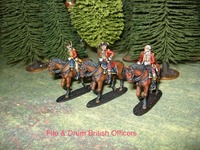
Fife & Drum American Revolution Range: Just in time for the 4th of July weekend, Fife & Drum Miniatures is also expanding their established line of miniatures. Sculpted in a large 30mm or 1/56 scale, these majestic figures offer incredible detail for the Colonial Period ranging from the Seven Years War to the American War of Independence. The Kickstarter campaign will help fund the company’s expansion into new British cavalry, Hessian, Highlander and French infantry offerings. At the $50 level, backers receive a special three-figure “Spirit of ’76” vignette, making this project perfect for any patriot and fan of the AWI period.

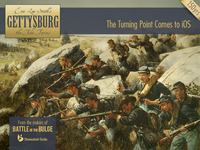
Gettysburg: The Tide Turns: Finally, and in keeping with the theme of American military history, I’m throwing in one video game offering to round out the list. The Battle of Gettysburg is celebrating its 150th anniversary this month, and so this timely iOS game for the iPad and iPhone looks to be a deal at just $10 to back the project. Developed by Shenandoah Studio, the makers of the previously Kickstarted Battle of the Bulge iOS game, this simulation looks to be a very promising 21st-century tribute to the strategy, tactics and heroics found on the famed Pennsylvania battlefield 150 years ago.

American Civil War: Perry Miniatures ACW in 28mm

About a year ago I got back into gaming the American Civil War.

My first miniatures wargaming experience back in the 1980s was with 15mm ACW played with the Fire & Fury rules. I wound up stepping away from gaming for the 1990s, but with the celebration of the 150th anniversary of Civil War and some ACW gaming with the Brother Against Brother rules at a convention I decided last year that now was the time to get back to the ACW.

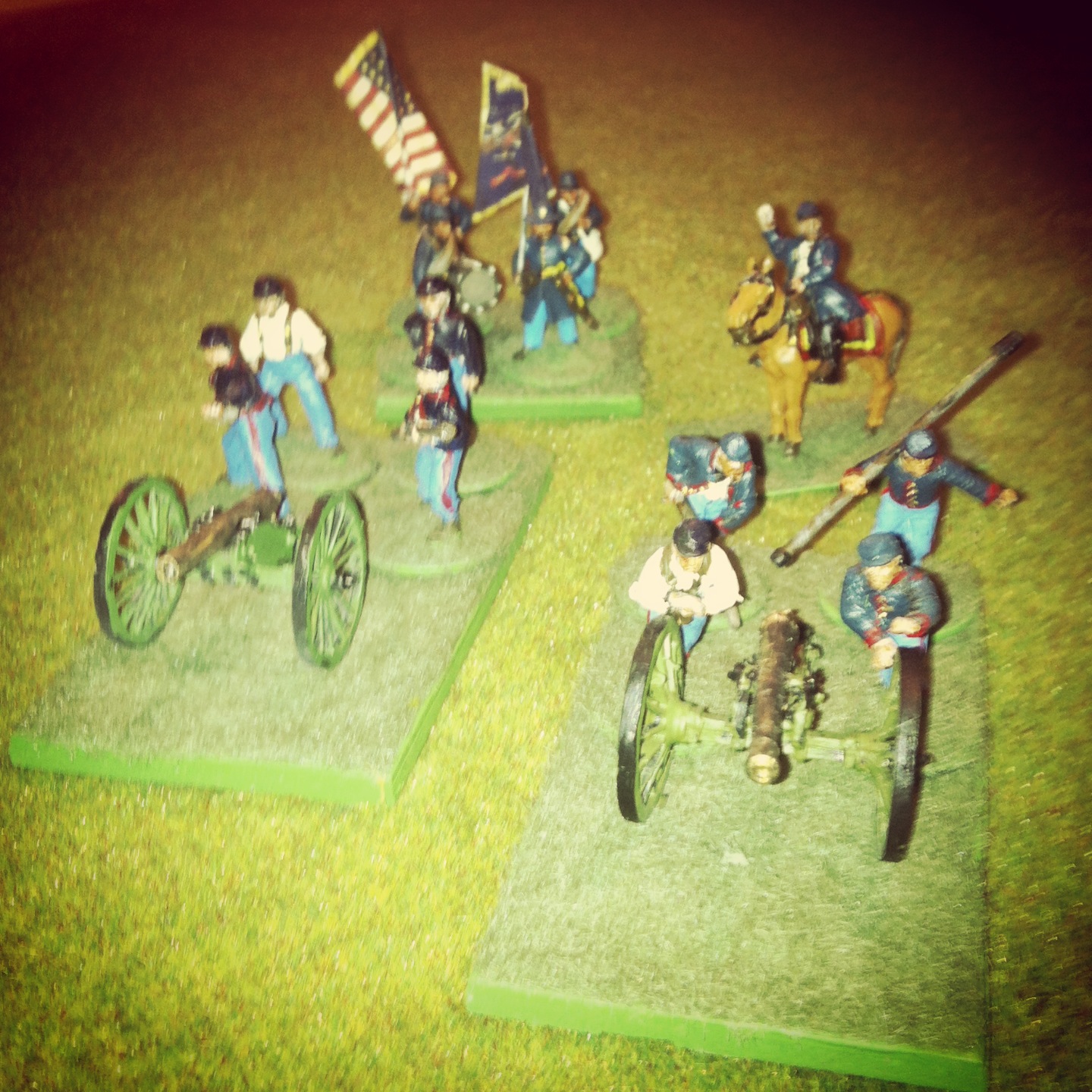
Having spent a couple years playing WWII in 15mm, I very much ready to try another era but I also chose to go bigger with another scale at 28mm. Fortunately, Perry Miniatures offer a line of well-sculpted and very reasonably-priced plastic and metal line of ACW figures which I’ve used exclusively to this point.

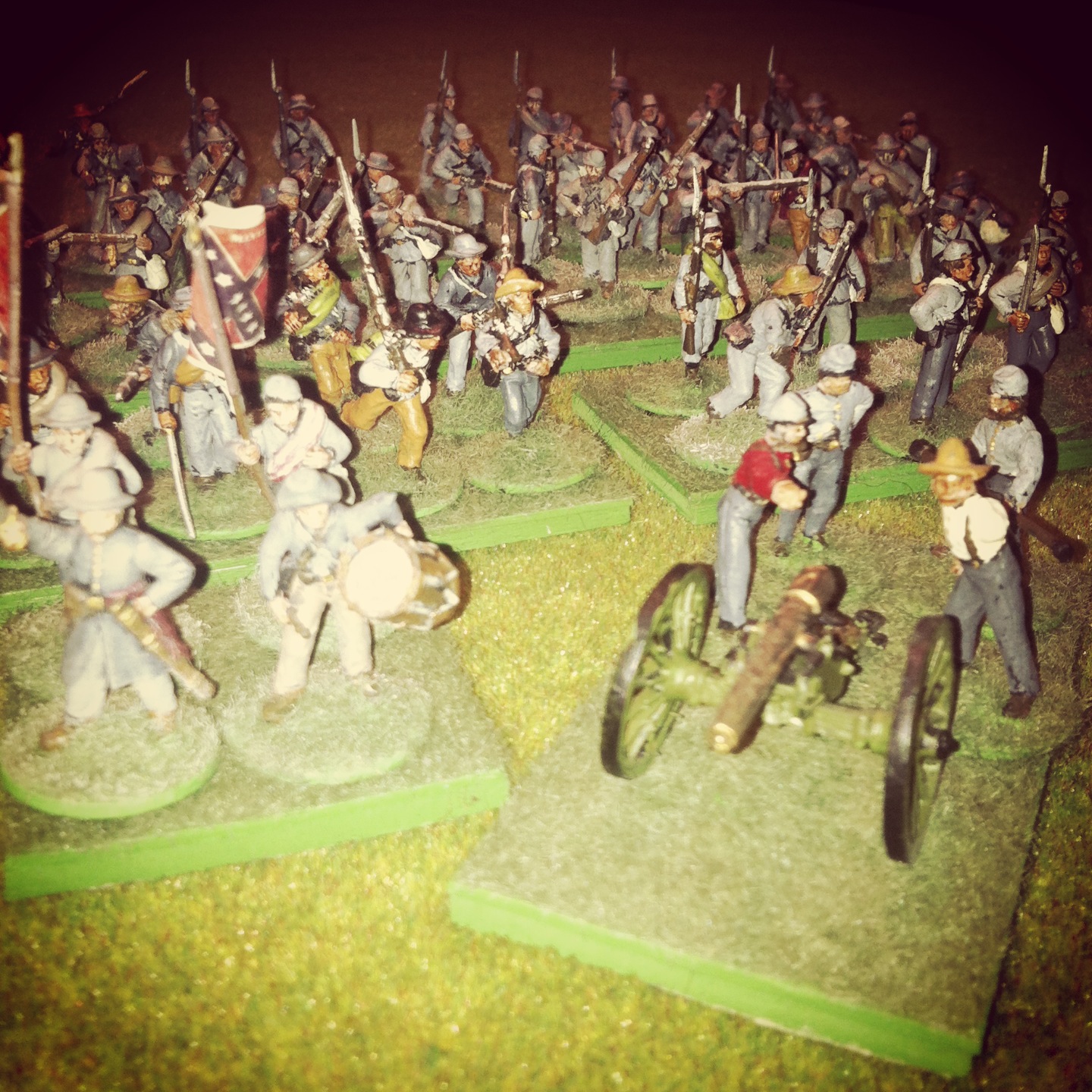
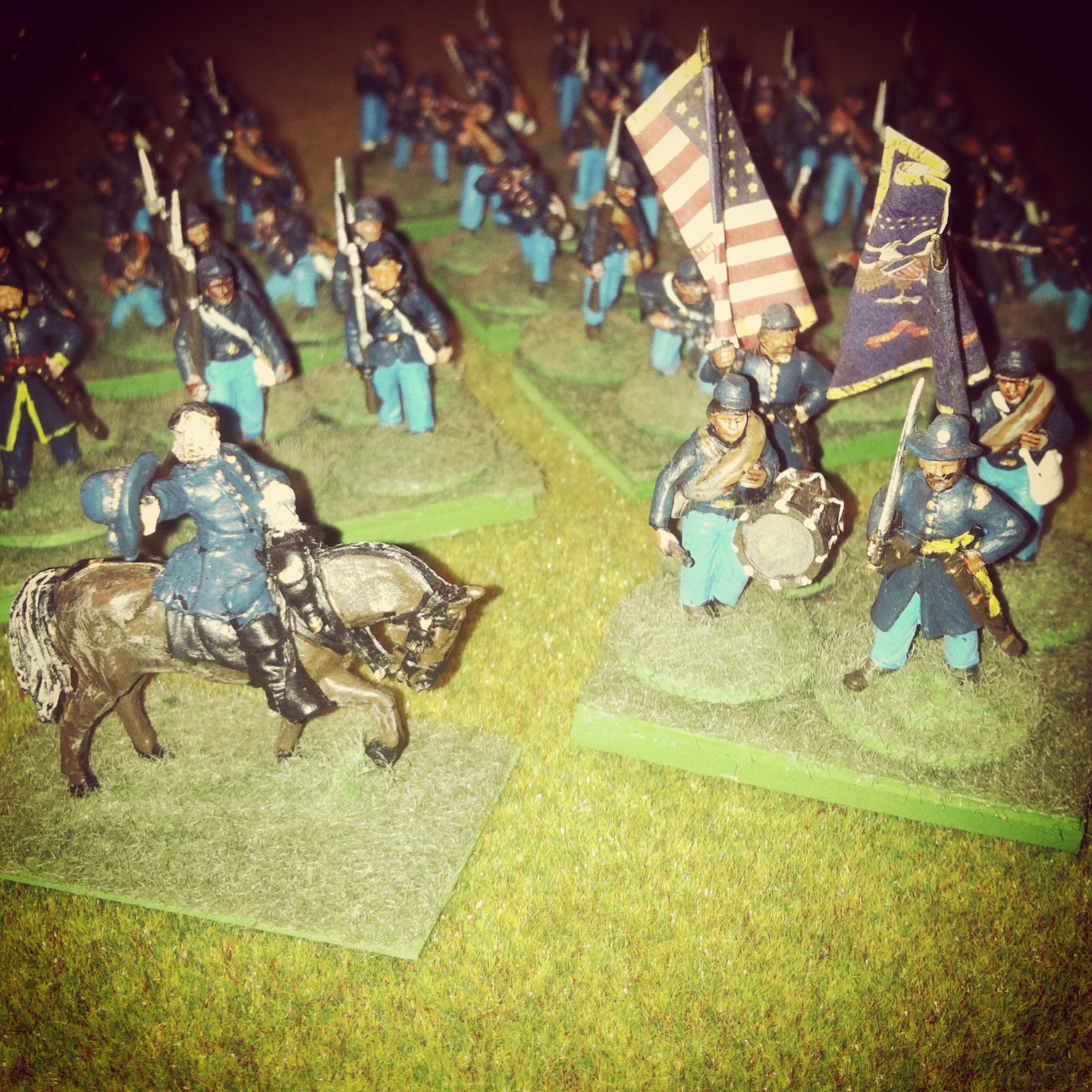
Without going into the details of assembly (relatively easy) and painting technique (also quite easy), I’ve got about 125 figures painted up now on each side. I’ve also completed some mounted and infantry command, artillery batteries and casualty figures. All figures are based on metal washers, and I also made some movement stands for each unit with magnetic sheets adhered to balsa bases.

First, some of the boys from the South…


And, some of the boys from up North…


Now that I’ve got a decent set of figures with which to play, I’m looking forward to setting up a real nice game with the Metropolitan Wargamers in Brooklyn this summer. Just in time for some key ACW anniversaries, I’m really happy to see my Blue and Grey hit the tabletop again.

Favorite Tabletop Games Kickstarters of the Month (May 2013)

Earlier this week, I wrote about how I believe Kickstarter to be the latest incarnation of how gamers have contributed to the decades-long conversation on who truly “owns” our hobby. This had me delving deep into what’s current on Kickstarter’s Tabletop Games section.

To date, I’ve honestly only contributed to one tabletop games Kickstarter project. The modest fundraising drive for A Las Barricadas which brought in just under $10,000 for a game that has since been delayed but promises to be shipping soon. While I wait for this little game of street protest pitting Occupy Wall Street-like demonstrators against the police to arrive, I thought I’d share a few projects I’m watching this month.

Moby Dick, or the card game: Like any good English Literature major, I’m a fan of Herman Melville’s epic American tale of one man’s obsession with a whale. On the flipside, I am not generally a fan of card games. That said, this card game of the high seas boasts some truly marvelous woodcut-like artwork and what looks to be an entertaining game of the best recruited crews trying to survive in their quest to spear the Great White Whale.

All Quiet On The Martian Front: Showcasing 15mm miniatures of Martians vs. early 20th-century human armies, this game uses the H.G. Wells sci-fi classic as a jumping-off point to imagine a world of humans locked in protracted combat with alien invaders. The models look fantastic, mining the very-popular steampunk trend in gaming today. Supporters of the game (particular those pledging in the hundreds of dollars) will net a lot of cool looking stuff with its funding.

Canterbury: Nothing gets me going like a great Euro-style worker placement game, so this is particularly enticing. The game places you in the age of Saxon Kings, and your aim is to build the greatest of cities starting with only a well in the wilderness. Managing your growing population, resources, culture, military and ongoing construction of buildings, the game claims to be one of pure skill and planning with no luck factor whatsoever. This one looks like a beauty and I’ll be anxious to give it a play when it is published later this year.

 Wargaming Terrain for the American Frontier: I don’t play games in the period, but the latest from Acheson Creations presents more than a dozen wonderfully-crafted 28mm buildings from the pioneer, settler and Native American era of 18th-century colonial America. I particularly like the longhouses and wigwams, possibly inspired by the local tribal history of the Western New York and the Rochester area where the creators (and I) hail from. The blockhouse, fort wall sections, barn and cabin models also look great and could easily be used in other eras or in fantasy gaming scenarios, too.

Civil War Toy Soldiers: This final project has less to do with gaming and more to do with the special spot in my heart for the toy soldiers of my childhood, especially around the holidays. Cast in soft plastic and a large 54mm scale, this new line of Union soldiers have been launched to compliment Cunnyngham Collectibles’s existing Southern troops. The poses, liveliness and equipment details on these guys make for some really cracking personality. A few bags of these fellas on the floor or in the tall grass and I’d be transported back to when I first fell in love with little plastic men nearly 40 years ago.

Zulu War: British 24th of Foot Regiment in 28mm

One of the big goals I set for myself this year was to have at my Anglo-Zulu War era project in 28mm. Most of my gaming interest has a US tie-in — American Civil War and WWII — but I am just fascinated by the dynamics of the in late 19th-century British campaigns of invasion fought in Sub-Saharan Africa . Now, after a few months of on-again-off-again toil, my British forces are looking pretty sharp and battle-ready.

I first picked up a couple boxes of plastic Anglo-Zulu War era British from Wargames Factory at a convention flea market for just $8 each (quite a deal from the $20 retail price). At 25 figures per box, these run under a buck per soldier at full cost. The sprues come with head and arm options for firing, loading, advancing and at-the-ready pose variations. The casting is a bit chunky, all figures are standing fully upright and no command figures are available, so there are some trade-offs for the relative value of these figures. Wargames Factory’s Anglo-Zulu War line is also very limited in that they only offer this one box of British and another of Zulus. Still, they’re a great bang-for-your-buck option, especially for an era that requires fielding a lot of soldiers on the table.

For variety and comparison’s sake I next bought a box of British infantry from Empress Miniatures and Warlord Games. Their expanding “Anglo-Zulu War 1879” line offers a nice mix of plastic and metal British, Zulu and allied forces along with terrain, artillery, cavalry and other nice models. Their British infantry box runs about $32 for 24 figures making their cost-per-figure a bit pricier than the offering from Wargames Factory at over a dollar each. However, their figure sculpting is a fair amount finer and the pose options allow for more variety. The boxed set also includes crouching figures, making double-ranked firing lines a possibility. Along with twenty plastic infantry armed with rifles, the box comes with four metal command stands which fill a basic need for most Anglo-Zulu War gaming. I’ve rounded-out my force with an additional 16 metal figures in various crouching poses and four more metal officers from Empress Miniatures in poses that vary from those in the box set. The metal figures run more than $2 each, but by spreading them among the less expensive plastics I’ve achieved what I think is a nice variety.

In sum, my first round of modelling the 24th of Foot will net me 76 infantry stands commanded by 8 officers. This will give me a nice Company-sized British force broken out into two Platoons of two Squads each of 20 figures (including command).

Here’s a couple work-in-progress photos:


My challenge now is to tackle my Zulus which are typically fielded in a ratio of (at least) 3:1 to British figures in many gaming systems. I have a few Zulus already painted shown along with some of my new British below, but it looks like I’ve got many hours of painting still to go in the coming months.

American Civil War: ACW Artillery in 28mm

I spent this past Sunday at the Metropolitan Museum of Art in New York City and caught the absolutely spectacular “Photography and the American Civil War” exhibit which runs through September 2, 2013. The hundreds of photos cover a bit of the same ground as past exhibits, documentaries and books, but there’s a lot I had never seen before, too. What spoke to me most were the dozens of simple individual soldier photos. The contrast between the dressed-up idealistic pre-war studio portraits and the devastatingly gruesome prisoner of war and hospital images is wrenching.

Aside from the portraits occupying the bulk of the show, one of my favorite photos from the show was the one shown below by Timothy O’Sullivan from 1864.

Titled “Pennsylvania Light Artillery, Battery B, Petersburg, Virginia,” O’Sullivan’s small photo (maybe 3″ x 9″) purports to give a rare glimpse of a full artillery battery either drilling or possibly in actual combat. The mass of guns, crew and equipment shows the full size and complexity an artillery section brought to the fields of the American Civil War 150 years ago.

My go-to favorite miniatures company for my American Civil War 28mm gaming is Perry Brothers for both their sculpting and reasonable cost in both their plastic and metal ranges. I have three artillery teams painted up  from their metals line, but more guns would always be better. However, each gun team currently runs me about $12. At this price, modelling realistic large-scale batteries like those in the O’Sullivan photo from the Met has seemed pretty cost-prohibitive.

Well, over at the Perry Brothers Plastics Workbench section of their site, they’ve just recently teased a few plastic sprues of artillery which will include carriages, limbers, multiple barrels and crew. The flexibility of the soon-to-come set will allow for modelling of different crews — North and South — as well as rifled and smoothbore gun types.


There’s no release date for this set as of yet, but in the meantime there are some nice work-in progress shots I’ve shared here. With a few of these assembled and painted up on each side of my tabletop battlefield, my games will get an added boost of realism captured timelessly in the hundreds of photos currently on view here in New York.

American Civil War: Duryee’s Zouaves in 28mm

Any American school kid with a passing knowledge of the American Civil War will be able to immediately recognize the classic blue uniform of Northern forces and the less regular gray and earth-toned make-up of Southern troops. What’s lesser-known is the fanciful variety that was found in uniforms of some units during the war.

Immediately preceding the American Civil War, Europe’s Crimean War of the 1850s saw the Russian Empire facing off against an alliance of the French, British and Ottomans. The French Zoauve uniform of the Crimean War went on to inspire military uniforms in the United States, and one of the more notable Zouave regiments of the Civil War period was the 5th New York Volunteers or Duryee’s Zouaves.

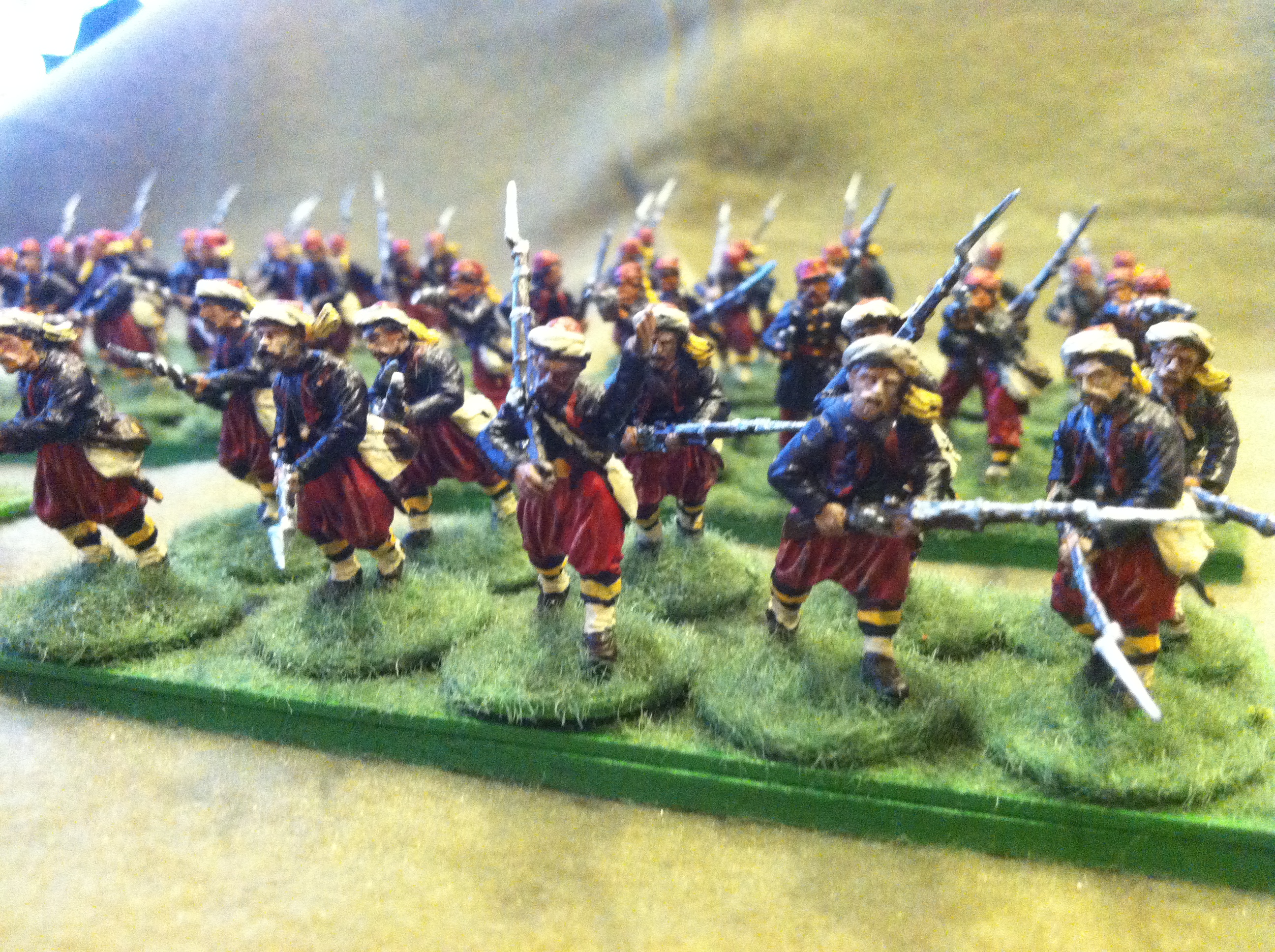
Formed in New York City in 1861 by Colonel Abram Duryée, the 5th NY Volunteers would find action throughout the war at Second Bull Run, Antietam, Chancellorsville and Fredericksburg. But it’s the uniforms that make the 5th NY a memorable unit for me. Dressed in baggy red chasseur trousers, dark blue jackets with red braiding and topped in fezzes with yellow tassels, Duryee’s Zouaves offer up one of the more colorful units to deploy on a Civil War gaming table. While some period drawings and photos exist in black and white, the true whimsy of these uniforms can really only be found in the work of modern artists like Don Troiani  (see above) or with active 5th NY Volunteer re-enactor groups.

For miniatures, I love the affordable and well-sculpted variety to be found in the line of 28mm American Civil War models from Perry Brothers. My 5th NY Volunteers are a mix of a Perry Brothers plastic Zouave box set and two sets of their metal Zouave firing/skirmishing line. Perry Brothers offer a nice variety in optional poses and heads in their plastics, and the metal figures offer just a bit more crisp detail. I chose to model most of my Zouaves in their fezzes, as this is how they usually appeared in battle. For variety’s sake, I modeled one unit with turbans which were more common in ceremonial and parade settings. The box set also offers arm options to represent units advancing at “right shoulder shift” and “at the charge” with bayonets leveled at the enemy lines.

Below is an overview of my completed five squads from the 5th NY Volunteers along with their company command stand.

And here’s a close-up of the company command below.

I painted most of the company in their more common battlefield fez headgear, shown below in detail. These figures are the metal Perry Miniatures firing line, while the rest of the company are plastics.

And finally, here’s the one squad in their turbans.

Painting Duryée’s Zoauves was a great break from my usual painting, and now I’m already thinking of some other specific units from the Civil War to mix up the walls of blue and gray lining my tabletop battlefield.

American Civil War: 28mm American Farmhouse

My workbench focus over the past couple of weeks has been almost exclusively on my 28mm American Civil War project which I hope to have wrapped-up and ready to present in a large scale battle this spring. As posted previously, I love setting out a realistic wargaming table full of structures and terrain. Luckily, Perry Miniatures – the maker of my favored 28mm American Civil War soldiers – also produces a couple 1/56th scale plastic kits of terrain suitable to the period.

The Perry Miniatures farmhouse is loosely modelled on General Meade’s Union headquarters from the Battle of Gettsyburg, pictured at right in a photo from the aftermath of the battle and as it looks today. I’ve seen the house in person a couple of times, and I’ve also seen similar buildings in Western New York, Ohio, Michigan and Virginia. The Perry Miniatures model is typical of the small wood-framed clapboard rural farmhouses found in the North, South and into the Great Lakes region from the late 18th through 19th-centuries.

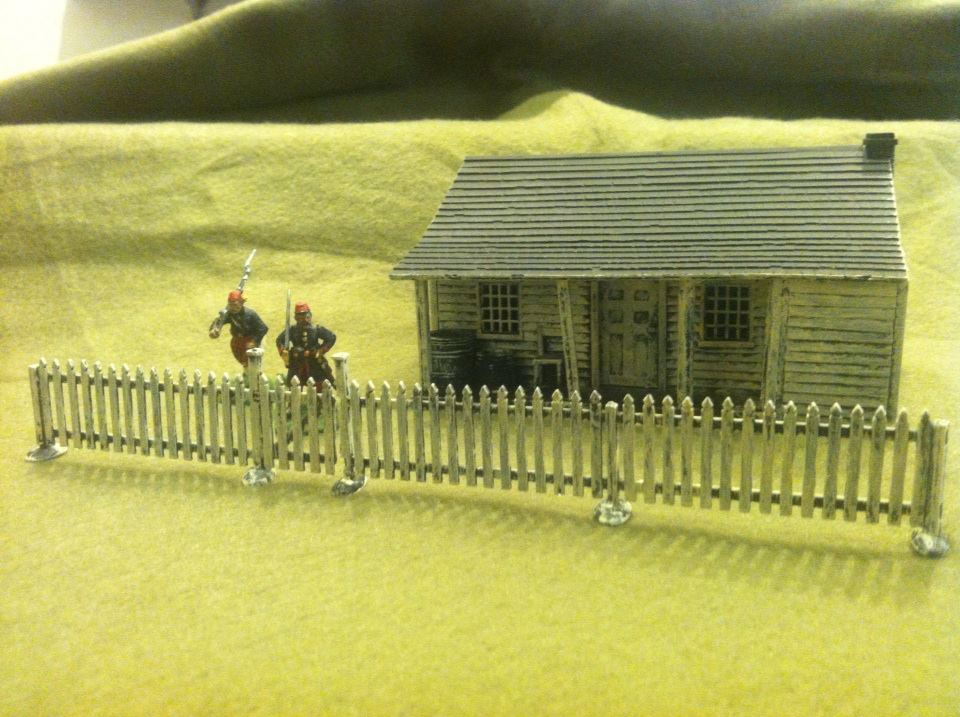
The pieces of the farmhouse kit come in two easily-assembled sprues along with an extra sprue of three types of fencing. The fencing is disappointing and unfortunately doesn’t really offer much to work with in terms of building out a farm scene. Some extra sets of plastic fencing from Renedra are probably needed to really complete the set. However, the box does contain a chair and a couple barrels to add some nice detail to the model’s front porch.

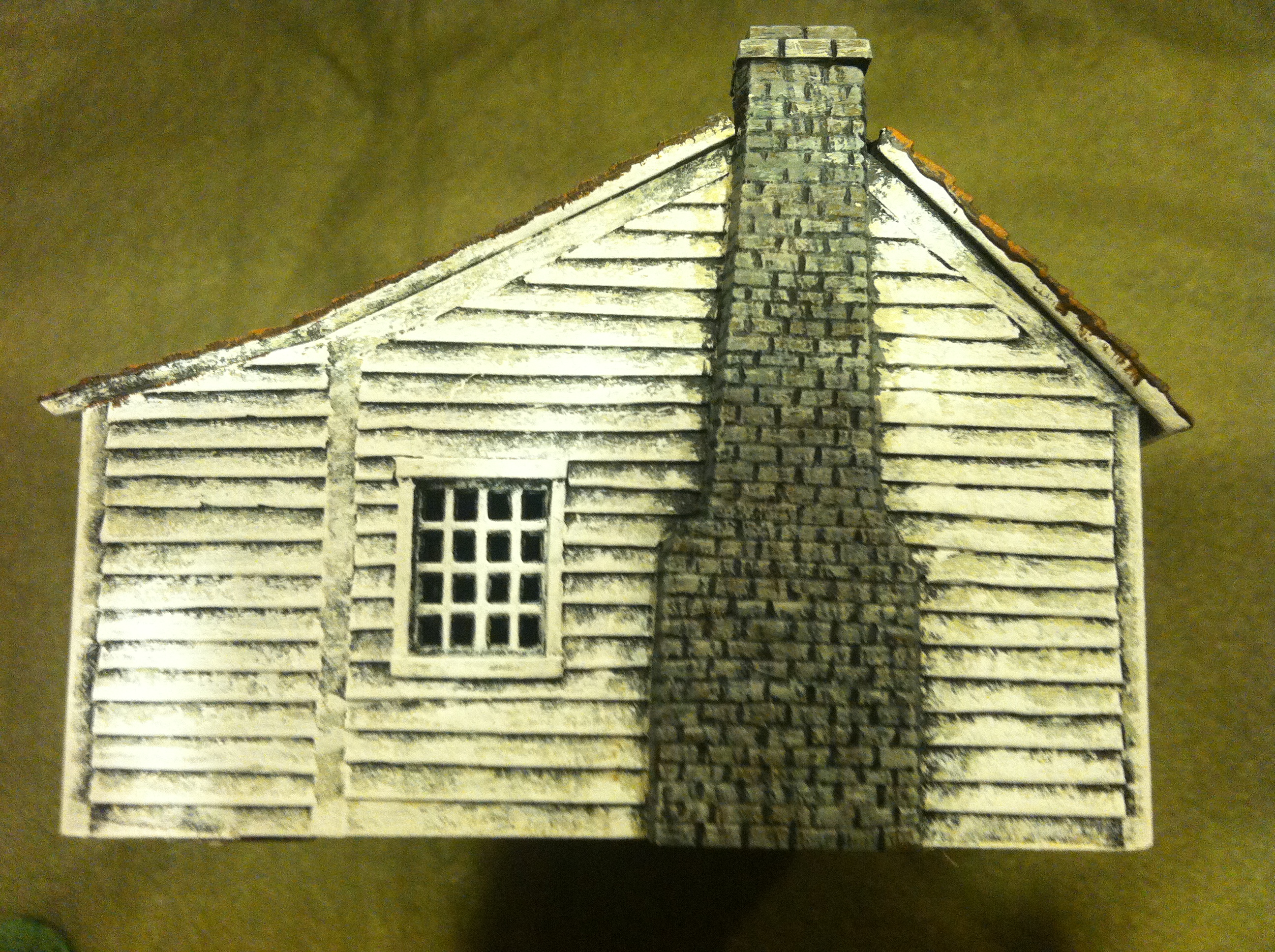
I glued up the kit and sprayed it with a flat black undercoat. My plan was to give the farmhouse a weather-beaten finish looking like it had years of peeling paint. I started by dry-brushing the model with a large flat brush with a yellowish off-white paint, making sure to leave a fair amount of the black in the gaps and areas between the clapboards (photo at top left).

Next, I dry-brushed the house again with a bright white paint, giving the clapboards additional depth as if the most recent layer of paint had deteriorated over time. For the roof shingles, I built-up dry-brushed paint in dark brown, light brown and then a bit of dark green mixed with a brown wash. I began the chimney with a dark gray paint and then finished it with dry-brushed lighter gray and dabs of brown and off-white paint to represent variations in the stonework (photo at middle left).

For details, I dabbed the barrels, chair and porch planking with dark brown and completed them with some lighter brown dry-brushing and some aging metal for the barrel hoops. The door knobs at the front and rear each got a dab of brass paint (photo at bottom left), and I gave the picket fence another coat of the bright white like the house clapboards.

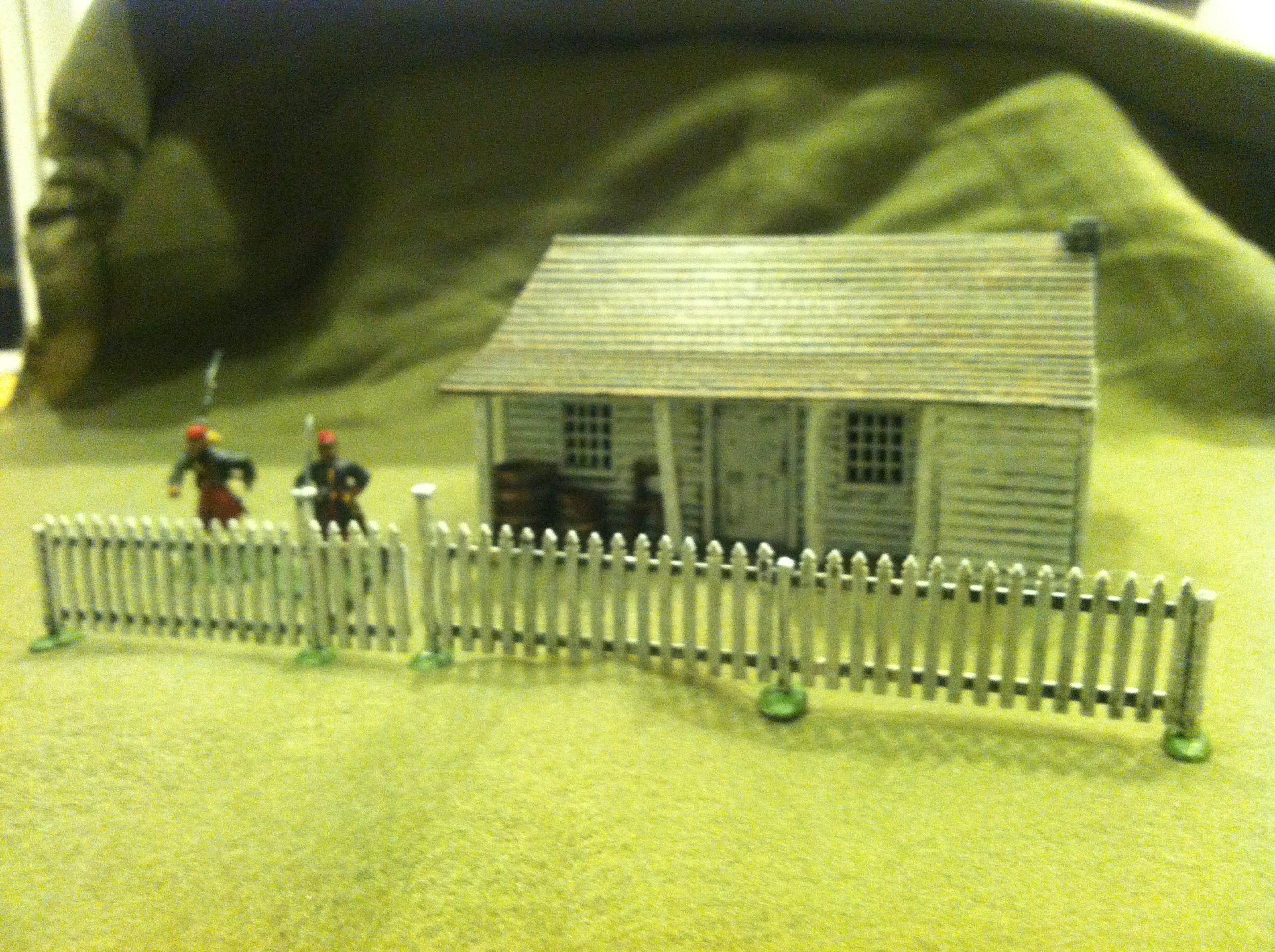
The final results are below and ready for the battlefield this coming spring.

American Civil War: 28mm Cannonball Markers

Aside from actual gaming, one of the more enjoyable aspects of wargaming for me is scale modelling. Scale modelling is basically looking at the real world and figuring out how to represent it realistically on the tabletop. I’m constantly picking up little pieces of wood, paper, metal, fabric and string and figuring out what those materials might be used for down in a miniature scale.

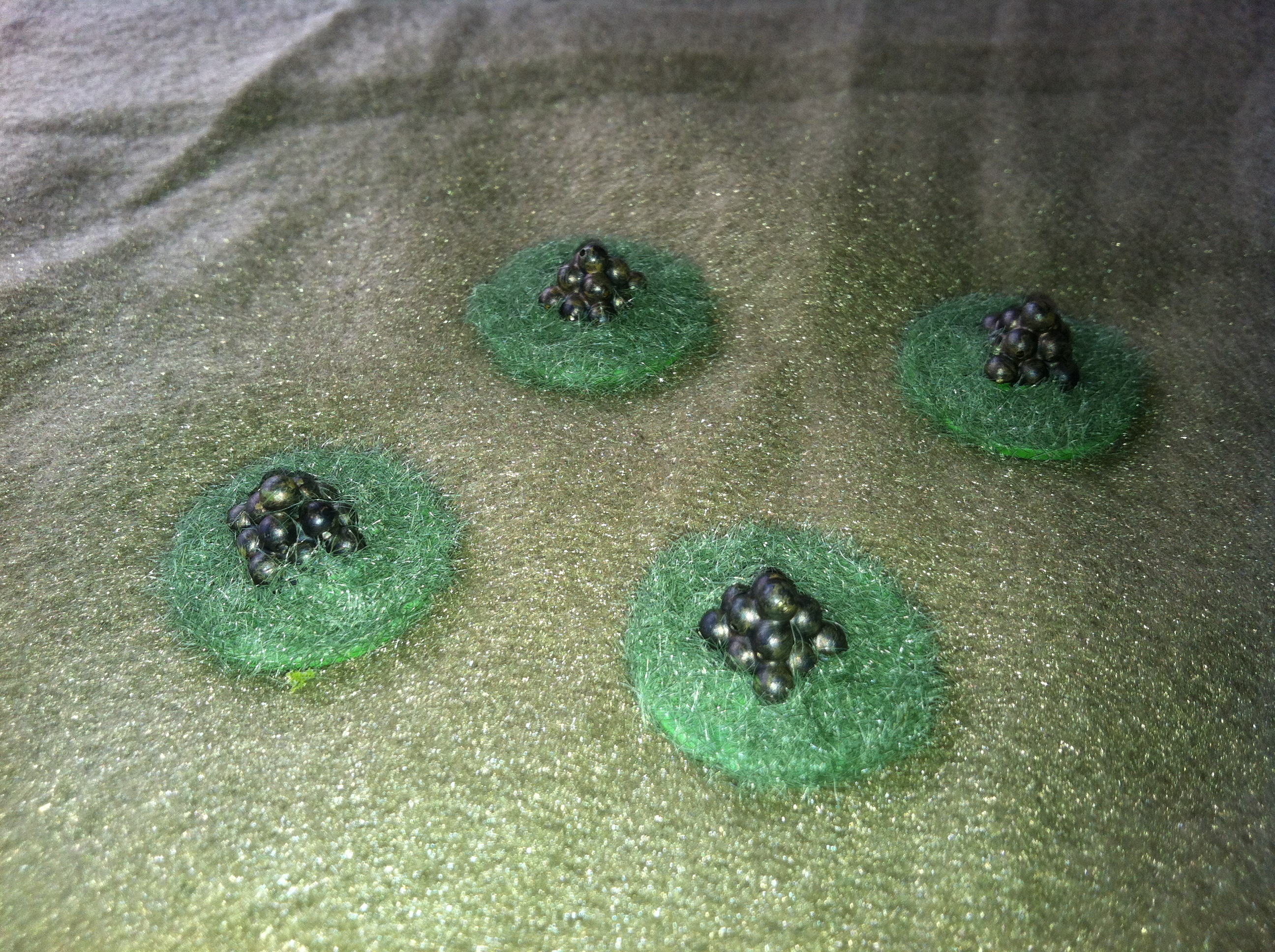
My most recent project is building some cannonball markers for my 28mm scale American Civil War gaming. These markers will be used to indicate when my field guns are loaded and ready to fire. In reality, most American Civil War field batteries probably didn’t have time to neatly stack piles of cannonballs as gun teams fired furiously at enemy lines. That said, anyone who has visited a historic battlefield site will most probably be familiar with the look of cannonball piles often found sitting neatly nearby an antique artillery piece.

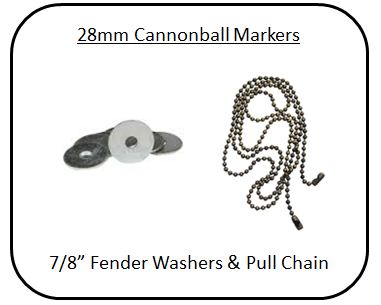
Many companies offer pre-made cannonball markers cast in plastic or metal, however, I thought scratch-building some markers of my own would offer a nice break from my usual painting of soldiers in blue and gray. For bases, I used the same 7/8″ fender washers I use for basing all my 28mm miniatures. The cannonballs were made from a length of metal pull chain found in the electric aisle of any hardware store. Many modellers use small gauge shot to model cannonballs, but I found the connected balls/links of the chain makes assembly quicker without the mess of chasing little balls around the workbench.

To begin, I cut and glued a small thin piece of cardboard over the center hole of each washer. I then cut three three-link sections, two two-link sections and a single ball from the chain. Starting at the bottom layer, I used a dab of superglue to affix the three three-link sections on the base. When dry, I glued the two two-link sections on top of the base layer and then fixed a single ball on the top of the pile. The result was a neat pile of 14 balls stacked into a symetric pyramid.

Once each based pile was dry, I spray-coated the markers with flat black paint. To give the cannonballs some shading and depth, I lightly dry-brushed some rusty metal and brown paint over the balls, allowing some of the black to remain between. The base was then painted green and flocked with some static grass affixed with PVA glue. A protective dull clear spray coat finished them off.

Sitting alongside my Union gunners running a field piece into position as their General shouts orders, these new markers make for a nice piece of detail on the battlefield.