Pinball, Pixels and Play In Rochester, New York

StrongMuseumIt’s been a couple years since I visited The Strong National Museum of Play in Rochester, NY, but I took advantage of a recent week visiting my family in Western New York to pay the place a visit. The museum was founded in the early 1980s with the massive hoard of dolls, toys, games, household items and other objects collected over the lifetime of Rochester heiress Margaret Woodbury Strong. Since then the museum has evolved and expanded to encompass the more recent history of play, as evidenced in some of the wonderful exhibits I had a chance to see this past month.

Pinball Playfields
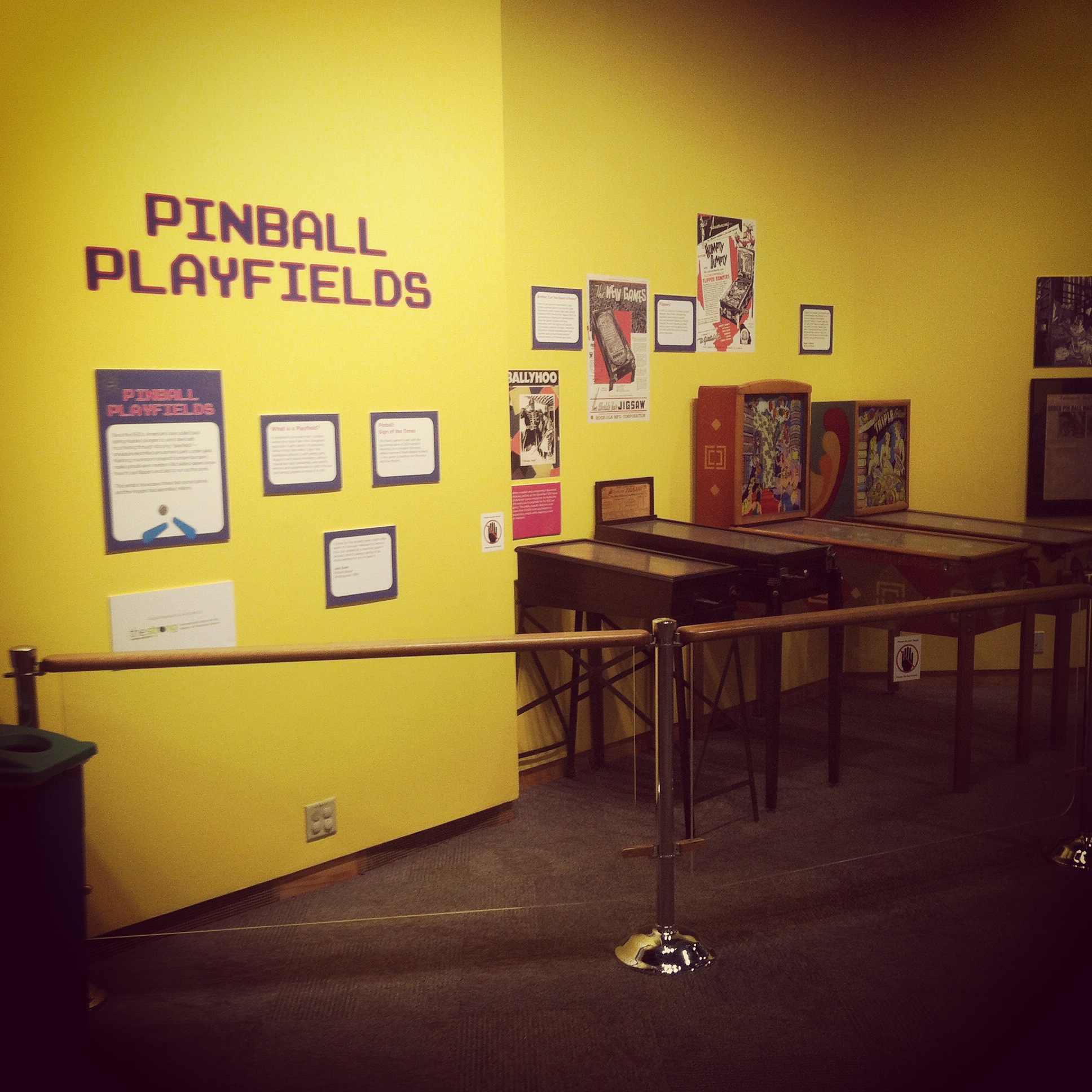
2014-07-08 11.59.24Running through September 7, 2014, Pinball Playfields offers up a tight overview of the American history of coin-operated pinball machines from their earliest appearance in the 1930s through today. A number of early games from the museum’s permanent collection kick off the small exhibit showing the first rudimentary gravity-fed games where balls plunked and clinked their way through a series of “pins” which would give the game its name.
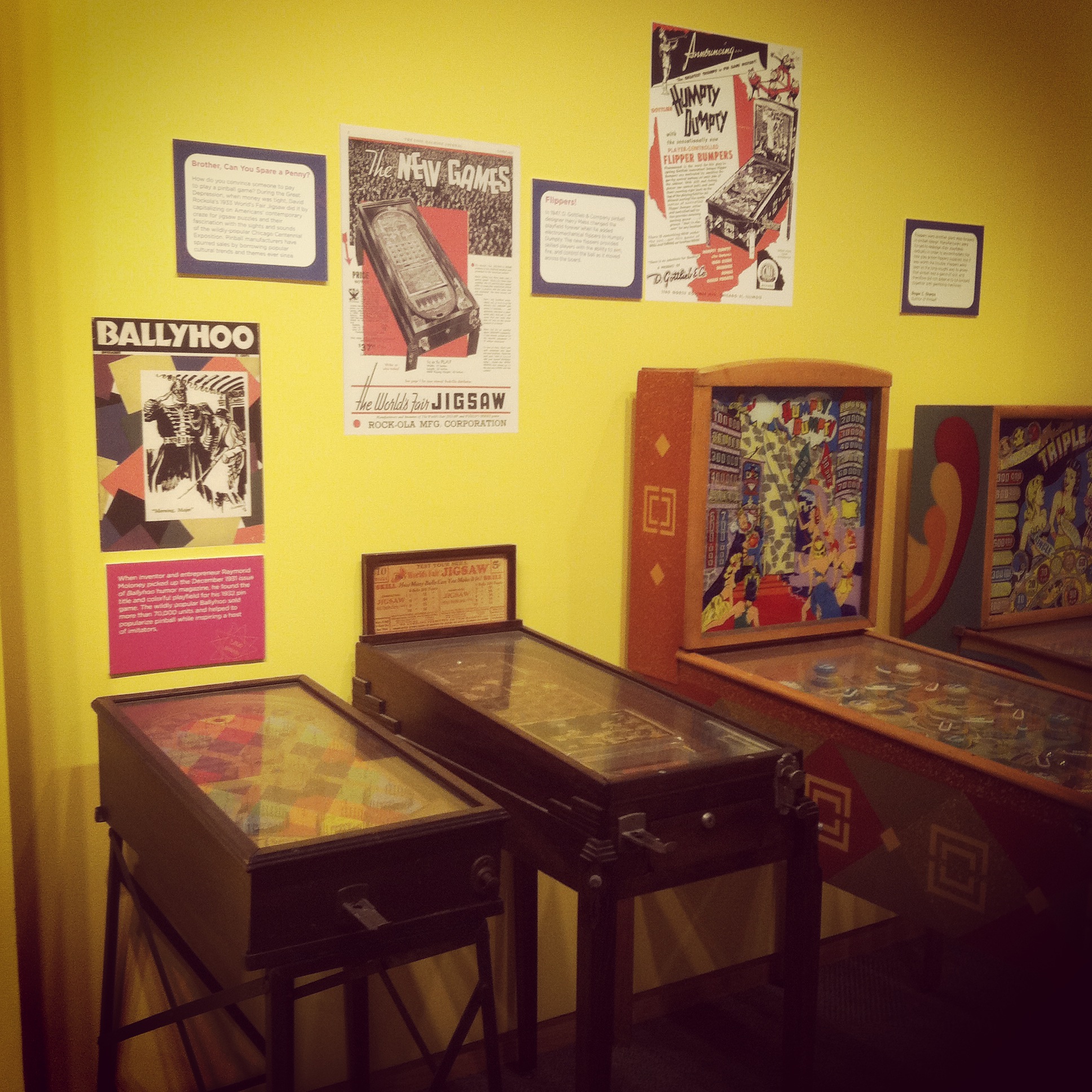
2014-07-08 12.00.10Early 1930s and 1940s pinball machines

By the 1940s, electrified games were on the rise and the introduction of flippers late in the decade added enormous playability and control for anyone willing to feed the growing craze a coin at a time. As explained on the brief wall text, it was this coin-fed frenzy that caused many cultural killjoys throughout the country to advocate for laws banning pinball as a frightening tool of gambling in the 1940s through 1970s (just this past summer, Oakland, California finally repealed an 80-year ban on pinball).
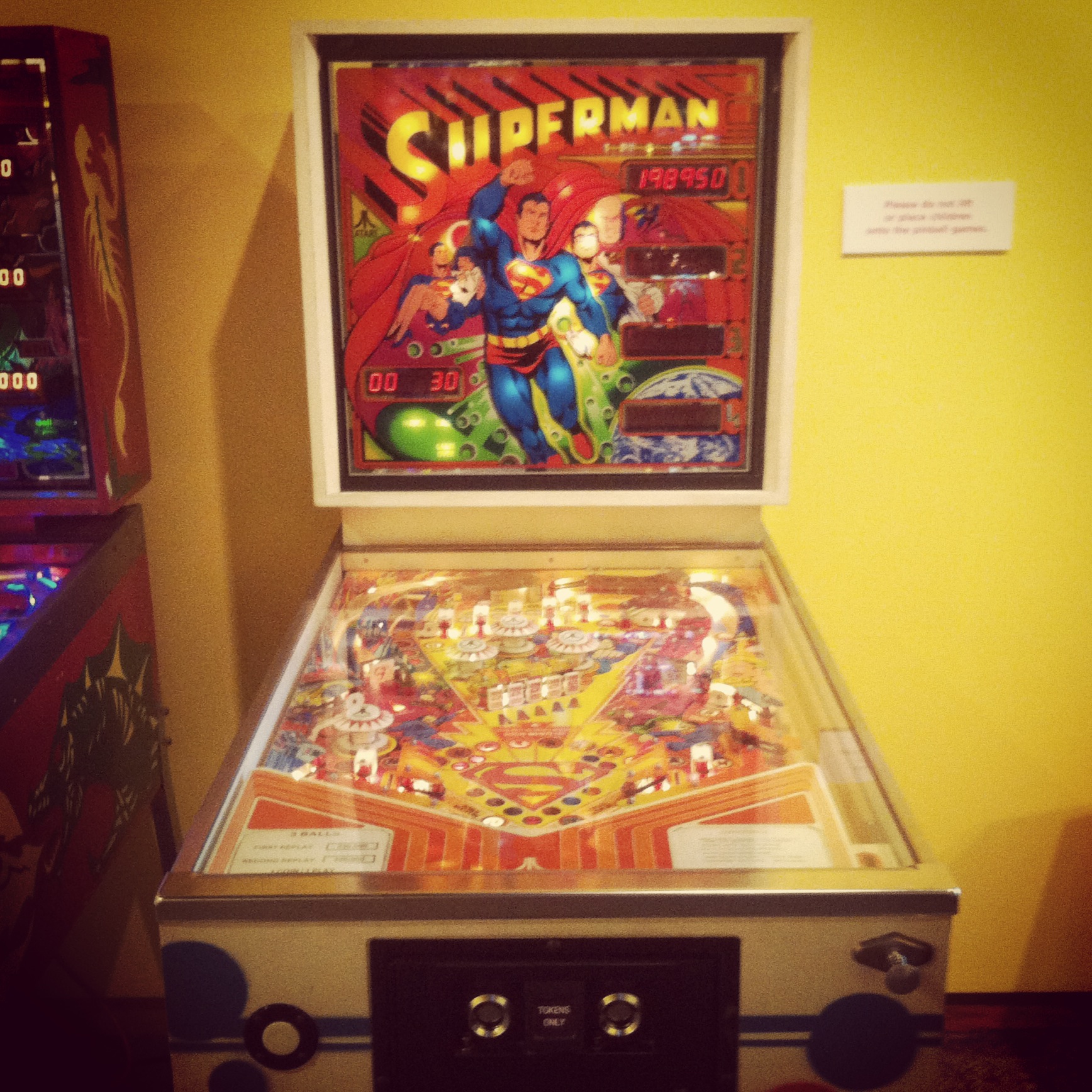
2014-07-08 12.02.40Superman pinball (1979)

Despite its opponents, pinball fandom grew into the 1960s and 1970s, crossing over into rock music with The Who’s iconic “Pinball Wizard” from 1969’s Tommy. In my 70s childhood I can easily recall many pinball machines tucked into pizza parlor corners or inhabiting the basements of some of my lucky friends with their constant glow of light and pinging sounds. The exhibit includes a number of playable machines from the 60s and 70s, including superhero tie-ins with Superman and the Incredible Hulk which demonstrate intersecting pop culture influences on games.
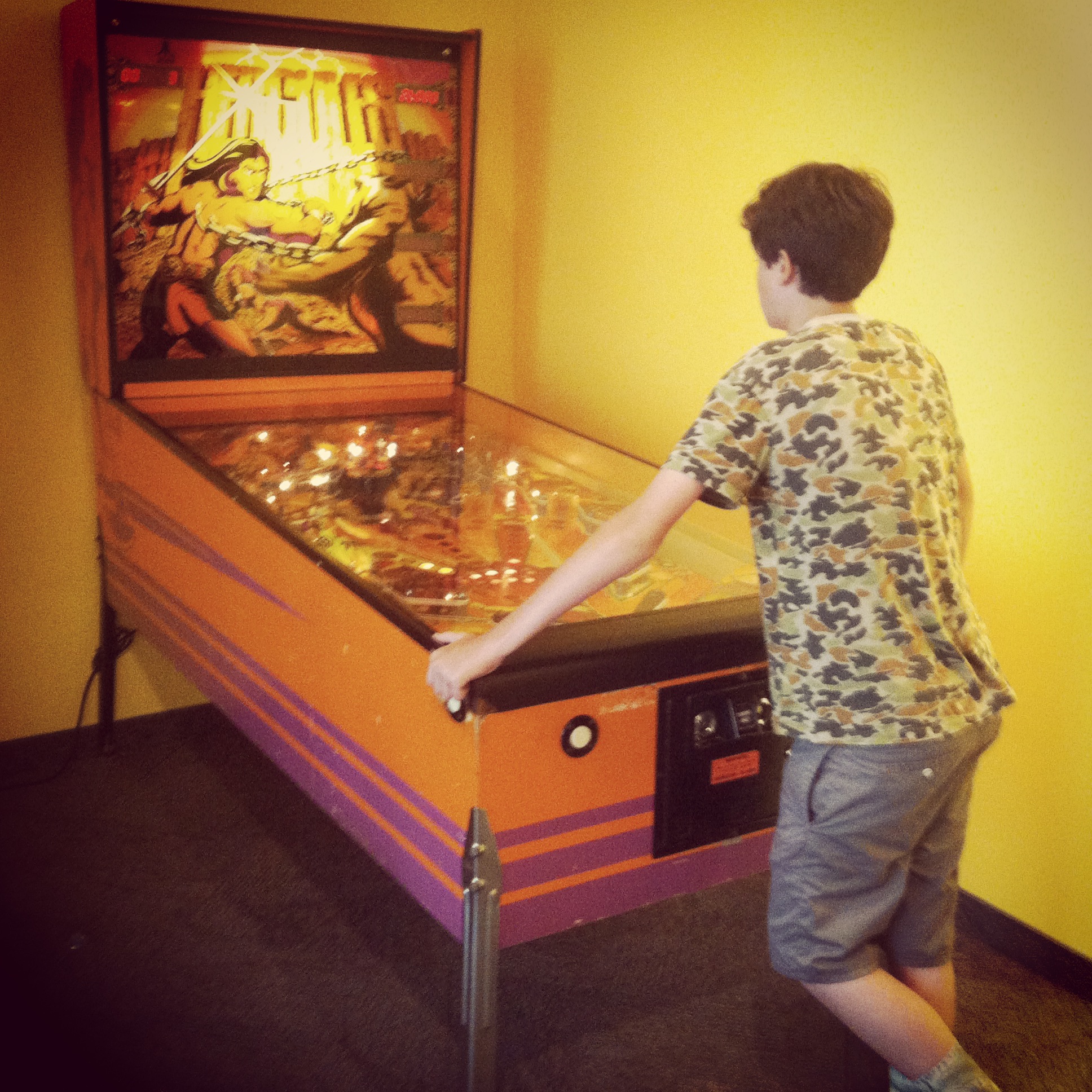
2014-07-08 12.12.03Hercules (1979) — the largest pinball machine ever made

By the late 1970s video games were creeping into territory dominated by pinball machines. Gimmicky games like 1979’s enormous Hercules machine attempted to maintain the hold on fistfuls of coins which would soon be increasingly making their way to video arcades. With video games dominating coin-fed play throughout the 1980s, it was not until the 1990s and the 2000s that pinball rebounded by incorporating increasingly-complex mechanical animations, advanced LED and video screen elements into games. The more recent Wizard of Oz, Monster Bash, Star Trek and Lord of the Rings games on display — and all playable — show how the old-time pinball fun has truly been integrated with a modern thirst for visual effects overload.

Aside from the dozen or so playable machines, Pinball Playfields gives a good deal of historical information with descriptive text, early photos and advertisements, news articles and modern design schematics. All this is certainly fine stuff for the museum context, but anytime I found myself lingering a bit too long over some of the historical material I had to look around to find my wife and kids feeding another token and pulling back the plunger to start another play.

eGameRevolution

2014-07-08 13.01.51The last time I was at the Museum of Play, the museum had just launched its important International Center for the History of Electronic Games. The collection now contains tens-of-thousands of video game artifacts, making it one of the most important repositories and research resources for the dominant mode of play of the past forty years. The debut exhibit a few years back presented an overview of  video game history and dozens of playable arcade and home games from the 1960s through the present. My latest visit allowed me time to see the full permanent exhibit, eGameRevolution.
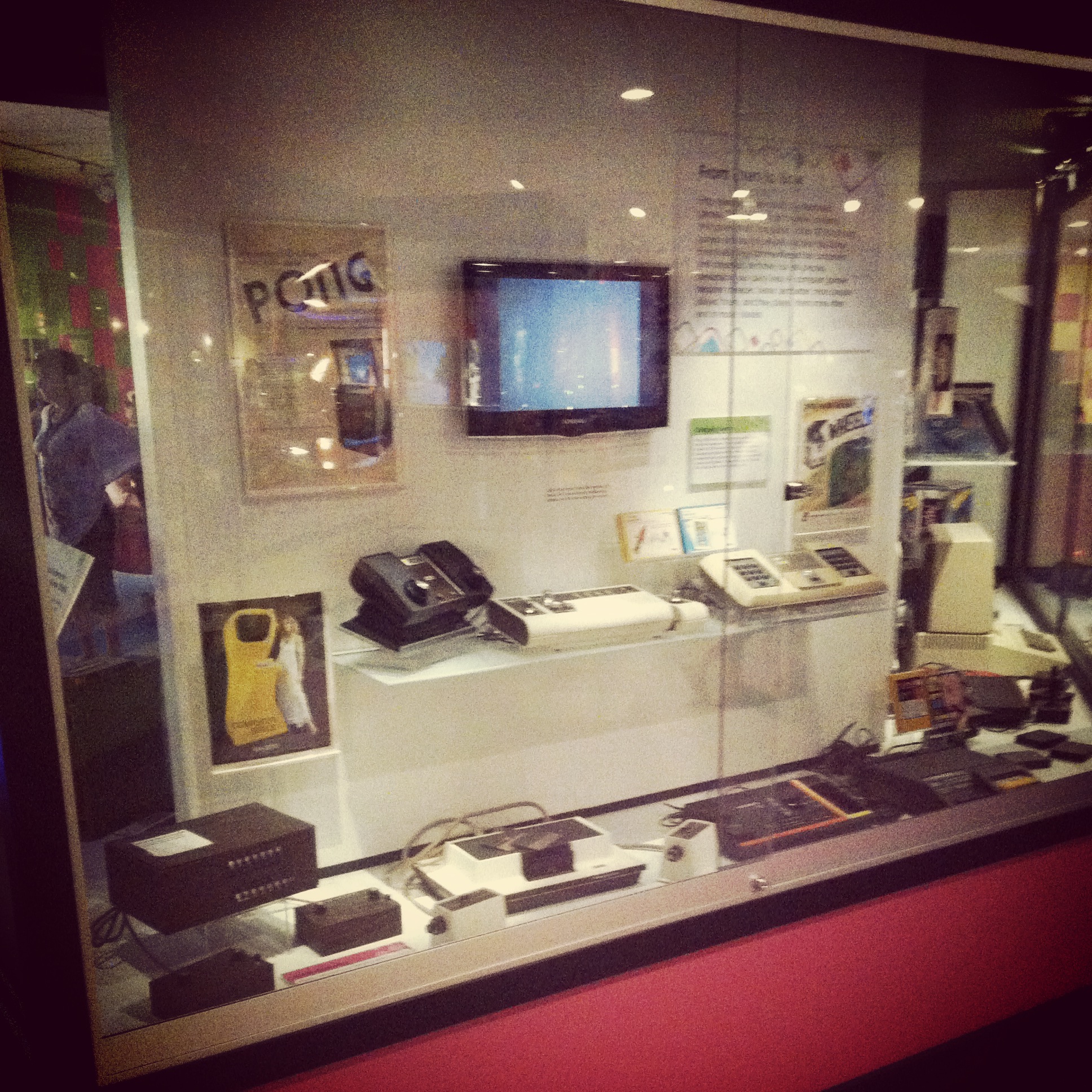
2014-07-08 13.20.36Early home video game systems from the 1960s and 1970s
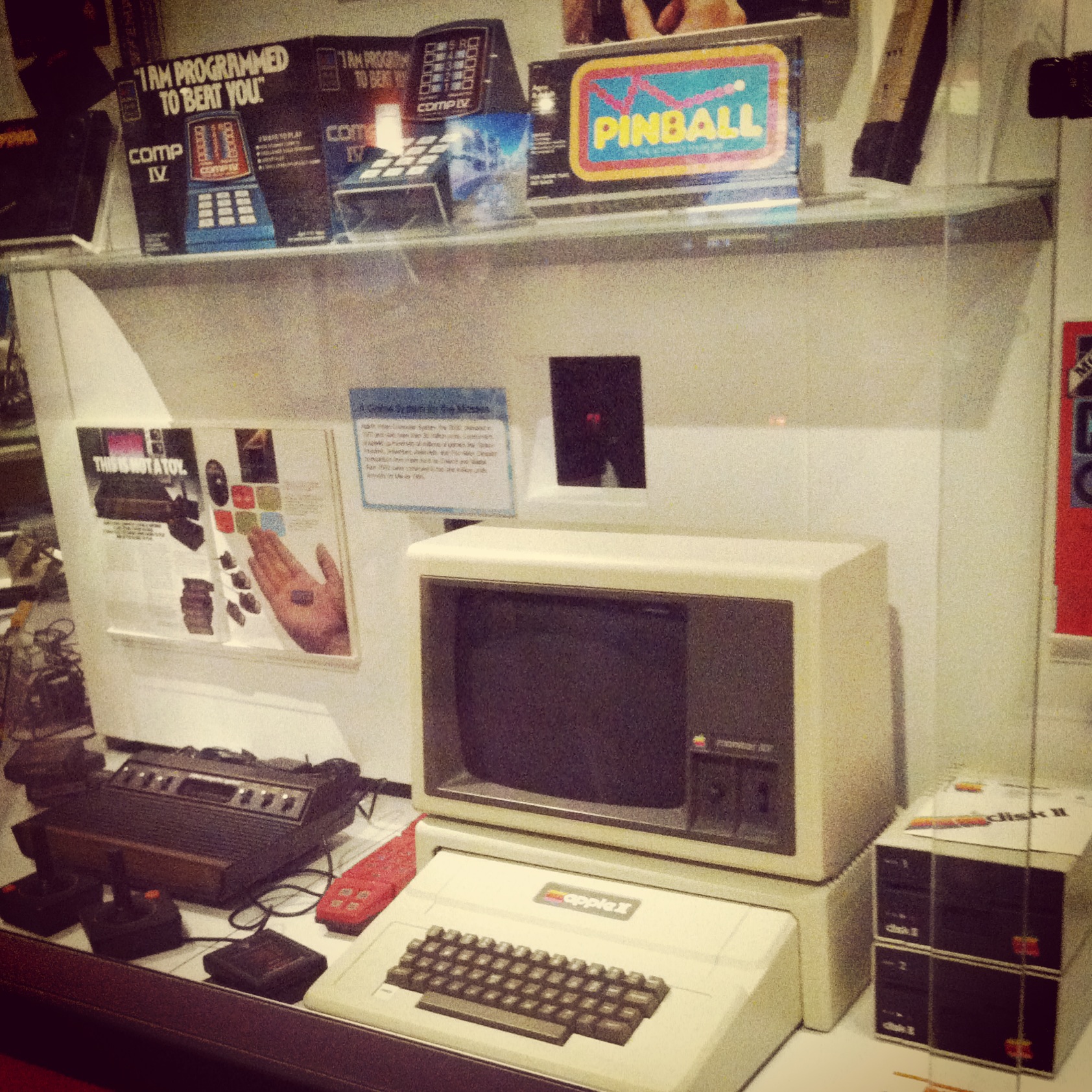
2014-07-08 13.20.26The Atari 2600 and Apple II computer — two machines that changed my world in 1977

The exhibit traces the development of the now-ubiquitous video game from its science lab beginnings of the early 60s through early console and home computer games in the 70s and 80s to the modern games which now inhabit so many living rooms worldwide. Changes in the sophisticated technology, graphics and marketing of video games are well-traced along with traditional curated displays behind glass. And, of course, there are plenty of playable games throughout the exhibit.

2014-07-08 13.22.23The video arcade in the eGameRevolution exhibit at the International Museum of Play

Pinball machines, an air hockey table, arcade cabinet classics, interactive dance and music games and a half-dozen home console games of different eras are set throughout the exhibit. A dark, low-ceilinged room reminiscent of the video arcades inhabited by many first generation video gamers like myself in the 1980s is set in the middle of the more traditional displays. At five plays for a buck, a visitor to eGameRevolution can easily lose themselves in decades of electronic gaming history.

 Game Time!
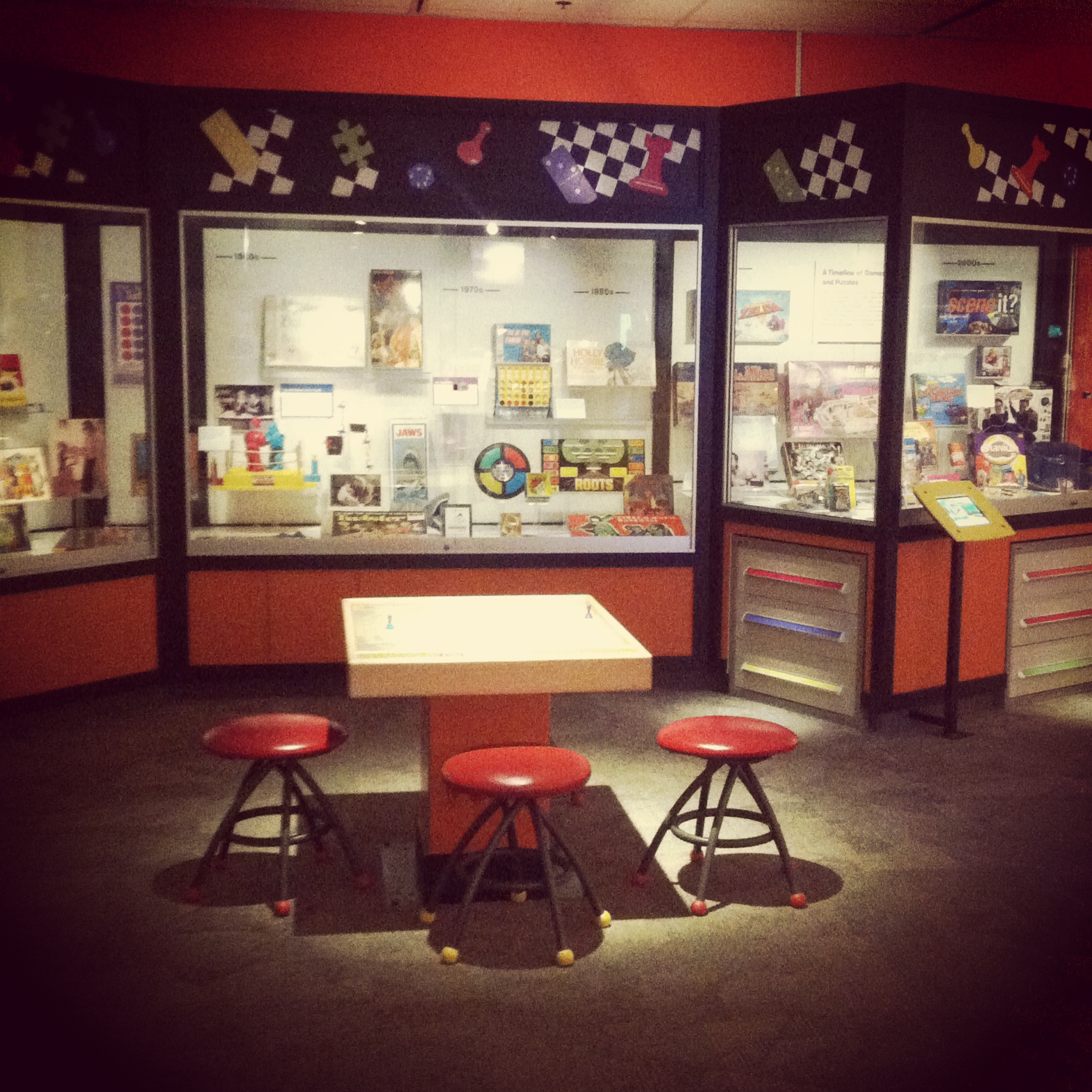
2014-07-08 13.09.07Museum goers willing to take a few steps further back in time will also find a dizzying and deep story of traditional games in the Game Time! permanent exhibit nearby. Three centuries of American board, card, puzzle and electronic games with brief, well-researched text offers a tremendous overview for those who wonder how gaming culture has evolved since the 19th-century.

2014-07-08 13.04.51An early 1970s Dungeons & Dragons set and the famed Dark Tower game from 1981

Games are arranged both in a historic timeline and also along themes such as economic games, chase games, strategy games and puzzle games. Along the way, a story unfolds where games provide a view into the American values and politics of each era, as well as the rise of the big business of games and the importance licensing particularly in the late 20th-century through the present.

2014-07-08 13.10.29War games, including classics like Risk (1959), Stratego (1961) and Battleship (1967)
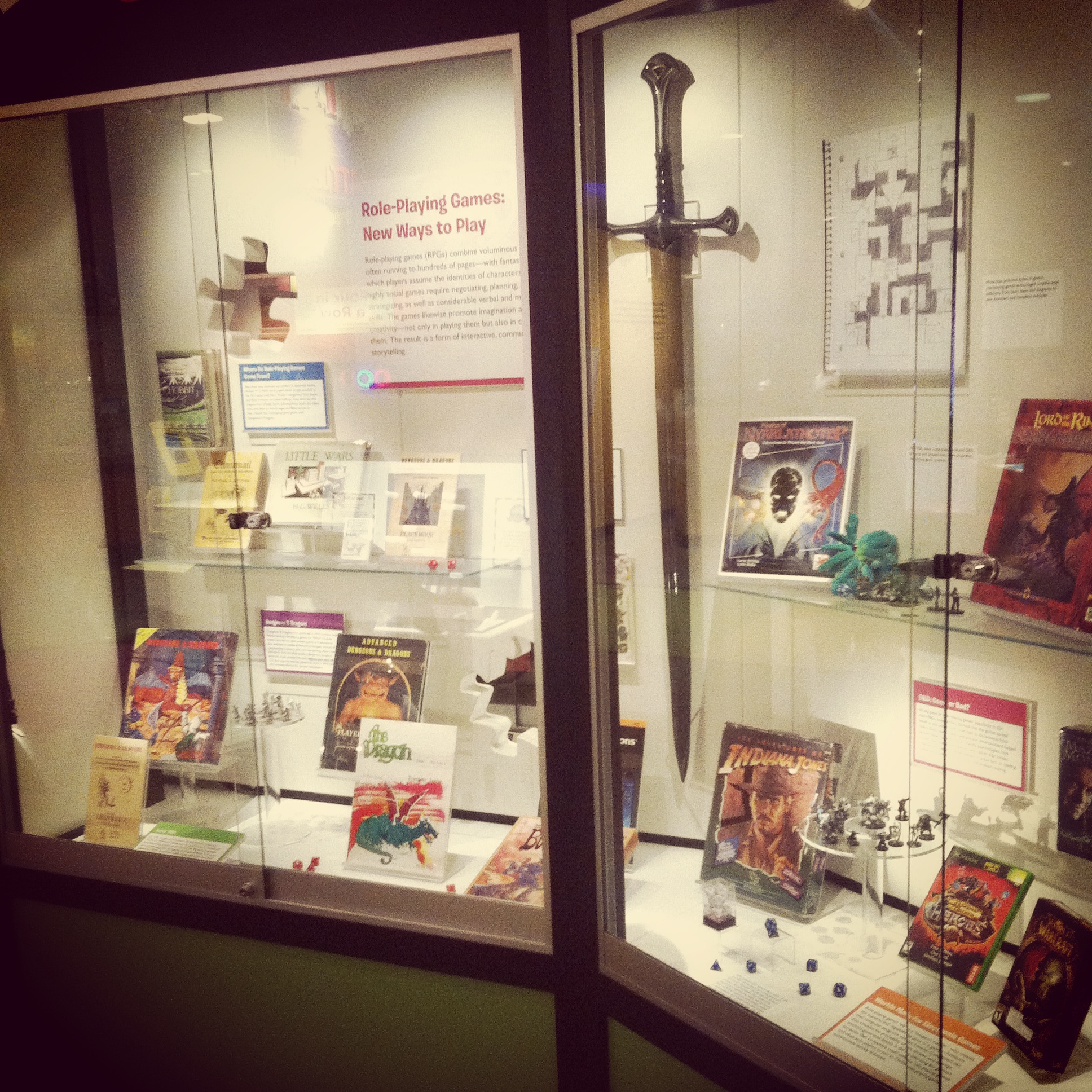
2014-07-08 13.11.05Role-playing games, including 1970s and 1980s Dungeons & Dragons books

Wargames and role-playing games each receive their equal due with an early copy of Little Wars by H.G. Wells and some classic Dungeons & Dragons books from its genesis in the early 1970s. Seeing these games side-by-side with other games, like the extensive exhibit on Monopoly, is incredibly validating for someone like myself who has spent my life engaged in games which once dwelt only at the edges of our culture.

Putting all these games — from pinball and video games to board and role-playing games — which so shaped my youth and those of countless others within a broader context of American history is something one can experience in few places like you can at the Strong Museum of Play. If you can get yourself to Rochester, stealing away a few hours to play through time will be time (and maybe some game tokens) well-spent.

New Game Weekend: Lego Heroica

heroicabox

Like a couple generations of kids around the world, I grew up on Lego. My childhood was heaped with thousands of little plastic building pieces produced in Denmark and strewn in endless piles on my bedroom floor. Lego have changed a lot over the years from its early days as an abstract, creative and flexible building system of my early years to the heavily-licensed and more rigid playsets my own kids have been raised on.

In 2011, Lego launched Heroica, a brick-based fantasy-themed dungeon crawl board game. Each set included a set of bricks to build a series of rooms, hallways, bridges, paths and outdoor areas with which several configurations of game boards could be assembled alone or in combination with other sets.

IMG_3372

My first game of Lego Heroica

This past weekend, I played Lego Heroica: Castle Fortaan with my 9-year-old son, a certified Lego and gaming addict. The game pieces go together nicely to create nifty modular rooms including a dungeon, castle walls, a hall with fireplace and a throne room. Four character adventurer figures and goblins in three varieties are depicted as tiny, rigid pawns which offer less interest than the very-popular Lego Minifigures common with most Lego sets. With a board built according to one of the included scenarios (or a game of your own making), players take turn rolling the special die, moving through the castle, collecting magic items and racing to the objective endpoint.

IMG_3371

Gaming components from Lego Heroica: Castle Fortaan

As expected from Lego, the Heroica sets look great. Each player has their own rack on which they track gold and magic items collected and damage received during combat with goblins lurking throughout the castle. A weapons rack allows for the purchase of special weapons which give bonuses and added abilities. The special die (also built from Lego) offers faces with dual purposes for movement, combat resolution and other results such as regaining health and randomized treasure.

IMG_3370

Our adventurers quest through the halls of Castle Fortaan

Despite the look of Heroica, gameplay leaves much to be desired. Unlike the collaborative spirit of most dungeon crawl games, Heroica is a straight-up competition and a race to the finish line. Strategy is also absent from the game, and the die-driven movement makes the game largely an exercise in die-rolling. Combat is overly-simple with any of the three goblins types easily destroyed on a single die result, no matter their strength. Purchasing an item from the weapons rack requires three collected gold, but finding three gold often doesn’t occur until late in the game when any bonus from an acquired item really doesn’t matter.

Lego suggests ages 8-and-up for Heroica, but this probably has more to do with safety issues with small parts than actual game complexity, interest or replay value. My son is a pretty experienced gamer, but he still liked the game most probably because of his overall passion for Lego. I’d peg the game more appropriate for 4 or 5-year-olds as a way of introduction to the basic concepts of dungeon crawlers including movement, melee and ranged combat, hit points, character abilities and collecting treasure and magic items.

Not surprisingly, Lego has announced the imminent discontinuation of the Heroica line of games. A fairly avid fanbase for the game exists using heavily-modified rules, but ultimately I really don’t think the game is worth the time and effort no matter how much customization is put into it. With so many engaging dungeon crawl games available and appropriate for a huge swath of ages, its pretty obvious why Heroica crashed in popularity in three short years.

As for dungeon crawling with my kids, I’m going to be heading back to my Dungeons & Dragons Basic Set from the late 1970s in the coming weeks — no plastic bricks required.

Downloading: Mapping the World at the New York Public Library

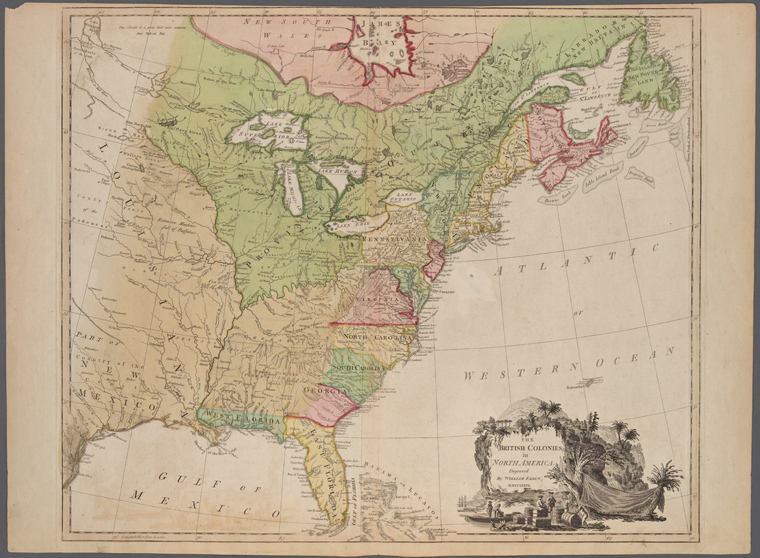
britishcolonies

As a lifelong gamer, I’ve spent many, many hours staring at maps or drawing my own. Most board games provide maps of sorts that define movement and area control. For players of Dungeons & Dragons and the like, adventure maps create much of the framework for how campaigns and role-played stories evolve. Miniature wargames, from ancients and historicals to fantasy and sci-fi, utilize three-dimensional set-ups driven by maps and the relationship of various features on the tabletop.

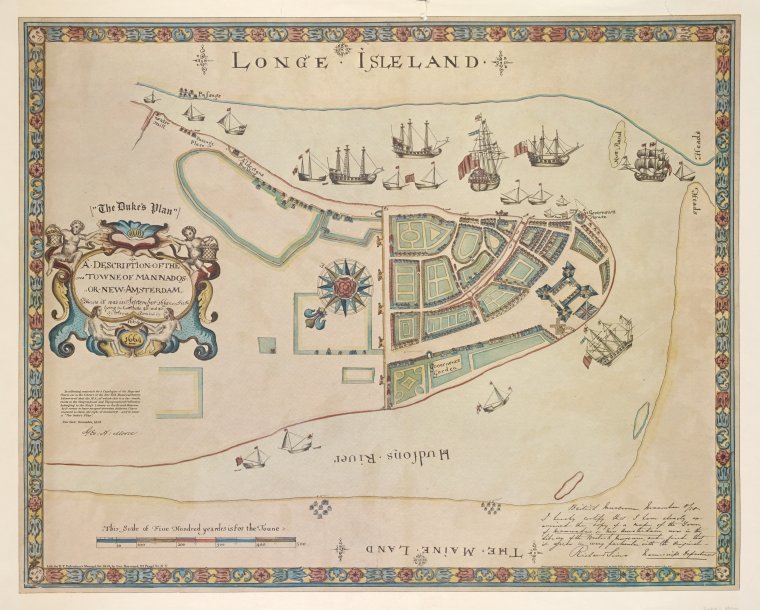
Late last month, the New York Public Library announced the availability of some 20,000 high resolution downloadable maps. The collection is an enormous resource for hardcore historians and hobbyists alike. Well over half the online collection naturally focuses on New York City, New York State and the surrounding areas. Beyond the New York area, the cartography goldmine grants access to hundreds of years of maps from around the world which can be viewed singly or within the context of their original books, atlases or folios.

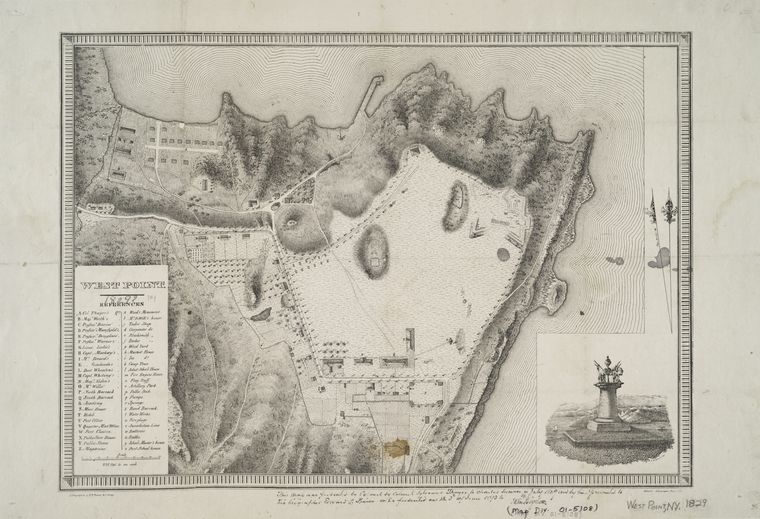
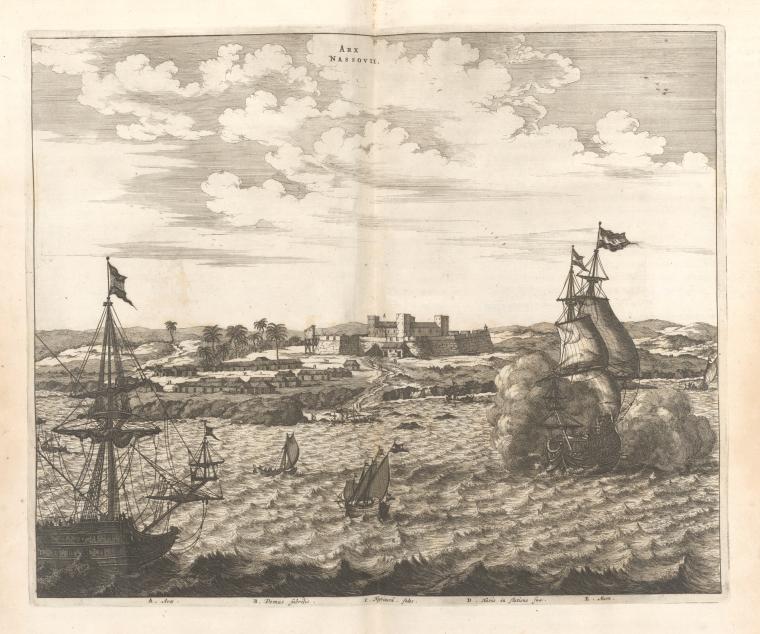
Digging into the archive, there’s a fair amount of material certain to be of interest for gamers. Maps of Europe, Africa, Asia and the Americas portray the development of civilizations and empires over the centuries. A fair amount of material is available on the American War of Independence, particularly in the areas around New York, New Jersey and Pennsylvania. Aside from maps, there are also some engraved plates of native societies encountered by European colonists, renderings of forts and some naval views.

The entire online collection is searchable here, but here are a few highlights I’ve come across on my digital travels.

New York

newamsterdam

New Amsterdam

navy yard

Brooklyn Navy Yard

American War of Independence

battleLI

Battle of Long Island

saratoga

Saratoga

Forts

westpoint2

West Point

fortalbany

Fort Albany

Naval History

dutchportships

Dutch and Portugese Ships

british1671

Ships in the British West Indies

Europe

ancientgreece

Ancient Greece

romanempire

Roman Empire

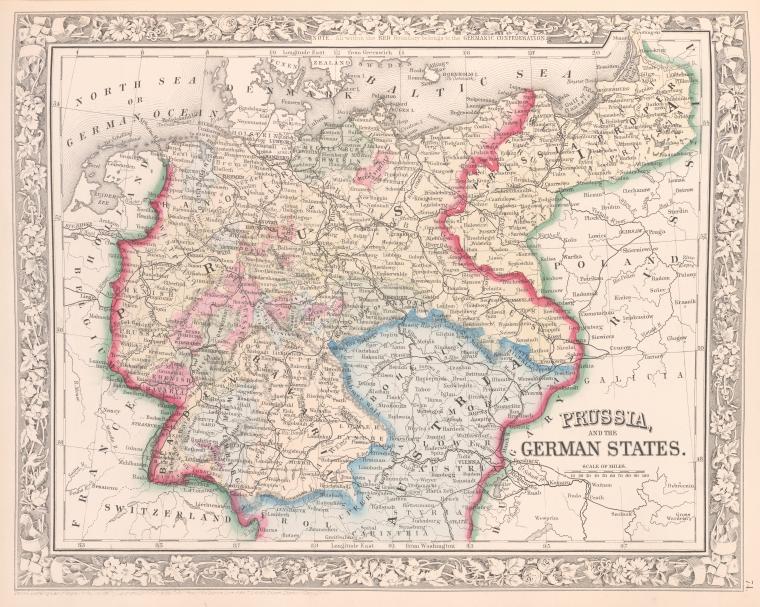
prussia1860

Prussia


New Game Weekend: Shoot N’ Skedaddle

sns

One of my favorite parts of attending gaming conventions is playing scales, periods and scenarios I usually don’t game. Getting the chance to play in scenarios run by the authors of rules is also a big bonus opportunity to experience a game “straight from the horse’s mouth,” so to speak. This past weekend at Fall In! I had one of those rare sessions that hit all these marks, playing in an Old West 28mm skirmish game of Shoot N’ Skedaddle by Oscar Turner.

Since I was a kid, I’ve been a big fan of Westerns. Starting with re-runs of the old Lone Ranger TV show and radio serials, I graduated up through American Western classics like Red River and The Searchers to the Italian “Spaghetti Westerns” of Sergio Leone and Clint Eastwood. Over the years I’ve remained dedicated to the now-declining genre, and I’m an enormous fan of Eastwood’s later Unforgiven and Quentin Tarantino‘s Django Unchained

unforgiven

1992’s Academy Award-winning Unforgiven, produced, directed by and starring Clint Eastwood

Like a lot of American boys, my  interest in Western TV, radio and movies spilled over into my play time. I spent a lot of time gunfighting on my bedroom floor in the 1970s with Gabriel Lone Ranger dolls  and the earlier Marx Johnny West toys. I also had plenty of cheap dimestore plastic cowboys and indians, plus a pretty substantial collection of the cowboys and indians from Britains Deetail and a pile of Western-themed Playmobil toys.

gabriellr

1970s ad for Gabriel’s Lone Ranger toys

Despite all my interest in Westerns, gaming the genre never became my thing. TSR’s Boot Hill, released in 1975 just as Dungeons & Dragons was taking off, has been a popular RPG option for years. There are a number miniatures ruelsets for the Wild West, and 1992’s Desperado by Monday Knight Productions seems to be the standard I’ve seen played at conventions. So, with nearly zero experience with shoot-outs on the streets of dusty tabletop frontier towns, I was really impressed with my three hours playing through my first game of Shoot N’ Skedaddle this past weekend.

snsgameset

The Shoot N’ Skedadle cards, dice and equipment needed to play

 With a visually stellar town laid out with incredible laser-cut and plastic scenery, Oscar’s scenario presented a simple scenario of outlaws on the lam with lawmen in hot pursuit. In Shoot N’ Skedaddle, play begins with character cards dealt to players playing on either the Outlaw Gang or Lawmen Posse side. Main characters such as “Judge,”Doc” and “Bandit” team-up with neutral characters like “Thug,” “Cowboy,” “Townsperson” and “Thug.” Characters then draw primary and secondary weapons (if any) which can include anything from a deringer, knife or carbine to a gattling gun, buffalo gun or dynamite. There are 40 character and 72 weapons cards, making for tremedously fun variations in the player Gangs and Posses in Shoot N’ Skedaddle.

IMG_2418

The town set-up for Shoot N’ Skedaddle at Fall In!

After initial deployment according to the scenario, regular playing cards are drawn to randomly activate characters in turn. I really loved this thematically-appropriate mechanic, tying the iconic Old West card game into the play. On a turn, a player can perform a combination of movements and action. Special event cards are also randonly drawn for each side, allowing the resurrection of dead characters, the arrest of an outlaw or an extra character activation. With this simple framework, characters can perform a seemingly endless variety of feats including running, hiding, shooting, grabbing a mule by the reins, jumping between rooftops, crashing through windows, kicking in doors or starting a fist fight. Player imagination bordering on role-playing is really the only boundary to the game.

IMG_2419

Lawmen with guns blazin’ in Shoot N’ Skedaddle at Fall In!

To resolve actions, an incredibly elegant dice mechanic is used. Characters each come with key attributes — Strength, Agility, Scrap, Marksmanship and Guts — with each of these weighted with a D6, D8, D12 or D20. Success when using a particular attribute is resolved by rolling a 5 or better, no matter what the action and no matter what the die. For example, a poor shot would roll a D6 when firing their pistol while a more skilled character might roll a D12. In either case, the player would need to roll a 5 or better to succeed. Wounds, hiding in cover or other game conditions modify the dice downward, so that same crack shot with the D12 Marksmanship would roll a D8 when shooting at someone hiding behind a barrel.

IMG_2420

A local woman acting just a little suspicious in Shoot N’ Skedaddle at Fall In!

Shoot and Skedaddle’s wonderful card and dice structure puts the focus back on the fun on the table like any really great game should. Oscar offers his game as a free PDF ruleset or in a printed set of cards for $25 ($30 with a box). Check out his website at http://shootnskedaddle.blogspot.com/ for downloads, ordering info, development news and more pics and information. The basic rules contain scenarios and a campaign option for longer-term  storylines to be played. I can’t say I’m going to run out and invest in a dozen Western buildings and paint up a bunch of cowboys and local citizens, but if you’re a fan of Old West gaming, I highly recommend checking out Shoot N’ Skedaddle. It’s a bullseye.

Retro Gaming The 70s & 80s: DC Heroes Role Playing Game

dcheroes

Households tend to gravitate to fan divisions. There are Star Trek people and Star Wars people. In New York City, you’re a Mets fan or a Yankees supporter. With comic books, divisions have fallen for decades between Marvel Comics and DC Comics with endless nerdy debates of the pros and cons for each.

In my home growing up, my brothers and I were Marvel guys. Our cardboard storage boxes were chocked full of bagged and boarded books from the Fantastic Four, The Avengers, Captain America, The Uncanny X-Men, Doctor Strange, Iron Man, The Incredible Hulk and Alpha Flight. The occasional Batman or Justice League story grabbed our interest, but superheroes who dwelled in the real-world embattled streets of New York City always won our hearts over the denizens of Gotham, Metropolis and Star City.

When we got around to superhero gaming we likewise threw our fandom (and dollars) behind TSR’s Marvel Super Heroes Role-Playing Game. While role-playing our favorite Marvel characters never took off with the passion we had for Dungeons & Dragons, we loved the modules and expanions chocked full of great art, stories and cut-out scenery and foldable heroes.

In 1985, a year after TSR’s comic-themed release, Mayfair Games answered with DC Heroes Role Playing Game. The game was released just as DC’s monumental Crisis On Infinite Earths series hit the comic racks garnering wide praise from long-time fans and the straight press alike. For a tepid DC fan like myself, Crisis was a crash course in DC lore and injected significant emotional realism to the character storylines mimicking much of what Marvel had been up to for a couple decades. The one-two punch of Crisis and the new game had me running to the store to add yet another RPG system to my shelf.

dcheroescontents

Like the Marvel role-playing game, the DC system never became a big part of my gaming time but its mechanics had some merits which retain a significant fan base to this day. At its root, the game used a unified “attributes points” design from which all manner of super powers, skills, wealth, time and distance variables could be calculated. Within this single framework, the game could contextually handle normal human characters such as Lois Lane and Jimmy Olsen side-by-side with epic heroes like Superman and Shazam.

Similar to TSR’s Marvel game, Mayfair’s DC game box came with a group of manuals for the players and gamemaster as well as a gamemaster’s screen, starter character cards and a manual of powers and skills. While the primary color design was more spare, the DC game’s mechanics and information offered a quicker start than wading through the uneven and occassionally frustrating complexities of the Marvel game.

Despite the surface comic book character interest in the DC game and the earlier Marvel one, my interest in superhero gaming waned pretty quickly. With positives and negatives to each RPG super hero system, what I always walked away with was a feeling of constraint within the boundaries of massive established narrative comic universes. While both games offered rules for creating new characters and scenarios (more effectively in the DC one), my mind inevitably drifted back to known caharacters and storylines I couldn’t imagine breaking into new realms and threads. With plenty of more satisfying fantasy RPG and historical miniature gaming options available to me, one thing I could always reconcile about Marvel and DC alike was that I preferred my comic heroes on the page rather than the tabletop.

Collector’s Note: Mayfair’s DC Heroes Role Playing Game and its expansion modules can be easily found online in the non-heroic $10-30 price range at eBay and elsewhere.

Games Take A Vacation

I’m currently midway through my family’s annual summer vacation week on Cape Cod, Massachusetts, and as always, games are on my mind. Renting a vacation house often gives an odd insiderish view to other people’s lives. The weird assortment of kitchen gadgets (who needs three waffle makers?), the hodgepodge of furniture, the collection of beachy knickknacks and bookshelves of worn bestsellers all seem to exist in various forms in the homes we’ve rented over the years. I always wonder how much this conglomeration of stuff reveals about the unseen owners who cash our rental checks each year and how much it tells me about my fellow vacationers.

Piles of games also usually inhabit vacation rental homes. Cottage owners probably provide a few games to start. Over the years families may pick up a game at a local gift shop and then leave it at the house for the next renter. For rainy days away from the beach or late nights after the sand has been rinsed off sunburned bodies, games hold a pretty consistent presence in the vacation home experience. I would hazard to guess that families who hardly ever find themselves playing board or card games together at home do so as part of their sacred vacation ritual.

563418_10201358773905705_1762981681_n

Games found in vacation rentals usually fall into a few broad categories. First, there are standard playing cards. Adults and kids alike can find many games for cards, from a calm game of Go Fish with a toddler to a game of Poker on the screened porch for the grown-ups after the children are tucked into bed. The house this summer has no less than ten decks of cards, including two unopened packs and a sailboat-decorated double set like the ones my grandmother and aunts used to use to play Bridge. Cribbage boards are also pretty commonly found along with cards, although I personally know few people who know how to play the game these days. Poking around in drawers and shelves this year revealed five cribbage boards, including two folding portable ones and a folksy handmade version with holes drilled into a slab of age-darkened wood cut into the shape of a whale (pic below). Tucked in a desk drawer I also found a set of five standard six-sided dice still sealed in their dusty package. Like so many items in a vacation home, I wondered at the story behind these dice. Why were they purchased? Why have they been left abandoned for so many years without use?

1240357_10201358910549121_1800974832_n

The second class of vacation games fall into what I call “American Classics.” These are family-friendly board games like Life, Monopoly, Chutes and Ladders, Checkers and Clue. To these I’d also add word games like Boggle and Scrabble, the dice game Yahtzee and Dominoes, all  of which were with us in this year’s house. Nostalgia and tradition resonate with these games, each offering a familiarity to vacationers year after year. These classics also give the flexibility for  games to be played among family members of all ages and the chance to introduce a new generation to an old favorite.

This year we also found a copy of Mastermind at the house, a classic board game outlier I’d never encountered in a rental cottage before. I hadn’t played in probably 30 years but was glad to find my eight-year-old son was an old hand at the game from playing a school. While not very challenging for me at this point, I was more than happy to pass an hour with this classic deductive code-solving game as part of a rainy day of indoor activity.

Finally, there’s the modern adult party games like Trivial Pursuit, Pictionary, Scattergories, Balderdash and Outburst which grew out of the boom in adult board games in the 80s and 90s.  These games are light on rules and big on group participation, making them the perfect thing to fill rowdy late nights for adults well into their gin and tonics or local summer brews. A copy of 1967’s trivia game Facts In Five was in the pile at the house this year, perhaps the result of a local yard sale find in the past.

1235986_10201358675743251_1324531316_n

Along with packing the car with luggage, beach gear and bikes, we usually stow some games for our annual week away. This year, we hauled along several games from home, including Small World, Civilization (pic above), Settlers of Catan and the horse racing game Winner’s Circle. My kids and wife have developed a liking toward well-designed strategy games and can even be found delivering sneers and eye-rolls at the mere mention of a game like Monopoly. A simple deck of cards or a heap of Parker Brothers classics just don’t make the grade when there are grand civilization-building strategies to be played, even while on vacation.

Like many vacation home renters, I often fantasize about owning my own funky little cottage on the Cape. Part of this fantasy is how I’d decorate it with only the most thoughtful and interesting collection of furniture, useful yet surprising books and top-of-the-line kitchenware. Added to this list would be a set of well-curated games, short on too many classics and filled out with the best Eurogames there are to offer. Maybe a couple basic Dungeons & Dragons books and a bag of polyhedral dice sitting on a shelf would inspire some vacation role-playing. I’d be sure to throw in the occasional retro game for irony, but my hope would be be that my renters would be pleasantly surprised by having their minds expanded while on vacation.

But then, I wake up from my real estate dream and realize most people probably don’t want a challenge on vacation. A deck of cards or a familiar board game is what most folks will ever want on those few precious days away from home each year. For me though, gaming never takes a holiday.

Retro Gaming The 70s & 80s: Talking Football

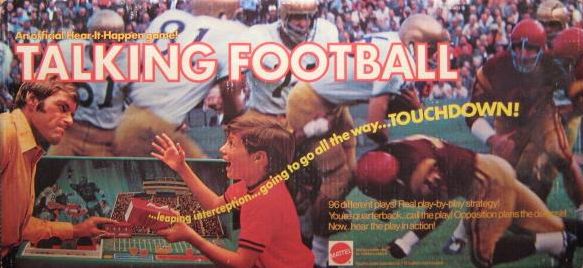
talkingfbbox

I was never a sporty kid, on the field or off. My playtime in the 1970s and 80s was much more apt to be spent gluing-up Airfix models, battling with Kenner Star Wars action figures or campaigning through the latest Dungeons & Dragons adventure. One of the few memories I have of a game I loved as a kid that didn’t involve dank passages, spellcraft and random encounters with wandering bugbears was Mattel’s Talking Football game.

First released in 1971 and then re-reissued in 1977 as Talking ABC Monday Night Football, this semi-obscure classic was the alternative to the electric football games a lot of my friends had in the 1970s. The electric football games looked great with their customizable football player miniatures vibrating all over the little field in random directions but those never really added up to much of a game for me. Talking Football was in a league of its own.

talkingfbcontentsTalking Football had a pretty conventional football field playing board with sliding plastic clips to show yardage progress and first down markers. Other plastic components included a little scoreboard and a place to mark downs and quarters. The nifty mechanic of the game was in the tiny plastic records that made the game “talk.” Play began with the offensive player selecting from one of the ten “standard” play or three “special” play records. The chosen record was inserted into a little handheld player and then the defensive player rotated the record to a defensive play. Once plays were selected, a lever was pressed and simulated audio recordings of announcers calling the play would play in combination of the offensive and defensive selections. The result of the play would be recorded on the field and the next play would be set.

To a kid living in the pre-videogame era of the late 1970s, Talking Football was a blast and a bit of a technological wonder. Over time, players got used to the hundred or so combinations of plays and the game would repeat itself a bit at times. This became part of the strategy, as the game was basically one of picking the right play you thought would best defeat what you predicted your opponent would pick. To answer the repetitive standard set of 13 records, Mattel also offered expansion packs for the game with celebrity player voices on picture disc records, including Merlin Olsen and O.J. Simpson.

I didn’t own a copy of Talking Football, but one of my good friends did. Flash forward more than three decades, and that friend is an on-air radio personality at a rock station in Northern New York State. I don’t know if the hours we spent playing Talking Football and hearing those recorded announcers call plays had any effect on my friend’s future career choice. That said, I think of how games shaped me into the person I am today and like to think that maybe those scratchy, plastic voices still reverberate with my old friend today.

Collector’s Note: Mattel’s Talking Football can be found for sale from special sports memorabilia companies and on eBay. The standard game can run anywhere from $40-200, depending on condition. Buyers should beware that many collectors indicate the original players haven’t always aged very well due to their cheap, dated technology. The individual player records go for around $10 apiece.