The Four-Decade History and Future of NYC’s Trailblazing Metropolitan Wargamers

Editorial note: I wrote this article in May of 2024 on the occasion of the 40th anniversary of Metropolitan Wargamers. The article was originally published by SDHist here.

Background

Metropolitan Wargamers (MWG) was founded in 1984. The club is New York City’s premier and longest-operating gaming organization in the five boroughs with its own dedicated private gaming spaces.

MWG grew out of of the New York Wargamers Association (NYWA), founded in the early 1970s as an affiliation of local Napoleonic miniatures players. By the early 80s, some members of the group split off to form what would become MWG. The club’s first permanent yet short-lived home was on Steinway Street in Queens in a cramped second-story apartment with a couple of small tables and a leaky hole in the roof.

After losing this space, the club moved to its largest space at 20 Broadway in Williamsburg, Brooklyn. In the early 90s, the club was regularly listed in the “Opponents Wanted” section of Avalon Hill’s The General magazine. It touted “its own 2,000 square foot loft for boardgames and miniatures” and “facilities and members to play any game, anytime.”

Occupying the entire second floor of a warehouse, the Broadway space held six tables (plus a poker table) and lines of shelves along the walls holding miniatures, games and an enormous collection of military and history books and magazines. With a dingy couch, a threadbare area rug, peeling linoleum floors, overhead fluorescent lighting, a closet with a cold-water sink and toilet, and an industrial heater mounted to the corner of the ceiling, the Metropolitan Wargamers in Williamsburg reflected the grit of a Brooklyn since largely faded into memory.

For years, a small, dedicated group of about a dozen members struggled to scrape together money to cover rent and keep the club operating. The Broadway building was sold (and subsequently demolished) during the Brooklyn real estate development boom of the early 2000s.,After that, the club moved to its current location in the basement of a four-story, eight-unit 1920 apartment building at 522 Fifth Street in the heart of Park Slope, Brooklyn. (Entrance door pictured above.)

Set-Up

When the club arrived at its new Park Slope home, it was a raw, unused space. About $300 was initially invested in building new tables and shelves. It is still very much a semi-raw basement with a painted concrete floor and brick and stone foundation walls.

We have a front room with three 4’ x 5’ tables, each with multiple racks underneath to hold games in progress, plus a small 4’ x 4’ kitchen style table we salvaged off the street.

The front room at Metropolitan Wargamers.

Moving down a narrow hall, we have our “monster game” table measuring 8’ x 8’ which plays host to large footprint multi-month games such as World In Flames or Pacific War. The three tables at the rear of the club (two at 5’ x 8’ and one at 5’ x 10’) all have removable tops, handy for hosting months-long games like Empires In Arms or a big RPG dungeon crawl miniatures campaign.

The back room at Metropolitan Wargamers, featuring sand tables and walls of lined with miniatures and games.

Most uniquely, lifting the covers off two of the tables reveals sand tables for miniatures gaming. World War II miniatures games such as Battleground, Flames of War, O Group and Bolt Action have often been played on these sand tables.

A recent game of O Group in 15mm, with members and visiting guest from Detroit, on one of the club’s sand tables.

Shelves line the walls of the club, and first-time visitors usually gaze in awe at their contents of hundreds of games and thousands of miniatures. Shelves in the rear hold club-owned terrain – trees, buildings, gaming mats, rivers, roads, hills, and buildings ranging from historical periods to sci-fi and fantasy in multiple scales. A tall rack holds a dozen 4’ x 4’ sheets of plywood where more in-progress games can be stowed. Most of the shelves are rented by members to store personal collections of games and miniatures.

A 20mm Battleground game on one of the club’s sand tables.

Creature comforts at the club are few. There’s a refrigerator, microwave and coffee maker at the front, a tiny bathroom at the rear, and stairs up and out the back to a small private yard. The yard is used to spray-paint miniatures, and is where we’ll throw food on the grill during warm months.

The Battle of the Monongahela in 28mm using Muskets & Tomahawks rules at the club (figures and scenario by the author).

We finally installed free Wi-Fi within the past two years. Other than that, not a lot has changed since we made the move twenty years ago, and the club remains a bare-bones space solely focused on gaming.

Rules

So how do we manage this gamer’s paradise nestled on a side street in one of the more expensive neighborhoods in Brooklyn? We are fortunate to have a very good relationship with our landlord, who rents us the space for what is far below what he charges for one of his $3200 per month two-bedroom apartments upstairs.

Visitors attend for free as guests their first time at the club, and then pay a weekly fee of $15 whenever they stop by to play again. There’s an option for regular guest players to pay $40 per month for as much gaming as they want, provided they are there with one of our members.

Members and guest playing Root at the club.

The real magic comes in being voted in as a member of MWG after a 3-month probationary period of paying a monthly fee. With membership comes a set of keys to the club, granting 24/7 access to the space. That said, some visitors pay at the weekly rate for years without becoming members. For gamers largely living in small NYC apartments, the monthly fee of $40 for membership and $20 for a private shelf is a real deal.

Over the past ten years, membership has held steady at around 35 in number, give or take. We each pay our nominal fees, which pays for rent, utilities, cleaning supplies (one member pays no fees and handles all our cleaning and maintenance work) and whatever else comes up like building new shelves or replacing major things like the sink. Because our costs are relatively fixed, we’ve been able to maintain our very reasonable fee structure for years.
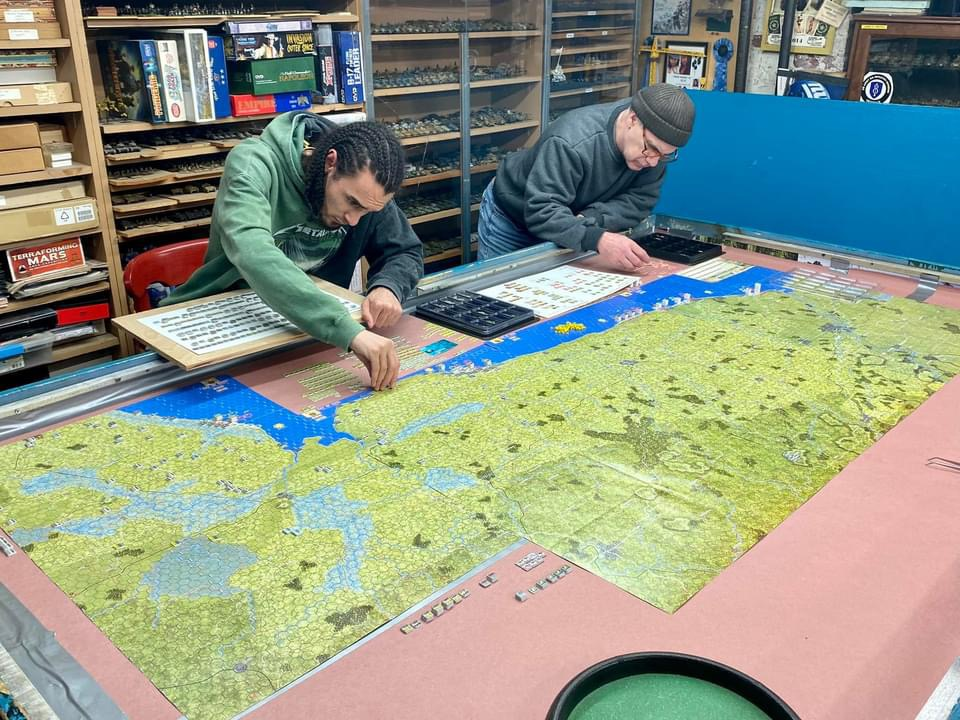
Father and son team James Jr. and James Sr. are often found playing big WWII hex and counter games, like Day of Days, over weeks on the club’s tables. James Jr. is just one of the people who have grown up in the club.

Modern gaming cafes in the city typically charge $15 for three to four hours of play, so the club is a bargain for serious gamers looking to clock many hours or even entire days of gaming. Unlike these café spaces, however, we are not open to walk-in traffic.And we don’t keep regular hours, so arrangements to visit are coordinated through an online club message board and via our social media channels on Facebook and Instagram.

Leviathans on the table surrounded by brick arches in the front room of the club. Second from left is Frank, our venerable eldest member and honorary Master of Arms.

Minors aren’t allowed without parents, but we’ve seen a few kids grow up within the club and come back to visit and play. We also don’t rent our space out, although we’ve been asked many times over the years.

Historical Notes

Membership has evolved greatly over the decades at MWG. Our founding members were largely working class first- and second-generation Italian, Irish and Greek New Yorkers who came of age in the 60s, 70s and 80s when New York City was a very different place. Stories abound with some members carrying knives and guns coming to and from the club in Williamsburg.
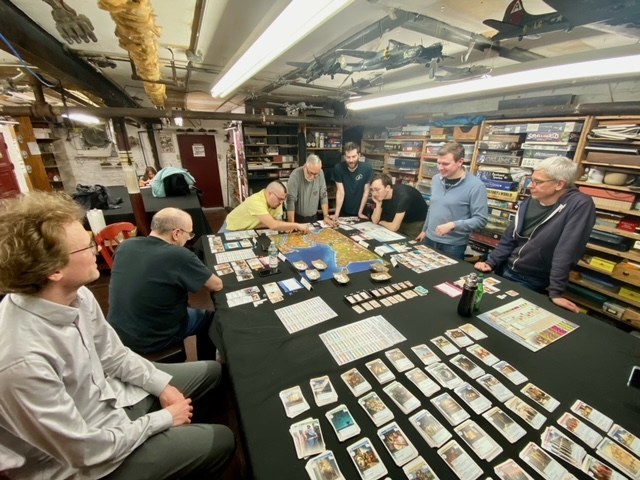
A day-long, 10-player game of MegaCiv at the club. Club founder Tony is second from left.

Today, about half our current membership reflects the modern influx of GenXers and Millennials who flocked to the city since the mid-90s. Our membership ranges in age from mid-20s to mid-80s. We’ve only ever had a few women as members at any given time. We’re fortunate to have many of the old guard around to share our history and that of the hobby with newer arrivals.

The games we play at MWG have also changed significantly. In its first decade, the club was almost exclusively home to historical miniatures gaming including Ancients, Hundred Years War, Napoleonic, American Civil War and World War II, all at multiple scales. Some board gaming from classic publishers like Avalon Hill and SPI also made regular appearances. Through the 1990s and into the 2000s, Warhammer Fantasy, Ancients and 40K rose to prominence, as did a greater interest in emerging Eurogames.
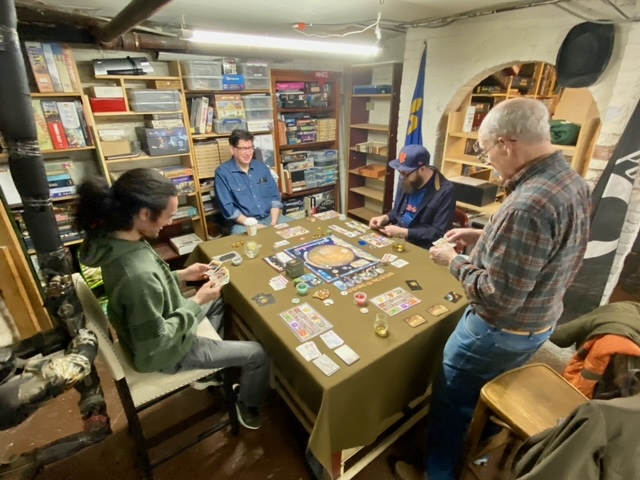
Club favorite Terraforming Mars shows up on the tables about once a week. Club founder Joe is at right.

While miniatures, including WWII, ACW, French & Indian War, Robotech, Epic 40K, Star Wars: Legion and Marvel: Crisis Protocol, have been played recently, most of the club’s gaming interests have moved toward a focus on modern board games and wargames in the past 10 years. RPGs have also continued to have a small but consistent presence at the club throughout its history.

Over its history, MWG has also been an incubator for game design and playtesting. A number of our earliest members spent time at the offices of SPI here in NYC in the 70s and 80s playtesting now-classic games. The club has included prominent designers in its membership, including Adam Starkweather (IGS, MMP) and Carl Fung (SCS and BCS, MMP), newer designers like Mike Willner (Prelude to Revolution, Compass Games) and Mike Lorino (Seminal Catastrophe, Vuca Simulations), and GMT Games Art Director Justin Martinez.

Members have won multiple awards at regional Historical Miniatures Gaming Society (HMGS) conventions. And the club continues to host visitors from across the country and around the world. That has included gamers from Spain, the UK and Australia.

Running an organization like ours has not been without its challenges. We’ve had more than a couple floods, weathered some internal controversies, and survived an extended shutdown during the COVID-19 pandemic (during which time most members continued paying dues and we received a grant from HMGS to offset a financial shortfall). Most recently there has been some conversation about changing our name to Metropolitan Tabletop Gamers to potentially broaden our appeal, but we continue to see new people show up almost every week just as we are.
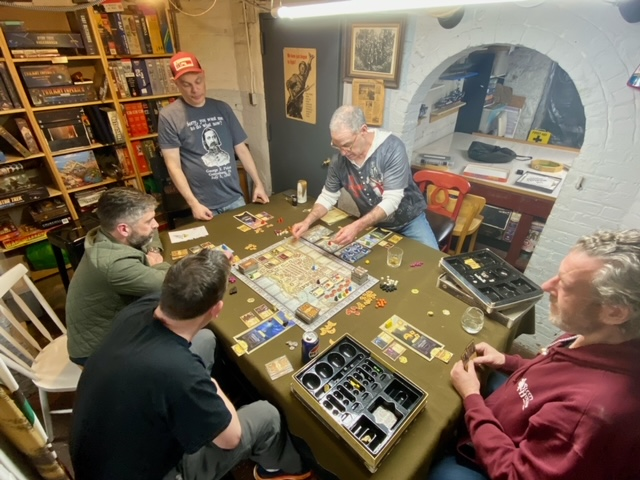
Another club favorite, Lords of Waterdeep, often serves as the opening or closing game of a day.

In 2024, Metropolitan Wargamers is celebrating its 40th anniversary. I’ve been fortunate to serve as President of MWG for the past ten years, and it remains one of the more unique communities of which I’ve been a part. The hobby, the city, the club, and its members have all changed over the years, but our core personality has remained intact as a community of dedicated gamers.

French and Indian War: Scottish Highlanders from AW Miniatures

I have Scottish Highlander units from a number of manufacturers suitable for the French and Indian War but I’m always looking to create variety on the table with other miniature sources. For my latest Highlanders, I turned again to AW Miniatures which I had used for French Regulars, British Light Infantry, British Grenadiers and some Woodland Indians.

AW Miniatures makes stout, easy-to-paint sculpts, and scale well with the likes of Galloping Major Wargames and Redoubt Enterprises. They have a pretty extensive line for the period, and for this project I picked up a six-figure pack of Highlanders (FIW87), an officer (FIW91) and a bagpiper (FIW93) — I really needed a bagpiper for my Highlander units.

These models are a real joy with multiple kilted poses advancing, charging and firing all found in this small pack. They are also a pleasure to paint with chunky details making them relatively quick and easy work to get them on the table.

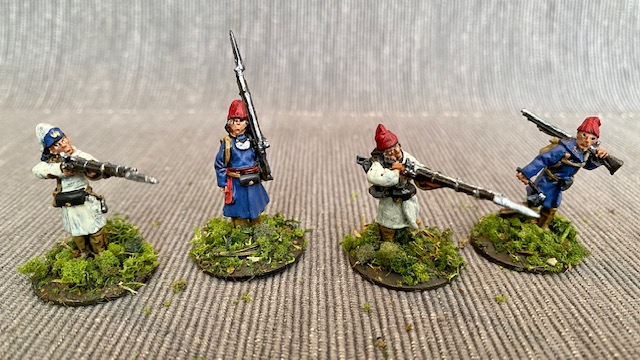
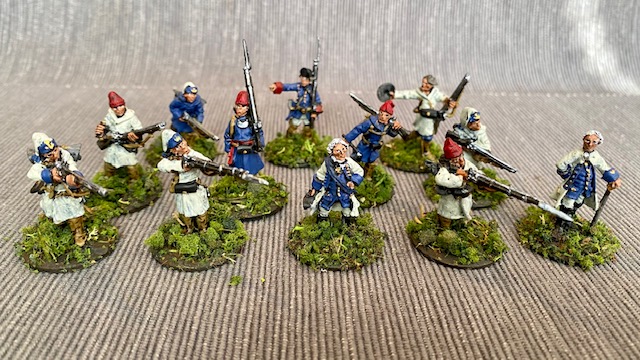
French and Indian War: French Canadian Militia from Black Hussar Miniatures

At the onset of the French and Indian War, the vast majority of “French” troops in North America were in fact, Canadian militia. First raised as early as the mid-1600s, Canadian militias (or “Milices Canadiennes”) compromised some 15,000 troops by the early 1750s. By the time the Seven Years War arrived in the North American French colonies of Canada, the militia was divided into three main government sections of Montréal, Québec and Trois-Rivières. Despite the local makeup of conscripted Canadian men, each militia was commanded by Compagnies Franches de la Marine officers pulled from traditional European training and tradition.

I have a bunch of Canadian militia already in my collection of 28mm FIW figures, but I’m always on the lookout to add diversity. With my latest from Black Hussar Miniatures I’ve found a great assortment of personality and poses which present the irregular nature of Canadian irregular troops of the period.

While some argue that uniform colors conformed to specific regions, most research shows the Canadian militia uniforms were a true mix of equipment and uniforms. Clad in a mix of jackets, frocks and leather leggings borrowed from the style of trappers and local natives, these figures create a great variety in modelling the period in color and texture.

Black Hussar sculpts scale toward the middle of manufacturers in 28mm, but as a unit, they hold together nicely. With a variety of animated poses firing, advancing, at the ready and in command, the molds all a unique quality which differs largely from the more regular casts of other makers.
Mixed with the militia fighting men, I particularly appreciate the contrasting formality of the French officers clad in their pressed European uniforms with one leaning casually on a walking stick. I made swift work of all these figures in the typical mix of blues, whites, red and picked out details, but upon consideration of the photos here I realize one more pass on cleaning up details would be of benefit. Even so, the irregular painting of these irregular militia was a treat and welcome addition to my tabletop forces of the period.

French and Indian War: Mule Train from Warlord Games

Eighteenth-century European armies fighting the French and Indian War in the North American wilderness were usually weeks or months away from points of supply. Lines of supply by wagons and animals were critical to campaigns as well as supporting remote fortifications and settlements.

Pack mules from Warlord Games

For my tabletop armies, I already had some pack animals from Wargames Foundry and wagons from Perry Miniatures. Warlord Games offers pack mules in a variety of eras, so I added some of theirs recently to my collection. The warlord sculpts fit right in at scale with all my other manufacturers, and the casts come clean and crisp. It’s the details I really love in these models — a basket of apples, a pig strapped across a large load and a braying, a stubborn mule refusing to move forward. Painted up quickly, they will go well in keeping my miniature armies in supply.

Pack mules from Warlord Games

French and Indian War: Woodland Indian Civilians from Sash and Saber Castings

So much of history focuses on armies that it is hard to remember the vast number of civilians swept up into grand conflicts. By many estimates, more than 10 million native people occupied the North American continent through the 18th-century, and only a fraction of them were direct and active participants as warriors.

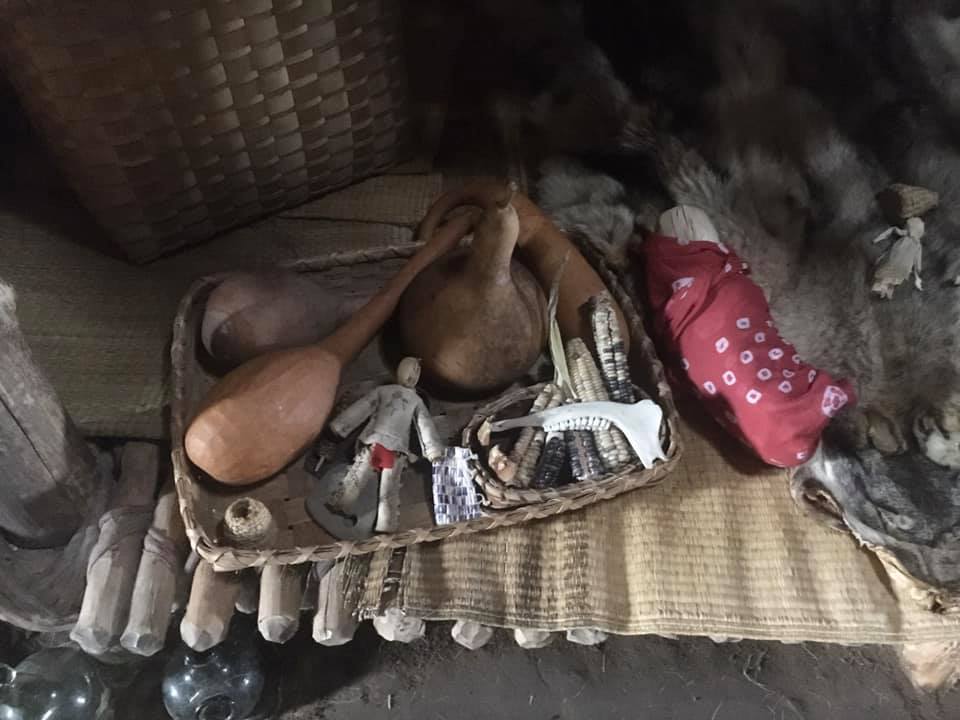
Recreated 17th-century Seneca longhouse at Ganondagan State Historic Site in Victor, NY

Visiting sites like Ganondagan State Historic Site is a real opportunity to step back and experience the life among the men, women and children of the Seneca and other members of the Haudenosaunee. Passing through the introductory cultural film and exhibits of the modern museum, a traditional longhouse greets visitors as a passage back in time to the true experience of the people who once populated Western New York in the centuries predating European arrival.

Everyday 17th-century Seneca items at Ganondagan State Historic Site

Within the natural light of the longhouse, central cooking fires are surrounded by stacked levels of storage and sleeping platforms. The immersive exhibit teems with traditional wares of everyday life and also reveals the influence of European trade goods. Although tour guides will caution visitors against it, one can reach out and feel the trappings of a indigenous civilian just as it was in the 17th-century and years before and after.

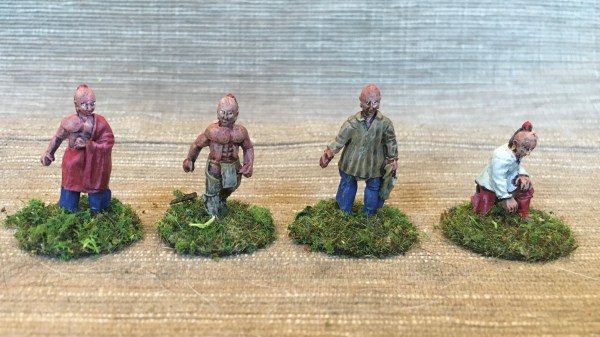
Iroquois Unarmed Men (FIW8) from Sash and saber castings

The 2018 Kickstarter from Sash and Saber Castings launched a broadly comprehensive line of French and Indian War miniatures. Along with the usual military models, the range presented a nice selection of Indian civilians often ignored by wargaming manufacturers.

Iroquois Women (FIW9) from Sash and Saber Castings

In my pledge I included all the Indian civilians packs, including Iroquois Unarmed Men (FIW8), Iroquois Women (FIW9) and Iroquois Children (FIW10). As with everything in the range, the figures present some nice detail in naturally lean sculpts that hew toward 25mm rather than the larger, more common 28mm heroic scale models of today. The inclusion of children and adolescent figures is of particular note as these are almost completely absent in the hobby.

The full line is now available on the company’s website, retailing for $8 a pack. Taking a dive into the Sash and Saber range is endlessly rewarding whether your armies need more troops or whether you want to get some realism on the table with these native villagers of the period.

Iroquois Children (FIW10) from Sash and Saber Castings

Star Wars Legion: Rebel Commandos and Commander Leia Organa

As a first generation Star Wars fan, I’ve always loved the Rebel Commandos from the Battle of Endor in 1985’s Return of the Jedi. The gritty, rugged camouflage-clad fighters have always reminded me of World War II or Vietnam War soldiers, just the sort of realism found in so much of the Star Wars saga.

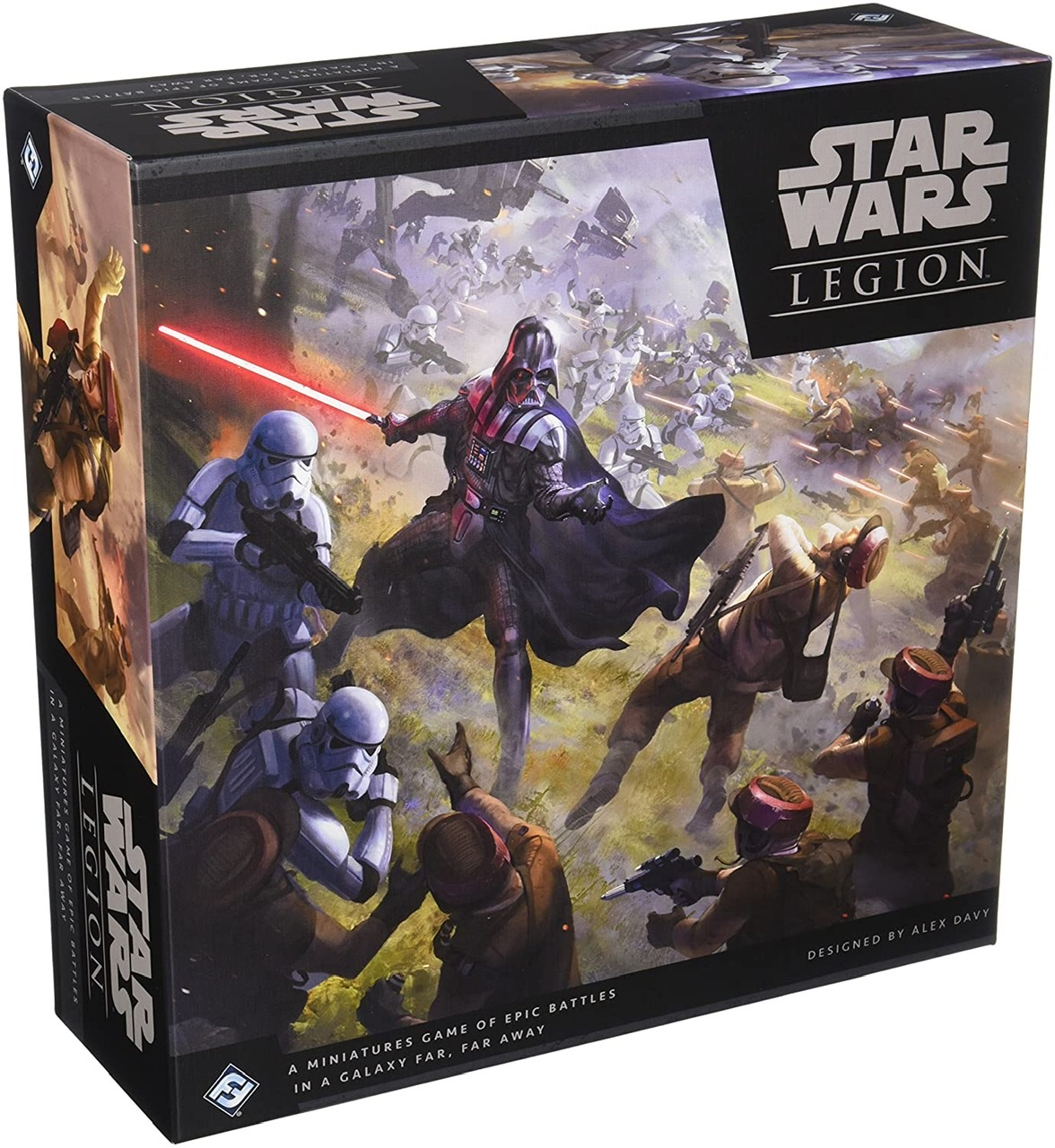
Having just jumped into Star Wars Legion from Fantasy Flight Games, I’ve quickly moved to boost my forces from the base starter set. Given my interest in the Rebel Troopers in the starter kit, it was a natural next-step to add the Rebel Commandos unit expansion to my collection.

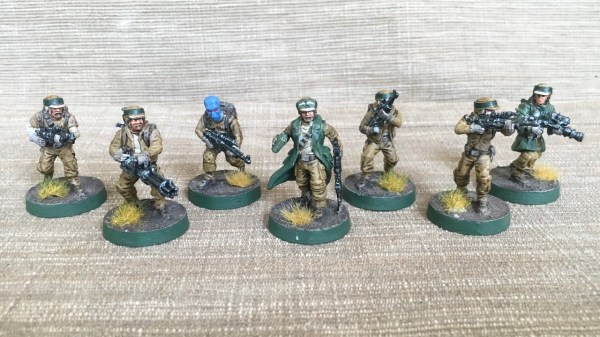
I love the seven figures in this box with their flowing, hooded ponchos and five toting A-280 blaster rifles. The other two figures include a saboteur armed with proton charges and a crouching Mon Calamari sniper carefully aiming a DH-447 rifle with his fish-like eye. The inclusion of this alien race, along with a Dressellian, expands the story of the Rebellion stretching across systems.

Leading them all, I added the Commander Leia Organa figure to the squad. her figure strikes a heroic pose on the run, and blaster at outstretched. With the Rebel Commandos at her back, Leia is no doubt leading the charge of this small squad fighting for a free galaxy.

Mon Calamari Rebel Sniper and Dressellian Rebel Commando
Rebel Commando and Saboteur
Rebel Commandos
Rebel Commander Leia Organa

Star Wars Legion: Rebel Troopers, AT-RT and Luke Skywalker

Before I was a gamer or miniatures modeler, I was a fan of Star Wars when my mom plopped me down in a movie theater seat in the summer of 1977. Over more than four decades of movies, TV shows, cartoons, books, action figures, puzzles, board games, shirts and all things Star Wars, I’ve remained a huge fan and raised my sons as second generation devotees to the space opera franchise.

Star Wars games in my collection from Fantasy Flight Games

All that said, my Star Wars gaming has been limited until recently. I jumped in early with Star Wars X-Wing, and I’ve added a bunch of other Star Wars games from Fantasy Flight Games to my collection over the years including Armada, Imperial Assault. Destiny and Rebellion.

In 2019, I picked up a copy of Star Wars Legion at a discount, opened it up, looked at the models, leafed through the rules and put it back on the shelf. In the past month, my sons and I decided to give it another look. One of my sons went to work painting up the Imperials and I tasked myself with painting the Rebel units.

I’m generally not a fan of plastic miniatures, but at the large 34mm scale, the figures are a joy to paint. The Rebel units have a lot of personality and detail with a mix of weapons and gear. The AT-RT and Luke Skywalker models are also a lot of fun, adding diversity to the two squads included in the base starter kit.

I was a bit skeptical of the skirmish nature of a Star Wars game, given the general epic proportion of the saga. The base set is a huge value for the amount of stuff that comes in the box, and the quality of the painted-up models really pops. With my first figures painted and a new dive into the rules, my mind has been changed. I’m going to be quickly adding more from the Legion game to my collection and playing out my own Star Wars stories on the table soon.

Rebel Troopers
Rebel MPL-57 Ion Trooper, Unit Leader and Z-6 Trooper
Rebel Trooper Squad
Rebel AT-RT and Luke Skywalker
Completed Rebel Troopers, AT-RT and Luke Skywalker from the Star Wars Legion Base Set

28mm: German 10.5cm leFH 18/40 Howitzers from Warlord Games

Pin on Artillery

I’ve had a project on my list for a long time to fully model a game of the Brecourt Manor Assault from June 6, 1944 (made famous by HBO’s Band of Brothers series) in 28mm. I’ve had all the individual German and American 101st Airborne figures for quite a while but on of the primary obstacles was modelling the four 10.5cm leFH 18/40 howitzers which were the objectives in the famed US assault.

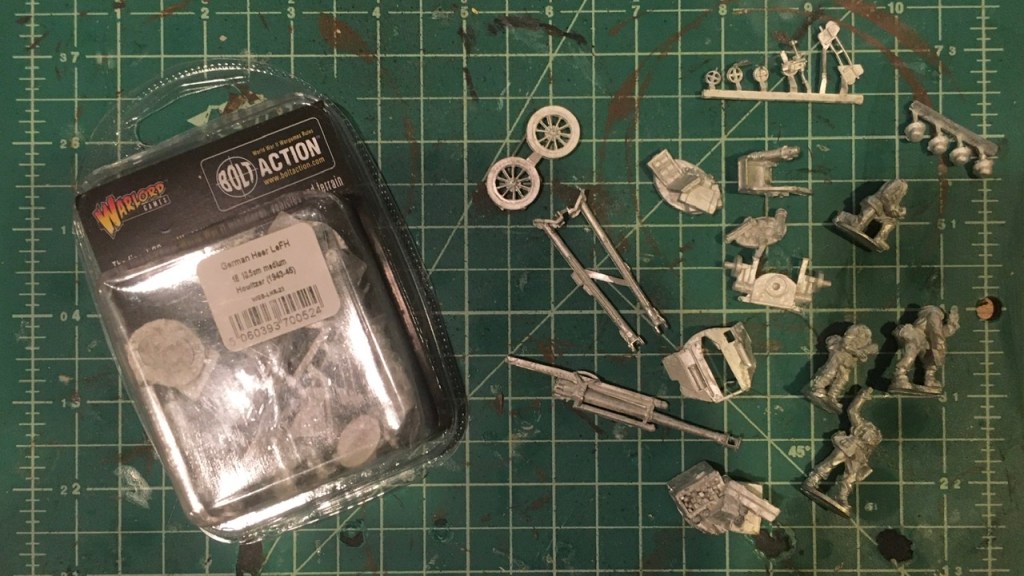
Unassembled German Heer leFH 18/40 10.5cm howitzer (1943-45) from Warlord Games

I finally broke down and picked up four of the models from Warlord Games at about $30 USD each. As pure objectives, this was a high rice to pay for models that were going to serve no game purpose other than table decoration.

Assembled German Heer leFH 18/40 10.5cm howitzer (1943-45) from Warlord Games

I have a lot of Warlord’s metal (always metal) models from their Bolt Action line, and I’ve always found the casts to be detailed and clean. The package comes with the gun, four crew figures and a couple pieces of crates to add flavor to the set-up. Assembly of the howitzers is a bit finicky but Warlord offers a diagram online to guide gluing up the kit. My one knock is there is no option for variation in the crew, given I’m fielding four of these, but this is a minor complaint.

Primed German Heer leFH 18/40 10.5cm howitzer (1943-45) from Warlord Games

I mounted up the figures and extra pieces on washers, filled the bases and primed black. Once I got to the painting, the work went fast with simple color schemes and just a few details picked out on the crew. Assembled and painted, the howitzer and crew really pay off. With one done, I had three more to go to get another step closer to getting my vision for the scenario closer to a gaming reality.

French and Indian War: Pennsylvania Provincials and British Command from Sash and Saber Castings

One of the joys of painting figures for the French and Indian War is in the diversity of uniforms among British colonial forces. Previously I’ve painted up units to reflect Virginia Provincials and the British Royal American Regiment which allow for uniforms that deviate from the usual red-coated British Regulars of 18th-century England.

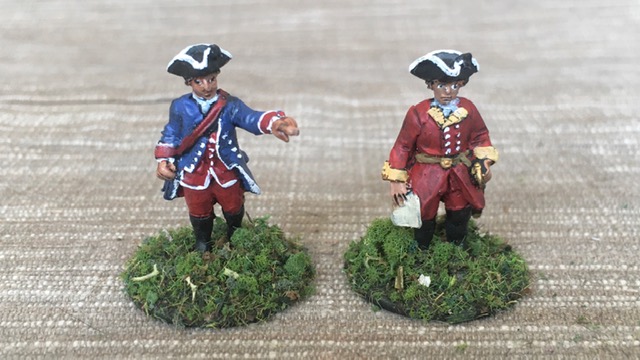
I took advantage of having a few four-packs of unpainted British Provincial models from the relatively new and extensive line of FIW models from Sash and Saber Castings to add a Pennsylvania Provincial Regiment to my collection. My force consists of Provincials Firing (FWB28), Loading (FWB29) and Advancing (FWB30), plus Provincial Officers and NCOs (FWB213). With green coats, red vests and tan leather breeches, the color scheme provides a great break from the more typical mix of red and blue clothing on most British soldiers. Together, the sixteen figures allows me to field two units of Pennsylvania Provincials.

Sash and Saber sculpts hew toward the smaller side of 28mm figures (like those from Conquest and Perry Miniatures) with thinner, naturalistic scaling still filled with decent variations in pose and personality. While details fade a bit in faces, sculpted equipment, uniforms and poses all offer the kind of variety I seek in the models I like to paint.

I also purchased the British Personalities pack (FWB402) which includes Lt. Col. George Washington and Jeffrey Amherst, Commander-In-Chief of British Forces in North America during the FIW. The Washington figure is one of three I own of him (along with those from Eureka and Warlord), and he is dressed in his blue British Virginia Provincial officer uniform he wore during the war. Amherst stands with orders in his hand by his side, a nice detail that makes Sash and Saber sculpts unique within such an extensive line.

French and Indian War: Campsite Terrain from Renedra Limited, WizKids and Mantic Games

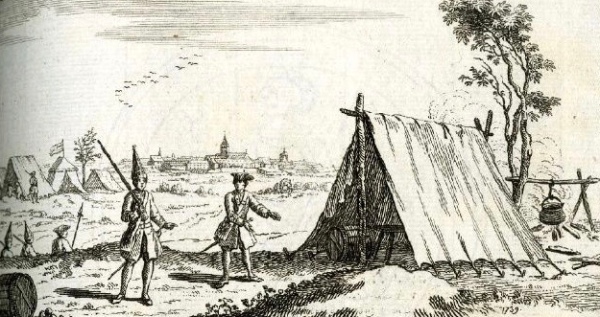
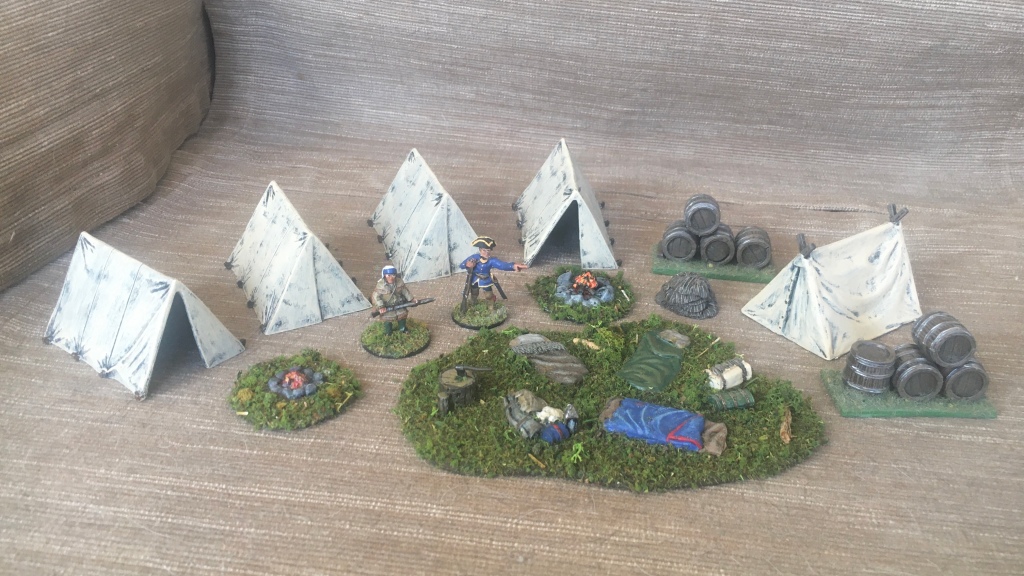
Gaming miniatures scenarios in the wilderness of 18th-century America and the French and Indian War period necessitates terrain that speaks of the period’s stories, often played out far away from towns and homesteads. With campaign seasons hacked through the woods of the Northeast, Ohio Country and Great Lakes region, impermanent campsites are often the more regular terrain encountered during play.

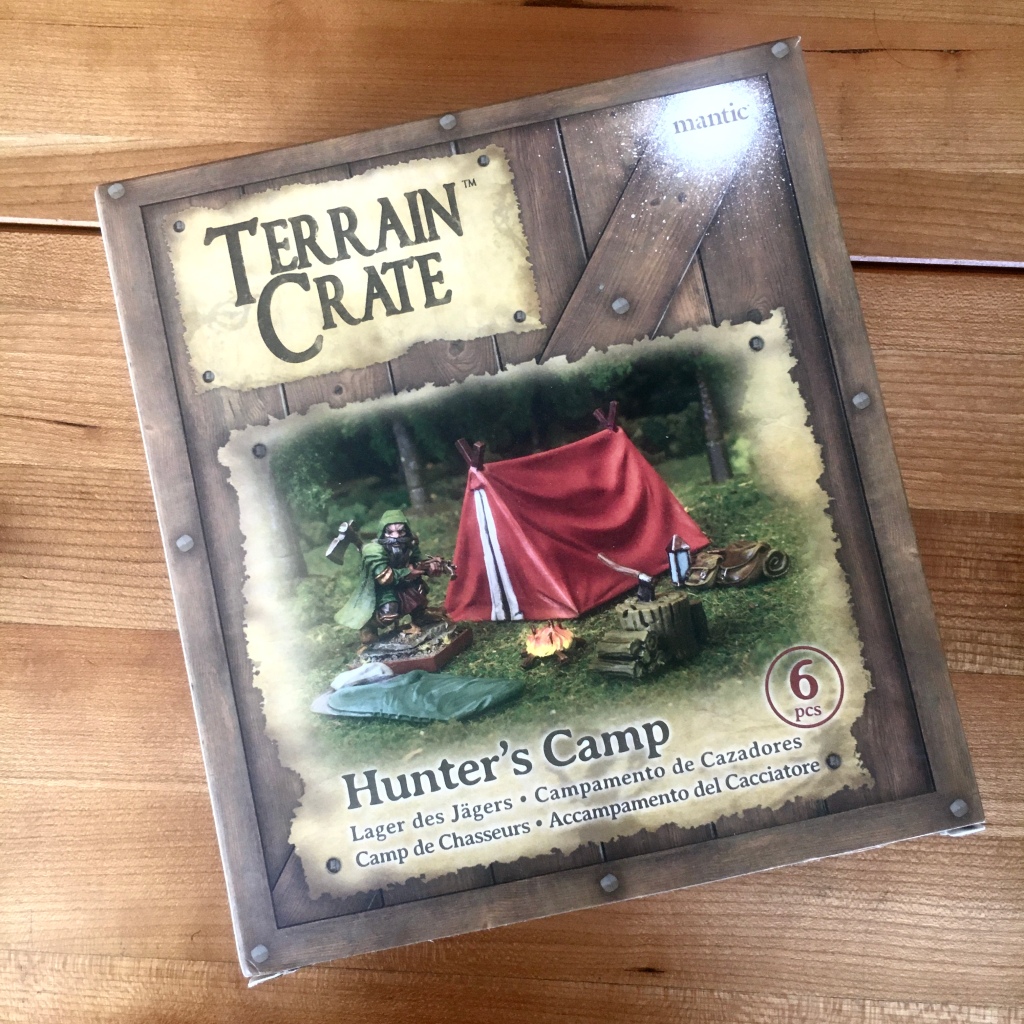
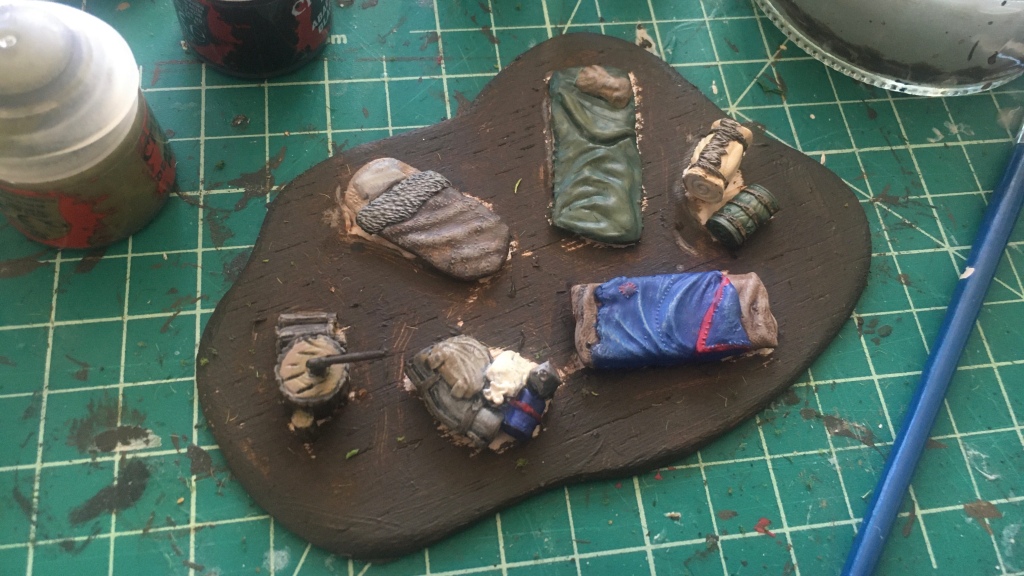
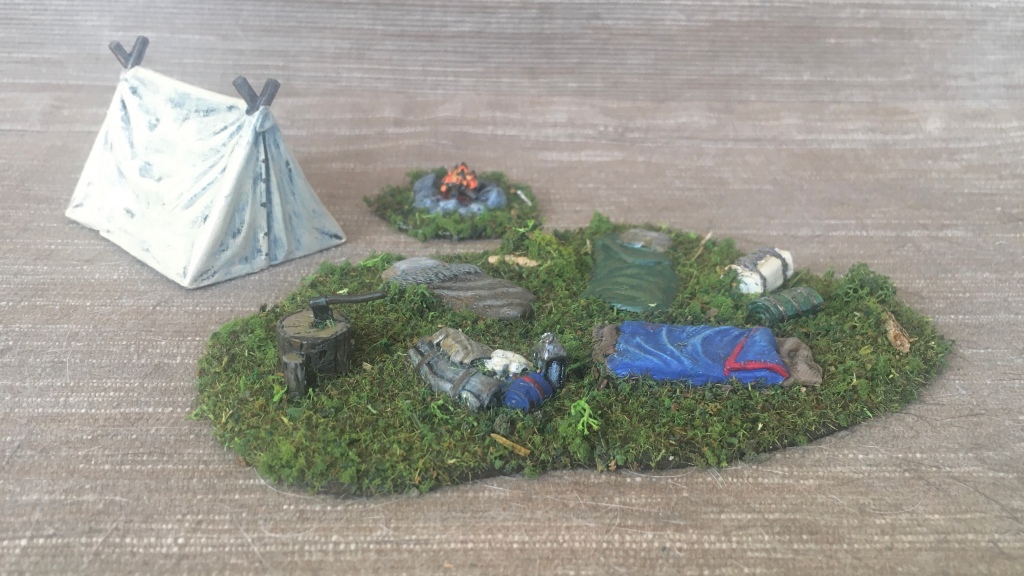
I’ve found a couple manufacturer’s that provide some great, inexpensive plastic terrain to create campsite vignettes on the table. The Terrain Crate Hunter’s Camp from Mantic Games, while produced for fantasy role-playing gaming, is a great out-of-the box foundation for any wilderness camp. The inexpensive box comes with a tent, campfire, bedroll, stack of gear and firewood pile. My one knock on the set is the rubbery plastic that takes flat paint and creates a bit of a gloss.

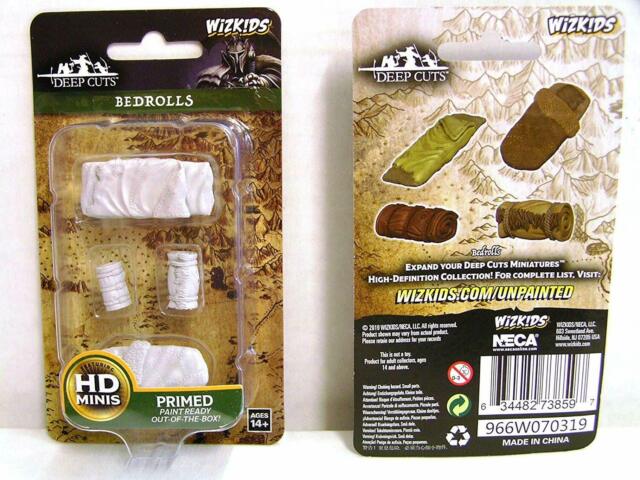
To supplement this set, I have a couple more bedrolls from the blisterpack from WizKids. These casts are primed and take paint exceedignly well right out of the box. The company has been adding all sorts of terrain, bits and pieces to their line of figures over the past few years including cannons, barrels, boxes, furniture, etc., all of which can find a home in a historical setting.

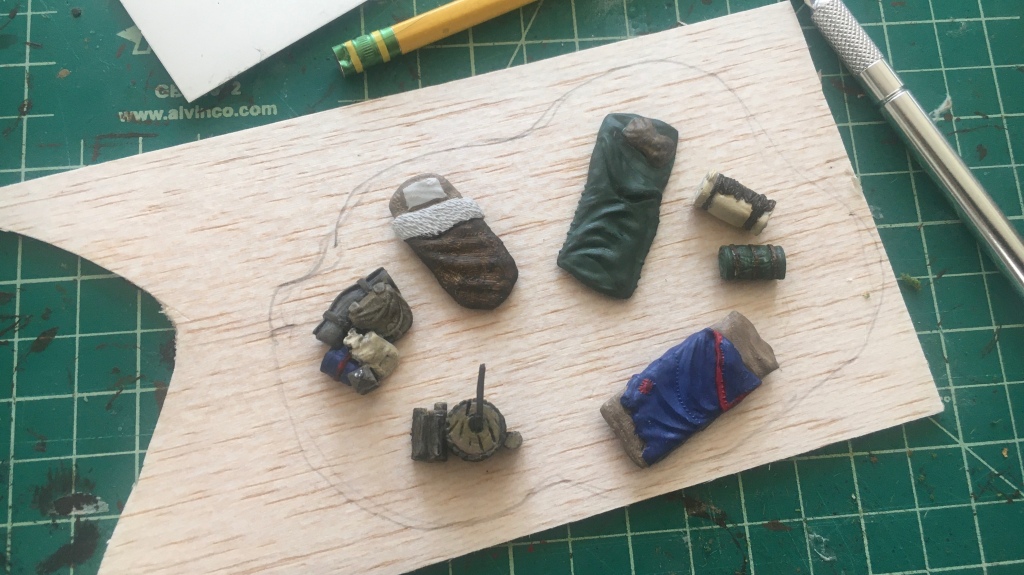
I painted and glued up all the smaller WizKids and Mantic pieces onto a freeform cut balsa base which I flocked. I kept the tent and campire (mounted on a large metal washer) separate from tha larger campsite scene for ease of tarnsport and a bit more flexibility of use on the table.

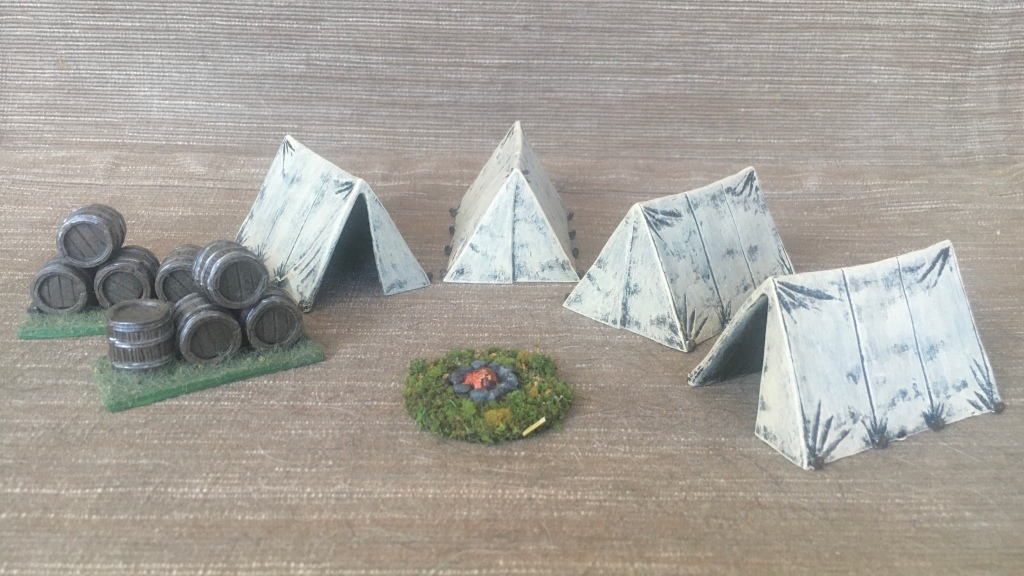
I also have a number of ridge tents, a campfire and barrels from Renedra Ltd. Like the other manufacturers above, this UK-based company manufacturers a variety of plastic terrain including buildings, fences and gabions apprpriate to the 18th-century. The barrels glue up from two halves and I mounted them up in various piles on smll strips of balsa.

Along the way, I’ve also picked up a resin cast of a pile of beaver pelts, a key item for traders making their way through the North American back woods of the 1700s. All together, these elements from three manufacturers combine to give me a pretty good sized campsite for trappers adventuring in the wilderness or a European army on campaign.