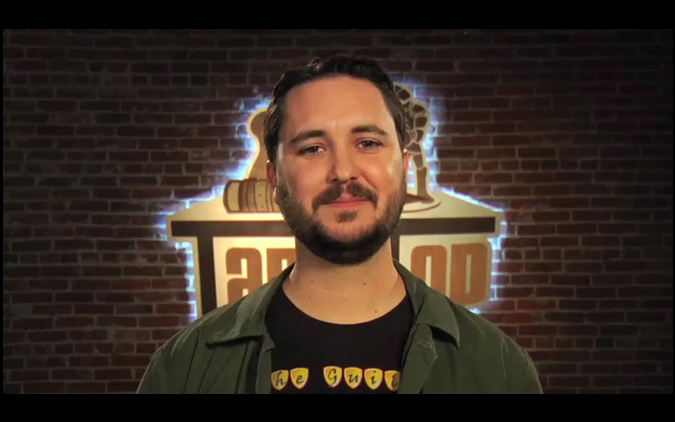
Wil Wheaton’s TableTop

Most people remember Wil Wheaton as the actor who played Wesley Crusher on the television series “Star Trek: The Next Generation.” In his years since, Wheaton has had a growing presence as one of the more prominent celebrities involved in gaming.

This past year Wheaton launched TableTop, a webseries on the Geek & Sundry web community. For longtime gamers, the premise is as familiar as a Friday night: get some friends together, play a game and enjoy the shenanigans that unfold. Wheaton pulls together a mix of actors, writers and comedians with varying levels of experience in gaming, but the results are usually hiliarious (and often a bit off-color) as the witty crew play through such games as Settlers of Catan, Ticket To Ride, Munchkin and others.

The TableTop series is so incredibly simple in its conceit and production but very effective in capturing the joys of gaming — creativity, camaraderie and comedy. Wheaton and his guest players also demonstrate how incredibly social gaming is for people of all ages and backgrounds.

The show is on hiatus until early 2013, but you can check out all this year’s episodes online. Check out the show, get some friends together over the holidays and play a game.

Painting and Playing

Wargaming broadly falls into three categories — paper-and-pencil games, board games and miniatures gaming. Dungeons & Dragons is the classic pencil-and-paper game, with games played out largely through verbal role-playing with a lot of note-taking and mapping on paper. Board games are great to pull off a shelf, set up and play, often in one sitting.

Miniatures wargaming is my favorite. The hobby combines two entirely different aspects – painting and playing. Firstly, miniatures wargaming involves obtaining often hundreds of plastic or metal figures in various sizes from just a few millimeters to nearly two inches tall. A fair amount of research usually goes into creating forces of the proper size and and make up. Then there’s a lot of gluing to get poses and equipment together in realistic and historically-accurate configurations. Lastly, a miniatures modeller is faced with hours and hours of painting with tiny brushes, dabbing paint on uniforms, weapons, gear and exposed faces and hands. Even within the same historical era, say WWII or the American Civil War, there are nearly-limitless variations in how miniatures can be painted. Beyond the figures themselves, setting up a wargame usually involves creating terrain including buildings, trees, rivers, roads and hills.

Only after you’ve logged many hours painting up your armies and laying out your terrain can the miniatures wargamer get on to the second half of the hobby — actually playing. Again, miniatures wargaming has a tremendous variety of rulesets available depending on the era, scale and size of a game desired. Some games might involve skirmish-level battles with just a couple dozens figures on a side and other games can be of a grand tactical scale with hundreds (or thousands) of troops filling the field. Rulesets can run from just a few pages to dozens of books, and some gamers choose to write their own “home-brewed” rules. Some companies such as Flames of War or Games Workshop manufacture self-contained systems of miniatures and rules, even offering some starter sets of figures, rules, paints and dice all in one box for new players.

For a glimpse at the intersection of painting and playing wargames, check out the newly-updated pages on my Gaming and Painting page. Whether it’s World War II, the American Civil War or the Anglo-Zulu War, each era and scale brings different variety to what I love about the hobby.

“Do you wanna play a game?”

Nearly a year ago I started a new job and was flown from New York to Seattle to spend a week with my new team to plot out our goals for the year. In one of those typical corporate ice-breaker exercises, we each went around the table in turn and stated something unique about ourselves. People talked about how they liked to dance, a funny anecdote from their youth or an exotic trip they once took.

When it was my turn, I said, “I play wargames. I paint hundreds of tiny soldiers and then spend hours refighting historic battles.”

I love games, all sorts of games.

Board games, dice games, card games, strategy games, role playing games, video games, logic games and wargames. For most people I meet, their idea of a game is Monopoly or maybe chess. So, when I start describing my love of games to new acquaintances it usually takes a fair amount of description before they understand.

Brooklyn Wargaming is my new place to talk about games, most probably to an audience who already has an interest but hopefully to other people, too. I’ll post pics on my own gaming adventures, plus some commentary on wider gaming innovation, evolution, theory and applications.

And yes, I would love to play a game.

(photo via Wikimedia Commons)