New Game Weekend: Sid Meier’s Civilization: The Board Game

CivBox

Unlike myself, electronic games have been a constant presence with both my sons since they were born. Now aged 8 and 13, my boys have graduated up through a host of platforms and games with the Leapster, DS, PS2, Wii, PS3, online through sites like Steam and on the iPhone. Over the past year, their obsessive play over Minecraft has been gradually replaced with scores of hours logged with the wildy-popular Civilization V.

Developed more than 20 years ago by Sid Meier and Bruce Shelley, the Civilization franchise has evolved from a PC-only DOS game to occupy a variety of gaming platforms. The turn-based civilization-building mechanic and historical theme sets up an incredibly-engaging and educational universe for players to plan and play out a nearly-endless variety of paths in human advancement from the ancient era to the near future. The latest iteration, Civilization V, broke on the scene in 2010 with two expansions since. Worldwide, the game has sold millions of copies and has continuously won accolades from a couple generations gaming critics and devoted fans alike.

Even though my kids are devoted electronic gamers, they’ve also been raised with a healthy love for card, board and miniatures gaming. So, when my 8-year-old caught wind last week that a boardgame version of Civilization existed, I leapt at the chance to introduce the boys to the game. I’ve played a number of civilization-building games such as Clash of Cultures but hadn’t yet played Civilization.

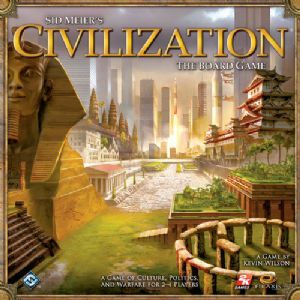
Now published by Fantasy Flight Games, Sid Meier’s Civilization: The Board Game has been around since 2002 and can be found at your local Barnes and Noble for $60 or cheaper online. Like many games of this type, the box comes stuffed with hundreds of components plus more than 300 cards. Geared for 2-4 players ages 14 and up, Civilization takes 3+ hours to play. Fortunately, my boys have been exposed to enough games, both online and on the tabletop, that they’ve been able to quickly pick up on the basic play and strategy Civilization offers.

CivContentsCivilization involves a march toward victory in one of four ways: Economic, Military, Cultural or Technological. Players begin by selecting a civilization such as the Americans, Egyptians, Romans or Russians. Each starting civilization carries its own strengths in play, making this first choice an important one in setting your strategy for the game. Based on the number of players, a map of hidden tiles is laid out and the market area is set up to the side of the board.

After set-up, the game progresses through a series of turns. In the Start Turn, a player may build a city or change their government type – an important choice which can greatly affect the path of a player’s civilization. Next, the Trade Phase allows a player to reap trade points from the areas around their cities and offer trades in resources with other players.

In the City Management Phase, the player may build units or buildings, harvest resources or focus on developing their culture. Building units – Scouts or Armies – allows the player to explore and conquer areas of the board. Constructing buildings such as Markets, Temples or Baracks allows a variety of bonuses to your civilization. At a higher price, Wonders like The Oracle, The Hanging Gardens or Angkor Wat may be built. Finally, a player may pay to build their military prowess through a progression from simple archers and pikemen to tanks and aircraft. Aside from building, a player may harvest resources such as silk, iron, incense or wheat to be later spent to activate certain technologies already researched. A player may also choose to focus on culture, with gained cultural points moving the player up the culture track while also earning special cultural event cards played to change different courses of the game’s play.

Next, in the Movement Phase a players may move their Scouts and/or Armies to explore, claim new territory or engage in combat with a barbarian village or another player. In the final Research Phase, players may spend their earned trade points to develop new technologies. The game’s “technology pyramid” is built progressively by each player as they grow from simple technologies such as Metalurgy and Horseback Riding toward higher level advancements all the way up to Flight and Nuclear Energy.

The play adavances through the above turns until a player arrives at a victory condition. Cultural victory is earned by completing progress on the culture track. A military victory is won by conquering an opponent’s capital city. Earning a technological win is done by completing the technology pyramid all the way up to Space Flight. Finally, an economic outcome is reached by collecting 15 gold coins earned through various actions your civilization makes throughout the game.

To summarize the game in a couple paragraphs is hard, as the variation of play in the game is boundless. This weekend, my younger son and I played through our first quick starter game on an eight-tile two player-map (pic below). Despite over twenty pages or rules and scores of playing pieces to manage, he picked up the game really fast. Along the way, there’s a ton of reading I’m certain is not covered in the general elementary curriculum with stops along the way to have side conversations on the meanings of words such as “despotism” and “anarchy.” At his age, my son’s memory is quite amazing and our discussions of the finer points of the rules has continued even away from the game table.

1001022_10201084784976153_1277385001_n

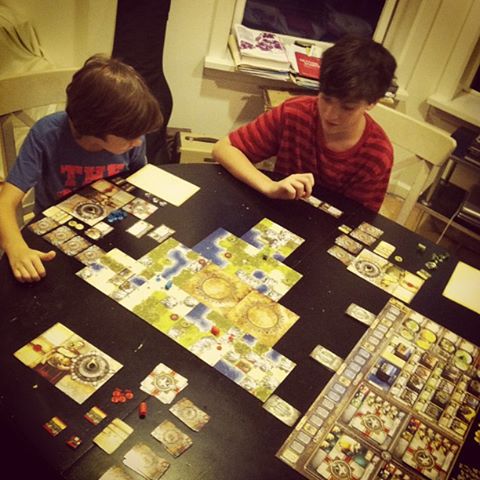
In our second game (pic below), three of us played on a larger map. My older son, a pretty experienced gamer at this point, blew threw a ten minute intro to the rules and played as the Prussians with an aggressively militaristic strategy I’ve grown used to over the years. Using the Egyptians, my younger son focused on culture and building construction. For my own strategy, I played as the Romans with a healthy mix of the military and cultural expansionism for which their empire was known.
1004654_10201085941885075_1372920330_n

For parents and critics of them who decry the falling attention spans of today’s kids, weekends like this past one show how with a bit of parental creativity all the stereotypes simply fall away. A game like Civilization — both online and off — offers so many opportunities to build vocabulary, learn history and develop some complex multi-layered management skills I see sorely lacking in many of the adults I encounter. Over hours of focused play, not only are my sons and I developing our civilizations but we’re also developing each other — an investment in time together well-spent.

New Game Weekend: Innovation

Humans at one of our most basic levels are builders, and gaming offers a wide variety of opportunities to experience the push of civilization building over time. It’s no surprise then that one of the big genres a lot of board, card and even video games fall into is civilization development. The combination of historical facts and the linear nature of societal advancement through the ages lends the subject to a wide variety of games. Gamers return again and again to the chance to play out the evolution of technology, philosophy, warfare, religion, agriculture and art. Sid Meir’s Civilization, Small World, Settlers of Catan, Clash of Cultures and Tzolk’in are just a few of the games I’ve played that fall into this broad category, both historically-based or set in a fantasy realm.

This past weekend at Metropolitan Wargamers, a few of us played through Innovation, the 2010 award-winning card game from Asmadi Games. Retailing at $20, the game consists of 105 unique and text-heavy cards played against a simple set of rules but with a lot complexity in keeping track of your own civilization’s innovation track.

Like most civilization building games, Innovation proceeds along a linear timeline from the Stone Age to the Modern Era. After starting with four cards laid out in front of them, each player chooses two actions in each turn: Draw, Meld, Dogma or Achieve. Cards are drawn from chronological eras numbered 1-10 with cards depicting progressively-advanced innovations. A meld action allows a player to play a like-colored card on top of a card already laid out in front of them. Melded cards supercede the innovation on the cards previously played underneath.

The dogma action is where the meat of the game takes place. Each dogma allows a variety of single or multiple actions that can affect not just the one player but other players displaying equal or greater numbers of symbols such as crowns, factories, lightbulbs, castles, leaves, etc. Dogma actions can result in additional drawn or discarded cards, taking cards from other players or fanning the pile of cards to the right, left, up or down.  As cards are collected and scored, players can take an achieve action to score a level of era achievement for their civilization. Some dogma actions allow a combination of cards to be used to score special achievment cards such as Monument, Empire or Wonder. The first player with five achievements wins the game.

As with most civilization development games, Innovation involves a lot of balance between charting your own progress while keeping an eye on the advancement of other players. Certain dogmas are extremely valuable in moving your civilization forward, but they may also assist the other players, too. This combination of collaborative and competitive play allows Innovation to mirror the arc of human societal development as the ebb and flow of alliances and strength can shift from turn to turn.

Innovation is deceptively easy out of the box, and it’s only through a play through a game or two that the true complexity is felt. Unlike other civilization games which can often  involve managing hundreds of pieces, charts and cards, Innovation’s simple card mechanic is one of its strongest points. The devleopment of human civilization has been a complex road for sure, but with Innovation the road doesn’t get bogged down in a big box of stuff and all the strategy you need is right there in the cards.

Favorite Kickstarters of the Month (July 2013)

Kickstarter can be a weird, volatile environment. Some projects come and go with little fanfare while others soar into the stratosphere with backer support. There can be all manner of highs, lows and outright trouble for projects on their journey from idea to funding to delivery. That said, four of the projects I wrote about in June wound up successfully funded in the past month. The fifth, the seafaring game Admiral, was funded but the project was then suspended inexplicably with a day to go. No doubt there’s a story there, but for now, here are the projects I’ll be watching as we hit the first hot month of the summer in July.

Cthulhu Wars: Drawing on the Cthulhu Mythos of H.P. Lovecraft, this game is the big story in games on Kickstarter right now. With dozens of gorgeously grotesque miniatures and many planned expansions, this strategy board game turns the tables and allows the players to play as Lovecraft’s beastly horde seeking to control the surface of a ruined Earth. Many of the pledgers have bought in at the higher funding levels of $200-500+, no doubt attracted by not only the theme but the tons of extra maps, gaming pieces and figures rewards. The project is trending toward nearly $1 million in funding in its closing days, and the more than 3300 backers are delivering a built-in fan base of this classic horror genre already popular with gamers.

Seas of Iron: I’m not a big naval gaming fan, but I really like the looks of this very modest battleship wargame from Battle Bunker Games. The battleships are comprised of two-sided cards defining the sections of each ship where you deploy your crew and fire volleys at your opponent. When a section is destroyed, cards are flipped over to show that part of your ship aflame. The Kickstarter exclusives include the famed Yamato and Bismarck warships. Just $20 allows for a backer to get a full version of the game which allows enough flexibility for 1-on-1 or small fleet play with combined sets.

Devil Dogs and Dragons: I’ve invested in more than a few of the Anglo-Zulu War 28mm miniatures from Empress Miniatures. They make quality, spirited and detailed miniatures, so its great to see them expanding their Modern Combat line. There’s a lot of interest in gaming modern warfare right now, and the 28mm scale seems to be a clear favorite with small squad-level engagements in the dusty and hot embattled corners of the world. These 28mm figures fill out modern US Marine Corps and Chinese People’s Liberation Army options for deployment in the Asia-Pacific desert and jungle regions. With a bit more imagination, these guys will even find a home in various zombie, alien invasion or post-apocalyptic scenarios.

Fife & Drum American Revolution Range: Just in time for the 4th of July weekend, Fife & Drum Miniatures is also expanding their established line of miniatures. Sculpted in a large 30mm or 1/56 scale, these majestic figures offer incredible detail for the Colonial Period ranging from the Seven Years War to the American War of Independence. The Kickstarter campaign will help fund the company’s expansion into new British cavalry, Hessian, Highlander and French infantry offerings. At the $50 level, backers receive a special three-figure “Spirit of ’76” vignette, making this project perfect for any patriot and fan of the AWI period.

Gettysburg: The Tide Turns: Finally, and in keeping with the theme of American military history, I’m throwing in one video game offering to round out the list. The Battle of Gettysburg is celebrating its 150th anniversary this month, and so this timely iOS game for the iPad and iPhone looks to be a deal at just $10 to back the project. Developed by Shenandoah Studio, the makers of the previously Kickstarted Battle of the Bulge iOS game, this simulation looks to be a very promising 21st-century tribute to the strategy, tactics and heroics found on the famed Pennsylvania battlefield 150 years ago.

Retro Gaming The 70s & 80s: Choose Your Own Adventure Books


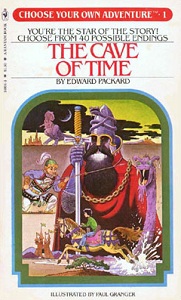
This week there was news the Choose Your Own Adventure (CYOA) book series is to be developed into a film series by 20th Century Fox. Launched in 1979, the series was enormously popular throughout the 80s and 90s, sold over 250 million copies and is still published today. The movie announcement got me thinking about how these books played yet another part in my personal growth as a gamer.

The CYOA series follows the form of a gamebook which allows a reader to participate in how a story unfolds through a a variety of choices made along the way. To a young kid, the CYOA books shared a lot in common with my role playing game interests. Each book presented a fantastically-themed self-contained adventure, International travel, outerspace journeys, crime investigations and sword and sorcery tales filled the pages of each paperback, and collecting them was part of the fun. Choices made while reading each story could take you to more than 20, 30 or 40 different endings to the book, making for a lot of re-reading value in seeing how things might turn out differently each time.

The CYOA mechanic provided the feel of a solo game for when no one else was around with which to play something a bit more complex like D&D. Looking back from today, the structure of jumping back and forth through the narrative is akin to the experience of clicking through hyperlinks online. Even videogames today like 2012’s award-winning The Walking Dead series from Telltale Games share in the basic chapter and choices format people of my generation grew up on.

There’s no telling what shape the proposed Choose Your Own Adventure movies series will take, and it may prove to be yet another Hollywood move to attempt to cash-in on a known property. That said, it’s interesting to see just one more way these books continue to ripple through the culture over 30 years later.

Collector’s Note: The Choose Your Own Adventure series is still published today and can also be picked up fairly easily used starting at about $3-5 each on eBay. For true collectors, first editions from books early in the series can go from hundreds or even over a thosand dollars from rare book dealers like AbeBooks.

Retro Gaming The 70s & 80s: Dungeons & Dragons Computer Labryinth Game

By 1980 I was like a lot of kids with feet in two worlds of gaming — Dungeons & Dragons and electronic games. Both were well on their way to being the worldwide phenomena they would become in the next decade, and Mattel and TSR (then owner of D&D) sought to cash in on the intersecting interest of adolescents everywhere.

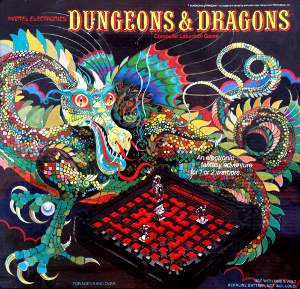
I never owned a copy of Mattel’s Dungeons & Dragons Computer Labryinth Game, but plenty of my friends did. The game looked pretty cool with its 64-square grid of spaces surround by a plastic castle-like wall. Metal figures represented a dragon, two adventurers and a treasure chest. The game could be played solo or with two players. A player moved their piece around the board, placing plastic walls when the board revealed a wall with light-up indicators. Other indicators would light up as you encountered monsters, traps or the dreaded dragon which roared as you approached. A player who avoided the dragon and navigated the revealed maze to the treasure first won the game.

A year before the D&D Computer Labryinth Game was released, Mattel was already competing in the new video game market with its Intellivision system. Those early years of the electronic game market were full of games which promised more than they delivered. Using the word “computer” in this game’s name was no doubt the work of shrewd marketing as the game itself was pretty low tech. Attaching the D&D graphics and brand to the game and even a moody TV ad didn’t do much to cover up for its shortcomings. Looking back, I recall the game even then to be unsatisfying to occasionally frustrating with its randomized LED grid and pieces which never really seemed to fit right. Retailing at around $45, the game didn’t come cheap either.

In 1984, Mattel admitted to its failed also-ran place in the video game market and pulled the plug on its Intellivision system. While it would go on to continued success with its boy-focused toy brands like Hot Wheels, Matchbox and Masters of the Universe, Mattel would never again be  significant player in electronic games. D&D, on the other hand, continues to thrive to this day. While the brand extension foray of the D&D Computer Labryinth Game never really delivered on the promises illustrated in Mattel’s box art, the game does capture a moment in time when gaming was bridging the gap from one era to the next.

Collector’s Note: Complete copies and components of the Dungeons & Dragons Computer Labryinth Game are readily avilable on eBay. Games in the original box run in the $30-50 range while the metal miniatures generally go for $5-10 each.

Gaming Wars In The 21st Century

I was pleasantly surprised to open the back page of this past weekend’s New York Times Sunday Book Review section to an article on the 100th anniversary of H.G. Wells’ “Little Wars.” The book’s Edwardian-era style, classism and occasional not-so-thinly-veiled sexism is mixed with the mechanics of a gaming system which makes it a relevant read even today.  Before “Little Wars,” wargaming had largely resided in Europe’s war colleges and in the parlors of the ruling elite. Even with its English intellectual, upper-crust trappings, “Little Wars” sought to expand the popularity of wargaming. As the article points out, “Little Wars” is an important foundational document and should be required reading for those who are interested in how we’ve arrived at the business of gaming on the tabletops and screens of the world today.

“Little Wars” is widely available for free online and for e-readers today, and “ownership” of gaming is largely the subject of a post today on BoingBoing about Dungeons & Dragons retro-gamers. Whether driven by nostalgia or as a reaction to corporate ownership of a beloved game of their youth, “old school” D&D gamers stress what they believe to be a truer game style more focused on role-playing and less-so on action-driven play. To stay relevant to a new generation brought up on CGI special effects, so the argument goes, the now-owners of D&D Wizards of the Coast have increasingly made the game more combat-heavy (read: more like video games). In reaction to this, retro D&D gamers have created an increasingly-active community of story-driven gamers who look to old rules for inspiration. The ability to share thoughts, opinions and out-of-print rulesets online has only fuelled the movement.

Old school gamers are just the latest combatants  in the war over gaming. The history of wargaming rules development winds its way from military schools and H.G. Wells to postal games and strategy boardgames in the mid-20th century. Games and rules were more fluid in the 1940s-60s where there was little profit to be had in wargaming, and a big part of the gaming community was in the debates over what rules were the most realistic or playable. With a few exceptions, ownership in those days was based more on pride and ego than copyrights and profit. This timeline is well-documented in Jon Peterson’s “Playing At The World” which finally arrives at the early days of D&D.  Even before D&D made the great leap into a world-wide phenomemon there were arguments and accustaions over copyright and ownership. Peterson’s recent analysis of a transitional draft of D&D (the Dalluhn Manuscript) not only adds greater nuanace to the development of the rules themselves but I think also provides another chapter on the concepts of evolutionary, intellectual and legal ownership of games.

Much of the digital conversation today — whether about games, photos, movies or music — hinges on the topics of openness, control and copyright. Along with the free and independent gaming forums and sites, we’ve now been given a new frontier of games on Kickstarter. What used to take years (or even decades) of slow development and debate by word-of-mouth fanzines and postal newsletters, Kickstarter achieves in weeks or days. Players vote with their wallets in support of games which can now easily garner six and seven-figure funding levels, all but guaranteeing a fanbase that literally buys-in at the ground floor. Sites like BoardGameGeek can help make or break the success of a new game and then go on to serve as R&D for game expansions, rule variations and subsequent editions.

A hundred years after “Little Wars” pulled the ownership of wargaming out of the fists of Europe’s elite, we’re still warring over our games. Copyright laws, digital distribution and individual financial investment will continue to shape the next hundred years of the ownership conversation, but gaming is certain to remain a very personal investment for some time to come, too.

Downloading: Zulus On The Ramparts

Living in Brooklyn and commuting back and forth to Manhattan on the subway for work each day, I wind up with a fair amount of time on my hands. I read a lot and the New York Times crossword puzzle is a daily necessity, but sometimes I like to just unwind with a game on my iPhone. I’m not a big electronic player in general, so I was glad to happen across Zulus On The Ramparts! by Victory Point games in the iTunes Store.

Over the past six years or so, Victory Point Games has cranked out dozens of board and card games covering all kinds of scenarios, eras and genres. More recently, they’ve begun releasing a few apps, and Zulus On The Ramparts! just debuted a couple months ago. The game is based on their popular boardgame of the same name from their historical “States of Siege” solitaire games line, and it is available now for iPhone, iPad and Android devices.

As with the boardgame, the app inserts the player into the Battle of Rorke’s Drift. In the January of 1879 battle, a small group of maybe 150 British soldiers from the 24th Regiment of Foot successfully defended a small outpost against a massive army of thousands of Zulus. The battle was popularly dramatized in the 1964 movie “Zulu,” and I was first introduced to it in John Keegan’s “A History of Warfare.” My interest in the battle and the Anglo-Zulu War period has only grown over time, and I’m currently working toward getting a large 28mm scale wargame up and running.

The game progresses through a series of turn phases. First, a random action is chosen for a Zulu impi to move, attack, retreat, stand their ground or perform some other specific action. Each Zulu force appears on the field and then moves over the course of the game through a series of predefined oval spaces which progressively close in on the walls and barricades of the British hospital outpost. Some Zulu actions may cause extra moves or the entire Zulu force to move en masse. Since close range combat is key to a Zulu victory, the first portion of the game is spent quickly organizing and supplying the British before the inevitable attack.

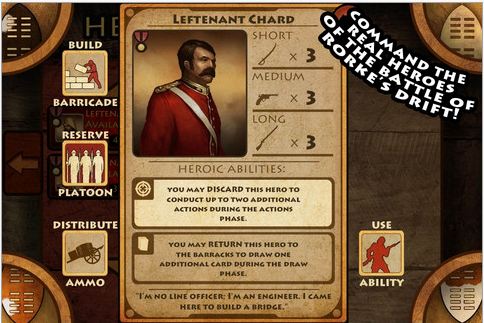
A lot of information is crammed into the game map screen. The position of the Zulus is shown at their various ranges from the fortifications. At the top, the game phase is indicated. On the left side of the screen, various historic officers or more generic soldier characters stand at the ready to use their various bonuses in combat and other special actions. On the right side a running status of supplies such as water and ammo, along with other factors which will effect the outcome. The bottom of the screen displays a clock as the turns click by toward darkness as well as a link that takes you to the “barracks” screen.

On the barracks screen you manage your officers and troops, viewing their heroic abilities on virtual “cards.” Abilities range from calling up reserves, ordering the construction of barricades or distributing supplies to the troops. The barracks also contain combat actions allowing you to fire volleys from your Martini-Henry rifles with various effectiveness of range

Once actions are selected, combat is resolved through a nifty slot machine-like spinning wheel. Depending on range, the type of weapons being fired and any modifiers from heroic actions on activated officer and troop “cards,” combat outcomes are determined. After combat, new cards are randomly placed in your barracks and the next round begins with additional Zulu actions.

Like the historic battle at Rorke’s Drift, time is of the essence in Zulus At The Ramparts! and hours run by quickly on the game clock as the Zulus swarm in on the British and supplies run low. This is a really tough game in a small digital package with lots of variables to manage from turn to turn. Playing on the tiny iPhone screen makes things even harder, and there is probably significant playability to be gained in playing the game on an iPad or Android tablet.

With a few games (and losses) behind me, the game can seem frustrating at times. With that said, the difficulty of Zulus At The Ramparts! does a pretty decent job in simulating the bloody tough spot the British found themselves in on the plains of Africa on that famous 1879 day where retreat simply wasn’t an option.

The History of Games in Western New York

I grew up in Western New York State about 40 miles South of Rochester. To my childhood self, going to Rochester was “going to the city.” Rochester was where I headed for big touring concerts, independent movies and museums. On my rare trips home these days, one of my favorites and one of the more unique museums to visit in Rochester remains the National Museum of Play.

Opened in the early 1980s, the National Museum of Play grew out of the Strong Museum and the collection of industrial heiress Margaret Woodbury Strong. The museum originally housed the enormous doll and toy collection Strong acquired over decades of worldwide travel in the first half of the 20th-century. In the past 30 years, the mission of the museum has evolved to be one of the preeminent repositories and exhibitors of toys, games, video games, dolls, action figures, children’s books and all things devoted to occupying the childhood development of children through that most basic of juvenile pursuits: play.

Among its collections, the museum has risen to prominence in the past few years with the opening of the International Center for the History of Electronic Games. The ICHEG publicly displays some 140 playable classic video arcade games and also maintains an archive of hundreds of thousands gaming systems, games, advertisements, manuals, corporate documents and other ephemera devoted to video games from their earliest development to their contemporary innovations and cultural dominance.

The museum made news this past week with the announcement of the temporary display of the “Dalluhn Manuscript” (photo at right) in their newest permanent exhibit called Game Time! This space will eventually devote the entire second floor of the museum to the history of American play through a series of interactive exhibits. The Dalluhn Manuscript is important as what is the earliest know draft of what would eventually become the world-changing game Dungeons & Dragons. The manuscript is on loan from Jon Peterson whose massive book “Playing At The World” took the scholarly investigation of the history of strategic gaming to new heights when it was published last year. Peterson has updated his book with a free appendix available through his blog that delves deep into the significance of the manuscript on display in Rochester. If you’ve read his book or have any desire to take a rare peek into the minutiae of how D&D came about, seeing this piece of gaming legend is a must-do over the coming months. Think of it as the Magna Carta or a first draft of the Declaration of Independence for gamers and you’ll have some idea of what a treasure these few pages are.

In general, I would urge anyone interested in games and play to visit the National Museum of Play in Rochester. It’s one of those rare museums where people of all ages will truly find something that speaks to them. If you can’t make it to Rochester, take a spin through their online archives where thousands of photos of toys, dolls and games are on view. With centuries of play behind us and unknown adventures ahead, a trip through our shared history is almost as enjoyable as a few hours of play itself.

Gaming In Challenging Times

Most people know H.G. Wells as one of the modern inventors of science fiction literature with such masterpieces as “The War Of The Worlds,” “The Time Machine” and “The Invisible Man.” Wells is less well-known as one of the first popular writers on the subject of miniature wargaming. Published just before Great Britain entered World War I, Wells’ “Little Wars” outlined one of the first widely-available English sets of rules for miniatures wargaming. Using cast metal toy soldiers and artillery, Wells and his Edwardian friends created elaborate wargames on their parlor floors and English gardens. Using wooden projectiles fired from small model canons, these proper English gentlemen waged war on opposing sides of tiny infantry and cavalry armies. Many of the concepts of movement, effects of model terrain and chance still present in 21st-century wargaming were set down in print by Wells.

Wells was also a socialist, pacifist and supporter of the concept of a world-governing body to preserve peace and avoid increasingly large-scale warfare that would eventually come to haunt much of the 20th-century. In “Little Wars,” Wells lays out the idealistic aspiration that men, young and old, would someday permanently remove themselves from the real killing fields of modern war and instead settle great international conflicts through wargaming and boardroom diplomacy. “The tin soldier leaves behind no tin widow, and no tin orphan,” said Wells.

I’ve spent well over half my life gaming, with countless hours spent locked in play violence. I’ve also made the study of history and warfare one of my educational and personal pursuits. I’m fascinated by why people make war on each other, and I wonder at what makes one human decide to do violence against another. With this, I too hate war and violence, questioning even when attempts are made to choose what fights are historically just.

The modern pervasiveness of video games, movies and news media makes violence real and immediate in ways Wells and his contemporaries could have never imagined a century ago. Even as a kid just 30 years ago, I couldn’t imagine for myself a culture so covered in virtual blood, real or fictitious.

I have two sons now, and like most parents, I wish to share and pass on some of my interests to them. For some parents, it’s baseball. For others, it may be a love of camping or cooking or knitting. Me, I want my kids to play wargames. I want them to do this because it is an incredibly rewarding hobby, combining artistry, historical research, complex decision-making, math, teamwork and management skills. I also want them to take up my interest in wargames because I think, when done right, wargaming can
still teach why war and violence is a horrible, horrible thing to be avoided at all costs.

“Doing it right” is the rub. Like so many worthwhile things, wargaming takes time. Lots of it. You need to have a real interest and a real commitment in not only yourself but in your fellow players in order to play wargames. Wargames are for people who care.

And here, I will expand beyond miniature wargames to include video games in the discussion. Just as Dungeons & Dragons was accused of being the realm of loner weirdo teenage Satanists with a penchant for violence and anti-social behavior in the 1970s and 80s, video games are the target now. Yes, the video gamer community and industry is far, far larger than the D&D community ever was. Yes, video games depict violence in a far more realistic way than tabletop wargaming can. But the problem is not inherent in the games. The problem is a lack parental involvement with their children’s gaming pursuits.

A parent who is fairly tuned-into their kids’ playtime is a participant and a partner. I’ve spent hours watching my kids play video games, playing video games with them, reading about video games with them and discussing video games with them. I am willing to bet most parents’ level of involvement with their children’s gaming begins with buying their kid a game they know nothing about and ends with the kid vanishing into their bedroom to start logging dozens of hours in a game. The same parent who will re-arrange their schedule and devote hours to their son’s baseball practices and games will probably not make a similar investment in the same son’s hours devoted to racking up kills on Call of Duty or levels of progression in Skyrim.

Play – parentally-invested play – is an indispensable part of childhood that can provide a lifetime of healthy and creative thinking. Maybe he is outdated, but I’ll stick with Wells and his utopian hope that games can and do provide the path to a better world.

Christmas Toy Soldier Memories

Generations of kids who grew up in the 50s, 60s and 70s looked forward to the holiday gift season and the possiblity of unwrapping a bounty of toy soldiers and playsets. In the post-WWII years, companies like Marx, Airfix, Britains and others churned out millions of plastic soldiers and accessories which would plant the seed for many a future wargamer. These boxes of relatively-inexpensive colorful plastic knights, cowboys and Indians, soldiers, horses, forts, castles, log cabins, wagons and tanks fuelled imaginative play and a collector’s spirit for kids before video games eclipsed playtime beginning in the 1980s.

For you Generation X kids who now have children of your own, toy soldiers are a still a fantastic way to add a little something different into the holdiay season. There’s a truly wonderful company called The Toy Soldier Company with a singular mission of keeping the toy soldier tradition alive, both for us nostalgia-prone grown-ups and for kids just waiting to discover the imaginative creativity and variety that play with little plastic figures brings.

The Toy Soldier Company offers a dizzying selection of plastic and metal figures, playsets and accessories in all scales and price ranges. No matter your era of choice — Ancient Europe, Colonial America, Civil War, The Old West, The World Wars,  Modern or Sci-Fi — the inventory is enormous and ever-growing. One of their most unique offerings is their playsets which seek to recapture the glory days of the 50s-70s when catalogs like the annual Sears Wish Book Christmas catalog offered pages filled with often fantastic depictions of playsets, primarily from Marx (like those shown in a Sears catalog from 1966 at the right). As a kid, you couldn’t help but marvel at the possibilities the often-exaggerated drawings and photos of these playsets. The imagination of young generals reeled from staring at the pages in the catalog and thoughts of future battles to be waged on the living room rug or in the sandbox out back. Lots of kids would eventually take their plastic play and creativity further by spending hours hunched over workbenches with tiny brushes and their first efforts at miniatures painting.

For those of you with children in your life, toy soldiers are still certain to be a hit for the holidays. You can even bridge the eras by getting a kid the latest from the Call of Duty video game franchise, a box of soldiers and maybe some paints. Another idea would be to buy some knights and Robin Hood toys along with a DVD of the classic The Adventures of Robin Hood starring Errol Flynn. A book about the American Civil War and some plastic soldiers in blue and grey would make another great package. With toy soldiers then and now, the possibilities are only bound by the imagination for play.