New Game Weekend: Tsuro

My Saturday evening of gaming with Metropolitan Wargamers was a busy one. First, I faced off in a 20mm World War II scenario on one of the club’s sand tables, and then I played in a three-player game of Lords of Waterdeep. It was standard fun stuff on a rainy quiet night in Brooklyn.

The surprise of the evening was when one of the guys pulled a box off the shelf and asked if I wanted to play a ten-minute game. Now, most the games I’m used to playing easily take a minimum of 60-90 minutes to play, so I was more than curious as to what this mystery game might be.

The game is Tsuro, and it’s one of those magical games that is both easy and complex all at once.

Tsuro has been around for about 10 years but the game has a feel and design making it seem a part of some ancient Far Eastern culture. It’s subtitled “the game of paths,” and that’s it in a nutshell. Each of the 2 to 8 players take turns placing square tiles on the board’s grid and moving their pieces along the linking paths. When newly-laid tiles touch other player’s pieces, those players also slide their pieces on the ever-changing linked, criss-crossing and overlapping paths. The object is to keep your piece from getting routed off the edge of the board. The last player on the board wins.

I played a couple three-player games of Tsuro in rapid succession. The turns go fast, and I can see how a game played with even more people could turn into a dizzyingly-quick game as pieces slide every which-way on the board’s paths. The game has nothing to read, nothing to count and incredibly simple rules, so I could see this as a fun game for families after dinner or with a few friends on the coffee table on a Friday night.

For another look, check out Wil Weaton’s Table Top for an episode with his friends playing Tsuro and some other quick dice games. Tsuro proves that a game doesn’t have to take all day or have a zillion pieces or complicated rules to be a blast.

American Civil War: 28mm Cannonball Markers

Aside from actual gaming, one of the more enjoyable aspects of wargaming for me is scale modelling. Scale modelling is basically looking at the real world and figuring out how to represent it realistically on the tabletop. I’m constantly picking up little pieces of wood, paper, metal, fabric and string and figuring out what those materials might be used for down in a miniature scale.

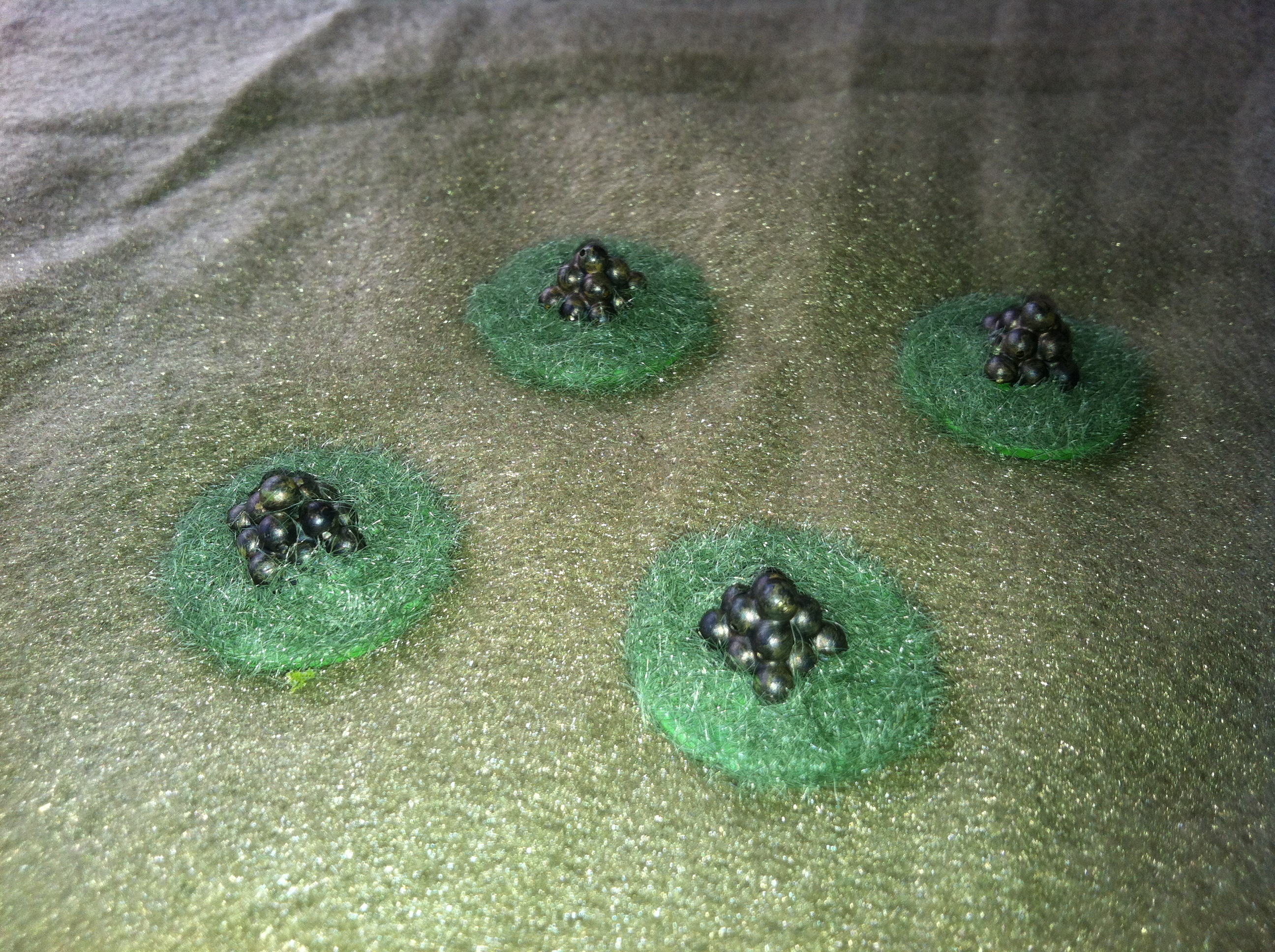
My most recent project is building some cannonball markers for my 28mm scale American Civil War gaming. These markers will be used to indicate when my field guns are loaded and ready to fire. In reality, most American Civil War field batteries probably didn’t have time to neatly stack piles of cannonballs as gun teams fired furiously at enemy lines. That said, anyone who has visited a historic battlefield site will most probably be familiar with the look of cannonball piles often found sitting neatly nearby an antique artillery piece.

Many companies offer pre-made cannonball markers cast in plastic or metal, however, I thought scratch-building some markers of my own would offer a nice break from my usual painting of soldiers in blue and gray. For bases, I used the same 7/8″ fender washers I use for basing all my 28mm miniatures. The cannonballs were made from a length of metal pull chain found in the electric aisle of any hardware store. Many modellers use small gauge shot to model cannonballs, but I found the connected balls/links of the chain makes assembly quicker without the mess of chasing little balls around the workbench.

To begin, I cut and glued a small thin piece of cardboard over the center hole of each washer. I then cut three three-link sections, two two-link sections and a single ball from the chain. Starting at the bottom layer, I used a dab of superglue to affix the three three-link sections on the base. When dry, I glued the two two-link sections on top of the base layer and then fixed a single ball on the top of the pile. The result was a neat pile of 14 balls stacked into a symetric pyramid.

Once each based pile was dry, I spray-coated the markers with flat black paint. To give the cannonballs some shading and depth, I lightly dry-brushed some rusty metal and brown paint over the balls, allowing some of the black to remain between. The base was then painted green and flocked with some static grass affixed with PVA glue. A protective dull clear spray coat finished them off.

Sitting alongside my Union gunners running a field piece into position as their General shouts orders, these new markers make for a nice piece of detail on the battlefield.

New Game Weekend: Village

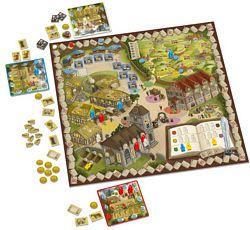
Lately I’ve been introduced to a number of board games known collectively as “worker management” games. The main mechanic of these games involves each player’s management of their main game pieces representing workers, family members, tribespeople, etc. With varying combinations of placement and removal of these pieces from the game board, the player gains resources, acquires skills, builds structures or otherwise advances in the varying points systems set up for that particular game. The games usually employ the ability to gain additional workers or lose workers over time. Gaining workers usually involves expending more resources to maintain them but also allows a player the advantage of being able to perform more actions within the game.

Lords of Waterdeep and Tzolk’in are worker managment games within fantasy swords-and-sorcery and ancient Mayan contexts, respectively. To a lesser extent, Small World is also a worker management game, where players manage successive rising and declining races of varying expertise and strength in a quest to control the board. The latest game I’ve tried within this genre is Village which plays out in a Medieval rural village with each player managing four generations of workers through their lifecycle of birth and eventual passing.

Each player begins with their first generation of family members born into the game in their “farmyard” and then deployed to the board. Players can choose to play their pieces in various areas of the board — Crafts, Market, Travel, Church and Council. There are also is also a Harvest area and Family space where new generations fo your family are “born” into the game. Placement in each area can allow a player to gain goods, trade goods for points or otherwise earn points over time. Cubes of four colors as well as pieces representing grain, gold, oxen, horses, plows, wagons and scrolls all serve as tradeable commodities within the game. These are all used in a number of combinations to either acquire different resources or score points.

The key to Village is managing the lifespan of your family members, as placement in each area of the board winds up costing passage of life costs marked in a track of hourglasses. Once a certain amount of lifetime passes, a family member dies off and is placed either in the prominent “village chronicle” book or in a generic grave. Timing exactly when your villagers die determines your shorter term acquistion of more goods or resources and long term point score at the game’s end. Each round of the game involves a re-set of the village and an interesting “mass” at the church where players have the opportunity to move up in prestige (and score points) through their prominence of placement within the church hierarchy.

Like most other worker management games I’ve played, Village is primarily competitive with little to no opportunity for collaboration between players. There’s variety to be had as players can choose to focus on one area of the board over others to rack up points. Players also exercise a certain amount of control of the game’s pace. They can agressively move their generations through their lifecycles and rush the game to quicker finish or they can take their time and focus more on points throughout the game.

While I’ve only played two-player versions of the game thus far, I can’t wait to try a three-or-four-person game where compettion for space and prestige on the board will obviously be more competitive. The game moves fast, and in just about 60-90 minutes players can easily cycle through the rise and fall of four generations in this wonderfully imaginative Village.

New Game Weekend: Tzolk’in

This past week’s introduction to a new game came some 3000 miles away from where I typically do my gaming in Brooklyn. I was travelling in Los Angeles for work, and, like any dedicated gamer, I sought out a local gaming group with which to connect. After some online searching, I came across the Westside Gamers who bounce around each Thursday night to a different restaurant or coffee shop in the west LA area. The group typically has about a couple dozen players show up to their weekly boardgaming events, but this week’s gaming night at a Denny’s restaurant in Santa Monica had maybe 30-40 gamers in attendance, many travelling in from out of town for the weekend’s Stragicon convention on West Century Boulevard in Los Angeles.

Each week, the Westside Gamers pick a theme game, and this week it was the late-1960s bookshelf game Mr. President, chosen in honor of the upcoming President’s Day weekend. While a few players hunkered down into this four-player game where two teams of two players  each face off in a Presidential election as running mates on competing party tickets, there was plenty of other boardgaming going on around the tables and booths in the restaurant. Members of the group bring loads of games from their personal collections to their meet-ups, so there was an array of new and vintage card and boardgames to choose from in the piles scattered throughout the diner.

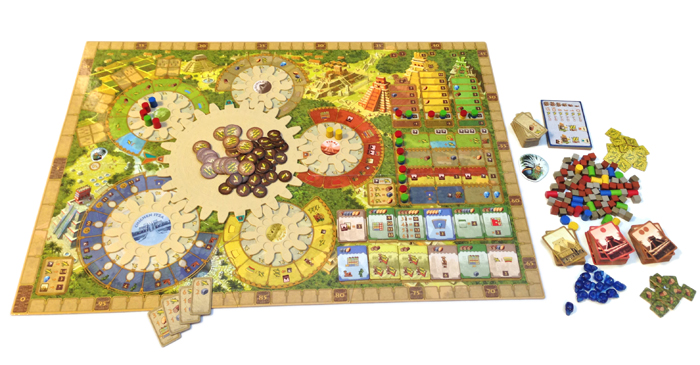
I teamed up with three friends — two from Alaska and one from Arizona — for an introduction to Tzolk’in, a wildly-popular Euro-style game based on the Mayan calendar. The game was introduced in 2012 and has become a gamer favorite for its interesting design and play mechanics based around a series of interlocking plastic wheels which mimic the passage of time on the Mayan calendar. The typical collection of wooden and cardboard chips, markers, cards and tiles make for a dizzying array of pieces to manage, but everything ties back neatly to the rotation of the wheels.

Like a few other Euro-style games I’ve played, such as Lords of Waterdeep and Settlers of Catan, Tzolk’in is a worker management game. Each player represents a Mayan tribe with a group of tribespeople workers to manage. In each turn, players either place or pick up one or more of their workers. Placing workers costs corn markers which are used as the primary currency in the game to pay for the health and upkeep of your tribe. Picking up a worker allows you an action such as harvesting corn or wood, gaining resources like stone or gold, building a temple, earning new technologies, paying homage to the gods or earning points through the play of a special crystal skull piece.

But about those wheels. Workers are placed on the wheels, and as each turn progresses, your workers rotate to more beneficial positions and actions. The game involves a lot of planning ahead as you balance resources gained by a worker on one wheel perhaps to be spent constructing a building or advancing a technology on another. Specific strategies seem like easy ways to win, like focusing on placing crystal skulls or earning praise of the gods in the temples. That said, the game isn’t as straight forward as just focusing on a single strategy, as the interplay among players can shift the strategy throughout the game.

Two of the guys I played with had a couple games of Tzolk’in under their belts, and their quick focus on building up stockpiles of resources and their presence in the temples allowed them to easily come out on top as we tallied points at the end of the game. About halfway through the game everything started to click for me, and I realized where I could’ve capitalized a bit more on my early game crystal skull focus rather than diversifying my gameplay. In all, Tzolk’in has quick play of about 90-minutes for four players, and I look forward to hopefully getting in a few games of this back in Brooklyn.

New Game Weekend: Spartacus

Back in the 1970s and 80s, many popular TV shows — from Happy Days and Welcome Back Kotter to Mork and Mindy and The Six Million Dollar Man — cranked out cheap, simply-designed board games. While these games were based on shows and characters we loved, in hindsight the majority of these games were horrendous in terms of gameplay. I think there’s still a copy of the Dukes of Hazzard Game at my parents’ house, but I hesitate playing it again lest I ruin my fond childhood memories.

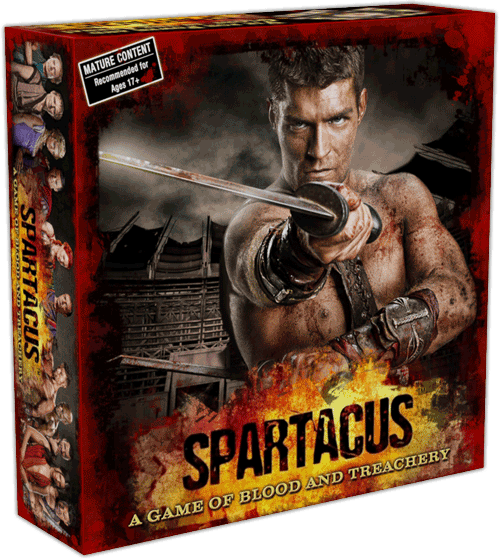
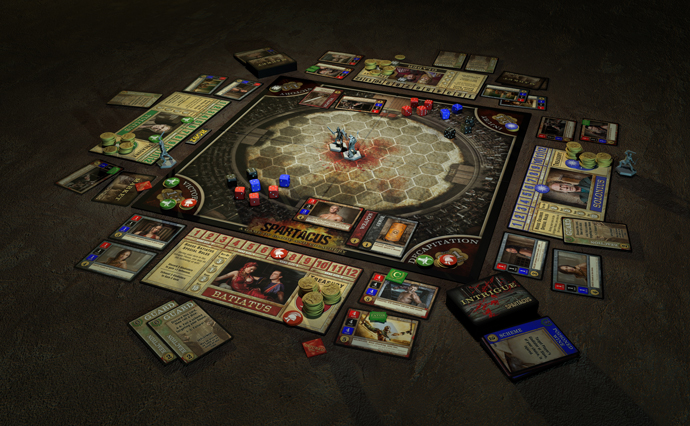
Modern shows continue to market themselves through games, although most of these come in the form of versions of Monopoly, Operation, Life, Trivial Pursuit or other established board game brands. I’ve never seen the incredibly popular Spartacus TV show on Starz, but I’ve read about the intense levels of swords-and-sandals-themed sex and violence which make the show a must-see for a certain demographic. About a week ago I had the opportunity to play the board game based on the show with three of the guys at Metropolitan Wargamers in Brooklyn, and this is definitely not a TV board game like most others.

The game is played with 3-4 players with each player representing a “Dominus” or a “house” in the ancient Roman city of Capua where the show’s drama unfolds. The quest for ultimate control through growing your “influence” is the goal of the game through three basic turn phases — Intrigue, Market and Arena.

The “Intrigue” phase allows you to play schemes and reactions via cards that grant positive or negative effect combinations on you and/or other players. The “Market” phase provides a auction-like environment where the players secretly bid for slaves, gladiators, guards and equipment.  The “Arena” phase is where two players face-off in a bloody gladiator tournament where victors bring “favor” to themselves and “influence” to their Dominus.

Spartacus is definitely a game with pretty simple some straight-foward rules, but the rambunctious thrill in the game is in the free-wheeling buying, selling, bribery and double-crossing among players. Your slaves maintain your house resources and often grant additional side-bonuses like the ability to heal wounded gladiators or to earn extra gold by providing, ahem, special services. Combinations of gladiators and acquired equipment makes for stronger opponents within the arena. Guards provide protection from the havock that schemes can rain on your house. All along, players are trading and buying their way through the game. You might bribe a player to allow your gladiator access to the arena for a chance to score victory over a weaker player’s gladiator. Other times, you might share the rewards from a scheme with another player in exchange for  use of that’s player’s influence strength to your benefit.

I played the game with three other players which made for a great dynamic of shifting alliances. One player quickly acquired Spartacus and a full compliment battle equipment making him unstoppable in the arena, so the rest of us cut whatever side deals we could to block going up against him in hand-to-hand combat. While we were busy keeping Spartacus out of the arena, another player quietly bought, sold and traded his way into a series scehemes and slave acquisitions in the market which eventually shot him to the lead and winning with the most influence in the game.

Spartacus plays in a couple hours and has a great design with characters pulled directly from the TV show. Themes and play can be a bit raunchy and graphic at times, and while it’s not designed as a role-playing game, players may naturally gravitate toward taking on the snarling personalities of their Domini. Fan of the show or not, strap on your shield, grab your trident and head to the arena for some wild fun in ancient Rome.

Downloading: Dungeons & Dragons Classics

I just finished reading Jon Peterson’s epic history of wargaming, “Playing At The World,” this past week. Reading through several hundred pages of gaming lore centered around the development of Dungeons & Dragons by TSR, I’ve had a yen to track down some of my old D&D rule books from those glory days of my early adolescent years in the late 1970s and early 80s. Well, as if the gaming gods themselves were reading my thoughts, the now-owners of the D&D franchise, Wizards of the Coast, launched a partnership just this week with DriveThruRPG to begin offering every piece of classic D&D as digital downloads.

The new web store, www.danddclassics.com, launched with more than 80 classic bits of D&D, from whole rule sets to module campaign adventures to detailed expansions. With a few downloads initially available for free and dozens more in the $5 to just under $20 range, the site promises to eventually release more material long-since out our print from the 1970s-90s. The site struggled under the massive weight of countless rabid fans and crashed over and over again on its first day, clearly demonstrating the pent-up demand for long-lost D&D material only to be found at the bottom of abandoned teenage closets and on eBay at inflated prices.

After multiple site time-outs and crashes, I managed to download a free file today: 1979’s B1 module “In Search of the Unknown.” For new players like me just getting into D&D as 1980 and my teen years neared, “In Search of the Unknown” and B2 “The Keep on the Borderlands” (available online now for $5) were our first forays into the professionally-developed D&D modules that showed us the way toward creating our own adventures. These self-contained adventures allowed players like my friends and me to jump right into a few hours of gaming with story background, maps, treasure and monsters neatly set forward in about 20 pages. These books also served as teaching tools as we learned to craft our own elaborate adventures in our childhood bedrooms, basements and classrooms after school.

With the release of 1979’s “blue book” Basic Rules (shown at right), TSR presented a serious clean-up and consolidation of the D&D rules which had been slowly released in multiple pamphlets throughout the early to mid 1970s. Though D&D had already established itself as the king of the role-playing game world, it was the release of the Basic Rules that roped-in hundreds of thousands of new players like myself. From these rules onward, a constant flow of modules, new iterations of the rules and expansion books became one of the most exciting aspects to me about D&D while also being much criticized by many for TSR’s strategy of extracting every last dime out of its faithful fans.

And so, here we are again some 30+ years later with D&D waging melee combat on our wallets with the spectre of a full-compliment of its back catalog coming soon. Already I see many module favorites of mine available like G1-3 “Against the Giants” and Q1 “Queen of the Demonweb Pits.” Hardcover classics such as the ancient religions and mythologies compilation of  “Deities and Demigods” and the odder European-themed monster compilation “Fiend Folio” are also currently available. I credit “Deities and Demigods” in particular for providing me a sort of independent study comparative religions primer at the age of 13. A few years later, this interest would lead me to Joseph Campbell’s “The Power of Myth” as well as his earlier writings. Three decades on, my life-long interest in the intersection of the stories of faith in the world’s societies — what I commonly refer to as the “holy mish-mash” — continues to shape my outlook on life. D&D is just chocked full of these kind of rippling memories for me.

The re-release of this material seems obvious for a whole host of reasons as I and my fellow first-generation D&D players are entering mid-life with our own children and a load of nostalgia for a pre-video game world in tow. Then again, as I scrolled through all the D&D titles again this week, I was reminded of the precedent D&D set in so many ways for today’s electronic gamers. Of course the basics of hit points, armor class, found items, completed missions and skill advancement laid out in D&D provided the foundation for today’s popular video gaming universe. But with each of these additional D&D modules and rules expansions, TSR also provided an early blueprint for the constant version updates and downloadable content of maps, missions, skins and characters that any inhabitant of the world of the Xbox and Playstation finds every day.

As always, what is old is new again, and I’m slowly getting to a place where I want to unplug my kids for a few hours some afternoon, help them roll-up a couple characters and blow the digital dust off these D&D treasures now just a click away.

Not Buying Monopoly

Hasbro’s Monopoly managed to insert itself into several news cycles over a week ago with an announcement that one of the classic player tokens would be retired and updated with a new token. The classic game, originally owned by Parker Brothers, holds a storied place in American culture and you would be hard-pressed not to find a dusty copy in nearly every household in the country. Despite it’s popularity, I am one of those growing number of gamers who maligns this game for its poor gameplay and overall lack of satisfaction in investing a couple hours slogging through taking laps around the board and pummelling opponents into bankruptcy.

Everyone knows Monopoly. Since its early development at the turn of the 20th-century and then its acquisition by Parker Brothers in the 1930s, a mythology developed around Monopoly as a game which grew out of the Great Depression and flourished in the post-war boom years of the 1950s and 60s. Monopoly has hundreds of boardgame variants (I have a Brooklyn-themed set at my house),  video games, state lottery games and an annual McDonald’s sweepstakes, all of which have extended the game’s tentacle-like brand across the country’s culture.

My family spent hundreds of hours in my youth playing Monopoly. Family friends often came over for rounds of play propped up by pizza, soda for the kids and beer for the adults. We played Monopoly so much that we wore out a couple sets, and when I visit my parents I can still find a set on the shelf in a crowded closet of games and puzzles. The game does have appeal in its relatively easy rules of acquiring property, collecting rent, building real estate empires and out-earning your opponents. Kids enjoy the game early on as they learn to count, add and subtract, and I think adults enjoy it since you can be pretty much be assured anyone knows how to play. The game has expanded into a worldwide presence, but it’s usually viewed as a very American game where simple winner-takes-all economics wins.

The problem with Monopoly for gamers like myself is that it is no fun and requires little to no skill or input by the players. Moving your top hat, battleship, race car, dog or other game piece around the board, a player’s fate is left almost entirely to the roll of the dice. A simple strategy (if you can call it that) of agressively buying any and all properties you land on (except the Ultilities, who buys those?) usually wins the game. Random dice rolls, an ever-shifting variance of popular “house rules” and economically destroying opponents makes the game incredibly frustrating. I have rarely played a game where tempers haven’t flared and people haven’t walked away mad at each other.

So, when Hasbro announced plans to retire one of its Monopoly game pieces recently, I was and wasn’t surprised at how much press there was. Newspapers, magazines, TV and cable news, blogs, talk radio and even usually-serious outlets like NPR lept on the story. What the whole thing was to me was a cycnical modern marketing ploy, a manufactured media event cooked-up by corporate boardroom marketers to place a decades-old brand back in the public consciousness and boost investor shareholder value.

As I often write here, there are so many great games to play with your kids, in your college dorm or with a group of friends on your dining room table. Unfortunately, most of the best games today (like Settlers of Catan, which I talk about a lot here) simply don’t have the marketing behind them to insert them into the public’s mind.

Monopoly is very American. It’s the fast food of gaming – cheap, quick, easy, tasteless and ultimately unsatisfying. Do yourselves a favor and find something more nutritious for your gaming.

New Game Weekend: Clash of Cultures

Once again, a few hours this weekend at the Metropolitan Wargamers brought me an introduction to yet another fantastically-addictive board game: Clash of Cultures.

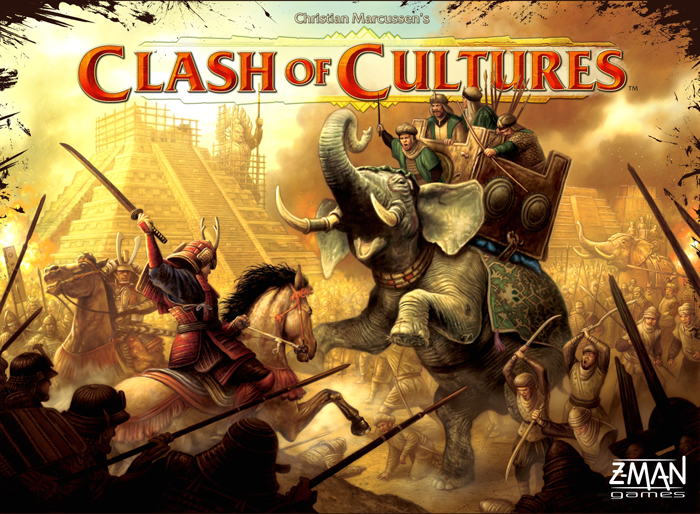
Released just last year by Z-Man Games, Clash of Cultures (aka COC) is a civilization-building endevour where each player seeks to exert their expanding cultural influence and ultimately vies for control of the imagined world of the game. If you melded Risk, Settlers of Catan and Sid Meir’s Civilization into one game and then multiplied that times ten, you’d have something like COC.

Play begins on hexagon terrain board with much of the territory hidden and open to exploration and expansion. Each player chooses three “actions” within their turn such as exploring, developing cities, reaping resources from the land, building armies or navies and expanding their culture. You can choose to increase the happiness of your cities or exploit the citizens, with each decision bringing plusses and minuses to the results. Cultural advances in areas such as Agriculture, Warfare, Spirituality, Economics and Science provide limitless variation in how each player chooses to develop their civilization. Different Government focus – Democracy, Autocracy or Theocracy – limits and expands your ability to develop the game world in different ways. “Event” cards insert random famines, bounties, natural disasters and other far-reaching events into the game, while “Wonder” cards provide players the opportunity to focus their resources on building architectural masterpieces while scoring big points. In the end, it is points earned through expansion, building and completing “Objective” cards that wins the game.

This isn’t a casual game, and a significant commitment to a play time of a minimum of an hour per player is required. My three-player game this weekend stretched to 4+ hours, and a week ago I sat in on the end of a four-player game that had run to 5-6 hours. With hundreds of plastic miniatures, cards, resource chips and cultural advances combined with quick shifts in dominance, the game moves remarkably fast but is at the same time administratively challenging.

In the game this weekend, I chose to focus on a massive defensive military build-up (those are my red soldiers filling the center of the board in the photo above).  Another player sank all his resources into building monumental wonders like the Great Pyramids and Great Gardens. The third player held half the territory while likewise building his armies and exploring coastal areas at the edge of the board. In the end, I acted too late with my superior military might and watched as several cities fell into the control of the third player who snuck through the middle in the final turns for a win.

At its heart, it’s the variety that’s making COC so wildly popular at the club in Brooklyn right now. Each game provides an opportunity to try out a different strategy and to see how each new culture clash plays out anew.

2013 Goal Setting

We’re just over a week into 2013 but with more than 50 weeks still ahead, I think I have time to squeeze in some ideas on gaming goals I’m setting myself for 2013. Here’s five goals I’m setting for the year (including one I’ve already checked off the list):

1. Join a club

I have been dropping in on the Metropolitan Wargamers in Brooklyn for probably 4-5 years, and this year I’ve already finally got around to becoming a full member. The club occupies the basement garden level of a townhouse on a side street in historic Park Slope Brooklyn, just two stops from me on the subway. In a city where space for storage and gaming is at a premium, the club is a wonderland of gaming tables, boardgames and miniatures. While a lot of guys arrange to play a particular game ahead of time, there’s a big opportunity on the weekends to simply stop in at the club and grab a few guys up for playing whatever sounds good. The members of the club are incredibly supportive and passionate about gaming, and the diverse ages and backgrounds always makes for an interesting and entertaining mix over the course of a few hours.

If you’re in the NYC-area and you’re interested in what’s going on at the club, I’d suggest introducing yourself via their Yahoo! Group and then come in for a game at some point. You can also check them out via Facebook or follow them on Twitter.

2. Get back into World War II

A few years ago I got heavily into WWII gaming in 15mm with Flames of War. In pretty short order I painted up large German and American infantry armies, and then threw in a US paratrooper force for good measure. I signed up and played in a full-day tournament at a convention, and then I ran a game at another convention. Along with my infantry, I’ve also got dozens and dozens of tanks, jeeps, trucks and artillery pieces that have largely sat fallow for over a year as my interests (and schedule) have drifted elsewhere. In the interim, a new revised set of rules were released and a whole host of additional rulebooks focusing on the post-D-Day actions have also hit the market.
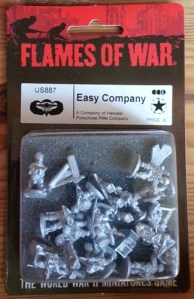
So, I’m jump-starting my interest in the era again in 2013. A big new starter boxed set containing the new rules and a bunch of new plastic figures and tanks wound up under the Christmas tree. I also scored the new Easy Company set of character figures who bring with them a whole set of special rules as you recreate the famed command exploits of the 101st Airborne Division. I spent part of my time off from work at the end of the year gluing up and priming my new forces and re-familiarizing myself with the rules. I’ve been talking up World War II with some guys at the club, my son seems interested in playing again and now I’ve just got to commit to returning to the tabletop battlefields of 1940s Europe.

3. Tackle my Anglo-Zulu War project

At a convention a few years ago I signed up blindly for a recreation of the Battle of Rourke’s Drift, one of the most significant engagements of the late-19th-century Anglo-Zulu War and a favorite of mine in the history of warfare. I tucked the game in the back of my head for a couple years, and then I happened upon some really inexpensive boxes of plastic British troops from the era at another convention last year. Well, once I had some Brits on the workbench I certainly needed some Zulus (and more Brits).

Months on, this project has stalled. I have hundreds of figures glued-up in various states of painting and a couple additional boxes of Zulus still waiting to be unwrapped. There’s a sameness to the British and Zulus which I haven’t quite cracked as of yet. I obviously need a system and a process to tackle all these guys in the coming year so I can finally get them up and running on the table. Long-term (really, really long-term), I fantasize about playing the battle of Rourke’s Drift in a true 1:1 scale of approximately 4,000 Zulu miniatures facing off against a contingent of 140 or so British troops. That said, getting this whole Anglo-Zulu project back on track this year is a promise I’m making to myself.

 4. Wrap up my American Civil War forces
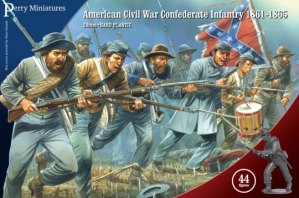
If 2012 had a focus for me, it was the American Civil War in 28mm. With the 150th anniversary of the war in the news and Stephen Spielberg’s “Lincoln” in theaters, America’s greatest conflict was in the air. I worked along throughout the year painting away at the wonderful plastic and metal range of ACW miniatures offered by Perry Brothers Miniatures, and my sons and I played increasingly larger skirmish battles on the coffee and dining room tables.

At this point I think I’m maxing out with a couple hundred troops in both Blue and Gray. I have a few more models of artillery which are about 80% complete, some fez-hatted 5th New York Volunteer “Duryee’s Zouaves” to wrap up and one box of the new Confederate infantry to start. I’ve been really happy with results this year, and I’m looking forward to hauling the whole contingent out of my apartment by the spring to share my work with the guys at the club.

5. More boardgames (and maybe some card games)

I largely ignored all manner of gaming throughout the 90s, and, with that, I largely missed the boat on the rise of Euro games. Over the past year-and-half, I’ve re-invigorated my interest in boardgames. Settlers of Catan and Ticket To Ride have become mainstays in my home for “family game nights.” I’ve already added Small World to the mix this year, and a friend of ours introduced us to Bohnanza – a competitive bean-planting and harvesting card game – over the holidays. I’ve got a list of others I want to try this year, and there’s probably countless more I don’t even know about yet.

Playing games with friends, family and members of the local club is such a fantastic way to disconnect from the realities of the world and re-connect with people in a way we seldom do in the normal course of life. Here’s to 2013 and a year of play.

New Games Weekend: Small World & Lords of Waterdeep

The first weekend of the New Year brought me an intro to two new games – Small World and Lords of Waterdeep. Both games are based in a fantasy realm with the mechanics of a Euro boardgame, and each offer a different take on some fast-paced group play of control and development of an imaginery world.

Small World

You can pick up a copy of Small World at specialty game shops and in book stores like Barnes & Noble. The game has been around for about three years, but my brother just tipped me off to it being a great game to play with a mix of kids and adults in about an hour-and-half’s time.

Small World comes with four maps on two game boards comprised of different regions of hills, fields, forests, mountains and water areas. Players take on the role of some 14 races including Elves, Humans, Giants, Dwarves, Amazons, Sorcerers and Ghouls. Each race comes combined with one of twenty random special powers such as Commando, Diplomat, Alchemist or Flying. Using a combined special power and race, each player spreads out across the board occupying regions, fighting other races and scoring coins toward victory. Once a race becomes over-extended, a player marks that race in “decline” and selects a new race.

The nearly endless permutations of races and special powers creates immense replay value in the game. One turn, you may have Diplomat Dwarves battling Flying Ratmen. A few turns later, Hill Giants and Mounted Haflings may be vying for control of the board. The art and combinations of races and special powers make Small World funny, fierce and a great entree for players new to strategy boardgames.

Lords of Waterdeep

I spent Saturday afternoon at the Metropolitan Wargamers club in Brooklyn, and the guys turned me on to my first game of Lords of Waterdeep. Longtime D&D players know Waterdeep to be one of the main cities within the storied Forgotten Realms campaign. The Lords of Waterdeep, released just last year, takes the history of Waterdeep as a jumping-off point for a strategy boardgame that can be played by 2-5 players in about 1 1/2 to 2 hours.

You begin the game as a Lord with two agents in your employ. Using these agents, you recruit parties of thieves, warriors, priests and wizards to complete Quests selected from a pile a cards. Along the way you also gain and play Intrigue cards which can be used to block or reward other players as loyalties shift. As you complete quests, construct buildings and reap gold, the play quickly switches-up throughout the game as your opportunity to change the turn order and grow your pool of agents and influence.

My first go-around with the game was with a group of experienced players, yet I quickly picked up on the raucous tone of the game as competition grew more heated yet good-natured. Five players seemed a bit cumbersome, and the other guys said a 3-4 person game is ideal. I’d recommend Lords of Waterdeep for veteran strategy gamers looking to bang out a quick, fun game or for a group of players who are looking to graduate from a game like Small World.