Gaming In Challenging Times

Most people know H.G. Wells as one of the modern inventors of science fiction literature with such masterpieces as “The War Of The Worlds,” “The Time Machine” and “The Invisible Man.” Wells is less well-known as one of the first popular writers on the subject of miniature wargaming. Published just before Great Britain entered World War I, Wells’ “Little Wars” outlined one of the first widely-available English sets of rules for miniatures wargaming. Using cast metal toy soldiers and artillery, Wells and his Edwardian friends created elaborate wargames on their parlor floors and English gardens. Using wooden projectiles fired from small model canons, these proper English gentlemen waged war on opposing sides of tiny infantry and cavalry armies. Many of the concepts of movement, effects of model terrain and chance still present in 21st-century wargaming were set down in print by Wells.

Wells was also a socialist, pacifist and supporter of the concept of a world-governing body to preserve peace and avoid increasingly large-scale warfare that would eventually come to haunt much of the 20th-century. In “Little Wars,” Wells lays out the idealistic aspiration that men, young and old, would someday permanently remove themselves from the real killing fields of modern war and instead settle great international conflicts through wargaming and boardroom diplomacy. “The tin soldier leaves behind no tin widow, and no tin orphan,” said Wells.

I’ve spent well over half my life gaming, with countless hours spent locked in play violence. I’ve also made the study of history and warfare one of my educational and personal pursuits. I’m fascinated by why people make war on each other, and I wonder at what makes one human decide to do violence against another. With this, I too hate war and violence, questioning even when attempts are made to choose what fights are historically just.

The modern pervasiveness of video games, movies and news media makes violence real and immediate in ways Wells and his contemporaries could have never imagined a century ago. Even as a kid just 30 years ago, I couldn’t imagine for myself a culture so covered in virtual blood, real or fictitious.

I have two sons now, and like most parents, I wish to share and pass on some of my interests to them. For some parents, it’s baseball. For others, it may be a love of camping or cooking or knitting. Me, I want my kids to play wargames. I want them to do this because it is an incredibly rewarding hobby, combining artistry, historical research, complex decision-making, math, teamwork and management skills. I also want them to take up my interest in wargames because I think, when done right, wargaming can
still teach why war and violence is a horrible, horrible thing to be avoided at all costs.

“Doing it right” is the rub. Like so many worthwhile things, wargaming takes time. Lots of it. You need to have a real interest and a real commitment in not only yourself but in your fellow players in order to play wargames. Wargames are for people who care.

And here, I will expand beyond miniature wargames to include video games in the discussion. Just as Dungeons & Dragons was accused of being the realm of loner weirdo teenage Satanists with a penchant for violence and anti-social behavior in the 1970s and 80s, video games are the target now. Yes, the video gamer community and industry is far, far larger than the D&D community ever was. Yes, video games depict violence in a far more realistic way than tabletop wargaming can. But the problem is not inherent in the games. The problem is a lack parental involvement with their children’s gaming pursuits.

A parent who is fairly tuned-into their kids’ playtime is a participant and a partner. I’ve spent hours watching my kids play video games, playing video games with them, reading about video games with them and discussing video games with them. I am willing to bet most parents’ level of involvement with their children’s gaming begins with buying their kid a game they know nothing about and ends with the kid vanishing into their bedroom to start logging dozens of hours in a game. The same parent who will re-arrange their schedule and devote hours to their son’s baseball practices and games will probably not make a similar investment in the same son’s hours devoted to racking up kills on Call of Duty or levels of progression in Skyrim.

Play – parentally-invested play – is an indispensable part of childhood that can provide a lifetime of healthy and creative thinking. Maybe he is outdated, but I’ll stick with Wells and his utopian hope that games can and do provide the path to a better world.
“Where Do I Start?” Some Thoughts On Starter Sets

One of the more daunting things for people just getting into tabletop wargaming is where to start. There are countless systems to choose from, many scales, different levels of complexity and hundreds of thousands of products to choose from. Shopping online or walking into a local hobby store, the newcomer can easily be overwhelmed by the sheer quantity of “stuff” that’s out there in the hobby.

Here’s a few pointers on how to get yourself (or your kids) started.

1.) Try a game first. If you have an opportunity to try a game before buying, that’s the best (and cheapest) first step. Spending a few hours with a local gaming club, visiting a gaming convention or playing at a nearby hobby shop will give you a broad overview of how complex and fun a game can be. It’s also good to speak with other players so they can relate their personal experience in what they do (or don’t) about particular games, and what kind of a time and money commitment you may be making by undertaking a new game.

2.) Pick a theme. There is a tremendous variety in the playable world of gaming. If your kids like comic book superheroes or sci-fi space battles, there are games for those. If you like reading about history and are interested in playing a particular historic era, chances are there’s a game for it. If you have tendencies toward swords, sorcery and fantasy monsters, there are plenty of options. And, for those of you into horror and zombies, there are definitely games to suit your taste for the macabre.

3.) Visit a local store. It’s great to support local businesses, and getting to know the folks at your local hobby store, comic book shop or specialized wargaming outlet is key to your intro and growth with a game. People at these stores are usually gamers themselves, and they know and love this stuff. Be honest with them when just starting out. Explain your level of previous experience, interests, budget and the amount of free time available to play games. If you are looking to play a World War II game for a couple hours a week and have a budget of $50, they’ll probably steer toward the great board or card games available. If you have hours of free time and are willing to invest hundreds (or thousands) of dollars in a World War II game over the long term, a good store employee will point you in a different direction.

4.) Get a starter set. One of the great things about wargaming is the wide array of products the industry churns out. Settling on just one gaming system can present a new player with thousands of options. Experienced gamers usually go the a la carte route, picking and choosing the specific miniatures, models and rulesets they want. As a new gamer, however, what you usually need to get started is some miniatures and rules.

Thankfully, many popular wargaming systems offer packaged starter sets. These usually contain a set of rules, dice, maps and enough miniatures to wage a small game right out of the box. The other bonus with starer sets is the costs savings, as many companies package there starter sets with contents that might be double the cost if bought separately.

Here’s a couple of my favorite starter sets, covering a couple different scales and eras. If you’re looking a for a great wargaming gift this holiday season, start here.

Flames of War: Open Fire!

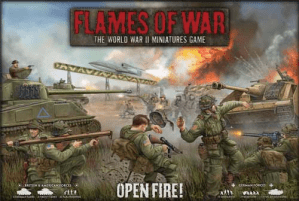
If you’re interested in World War II, start here. For about $70, this incredible set gives a player a 50-page quick-start guide, a full 300-page rulebook, dice, nearly 120 soldiers, eleven tanks and lots of other goodies. The set encourages you to glue up the miniatures and models and start right in playing. Once you’ve got a game or two under your belt, you can get started painting and then head back to the shop to start building out your forces for even bigger games.

The Hobbit: Escape from Goblin Town

Millions of people are going to be marching into movie theaters this month to see The Hobbit: An Unexpected Journey. If your interest in things Tolkienesque goes beyond the Hobbit and Lord of the Rings books and movies, then Games Workshop’s line of games should be your next stop. To coincide with the new movie, a whole new line of miniatures, rules and this incredible limited starter set has been introduced. The set costs $125, but with that you get all the hero characters (Bilbo Baggins, Gandalf the Wizard and Thorin Oakenshield and his band of dwarves) and dozens of goblins. The set includes a 50-page rule book plus some terrain models, dice and a ruler. Everything is plastic and modelled with incredible detail and personality. When painted, the models really come to life on the table. There’s also a full line of Hobbit-themed (and previously-produced Lord of The Rings) miniatures and rules ready to be added to your future games.

Warhammer and Warhammer 40K

Games Workshop also offers two long-standing favorites in the miniatures gaming world: Warhammer and Warhammer 40,000 (or, 40K to fans). Each gaming system offers a starter set for $99 that comes packed with incredibly detailed miniatures, rule books, starter guides, dice and other gaming accessories.

Warhammer is set in a fantasy world of magic and monsters, The Island of Blood starter sets allows you to field an army of High Elves against the Skaven, a race of giant rats. The 74 models exclusive to this box include Elves on horseback, an Elven prince riding a giant griffon, Skaven ogres and a whimsical cannon strapped to the back of a giant rat.

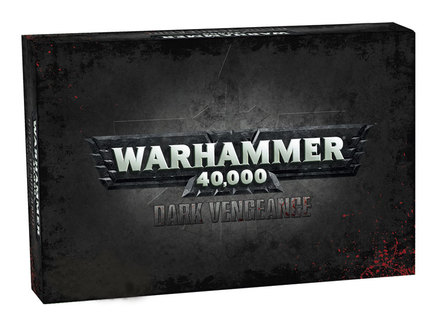
Warhammer 40K inhabits a universe in a far off future plagued by armies in endless intergalactic planetary war. The dark vengence starter set gives you 48 plastic miniatures depicting the Dark Angels against the Chaos Space Marines. Theses figures come armed to the teeth with gruesome hi-tech weapons and clad in enormous suits of armor. A squad of bikers and a walking death machine armed with laser cannons and giant claws round out the armed forces.

Wil Wheaton’s TableTop

Most people remember Wil Wheaton as the actor who played Wesley Crusher on the television series “Star Trek: The Next Generation.” In his years since, Wheaton has had a growing presence as one of the more prominent celebrities involved in gaming.

This past year Wheaton launched TableTop, a webseries on the Geek & Sundry web community. For longtime gamers, the premise is as familiar as a Friday night: get some friends together, play a game and enjoy the shenanigans that unfold. Wheaton pulls together a mix of actors, writers and comedians with varying levels of experience in gaming, but the results are usually hiliarious (and often a bit off-color) as the witty crew play through such games as Settlers of Catan, Ticket To Ride, Munchkin and others.

The TableTop series is so incredibly simple in its conceit and production but very effective in capturing the joys of gaming — creativity, camaraderie and comedy. Wheaton and his guest players also demonstrate how incredibly social gaming is for people of all ages and backgrounds.

The show is on hiatus until early 2013, but you can check out all this year’s episodes online. Check out the show, get some friends together over the holidays and play a game.

“Airfix’s Little Soldiers” by Jean-Christophe Carbonel & “The Boys’ Book of Airfix” by Arthur Ward

As I’ve previously written, many kids’ first introduction to plastic toy soldiers in the 50s-70s came through the Marx playsets offered through Sears. Marx’s colorful plastic toys offered the ability to imaginitively play right out of the box. But for a lot of us, our interest graduated from casual play to an actual hobby with Airfix.

For people with fond memories for Airfix model kits and plastic soldiers, there are two must-haves for your bookshelf. Arthur Ward’s “The Boys’ Book of Airfix” traces the development of the company from a toy-maker beginning in the 1930s to their late-20th-century growth into a leader in scale modelling. “Airfix’s Little Soldiers” by Jean-Christophe Carbonel focuses almost exclusively on Airfix’s 1/32 and 1/72 scale plastic soldier lines. With intensely creative packaging depicting soldiers in action, Airfix’s plastic soldiers were unparalleled for their detailed sculpting and variety of poses. Unlike Marx plastic soldiers, Airfix appealed to budding miniatures modelling hobbyists willing to put in the hours painting tiny plastic soldiers. Although the soft plastic Airfix used was notoriously difficult in holding glue and paint, many a future miniatures wargamer got their start with Airfix.

Aside from plastic soldiers, Airfix produced a large line of scale model kits (planes, ships, cars, military vehicles, etc.). Because of the hobbyist focus of Airfix, their models and sets were available not only in department stores and five-and-dime shops, but they also became a presence in more traditional hobby shops. The company also created marvellous diorama playsets such as the Beachhead Assault and Coastal Defense sets to enhance play with their expansive selection of plastic soldiers. Many of these sets continued to be re-packaged and sold over the years as anniversaries of World War II battles were celebrated by the media.

 (photo via Vintage Airfix)

For fans of Airfix, you should also check out the Vintage Airfix website for a comprehensive look back at the evolution of their models and kits over the years. Both books conclude with the corporate mergers, changes in distribution and a look at competitiors Airfix faced over the years. By the end of the 20th-century, Airfix became more of a specialty brand in the US while their plastic kits remain widely available and popular in Europe. For me, holding one of those little Airfix boxes of soldiers still takes me back to the hours of painting and playing with plastic as a kid.

Painting and Playing

Wargaming broadly falls into three categories — paper-and-pencil games, board games and miniatures gaming. Dungeons & Dragons is the classic pencil-and-paper game, with games played out largely through verbal role-playing with a lot of note-taking and mapping on paper. Board games are great to pull off a shelf, set up and play, often in one sitting.

Miniatures wargaming is my favorite. The hobby combines two entirely different aspects – painting and playing. Firstly, miniatures wargaming involves obtaining often hundreds of plastic or metal figures in various sizes from just a few millimeters to nearly two inches tall. A fair amount of research usually goes into creating forces of the proper size and and make up. Then there’s a lot of gluing to get poses and equipment together in realistic and historically-accurate configurations. Lastly, a miniatures modeller is faced with hours and hours of painting with tiny brushes, dabbing paint on uniforms, weapons, gear and exposed faces and hands. Even within the same historical era, say WWII or the American Civil War, there are nearly-limitless variations in how miniatures can be painted. Beyond the figures themselves, setting up a wargame usually involves creating terrain including buildings, trees, rivers, roads and hills.

Only after you’ve logged many hours painting up your armies and laying out your terrain can the miniatures wargamer get on to the second half of the hobby — actually playing. Again, miniatures wargaming has a tremendous variety of rulesets available depending on the era, scale and size of a game desired. Some games might involve skirmish-level battles with just a couple dozens figures on a side and other games can be of a grand tactical scale with hundreds (or thousands) of troops filling the field. Rulesets can run from just a few pages to dozens of books, and some gamers choose to write their own “home-brewed” rules. Some companies such as Flames of War or Games Workshop manufacture self-contained systems of miniatures and rules, even offering some starter sets of figures, rules, paints and dice all in one box for new players.

For a glimpse at the intersection of painting and playing wargames, check out the newly-updated pages on my Gaming and Painting page. Whether it’s World War II, the American Civil War or the Anglo-Zulu War, each era and scale brings different variety to what I love about the hobby.

Christmas Toy Soldier Memories

Generations of kids who grew up in the 50s, 60s and 70s looked forward to the holiday gift season and the possiblity of unwrapping a bounty of toy soldiers and playsets. In the post-WWII years, companies like Marx, Airfix, Britains and others churned out millions of plastic soldiers and accessories which would plant the seed for many a future wargamer. These boxes of relatively-inexpensive colorful plastic knights, cowboys and Indians, soldiers, horses, forts, castles, log cabins, wagons and tanks fuelled imaginative play and a collector’s spirit for kids before video games eclipsed playtime beginning in the 1980s.

For you Generation X kids who now have children of your own, toy soldiers are a still a fantastic way to add a little something different into the holdiay season. There’s a truly wonderful company called The Toy Soldier Company with a singular mission of keeping the toy soldier tradition alive, both for us nostalgia-prone grown-ups and for kids just waiting to discover the imaginative creativity and variety that play with little plastic figures brings.

The Toy Soldier Company offers a dizzying selection of plastic and metal figures, playsets and accessories in all scales and price ranges. No matter your era of choice — Ancient Europe, Colonial America, Civil War, The Old West, The World Wars,  Modern or Sci-Fi — the inventory is enormous and ever-growing. One of their most unique offerings is their playsets which seek to recapture the glory days of the 50s-70s when catalogs like the annual Sears Wish Book Christmas catalog offered pages filled with often fantastic depictions of playsets, primarily from Marx (like those shown in a Sears catalog from 1966 at the right). As a kid, you couldn’t help but marvel at the possibilities the often-exaggerated drawings and photos of these playsets. The imagination of young generals reeled from staring at the pages in the catalog and thoughts of future battles to be waged on the living room rug or in the sandbox out back. Lots of kids would eventually take their plastic play and creativity further by spending hours hunched over workbenches with tiny brushes and their first efforts at miniatures painting.

For those of you with children in your life, toy soldiers are still certain to be a hit for the holidays. You can even bridge the eras by getting a kid the latest from the Call of Duty video game franchise, a box of soldiers and maybe some paints. Another idea would be to buy some knights and Robin Hood toys along with a DVD of the classic The Adventures of Robin Hood starring Errol Flynn. A book about the American Civil War and some plastic soldiers in blue and grey would make another great package. With toy soldiers then and now, the possibilities are only bound by the imagination for play.


“Playing At The World” by Jon Peterson

Since its release in the middle of the year, I’ve been nibbling away at Jon Peterson’s monstrous 720-page history of wargaming, “Playing At The World.” Peterson’s book takes the broadest swipe I’ve yet seen at tackling the true history of games. His opus work covers ancient games in Egypt to the early development of chess, 18th and 19th century Eastern European wargaming, the rise of simulations in the colleges and think tanks of Cold War America and into the birth of Dungeons & Dragons and eventually video games in the latter part of the 20th-century.

The book is daunting, and only for the true scholars of gaming. Whole chapters are devoted to concepts of randomizing results in gameplay, the rise of miniatures wargaming with toy soldiers (with early support by the likes of H.G. Wells and his book “Little Wars”), basic concepts of fantasy character development and the minutiae of gaming mechanics. The latter half of the book focuses on how a small group of gamers in Wisconsin, led by the now-famous Gary Gygax and David Arneson, created the worldwide sensation that became D&D in the late 60s and early 70s.

As both a gamer and historian, my love for this book flows from its slow-building narrative that firmly places the importance of games in worldwide culture. With immense detail, Peterson clearly shows games not to be the often-maligned pastime of nerds and misfits but an important device through which we’ve developed our modern worldwide approaches to military policy, economics, international diplomacy and social interaction.

The book is certainly enough on its own, but Peterson also runs a blog which adds insight into his ongoing research. “Playing At The World” is such an achievement of singular vision, and I highly recommend it for anyone who is interested in how we play beyond the four corners of our gaming tables.


“Do you wanna play a game?”

Nearly a year ago I started a new job and was flown from New York to Seattle to spend a week with my new team to plot out our goals for the year. In one of those typical corporate ice-breaker exercises, we each went around the table in turn and stated something unique about ourselves. People talked about how they liked to dance, a funny anecdote from their youth or an exotic trip they once took.

When it was my turn, I said, “I play wargames. I paint hundreds of tiny soldiers and then spend hours refighting historic battles.”

I love games, all sorts of games.

Board games, dice games, card games, strategy games, role playing games, video games, logic games and wargames. For most people I meet, their idea of a game is Monopoly or maybe chess. So, when I start describing my love of games to new acquaintances it usually takes a fair amount of description before they understand.

Brooklyn Wargaming is my new place to talk about games, most probably to an audience who already has an interest but hopefully to other people, too. I’ll post pics on my own gaming adventures, plus some commentary on wider gaming innovation, evolution, theory and applications.

And yes, I would love to play a game.

(photo via Wikimedia Commons)