Gaming Wars In The 21st Century

I was pleasantly surprised to open the back page of this past weekend’s New York Times Sunday Book Review section to an article on the 100th anniversary of H.G. Wells’ “Little Wars.” The book’s Edwardian-era style, classism and occasional not-so-thinly-veiled sexism is mixed with the mechanics of a gaming system which makes it a relevant read even today.  Before “Little Wars,” wargaming had largely resided in Europe’s war colleges and in the parlors of the ruling elite. Even with its English intellectual, upper-crust trappings, “Little Wars” sought to expand the popularity of wargaming. As the article points out, “Little Wars” is an important foundational document and should be required reading for those who are interested in how we’ve arrived at the business of gaming on the tabletops and screens of the world today.

“Little Wars” is widely available for free online and for e-readers today, and “ownership” of gaming is largely the subject of a post today on BoingBoing about Dungeons & Dragons retro-gamers. Whether driven by nostalgia or as a reaction to corporate ownership of a beloved game of their youth, “old school” D&D gamers stress what they believe to be a truer game style more focused on role-playing and less-so on action-driven play. To stay relevant to a new generation brought up on CGI special effects, so the argument goes, the now-owners of D&D Wizards of the Coast have increasingly made the game more combat-heavy (read: more like video games). In reaction to this, retro D&D gamers have created an increasingly-active community of story-driven gamers who look to old rules for inspiration. The ability to share thoughts, opinions and out-of-print rulesets online has only fuelled the movement.

Old school gamers are just the latest combatants  in the war over gaming. The history of wargaming rules development winds its way from military schools and H.G. Wells to postal games and strategy boardgames in the mid-20th century. Games and rules were more fluid in the 1940s-60s where there was little profit to be had in wargaming, and a big part of the gaming community was in the debates over what rules were the most realistic or playable. With a few exceptions, ownership in those days was based more on pride and ego than copyrights and profit. This timeline is well-documented in Jon Peterson’s “Playing At The World” which finally arrives at the early days of D&D.  Even before D&D made the great leap into a world-wide phenomemon there were arguments and accustaions over copyright and ownership. Peterson’s recent analysis of a transitional draft of D&D (the Dalluhn Manuscript) not only adds greater nuanace to the development of the rules themselves but I think also provides another chapter on the concepts of evolutionary, intellectual and legal ownership of games.

Much of the digital conversation today — whether about games, photos, movies or music — hinges on the topics of openness, control and copyright. Along with the free and independent gaming forums and sites, we’ve now been given a new frontier of games on Kickstarter. What used to take years (or even decades) of slow development and debate by word-of-mouth fanzines and postal newsletters, Kickstarter achieves in weeks or days. Players vote with their wallets in support of games which can now easily garner six and seven-figure funding levels, all but guaranteeing a fanbase that literally buys-in at the ground floor. Sites like BoardGameGeek can help make or break the success of a new game and then go on to serve as R&D for game expansions, rule variations and subsequent editions.

A hundred years after “Little Wars” pulled the ownership of wargaming out of the fists of Europe’s elite, we’re still warring over our games. Copyright laws, digital distribution and individual financial investment will continue to shape the next hundred years of the ownership conversation, but gaming is certain to remain a very personal investment for some time to come, too.

2013 Goal Setting

We’re just over a week into 2013 but with more than 50 weeks still ahead, I think I have time to squeeze in some ideas on gaming goals I’m setting myself for 2013. Here’s five goals I’m setting for the year (including one I’ve already checked off the list):

1. Join a club

I have been dropping in on the Metropolitan Wargamers in Brooklyn for probably 4-5 years, and this year I’ve already finally got around to becoming a full member. The club occupies the basement garden level of a townhouse on a side street in historic Park Slope Brooklyn, just two stops from me on the subway. In a city where space for storage and gaming is at a premium, the club is a wonderland of gaming tables, boardgames and miniatures. While a lot of guys arrange to play a particular game ahead of time, there’s a big opportunity on the weekends to simply stop in at the club and grab a few guys up for playing whatever sounds good. The members of the club are incredibly supportive and passionate about gaming, and the diverse ages and backgrounds always makes for an interesting and entertaining mix over the course of a few hours.

If you’re in the NYC-area and you’re interested in what’s going on at the club, I’d suggest introducing yourself via their Yahoo! Group and then come in for a game at some point. You can also check them out via Facebook or follow them on Twitter.

2. Get back into World War II

A few years ago I got heavily into WWII gaming in 15mm with Flames of War. In pretty short order I painted up large German and American infantry armies, and then threw in a US paratrooper force for good measure. I signed up and played in a full-day tournament at a convention, and then I ran a game at another convention. Along with my infantry, I’ve also got dozens and dozens of tanks, jeeps, trucks and artillery pieces that have largely sat fallow for over a year as my interests (and schedule) have drifted elsewhere. In the interim, a new revised set of rules were released and a whole host of additional rulebooks focusing on the post-D-Day actions have also hit the market.

So, I’m jump-starting my interest in the era again in 2013. A big new starter boxed set containing the new rules and a bunch of new plastic figures and tanks wound up under the Christmas tree. I also scored the new Easy Company set of character figures who bring with them a whole set of special rules as you recreate the famed command exploits of the 101st Airborne Division. I spent part of my time off from work at the end of the year gluing up and priming my new forces and re-familiarizing myself with the rules. I’ve been talking up World War II with some guys at the club, my son seems interested in playing again and now I’ve just got to commit to returning to the tabletop battlefields of 1940s Europe.

3. Tackle my Anglo-Zulu War project

At a convention a few years ago I signed up blindly for a recreation of the Battle of Rourke’s Drift, one of the most significant engagements of the late-19th-century Anglo-Zulu War and a favorite of mine in the history of warfare. I tucked the game in the back of my head for a couple years, and then I happened upon some really inexpensive boxes of plastic British troops from the era at another convention last year. Well, once I had some Brits on the workbench I certainly needed some Zulus (and more Brits).

Months on, this project has stalled. I have hundreds of figures glued-up in various states of painting and a couple additional boxes of Zulus still waiting to be unwrapped. There’s a sameness to the British and Zulus which I haven’t quite cracked as of yet. I obviously need a system and a process to tackle all these guys in the coming year so I can finally get them up and running on the table. Long-term (really, really long-term), I fantasize about playing the battle of Rourke’s Drift in a true 1:1 scale of approximately 4,000 Zulu miniatures facing off against a contingent of 140 or so British troops. That said, getting this whole Anglo-Zulu project back on track this year is a promise I’m making to myself.

 4. Wrap up my American Civil War forces

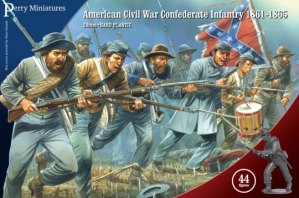
If 2012 had a focus for me, it was the American Civil War in 28mm. With the 150th anniversary of the war in the news and Stephen Spielberg’s “Lincoln” in theaters, America’s greatest conflict was in the air. I worked along throughout the year painting away at the wonderful plastic and metal range of ACW miniatures offered by Perry Brothers Miniatures, and my sons and I played increasingly larger skirmish battles on the coffee and dining room tables.
At this point I think I’m maxing out with a couple hundred troops in both Blue and Gray. I have a few more models of artillery which are about 80% complete, some fez-hatted 5th New York Volunteer “Duryee’s Zouaves” to wrap up and one box of the new Confederate infantry to start. I’ve been really happy with results this year, and I’m looking forward to hauling the whole contingent out of my apartment by the spring to share my work with the guys at the club.

5. More boardgames (and maybe some card games)

I largely ignored all manner of gaming throughout the 90s, and, with that, I largely missed the boat on the rise of Euro games. Over the past year-and-half, I’ve re-invigorated my interest in boardgames. Settlers of Catan and Ticket To Ride have become mainstays in my home for “family game nights.” I’ve already added Small World to the mix this year, and a friend of ours introduced us to Bohnanza – a competitive bean-planting and harvesting card game – over the holidays. I’ve got a list of others I want to try this year, and there’s probably countless more I don’t even know about yet.

Playing games with friends, family and members of the local club is such a fantastic way to disconnect from the realities of the world and re-connect with people in a way we seldom do in the normal course of life. Here’s to 2013 and a year of play.

Wil Wheaton’s TableTop

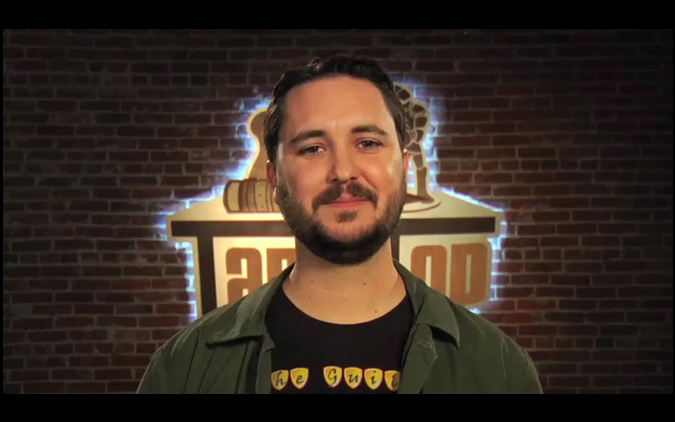
Most people remember Wil Wheaton as the actor who played Wesley Crusher on the television series “Star Trek: The Next Generation.” In his years since, Wheaton has had a growing presence as one of the more prominent celebrities involved in gaming.

This past year Wheaton launched TableTop, a webseries on the Geek & Sundry web community. For longtime gamers, the premise is as familiar as a Friday night: get some friends together, play a game and enjoy the shenanigans that unfold. Wheaton pulls together a mix of actors, writers and comedians with varying levels of experience in gaming, but the results are usually hiliarious (and often a bit off-color) as the witty crew play through such games as Settlers of Catan, Ticket To Ride, Munchkin and others.

The TableTop series is so incredibly simple in its conceit and production but very effective in capturing the joys of gaming — creativity, camaraderie and comedy. Wheaton and his guest players also demonstrate how incredibly social gaming is for people of all ages and backgrounds.

The show is on hiatus until early 2013, but you can check out all this year’s episodes online. Check out the show, get some friends together over the holidays and play a game.

“Do you wanna play a game?”

Nearly a year ago I started a new job and was flown from New York to Seattle to spend a week with my new team to plot out our goals for the year. In one of those typical corporate ice-breaker exercises, we each went around the table in turn and stated something unique about ourselves. People talked about how they liked to dance, a funny anecdote from their youth or an exotic trip they once took.

When it was my turn, I said, “I play wargames. I paint hundreds of tiny soldiers and then spend hours refighting historic battles.”

I love games, all sorts of games.

Board games, dice games, card games, strategy games, role playing games, video games, logic games and wargames. For most people I meet, their idea of a game is Monopoly or maybe chess. So, when I start describing my love of games to new acquaintances it usually takes a fair amount of description before they understand.

Brooklyn Wargaming is my new place to talk about games, most probably to an audience who already has an interest but hopefully to other people, too. I’ll post pics on my own gaming adventures, plus some commentary on wider gaming innovation, evolution, theory and applications.

And yes, I would love to play a game.

(photo via Wikimedia Commons)