Touching History at the Military History Society of Rochester

mhsrlogo

I have logged many, many hours over the years visiting battlefields, historical homes, living heritage sites, reenactments, roadside markers and all sorts of art, history and military museums. Near the top of these experiences was a full day I spent at the Imperial War Museum a few years back while working in London for over a month. With over two million visitors a year and some 11 millions artifacts, the IWM is hard to beat for immersing yourself in the history of warfare.

This past week I had a very different, yet truly remarkable experience in my first visit to the Military History Society of Rochester. Located up a flight of stairs in a warehouse inhabited by various artist galleries and studios, the MHSR occupies roughly 2000 square feet of space packed with all manner of historical artifacts focused on telling the story of the US military through the local lens of Rochester, NY.
IMG_4891

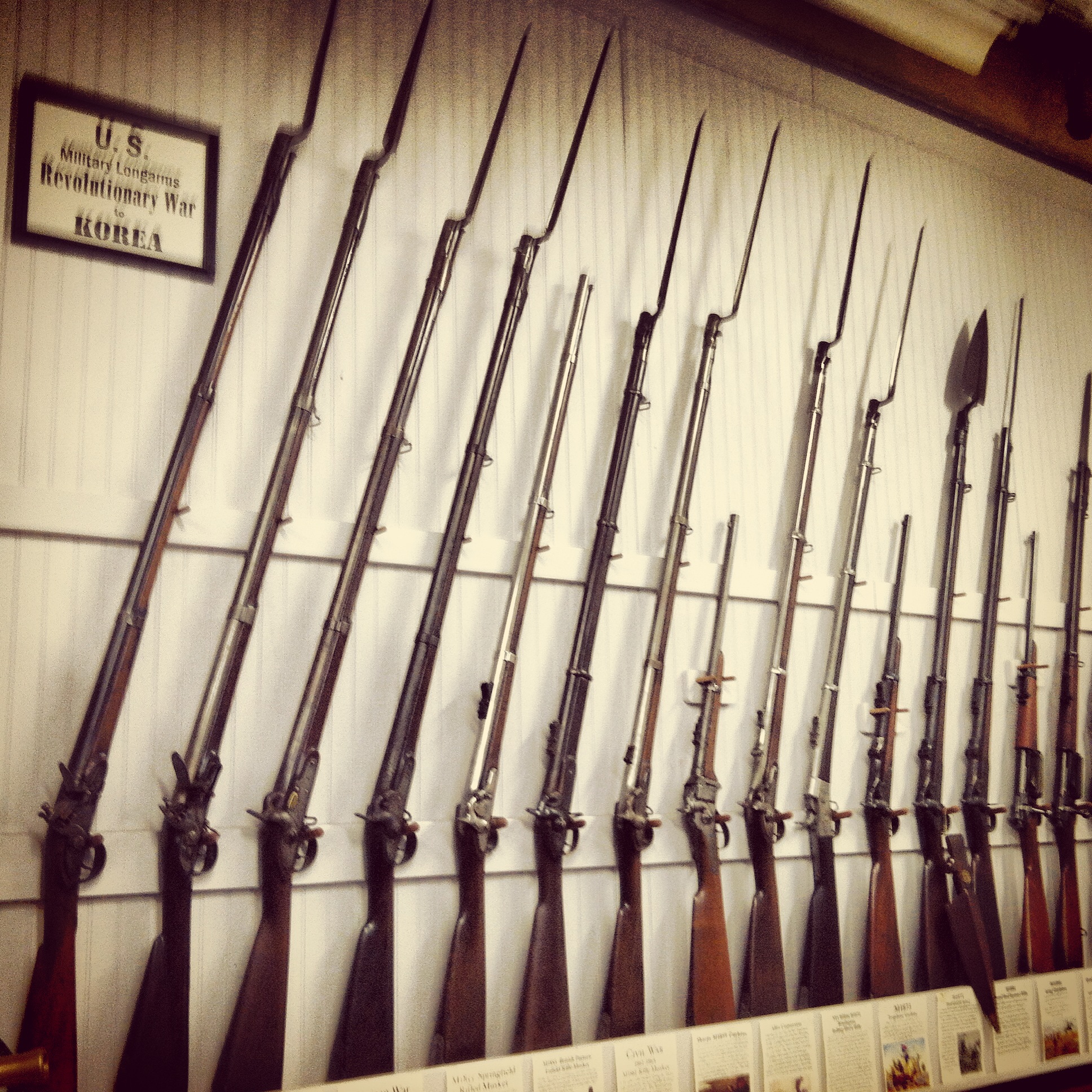
A timeline of US long arms from the American War of Independence through the Korean War at the MHSR

Founded several years ago by Chuck Baylis as the American Civil War Artillery Association, the group’s mission has since grown beyond his original collection of Civil War artifacts to encompass American wars from the Revolution to the present. The first room still focuses on the Civil War including detailed displays on artillery, uniforms and the 140th New York Volunteer Regiment formed in Rochester in 1862. A timeline of American long arms from the American War of Independence through the Korean War covers an entire wall.

IMG_4890

A timeline of military uniforms from the American War of Independence through the present at the MHSR

In the rear space of the museum, the focus swings to 20th-century with displays on World War I, World War II, the Korean War, Vietnam and present day wars. Uniforms, guns, swords, equipment hang from the walls, rest on shelves and lay slung over mannequins. Scale model airplanes hang from the ceiling, model vehicles rest on the floors and cases and a D-Day diorama sits nearby. Throughout the museum are some 2000 books as well as countless other letters, maps, photos, schematics, deck plans, prints, posters and other ephemera for perusal or research.

IMG_4887

 A US .50 caliber machine gun at the MHSR

Baylis has been joined by a number of passionate volunteers who can be found at the museum during its operating hours on Thursdays, Fridays and some Saturdays. Civil War reenactor, historian and wargamer Mike Vasile (co-author of the excellent Arena Games: Gladiatorial Combat rules) is responsible for many of the scale dioramas throughout the museum. Scale ship modeller Timothy Igoe of Historia Militaris Shipways has contributed several naval models to the collection and is currently undertaking a build of the USS Rochester (CA-2) for the museum. Retired Social Studies teacher Orton Begner rounds out the group with a deep knowledge of every object on hand.

IMG_4889

A US M1919 Browning machine gun at the MHSR

The one-to-one interaction with the MHSR’s members and the collection is what sets the museum apart from any other I’ve every visited. Everything has been well labeled, organized and put on display but hardly anything in the museum sits behind glass. Care to hold the various types of artillery rounds used in the Civil War? Want to feel the heft of a WWII era Thompson submachine gun or M-1 rifle? Would you like to take a look inside a pack carried by an American GI on D-Day? Want to lie down with a German MG-42? Ever wanted to hold a Japanese officer’s sword or 1913 “Patton Saber”? Just about everything in the museum, with the proper care, respect and assistance from one of the staff, can be touched, offering an incredibly rare opportunity to physically connect with past.

IMG_4888

 A German MG-42 and StG 44 at the MHSR

The mission to bring history alive beyond the walls of the museum also occurs with the exhibits members of the group bring to school groups and veteran events in the Rochester area. With its focus on celebrating the men and women of Western New York’s service in every branch of the military past and present, the museum is serving a unique and human mission of connecting today’s generations to a long tradition military service.

IMG_4892

My son gets some hands-on time with a Thompson submachine gun at the MHSR

In all my years of interest in history and military heritage, I have yet to find a museum as alive as the experience found at the Military History Society of Rochester. As a wargamer, the opportunity to see and handle so many objects up close is unparalleled. My time spent at the museum on my first visit was brief, but meeting the guys and seeing the collection at the museum will definitely bring me back my next time in Rochester.

Interview with Chuck Baylis of the MHSR

The Military History Society of Rochester is located in the Anderson Arts Building at 250 North Goodman Street on the second floor. Admission is free.

Battle of Brooklyn Commemoration at Green-Wood Cemetery

bobengraving

Buried and hidden amid the 21st-century streets and neighborhoods of New York City is an enormous trove of history of the nation’s formative years and the battles waged here during the American War of Independence.

I live on a former battleground where British and American troops fought the first and largest battle of the Revolution, the Battle of Brooklyn. Here in late August of 1776, just weeks after the Declaration of Independence was signed, some 35,000 British troops landed to face 10,000 Americans seeking to defend their new country. The series of engagements became a running retreat for General George Washington to the edge of Long island, over the East River, north through Manhattan and then on to safety in New Jersey and Pennsylvania.

At historic Green-Wood Cemetery near my home, the Battle of Brooklyn’s 238th anniversary was commemorated this past weekend with reenactors, period weapons demonstrations, military music, a parade featuring more than eighty regimental flags and speeches by various local dignitaries. Also on display was the “Percy Map,” a contemporary map of the American positions during the battle made by British General Hugh Earl Percy. The map was recently acquired through a joint partnership between Green-Wood and the Brooklyn Historic Society and will be on display again beginning this week at the society’s exhibit “Unlocking Two Revolutionary War Era Maps.”

schecterbfny

Various local dignitaries such as Borough President Eric Adams and historian Barnet Schecter spoke during the official ceremonies held near the monument to the Battle of Brooklyn at Battle Hill in the cemetery this weekend. Schecter’s seminal 2002 book, The Battle For New York: The City At The Heart Of The American Revolution, places New York at the center of the War of Independence and grandly documents the events leading up to the Battle of Long Island and its aftermath. Using extensive primary written sources from the period, Schecter shows how the British obsession with maintaining control of New York drained precious resources from other fronts in the war and strengthened the newly-born nation’s resistance to their former English rulers. Schecter’s book documents that British General William Howe’s failure to follow-up his victories  during the August and September 1776 campaign allowed Washington’s army to retrench and prolong the war another seven years until eventual American victory.

Schecter’s book is a must-read for those of us interested in the story which unfolded here in the early days of the new American republic’s fight against overwhelming odds with the world’s most dominant military power at the time. Like the hundreds of other people in attendance at Green-Wood Cemetery, experiencing the place where the United States fought its first formative battle brought this history alive again on a sunny afternoon in Brooklyn, New York.

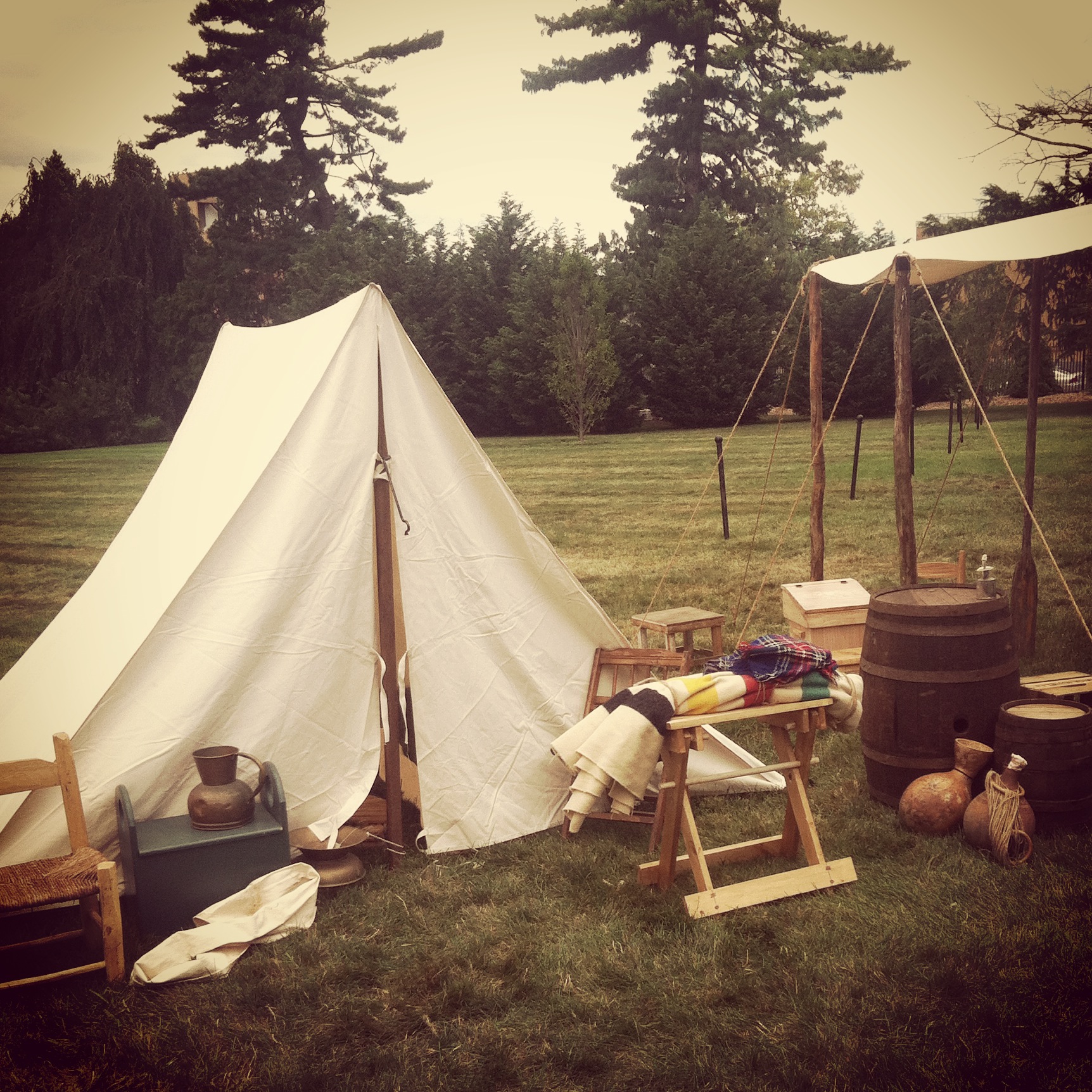
IMG_4128A Revolutionary War era encampment stood near the entrance to Green-Wood Cemetary

IMG_4126A variety of reenactors spoke to attendees about the soldier’s experience during the American War of Independence

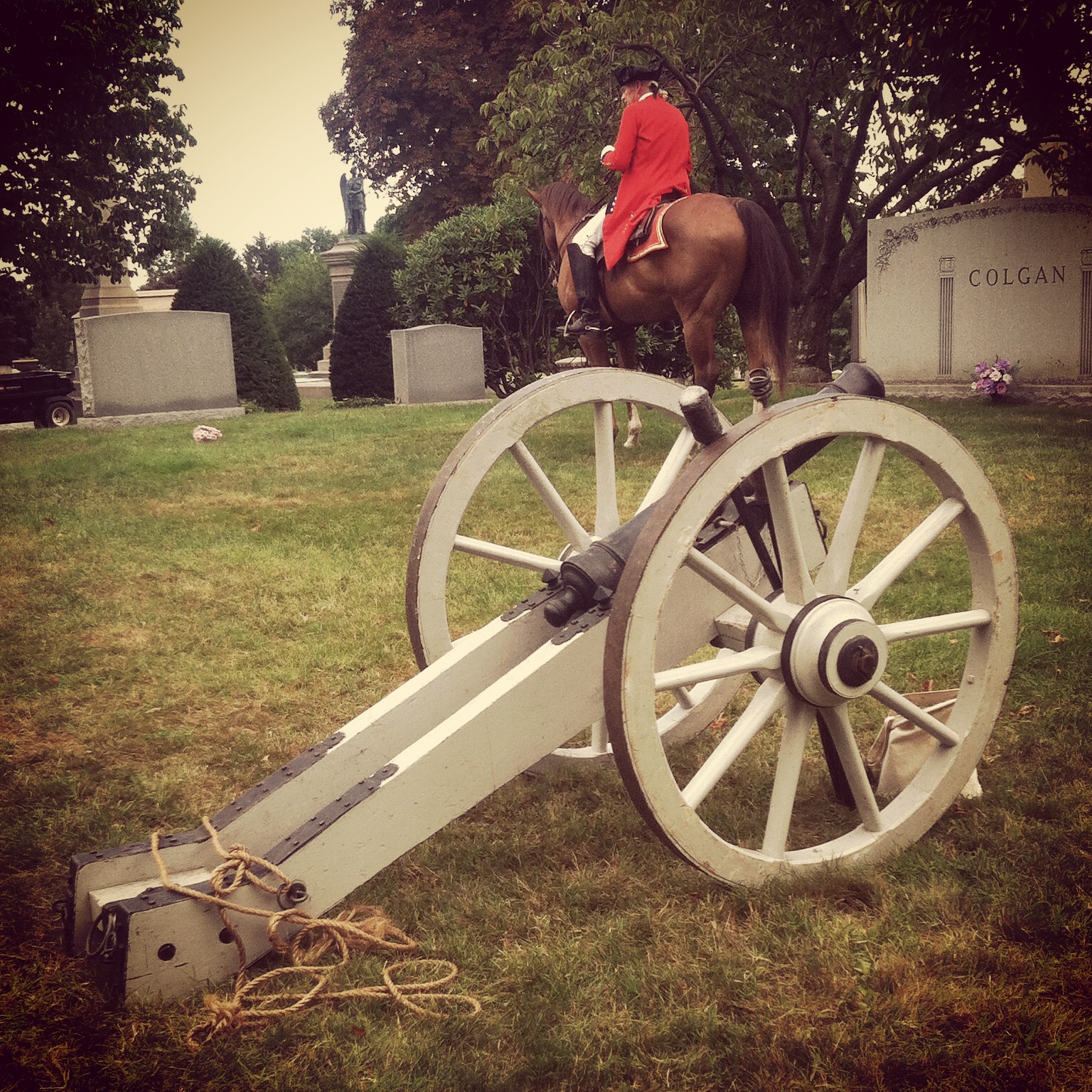
IMG_4127Firing demonstrations of artillery pieces and mounted British officer reenactors helped bring the Revolutionary War period to life

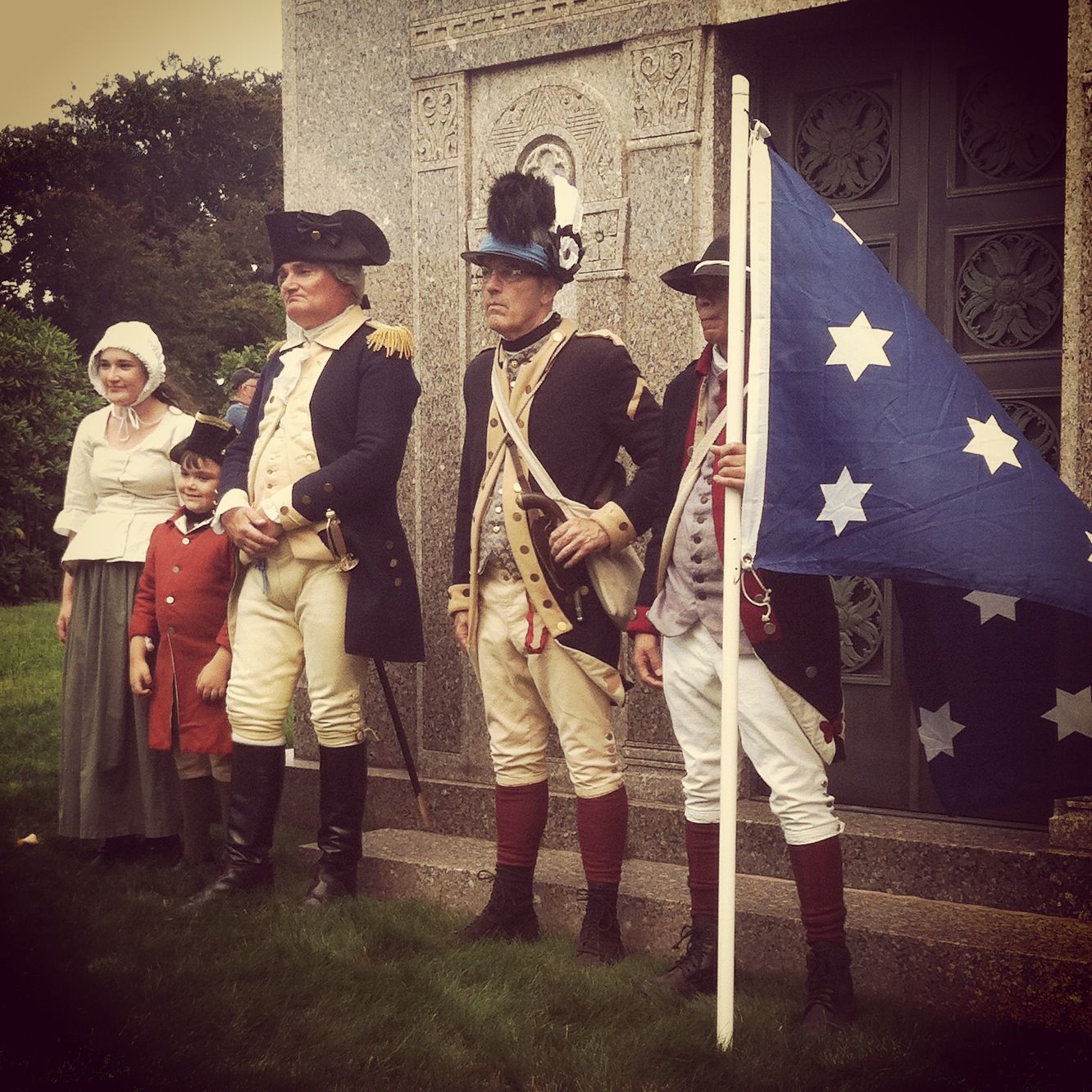
IMG_4130Reenactors portraying General George Washington and his staff were present

IMG_4129The United States Marine Academy Regimental Band provided musical accompaniment for the ceremonies

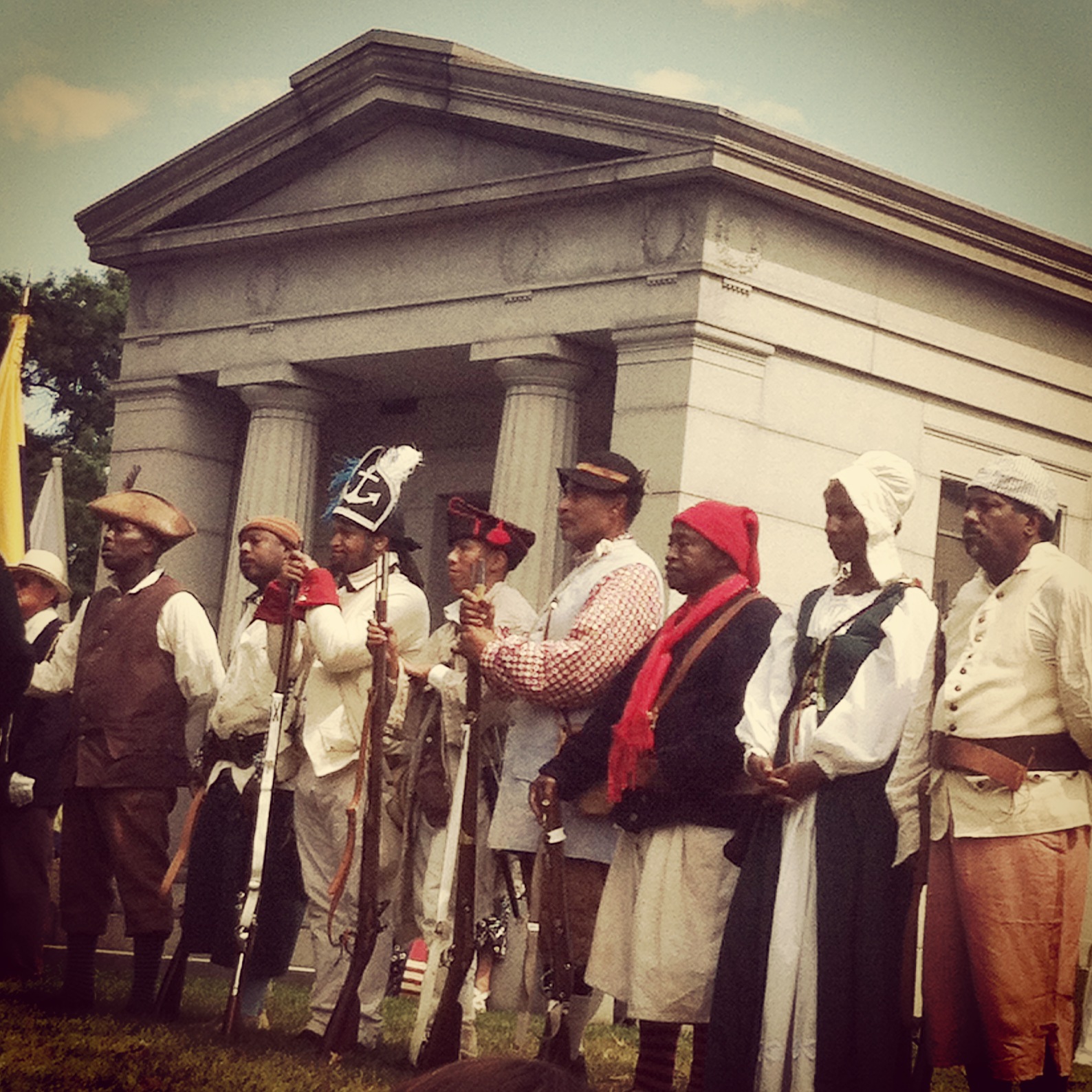
IMG_4131Reenactors were recognized for their depiction of African-American contributions to the War of Independence

New York Harbor Defense History and Civil War Weekend at Governors Island

CastlewilliamsgiShuttling back and forth between Brooklyn and Manhattan every day on the New York City subway system, it’s sometimes easy to forget I live and work in area surrounded by coasts. This past weekend I hopped a free mid-morning ferry from Brooklyn to Governors Island National Monument for some immersion in NYC’s coastal defense history and annual Civil War Weekend sponsored by the National Park Service.

New York Harbor Defense History

From the beginning of European settlement of New Amsterdam on the island of Manhattan by the Dutch in the early 1600s, the importance of New York Harbor as a gateway to a system of  trade and military defense was clear. The Dutch colony’s main defense at Fort Amsterdam eventually ceded to the British who maintained fortifications on the spot until after the American Revolution. In the post-Revolution centuries, the defense of New York Harbor remained a focus of the US military against foreign and domestic would-be aggressors.

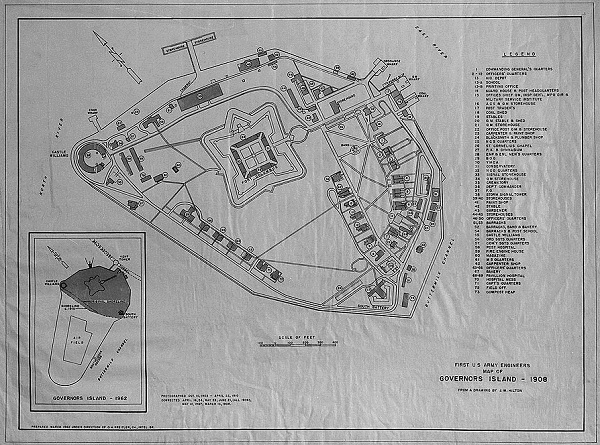
Governorsislandplan1908 US Army Corps of Engineers map of Governors Island with Fort Jay (center) and Castle Williams (left)

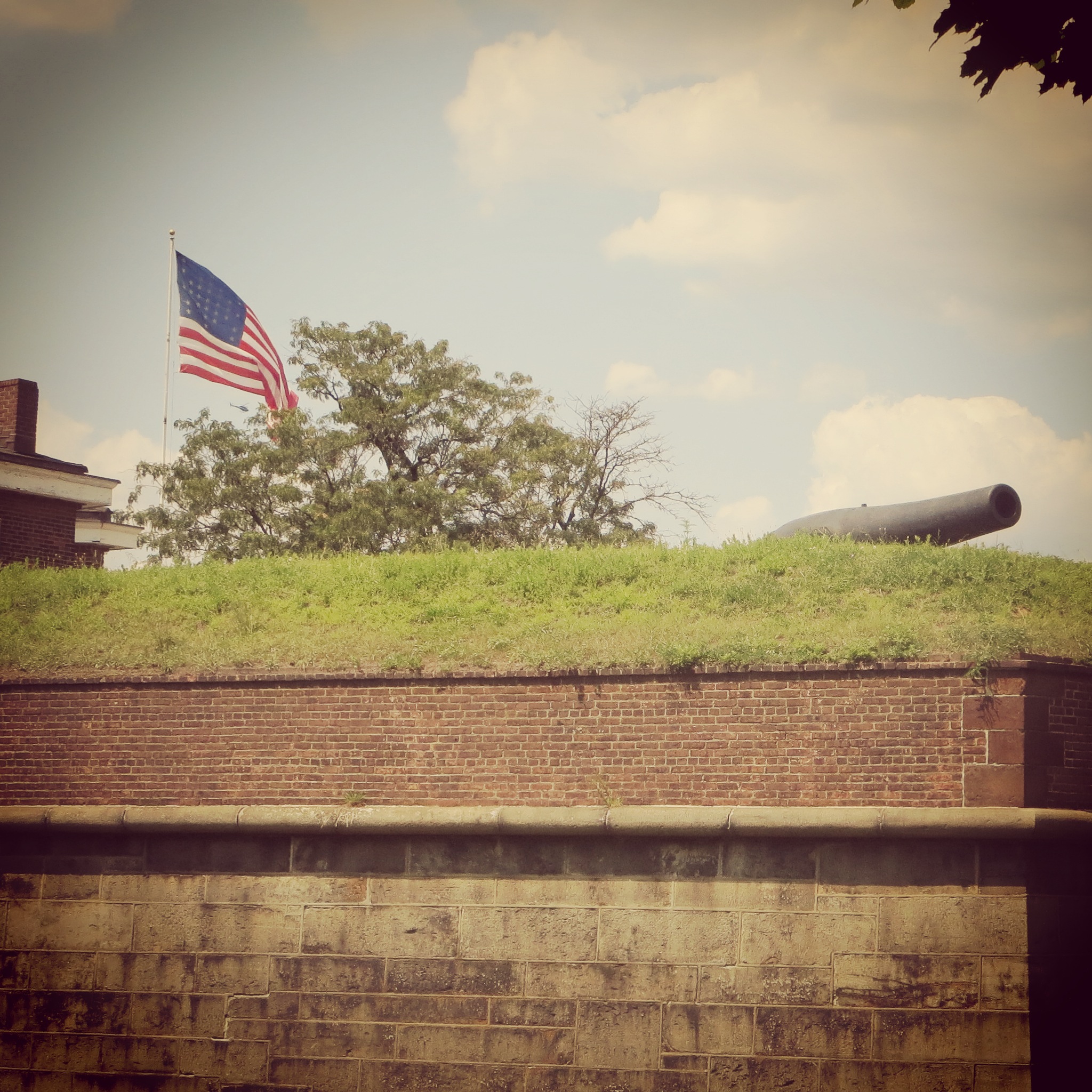
Governors Island offers a good historic overview of the development of New York’s coastal defense works from the 18th through 19th centuries. Fort Jay dates from the late 18th-century when American colonists and British troops exchanged control of the island with various earlier wood and earth forts. The existing facility is a classic European-style star fort with masonry and earthen walls is typical of the design built all over the world from the 15th through 19th centuries. Entering through elaborate gates, a visitor walks into a peacefully idyllic central courtyard surrounded by Greek Revival colonnaded buildings with welcoming porches. Several cast iron Civil War era 10 and 15 inch Rodman cannons survive on the fort’s walls, pointing toward the harbor.

IMG_4073Guns overlook New York Harbor from Fort Jay

The later Castle Williams was built between 1807 and 1811 as a fortification just ahead of the War of 1812. The state-of-the art, circular casemate sandstone pile was designed by Col. Jonathan Williams, at the time the chief of the US Army Corps of Engineers. The first fort designed by an American engineer, Castle Williams presents three tiers of gun ports from which a nearly 360-degree field of defensive fire across the harbor.

IMG_4074The imposing walls of Castle Williams

Together with Fort Wadsworth on Staten Island, Fort Wood (today the base of the Statue of Liberty on Liberty Island), Castle Clinton at the southern tip of Manhattan and Fort Gibson at today’s Ellis Island, Fort Jay and Castle Williams served as part of the interlacing network of forts protecting New York Harbor through the 19th-century. Both Fort Jay and Castle Williams would go on to other roles as the site of a Confederate prisoner of war camp during the Civil War, a US Army prison in the middle of the 20th-century and the site of a large US Coast Guard base until closing in 1996. Gone is the military use of Governors Island today, but the spaces still serve the public as place to walk amid important and usually unseen history of New York.

Civil War Weekend

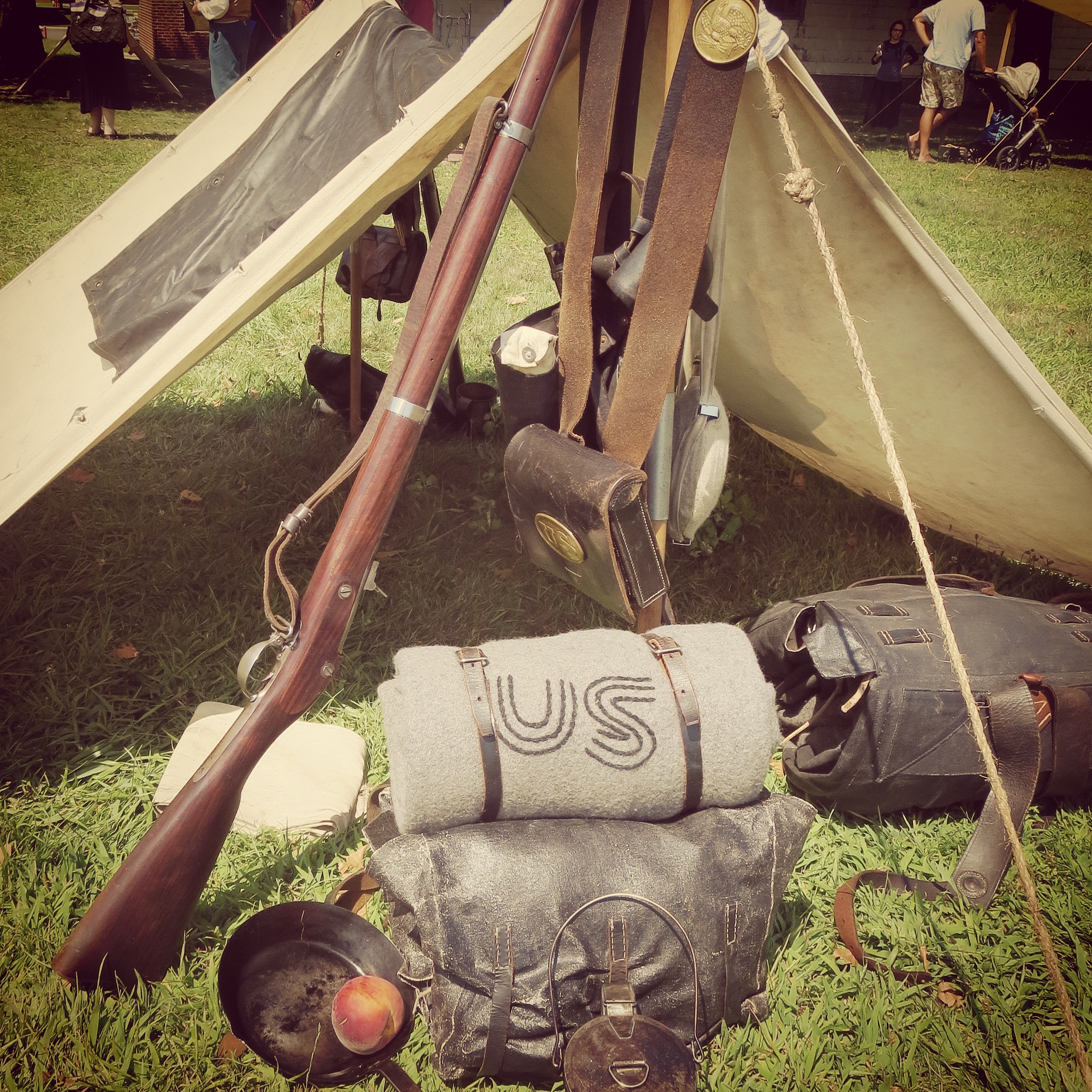
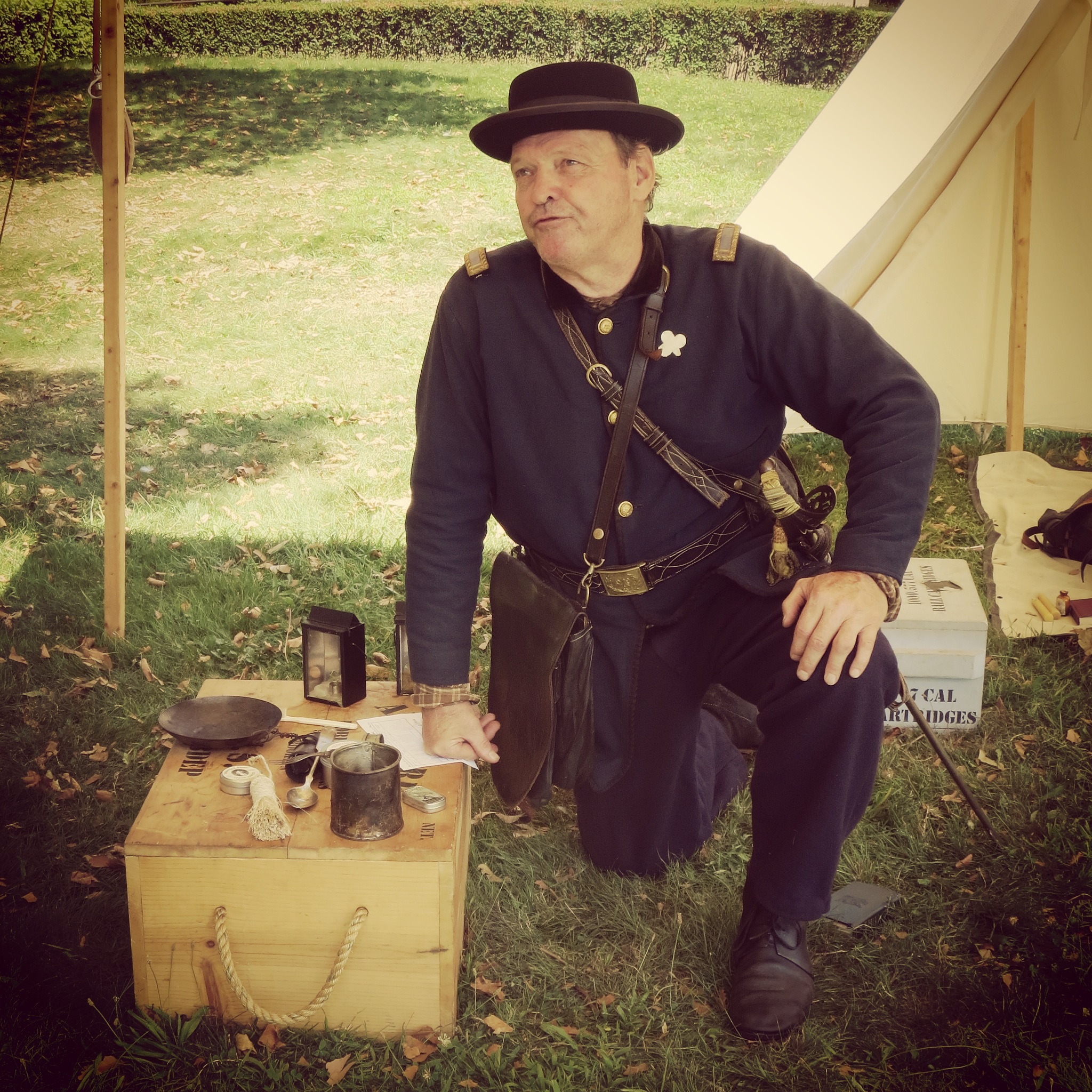
Each August the National Park Service presents the only Civil War encampment of reenactors in New York City. With about a dozen tents in a small camp and more than twenty staff and volunteer reenanctors, the weekend’s events gives New Yorkers an up-close glimpse of a solder’s life during the Civil War.

IMG_4068Reenactors encamped at Governors Island

IMG_4076A Civil War era soldier’s equipment sits at the ready in camp

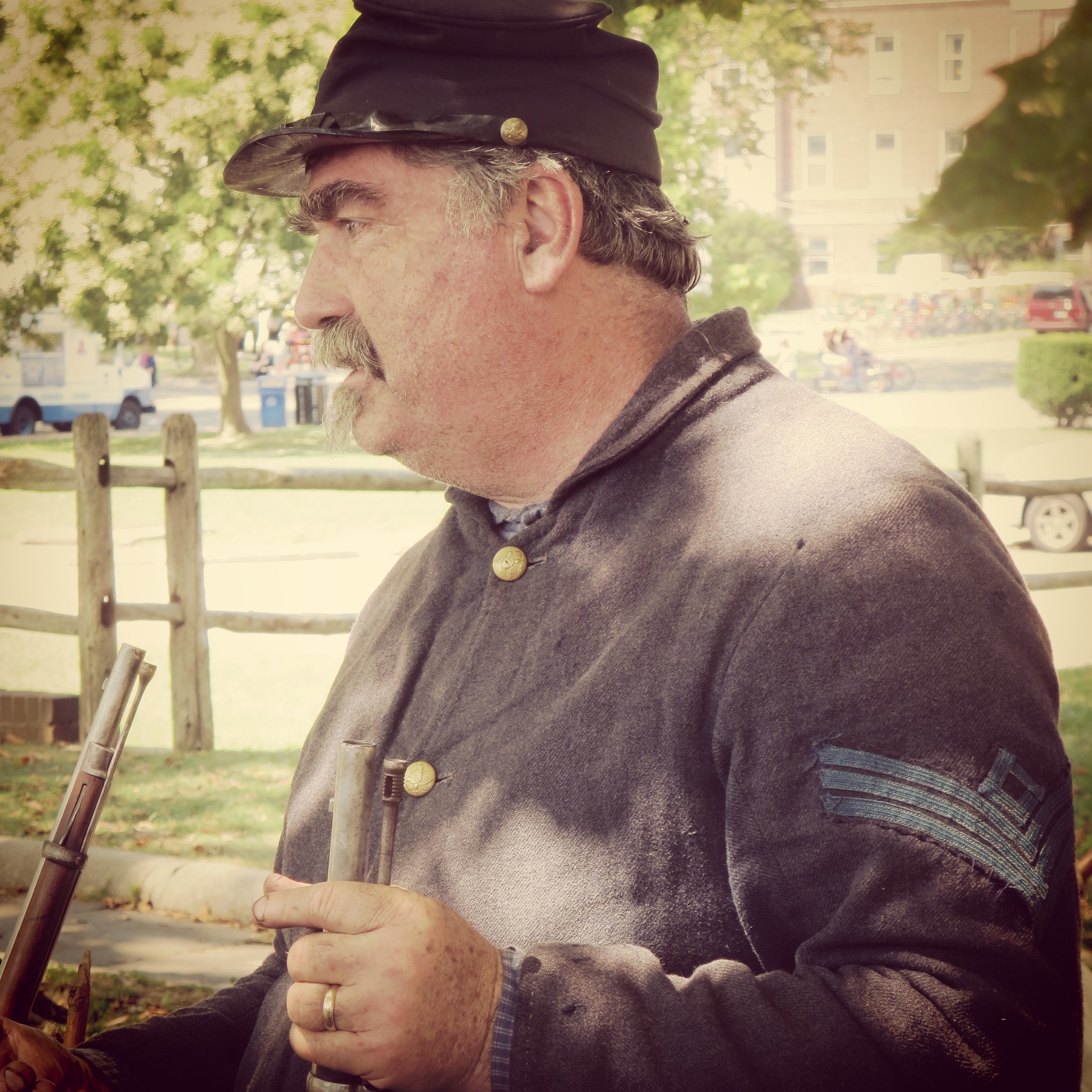
IMG_4072A reenactor discusses a Civil War soldier’s life with visitors to Governors Island

IMG_4075An officer reenactor speaks with with visitors to Governors Island

Aside from an opportunity to speak with reenactors and view some typical soldier’s equipment and life in camp, demonstrations of canon firing, drilling and infantry weapons are presented. For the less militarily-minded, period music was also offered in the comfort of shaded grass and rocking chairs inside the walls of Fort Jay.

IMG_4069Officer inspection of the troops at Governors Island

IMG_4070Canon firing demonstration during Civil war Weekend at Governors Island

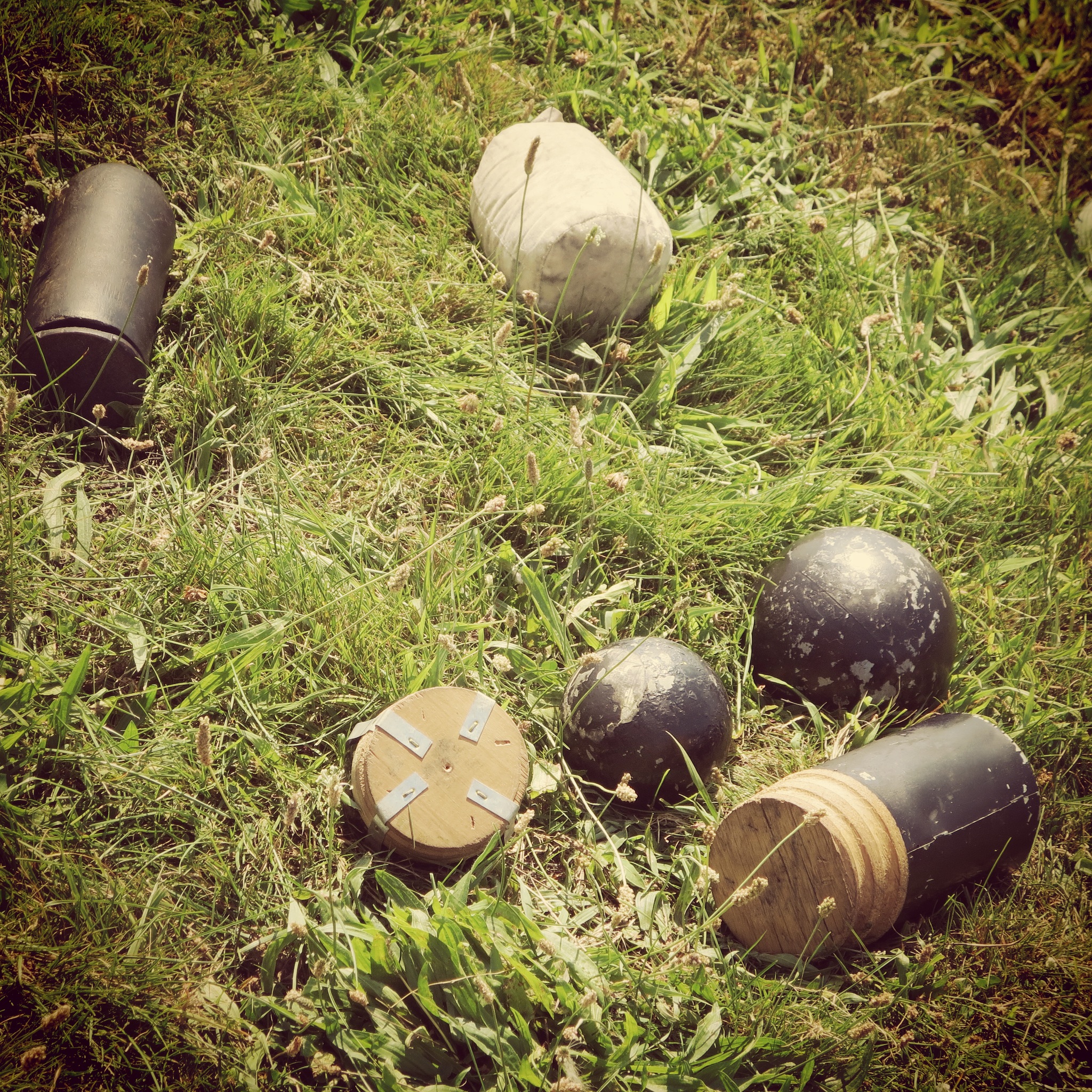
IMG_4071Civil War era cannon shot, canister and ordinance loads

Although the use of Governors Island has primarily been military for several centuries, visiting the island today serves up multiple experiences. While the historic forts and sites under the governance of the National Park Service occupy approximately 22 acres to the north, the remaining 150 acres is now overseen by the Trust for Governors Island. The Trust has worked to create an oasis of recreational areas for picnicking, play, bike riding, strolling and relaxing among historic buildings, allays of trees, wide grassy lawns, outdoor sculpture and newly designed landscapes. Whether you are a visitor looking for a step back into American history or just unwind from the city’s usual hustle, Governors Island can give a whole new perspective on New York at the center of the harbor and world.

New Game Weekend: 1775 Rebellion

1775box

Late this past week, the Washington Post ran a lengthy article on game designer and CIA analyst Volke Ruhnke. Ruhnke’s games are popular at Metropolitan Wargamers, including his COIN (Counterinsurgnecy) series from GMT Games, including the two 2013 releases of  Cubra Libre (Cuba) and A Distant Plain (Afghanistan). The basic mechanics of these games and other historicals like them involve simple map game boards, wooden blocks placed in area control of spaces and detailed cards driving player actions.

While Ruhke’s games from GMT focus on 20th-century insurgencies in Southeast Asia, the Middle East and Central and South America, Academy Games has been producing games for a couple years framed in similar mechanics but focused on US history with their Birth of America series. Thus far, the series consists of  1812: The Invasion of Canada, published two years ago  to conicide with the 200th-anniversary of the War of 1812, and 1775: Rebellion, an American Revolution game. Next up for Academy Games is an Underground Railroad-themed game called Freedom which was successfully funded on Kickstarter last year.

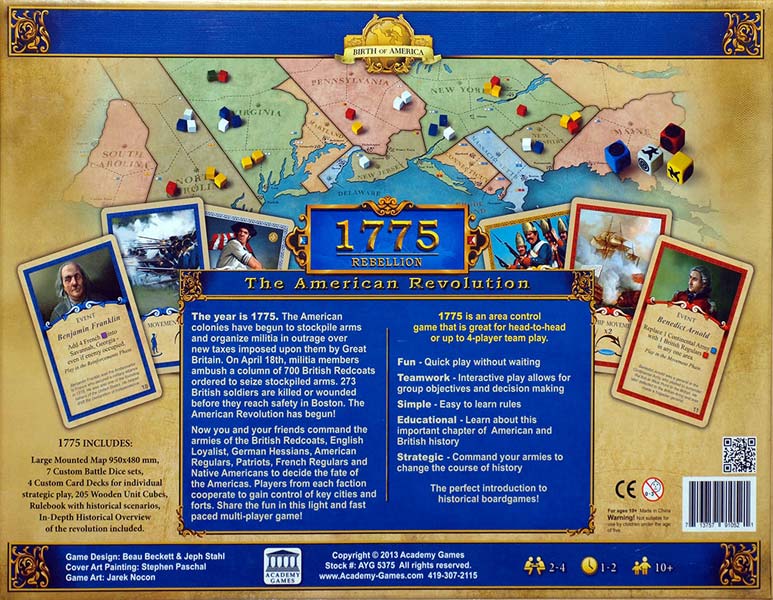
1775backbox

Back of the box for 1775: Rebellion showing game contents

This past weekend I had an opportunity to play 1775 for the first time, and if you’ve got a passion for board games and American history like me, you need to give this one a try yourself.

IMG_2754

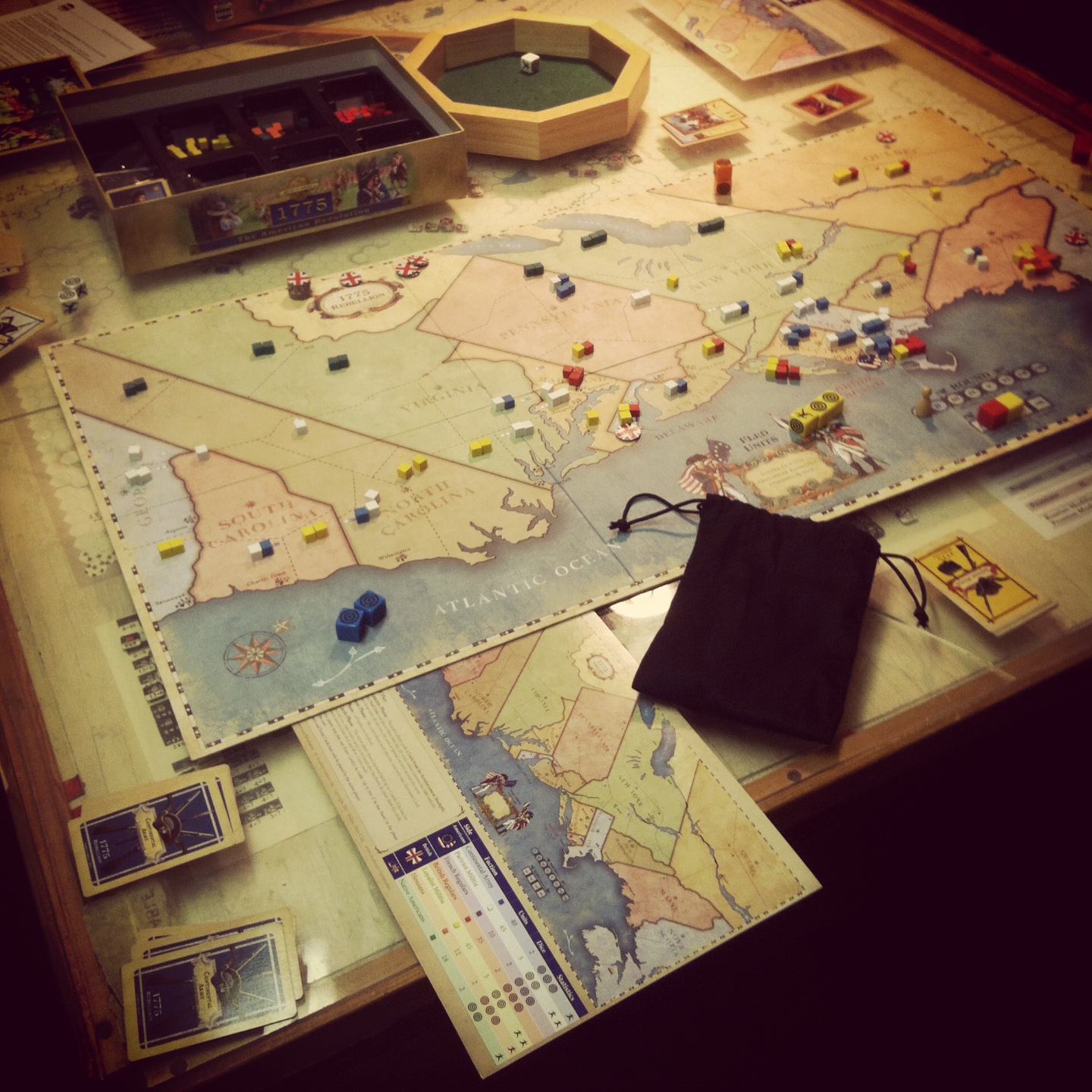
Game set up for 1775: Rebellion

The board presents a map of ther thirteen original American colonies, plus Quebec and Nova Scotia to the north, at the dawn of the War of Independence. Two to four players begin the game as American Regulars, Colonial Militia, British Redcoat Regulars and English Loyalists deployed throughout the colonies. On the western frontier are unaligned Native Americans, and throughout the game opportunities arise for Hessian and French forces to join the conflict. All forces in the game are indicated through simple color-coded cubes with American Colonists in blue and white, British in red and yellow, Native Americans in green, French in purple and Hessians in orange.

1775movementcards

Sample movement cards from 1775: Rebellion

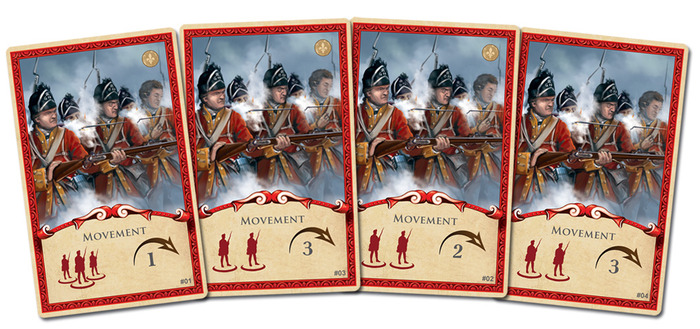
The action of the game is propelled by movement and event cards. Each player draws three cards to their hand and may play one movement and up to two event cards during their turn. Movement cards indicate one or more allied army’s movement from one to three spaces in a turn. Native American, Hessian and French forces cannot move until another force moves to their space and joins in alliance with them. Moving forces cannot move through enemy-occupied areas, and movement to a space containing enemy forces results in a battle.

1775cards

Sample event cards from 1775: Rebellion

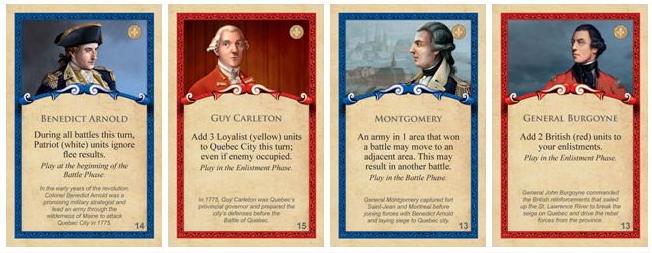
Event cards depict historic personalities such as generals or statesmen and other occurences from the Revolutionary period like Paul Revere’s Ride, signing of the Declaration of Independence or the creation of the American flag by Betsy Ross. Each event card allows for things like additional forces to arrive or extra movement.


IMG_2755

Turn 1 with the Americans moving on British-occupied Boston

Combat is resolved with dice color-coded to each force. Dice faces show hits, blank sides and flee indicators. Defending forces roll first in a combat. Hits destroy an enemy unit, returning it to the reinforcement pool. A blank result allows the option for a unit to retreat to a neighboring allied-controlled space. A flee roll removes a unit to the flee space to be replaced at the beginning of that player’s next turm. Dice for each force are weighted differently, so British Redcoats don’t hit as often but never flee while Hessians hit more frequently but flee more readily.

1775trucecards

Truce cards from 1775: Rebelllion

The game proceeds in random turn order each round with players deploying reinfocements into occupied cities and retrieving fled units. The object of the game is to control the most colonies before the game ends after turn three with the play of two truce cards on each side. Colonies are only controlled when every space in the colony is controlled by allied forces.

IMG_2757

Turn 3 with the American truce card played and British advancing from the north

In our four-player game this past weekend, my team’s Colonists initially attempted to oust the British from Boston but were repelled. The British advanced from Canada into northern New York, New Hampshire, Massachusetts and Connecticut. The Colonists picked up Native American allies in Western Pennsylvania and took control of the colony while a stalemate resulted in New England. With a mass of British-allied reinforcements to the north, the Colonists recieved French reinforcements in turn three and quickly took control of two colonies to the south. Colonists quickly played their second truce card and ended the game with more colonies in our control.

Although our intro game was a quick one, I’m very much looking forward to trying 1775: Rebellion again using different paths to victory. The game’s rules are short and the components simple, but there’s a lot of strategic heft to the game. For adults, or even smart kids, with a thing for early American history, I can’t recommend 1775: Rebellion enough.

Tis The Season For Toy Soldiers

tsc

Thanksgiving is upon us which means the annual run to holiday gift shopping is nigh. By some estimates, upwards to 40% of toy sales occur around the holidays which fits squarely with my memories of the plastic bounty of Christmas past. The arrival of store Christmas displays and holiday catalogs sent my childhood mind reeling. Before the arrival of electronic games in the late 1970s and early 80s, my dreams of toys stacked under the Christmas tree were filled with action figures, playsets, games and toy soldiers.

So, with visions of Christmas toys past dancing through my head, I find myself paging through the glorious selection from the recently-relaunched website from I The Toy Soldier Company. For almost 30 years this New Jersey-based company has been keeping plastic and metal toy soldier fandom alive with an enormous catalog of toys in all scales and hand-crafted playsets which harken back to the glory days of the 50s, 60s and 70s.

With so much play now relegated to screens and virtual fun, there is still nothing like seeing a kid moving dozens (or hundreds) of little plastic figures around the floor. These toys not only make for hours of fun across generations, but they can also open young minds to burgeoning interests in history and maybe some eventual wargaming. Going a step further and combining some toy soldiers with books, movies, documentaries and family outings that highlight the period is another great way to make up a fun and educational gift package for the holidays.

Ancient Egypt, Greece and Rome

http://www.youtube.com/watch?v=LlzfqVtmxVA

Kids are fascinated by the ancient eras of Egypt, Greece and Rome, and a lot of elementary school curriculums focus on these periods, their culture, arts and the gods they worshipped. Books and films full of pyramids, temples, gladiators and chariots dazzle young minds.  Mid-century film classics Ben Hur, Spartacus and even The Ten Commandments are thrilling, family-appropriate entertainment to this day. From one-on-one arena battles between tiny gladiators to epic plastic battles on the sands and plains of the Mediterranean region will enliven the imagination for these ancient cultures.

Ancient Era playsets and toy soldiers

 American Revolution

Living here in the Northeast United States, I’m surrounded by history of the American War of Independence, inlcuding the Battle of Brooklyn fought right over ground I cover on the way to work every day. With forts, museums, battlefields and museums dedicated to the period dotting the countryside, the formative conflict of the nation is all around us. The classic 1943 children’s novel Johnny Tremain and Disney’s 1957 movie adaptation have been the hook for kids for years. There’s so much color and mythic personality to this period in early American history, and some plastic soldiers armed with muskets and cannons will easily spark interest in any wee patriot.

American Revolution playsets and toy soldiers

American Civil War

We’re right in the middle of the 150th anniversary of the American Civil War, so the time is ripe to get burgeoning historians interested in the period. With the release of Lincoln last year and many past offerings available like 1989’s Glory and Ken Burns’ epic 1990 The Civil War, the War Between The States maintains its cinematic hold on the American narrative. The seminal book on the war in many ways remains Red Badge of Courage which is still a rite of passage for many a young reader . Spending the holidays learning about the Civil War might kick off some family visits to battlefields and historic sites when winter breaks to spring, but getting some blue and gray toy soldiers out on the floor now can make for a very timely history lesson through play.

American Civil War playsets and toy soldiers

World War I

http://www.youtube.com/watch?v=obUVbFdGepM

Europe is in the midst of the 100th anniversary of World War I, and next year America’s involvement in “the war to end all wars” will be quietly memorialized. The US came to the war late and it’s effects on our country were nowhere near those on the European continent, so learning about this conflict is a great way to broaden young minds to 20th-centtury history beyond our usual American-focused history education. My oldest son read All Quiet On The Western Front this past year, and the adaptation of that classic novel as well as films like Paths of Glory and Gallipoli are engaging ways to get a view inside the troubling politics and tactics of the war. Lining up multinational plastic armies bridging the gap of 19th to 20th-century warfare makes for a great intro to the period.

World War I playsets and toy soldiers

World War II

Perhaps more than just about any other war, World War II remains an enormous part of historical and popular culture through countless books, movies, TV shows and documentaries, both factual and fiction. From The Longest Day and A Bridge Too Far to modern classics like Saving Private Ryan, Band of Brothers and Flags of Our Fathers, Hollywood continues to crank out epic stories from the war. Aside from books and movies, their are some amazing WWII games from the likes of Axis & Allies to Flames of War. To me, WWII is the period to watch, game and play in, no matter your age.

World War II playsets and toy soldiers

The above are just a few of my favorite periods in which I think kids could easily establish a lifelong interest. Through a combination of books, films, field trips, games and plastic soldiers from the likes of the Toy Soldier Company, you can make this holiday season a bit fun, a bit unique and maybe your kids or grandchildren will even learn a little something in one of the most time-tested ways: play.

Favorite Kickstarters of the Month (July 2013)

Kickstarter can be a weird, volatile environment. Some projects come and go with little fanfare while others soar into the stratosphere with backer support. There can be all manner of highs, lows and outright trouble for projects on their journey from idea to funding to delivery. That said, four of the projects I wrote about in June wound up successfully funded in the past month. The fifth, the seafaring game Admiral, was funded but the project was then suspended inexplicably with a day to go. No doubt there’s a story there, but for now, here are the projects I’ll be watching as we hit the first hot month of the summer in July.

Cthulhu Wars: Drawing on the Cthulhu Mythos of H.P. Lovecraft, this game is the big story in games on Kickstarter right now. With dozens of gorgeously grotesque miniatures and many planned expansions, this strategy board game turns the tables and allows the players to play as Lovecraft’s beastly horde seeking to control the surface of a ruined Earth. Many of the pledgers have bought in at the higher funding levels of $200-500+, no doubt attracted by not only the theme but the tons of extra maps, gaming pieces and figures rewards. The project is trending toward nearly $1 million in funding in its closing days, and the more than 3300 backers are delivering a built-in fan base of this classic horror genre already popular with gamers.

Seas of Iron: I’m not a big naval gaming fan, but I really like the looks of this very modest battleship wargame from Battle Bunker Games. The battleships are comprised of two-sided cards defining the sections of each ship where you deploy your crew and fire volleys at your opponent. When a section is destroyed, cards are flipped over to show that part of your ship aflame. The Kickstarter exclusives include the famed Yamato and Bismarck warships. Just $20 allows for a backer to get a full version of the game which allows enough flexibility for 1-on-1 or small fleet play with combined sets.

Devil Dogs and Dragons: I’ve invested in more than a few of the Anglo-Zulu War 28mm miniatures from Empress Miniatures. They make quality, spirited and detailed miniatures, so its great to see them expanding their Modern Combat line. There’s a lot of interest in gaming modern warfare right now, and the 28mm scale seems to be a clear favorite with small squad-level engagements in the dusty and hot embattled corners of the world. These 28mm figures fill out modern US Marine Corps and Chinese People’s Liberation Army options for deployment in the Asia-Pacific desert and jungle regions. With a bit more imagination, these guys will even find a home in various zombie, alien invasion or post-apocalyptic scenarios.

Fife & Drum American Revolution Range: Just in time for the 4th of July weekend, Fife & Drum Miniatures is also expanding their established line of miniatures. Sculpted in a large 30mm or 1/56 scale, these majestic figures offer incredible detail for the Colonial Period ranging from the Seven Years War to the American War of Independence. The Kickstarter campaign will help fund the company’s expansion into new British cavalry, Hessian, Highlander and French infantry offerings. At the $50 level, backers receive a special three-figure “Spirit of ’76” vignette, making this project perfect for any patriot and fan of the AWI period.

Gettysburg: The Tide Turns: Finally, and in keeping with the theme of American military history, I’m throwing in one video game offering to round out the list. The Battle of Gettysburg is celebrating its 150th anniversary this month, and so this timely iOS game for the iPad and iPhone looks to be a deal at just $10 to back the project. Developed by Shenandoah Studio, the makers of the previously Kickstarted Battle of the Bulge iOS game, this simulation looks to be a very promising 21st-century tribute to the strategy, tactics and heroics found on the famed Pennsylvania battlefield 150 years ago.