American Civil War: 28mm American Farmhouse

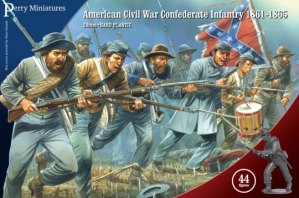
My workbench focus over the past couple of weeks has been almost exclusively on my 28mm American Civil War project which I hope to have wrapped-up and ready to present in a large scale battle this spring. As posted previously, I love setting out a realistic wargaming table full of structures and terrain. Luckily, Perry Miniatures – the maker of my favored 28mm American Civil War soldiers – also produces a couple 1/56th scale plastic kits of terrain suitable to the period.

The Perry Miniatures farmhouse is loosely modelled on General Meade’s Union headquarters from the Battle of Gettsyburg, pictured at right in a photo from the aftermath of the battle and as it looks today. I’ve seen the house in person a couple of times, and I’ve also seen similar buildings in Western New York, Ohio, Michigan and Virginia. The Perry Miniatures model is typical of the small wood-framed clapboard rural farmhouses found in the North, South and into the Great Lakes region from the late 18th through 19th-centuries.

The pieces of the farmhouse kit come in two easily-assembled sprues along with an extra sprue of three types of fencing. The fencing is disappointing and unfortunately doesn’t really offer much to work with in terms of building out a farm scene. Some extra sets of plastic fencing from Renedra are probably needed to really complete the set. However, the box does contain a chair and a couple barrels to add some nice detail to the model’s front porch.

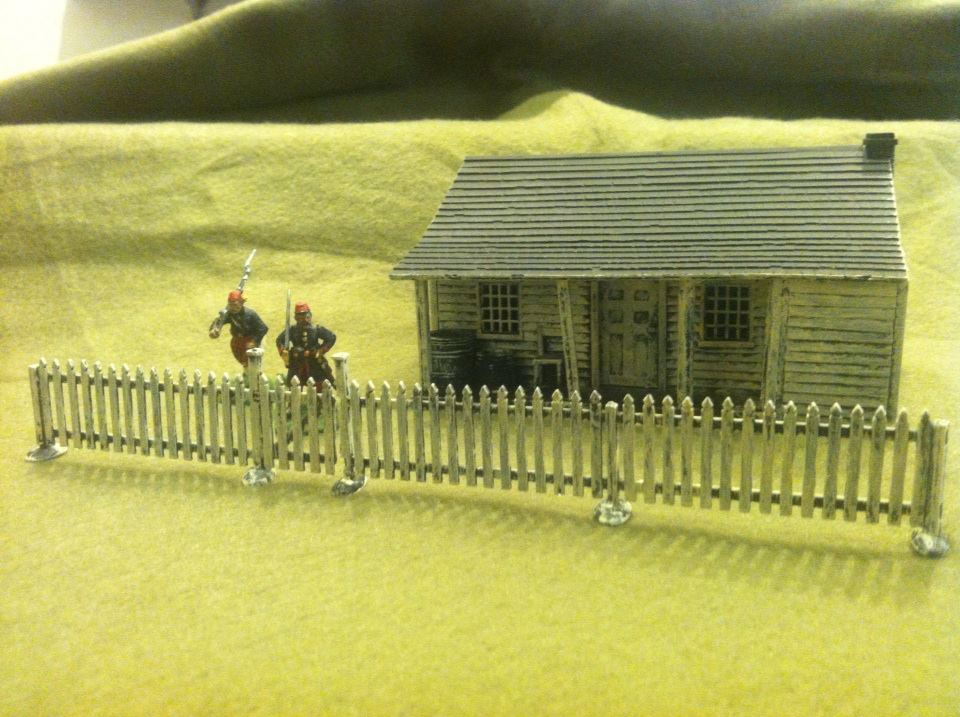
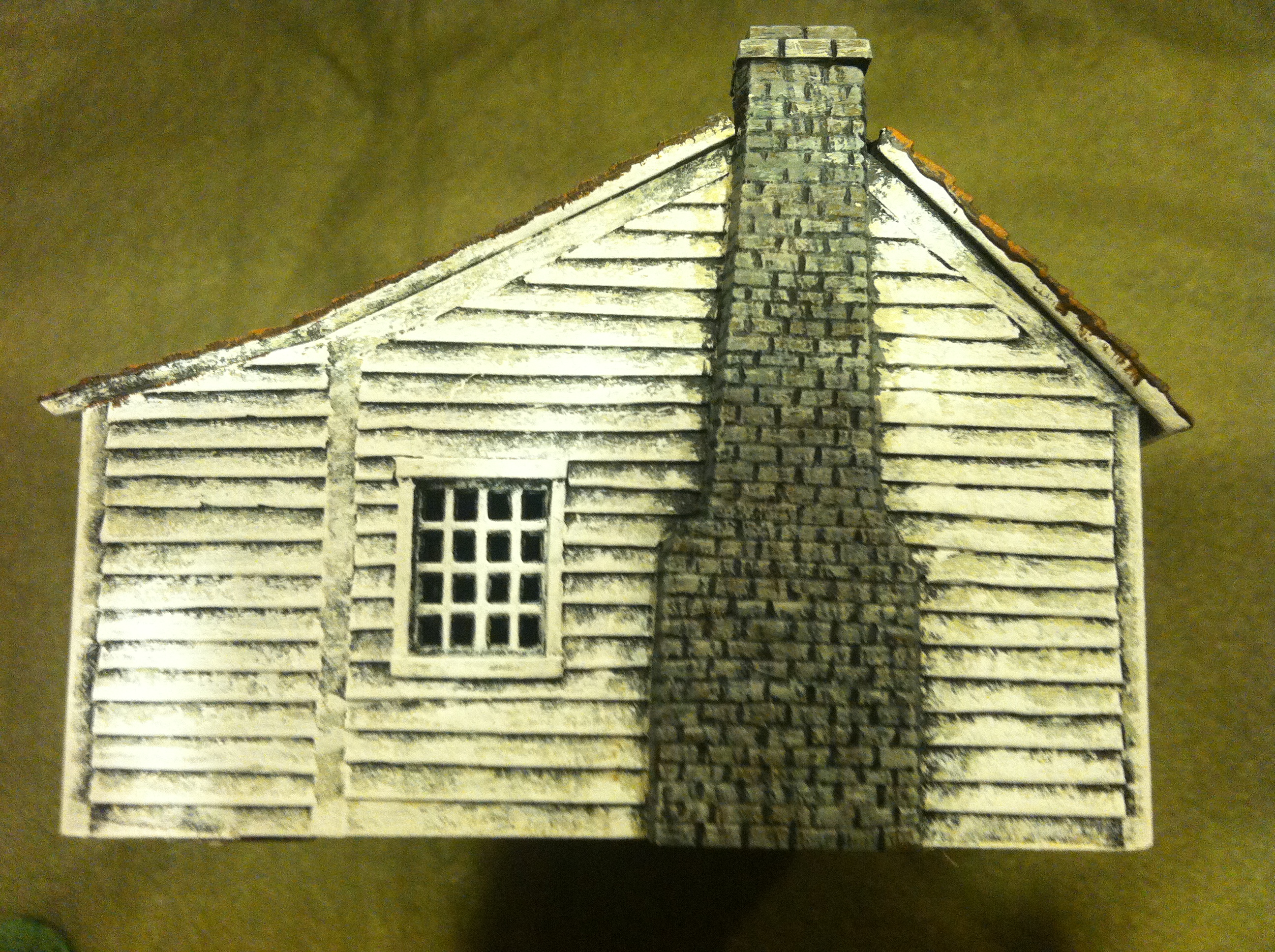
I glued up the kit and sprayed it with a flat black undercoat. My plan was to give the farmhouse a weather-beaten finish looking like it had years of peeling paint. I started by dry-brushing the model with a large flat brush with a yellowish off-white paint, making sure to leave a fair amount of the black in the gaps and areas between the clapboards (photo at top left).

Next, I dry-brushed the house again with a bright white paint, giving the clapboards additional depth as if the most recent layer of paint had deteriorated over time. For the roof shingles, I built-up dry-brushed paint in dark brown, light brown and then a bit of dark green mixed with a brown wash. I began the chimney with a dark gray paint and then finished it with dry-brushed lighter gray and dabs of brown and off-white paint to represent variations in the stonework (photo at middle left).

For details, I dabbed the barrels, chair and porch planking with dark brown and completed them with some lighter brown dry-brushing and some aging metal for the barrel hoops. The door knobs at the front and rear each got a dab of brass paint (photo at bottom left), and I gave the picket fence another coat of the bright white like the house clapboards.

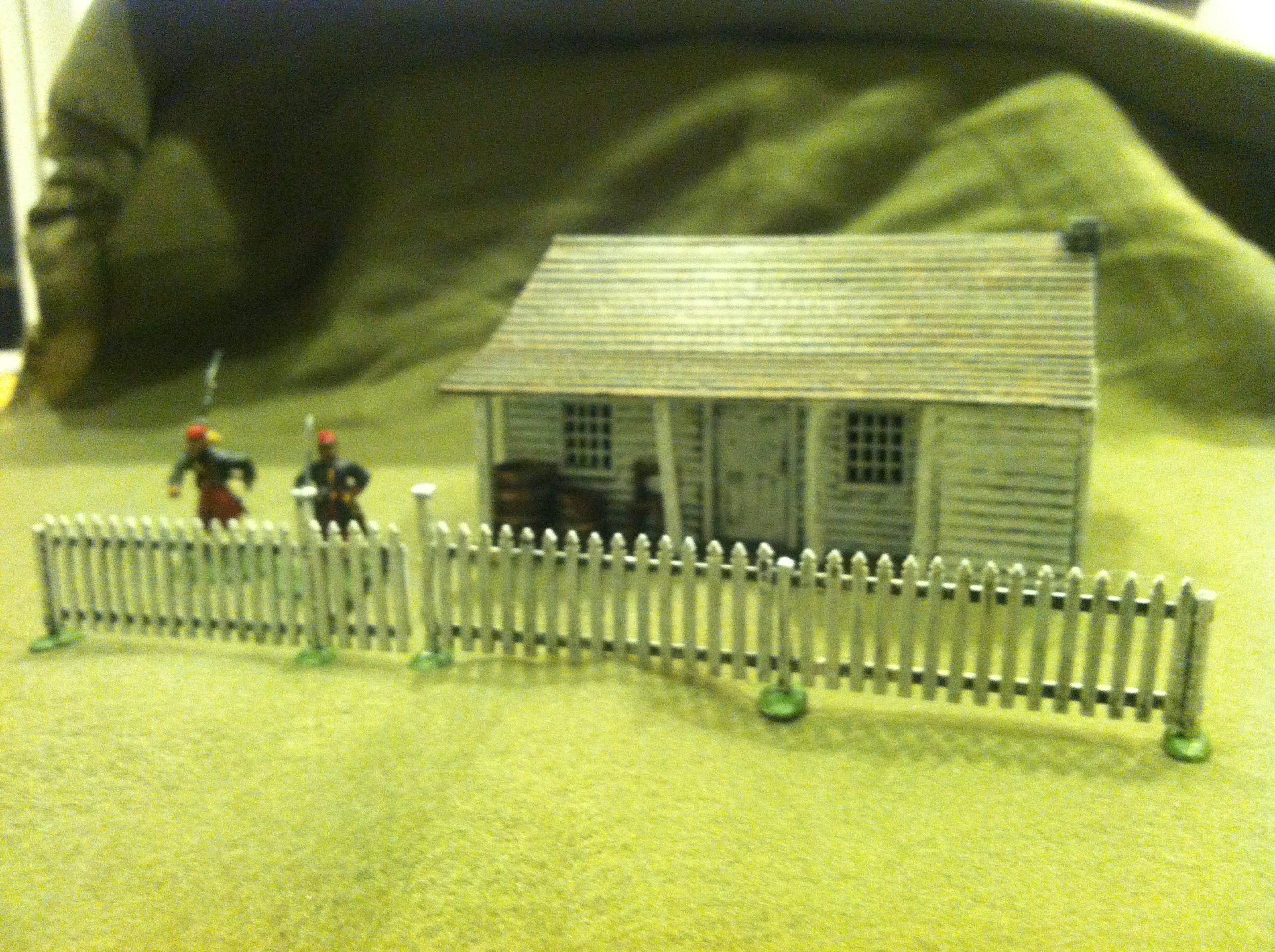
The final results are below and ready for the battlefield this coming spring.

American Civil War: 28mm Cannonball Markers

Aside from actual gaming, one of the more enjoyable aspects of wargaming for me is scale modelling. Scale modelling is basically looking at the real world and figuring out how to represent it realistically on the tabletop. I’m constantly picking up little pieces of wood, paper, metal, fabric and string and figuring out what those materials might be used for down in a miniature scale.

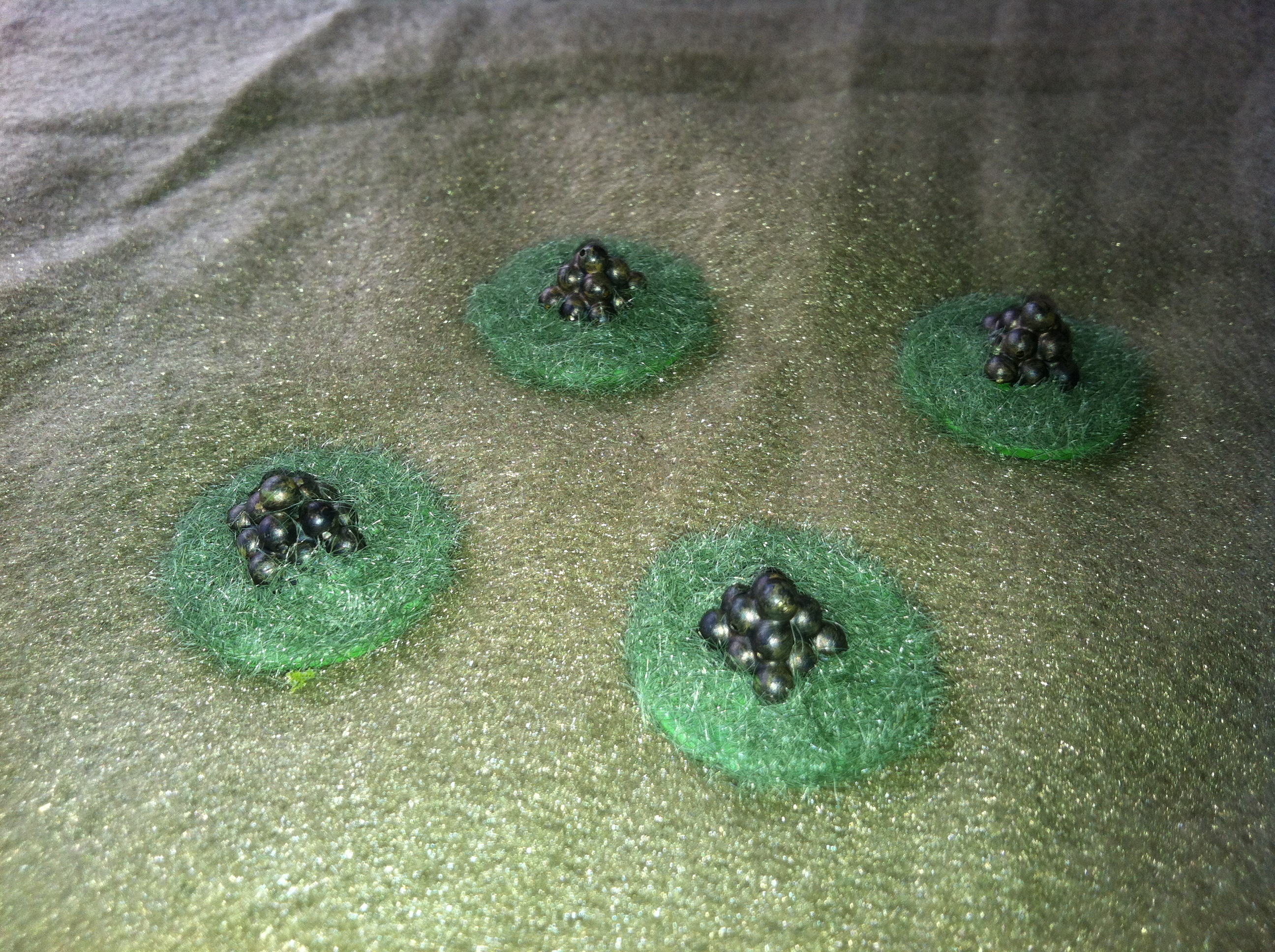
My most recent project is building some cannonball markers for my 28mm scale American Civil War gaming. These markers will be used to indicate when my field guns are loaded and ready to fire. In reality, most American Civil War field batteries probably didn’t have time to neatly stack piles of cannonballs as gun teams fired furiously at enemy lines. That said, anyone who has visited a historic battlefield site will most probably be familiar with the look of cannonball piles often found sitting neatly nearby an antique artillery piece.

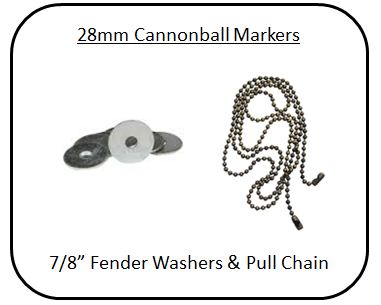
Many companies offer pre-made cannonball markers cast in plastic or metal, however, I thought scratch-building some markers of my own would offer a nice break from my usual painting of soldiers in blue and gray. For bases, I used the same 7/8″ fender washers I use for basing all my 28mm miniatures. The cannonballs were made from a length of metal pull chain found in the electric aisle of any hardware store. Many modellers use small gauge shot to model cannonballs, but I found the connected balls/links of the chain makes assembly quicker without the mess of chasing little balls around the workbench.

To begin, I cut and glued a small thin piece of cardboard over the center hole of each washer. I then cut three three-link sections, two two-link sections and a single ball from the chain. Starting at the bottom layer, I used a dab of superglue to affix the three three-link sections on the base. When dry, I glued the two two-link sections on top of the base layer and then fixed a single ball on the top of the pile. The result was a neat pile of 14 balls stacked into a symetric pyramid.

Once each based pile was dry, I spray-coated the markers with flat black paint. To give the cannonballs some shading and depth, I lightly dry-brushed some rusty metal and brown paint over the balls, allowing some of the black to remain between. The base was then painted green and flocked with some static grass affixed with PVA glue. A protective dull clear spray coat finished them off.

Sitting alongside my Union gunners running a field piece into position as their General shouts orders, these new markers make for a nice piece of detail on the battlefield.

2013 Goal Setting

We’re just over a week into 2013 but with more than 50 weeks still ahead, I think I have time to squeeze in some ideas on gaming goals I’m setting myself for 2013. Here’s five goals I’m setting for the year (including one I’ve already checked off the list):

1. Join a club

I have been dropping in on the Metropolitan Wargamers in Brooklyn for probably 4-5 years, and this year I’ve already finally got around to becoming a full member. The club occupies the basement garden level of a townhouse on a side street in historic Park Slope Brooklyn, just two stops from me on the subway. In a city where space for storage and gaming is at a premium, the club is a wonderland of gaming tables, boardgames and miniatures. While a lot of guys arrange to play a particular game ahead of time, there’s a big opportunity on the weekends to simply stop in at the club and grab a few guys up for playing whatever sounds good. The members of the club are incredibly supportive and passionate about gaming, and the diverse ages and backgrounds always makes for an interesting and entertaining mix over the course of a few hours.

If you’re in the NYC-area and you’re interested in what’s going on at the club, I’d suggest introducing yourself via their Yahoo! Group and then come in for a game at some point. You can also check them out via Facebook or follow them on Twitter.

2. Get back into World War II

A few years ago I got heavily into WWII gaming in 15mm with Flames of War. In pretty short order I painted up large German and American infantry armies, and then threw in a US paratrooper force for good measure. I signed up and played in a full-day tournament at a convention, and then I ran a game at another convention. Along with my infantry, I’ve also got dozens and dozens of tanks, jeeps, trucks and artillery pieces that have largely sat fallow for over a year as my interests (and schedule) have drifted elsewhere. In the interim, a new revised set of rules were released and a whole host of additional rulebooks focusing on the post-D-Day actions have also hit the market.

So, I’m jump-starting my interest in the era again in 2013. A big new starter boxed set containing the new rules and a bunch of new plastic figures and tanks wound up under the Christmas tree. I also scored the new Easy Company set of character figures who bring with them a whole set of special rules as you recreate the famed command exploits of the 101st Airborne Division. I spent part of my time off from work at the end of the year gluing up and priming my new forces and re-familiarizing myself with the rules. I’ve been talking up World War II with some guys at the club, my son seems interested in playing again and now I’ve just got to commit to returning to the tabletop battlefields of 1940s Europe.

3. Tackle my Anglo-Zulu War project

At a convention a few years ago I signed up blindly for a recreation of the Battle of Rourke’s Drift, one of the most significant engagements of the late-19th-century Anglo-Zulu War and a favorite of mine in the history of warfare. I tucked the game in the back of my head for a couple years, and then I happened upon some really inexpensive boxes of plastic British troops from the era at another convention last year. Well, once I had some Brits on the workbench I certainly needed some Zulus (and more Brits).

Months on, this project has stalled. I have hundreds of figures glued-up in various states of painting and a couple additional boxes of Zulus still waiting to be unwrapped. There’s a sameness to the British and Zulus which I haven’t quite cracked as of yet. I obviously need a system and a process to tackle all these guys in the coming year so I can finally get them up and running on the table. Long-term (really, really long-term), I fantasize about playing the battle of Rourke’s Drift in a true 1:1 scale of approximately 4,000 Zulu miniatures facing off against a contingent of 140 or so British troops. That said, getting this whole Anglo-Zulu project back on track this year is a promise I’m making to myself.

 4. Wrap up my American Civil War forces

If 2012 had a focus for me, it was the American Civil War in 28mm. With the 150th anniversary of the war in the news and Stephen Spielberg’s “Lincoln” in theaters, America’s greatest conflict was in the air. I worked along throughout the year painting away at the wonderful plastic and metal range of ACW miniatures offered by Perry Brothers Miniatures, and my sons and I played increasingly larger skirmish battles on the coffee and dining room tables.

At this point I think I’m maxing out with a couple hundred troops in both Blue and Gray. I have a few more models of artillery which are about 80% complete, some fez-hatted 5th New York Volunteer “Duryee’s Zouaves” to wrap up and one box of the new Confederate infantry to start. I’ve been really happy with results this year, and I’m looking forward to hauling the whole contingent out of my apartment by the spring to share my work with the guys at the club.

5. More boardgames (and maybe some card games)

I largely ignored all manner of gaming throughout the 90s, and, with that, I largely missed the boat on the rise of Euro games. Over the past year-and-half, I’ve re-invigorated my interest in boardgames. Settlers of Catan and Ticket To Ride have become mainstays in my home for “family game nights.” I’ve already added Small World to the mix this year, and a friend of ours introduced us to Bohnanza – a competitive bean-planting and harvesting card game – over the holidays. I’ve got a list of others I want to try this year, and there’s probably countless more I don’t even know about yet.

Playing games with friends, family and members of the local club is such a fantastic way to disconnect from the realities of the world and re-connect with people in a way we seldom do in the normal course of life. Here’s to 2013 and a year of play.

Setting The Scene

One of the aspects of wargaming I love most is setting up the tabletop battlefield. I first got into scenery building with a large basement HO scale model railroad as a kid in the 1970s and 80s. Through a mix of sculpting hills and roads, modelling trees and creating realistic tableaus of buildings, I spent hours bringing to life a miniature world.

Setting up a tabletop battlefield serves two purposes. Firstly, playability is affected in terms of terrain contours, defensive cover and lines of sight. Secondly, a well-laid and realistic tabletop brings an aesthetic appeal and excitement only to be found in miniature wargaming. While throwing down a big piece of green fabric and some simple trees or lichen shrubbery and maybe some rocks for outcroppings can provide a bare minimum play area, adding a few pieces of additional model detail really makes a game come to life.

Check out some of my WWII and American Civil War set-ups in the Gaming & Painting section above, and have a quick read on some easy resources below to get your own tabletop ready for battle.

Battlefield Basics

For my groundcover, I use a $10 green fleece throw I picked up in a discount store. I like that I can fold it or open it up to create different sized gaming spaces. You can also use felt or any other cloth easily picked up at a local fabric store. For roads, I use a rubber textured road system I bought at a gaming convention. On the cheap, you can cut felt or other material into strips to create roads of varying lengths and widths. Streams and rivers can also be cut from blue felt. For basic shrubs, a bag or two of lichen from a hobby shop in varying shades of greens and browns provides flexibility in creating hedgerows and other bunches of ground cover. Spreading some gravel or larger stones around the battlefield can also provide some texture and look to the table.

Trees

While a lot of gamers prefer making trees from scratch using twigs and lichen, I like tree systems like those offered by Woodland Scenics. Whether you choose to build your own or buy pre-made trees, you can easily find what you need via websites or stores that cater to model railroading hobbyists. Keep scale in mind that shorter HO-scale trees suffice for 15mm scenarios and taller O-scale trees will stand in nicely for forests and treelines in 28mm games.

 Buildings

There are tons of options for wargaming buildings. Many experienced gamers make their buildings from scratch using foamcore, balsa wood and other kit-building materials found at any decent hobby shop. Another cheap option is downloadable paper cut-out buildings, many examples of which can be found online for free or in easy and immediate pay/download format.

A number of companies specialize in model buildings in lots of scales, eras and geographic locations. Some relatively inexpensive buildings come cast in solid resin and unpainted, while others come completely assembled and detailed with removable floors and roofs. More recently, laser-cut wood buildings are becoming a popular option.

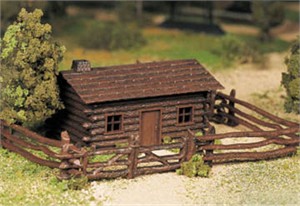
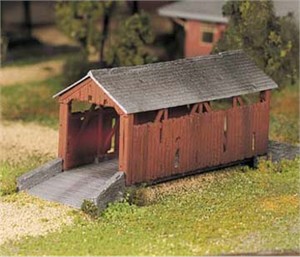
I like using plastic kits from model railroad suppliers, particularly O-scale buildings when I’m gaming the American Civil War in 28mm. These kits are pretty inexpensive ($10-30), easy to find online or in stores, simple to glue together and lightweight. The often simple detailing is easily enhanced with some simple painting and weathering removing the plastic gloss. Companies such as Bachmann (log cabin and covered bridge pictured), Atlas and Lionel all make model railroad buildings which can easily stand on an 18th or 19th-century American battlefield. I love my big Lionel K-Line O-scale American church I picked up for $9 on sale, and it always takes center stage in my American Civil War set-ups.

Boxed Terrain Systems

While pricey, several companies offer full lines of pre-packaged terrain systems made specifically for gaming. Flames of War offers a big line of 15mm WWII terrain through their Battlefield In A Box sets with roads, rivers, buildings and battlefield accessories to fit different regions of the war. Games Workshop also offers a number of products specific to their games from Citadel but much of it could be used for other gaming in Medieval and fantasy gaming environments in 28mm. For gamers with particularly deep pockets, Games Worshop all carries highly-detailed modular gaming boards for nearly $300 each.

“Where Do I Start?” Some Thoughts On Starter Sets

One of the more daunting things for people just getting into tabletop wargaming is where to start. There are countless systems to choose from, many scales, different levels of complexity and hundreds of thousands of products to choose from. Shopping online or walking into a local hobby store, the newcomer can easily be overwhelmed by the sheer quantity of “stuff” that’s out there in the hobby.

Here’s a few pointers on how to get yourself (or your kids) started.

1.) Try a game first. If you have an opportunity to try a game before buying, that’s the best (and cheapest) first step. Spending a few hours with a local gaming club, visiting a gaming convention or playing at a nearby hobby shop will give you a broad overview of how complex and fun a game can be. It’s also good to speak with other players so they can relate their personal experience in what they do (or don’t) about particular games, and what kind of a time and money commitment you may be making by undertaking a new game.

2.) Pick a theme. There is a tremendous variety in the playable world of gaming. If your kids like comic book superheroes or sci-fi space battles, there are games for those. If you like reading about history and are interested in playing a particular historic era, chances are there’s a game for it. If you have tendencies toward swords, sorcery and fantasy monsters, there are plenty of options. And, for those of you into horror and zombies, there are definitely games to suit your taste for the macabre.

3.) Visit a local store. It’s great to support local businesses, and getting to know the folks at your local hobby store, comic book shop or specialized wargaming outlet is key to your intro and growth with a game. People at these stores are usually gamers themselves, and they know and love this stuff. Be honest with them when just starting out. Explain your level of previous experience, interests, budget and the amount of free time available to play games. If you are looking to play a World War II game for a couple hours a week and have a budget of $50, they’ll probably steer toward the great board or card games available. If you have hours of free time and are willing to invest hundreds (or thousands) of dollars in a World War II game over the long term, a good store employee will point you in a different direction.

4.) Get a starter set. One of the great things about wargaming is the wide array of products the industry churns out. Settling on just one gaming system can present a new player with thousands of options. Experienced gamers usually go the a la carte route, picking and choosing the specific miniatures, models and rulesets they want. As a new gamer, however, what you usually need to get started is some miniatures and rules.

Thankfully, many popular wargaming systems offer packaged starter sets. These usually contain a set of rules, dice, maps and enough miniatures to wage a small game right out of the box. The other bonus with starer sets is the costs savings, as many companies package there starter sets with contents that might be double the cost if bought separately.

Here’s a couple of my favorite starter sets, covering a couple different scales and eras. If you’re looking a for a great wargaming gift this holiday season, start here.
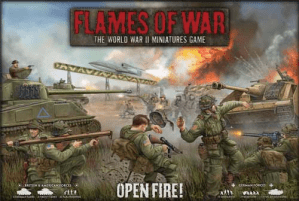
Flames of War: Open Fire!

If you’re interested in World War II, start here. For about $70, this incredible set gives a player a 50-page quick-start guide, a full 300-page rulebook, dice, nearly 120 soldiers, eleven tanks and lots of other goodies. The set encourages you to glue up the miniatures and models and start right in playing. Once you’ve got a game or two under your belt, you can get started painting and then head back to the shop to start building out your forces for even bigger games.

The Hobbit: Escape from Goblin Town

Millions of people are going to be marching into movie theaters this month to see The Hobbit: An Unexpected Journey. If your interest in things Tolkienesque goes beyond the Hobbit and Lord of the Rings books and movies, then Games Workshop’s line of games should be your next stop. To coincide with the new movie, a whole new line of miniatures, rules and this incredible limited starter set has been introduced. The set costs $125, but with that you get all the hero characters (Bilbo Baggins, Gandalf the Wizard and Thorin Oakenshield and his band of dwarves) and dozens of goblins. The set includes a 50-page rule book plus some terrain models, dice and a ruler. Everything is plastic and modelled with incredible detail and personality. When painted, the models really come to life on the table. There’s also a full line of Hobbit-themed (and previously-produced Lord of The Rings) miniatures and rules ready to be added to your future games.

Warhammer and Warhammer 40K

Games Workshop also offers two long-standing favorites in the miniatures gaming world: Warhammer and Warhammer 40,000 (or, 40K to fans). Each gaming system offers a starter set for $99 that comes packed with incredibly detailed miniatures, rule books, starter guides, dice and other gaming accessories.

Warhammer is set in a fantasy world of magic and monsters, The Island of Blood starter sets allows you to field an army of High Elves against the Skaven, a race of giant rats. The 74 models exclusive to this box include Elves on horseback, an Elven prince riding a giant griffon, Skaven ogres and a whimsical cannon strapped to the back of a giant rat.
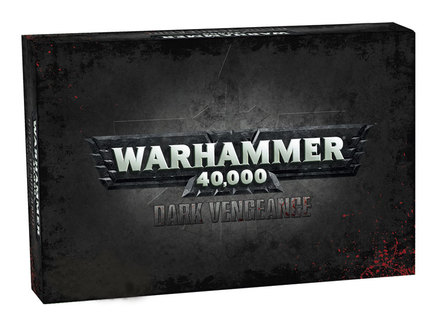
Warhammer 40K inhabits a universe in a far off future plagued by armies in endless intergalactic planetary war. The dark vengence starter set gives you 48 plastic miniatures depicting the Dark Angels against the Chaos Space Marines. Theses figures come armed to the teeth with gruesome hi-tech weapons and clad in enormous suits of armor. A squad of bikers and a walking death machine armed with laser cannons and giant claws round out the armed forces.

“Airfix’s Little Soldiers” by Jean-Christophe Carbonel & “The Boys’ Book of Airfix” by Arthur Ward

As I’ve previously written, many kids’ first introduction to plastic toy soldiers in the 50s-70s came through the Marx playsets offered through Sears. Marx’s colorful plastic toys offered the ability to imaginitively play right out of the box. But for a lot of us, our interest graduated from casual play to an actual hobby with Airfix.

For people with fond memories for Airfix model kits and plastic soldiers, there are two must-haves for your bookshelf. Arthur Ward’s “The Boys’ Book of Airfix” traces the development of the company from a toy-maker beginning in the 1930s to their late-20th-century growth into a leader in scale modelling. “Airfix’s Little Soldiers” by Jean-Christophe Carbonel focuses almost exclusively on Airfix’s 1/32 and 1/72 scale plastic soldier lines. With intensely creative packaging depicting soldiers in action, Airfix’s plastic soldiers were unparalleled for their detailed sculpting and variety of poses. Unlike Marx plastic soldiers, Airfix appealed to budding miniatures modelling hobbyists willing to put in the hours painting tiny plastic soldiers. Although the soft plastic Airfix used was notoriously difficult in holding glue and paint, many a future miniatures wargamer got their start with Airfix.

Aside from plastic soldiers, Airfix produced a large line of scale model kits (planes, ships, cars, military vehicles, etc.). Because of the hobbyist focus of Airfix, their models and sets were available not only in department stores and five-and-dime shops, but they also became a presence in more traditional hobby shops. The company also created marvellous diorama playsets such as the Beachhead Assault and Coastal Defense sets to enhance play with their expansive selection of plastic soldiers. Many of these sets continued to be re-packaged and sold over the years as anniversaries of World War II battles were celebrated by the media.

 (photo via Vintage Airfix)

For fans of Airfix, you should also check out the Vintage Airfix website for a comprehensive look back at the evolution of their models and kits over the years. Both books conclude with the corporate mergers, changes in distribution and a look at competitiors Airfix faced over the years. By the end of the 20th-century, Airfix became more of a specialty brand in the US while their plastic kits remain widely available and popular in Europe. For me, holding one of those little Airfix boxes of soldiers still takes me back to the hours of painting and playing with plastic as a kid.

Painting and Playing

Wargaming broadly falls into three categories — paper-and-pencil games, board games and miniatures gaming. Dungeons & Dragons is the classic pencil-and-paper game, with games played out largely through verbal role-playing with a lot of note-taking and mapping on paper. Board games are great to pull off a shelf, set up and play, often in one sitting.

Miniatures wargaming is my favorite. The hobby combines two entirely different aspects – painting and playing. Firstly, miniatures wargaming involves obtaining often hundreds of plastic or metal figures in various sizes from just a few millimeters to nearly two inches tall. A fair amount of research usually goes into creating forces of the proper size and and make up. Then there’s a lot of gluing to get poses and equipment together in realistic and historically-accurate configurations. Lastly, a miniatures modeller is faced with hours and hours of painting with tiny brushes, dabbing paint on uniforms, weapons, gear and exposed faces and hands. Even within the same historical era, say WWII or the American Civil War, there are nearly-limitless variations in how miniatures can be painted. Beyond the figures themselves, setting up a wargame usually involves creating terrain including buildings, trees, rivers, roads and hills.

Only after you’ve logged many hours painting up your armies and laying out your terrain can the miniatures wargamer get on to the second half of the hobby — actually playing. Again, miniatures wargaming has a tremendous variety of rulesets available depending on the era, scale and size of a game desired. Some games might involve skirmish-level battles with just a couple dozens figures on a side and other games can be of a grand tactical scale with hundreds (or thousands) of troops filling the field. Rulesets can run from just a few pages to dozens of books, and some gamers choose to write their own “home-brewed” rules. Some companies such as Flames of War or Games Workshop manufacture self-contained systems of miniatures and rules, even offering some starter sets of figures, rules, paints and dice all in one box for new players.

For a glimpse at the intersection of painting and playing wargames, check out the newly-updated pages on my Gaming and Painting page. Whether it’s World War II, the American Civil War or the Anglo-Zulu War, each era and scale brings different variety to what I love about the hobby.